How much does TV bracket mounting cost in Warsaw?
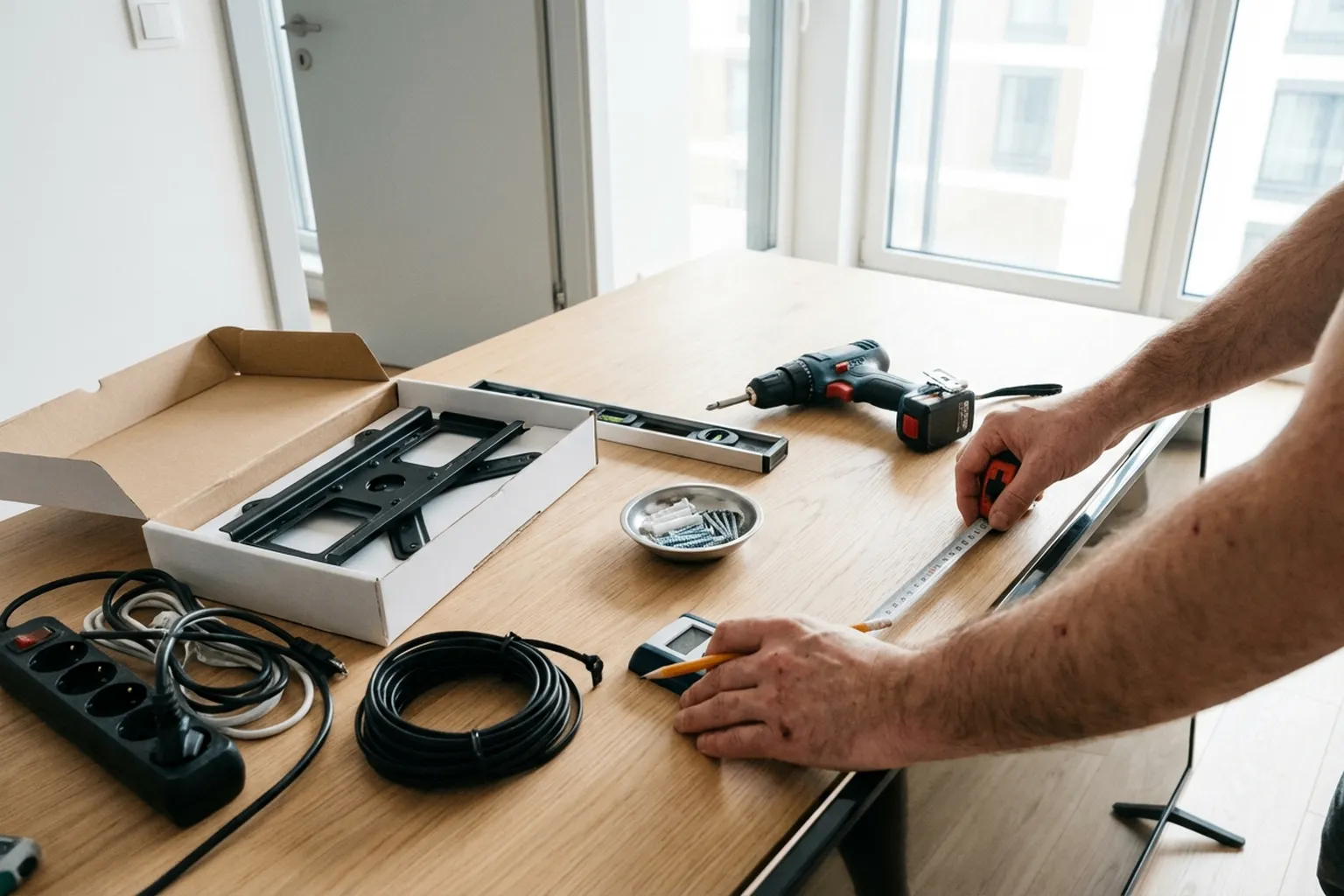
The price depends on the wall type, the weight of the TV, and how complicated the installation is. A basic fixed bracket on concrete is fast to install. A tilt-and-swivel bracket on plasterboard with reinforcement takes more work. The final cost is affected by things like whether cables should be hidden inside the wall (chasing), and whether the wall needs extra support with a backing plate. Fixings from the bracket kit are included. Extra anchors for your exact wall type are added when needed. You can check current prices in the table below.
| Service | Price |
|---|---|
| Wall-mounted TV installation | 200–400 zł/szt |
Indicative prices. Ranges for a typical scope. Fixings included, materials separate. Minimum order 300 zł.
What it costs and how to book: TV bracket installation in Warsaw.
How TV bracket mounting is done
- You send the TV and bracket model: the technician checks VESA compatibility and confirms the weight.
- Timing depends on the tradesperson you choose: they give the arrival time in their offer.
- At the address, the technician checks the wall type and chooses the right fixings: anchor bolts for concrete, expansion plugs for brick, reinforcement through studs for plasterboard.
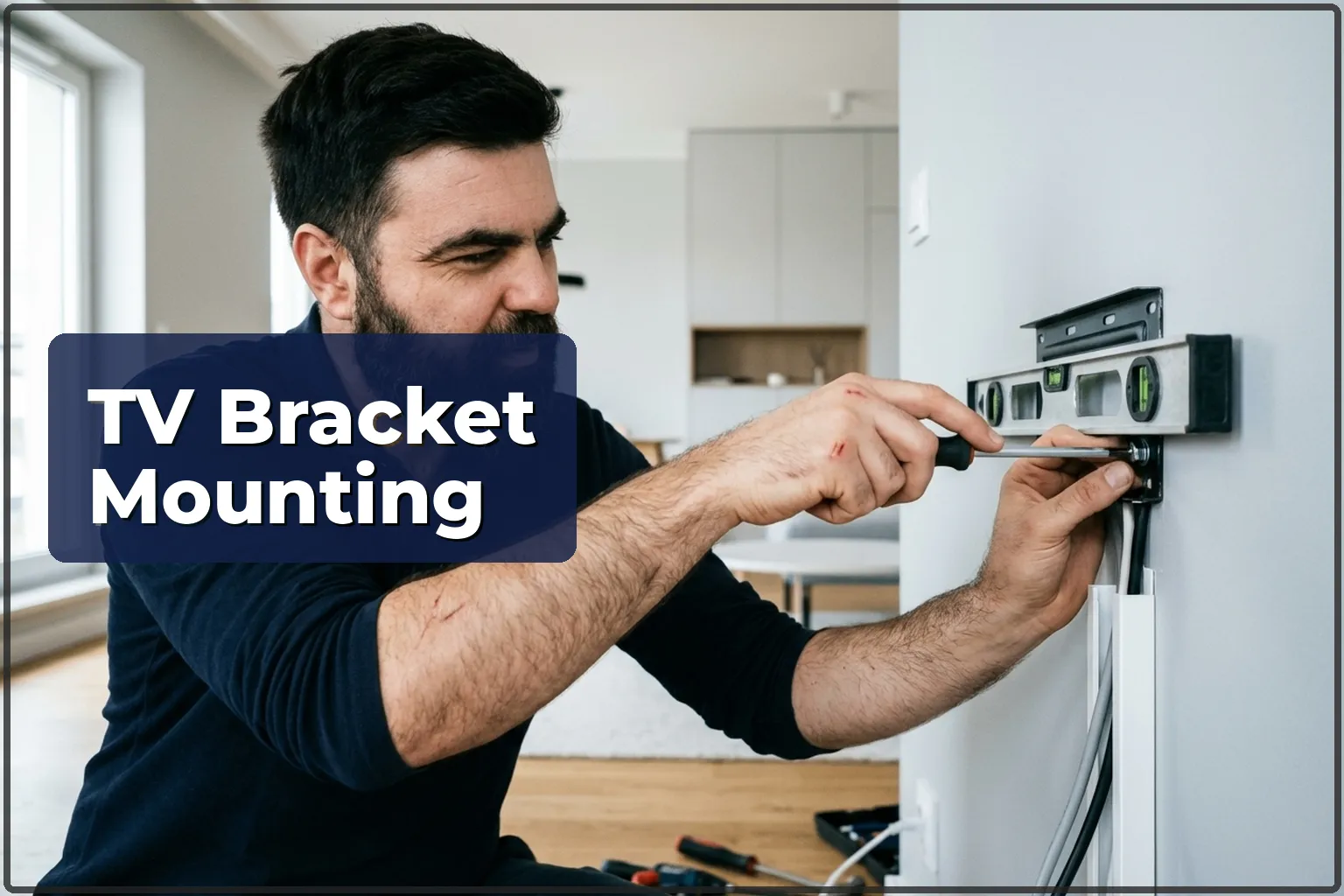
- The mounting points are marked with a laser level at the right height.
- Holes are drilled, plugs or anchors fitted, and the bracket plate secured.
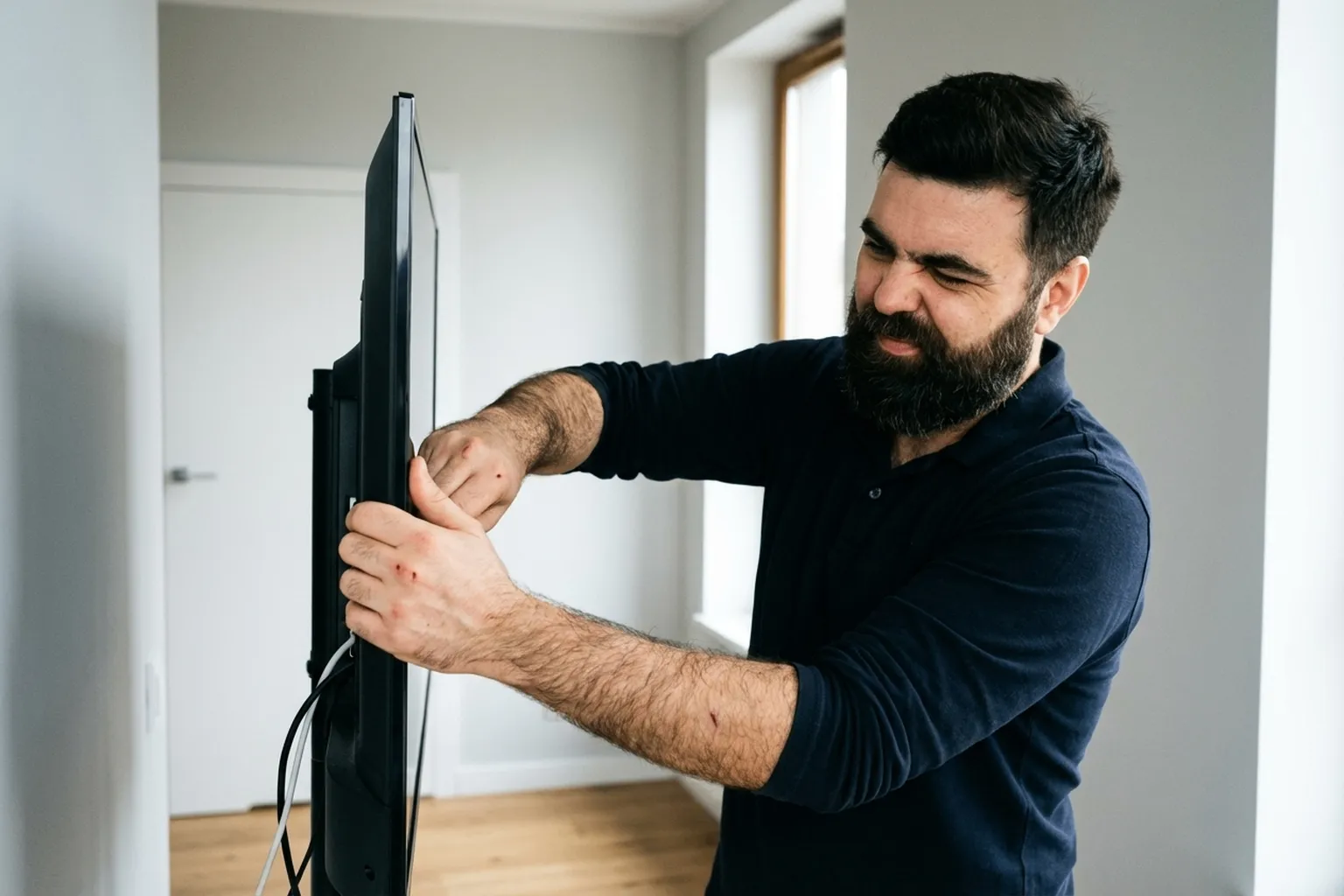
- The TV is mounted, cables connected, and tilt and swivel tested.
- Dust is cleaned up and the fixing is checked under load to confirm it is stable.
Common DIY mounting mistakes
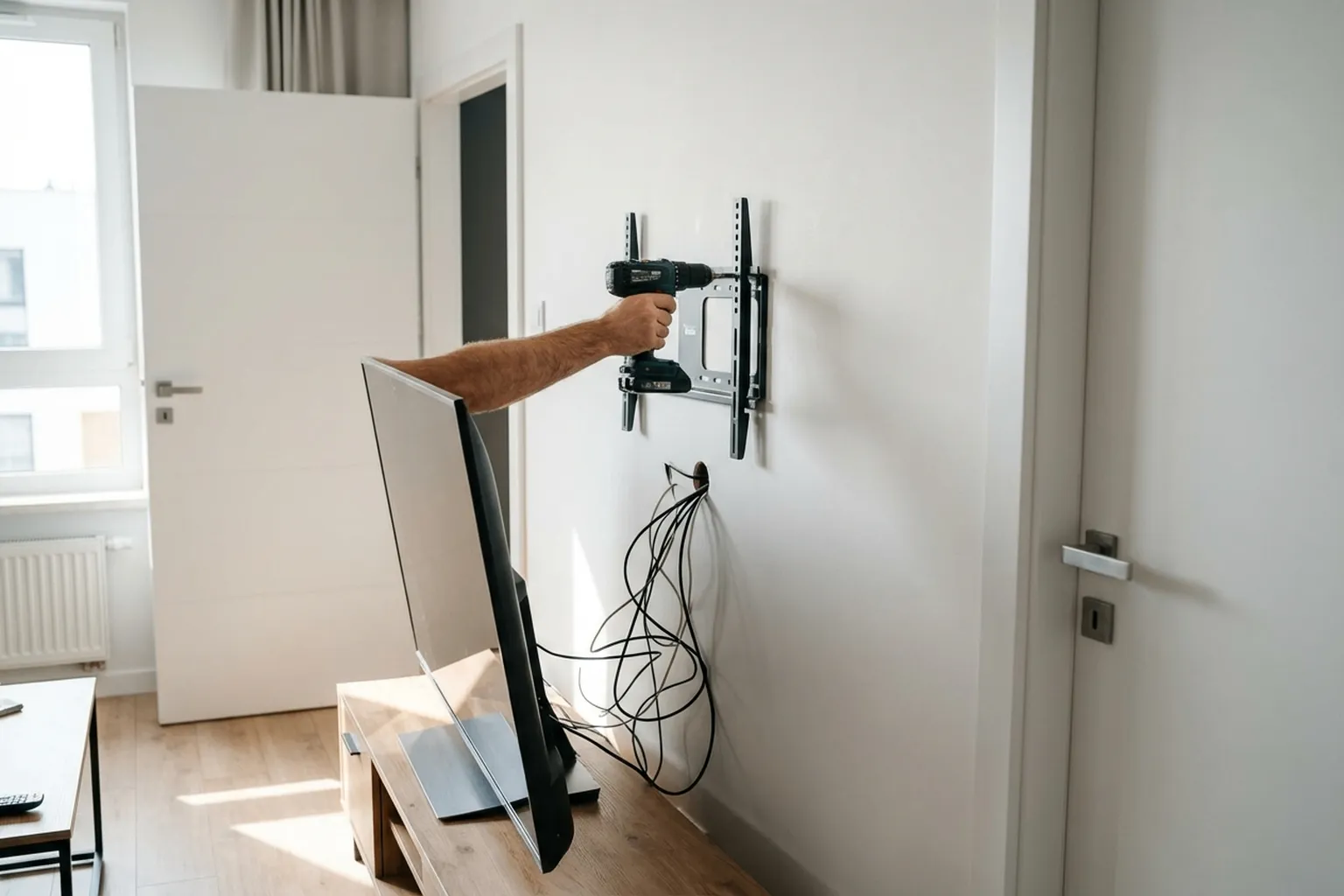
- Buying a bracket without checking the VESA standard, the mounting holes do not line up with the TV.
- Mounting on plasterboard with ordinary plugs: the wall gives way and the TV drops.
- Skipping the level — the tilt can be seen from every side.
- Fixing into aerated concrete with standard screws, they loosen and pull out after a few weeks.
- Drilling without checking for wiring first: hitting a cable.
- Picking the height by guesswork — neck pain because the viewing angle is wrong.
- Not allowing for HDMI cable length with a swivel bracket, the cable gets pulled tight and snaps.
Check the wall with a detector before you drill. How to use one is explained in our wire and moisture detector guide.
What to prepare before the technician arrives
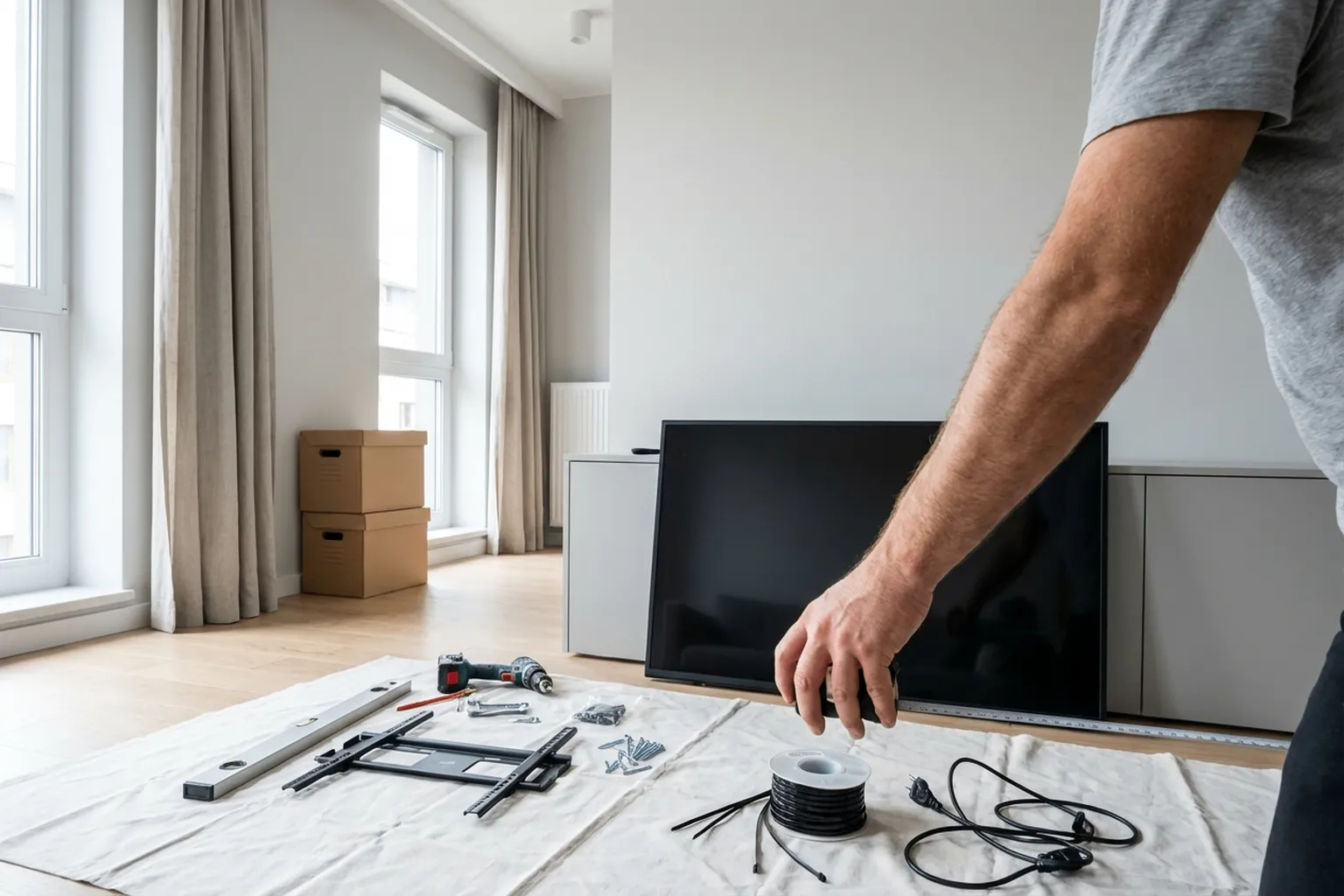
- Buy a bracket that matches your TV’s VESA standard (shown in the specifications).
- Choose the position on the wall: the height and the room.
- Check the wall type: concrete, brick, hollow brick, aerated concrete, plasterboard.
- Get HDMI cables in the right length (leave room for bracket swivel).
- Clear the space in front of the wall — move furniture and decorations away.
- If you want the cables hidden in the wall, say so in the order beforehand, the technician will bring chasing tools.
- Check that there is a power socket close to the mounting area.
- Send the intercom code and parking details.
A real case from Warsaw: TV bracket mounting
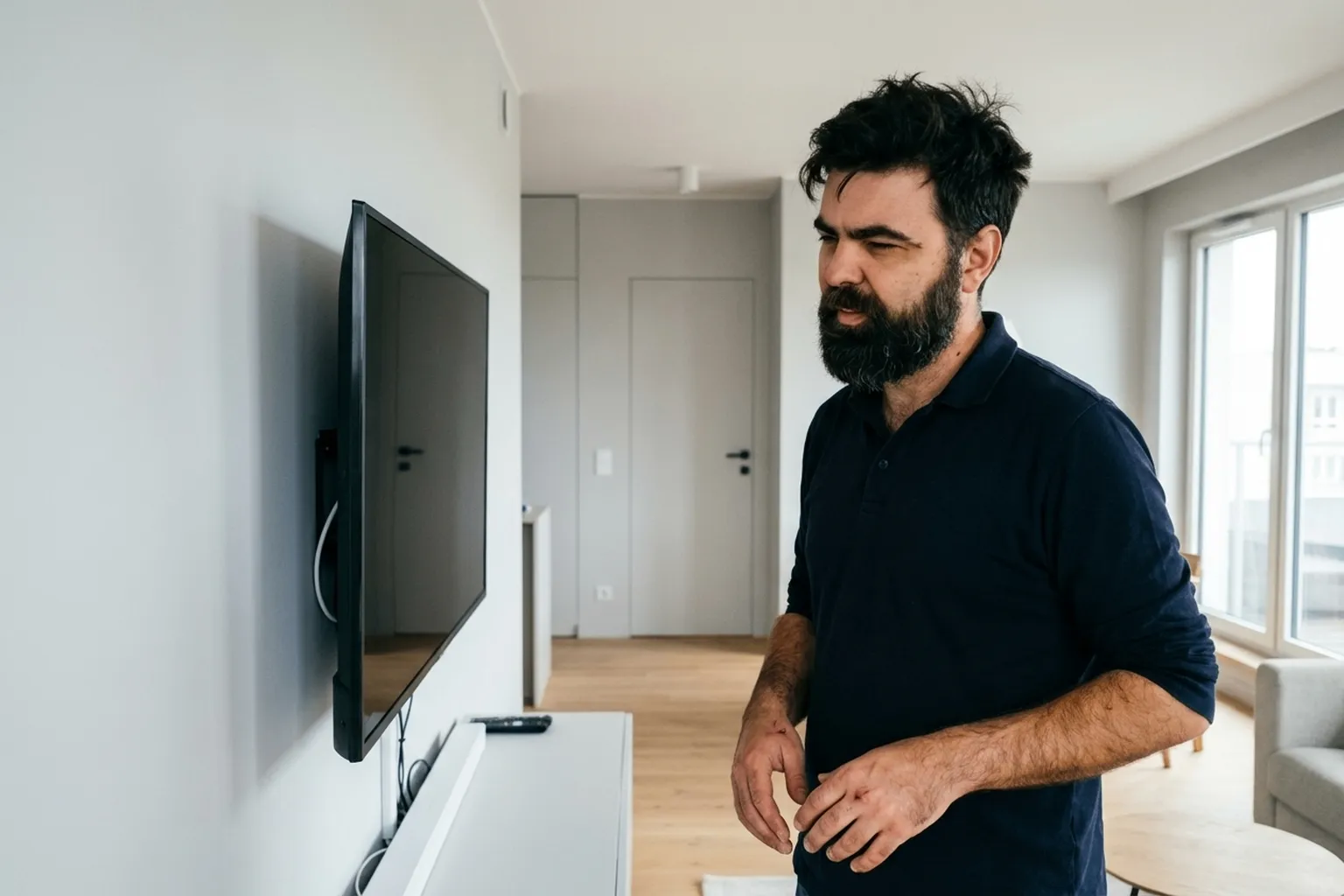
A job in Ursynow: the client had bought an LG OLED 65-inch and a Vogel’s swivel bracket. The wall was plasterboard on a steel frame with about 5 cm of empty space behind it. The TV and bracket together weighed nearly 30 kg. Regular plasterboard plugs would not carry that weight. Tradespeople found the frame studs with a magnetic detector, fixed the bracket plate straight into the studs using long screws, and strengthened the remaining points with expansion anchors. Every point was marked with a laser level, then drilled and fitted. The HDMI 2.1 cable was run through a conduit behind the wall. Tilt, swivel, and stability were all tested: all spot on. The whole job took around an hour and a half.
Frequently asked questions
Can a tradesperson mount a TV on plasterboard?
Yes, but it needs to be fixed through the metal studs or with specialist expansion anchors. Standard toggle bolts are only good for lighter models under 15 kg.
How do I find my TV’s VESA standard?
VESA is shown in the TV’s specifications — it is the spacing between the mounting holes on the back panel (e.g. 200×200, 400×400). The bracket has to support that standard.
Fixed or swivel bracket?
Choose fixed if you always watch from one spot. Go for tilt-and-swivel if you need the screen visible from different places in the room.
Can cables be hidden in the wall?
Yes, the technician can cut a channel and run the cables inside the wall. That adds extra time and is priced separately.
What height should the TV be mounted at?
The middle of the screen should sit at eye level when you are seated. Usually 100-120 cm from the floor to the centre. In a bedroom, a bit higher.
What is included in the price?
The technician’s labour, fixings from the bracket kit, and travel within Warsaw. Extra anchors and wall chasing cost more.
How long does installation take?
A basic fixed bracket on concrete: 30-40 minutes. A swivel bracket on plasterboard with cable routing: up to 2 hours.
Do tradespeople supply brackets?
No, the client buys the bracket. Tradespeople can suggest a model that suits your TV.
Do tradespeople work on weekends?
Yes, Saturday and Sunday are normal working days.
Who does the work
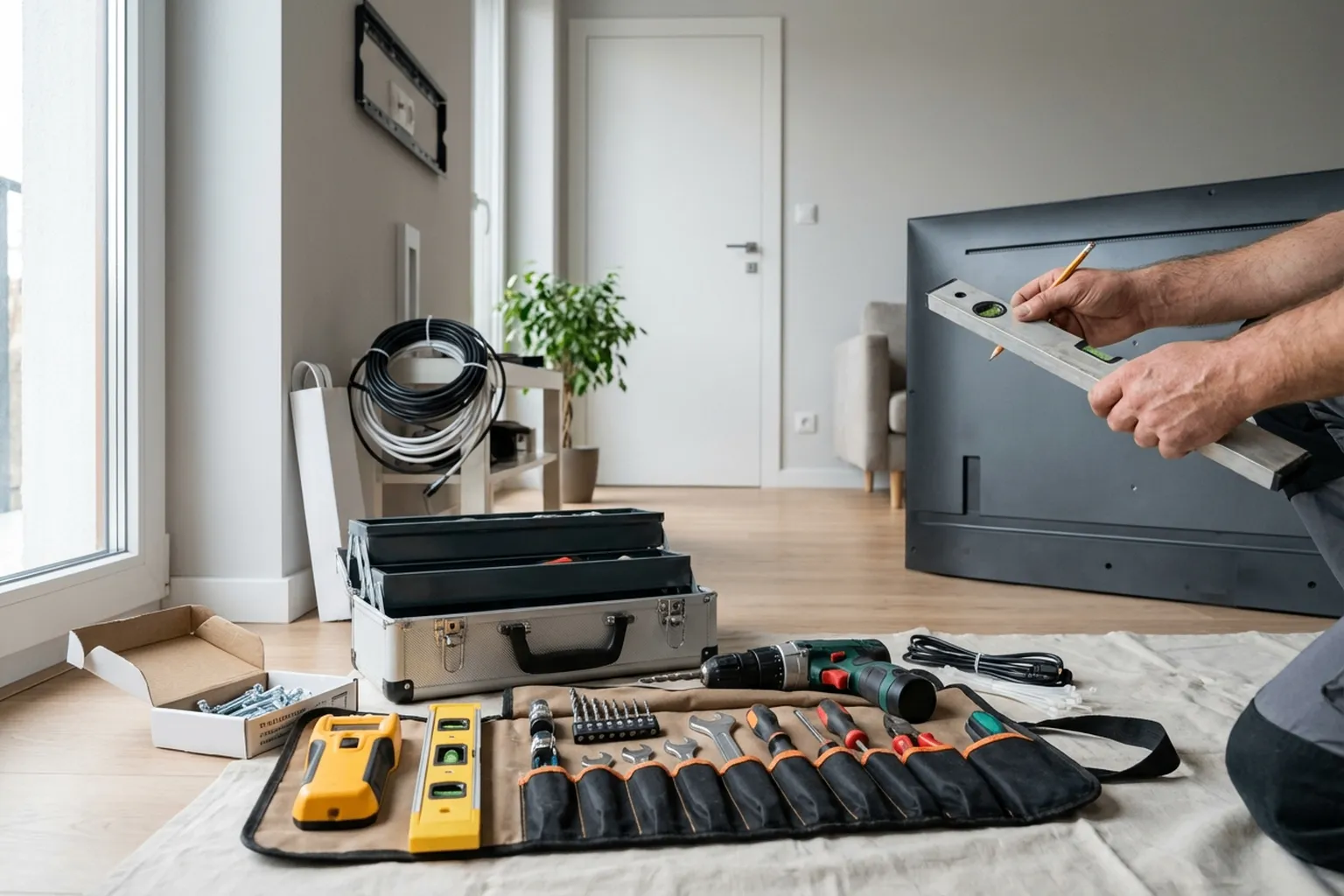
Brackets are fitted by a technician who has worked with every wall type. He knows why an LG goes up differently from a Samsung, and he knows the difference between a concrete anchor and an expansion plug for hollow brick. Post a request in the HandyMan24 app: tradespeople across Warsaw will send their offers.
Order in the app
Describe the job, add photos and the address. Tradespeople send their own prices and dates, and you pick one of the offers.
Open the app