Electrical socket replacement: cost and what affects it
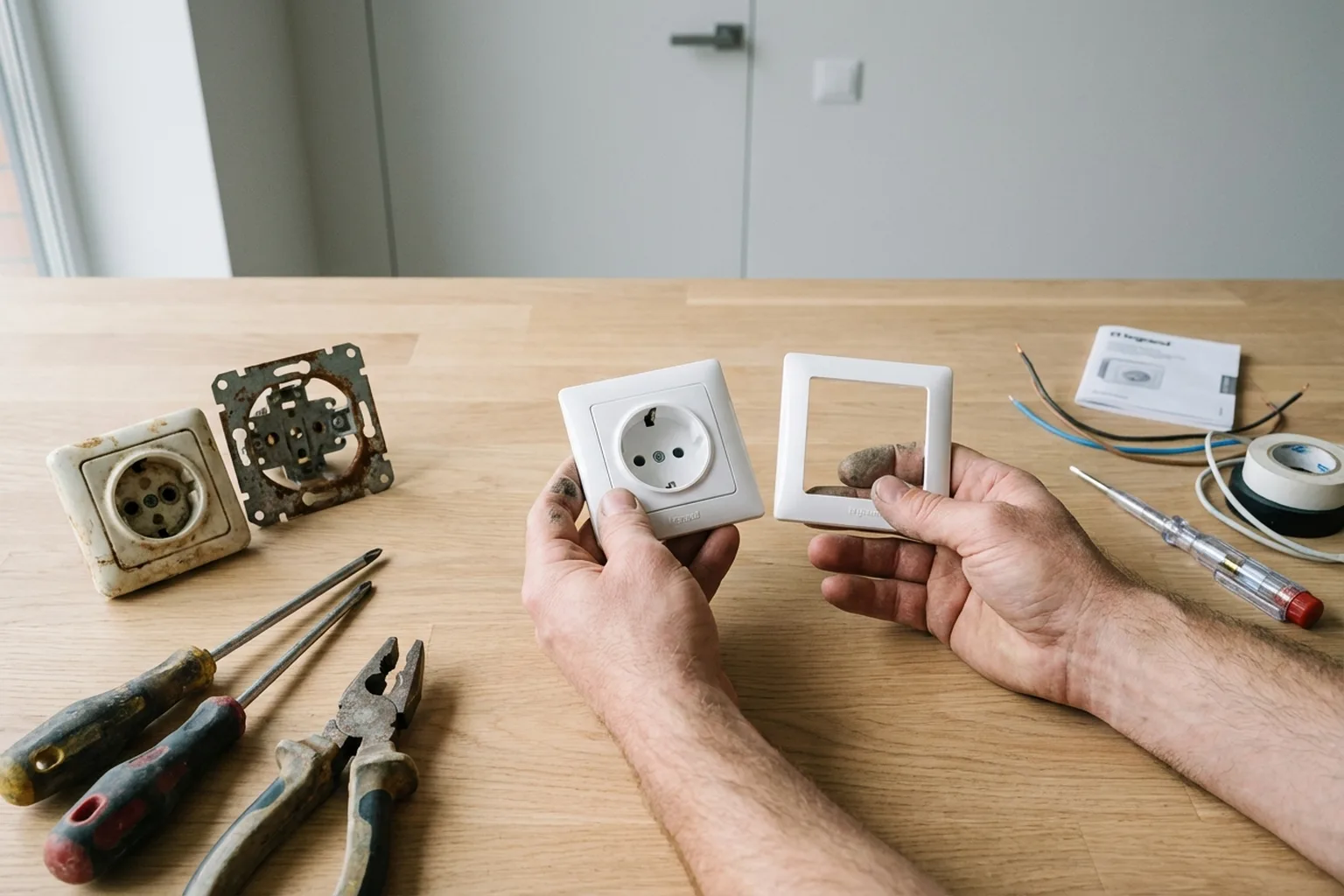
The price of replacement depends on the state of the back box and the wiring. If the box is in good shape and the cables are fine, it’s a fast swap of the mechanism. If the box is damaged, the wires are burnt or too short, there is more to do. Up-to-date prices for all electrical jobs are in the table below. The client provides the new socket; the service covers removing the old one and installing the new one.
| Service | Price |
|---|---|
| Light switch installation | 50–90 zł/pkt |
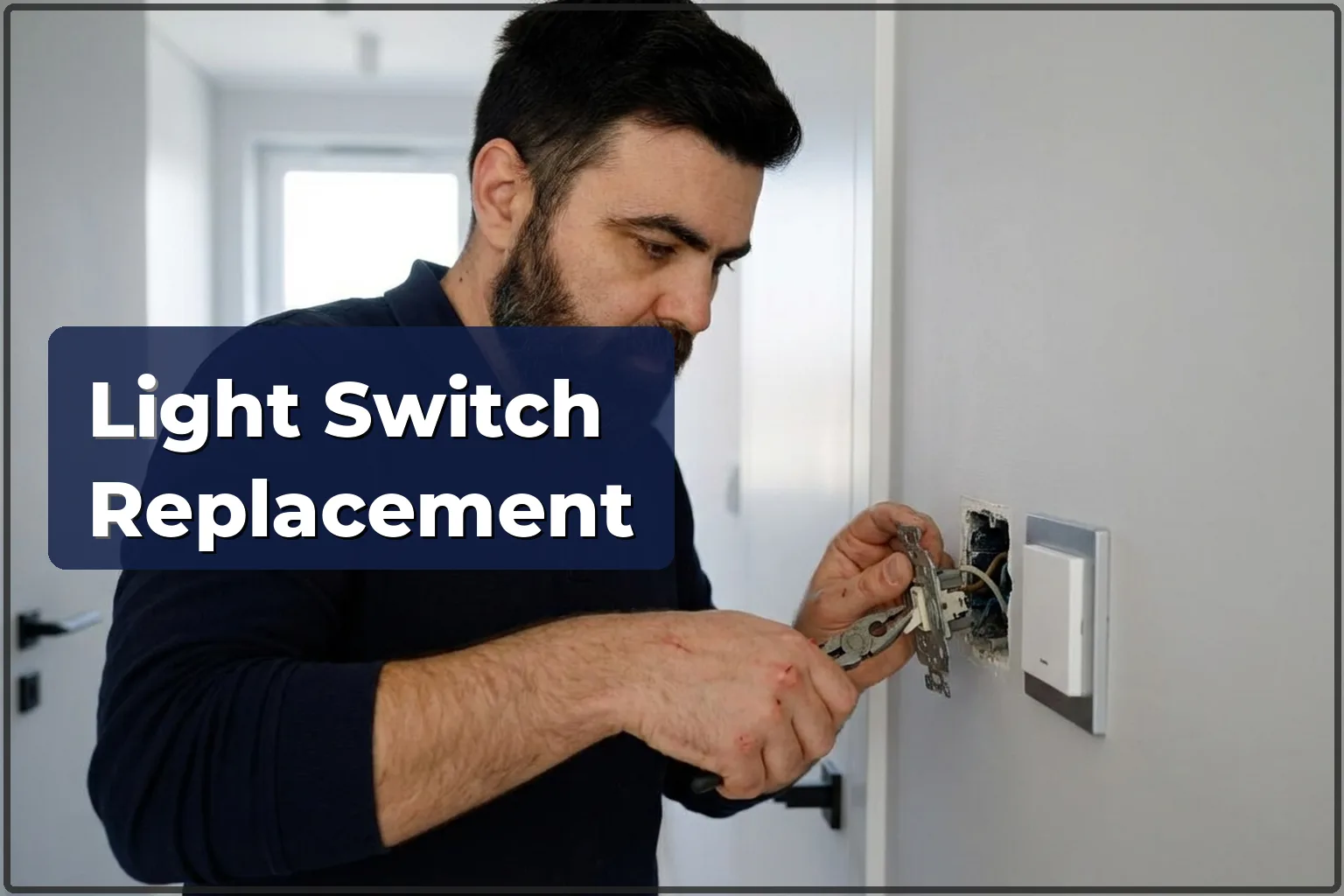
| Light switch replacement | 60–90 zł/pkt |
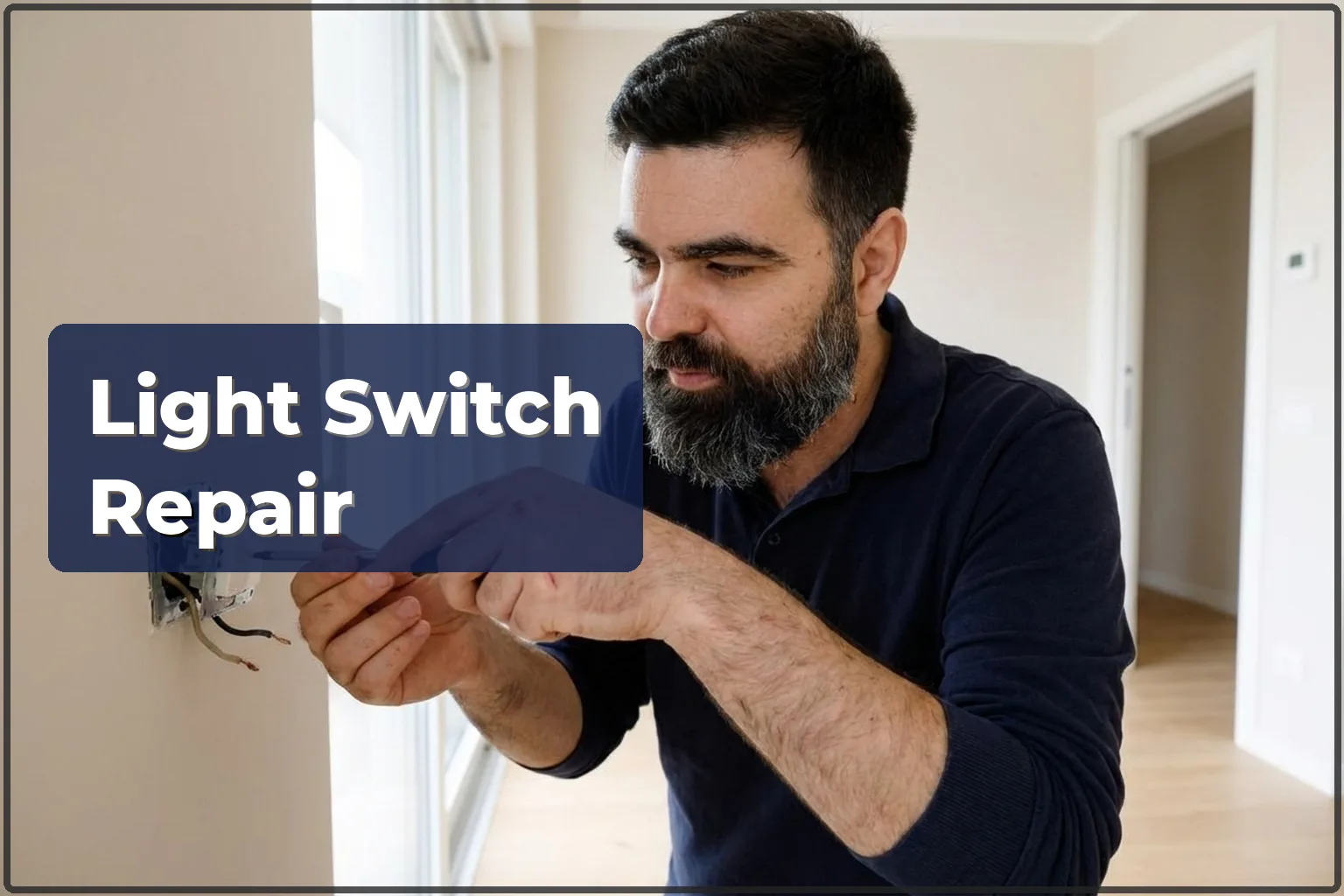
| Light switch repair | 150–350 zł/szt |
| Socket installation | 30–90 zł/pkt |
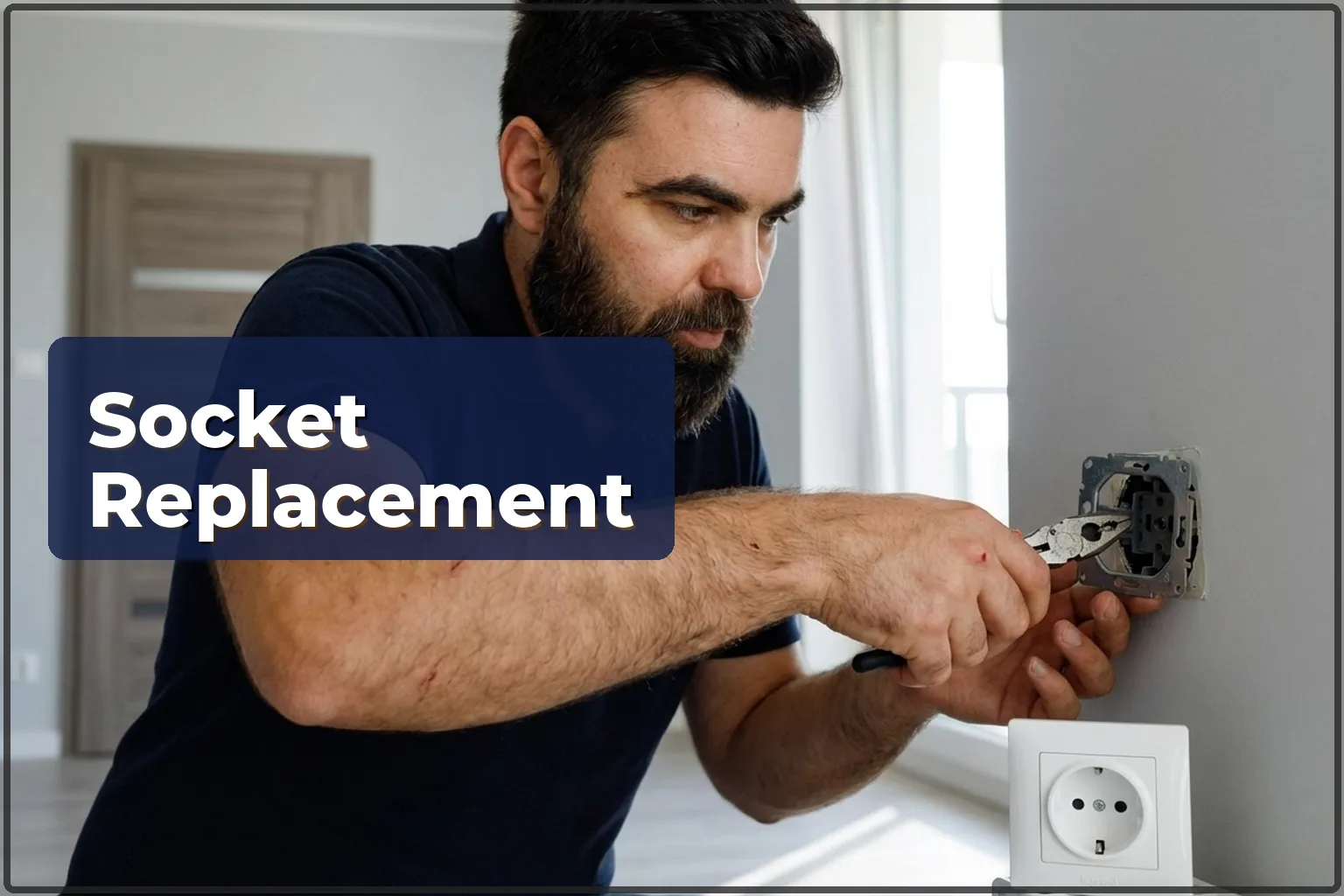
| Socket replacement | 50–90 zł/pkt |
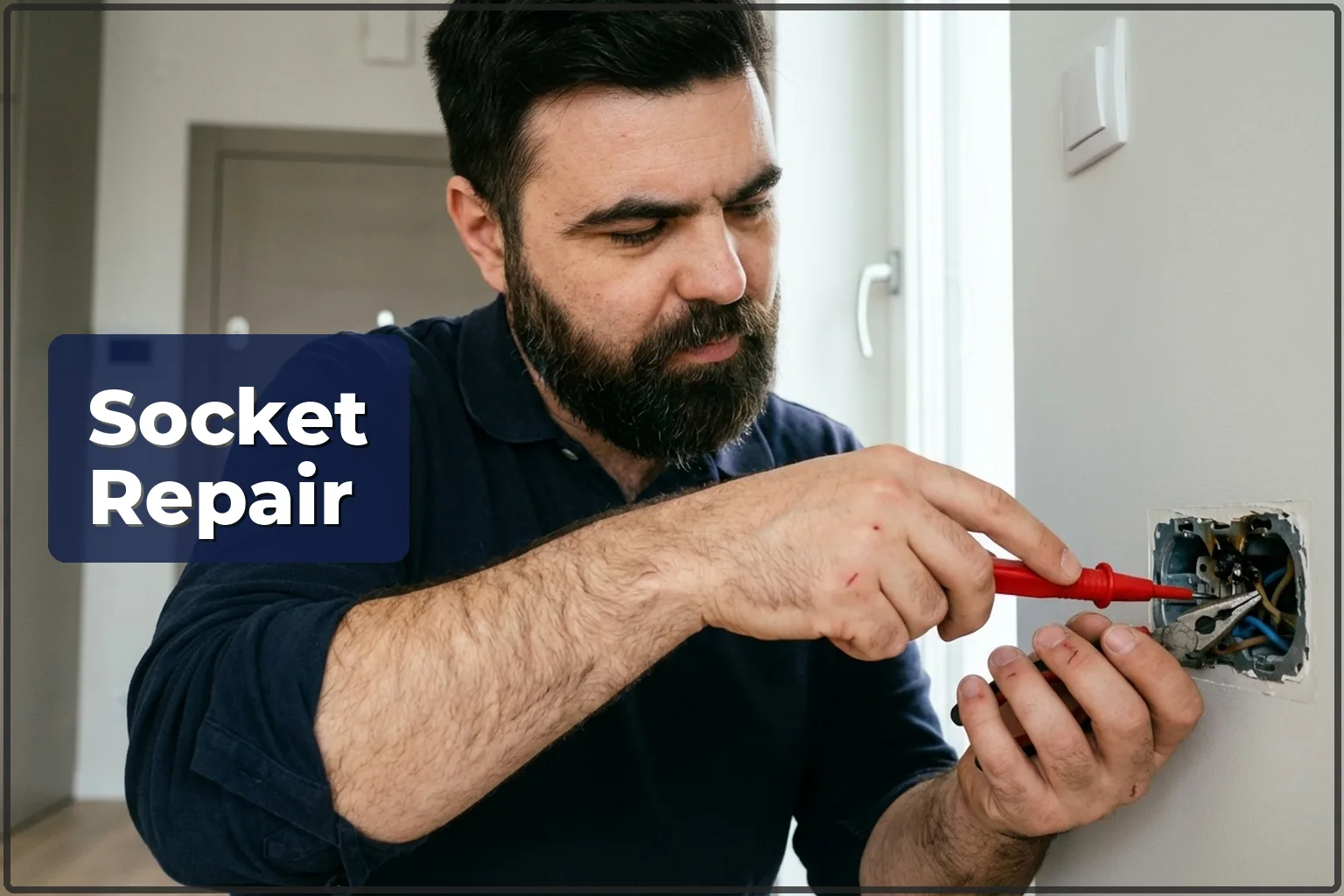
| Socket repair | 60–250 zł/szt |
| New electrical point | 150–250 zł/pkt |
| Wall chasing for cables | 40–80 zł/mb |
| Running electrical cables | 15–50 zł/mb |
| Junction box wiring | 80–400 zł/szt |
| Light installation (lamp, chandelier) | 80–550 zł/pkt |
| Light fixture replacement | 150–450 zł/szt |
| Lighting repair | 120–350 zł |
| LED strip installation | 60–90 zł/mb |
| LED transformer installation | 150–220 zł/szt |
| Bulb and halogen replacement | 30–50 zł/szt |
| Power socket installation 230/400 V | 150–350 zł/pkt |
Indicative prices. Ranges for a typical scope. Fixings included, materials separate. Minimum order 300 zł.
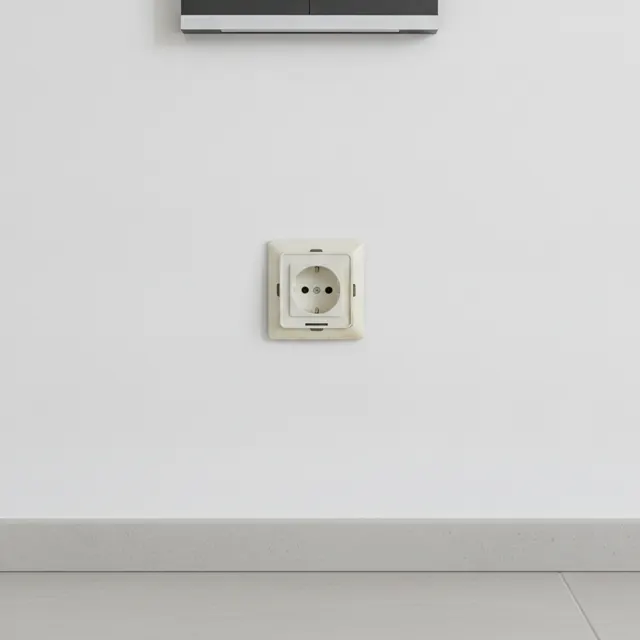
Rather hand the job over? More here: socket replacement in Warsaw.
What turns up when replacing a socket
In a new build, a replacement takes a few minutes. In an older block it can be different.
- Aluminium wiring. It snaps when bent and needs careful connecting or aluminium-rated connectors.
- No earth. Old two-core wiring has no protective conductor, and a new earthed socket won’t fix that.
- Broken back box. The old one is held in by plaster and has to be replaced and the wall made good.
- Burnt ends. After an overheated socket the wires can be charred and need shortening.
If there is no socket in that spot and a cable has to be run, book new socket installation.
How the replacement works
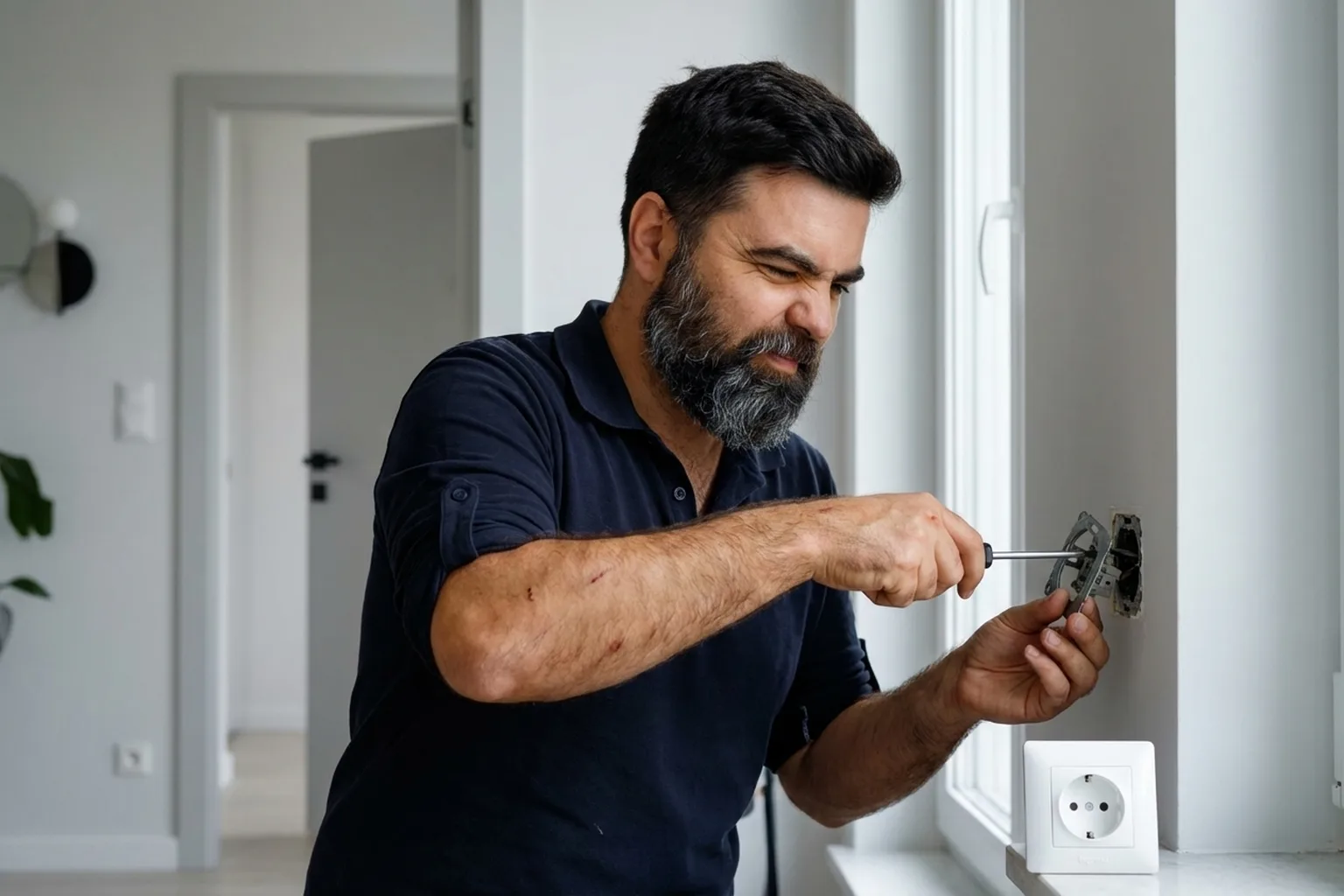
- Isolating the supply: they turn off the circuit at the board and check with a voltage tester that the socket is no longer live.
- Removing the old socket: they remove the cover and frame, unscrew the mechanism from the back box, and disconnect the wires.
- Cable check: they look for melting, breaks, or oxidised contacts. If the wires are damaged, they cut back to a clean section.
- Back-box check: if the existing box is cracked or unsuitable for the new mechanism, they replace it.
- Wiring the new socket: they strip the wires to the right length, connect live, neutral, and earth to the terminals, and tighten every contact properly.
- Fitting into the back box: they fix the mechanism in place, then fit the frame and cover.
- Testing: they turn the circuit back on, check voltage with a multimeter, and test it under load.
Common mistakes
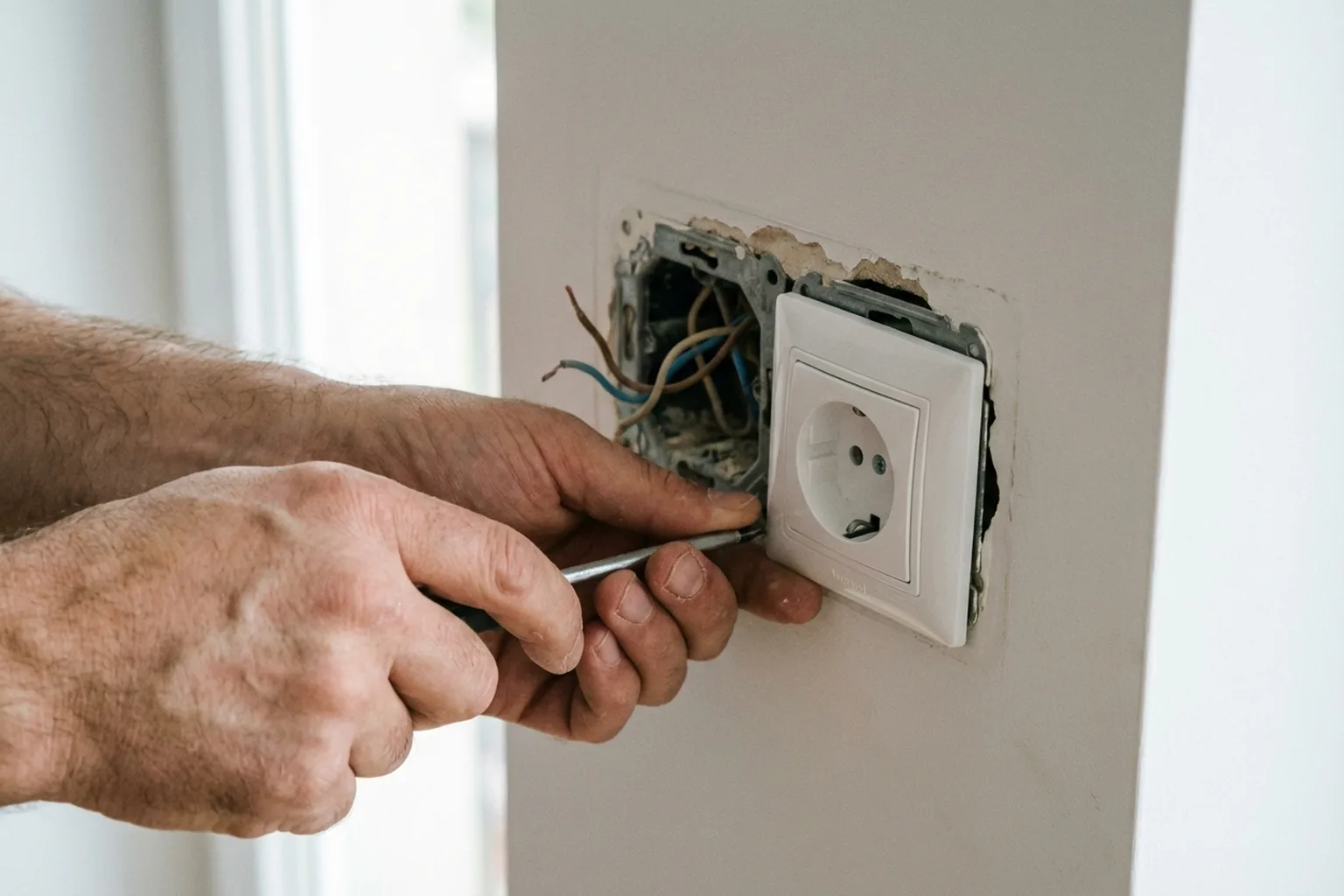
- Changing a socket without switching off the power: risk of electric shock.
- Skipping the cable check: installing a new socket onto burnt contacts, so the fault comes back.
- Leaving terminal screws untightened — the connection heats up and starts arcing after some time.
- Installing a socket without earth where earth is required (bathroom, kitchen).
- Using low-cost sockets with thin plastic: the body deforms quickly from heat.
- Connecting aluminium wire straight into a copper terminal, oxidation at the joint raises resistance and leads to overheating.
Warning: even replacing a socket is electrical work. Wrong connections can lead to a short circuit or fire. If you are not sure, call a professional.
Home fixes don’t belong anywhere near electricity or gas. See the jobs you should never DIY.
What to prepare before the visit
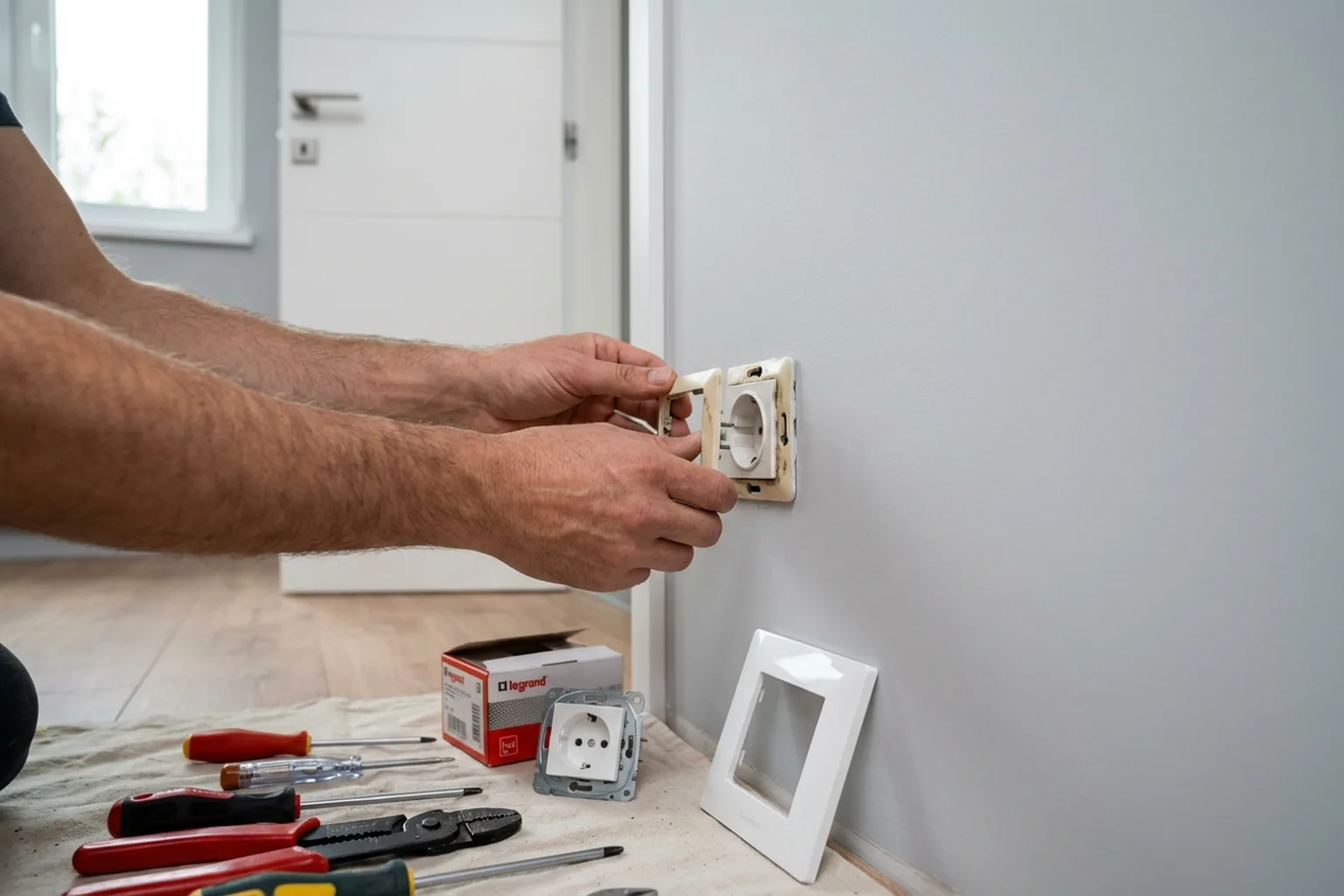
- Buy the new socket: check whether you need an earthed one (for kitchens and bathrooms — mandatory).
- Make sure you know where the consumer unit is: the technician will need to isolate the circuit.
- Clear the area around the socket — move furniture out of the way.
- If the socket is sparking or giving off smoke, isolate the circuit before their visit and stop using it.
- If you want several sockets changed, say so in the order in advance, they can handle them all in one visit.
- If the building has aluminium wiring, mention it, special connectors will be needed.
Electrical socket replacement in practice: a Warsaw case

Tradespeople got a call to a flat on Praga Poludnie. A kitchen socket had begun smoking when the kettle was turned on. Tradespeople isolated the circuit and took the socket out — the wires had melted and the back box was cracked from heat. The cause was a loose live terminal that had been heating up for years. Tradespeople trimmed the wires back to sound sections, replaced the back box, and installed a new earthed socket with quality spring-cage terminals. Tradespeople tested it under a 2 kW load: everything worked properly, with no overheating. While on site, they checked the nearby sockets, two of them also had loose contacts, and they tightened them. The whole job took around an hour.
Frequently asked questions
How can I tell a socket needs replacing?
It sparks when a plug is pushed in or pulled out, the casing is melted or stained, the mechanism feels loose, the plug slips out, or you can smell burning plastic when it is under load.
Can I change an unearthed socket to an earthed one?
Physically yes. But if there is no earth wire in the installation, the earth pin will do nothing. A proper earth needs an extra cable to be installed.
Do new sockets fit old back boxes?
That depends on the standard. Modern sockets are made for 68 mm round boxes. If the old box is square or non-standard, it has to be replaced.
How long does replacement take?
One socket — 20–40 minutes. If the back box or wire ends need replacement, up to an hour.
Can one single socket be changed to a double?
Yes, if the back box allows for it (or is changed to a double). But the total load on the circuit must remain within limits.
Is it dangerous to keep using a socket that sparks a little?
Yes. Sparking means there is a bad connection, which causes overheating and can start a fire. Replace it as soon as you can.
Book the replacement
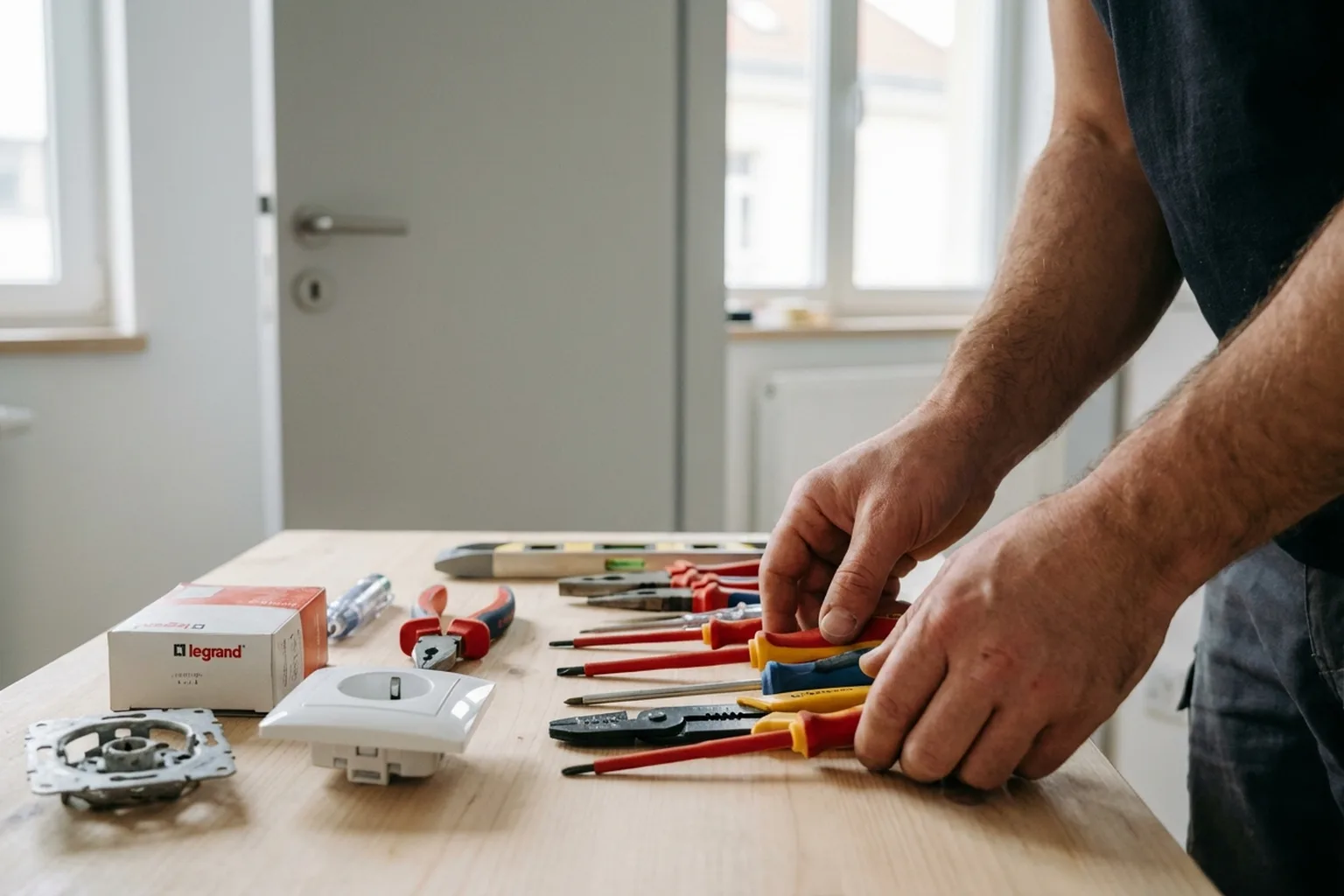
Tradespeople replace sockets all over Warsaw: single, double, earthed, and unearthed. Tradespeople inspect the wiring, tighten connections, and change back boxes where needed.
Order in the app
Describe the job, add photos and the address. Tradespeople send their own prices and dates, and you pick one of the offers.
Open the app