Bought an induction hob and found only a standard 16 A socket on the wall? Or do you need to hook up an electric oven, air conditioner, or workshop equipment — but there’s no separate line for it? A 230 or 400 V power socket fixes that. But fitting one on your own without knowing the consumer unit setup and proper cable size is a bad idea. We work all over Warsaw: from Ursynow to Zoliborz, arriving with a tester, tools, and the correct cable.
Important: work on 230/400 V lines carries a real risk of electric shock and fire. If you’re not sure what state the wiring or consumer unit is in — don’t try to connect anything yourself. Call a professional.
How much does it cost and what affects the price
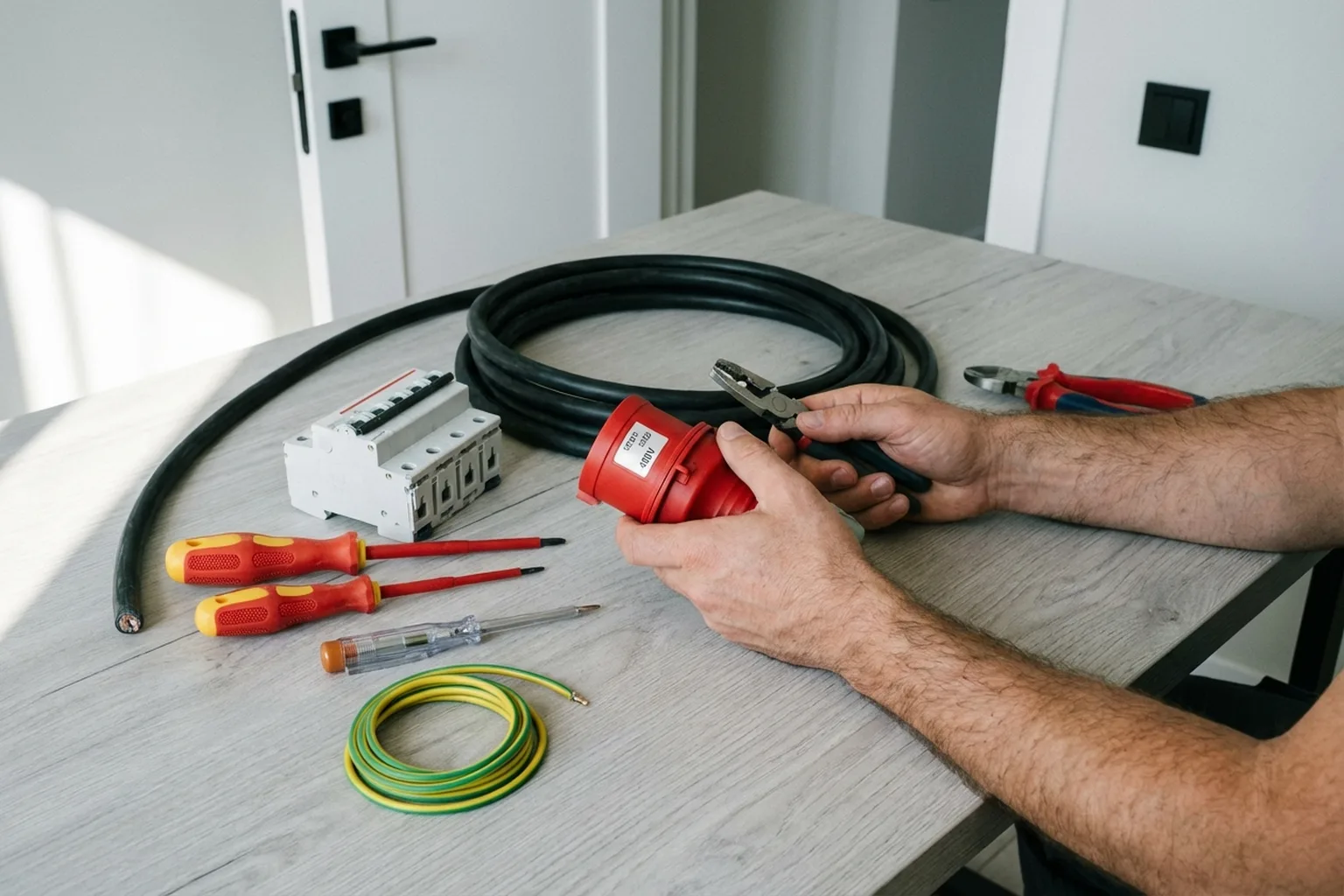
Up-to-date prices for all electrical installation services are listed in the table below. The price of fitting a power socket depends on a few things: whether a new cable has to be pulled from the consumer unit or the point is already ready, the type of socket needed (single-phase 230 V or three-phase 400 V), and whether there’s a free breaker slot in the consumer unit. Fixings are included in the labour price. Cable, socket, and breaker are billed separately if the client hasn’t bought them beforehand.
Types of power sockets and when each is needed
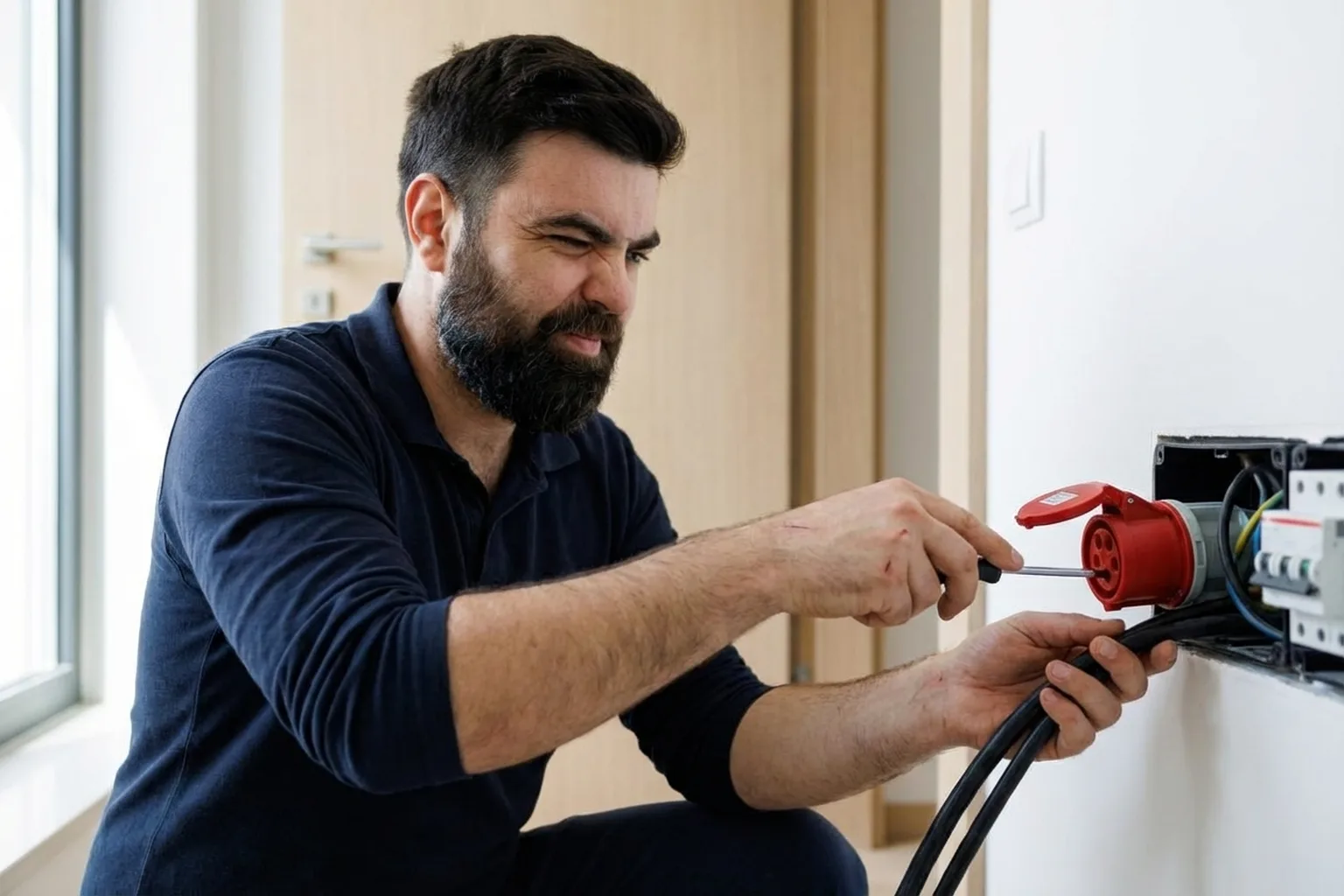
Single-phase 230 V (16 A or 20 A) — good for most home appliances: an oven up to 3.5 kW, an induction hob up to 3.7 kW, a high-power kettle, or a heater. It looks like a normal socket but with earthing, and it is wired to a dedicated breaker using a 2.5 or 4 mm2 cable.
Single-phase 230 V (32 A) — for heavy single-phase loads: an induction hob up to 7 kW, an electric cooktop, or an industrial heater. It needs a 6 mm2 cable and its own 32 A breaker.
Three-phase 400 V (16 A or 32 A) — required for equipment rated from 5 to 22 kW: a three-phase induction hob, workshop machines, a compressor, or a powerful air conditioning unit. It is connected with a five-core cable (3 phases + neutral + earth). Three-phase supply is not available in every Warsaw flat — this has to be checked first.
If you’re not sure which type you need — send a photo of the appliance rating plate (the label with the wattage on the back). Our technician will check whether a single-phase line will do or if three-phase is needed (compatible with Legrand, Schneider Electric, ABB and similar).
How the on-site work goes
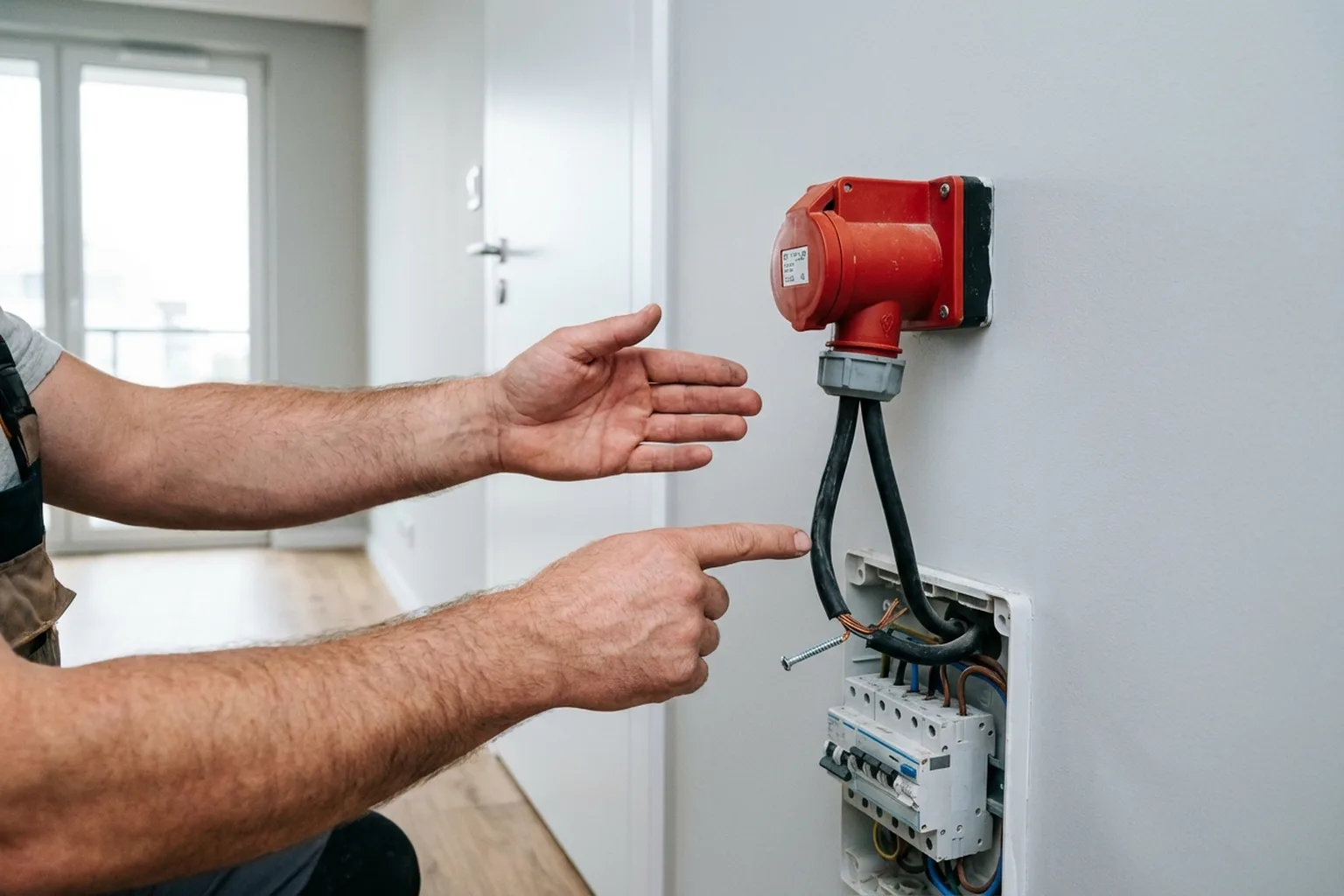
- You explain the job: which appliance needs to be connected, and send photos of the consumer unit and the installation spot.
- The technician works out the socket and cable type and gives an estimated price.
- On site — the consumer unit is checked: is there a spare breaker, what size is the supply cable, is there enough capacity.
- The cable is run from the consumer unit to the point: in trunking, chased into the wall, or behind skirting — depending on the conditions.
- A breaker (or RCBO) is fitted in the consumer unit and the cable is connected.
- The power socket is mounted and tested with a multimeter: voltage, earthing, correct phase rotation.
- The appliance is started for a test, and cable and connection temperatures are checked for 10–15 minutes.
Safety requirements
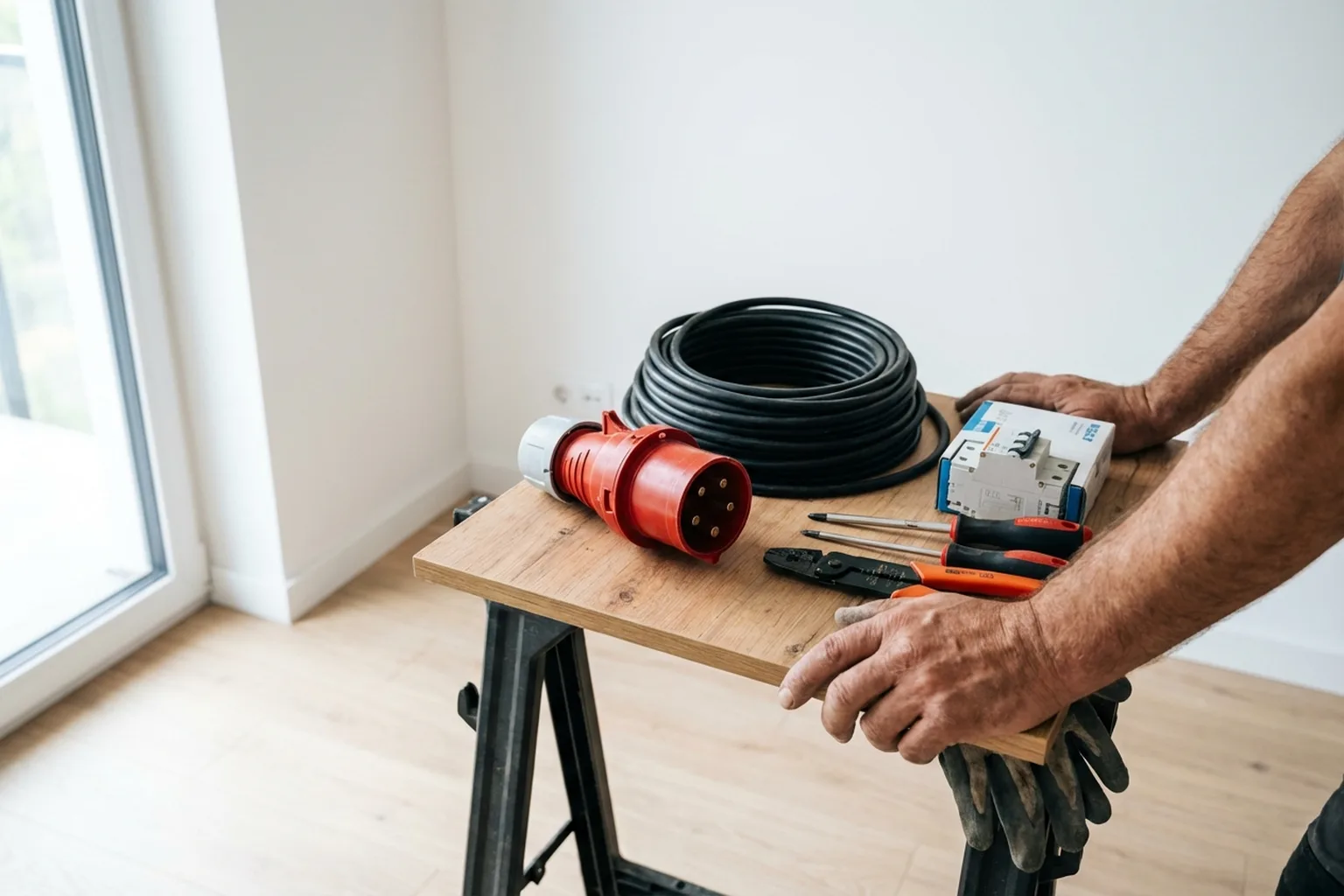
This is not a regular socket. A power line carries several times the load of a standard circuit. Mistakes in the wiring lead to melted contacts, short circuits, appliance damage, and fire. Minimum requirements:
- A dedicated circuit breaker (or RCBO) in the consumer unit — the line must not be combined with lighting or other sockets.
- Cable matched exactly to the rating: 2.5 mm2 for 16 A, 4 mm2 for 20 A, 6 mm2 for 32 A. Undersized cable = overheating.
- Earthing is compulsory — we do not connect without it. If there is no PE conductor in the property, that is a separate job.
- For three-phase lines — correct phase sequence. Wrong wiring can damage motors (compressors, fans).
- All connections through terminals (WAGO, screw-type). Twisted joints on power lines are not acceptable.
- After installation, multimeter checks and a load test run are mandatory.
Common customer mistakes (and how to avoid them)
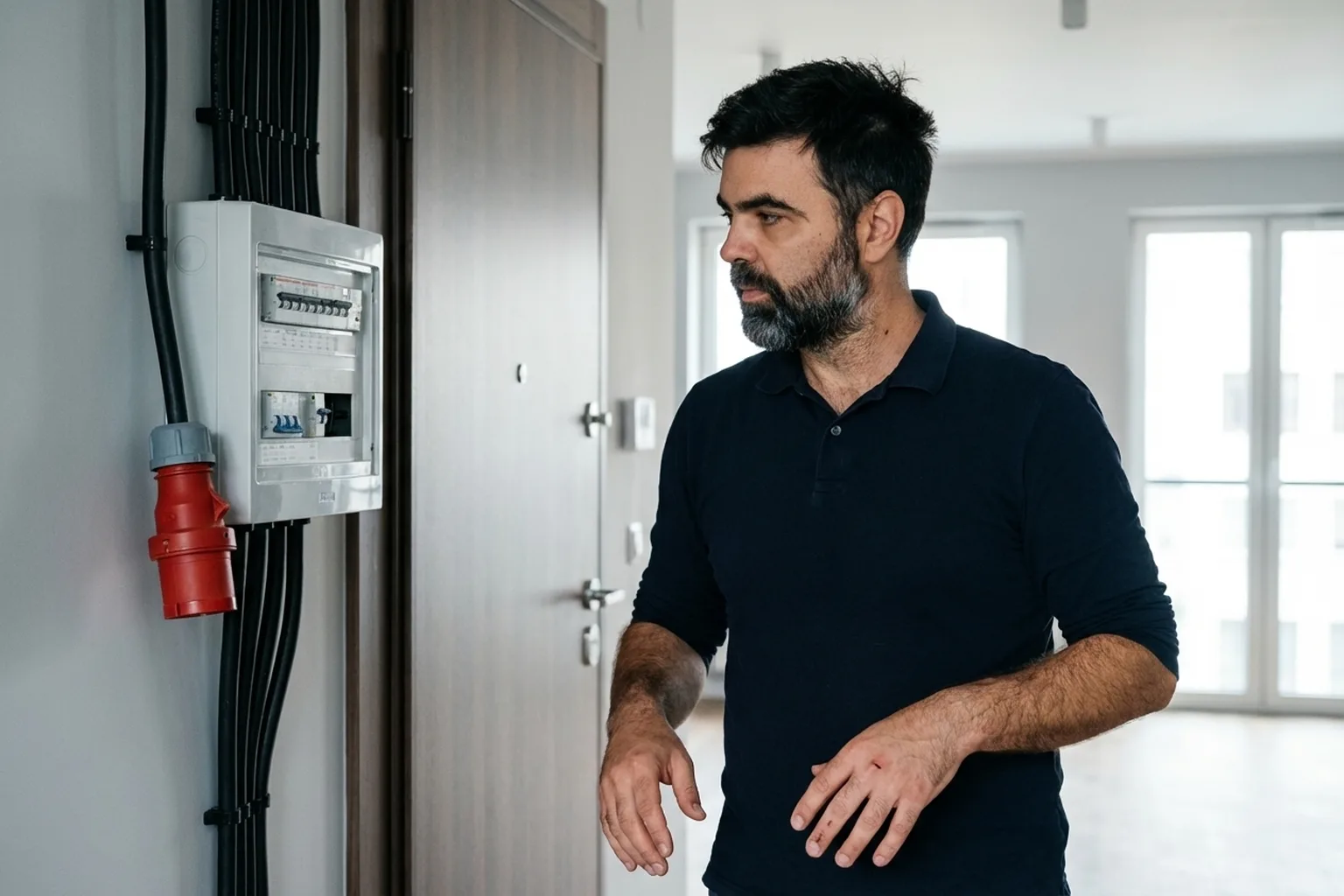
- Plugging an induction hob into a standard 16 A socket — the breaker trips as soon as two burners are turned on.
- Buying the wrong socket type: picking a domestic CEE 7/5 when a power-rated CEE 7/4 with earth or an industrial IEC 60309 is required.
- Running 2.5 mm2 cable on a 32 A circuit — the cable gets too hot, insulation melts.
- Connecting a power socket to the same breaker as other loads — the circuit gets overloaded.
- Forgetting earthing — the appliance gives electric shocks, and there is no protection during a fault.
- Trying to connect a three-phase hob to single-phase supply without changing the terminal links — the hob runs at one-third power or does not start at all.
- Not checking the flat’s supply capacity — fitting a 32 A breaker when the incoming supply is rated for 25 A. The main breaker trips.
What to prepare before the technician arrives
- Take a photo of the inside of the consumer unit and send it to the technician — we need to see the breakers and any free ways.
- Find the appliance manual or rating plate — we need the power (kW) and connection type (1-phase / 3-phase).
- Choose the socket location — most often behind the hob or under the worktop.
- Check that the consumer unit is accessible — sometimes it is in the stairwell or in a locked recess.
- Check whether you have three-phase supply (if 400 V is needed) — look at the main switch: if it has three levers, it is most likely three-phase.
- Clear the route from the consumer unit to the socket point — the technician will need space to run the cable.
- If wall chasing is needed — tell us in advance. It’s dusty work; cover furniture and appliances.
- Provide access details: intercom code, key, parking info.
- If there are small children in the flat — tell the technician; they will take extra care around the consumer unit.
A real case from Warsaw
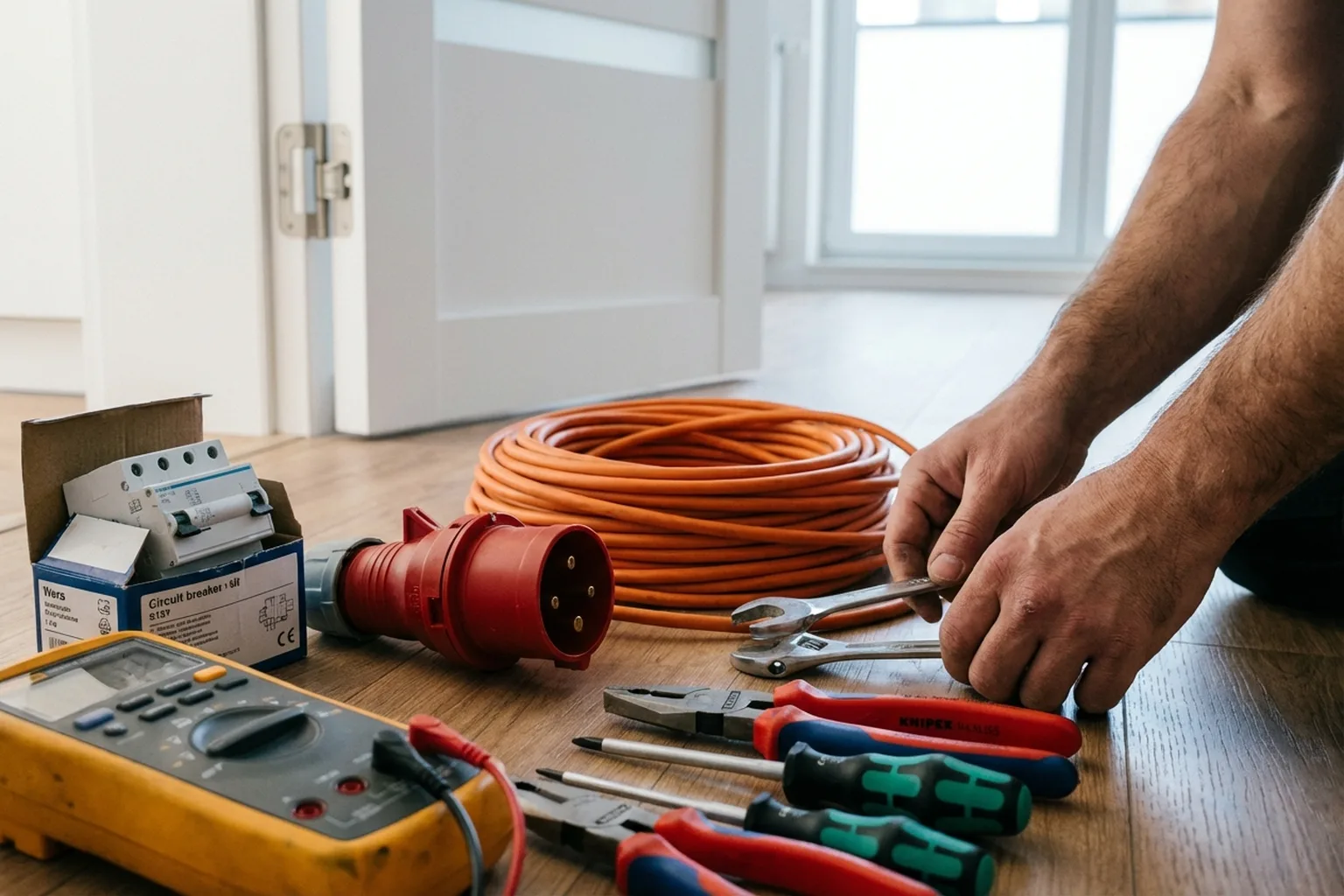
A client in Mokotow bought a 7.4 kW Bosch induction hob. The flat had only a standard 16 A socket on a 2.5 mm2 cable. The breaker tripped whenever three burners were running. Our technician checked the consumer unit — there was space, and the supply was three-phase. We pulled a dedicated 5×2.5 mm2 cable from the consumer unit for a three-phase connection and installed a 16 A RCBO across three phases. The socket was fitted behind the hob in a back box. We changed the terminal links on the hob’s connection block to three-phase mode. After connection, all phases were tested, and the hob was run at full power — everything stayed stable, with no cable heating. The job took about 3 hours. The lesson: before buying high-power appliances, check what supply your flat has and whether the capacity is enough.
Frequently asked questions
What makes a power socket different from a regular one?
It is designed for a higher load — 20 to 32 A — and connected by a dedicated cable to its own breaker in the consumer unit. A regular socket is 16 A on a shared circuit.
Does an induction hob need a three-phase socket?
That depends on the model. Hobs up to 3.7 kW run on single-phase. Hobs from 5 kW are better connected to three phases — the load is spread more evenly and the cable can be thinner.
Can a power socket be installed without chasing?
Yes, if the cable is run in surface trunking or behind the kitchen units. That is quicker and cheaper.
What’s included in the price?
Socket fitting, connection at the consumer unit, and testing of the line. Fixings are included. Cable, socket, and breaker are charged separately.
How quickly can you come?
Often the same day or the next one. Urgent call-outs have a surcharge. We cover all of Warsaw.
Can I buy the cable and socket myself?
Yes, but confirm the type and size with the technician before buying. The wrong cable means the job has to be redone.
Can an oven and hob share one socket?
No. Each high-power appliance needs its own separate line and breaker. This is a safety requirement.
Who does the work
Electrical installation is done by technicians with real hands-on experience in power connections. We work across all of Warsaw and nearby suburbs. Minimum order — from 200 zl. To book, call or message us — we’ll get back to you within an hour and explain what to prepare before the visit.