
How much does kitchen wall panel installation cost in Warsaw?
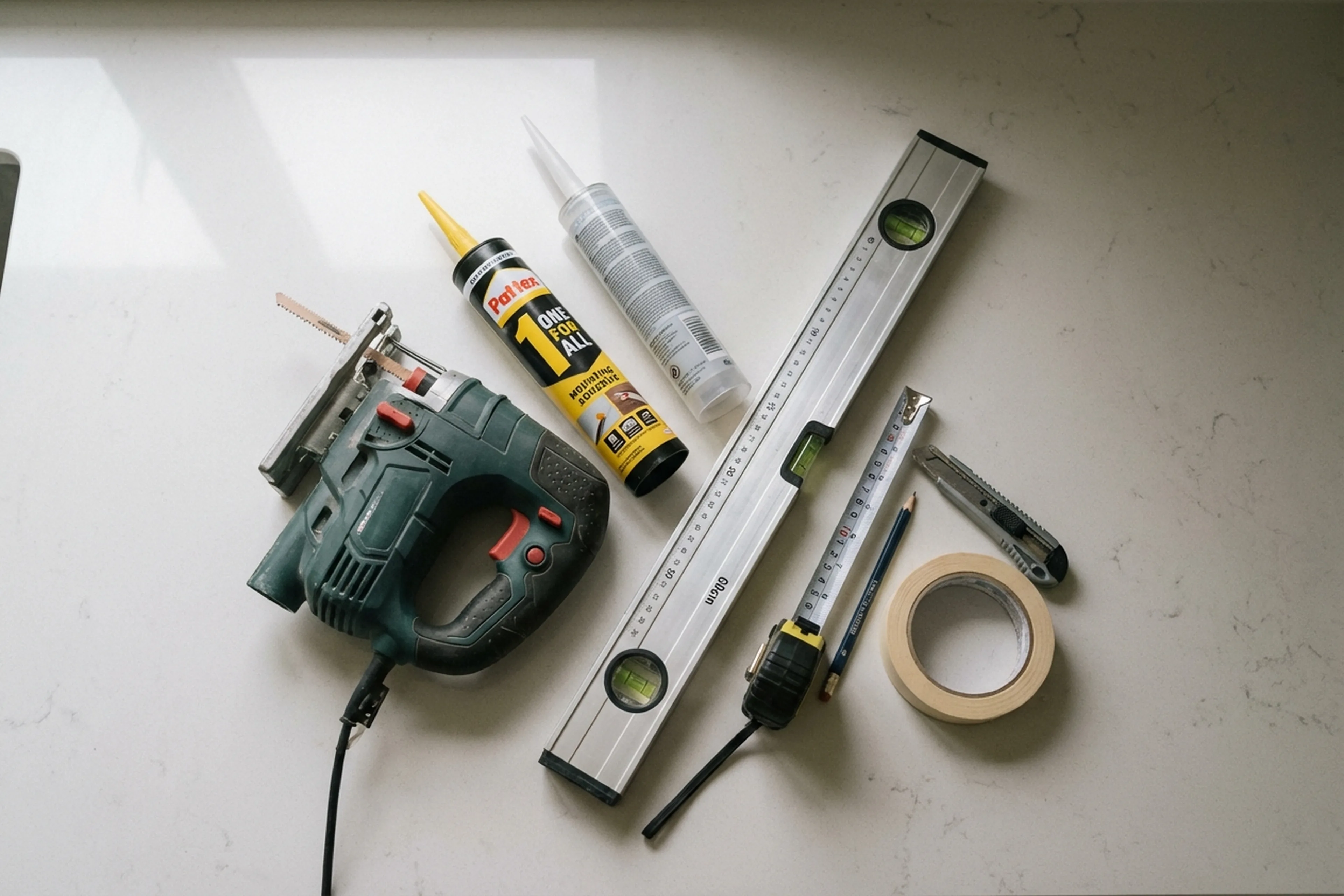
The price of wall panel fitting depends on the kitchen length, the panel material, and how many cutouts are needed. Laminate and MDF panels go in faster; glass panels need a more careful approach. Cutouts for sockets and switches are charged separately — each one increases the final amount. Fixings (adhesive, screws, decorative caps) are part of the labour cost. The panel itself is bought by the client. Up-to-date rates for all kitchen services are in the table below.
| Service | Price |
|---|---|
| Assemble kitchen units (base and wall cabinets) | 400–1000 zł/mb |
| Base kitchen cabinet installation | 120–270 zł |
| Wall kitchen cabinet installation | 120–270 zł |
| Kitchen front adjustment | 80–250 zł |
| Kitchen worktop installation | 70–200 zł/mb |
| Laminate worktop installation | 70–135 zł/mb |
| Composite worktop installation | 250–400 zł/mb |
| Worktop joining | 190–300 zł/szt |
| Worktop cut-out (sink, hob) | 150–300 zł/szt |
Indicative prices. Ranges for a typical scope. Fixings included, materials separate. Minimum order 300 zł.
What it costs and how to book: worktop fitting in Warsaw.
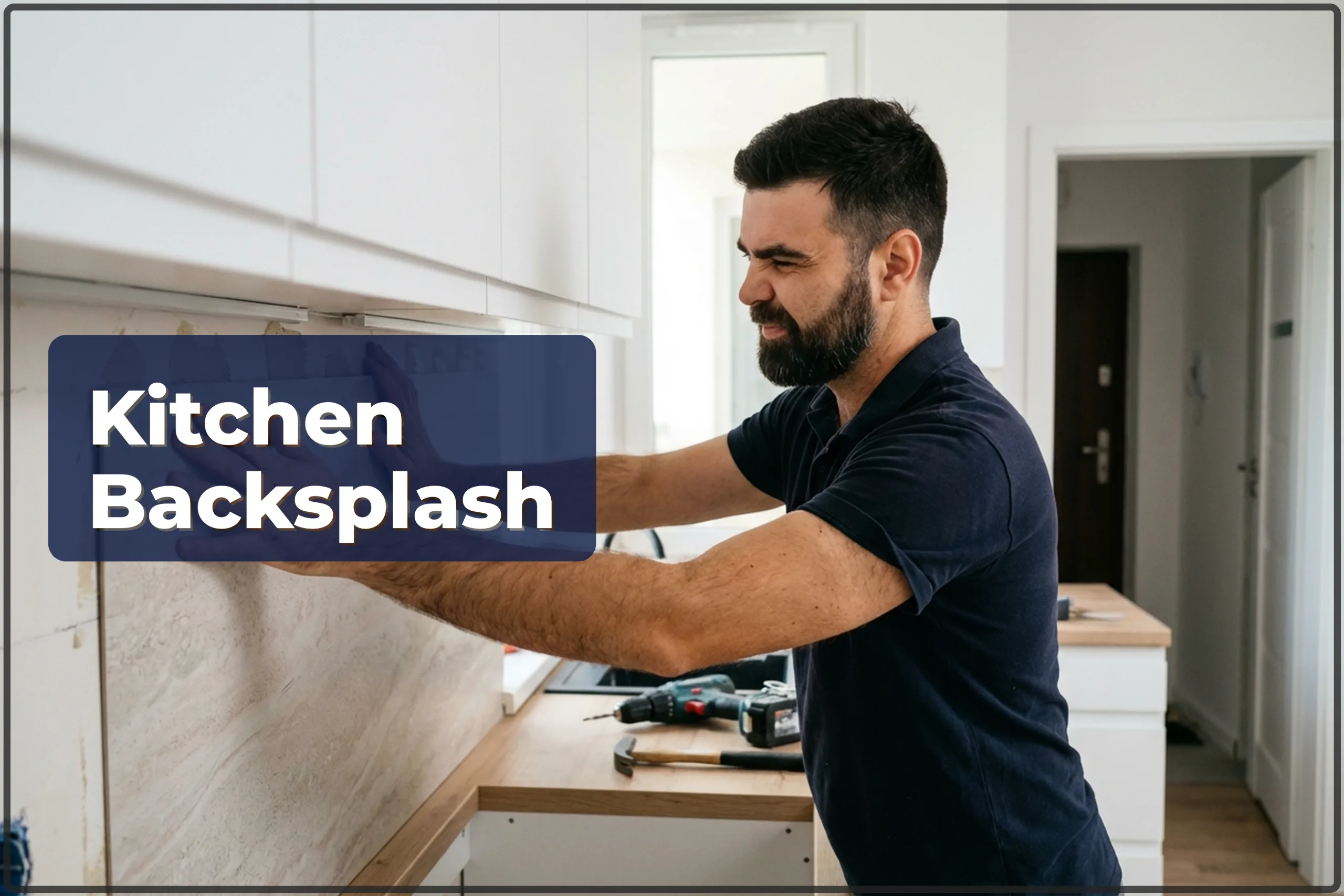
How kitchen wall panel installation is done
- You send a kitchen photo and the wall dimensions, the technician checks the scope of work.
- Timing depends on the tradesperson you choose: they give the arrival time in their offer.
- The technician measures the wall to the millimetre, marking sockets, pipes, and uneven areas.
- The panel is marked out and cut on site — with a jigsaw or circular saw.
- Openings for sockets are cut using hole saws or a router.
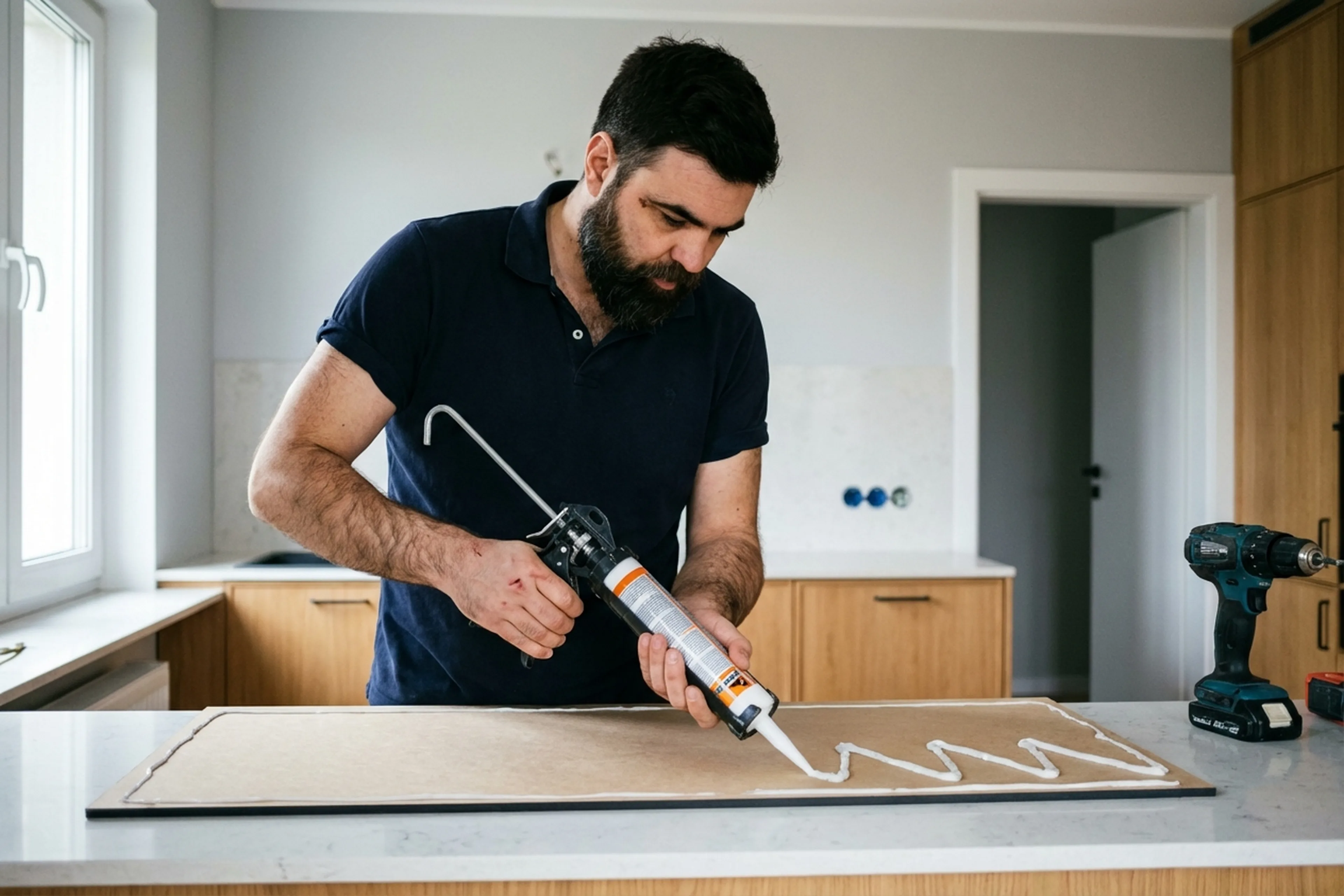
- The panel is attached with adhesive (mounting glue) or screws, depending on the wall and the panel material.
- Joints are covered with skirting strips or decorative profiles, and the final fit is checked.
Common customer mistakes (and how to avoid them)
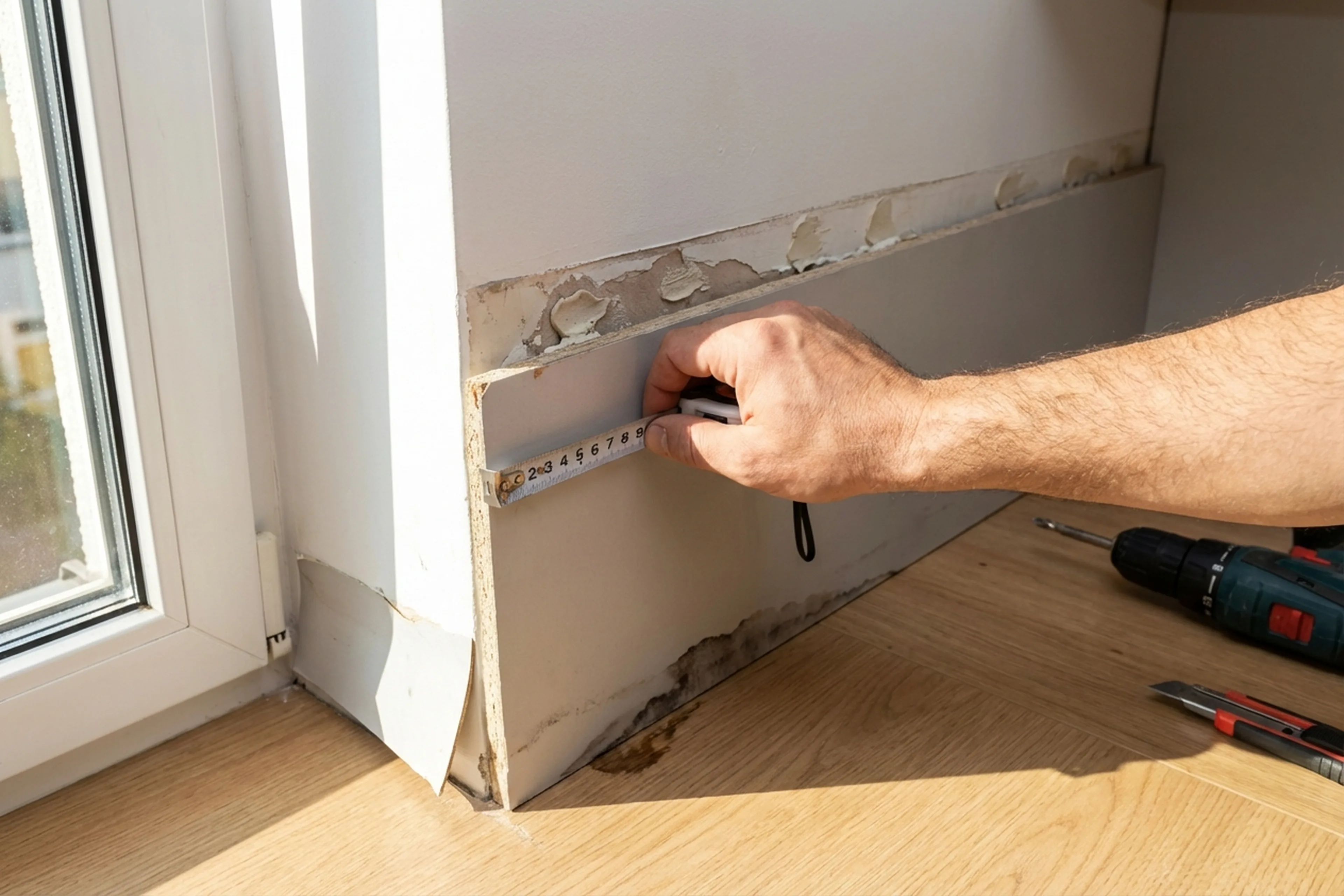
- Buying a panel without precise measurements — it ends up too short in length or height, so another piece has to be bought.
- Ignoring panel thickness when ordering the kitchen, the upper cabinets no longer sit flush to the wall.
- Trying to glue a panel onto a crooked wall: gaps appear and the panel bends.
- Overlooking sockets — once the panel is in place, access is blocked and the work has to be redone.
- Picking a PVC panel next to a gas hob: the plastic deforms from high heat.
- Cutting the panel with an angle grinder and no guide: the laminated surface chips.
- Not leaving room for thermal expansion — the panel warps in summer.
What to prepare before the technician arrives
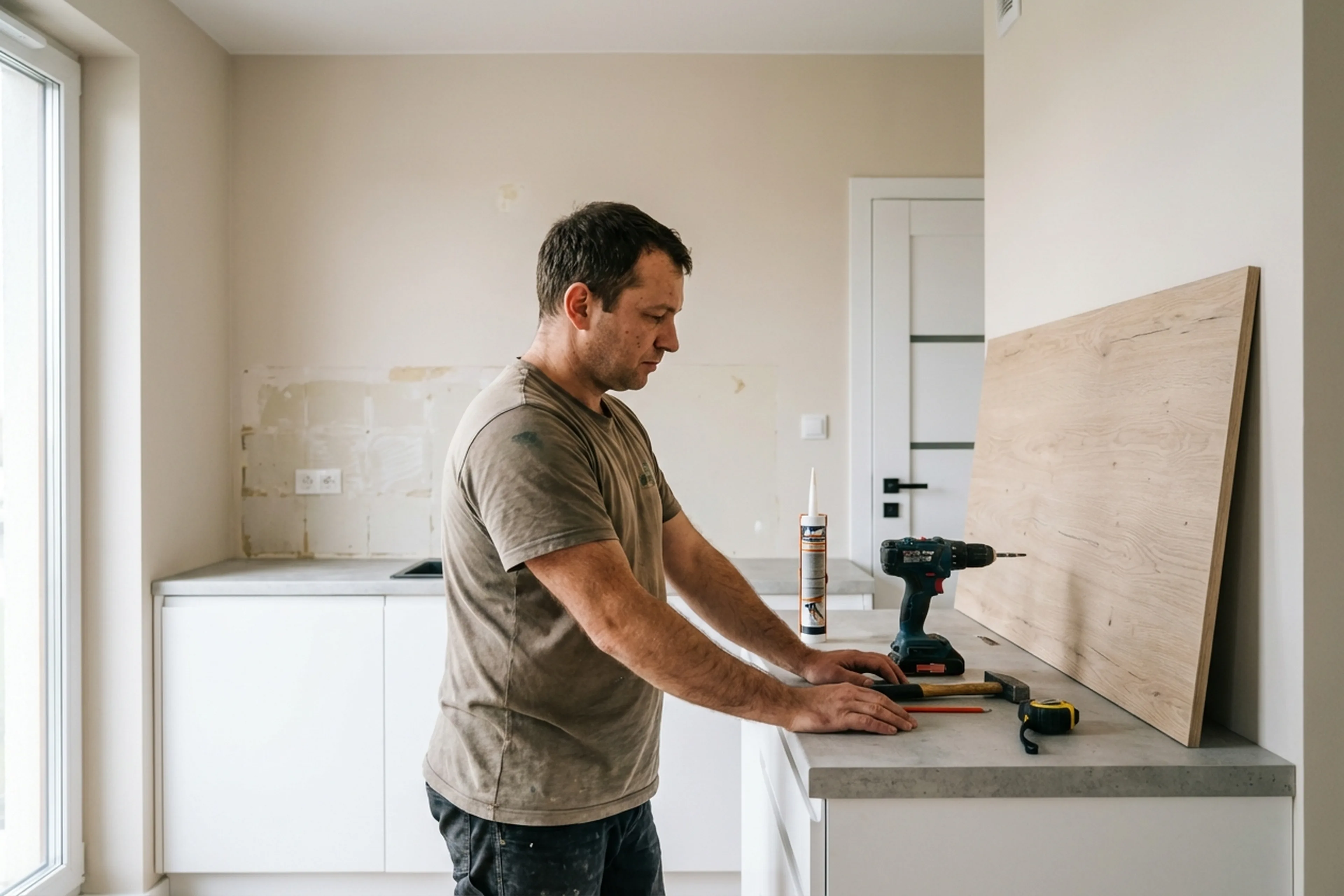
- Buy the panel in the right size: the technician can suggest a material, but the purchase is on your side.
- Make sure the countertop is already fitted: the panel is installed after that.
- The upper cabinets should already be mounted or at least marked out — this sets the panel height.
- Clear the countertop of dishes, appliances, and small items.
- Check where the electrical wiring runs inside the wall: so a screw does not hit a cable.
- If sockets need moving, get that done before the panel is fitted.
- Have a power socket available for tools (jigsaw, drill/driver).
- Provide access to the apartment: intercom code, parking info.
- If the wall is badly uneven — say so in the order beforehand, as levelling may be required.
A real case from Warsaw: kitchen wall panel installation
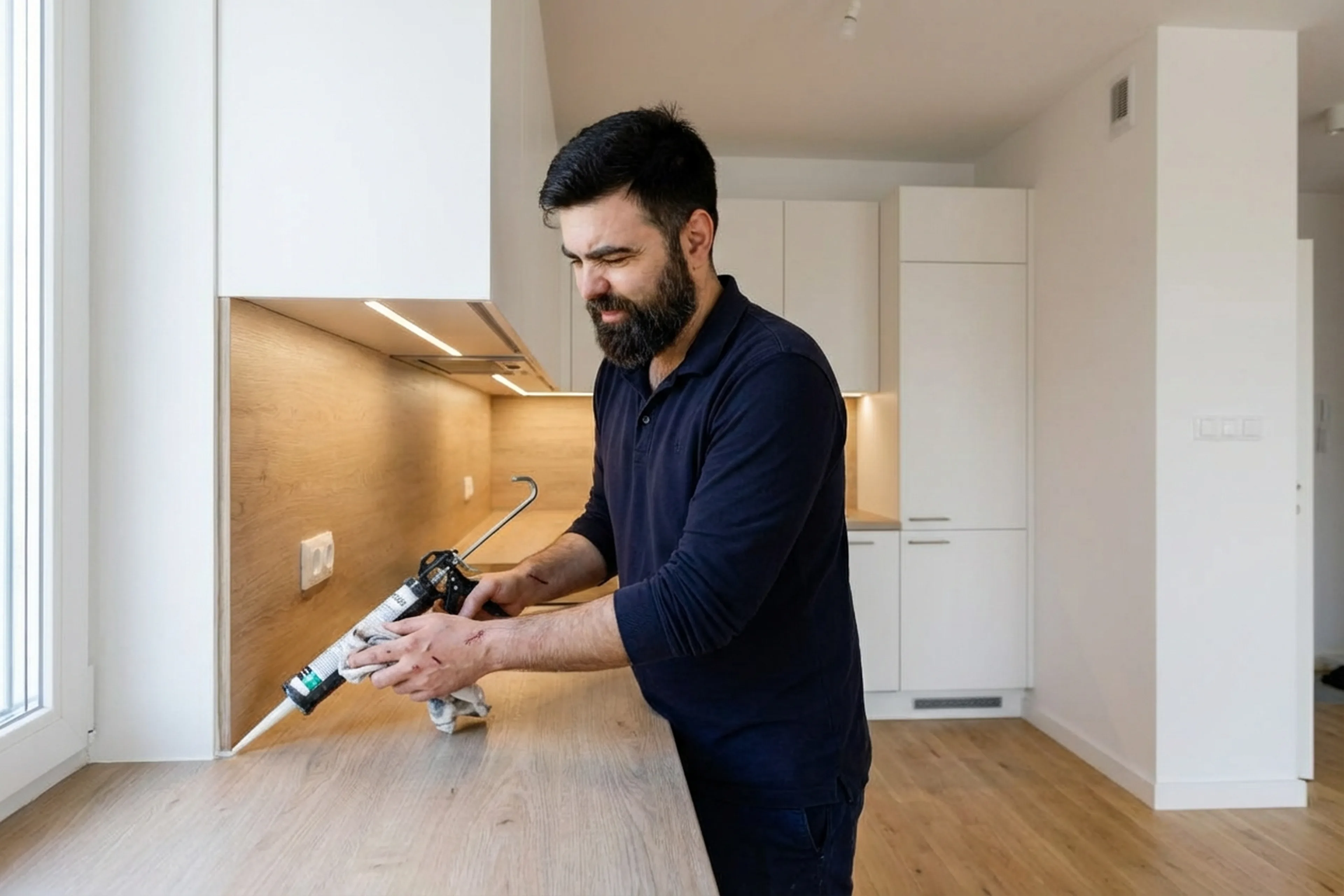
A client in the Praga-Południe district ordered fitting of a laminate panel in a 3.2-metre kitchen. The kitchen was L-shaped, with four sockets in the backsplash zone and a gas hob. During measuring, they found the wall was out by 8 mm, shims had to go behind the panel so it would sit tight. All four socket openings were cut with a 68 mm hole saw with allowance. The panel was fixed with mounting adhesive, and the joint with the countertop was finished with an aluminium skirting strip. A heat-resistant insert was added next to the hob. The whole job took around 3 hours. The client was happy: the wall is fully covered and the seams between panels are barely visible.
Frequently asked questions
Which panel material is best for a kitchen?
Laminated MDF gives the best mix of price and everyday practicality. Glass costs more but is easier to wipe clean. PVC is a cheaper option, but it should not be used near a hob.
Can a panel be installed without upper cabinets?
Yes — in that case the top edge is finished with a decorative profile, or the panel runs all the way up to the ceiling.
Do old tiles need to be removed before panel installation?
Not always. If the tiles are solid, well attached, and even, the panel can be mounted straight over them.
What’s included in the labour cost?
Measuring, cutting the panel, making socket cutouts, installation, and fitting skirting strips. Fixings are included. The panel itself and decorative elements are charged separately.
How long does installation take?
A standard 2–3 metre kitchen takes 2 to 4 hours, depending on the number of cutouts and the condition of the wall.
Can the panel be replaced without removing the cabinets?
In most cases: yes. The technician carefully removes the old panel and fits the new one, matching it to the existing cabinets.
Do tradespeople work with glass panels (splashbacks)?
Yes, but glass panels have to be made to measure in advance: they cannot be cut on site.
Who does the work
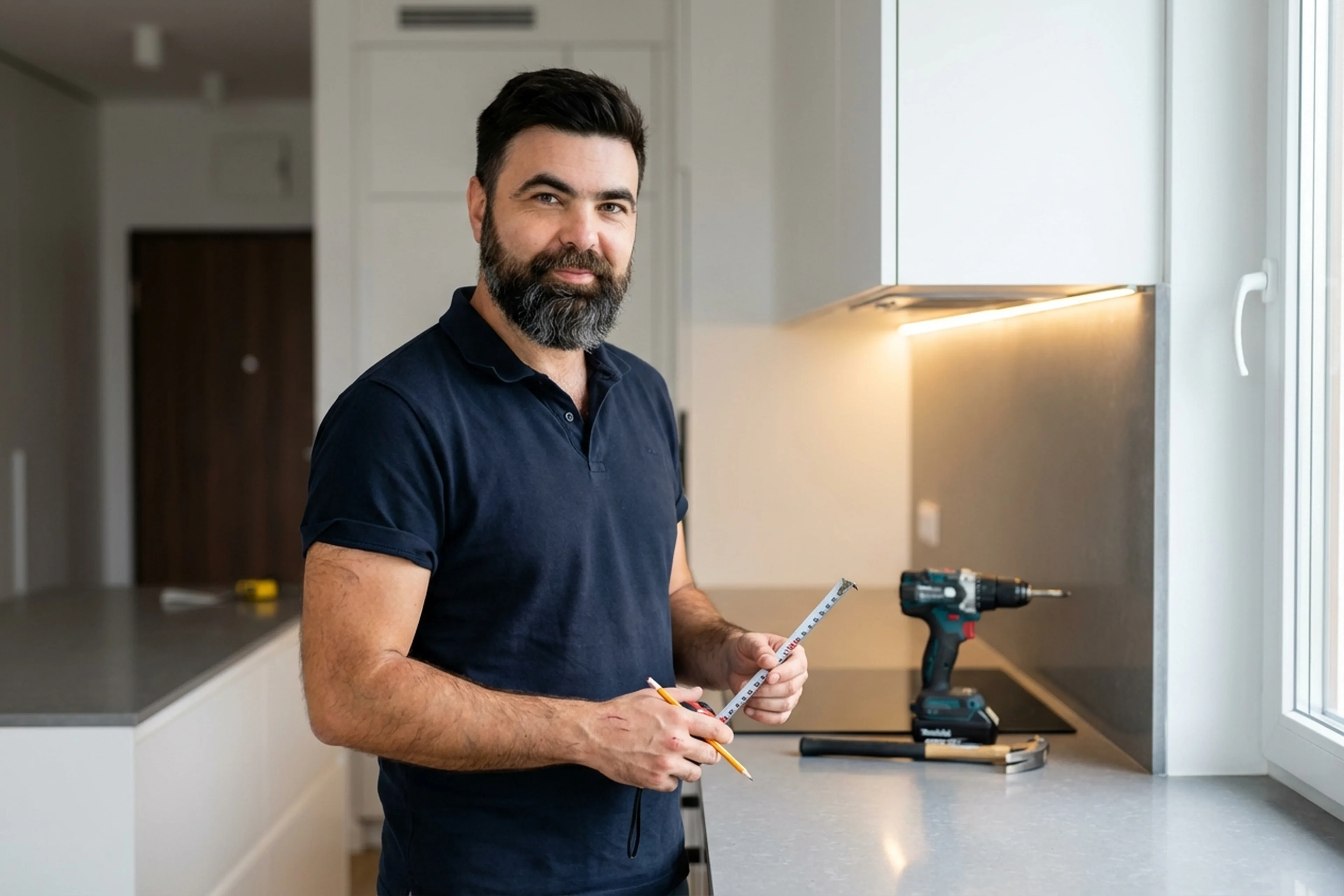
Kitchen panel fitting is done by technicians with hands-on experience in kitchen furniture installation and finishing work. Tradespeople cover all of Warsaw and nearby suburbs.
Order in the app
Describe the job, add photos and the address. Tradespeople send their own prices and dates, and you pick one of the offers.
Open the app