Washing machine connection: cost and what affects it
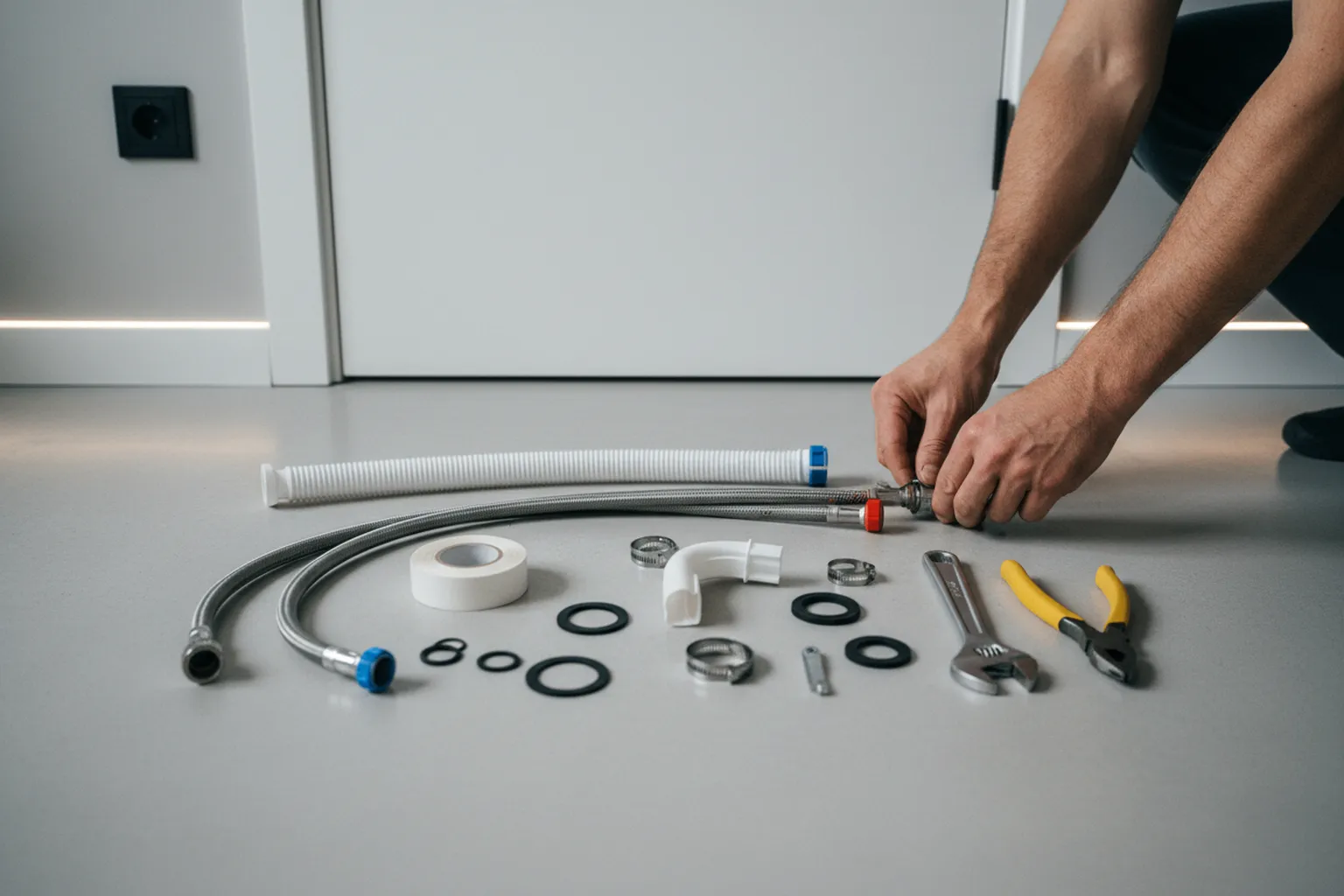
The price of connecting a washing machine depends on a few things: whether there is already a cold-water valve, whether the drain is set up (siphon with an outlet, tee on the waste pipe, or a separate standpipe), and whether there is a grounded socket close to where the machine will stand. If all of that is already there, the job takes less than an hour. If plumbing or electrical work is required, fitting a new valve, adding a drain connection, or installing a socket — the work takes more time and the cost goes up. Basic fixings are included in the service price; consumables (hoses, tee fittings, clamps) are added separately if required. Current prices are in the table below.
| Service | Price |
|---|---|
| Connect washing machine | 150–350 zł/szt |
| Built-in washing machine connection | 250–350 zł |
Indicative prices. Ranges for a typical scope. Fixings included, materials separate. Minimum order 300 zł.
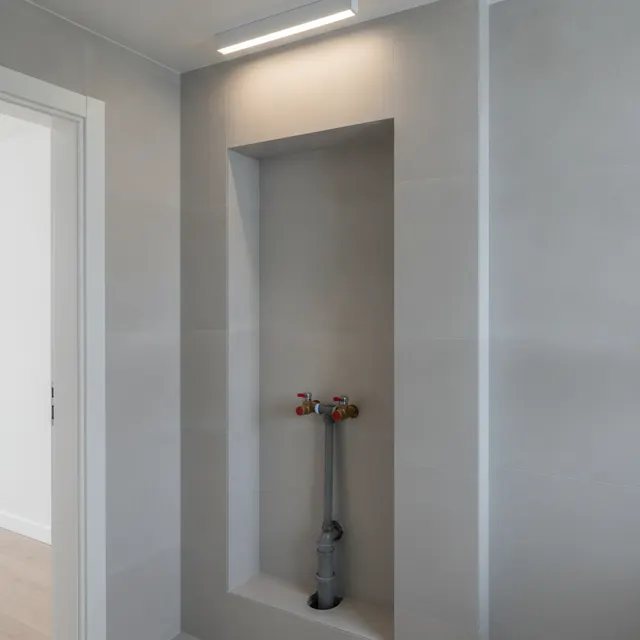
What it costs and how to book: washing machine installation in Warsaw.
Washing machine connection: how the work goes
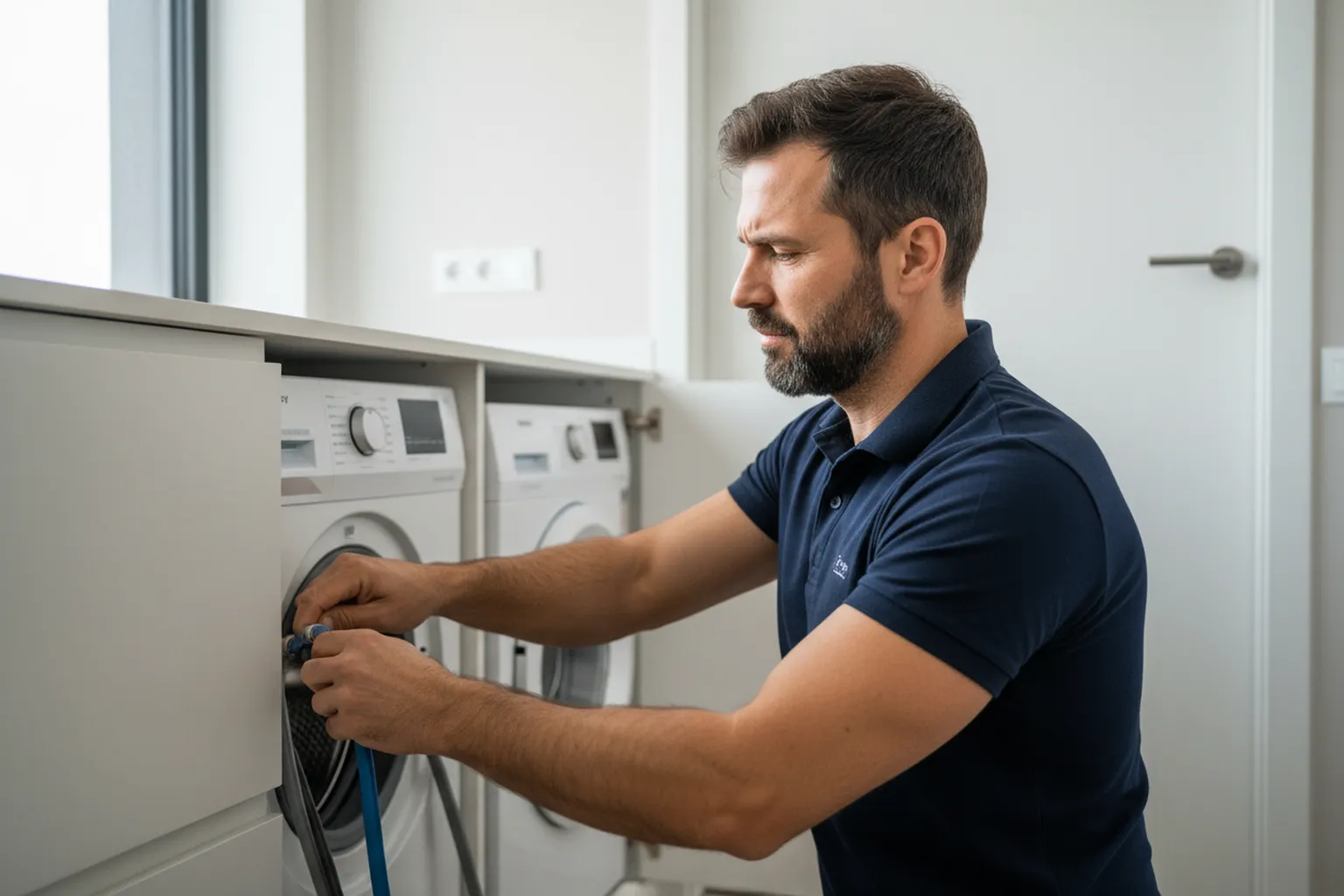
- You send a photo of the installation spot (bathroom, kitchen, utility room), the technician checks the setup and gives a rough price.
- Each tradesperson says in their offer when they can come, and you pick the one that suits you.
- On site, the technician checks whether there is a cold-water valve, a free drain outlet on the siphon or a separate waste connection, and a grounded socket.
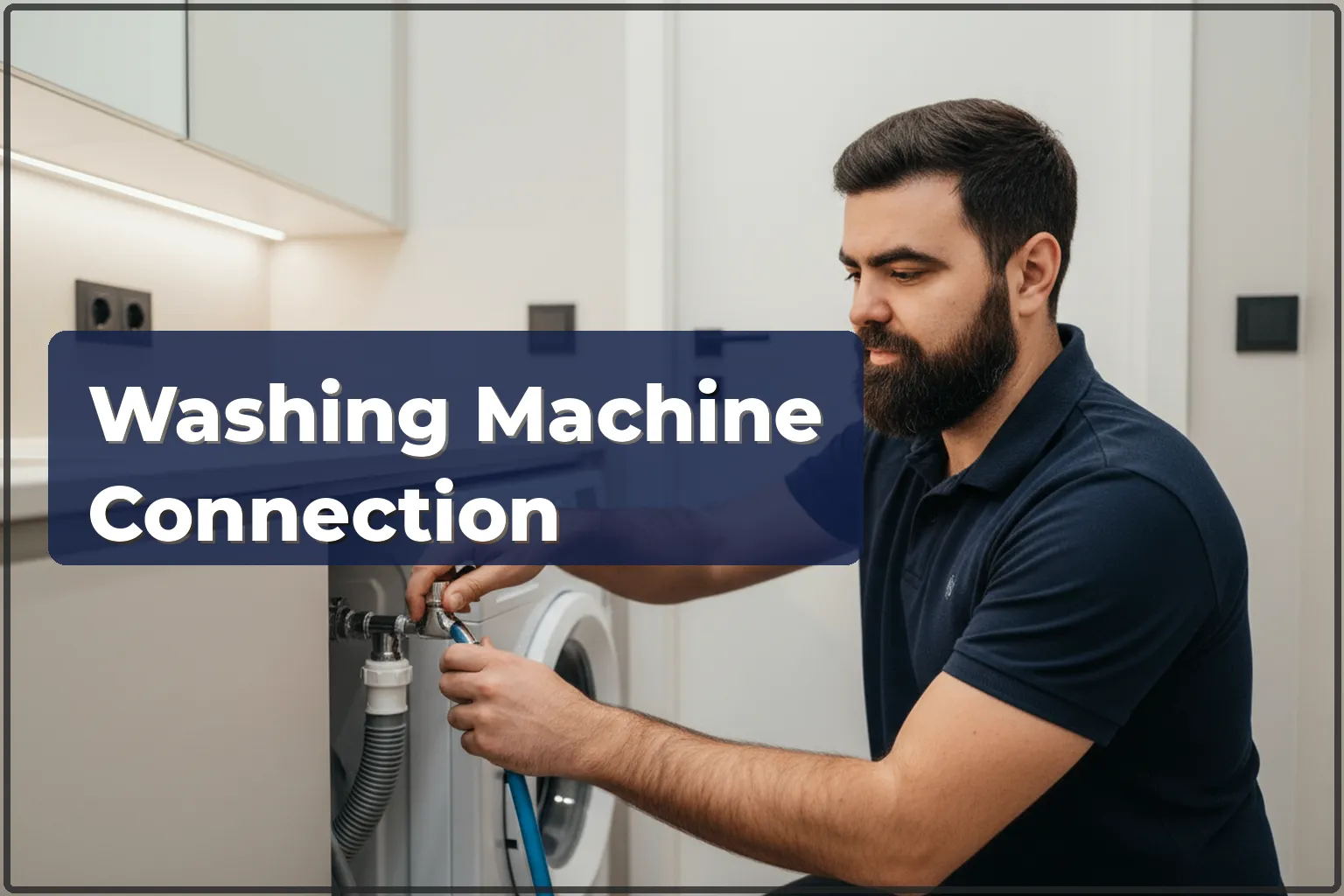
- Tradespeople connect the water supply: through a tee on the existing valve or by fitting a new outlet. Tradespeople test for leaks.
- Tradespeople connect the drain hose to the siphon or straight to the waste pipe, always with a high loop and a check valve so water cannot flow back.
- Tradespeople connect the power and check the earthing, without it the machine can give electric shocks, especially in a damp room.
- Tradespeople level the machine with the adjustable feet and make sure it stands solidly and does not shake during an empty spin cycle.
Common mistakes when connecting a washing machine
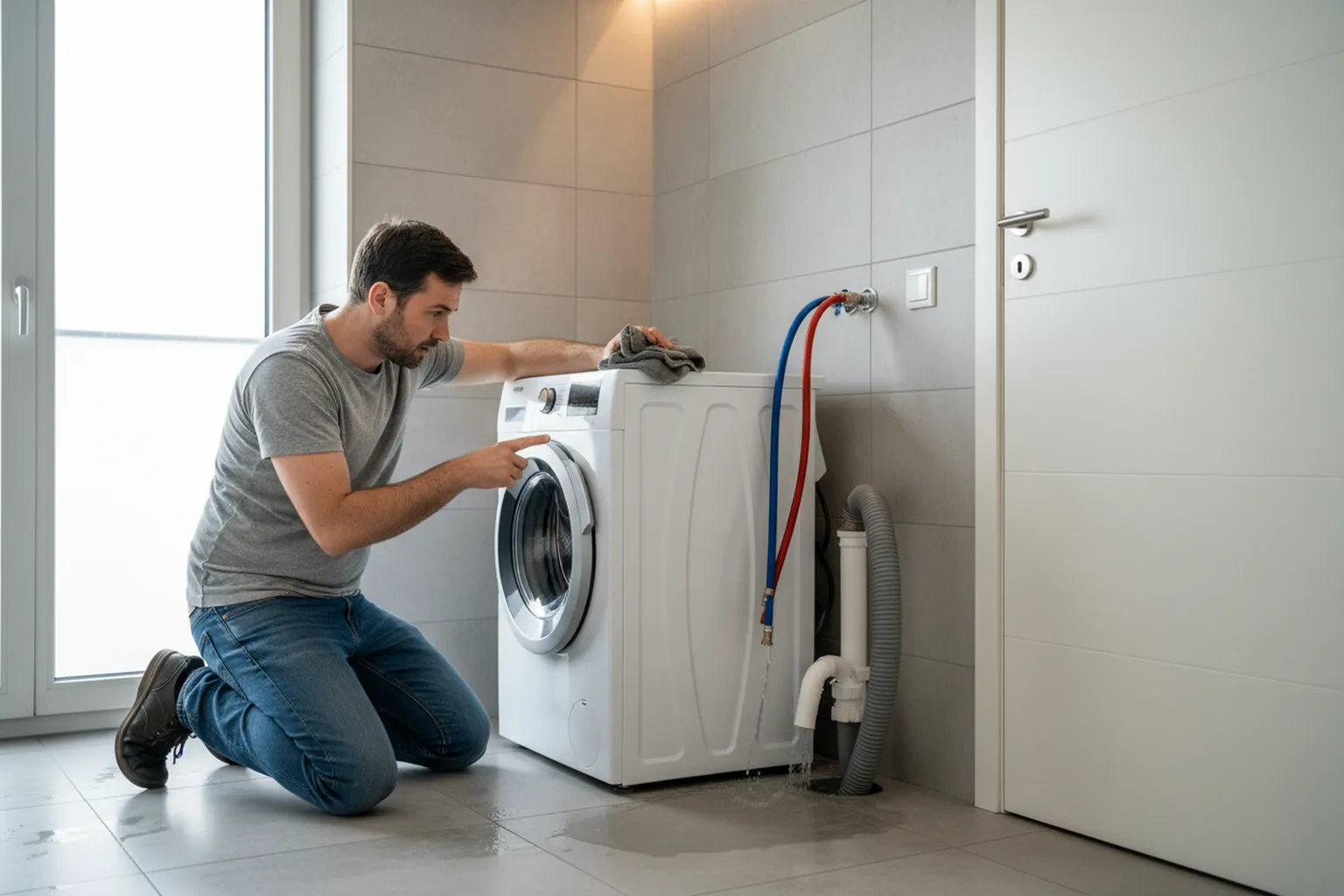
- Not removing the transit bolts — the drum stays locked, the machine shakes hard and can ruin the shock absorbers.
- Leaving the drain hose lying flat on the floor, water runs out by gravity during the wash, the machine keeps taking in more water and never completes the cycle.
- Using an extension lead without earthing: in a damp bathroom, that is a straight route to electric shock.
- Connecting the drain to the sewer without a trap or check valve — sewer smells get into the room.
- Not checking the water pressure: if the pressure is too low, the machine fills very slowly or does not start at all.
- Putting the machine on an uneven floor without adjusting the feet, it jumps, shifts, and gets noisy during spin.
- Bending the drain hose too sharply — water cannot drain out, and the machine shows an error code.
- Connecting to hot water: most modern machines are made for cold water supply only.
What to prepare before the technician arrives
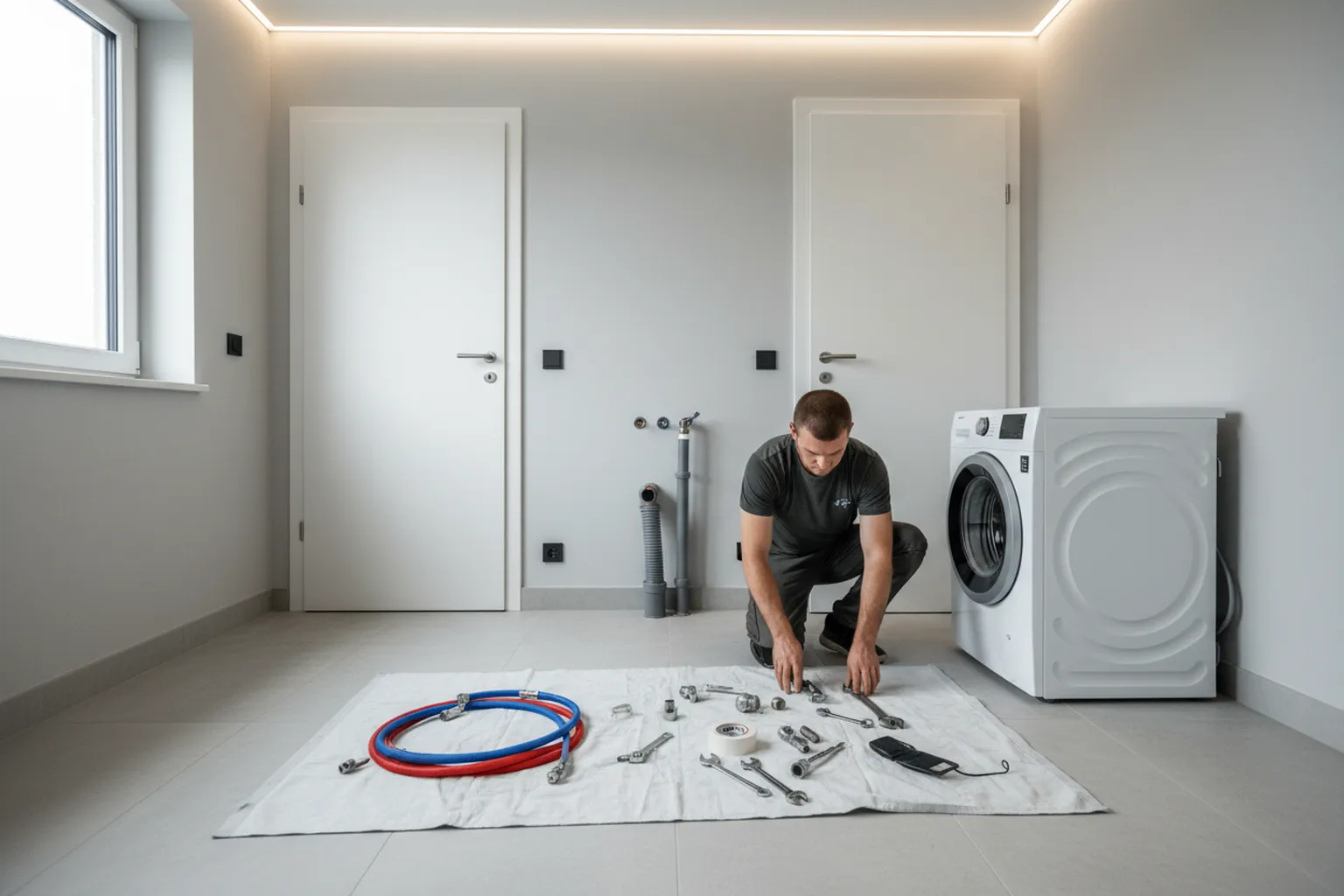
- Unpack the washing machine and remove the transit bolts (usually 3-4 at the back, marked in the manual).
- Clear the space in the bathroom, utility room, or kitchen, the technician needs access to the wall, pipes, and siphon.
- Check if there is a cold-water valve near the installation spot.
- See if the siphon has a free outlet for the drain (or tell the technician in advance).
- Check the socket: it must be earthed and located to the side or above the machine, not behind it.
- If there is no socket, mention it in the request so the technician brings the materials to fit one.
- Keep the machine’s manual ready: it shows the spacing and connection requirements.
- Give access details: intercom code, floor, lift availability (if the machine needs to be carried up).
- If renovation is in progress, tell the technician so surfaces can be protected.
- Move personal items and cleaning products out of the installation area — the technician needs free space to work.
Washing machine connection in practice: a Warsaw case
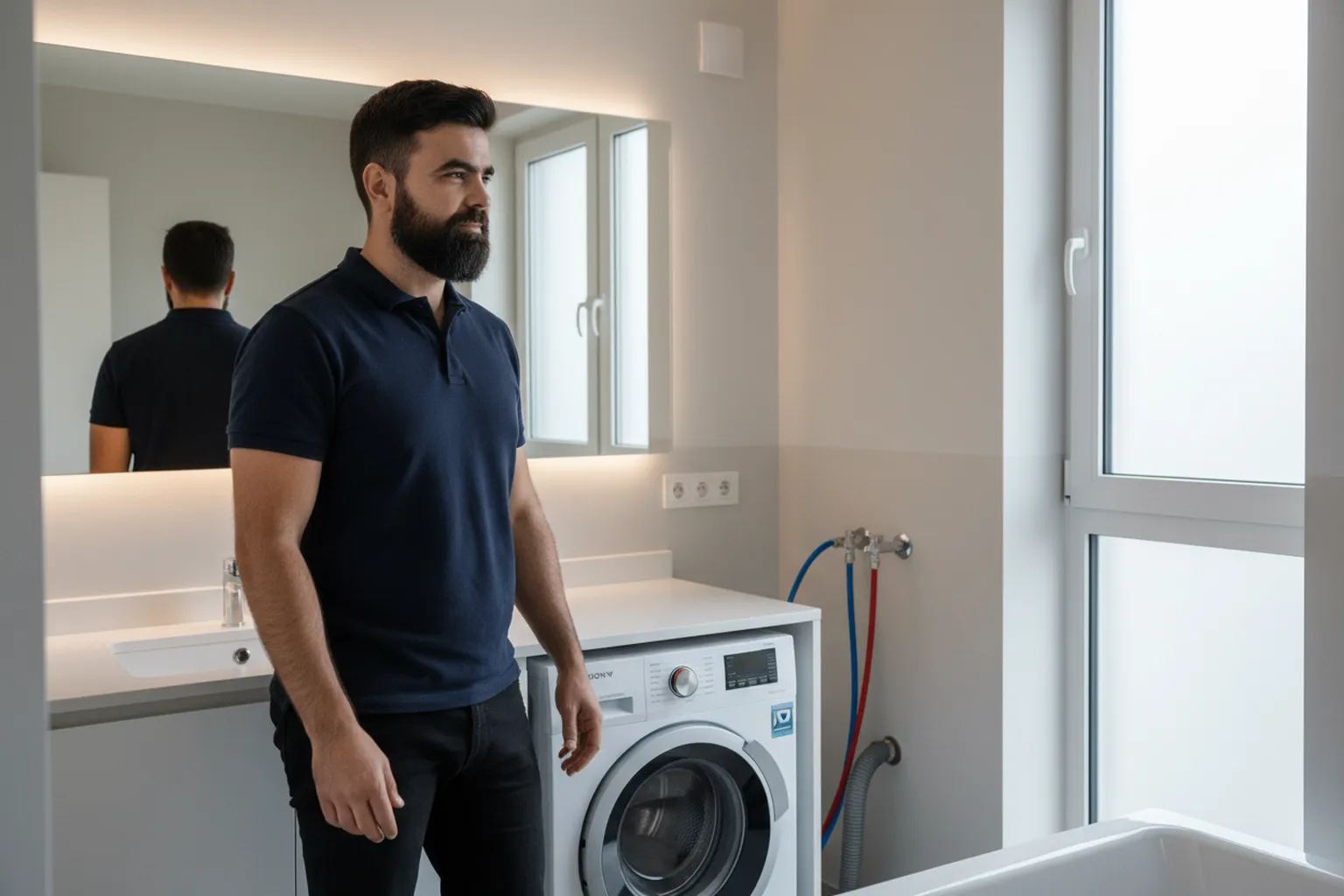
A client in the Ursynow district moved into a new flat and brought a Samsung washing machine from the previous home. The bathroom had a cold-water valve, but with a 1/2″ thread: an adapter was needed. The siphon under the basin was a simple model without a side drain outlet. The socket was a standard one, with no earthing. The technician installed a tee with an adapter on the valve, replaced the siphon with one that has a drain outlet, checked the wiring, and fitted an earthed socket. Tradespeople levelled the machine: the bathroom floor had a slight slope, so the rear feet had to be lifted. Tradespeople ran a test wash: fill, drain, spin — everything worked with no leaks or vibration. The whole job took around an hour and a half. Takeaway: even when the valve and drain seem to be there, something nearly always needs correcting, calling a professional is easier than sorting it out on your own.
Frequently asked questions
Can I connect a washing machine myself?
If all connections are ready and you know what you are doing, yes. But if you need to tie into the plumbing or change a socket, it is better to call a professional. Mistakes with water and electricity in a damp room can mean leaks and electric shock.
Is earthing mandatory?
Yes. A washing machine works with water and electricity at the same time. Without earthing, the casing can give shocks — especially dangerous in a bathroom.
Where is it better to put the machine: bathroom or kitchen?
In Warsaw, the bathroom is the more common option: the utilities are closer. The kitchen is fine if the bathroom is too small. The technician can connect it in any room with water access and drainage.
What is included in the connection price?
Labour, basic fixings, travel within Warsaw. Extra materials (tee fitting, siphon, adapter, socket) are charged separately when needed.
How long does the connection take?
If everything is ready — about 40 minutes. If changes are needed, up to two hours.
Do tradespeople connect built-in washing machines?
Yes. The connection itself is the same, but fitting it into furniture and mounting the door panel are extra steps. Mention it when booking.
The machine jumps during spin after connection: what should I do?
Most likely the transit bolts were left in place or the feet were not levelled. The technician will check it and sort it out.
Can the drain hose be extended?
Yes, but not past the manual’s limit (usually 3-4 metres). A hose that is too long puts extra strain on the pump.
Who does the work
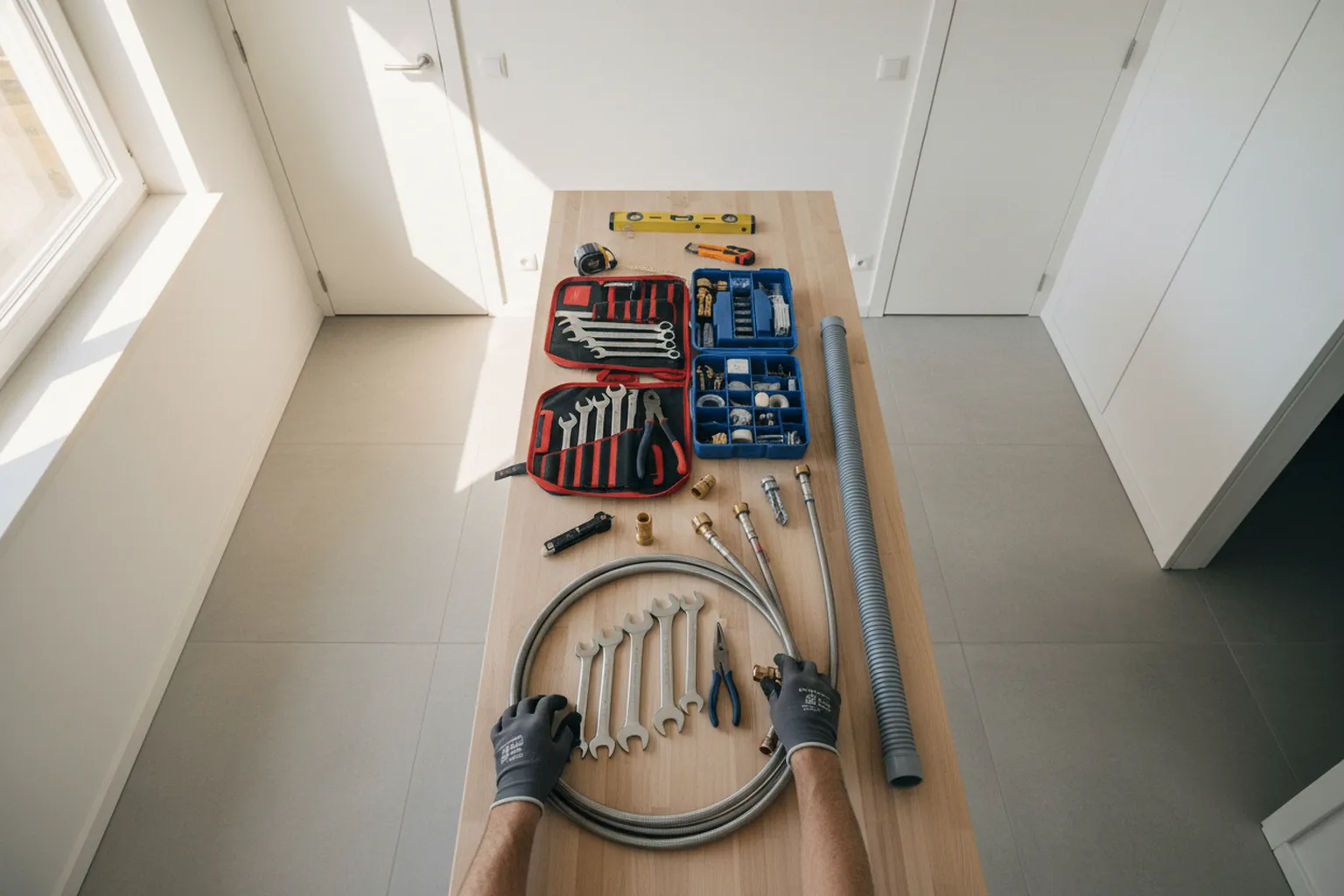
Washing machine connections are done by technicians who know flats of every layout — from compact studios in Praga to large apartments in Wilanow. Tradespeople come with tools and a basic set of consumables. If extra materials are needed, they agree that in advance. Tradespeople work cleanly and tidy up after the job.
Order in the app
Describe the job, add photos and the address. Tradespeople send their own prices and dates, and you pick one of the offers.
Open the app