
How much does dishwasher connection cost
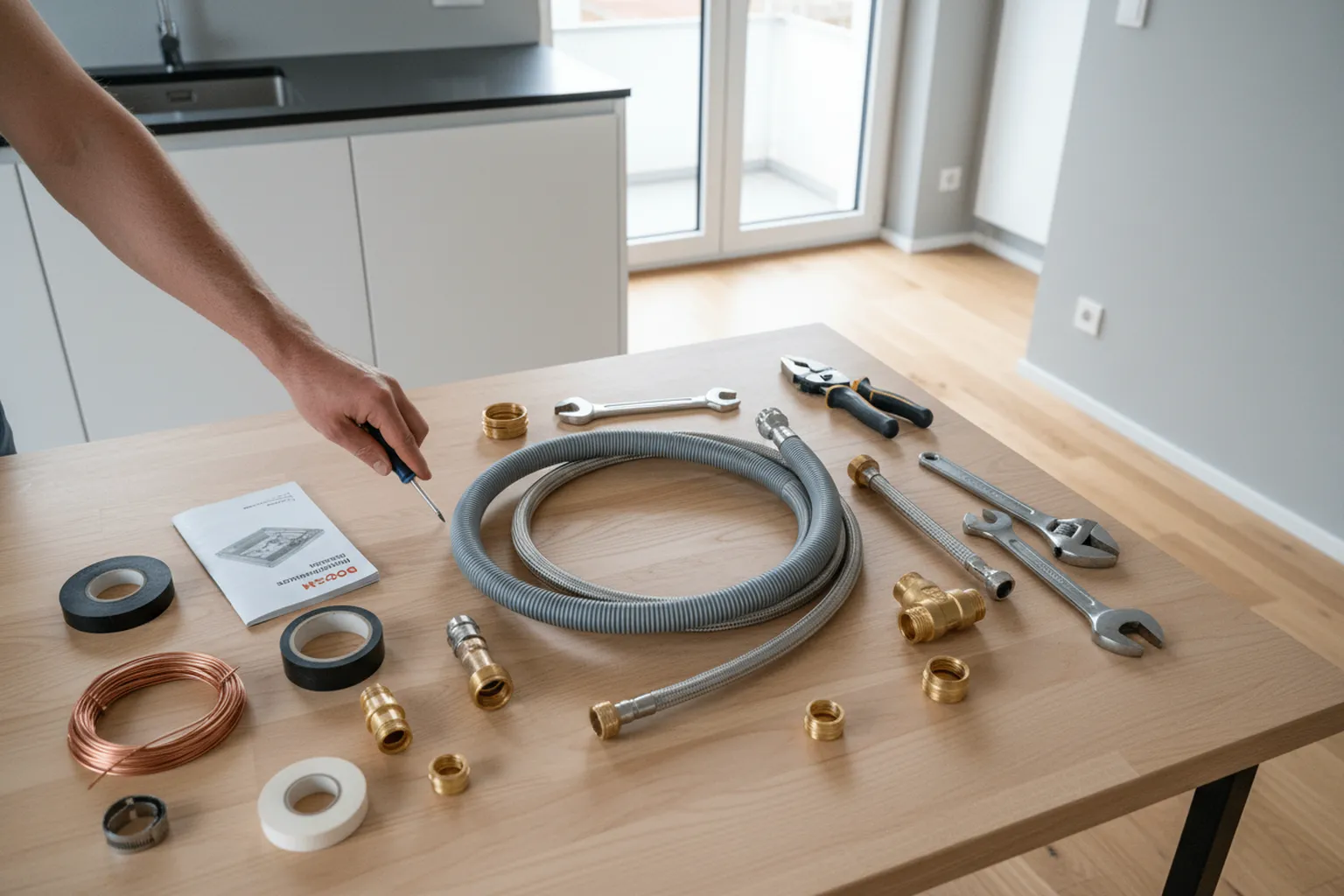
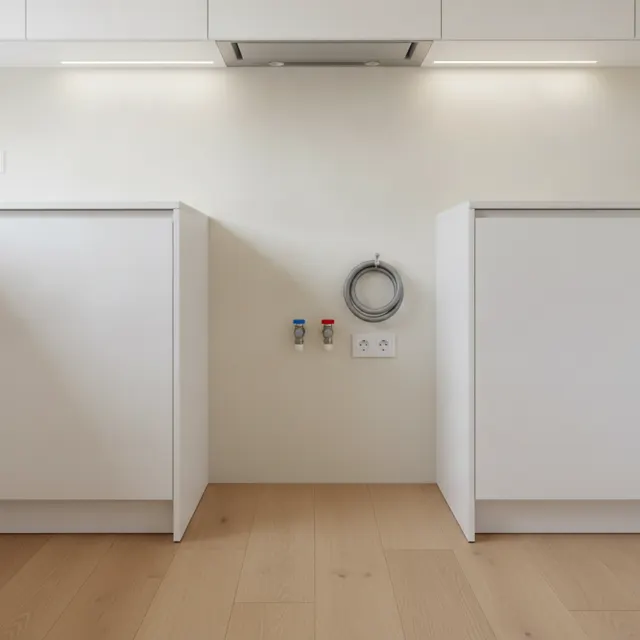
The total price depends on how prepared the connections already are. If the flat has a cold-water valve with a 3/4″ thread, a drain spigot on the siphon, and a grounded 16A socket close by, the job is quick and stays within the base rate. If anything is missing, the technician can fit a tee, change the siphon, or install a socket, but that means extra labour and materials. Basic fixings are part of the price; consumables (hoses, adapters, clamps) are billed separately if required. You can see the current technical service prices in the table below.
| Service | Price |
|---|---|
| Dishwasher connection | 150–350 zł/szt |
| Built-in dishwasher connection | 280–400 zł |
Indicative prices. Ranges for a typical scope. Fixings included, materials separate. Minimum order 300 zł.
What it costs and how to book: dishwasher installation in Warsaw.
Connection or fitting into the kitchen?
If the dishwasher still has to slide into a recess under the worktop, be levelled, fixed and fitted with a cabinet door, you need a built-in dishwasher installation.
How the connection works: step by step
- You send a photo of the installation spot and the plumbing, the technician checks the scope and gives a rough price.
- You agree the visit time with the tradesperson you choose; it depends on their schedule.
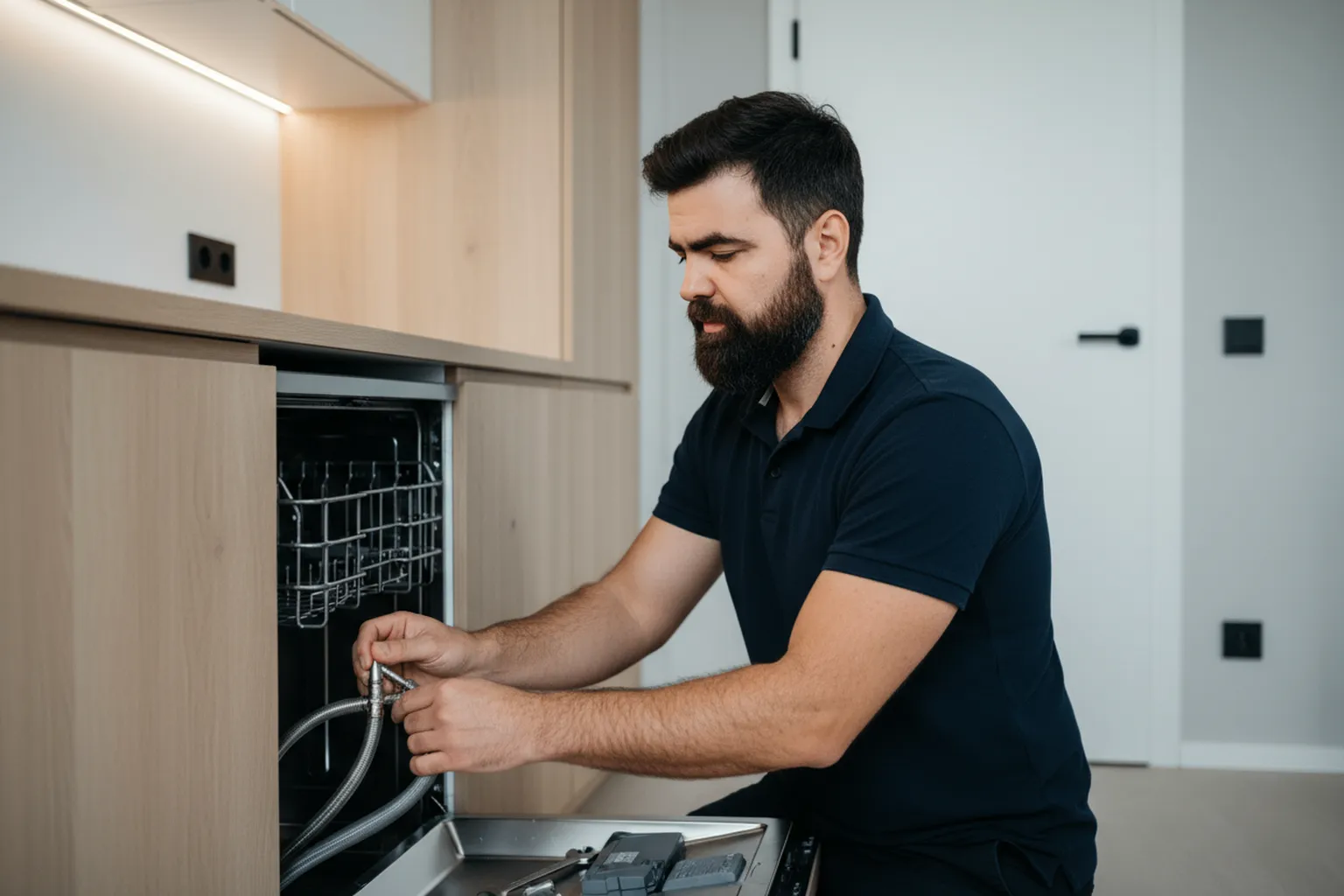
- On site, the technician looks over the connection point: cold-water valve, drain, socket. Also checks if the factory hoses are long enough.
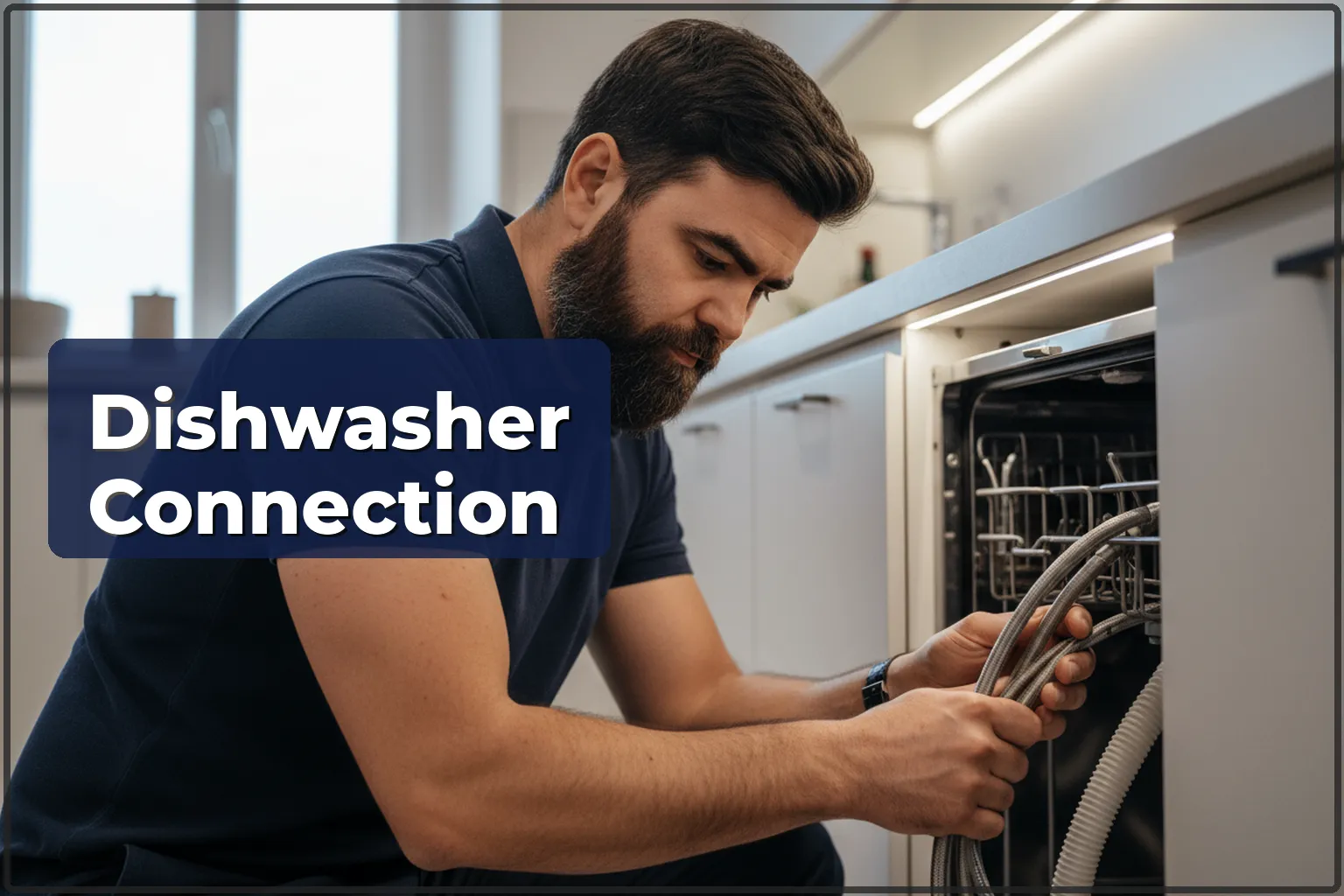
- Tradespeople connect the water supply through a tee on the existing valve or straight to it. If the hose has an Aquastop system, they make sure the length is enough and the hose is not under tension.
- Tradespeople connect the drain hose to the siphon or waste pipe — always with a high loop and air gap, otherwise dirty water from the drain can return into the machine.
- Tradespeople connect the power and test the earthing with a multimeter, the machine runs with water, so no earthing means real danger.
- Tradespeople level the dishwasher with the adjustable feet, then check that it stands firmly and the door opens freely.
- Tradespeople start a test wash cycle: watching the fill, drain, and every joint for leaks.
Common mistakes when connecting a dishwasher yourself
- Connecting it to hot water: most dishwashers are made for cold water only; hot water can ruin internal components and throw off the wash programmes.
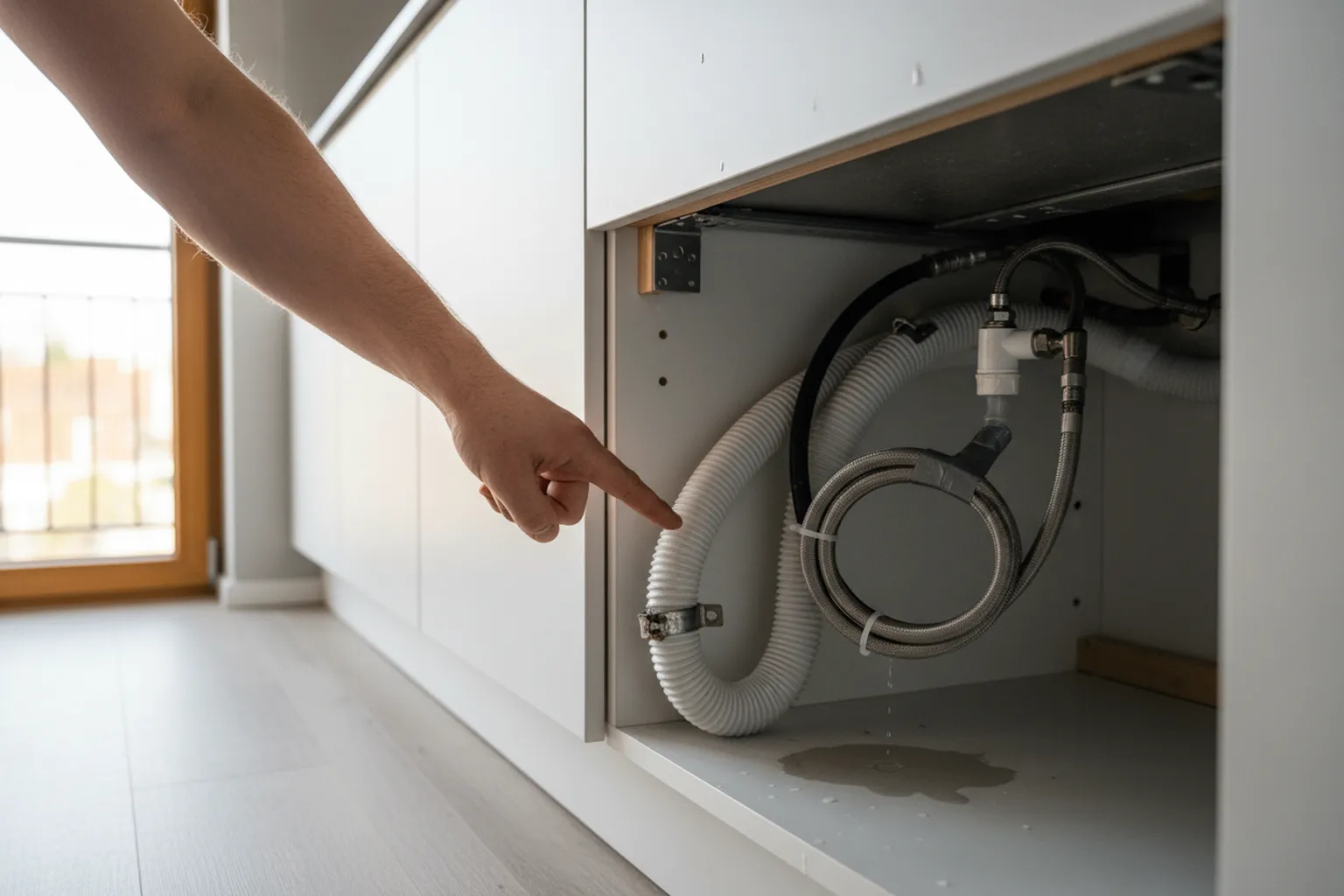
- Drain hose laid flat on the floor with no loop, water drains badly, grime collects inside, and smells start to appear.
- No check valve on the drain — sewage water can flow back into the machine.
- Socket without earthing or plugging it in through a household extension lead, serious risk of electric shock, especially in a damp room.
- Replacing the Aquastop hose with a regular one, you lose flood protection if the hose splits.
- Machine left unlevelled — it shakes, moves around, and can damage the floor and hoses.
- Drain connected straight into the sewer pipe without a trap: sewer smells come into the room.
- Not checking the factory hose length: if it is stretched, the joints can pull loose while the machine is running.
What to prepare before the technician arrives
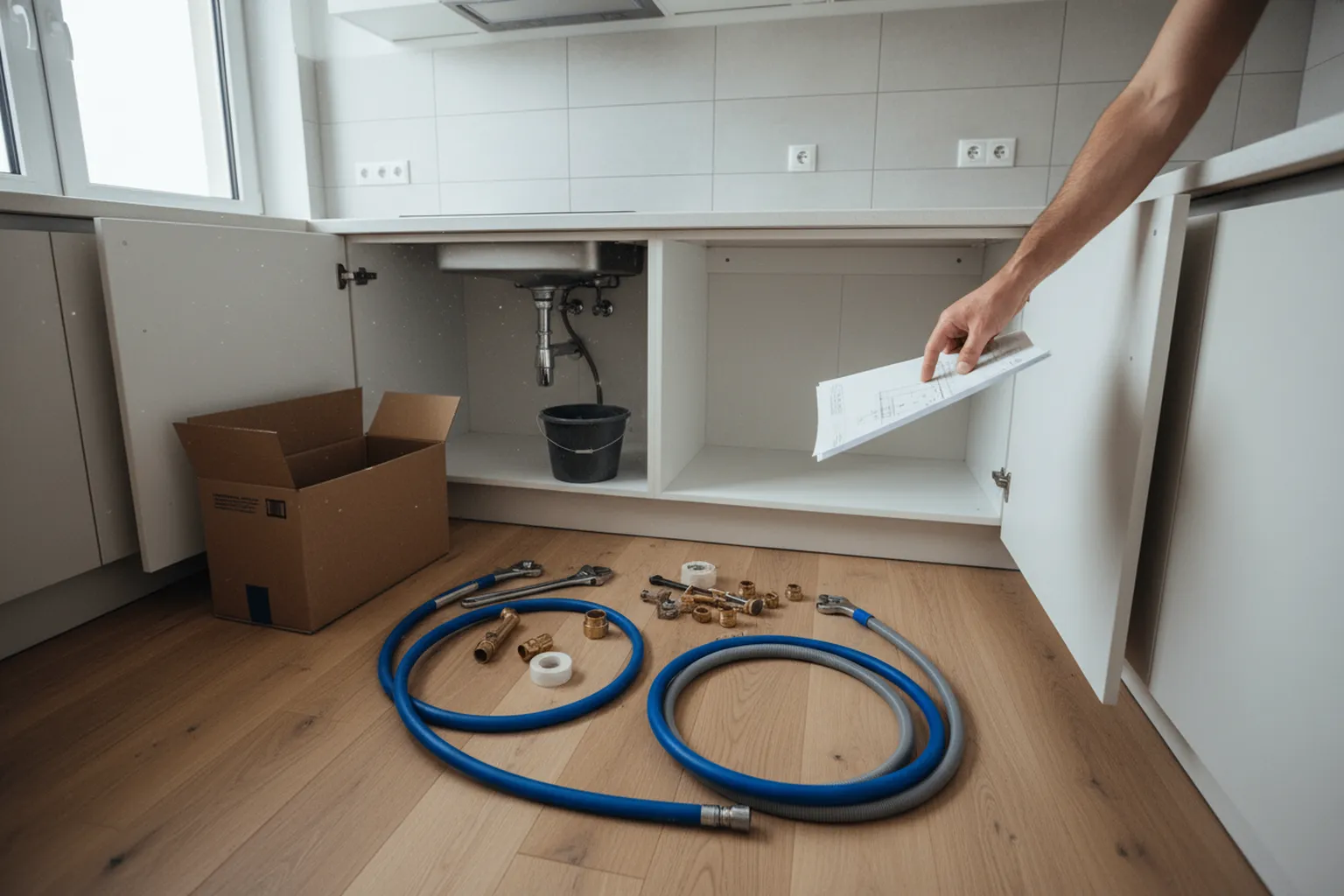
- Unpack the dishwasher and remove the transit bolts (usually at the back, noted in the manual).
- Make access to the installation spot clear — move boxes, belongings, and furniture out of the way.
- Check whether there is a cold-water valve with a 3/4″ thread, often under the sink or near the riser.
- See if the siphon has a spare outlet for the drain. If not, tell the technician beforehand.
- Make sure there is a grounded 16A socket nearby. It should not sit behind the machine (in an emergency, the plug must be reachable).
- If there is no socket, say so in the order in advance so the technician brings the materials to install one.
- Keep the dishwasher manual ready: it gives the water pressure, connection diameter, and electrical requirements.
- Measure the distance from the machine to the connection points — the technician will check whether the factory hoses are long enough.
- Send building access details: intercom code, floor, lift availability, parking.
- If there is renovation work going on, let the technician know so surfaces can be protected from dirt and splashes.
Real case: connection in Praga Poludnie
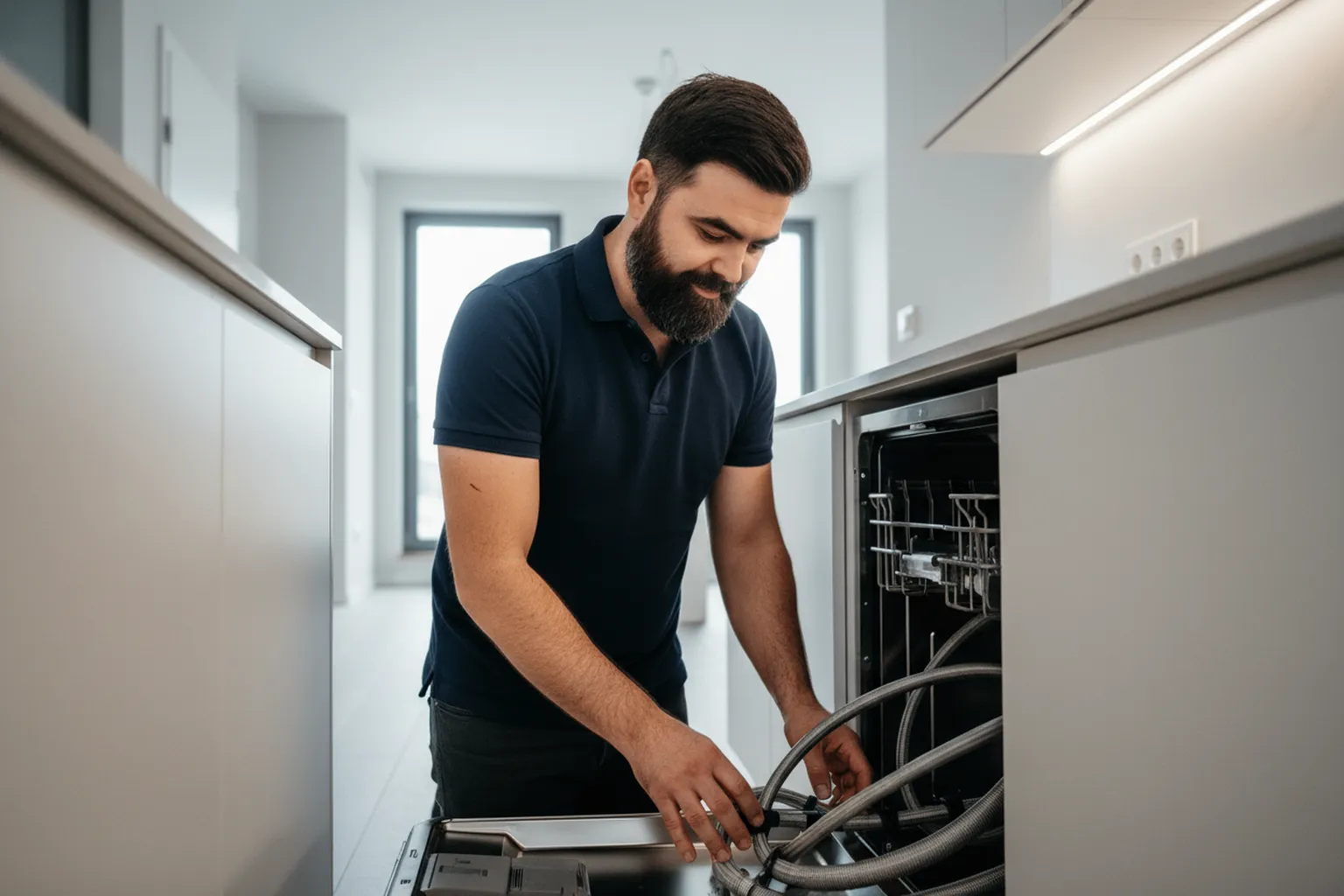
A client had moved into a rented flat in Praga Poludnie and brought a 45 cm Samsung dishwasher with them. In the kitchen there was a sink with a simple siphon and no side outlet for the drain, and only one cold-water valve: with a 1/2″ thread. There was a socket, but it had no earthing, and it was two metres from where the machine was meant to stand. The technician changed the siphon to a two-outlet version and installed a tee with a 1/2″→3/4″ adapter on the valve. The socket was earthed: the distribution board had a spare breaker. The Aquastop hose only just reached, so they shifted the machine 10 cm nearer to the riser. Then they levelled it and ran a test cycle — every connection stayed dry and the drain worked as it should. The whole job took about an hour and a half. The point is simple: even in a finished flat, the plumbing almost never lines up perfectly with a particular dishwasher model, better to bring in a technician than deal with a leak later.
AEG and Bosch dishwashers: what to keep in mind
AEG
An AEG dishwasher, like any other, has three connections: a fill hose to the cold water, a drain hose and a power cable with a plug. In a kitchen planned without a dishwasher, usually none of them is ready.
Bosch
Water. A dishwasher usually goes on the cold supply, through the valve under the sink. If that valve only feeds the tap, a tee or a valve with an extra outlet goes in. Many Bosch dishwashers have an inlet hose with leak protection (AquaStop). You don’t cut it or extend it with an ordinary connector.
Drain. The hose goes into a trap with a spigot under the sink. The loop is what matters: the hose should rise up under the worktop first and only then drop down to the trap. Without it, dirty water from the sink can run back into the dishwasher. The manual for your model gives the height of that high point.
Frequently asked questions
Can I connect a dishwasher without a dedicated valve?
Yes. The technician can install a tee on the existing cold-water valve, this is a standard job and does not affect the mixer tap.
Is earthing mandatory?
Yes. A dishwasher uses water and electricity at the same time. Without earthing, there is a genuine risk of electric shock. This is not optional — it is a safety requirement.
What is Aquastop and do I need it?
Aquastop is a leak-protection system built into the inlet hose. If your machine has one, keep it in use. Do not replace it with a standard hose: you will lose flood protection.
How long does the connection take?
If all the utilities are ready, around 40 to 60 minutes. If the siphon, valve, or socket needs attention, it can take up to two or three hours.
What is included in the price?
Labour, basic fixings, and travel within Warsaw. Consumables (tee fitting, siphon, adapters, cable for a socket) are charged separately if needed.
Do tradespeople connect built-in dishwashers?
Yes. Connecting a built-in model includes the same steps, plus accurate fitting into the cabinet.
Can a dishwasher be connected outside the kitchen?
Yes, as long as there is water, drainage, and a socket nearby, a dishwasher can be installed in a bathroom, utility room, or another space. The technician will check on site whether it can be done properly.
Do tradespeople take away packaging and old appliances?
Removal of packaging waste and old equipment is available for an extra fee.
Is the Aquastop hose essential?
If the dishwasher comes with an Aquastop hose, that is the one to connect. It protects against flooding if the hose bursts, so swapping it for a plain hose makes no sense.
What if there is no separate valve under the sink?
The handyman fits a tee on the existing cold-water valve. It is a standard solution, and the tee is charged as material.
Is an earthed socket mandatory?
Yes. A dishwasher uses water and electricity at the same time, and without earthing the risk of electric shock is real.
Who carries out the connection
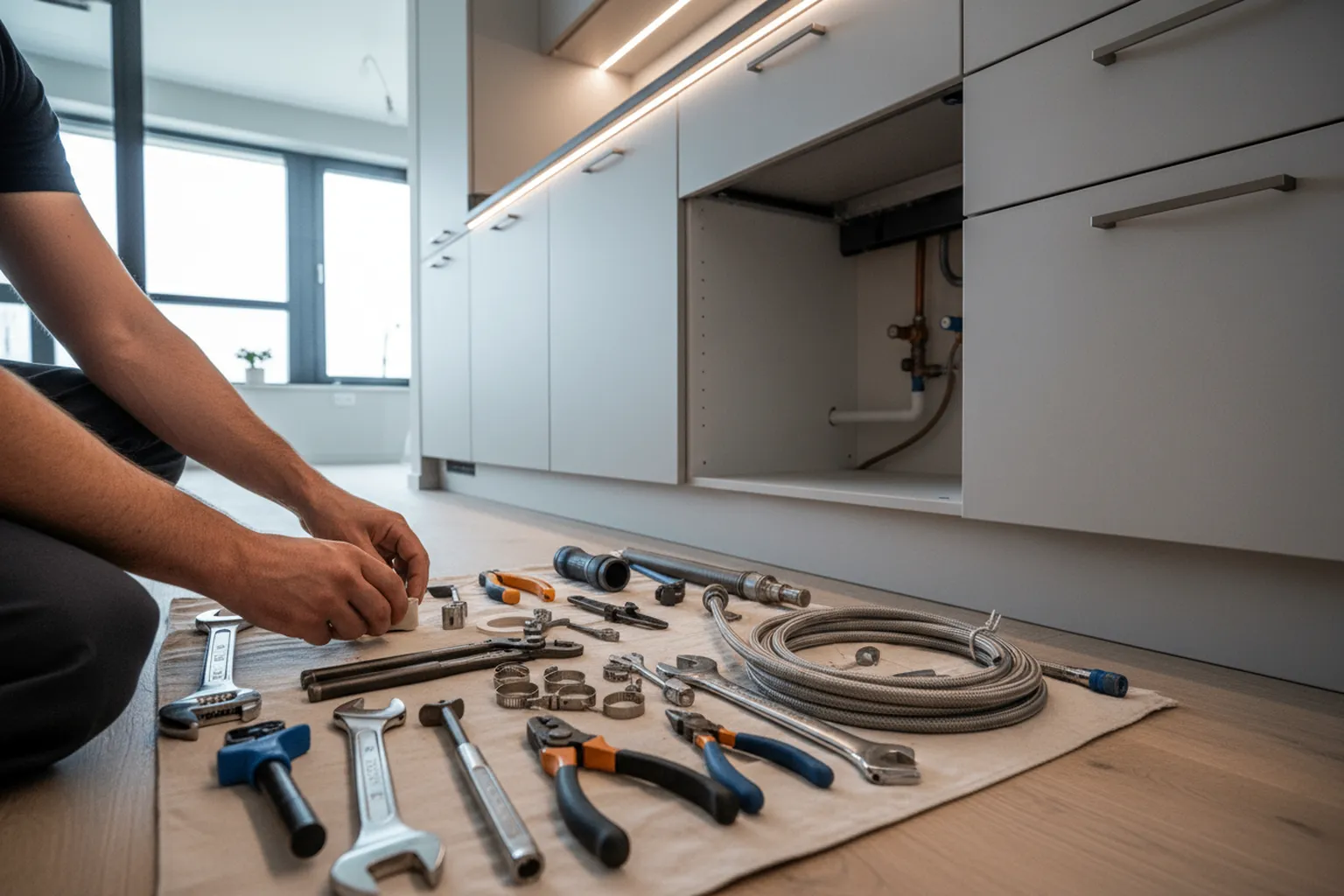
Dishwasher connections are done by technicians who know flats of every kind, from older blocks in Wola to new developments in Wilanow. Tradespeople come with a full set of tools and basic consumables. If extra materials are needed, they talk it through first or pick them up on the way.
Order in the app
Describe the job, add photos and the address. Tradespeople send their own prices and dates, and you pick one of the offers.
Open the app