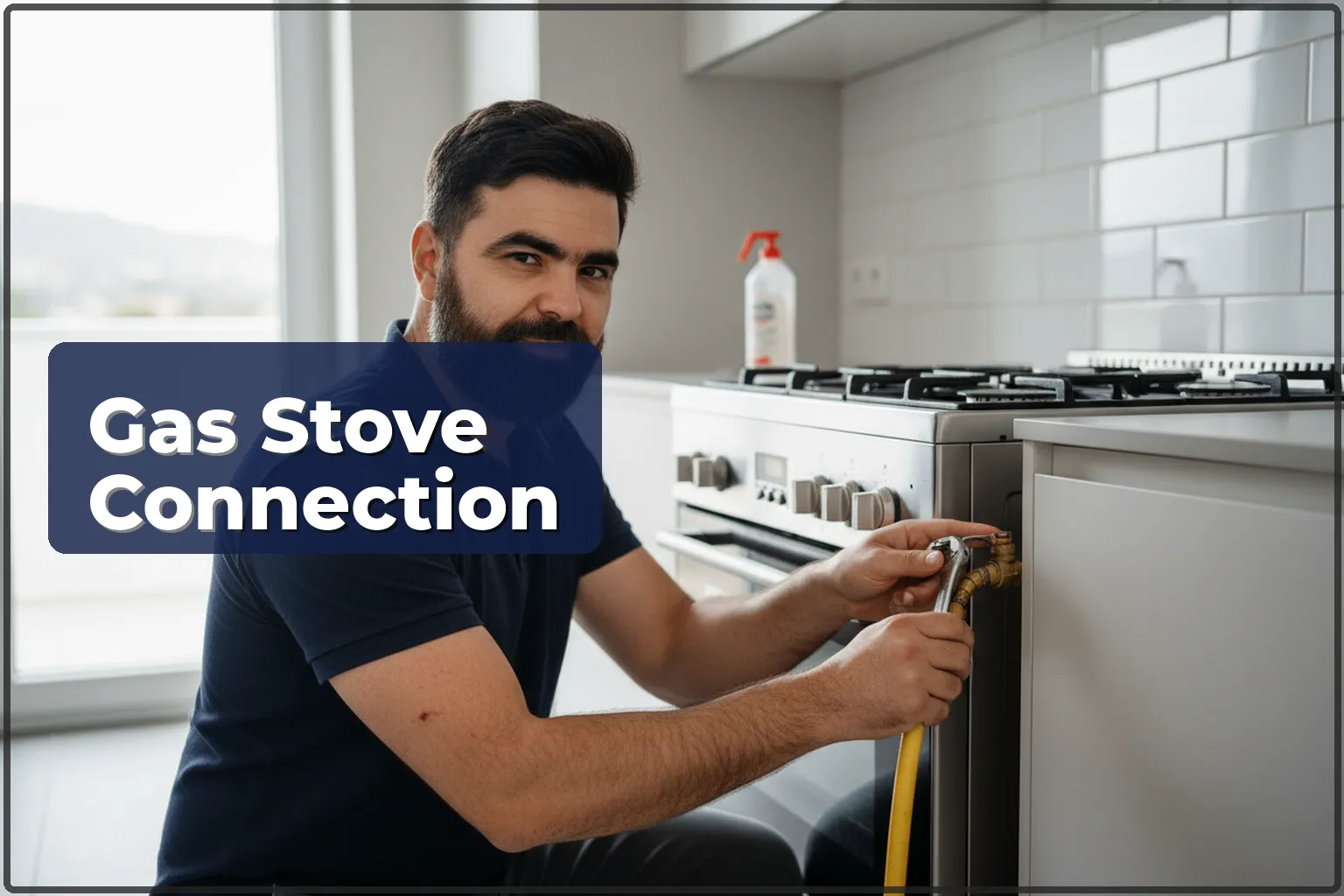
Please note: this article is only about connecting a freestanding gas stove (range with oven) to an existing gas point. If you need a built-in gas hob installed into a countertop: that is a separate service in the “Kitchen” section.
How much does connection cost and what affects the price
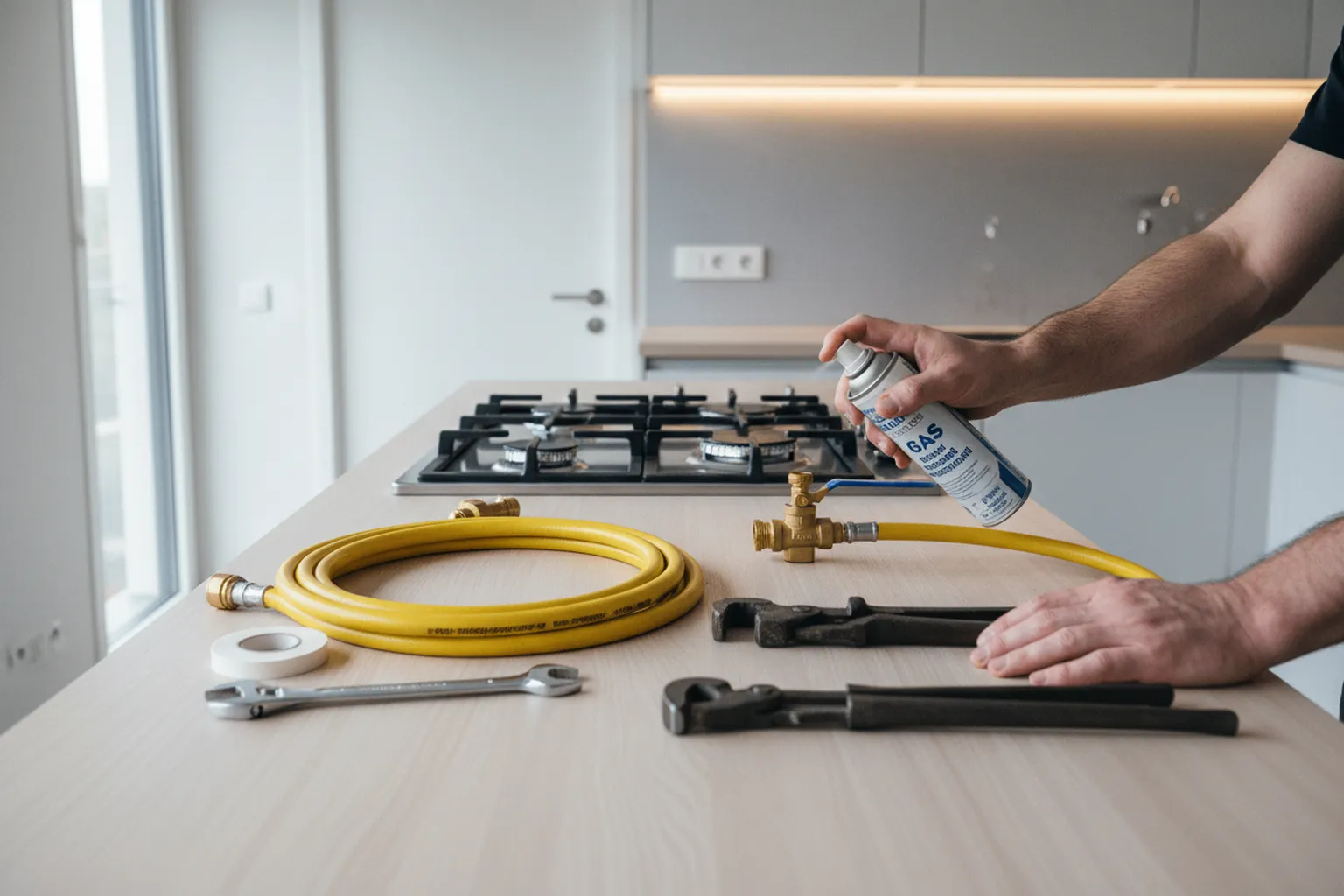
The price of connecting a gas stove depends on a few things. Is there a working gas shutoff valve? Does the flexible hose have to be replaced? Do you need an adapter or an extension piece? If the gas point is ready and the valve is working — the job takes 30 to 60 minutes. If the valve or hose needs changing, it takes longer. Basic fixings and consumables are included in the price. A certified gas hose is billed separately if a replacement is required. You can see current prices in the table below.
| Service | Price |
|---|---|
| Gas cooker connection | 150–450 zł |
Indicative prices. Ranges for a typical scope. Fixings included, materials separate. Minimum order 300 zł.
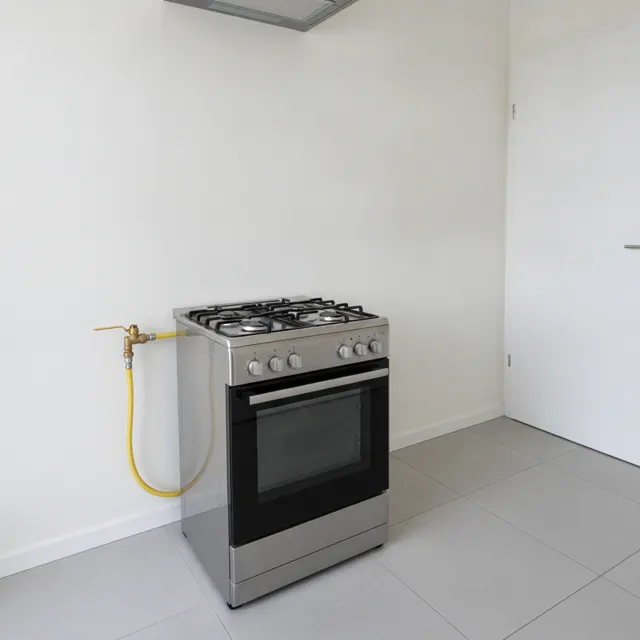
Price ranges and offers from tradespeople: odd job man in Warsaw.
How gas stove connection works step by step
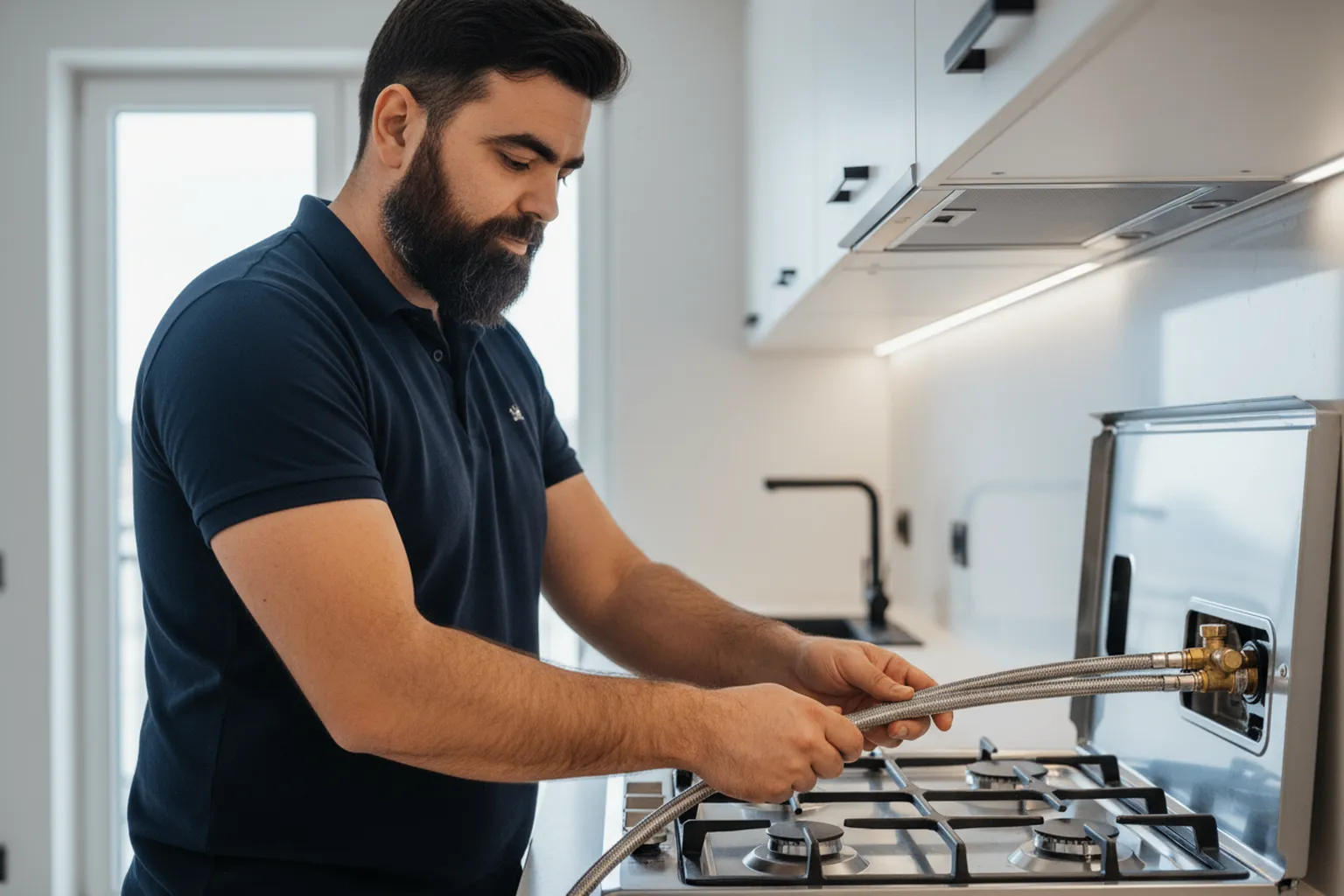
- You send a photo of the installation spot and the gas valve, the technician checks the scope of work and tells you what materials may be required.
- Timing depends on the tradesperson you choose: they give the arrival time in their offer.
- On site, the technician closes the gas valve and makes sure it works properly. If it does not seal or is stuck, replacement is advised (replacing a valve on the gas pipe is a job for the licensed gas service PSG, not a handyman).
- Tradespeople attach the flexible gas hose to the valve and to the stove. The hose must be certified, marked for natural gas, and the proper length: no strain and no extra loops.
- Tradespeople test every joint for leaks using a soapy water solution. Foam goes on each connection — if bubbles appear, the joint is not tight and has to be redone.
- Tradespeople level the stove with the adjustable feet. If the stove stands crooked, heating is uneven and pots can slide off.
- If the stove has electric ignition, they plug it in (standard 230V socket, earthing recommended).
- Tradespeople ignite each burner and the oven: checking that the flame is stable, there is no gas smell, and the ignition works properly.
- Tradespeople inspect the ventilation: a room with a gas stove must have an extractor or natural ventilation. Using gas without ventilation is dangerous.
Common mistakes when connecting a gas stove (and why they are dangerous)
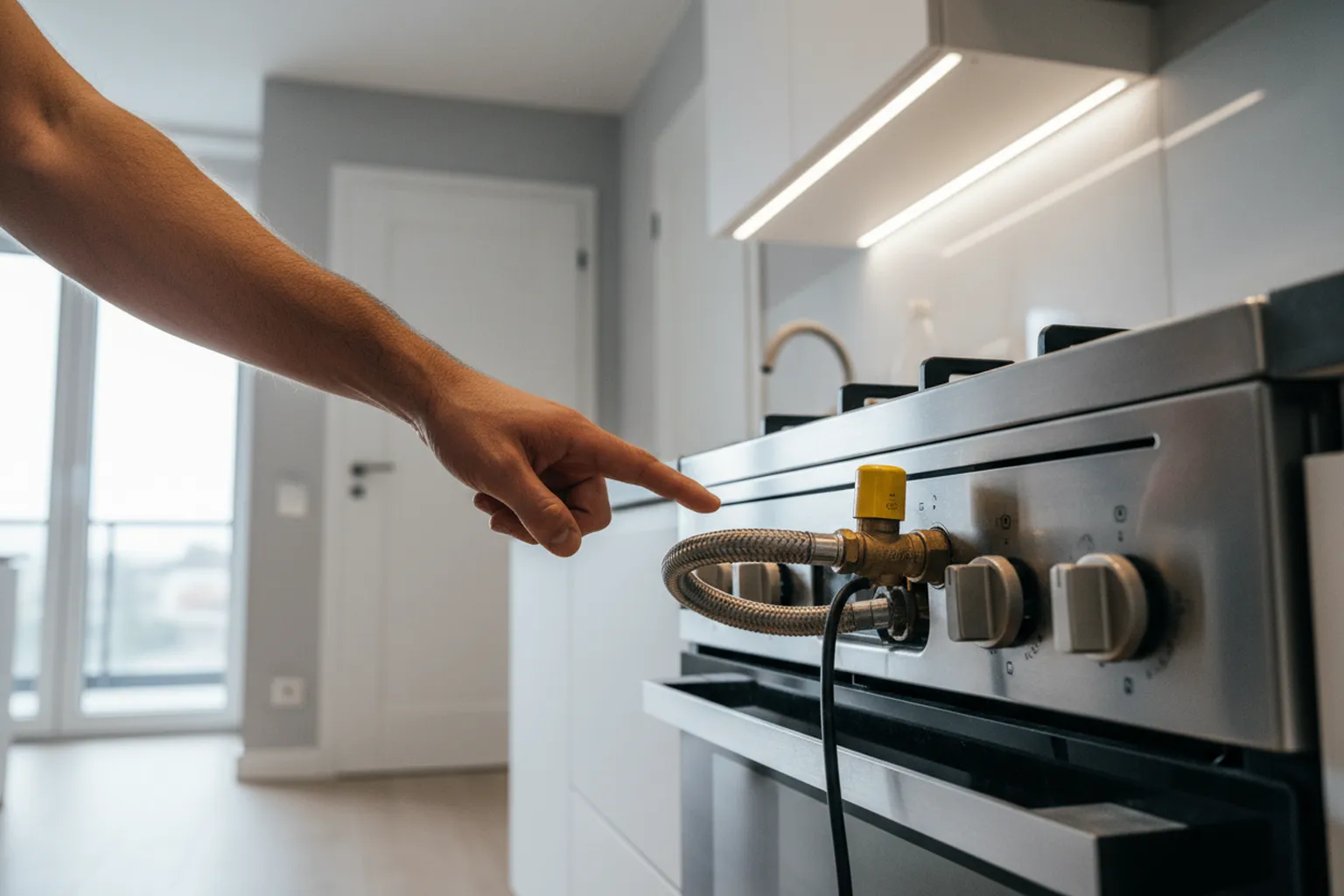
Warning: gas appliances are not like furniture or standard electrics. A mistake during gas connection can cause a leak, carbon monoxide poisoning, or an explosion. Here are the problems they come across again and again.
- Using an old or wrong hose: plain rubber hoses without braiding dry out and crack over time, and water hoses are not made for gas. A gas hose must be marked for natural gas (GZ) and still within its expiry date.
- Joining extra pieces onto the hose with adapters, a gas hose must be one continuous length, with no couplers or extensions in the middle.
- Skipping the leak test with soapy water — you cannot count on smell alone to spot a small leak.
- Not shutting off the gas before starting work: this is the most serious breach of safety.
- Using PTFE tape on connections with a union nut, on gasketed joints, tape is not needed and can do damage.
- Ignoring ventilation, a gas stove uses oxygen and creates combustion by-products. Without ventilation, CO (carbon monoxide) builds up.
- Pushing the stove tight to the wall and trapping the hose — the hose must not be crushed, sharply bent, or touching hot surfaces.
- Failing to level the stove: pots slide, grease runs unevenly, and the oven bakes unevenly.
Home fixes don’t belong anywhere near electricity or gas. See the jobs you should never DIY.
What to prepare before the technician arrives
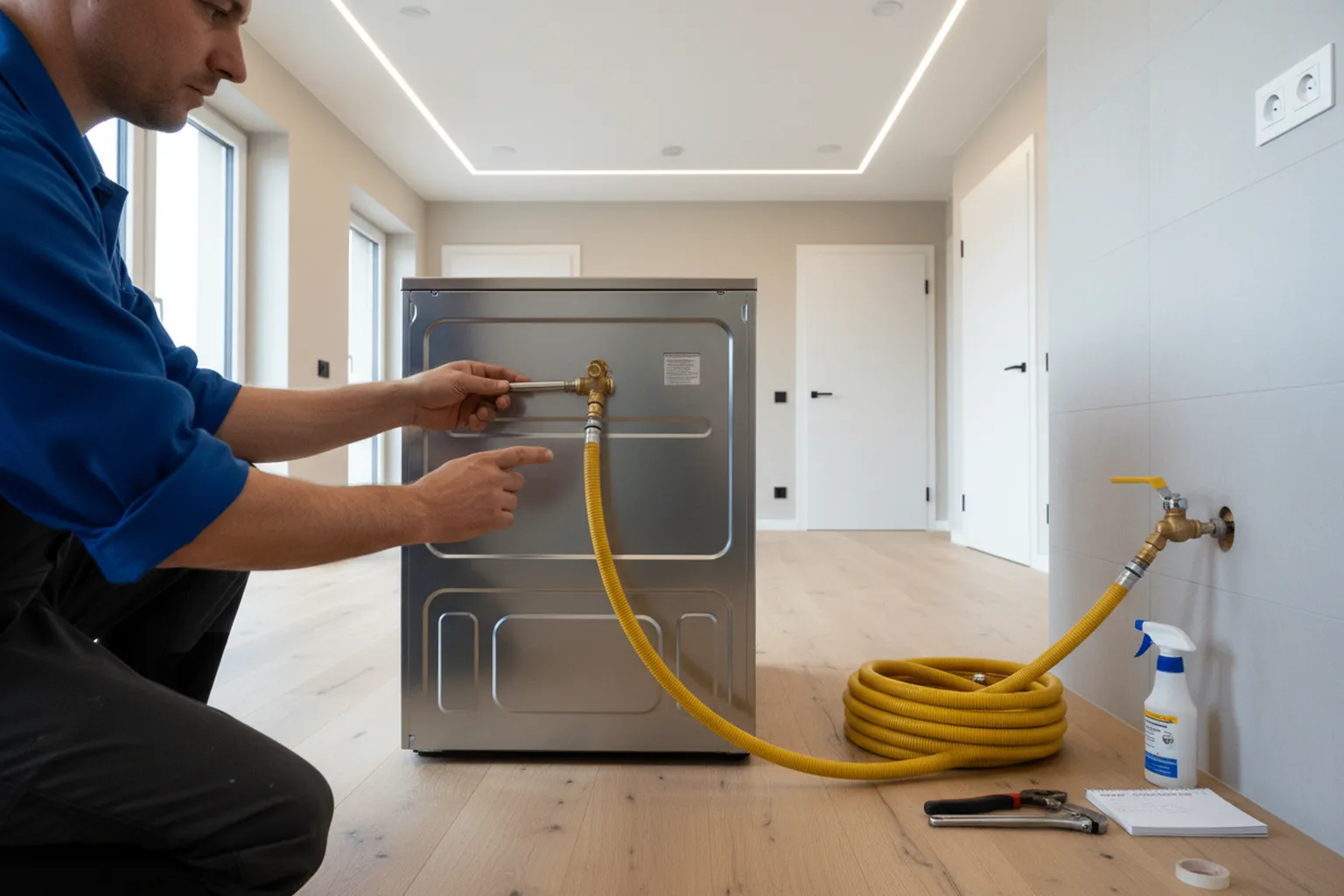
- Check that the gas shutoff valve is accessible and working, it should turn freely and fully cut off the gas supply.
- Clear the area for the stove and access to the gas pipe — the technician needs space to work.
- If the stove is new, unpack it and make sure all parts are there (feet, grates, trays, manual).
- Check whether a gas hose is included. If not, tell the technician beforehand so they can bring the right one.
- Confirm the gas type: Warsaw uses natural gas (GZ-50). The stove must be adjusted for it, not for propane-butane.
- If the stove has electric ignition or an electric oven — make sure there is a socket nearby.
- Find out where the main gas shutoff valve in the flat is: for emergencies.
- Check the ventilation: open the vent grille and make sure the duct is clear (hold a sheet of paper against it — it should stick).
- Send entry details: intercom code, parking information.
- If there is no carbon monoxide (CO) detector in the flat, think about fitting one. It is not legally required for gas stoves, but it is strongly recommended.
Gas stove connection in practice: a Warsaw case
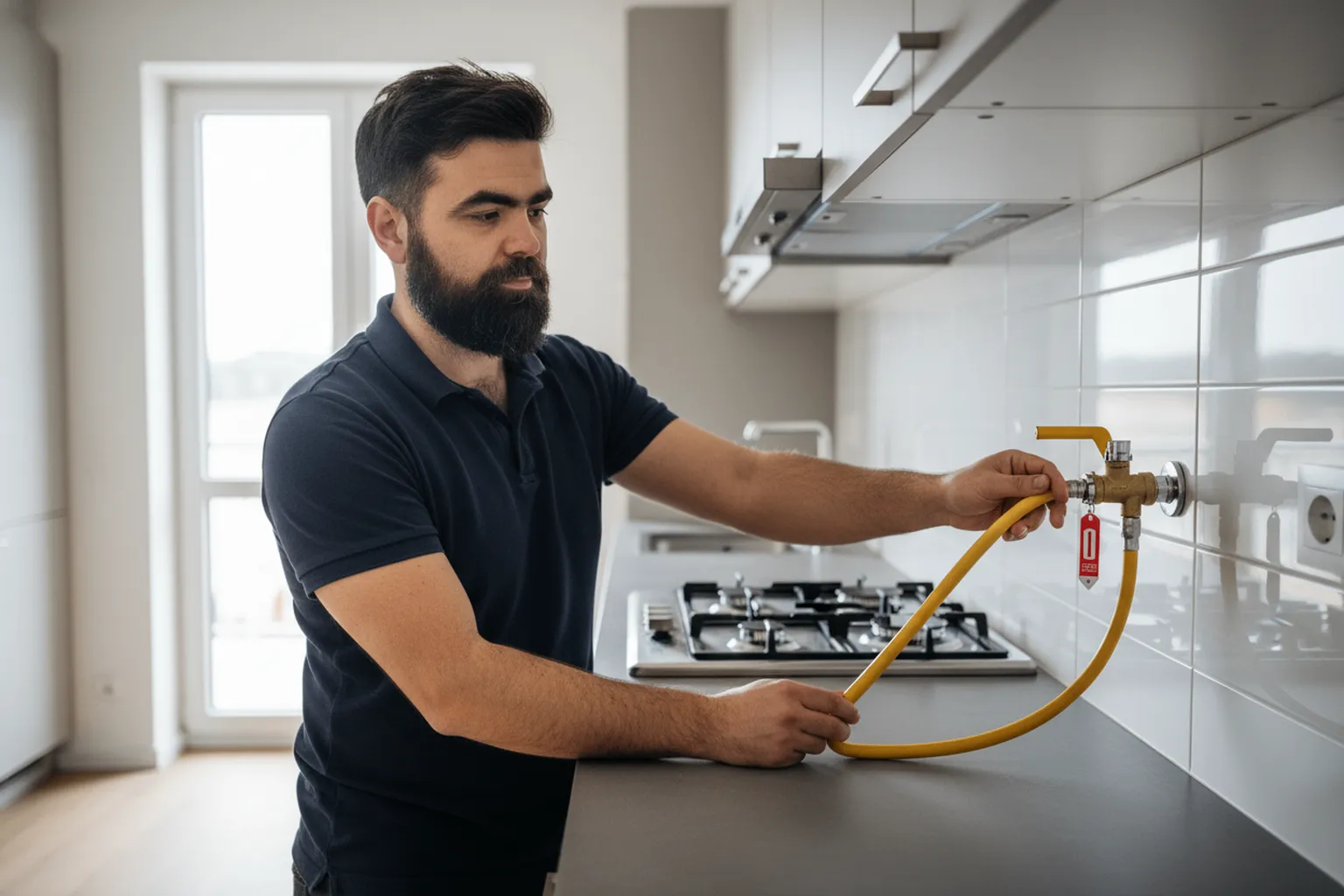
A client in the Zoliborz district bought a new Amica gas stove to replace one that had been working for 15 years. The old hose was plain rubber with no braiding and visible cracks — honestly, it was a surprise it had not started leaking already. The gas valve was stiff to turn but still sealed properly. The technician disconnected the old stove, removed the worn hose, and installed a new certified hose with stainless steel braiding. He connected the new stove and levelled it. Every joint was checked with soapy water: dry, not one bubble. Each burner was lit: the flame was even and blue, with no yellow tips. The electric ignition worked properly. Tradespeople checked the extractor — the pull was normal. Tradespeople advised the client to have the gas valve replaced by PSG, because it was right on the edge: still holding, but very stiff. The whole job took about 40 minutes.
Frequently asked questions
Do I need a certified specialist to connect a gas stove?
In Poland, connecting a gas stove to an existing gas point (with a valve) does not require a licence, a handyman can do the job. But replacing a gas valve on the riser, moving a gas pipe, or making a new gas point is work for a licensed gas service (e.g. PSG).
How do I check for a gas leak?
Put a soapy water solution (water plus washing-up liquid) on every connection. If bubbles show up, there is a leak. Shut off the gas valve right away, air out the room, and call a specialist. Never check with an open flame.
What hose do I need for a gas stove?
You need a certified flexible hose marked for natural gas (GZ). The length should be enough so there is no tension, but without extra loops: usually 1 to 1.5 metres. Replace the hose every 10 years or earlier if it is damaged.
Will a propane-butane stove work in a Warsaw flat?
No. Warsaw flats use natural gas (GZ-50). The stove must be set for that gas type. If the stove was bought for bottled gas, the jets have to be changed.
Is an extractor or ventilation mandatory?
Yes. A gas stove uses oxygen and creates combustion by-products, including carbon monoxide (CO). The room must have working ventilation — natural or mechanical. Using a gas stove without ventilation can be fatal.
What is included in the connection price?
Labour, travel within Warsaw, and basic fixings. A gas hose, if replacement is needed, is charged separately. Removal of the old stove: by arrangement.
When should I call the gas service (PSG) instead of a handyman?
Call PSG if you need to: replace a gas valve on the riser, move a gas pipe, make a new gas point, or repair a leak on the pipe itself. A handyman connects the stove to an existing working point: nothing beyond that.
Is a carbon monoxide detector worth installing?
Definitely. A CO detector is inexpensive and can save lives. It matters even more if the flat has both a gas stove and a gas boiler. Fit it on the wall at 150 cm height, at least 1.5 m from gas appliances.
Who does the work
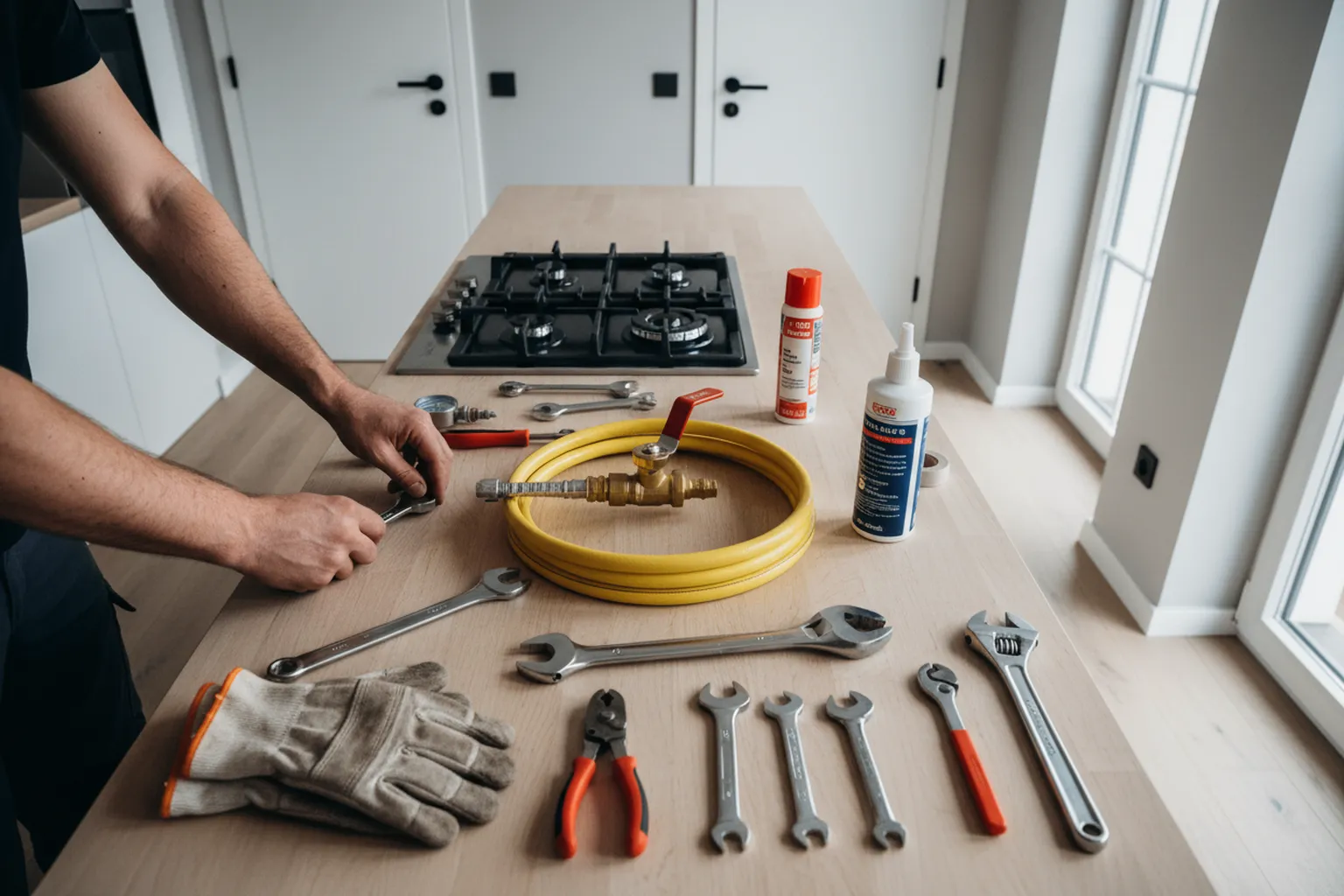
Gas stove connections are done by technicians who know gas appliances in Warsaw flats inside out — from older buildings in Praga to new developments in Wilanow. Tradespeople come with tools, a gas wrench, and soapy water for leak testing. If a hose is needed, they bring a certified one. Tradespeople connect the stove to a ready gas point, but they do not touch gas pipes or valves: that part is for licensed services.
Order in the app
Describe the job, add photos and the address. Tradespeople send their own prices and dates, and you pick one of the offers.
Open the app