How much does connection cost and what affects the price
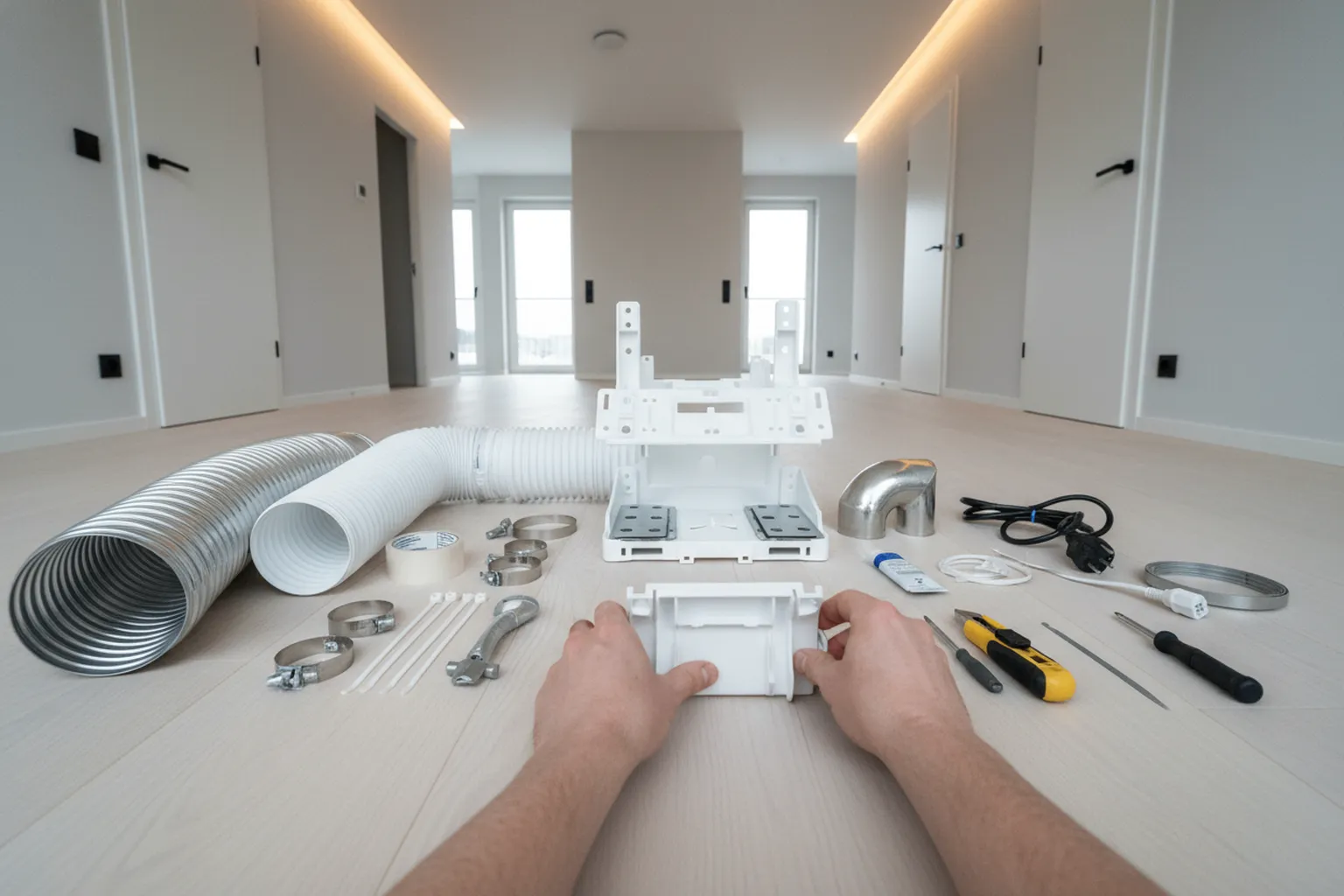
The price of connecting a tumble dryer depends on the type of unit: condenser, heat-pump, or vented (with an exhaust duct leading outside). Condenser and heat-pump units only require a power socket and, if needed, a condensate drain into the sewer. Vented units need a duct routed outside — that job is more complicated and takes extra time. Stacking the dryer on top of a washing machine is another factor: you need a stacking kit, and the whole setup has to be checked for stability. Basic fixings are included in the price; consumables (flexible ducting, clamps, adapters) are billed separately. You can see the current prices in the table below.
| Service | Price |
|---|---|
| Tumble dryer connection | 150–250 zł |
Indicative prices. Ranges for a typical scope. Fixings included, materials separate. Minimum order 300 zł.
What it costs and how to book: washing machine installation in Warsaw.
How the connection works
- You send a photo of the installation place (bathroom, utility room, kitchen), the technician checks the scope of work and gives you an estimated price.
- Timing depends on the tradesperson you choose: they give the arrival time in their offer.
- On site, the technician inspects the socket (earthing, load capacity), the room ventilation, and whether a condensate drain is available.
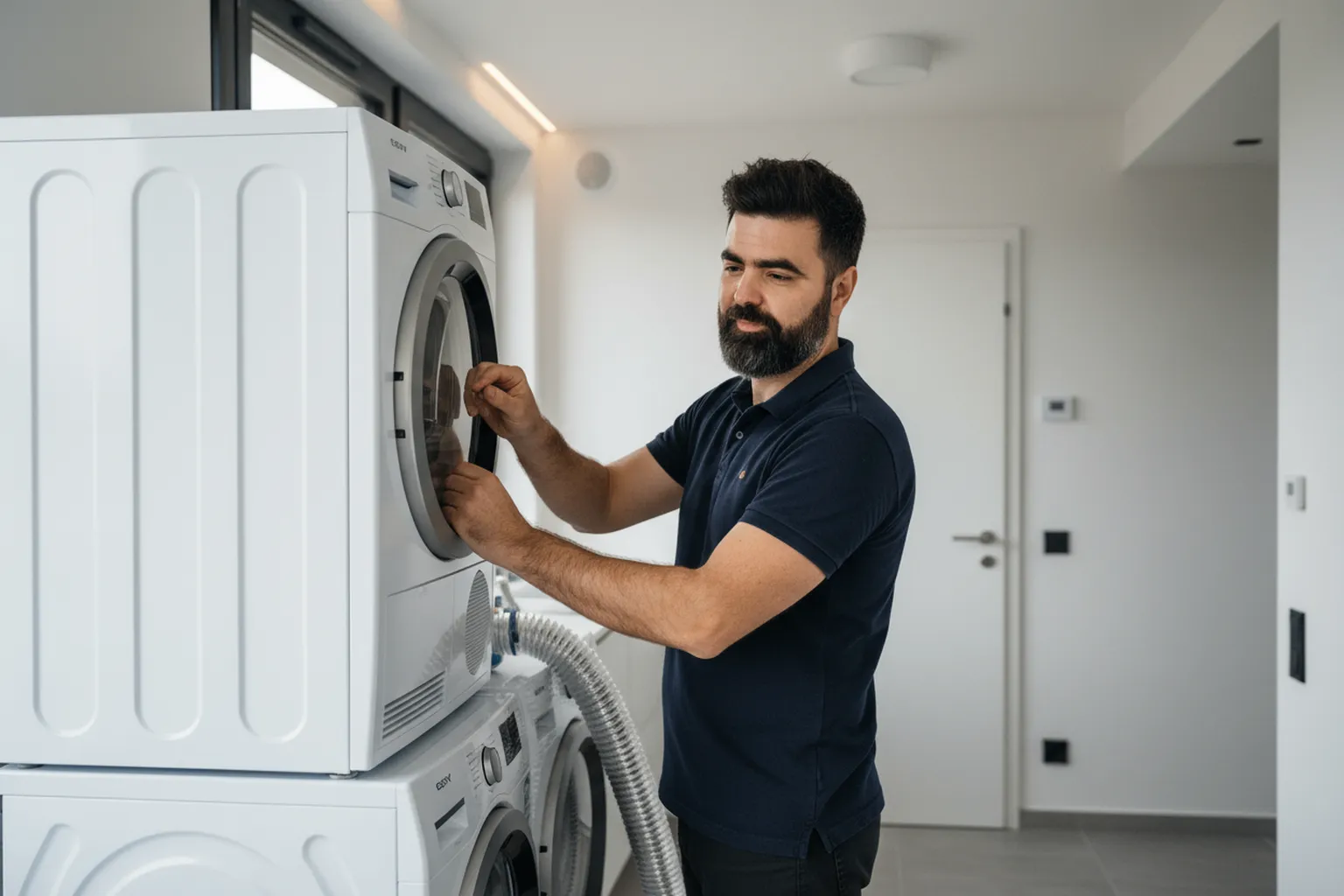
- If the dryer is being placed on top of a washing machine, they install the stacking kit and check the stability and level of the column.
- Tradespeople connect the power. Most dryers need a separate 16A circuit with earthing — without that, the risk of overload is high.
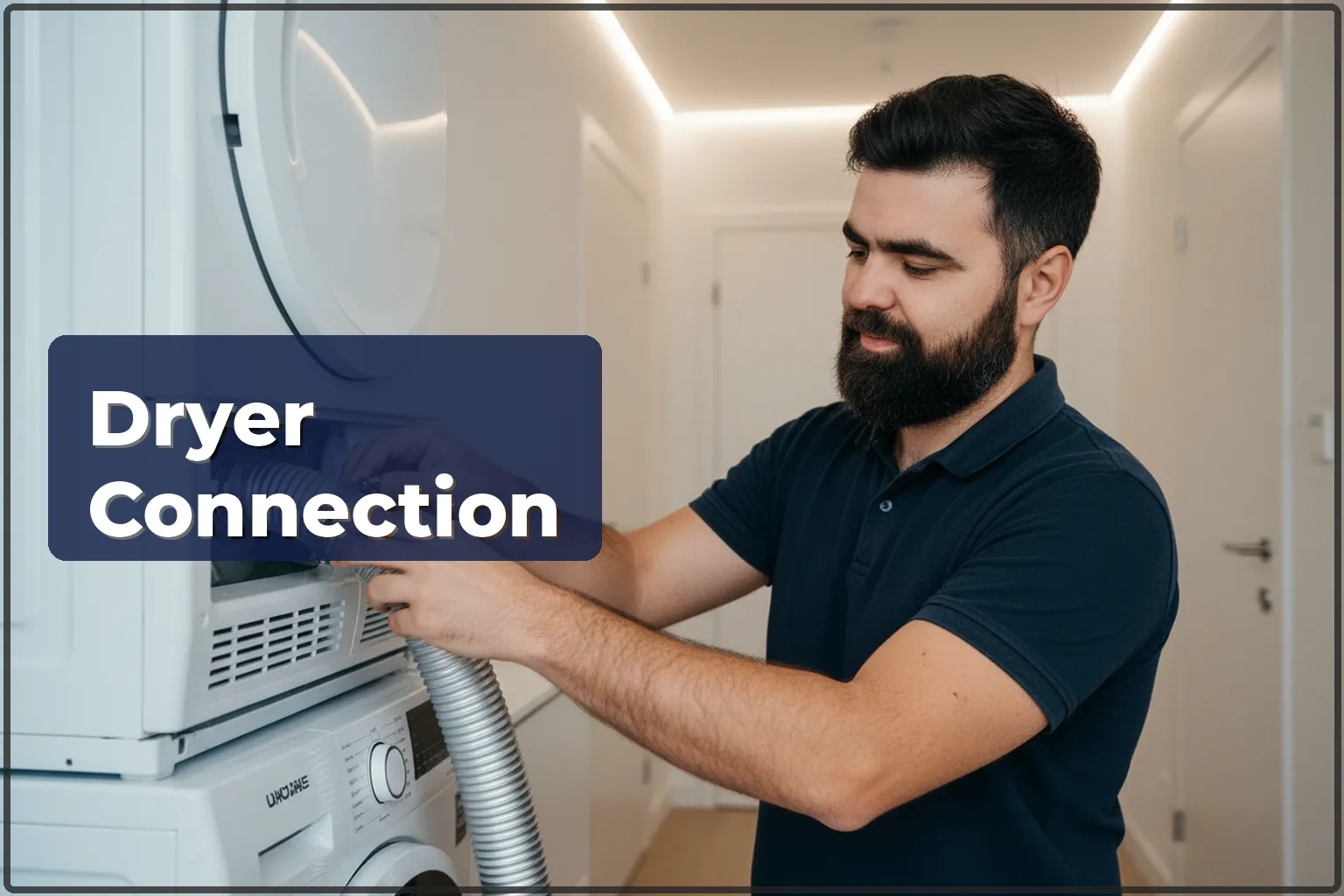
- For vented units they install flexible ducting to the ventilation shaft or a window. For condenser units they connect the condensate drain to the sewer or inspect the collection tank.
- Tradespeople run a test cycle: checking the heating, fan operation, moisture removal, and the tightness of each connection.
Common mistakes when connecting a dryer

- Plugging the dryer into a regular extension lead: load up to 2.5 kW, the lead gets hot and can melt.
- No ventilation in the room — damp air remains in the bathroom, and mould starts showing up on the walls and ceiling.
- Installing a vented unit without an exhaust duct, hot, wet air goes straight back into the room.
- Putting the dryer on a washing machine without a stacking kit: it shakes and may fall off.
- Leaving the machine unlevelled — more vibration, more noise, faster bearing wear.
- Bending the condensate drain hose: water cannot drain away, and the tank overflows.
- Skipping lint filter cleaning after the first cycle, performance drops and electricity use goes up.
- Pushing the machine right up against the wall — the ventilation openings on the rear panel get blocked.
What to prepare before the technician arrives

- Unpack the dryer and remove the transit fixings (listed in the manual).
- Choose the installation spot: bathroom, utility room, kitchen, or a separate laundry area.
- If you want to stack it on a washer, make sure you already have the stacking kit (or order one for your model beforehand).
- Check the socket: earthing, 16A breaker, ideally a separate circuit.
- If there is no socket or it is too far away, tell the technician so he can bring cable.
- For a vented unit, check whether there is a ventilation shaft or a way to run ducting through a window.
- Make sure there is sewer access in the room if you want the condensate to drain automatically.
- Clear the way: the technician needs space to carry in and position the appliance.
- Keep the dryer manual ready: it shows the technical requirements.
- Provide the intercom code, floor number, and parking details.
Dryer connection in practice: a Warsaw case

A client in the Ursynow district bought a Bosch heat-pump dryer and wanted it installed on top of a Samsung washing machine in the bathroom. The first issue: the original Bosch stacking kit did not match the Samsung, so they had to use a universal adapter bracket. The second: the bathroom socket had no earthing and was on the same circuit as the lighting. The technician pulled a dedicated line from the consumer unit with a 16A breaker and an RCD. Tradespeople levelled the dryer and checked that the column was stable. The client wanted the condensate drain led straight into the sewer, so they connected the hose to the basin siphon. After a test cycle they confirmed the machine heated evenly, the condensate drained correctly, and the stack stayed steady without vibration. The whole job took about three hours, including the electrical work. Result: everything compact, safe, and laundry dry in an hour.
Frequently asked questions
Which dryer is better: condenser or heat-pump?
A heat-pump dryer uses less power but costs more to purchase. A condenser dryer is more straightforward and cheaper, but it uses more electricity. Both are connected in the same way: you need a socket and, if desired, a condensate drain.
Is a dedicated socket mandatory?
Tradespeople highly recommend it. A dryer draws up to 2.5 kW — on a shared circuit with other appliances, it may trip the breaker. Earthing is mandatory.
Can I stack the dryer on top of a washing machine?
Yes, but only with the manufacturer’s stacking kit or a tested universal bracket. Without it, the stack is unstable and unsafe.
Does a condenser dryer need an exhaust duct?
No. Condenser and heat-pump units do not need external ducting. But the room still has to be ventilated: otherwise moisture will build up.
What is included in the connection price?
Labour, basic fixings, travel within Warsaw. Extra materials (stacking kit, flexible ducting, cable, adapters) are charged separately.
How long does the connection take?
If the socket and space are ready: around an hour. If electrical work, stacking, or ducting is required — up to three hours.
Can I install a dryer in a windowless utility room?
A condenser or heat-pump unit: yes, as long as the room has ventilation. A vented unit: only if there is a duct leading outside.
Do tradespeople connect all dryer brands?
Yes — Bosch, Samsung, LG, Beko, Electrolux, AEG, and others. The connection method is the same; the only differences are in the stacking kits.
Who does the work

Dryer installation and connection is done by technicians with hands-on experience in household appliances and electrical work. Tradespeople know the realities of Warsaw flats, from small bathrooms in Praga to large laundry rooms in Wilanow. Tradespeople come with tools and basic materials. If anything extra is needed, they discuss it in advance.
Order in the app
Describe the job, add photos and the address. Tradespeople send their own prices and dates, and you pick one of the offers.
Open the app