
How much does hook installation cost
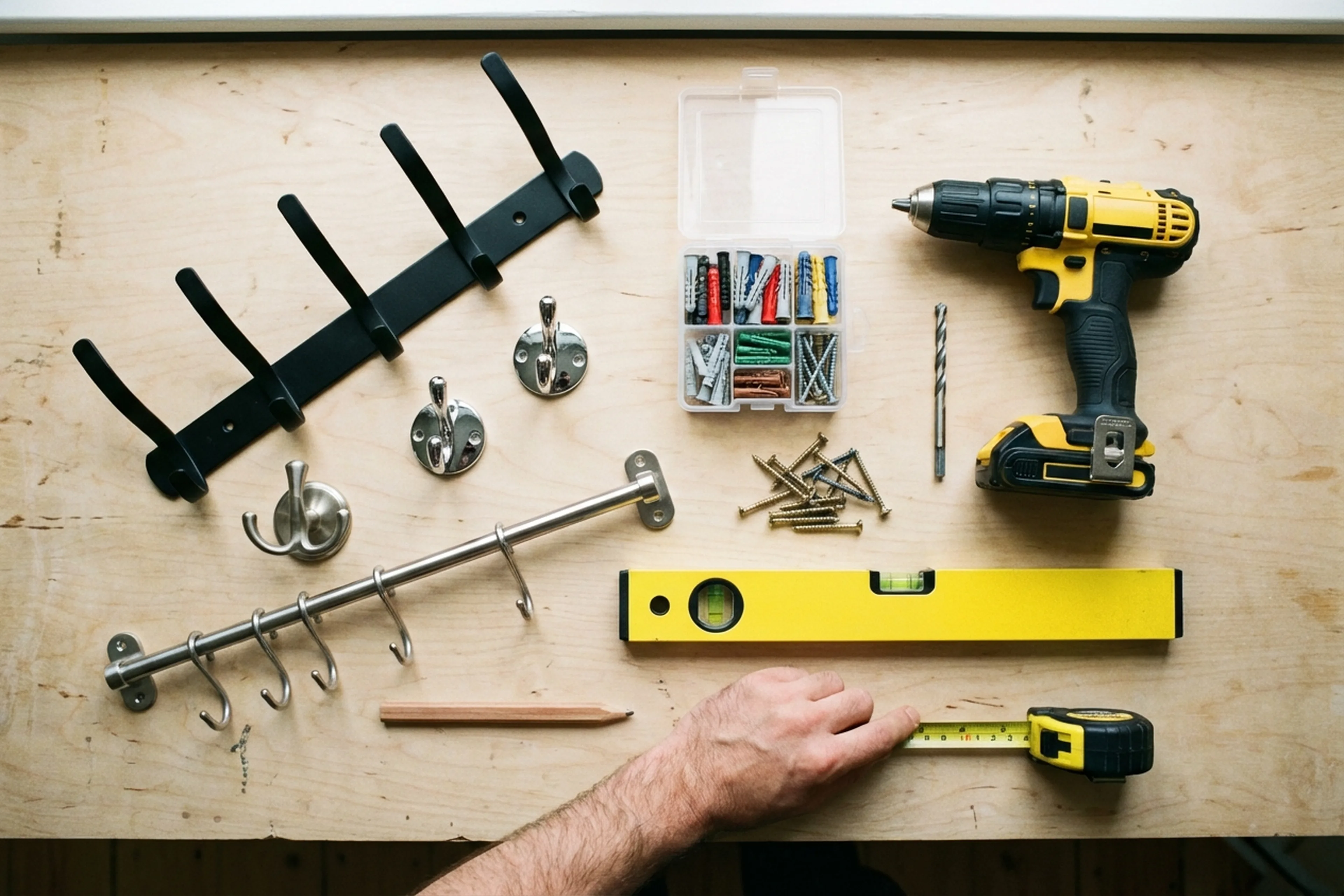
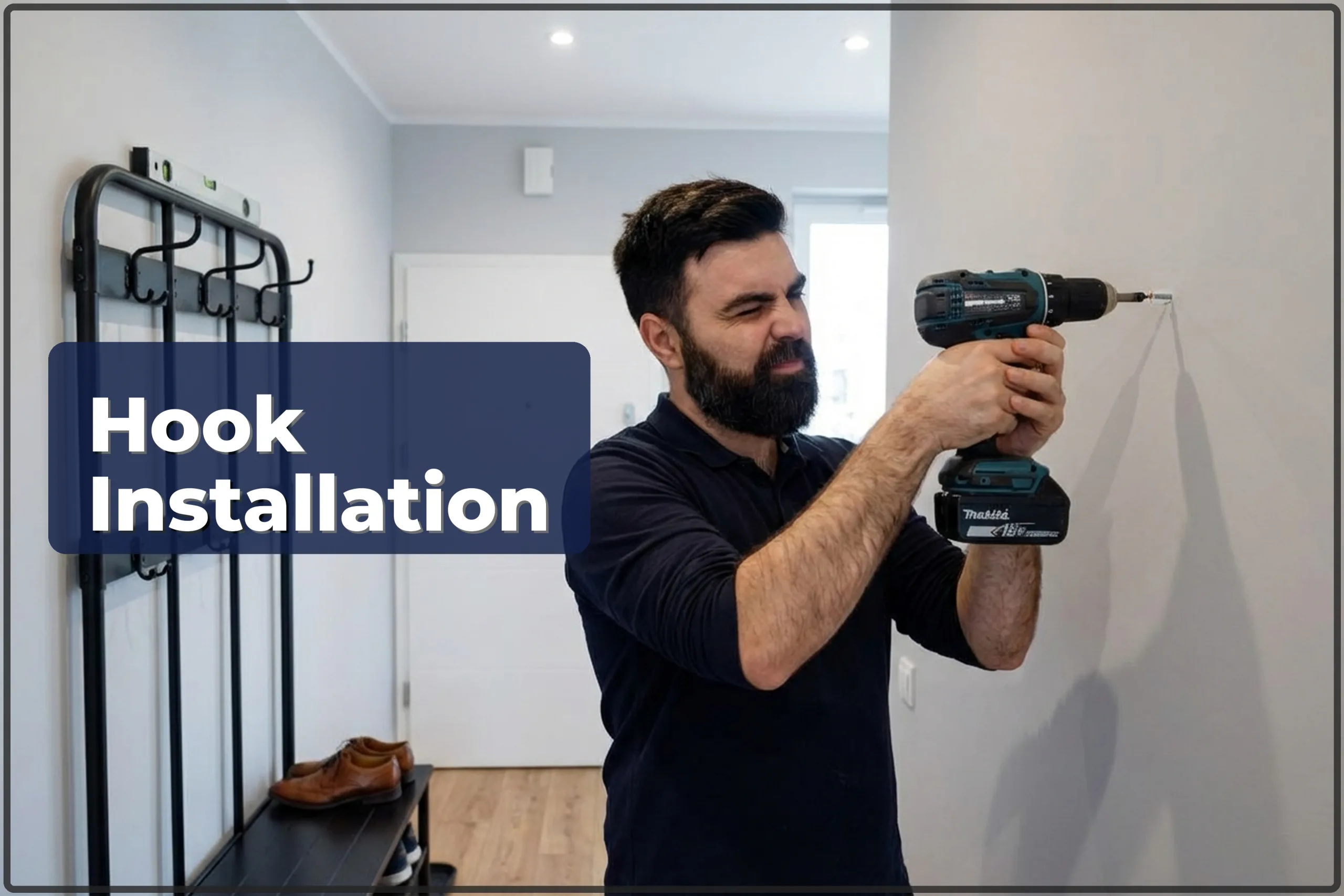
The cost comes down to the number of fixing points and the wall material. One hook in concrete takes a minute. A five-hook rail on tiles is more delicate — you have to go through the ceramic without cracking it. Standard fixings are part of the price. Current rates are in the table below.
| Service | Price |
|---|---|
| Coat rack installation | 80–120 zł |
| Hang a wall shelf | 80–250 zł/szt |
Indicative prices. Ranges for a typical scope. Fixings included, materials separate. Minimum order 300 zł.
Rather hand the job over? More here: wall mounting service in Warsaw.
What gets installed
- Wall hook rails (hallway, corridor).
- Single hooks: for towels, bathrobes, bags.
- Over-door hooks (with and without drilling).
- Hangers with a shelf for hats.
- Kitchen utensil hooks on rails.
- Key holders.
- Double and triple hooks for bathrooms.
How installation works
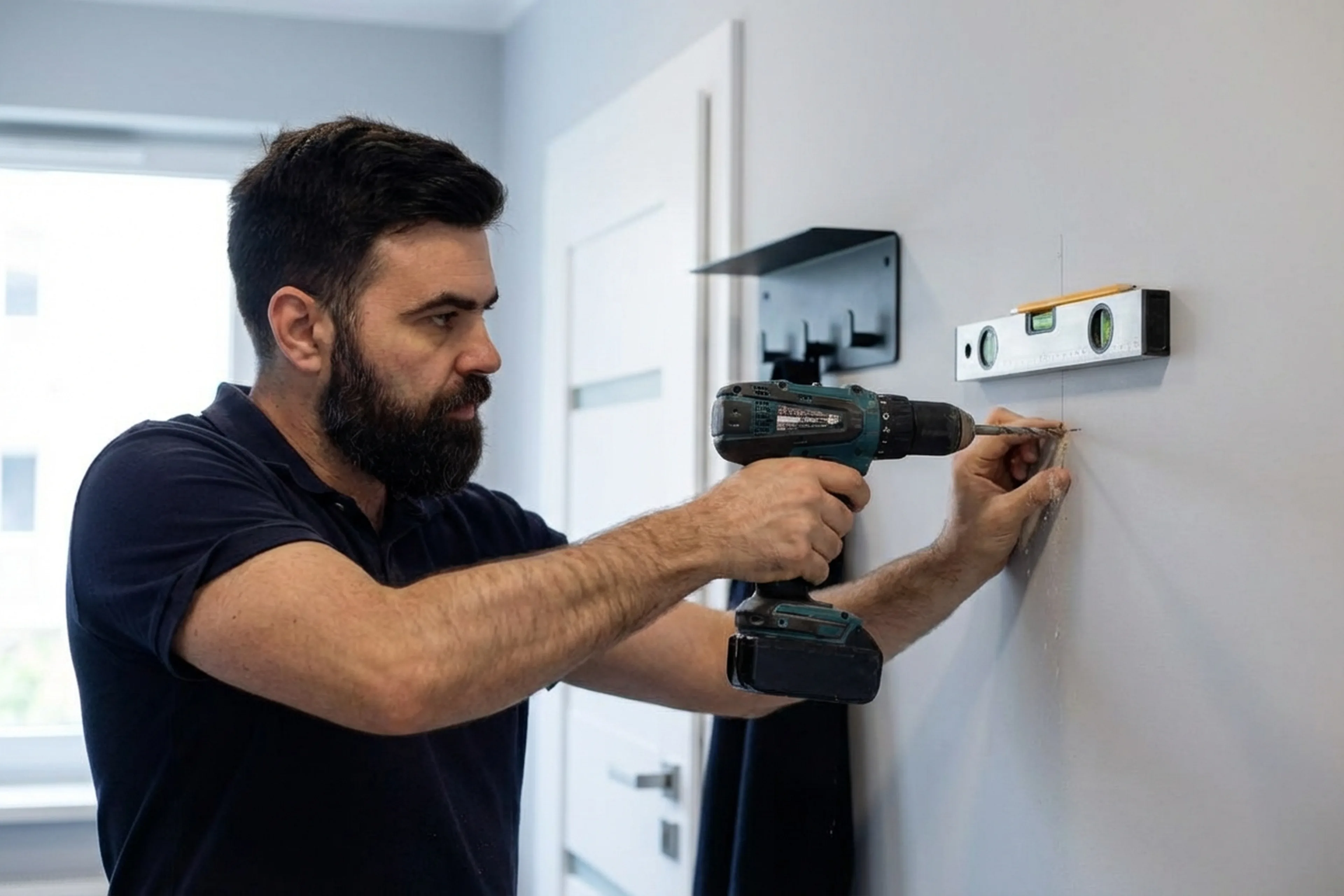
- Tradespeople check the wall type: concrete, brick, plasterboard, tiles.
- Tradespeople pick the right fixings: standard plugs for concrete, toggle bolts for plasterboard, tile drill bits for ceramics.
- Tradespeople mark the fixing points with a level. Even one hook should sit straight.
- Tradespeople drill. On tiles — first a spade bit without hammer action, then they change to a masonry bit.
- Tradespeople fit the plugs and screw in the hanger or hooks.
- Tradespeople test it: hang a heavy coat and give it a tug. It has to stay solid with no wobble.
Common mistakes
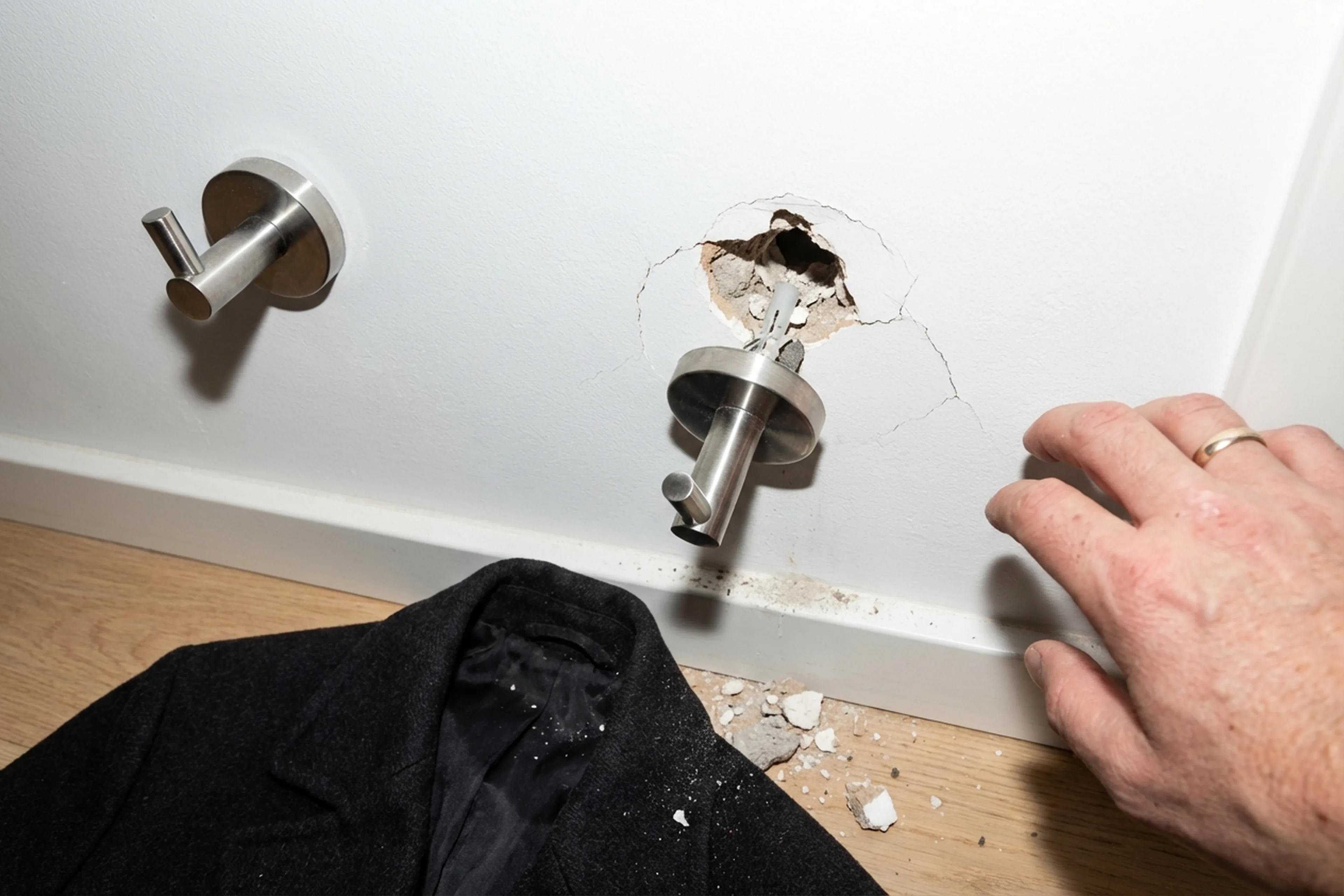
- Putting a hook into plasterboard with an ordinary screw — it tears out with the first coat.
- Drilling tiles with hammer mode on: the tile cracks or chips.
- Skipping a wiring check: the drill goes into a cable.
- Using a plug that is too short — the hook moves.
- Mounting a heavy rail on two fixings instead of four: it bends.
- Fixing into tile grout: the plug has nothing to grip.
- Ignoring the height — children cannot reach it.
What to prepare
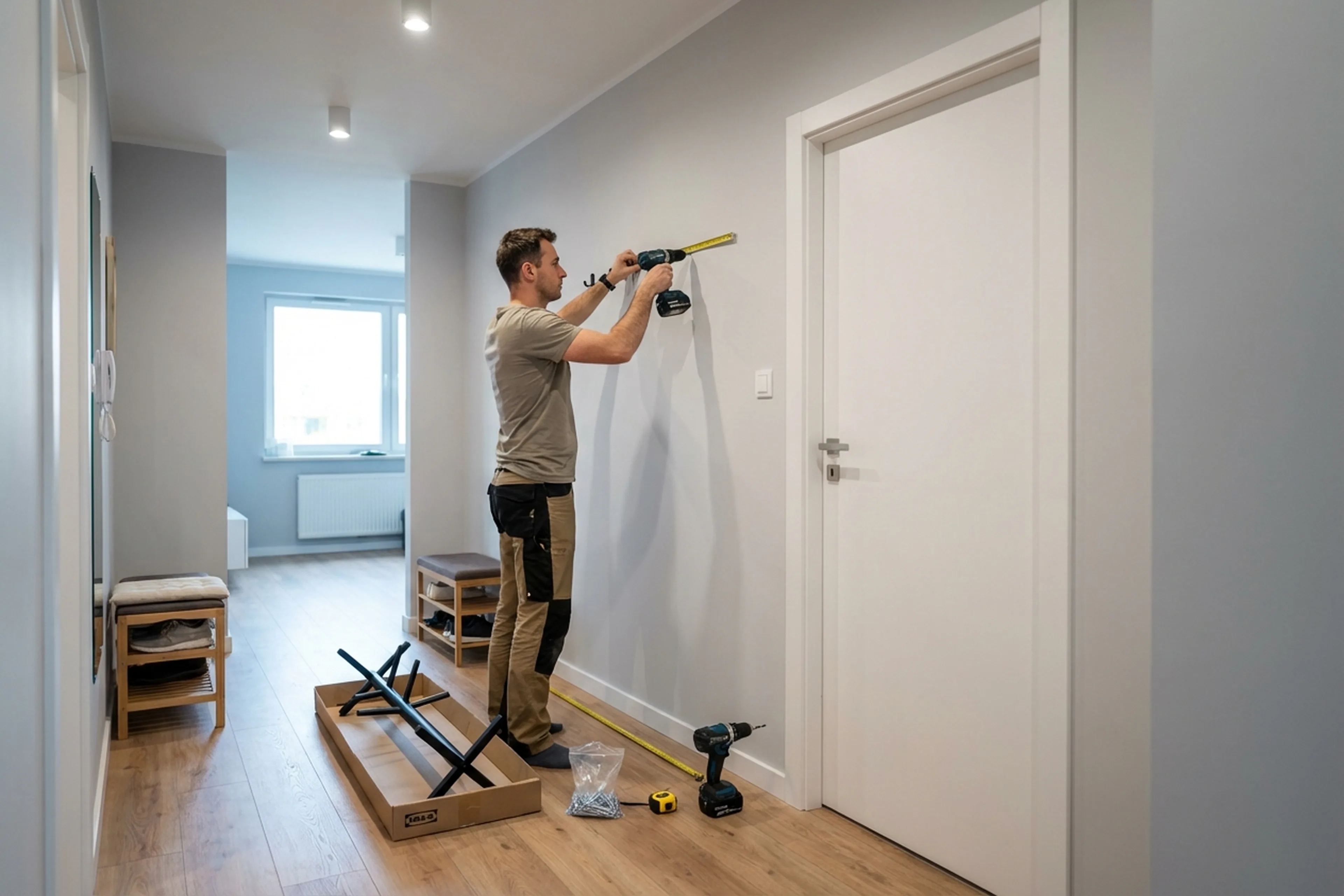
- Buy the hanger or hooks beforehand.
- Choose the spot: which wall, what height.
- If tiles, check if you have a spare tile.
- Find out what wall type you have.
- Clear the area: take clothes off any existing hooks.
- Make sure there is a power socket for the drill.
- Provide the intercom code.
A real case from Warsaw: coat hook installation
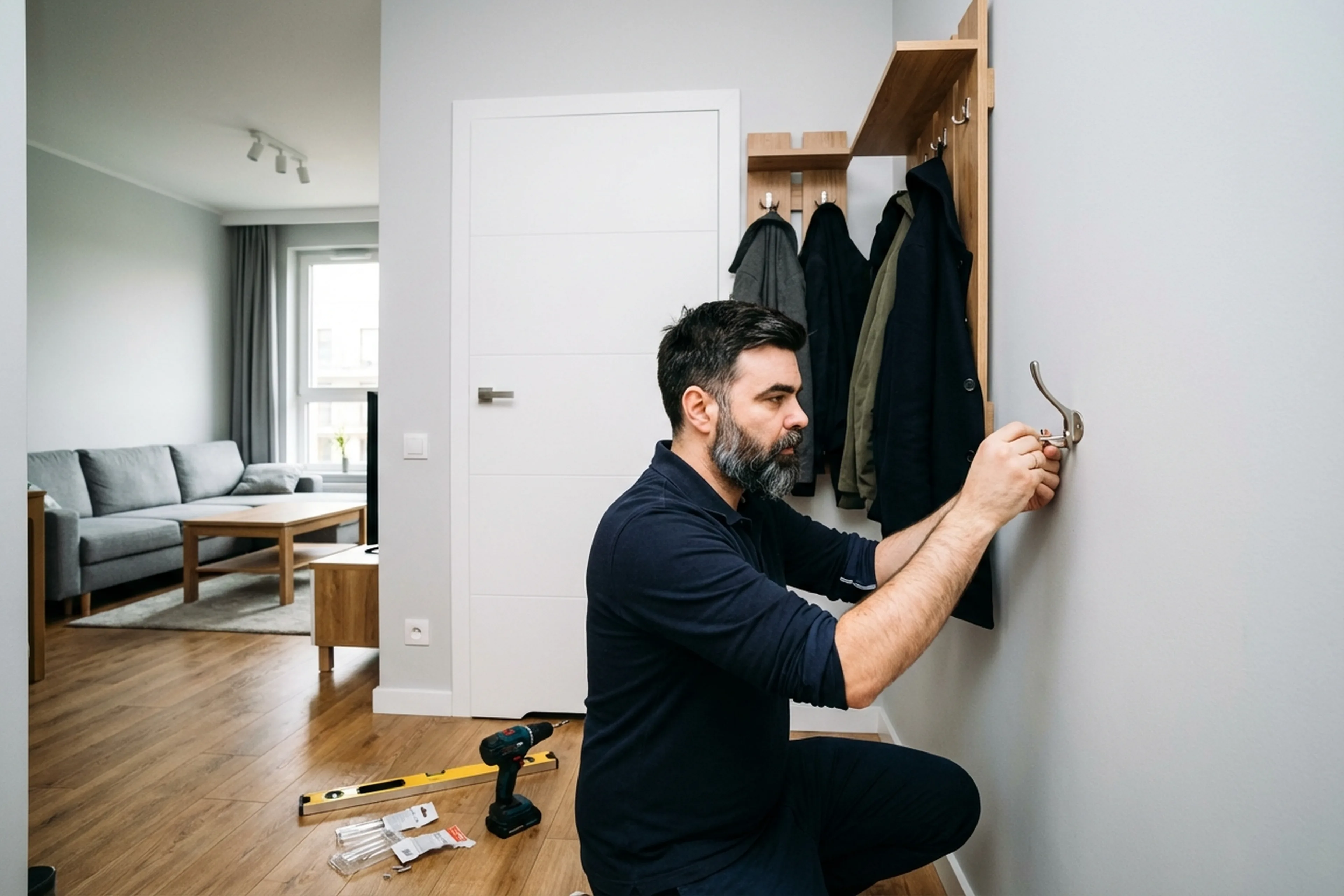
A family in Ursynow moved into a new-build flat — bare walls, not one hook anywhere. They needed: a seven-hook rail in the hallway (concrete), three towel hooks in the bathroom (tiles), and two hooks in the kitchen (plasterboard). Hallway: standard 8 mm plugs. In the bathroom, the technician drilled the tiles with a spade bit on no-hammer mode, then the concrete with a hammer drill. Not one tile cracked. Kitchen: toggle bolts. The whole job took 40 minutes.
Frequently asked questions
Are fixings included?
Standard fixings — yes. Specialist ones (toggle bolts, chemical anchors): charged separately.
Can a tradesperson install on tiles?
Yes. Tradespeople drill with a specialist bit on no-hammer mode. If the tile is old or thin, they will warn you about the risks first.
What about plasterboard?
Toggle bolts or molly bolts. Heavy hangers are fixed into the metal stud frame.
How many hooks per visit?
Usually 5-15. A complete set for the whole flat can be done in one visit.
Do tradespeople work weekends?
Yes, Saturdays and Sundays are normal working days.
Who does the work
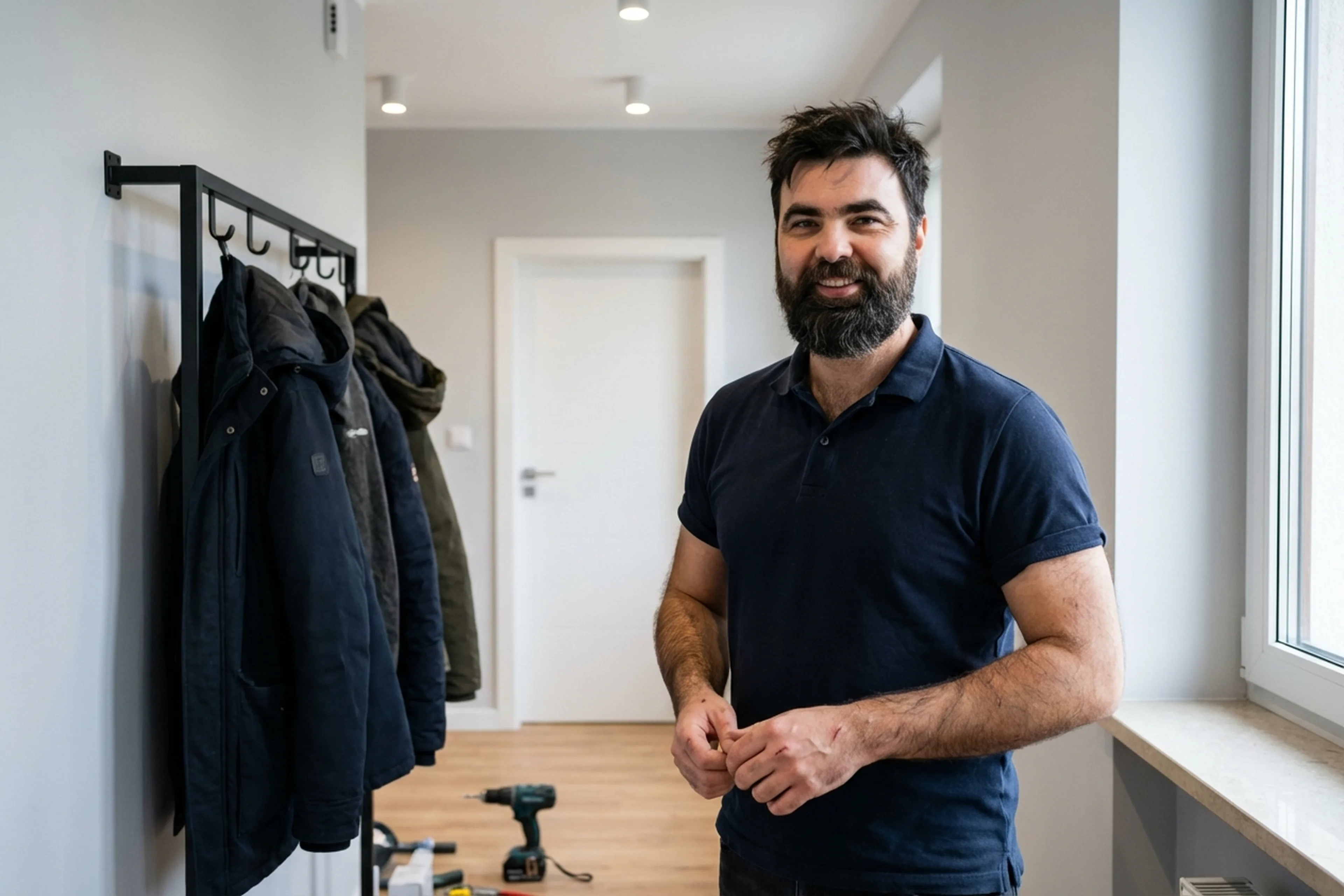
The installation is done by technicians who know all wall types: concrete, brick, plasterboard, tiles. Tradespeople cover Mokotow, Wola, Ursynow, Praga, Bemowo, Ochota and the rest of Warsaw. Post a request in the HandyMan24 app to get offers.
Order in the app
Describe the job, add photos and the address. Tradespeople send their own prices and dates, and you pick one of the offers.
Open the app