Stripping old paint and varnish from wood in Warsaw
Old paint on wooden doors, frames and window casings is not just ugly to look at. The finish cracks and flakes, and underneath there are often three or four layers left from earlier refurbishments, one over another. Painting on top of that makes no sense — after a few months the fresh coat starts coming away together with the old one. In pre-war buildings around Śródmieście and Saska Kępa, timber joinery has often been repainted again and again over the years. The only proper solution is to strip it right down to bare wood and begin from scratch.
How much does it cost and what affects the price
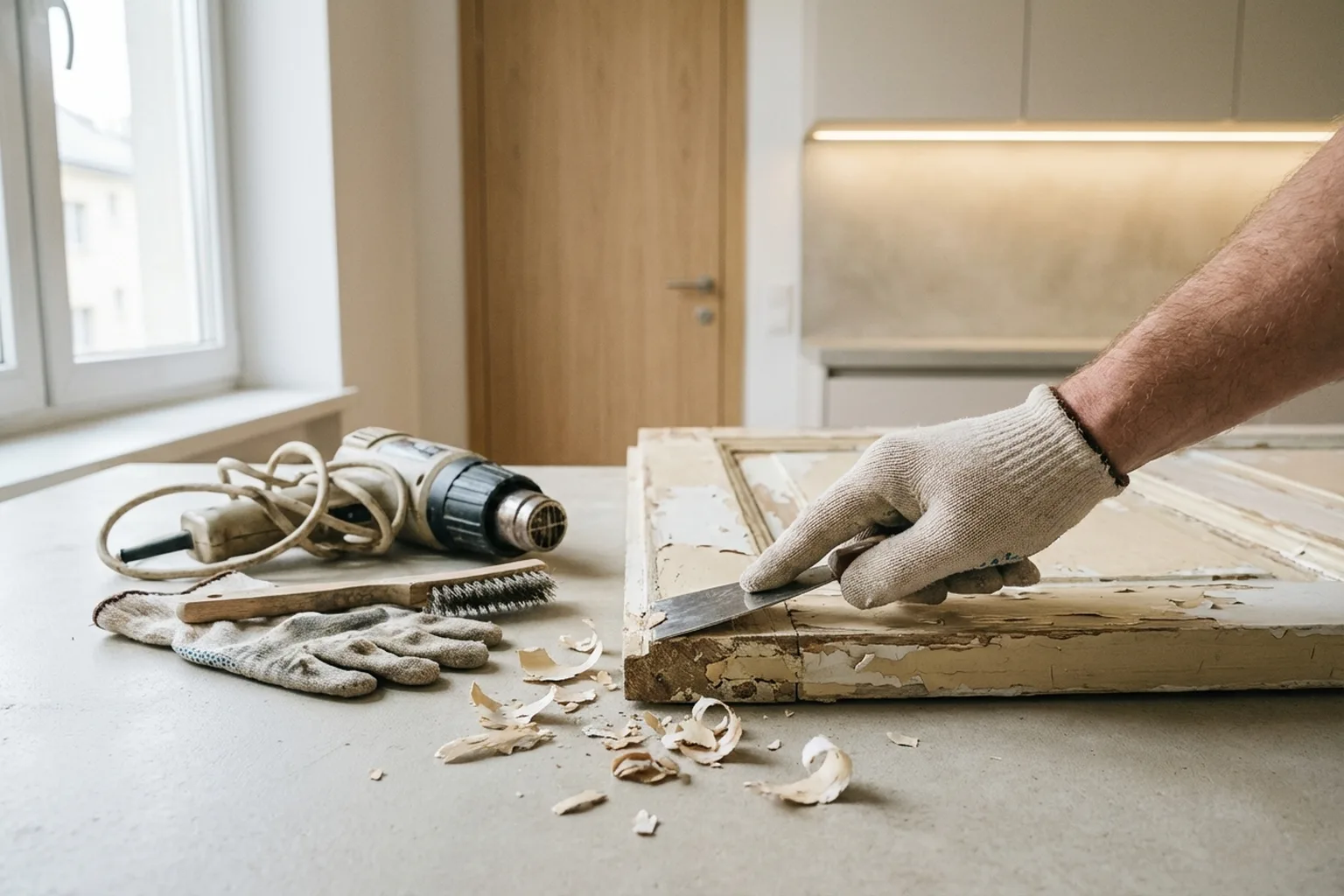
Stripping old paint from wood in Warsaw costs 30 to 70 zł per m², and impregnating or sealing the timber afterwards runs 45 to 75 zł/m². The current rates are in the table below. The final cost comes down to the area size, how many layers of old paint there are, and which stripping method is needed. Chemical stripper is more expensive because of the materials used, but it is the safest option for the wood. A heat gun works quicker but needs a careful hand on shaped profiles. Sanding is effective on flat sections. Consumables (stripper, sandpaper) are billed separately. Tools are already included in the labour price.
| Service | min | max |
|---|---|---|
|
Protection of furniture, doors, windows and floors with film
Book this service → |
10 zł/m² | 15 zł/m² |
|
Cleaning and washing walls before painting
Book this service → |
15 zł/m² | 25 zł/m² |
|
Filling holes and damages
Book this service → |
20 zł/m² | 35 zł/m² |
|
Wall leveling after tile removal
Book this service → |
45 zł/m² | 70 zł/m² |
|
Ceiling leveling
Book this service → |
45 zł/m² | 70 zł/m² |
|
Priming before painting
Book this service → |
15 zł/m² | 25 zł/m² |
|
Gypsum putty application
Book this service → |
55 zł/m² | 90 zł/m² |
|
Painting walls / ceilings in one color (2 coats)
Book this service → |
30 zł/m² | 45 zł/m² |
|
Painting walls in different colors
Book this service → |
35 zł/m² | 55 zł/m² |
|
Stripping old paint and varnish from wood
Book this service → |
30 zł/m² | 70 zł/m² |
|
Wood impregnation
Book this service → |
45 zł/m² | 75 zł/m² |
How the on-site work goes
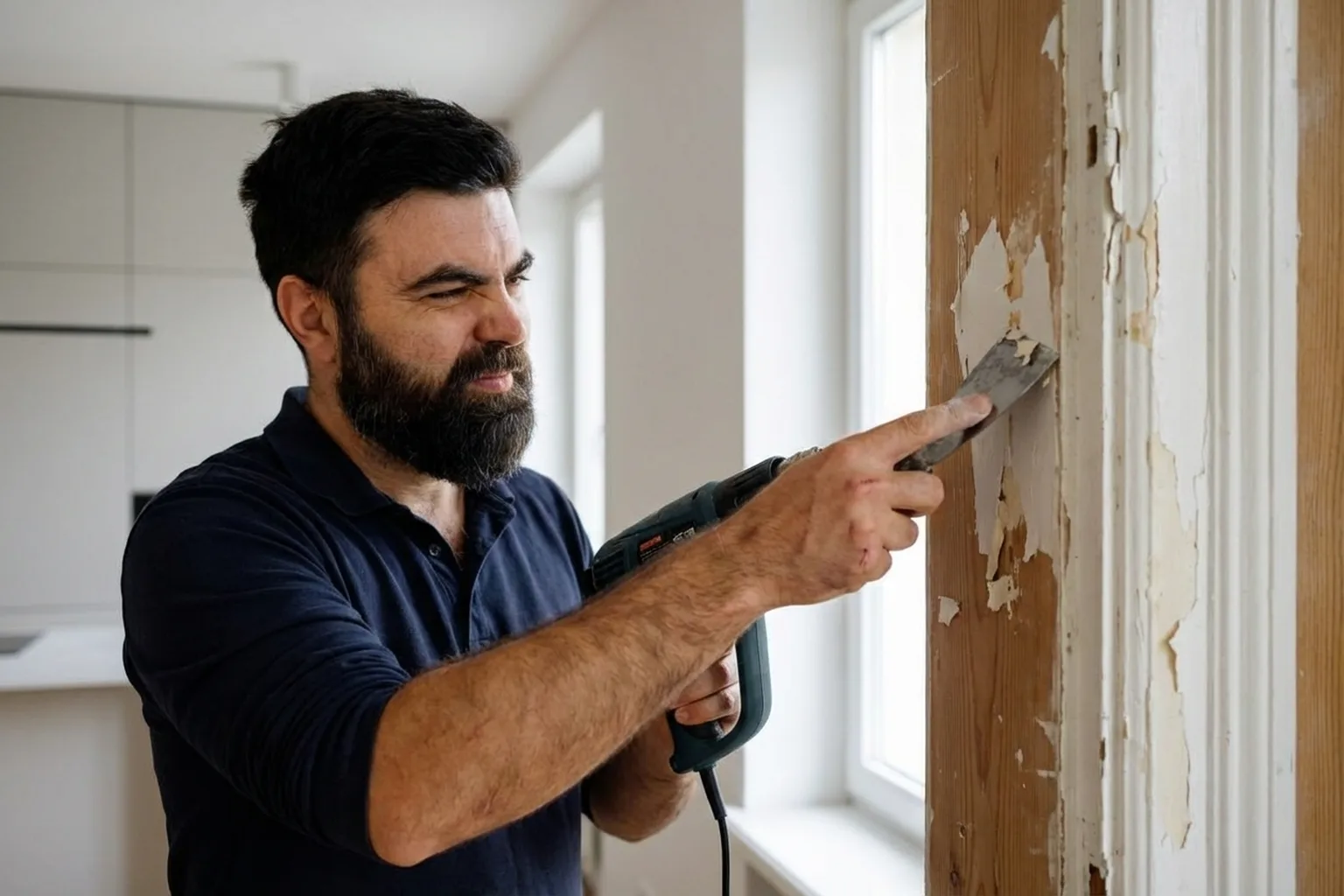
- The technician checks the surface: how many paint coats there are, what kind of finish it is (oil-based, alkyd, acrylic, varnish), and what condition the wood underneath is in.
- We select the method: chemical stripper for moulded panels and trim, heat gun for flat door leaves, orbital sander for broad even surfaces.
- We shield the floor, walls and furniture with sheeting. If a heat gun or chemical stripper is used, we make sure the room is well ventilated.
- We put on the stripper or warm the coating with the gun — the softened paint is then scraped away layer by layer with a wide scraper.
- Any residue is cleaned off with fine-grit hand sanding — above all in corners and on decorative details.
- The cleaned surface is then prepared — small chips and cracks in the wood are filled where needed.
- The timber is primed before the new finish goes on. If painting is needed — that is a separate stage.
Common customer mistakes (and how to avoid them)
- Painting over loose old paint — the fresh coat sticks only to the old layer, and that layer is already separating from the wood. After a short time, it all starts peeling away together.
- Using an angle grinder with a coarse disc — it strips paint in seconds but tears into the wood surface. Those gouges cannot be disguised with any filler.
- Skipping a check for lead in old paint — in buildings from before the 1970s, this is a real health hazard. Dust from sanding lead paint is toxic.
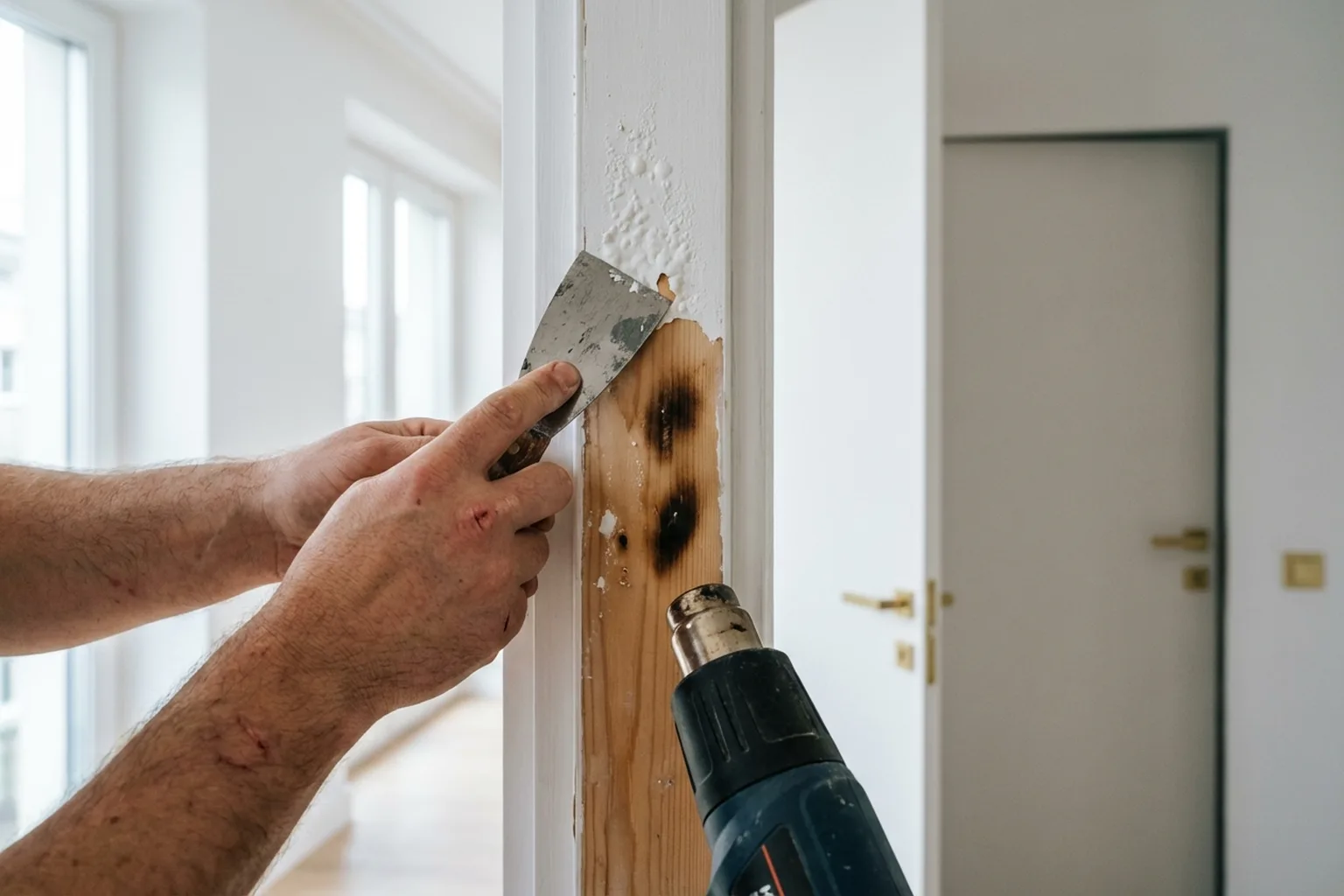
- Working with no ventilation — chemical strippers give off strong fumes, and a heat gun can overheat old paint and create toxic smoke.
- Leaving stripper on the wood for too long — softwood species (pine, spruce) may swell and twist.
- Trying to strip varnish from parquet by hand — this should be done with a professional drum sander; hand-sanding would take a week.
- Doing one side of a door and losing patience before the other — in the end it looks worse than it did at the start.
What to prepare before the technician arrives
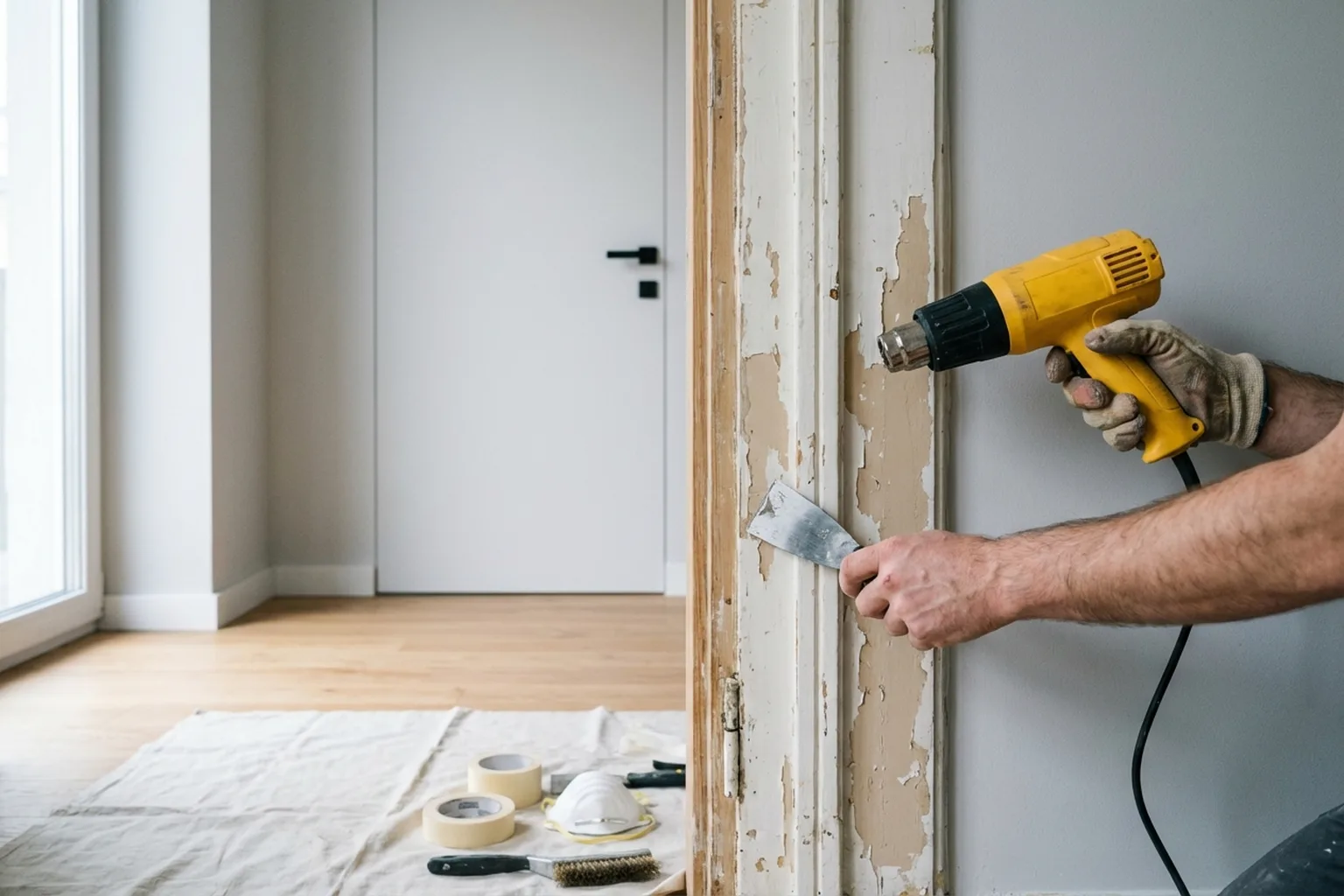
- Be clear about which items need stripping — doors, architraves, window frames, sills, handrails.
- If you can, take the doors off the hinges and place them flat — the work goes faster and the finish is better.
- Take off all hardware: handles, locks, hinges, bolts.
- Move furniture out of the work area or cover it with sheeting — sanding creates a lot of fine dust.
- Make sure there is power available for the heat gun and sander.
- Open the windows or sort out ventilation — especially if chemical stripper is going to be used.
- Take pets and plants out of the room while chemical stripper is being used.
- If the building is pre-war — tell the technician; the lower layers may include lead paint.
- Set aside a drying area for the stripped items — at least 24 hours before primer can be applied.
- Give access details: intercom code, parking for unloading tools.
A real case from Warsaw
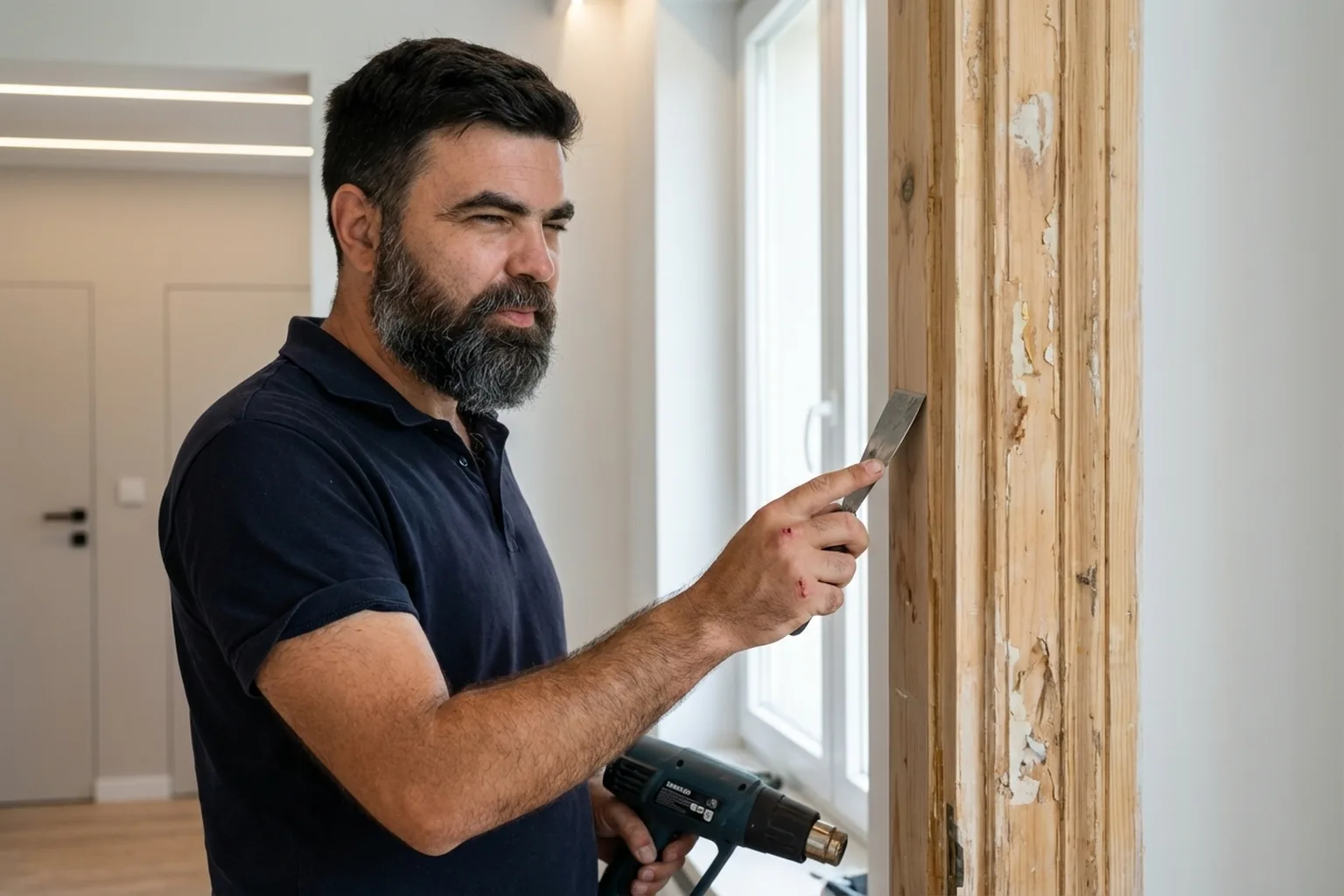
A flat in a 1920s tenement in Saska Kępa — the owners were doing renovations and found the original oak double doors buried under seven coats of paint. The oldest layer was a dark brown oil paint, then came greens, whites and greys added over the years. Our technician took the doors down and worked on them laid flat. The moulded panels were treated with chemical stripper brushed on, left for 20 minutes, then gently scraped clean. The flat rails and stiles were quicker with a heat gun. The whole job on both doors took two and a half days. After stripping, the oak was hand-sanded with 120 and 240 grit, sealed with a penetrating primer, and finished in a satin polyurethane. The grain and patina of the century-old oak looked fantastic — the owners made the doors the focal point of their living room. They said no new piece of furniture could come close to the character of the originals.
Frequently asked questions
Which is better — chemical stripper, heat gun or sanding?
That depends on the surface. Moulded or carved details — chemical stripper only. Flat door panels — a heat gun is quicker. Large even areas — a power sander. We often use more than one method on the same piece.
Can paint be removed without damaging the wood?
Yes, if the right method is used. Chemical stripper is the mildest option — it softens the paint without affecting the timber.
How long does it take to strip one door?
A standard door takes 4 to 8 hours, depending on how many layers are on it and how much moulding detail it has.
Is old paint dangerous?
In buildings from before the 1970s, the lower layers may contain lead. We use protective equipment and extraction. If lead paint is suspected — chemical stripping only, no sanding.
Do I have to strip all the way to bare wood?
If the existing coating is sound and not peeling — a good scuff-sand for adhesion may be enough. But if even one layer is lifting — all of it has to be removed.
Do you paint after stripping?
Yes, painting or varnishing is a separate service. We can handle everything in one visit if the scope allows.
What does stripping old paint from walls and wood cost?
Taking a finish off timber is 30–70 zł/m². The spread comes from the number of layers and the method: a heat gun and scraper are cheaper, while chemical stripper for moulded frames and cornices costs more because it needs neutralising and disposing of.
How should wood be protected once the paint is off?
It depends where the piece sits. Indoors, lacquer or oil is enough — it brings out the grain and can be touched up in patches. Outdoors, on windows and balcony doors, you need an impregnation with a UV filter, otherwise the timber greys within a season. Impregnation is 45–75 zł/m².
Can paint be stripped from a deck or timber cladding?
Yes, though the method outdoors differs from indoor work. Decking boards are usually sanded mechanically, because chemical stripper runs down between the boards and is hard to rinse out. Straight after sanding the deck has to be sealed, or it takes up moisture.
Who does the work
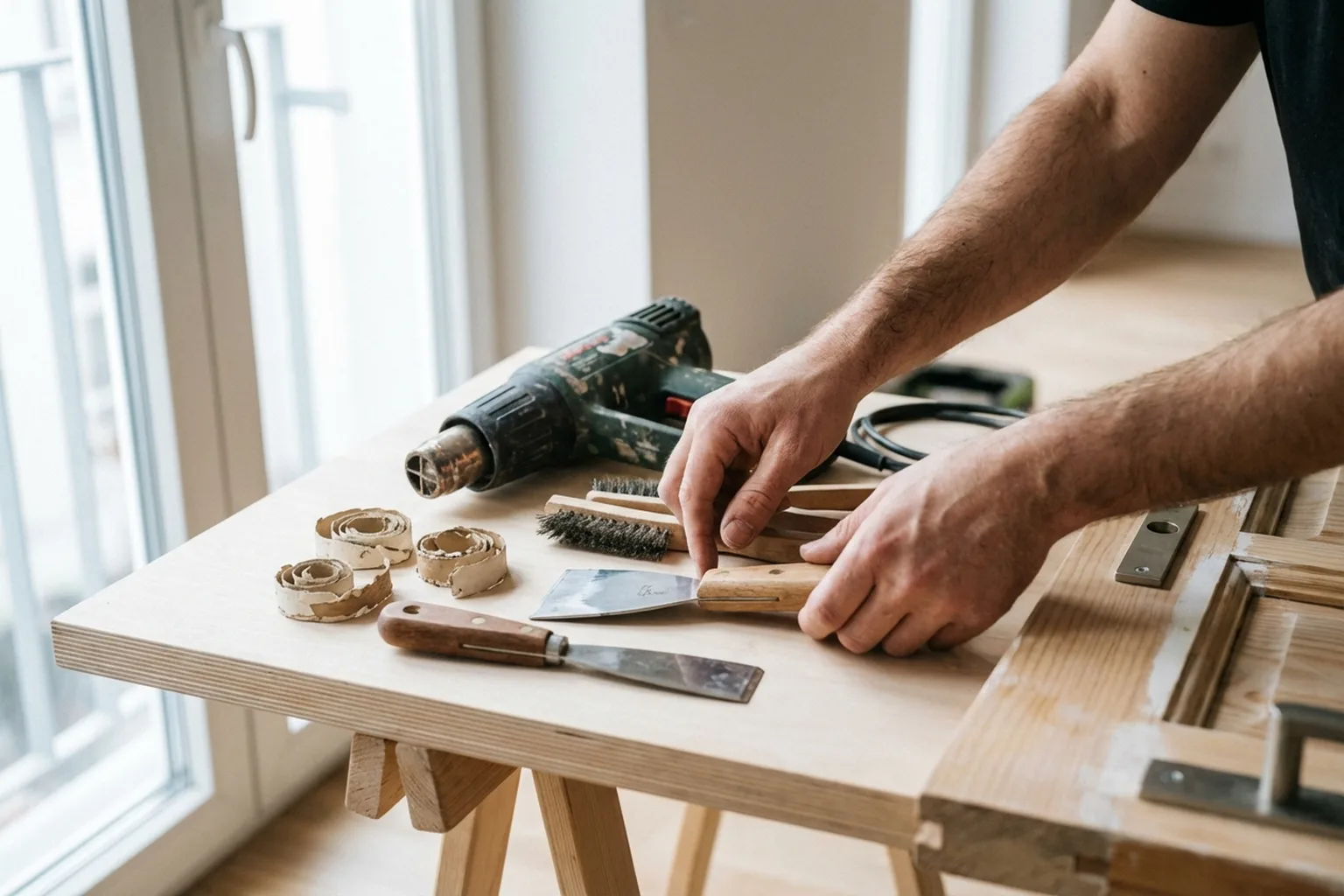
Paint stripping is done by painters with restoration experience. We cover all of Warsaw — from the centre to the suburbs. Message us — we’ll check the scope, pick the right method and set a convenient time.