An electric cooker is not like a kettle that you simply plug into a wall socket. These units pull 5 to 10 kW, and an ordinary household outlet just is not built for that. You need a separate circuit from the consumer unit, the right cable cross-section, and an individual circuit breaker. If this is done wrong, the best-case scenario is tripping breakers — the worst-case one is melted wiring. We cover the whole of Warsaw, from Praga-Poludnie to Wola, and arrive with tools and materials.
Safety notice: wiring in an electric cooker means dealing with high electrical loads. If you are not sure about the state of your wiring or consumer unit, do not try to connect it yourself. Errors here are expensive — from scorched cables to a real fire risk. Call a professional — it is quicker and safer.
How much does it cost and what affects the price
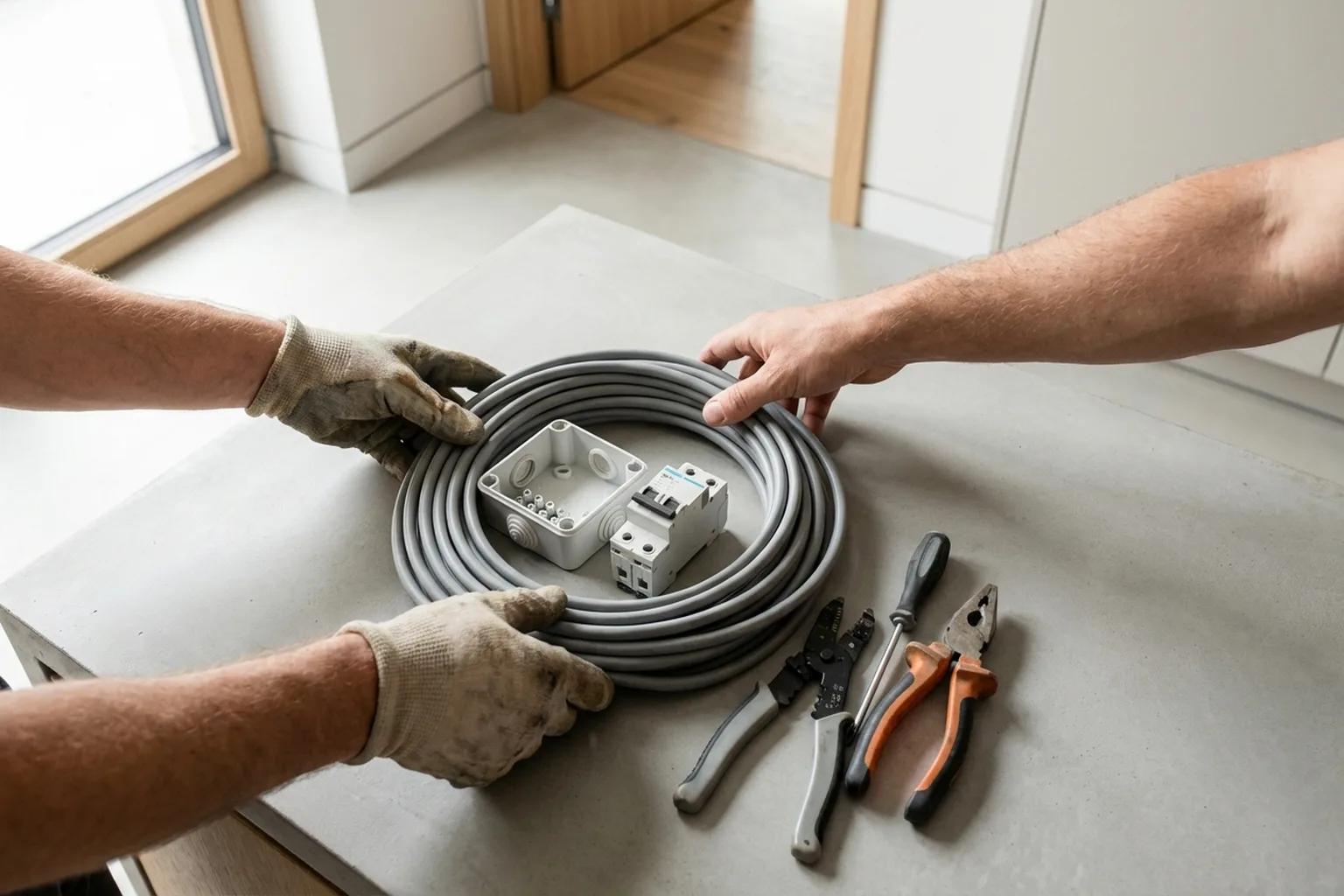
The price of connecting an electric cooker depends on a few things: whether a dedicated line is already there, how far the kitchen is from the consumer unit, and whether the job calls for wall chasing or cable trunking. If the line is ready, the work takes around 1–1.5 hours. If a new cable has to be run from scratch, the job takes more time and costs more. Current rates for all electrical services are listed in the table below. Fixings are included; cable and circuit breaker are billed separately.
What is needed to connect an electric cooker
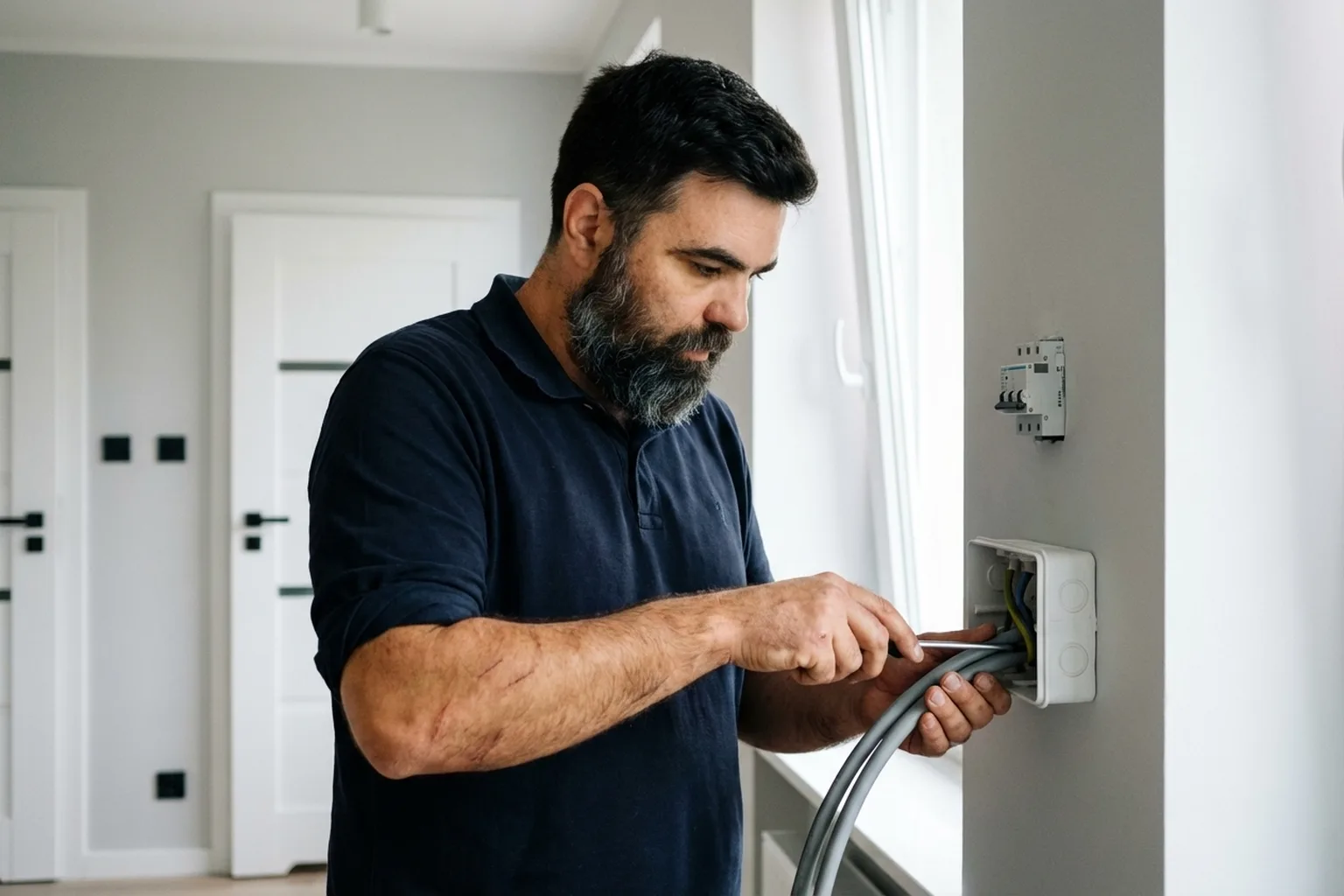
- A separate circuit from the consumer unit — the cooker must not be on the same line as other appliances.
- Cable with a minimum cross-section of 4 mm² (for up to 7 kW) or 6 mm² (for cookers above 7 kW).
- A dedicated circuit breaker rated at 32 A (for 4 mm²) or 40 A (for 6 mm²).
- A 32 A power socket or a direct connection through a terminal block.
- Earthing — required. Never connect an electric cooker without proper earthing.
An electric cooker is a freestanding appliance with an integrated oven, unlike an induction hob. It uses more power and needs heavier cable. If your flat still has old aluminium wiring, you will probably need a new copper line (compatible with Legrand, Schneider Electric, ABB and similar).
How the on-site work goes
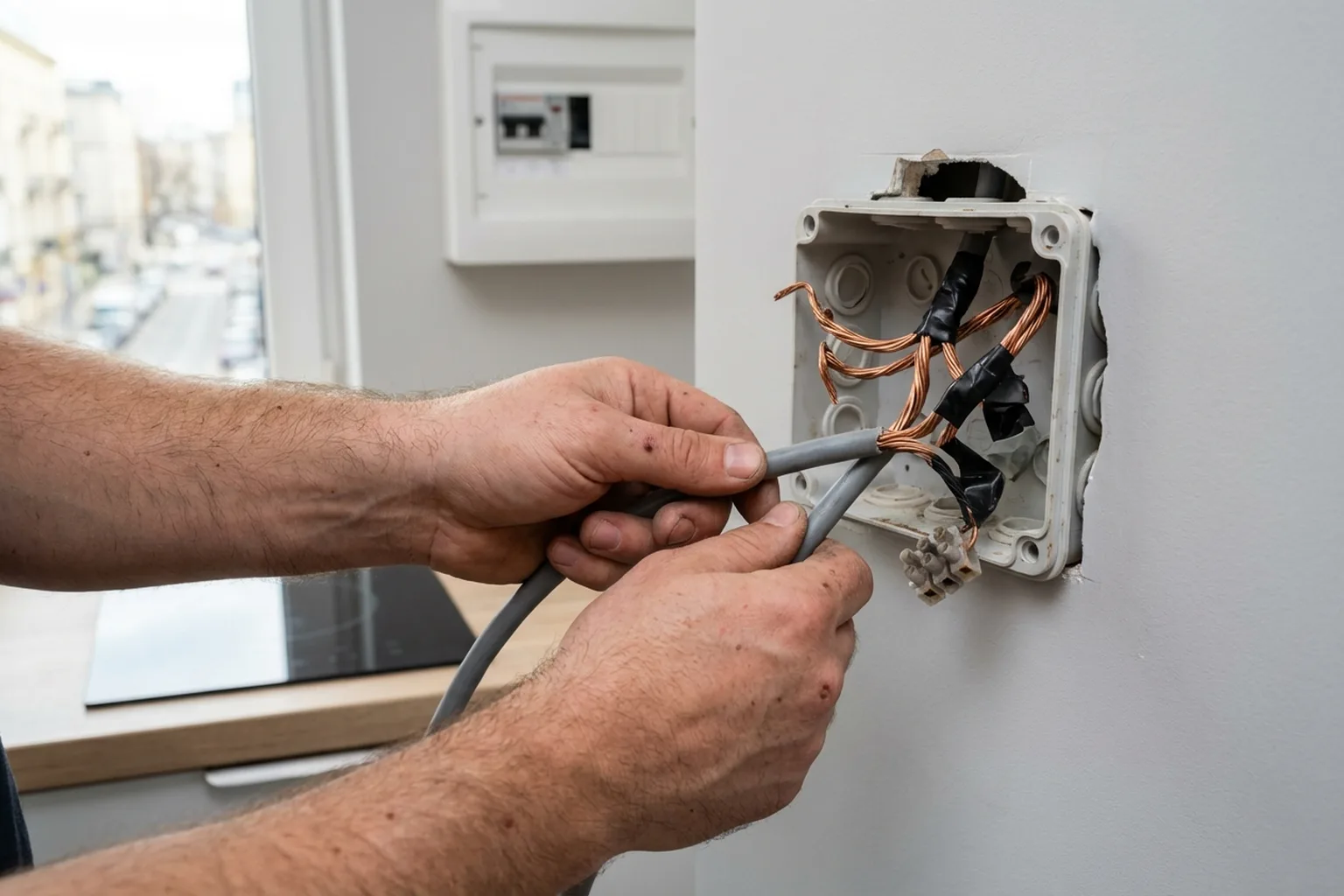
- You explain the job: cooker model, distance to the consumer unit, and whether a socket is already installed.
- The technician checks the appliance wattage and evaluates the scope of work.
- On site, we inspect the consumer unit: free space, main breaker, earthing condition.
- We run the cable from the consumer unit to the connection point (if no line is in place).
- We install a breaker with the correct rating and connect the cable in the consumer unit.
- We fit a power socket or wire the cooker directly through a terminal block.
- We connect the cooker, test each hotplate and the oven, and measure the current draw.
Common customer mistakes (and how to avoid them)
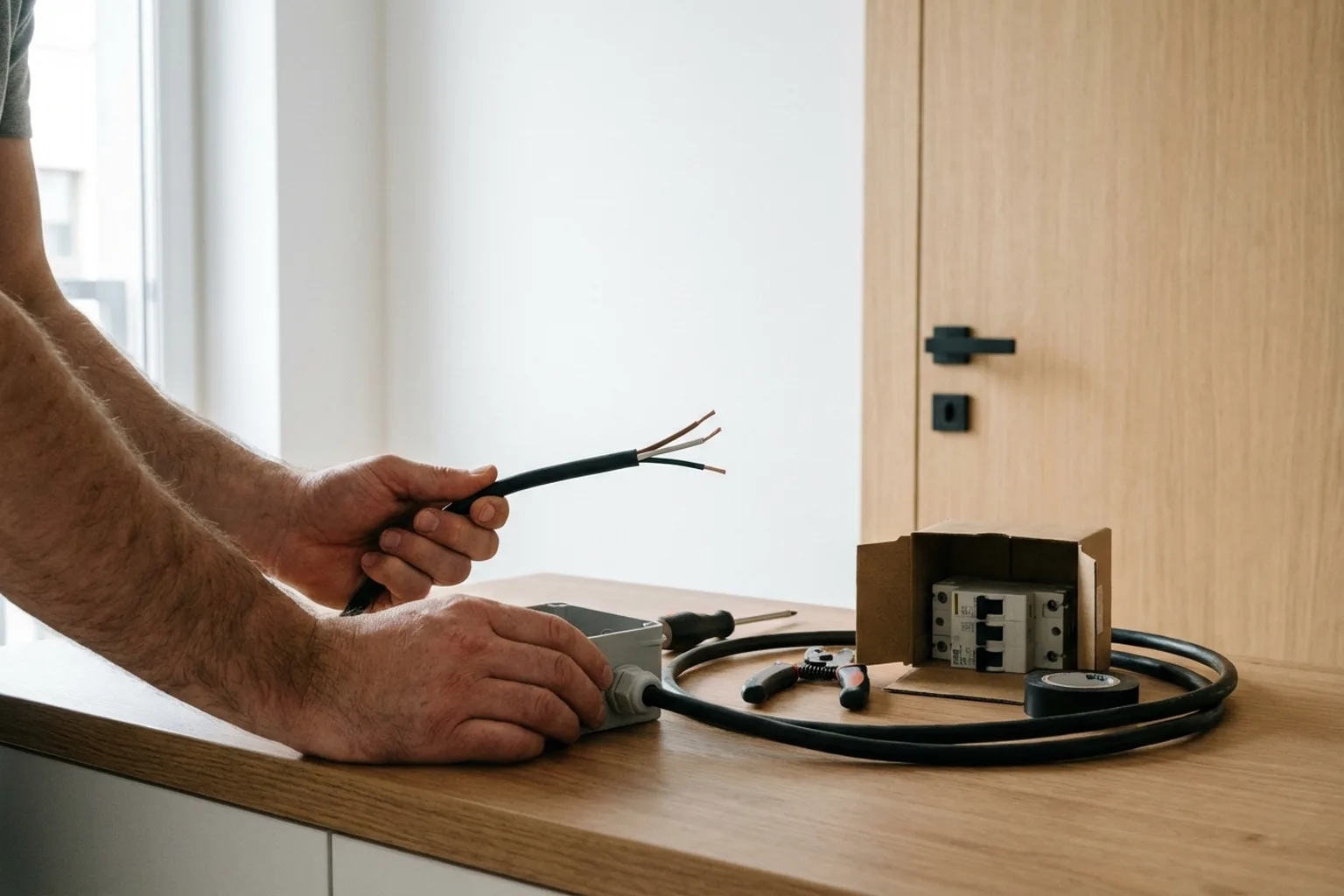
- Plugging the cooker into a standard 16 A socket — the contacts get too hot and the socket body starts to melt.
- Using an extension lead or multi-plug — completely unacceptable for high-power appliances.
- Choosing 2.5 mm² cable instead of 4 mm² — the wire gets hot and the insulation breaks down.
- Installing a 16 A breaker on the cooker circuit — it trips all the time when the oven and two hotplates are running.
- Ignoring earthing — the cooker casing can become live.
- Swapping live and neutral at the terminal block — the cooker runs, but the protection will not work properly.
- Buying the cooker without checking what cable is already run to the kitchen — then a new line has to be fitted.
What to prepare before the technician arrives
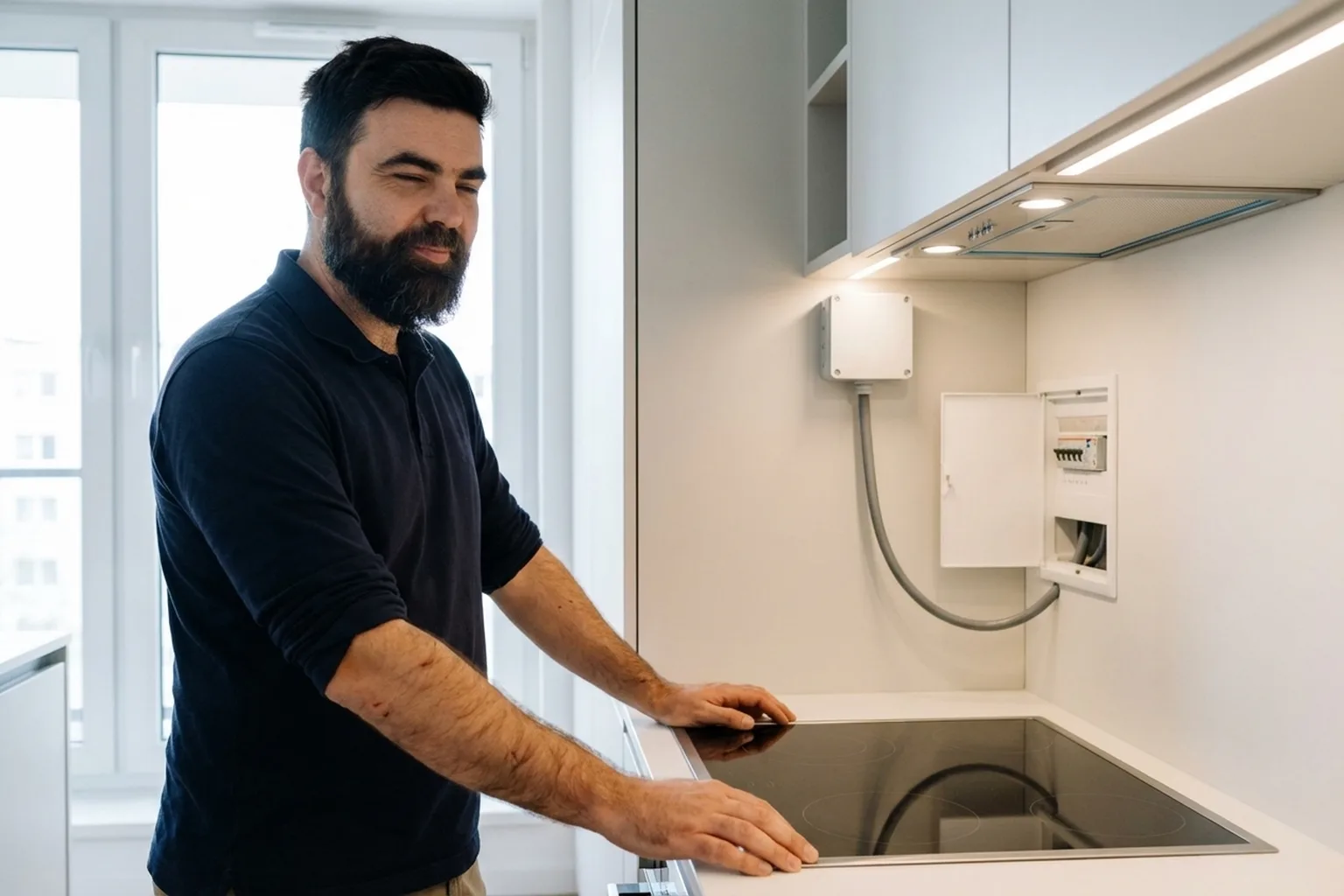
- Check the cooker’s power rating — it is on the nameplate at the back or in the manual.
- See whether there is a power socket on the kitchen wall (usually bigger than a standard one, rated 32 A).
- Look inside the consumer unit for a dedicated breaker marked “cooker” or “kitchen”.
- Clear the space behind the cooker and make sure there is access to the consumer unit.
- If the cooker is new and still in the box — leave it packed; the technician will unpack it and check everything inside.
- Take photos of the consumer unit and the kitchen socket, and send them to the technician beforehand.
- Give access details: intercom code, floor, parking.
- Prepare some room for tools — the technician needs space to lay out cable and materials.
- If the flat has a fresh renovation — tell us so the walls can be covered with film during any chasing.
A real case from Warsaw
A client in Ursynow bought a Beko electric cooker rated at 7.4 kW. In the kitchen there was only a standard socket — old wiring, 2.5 mm² aluminium. Connecting the cooker there would have been asking for overheating. The technician ran a new 3×6 mm² copper cable from the consumer unit to the kitchen (about 8 metres), installed a 32 A breaker, and fitted a power socket. The cable was laid in surface trunking along the wall — no chasing was needed. The whole job took about 3 hours. After the connection, all four hotplates and the oven were tested — current draw was normal and the breaker held without issues. The client has been using the cooker for six months with no problems. The lesson is simple: before buying a high-power cooker, always check whether your wiring can take it.
Frequently asked questions
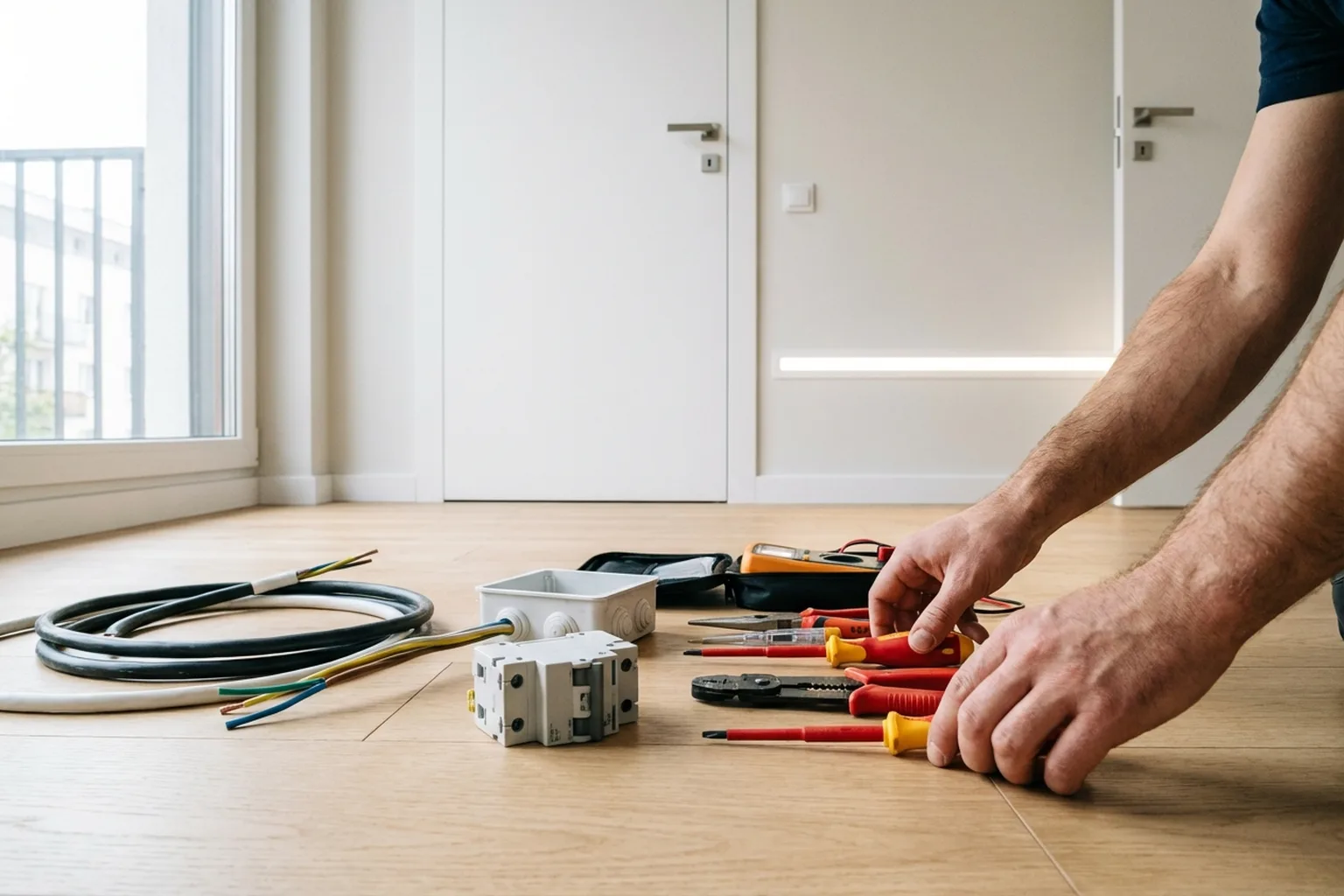
How is connecting an electric cooker different from an induction hob?
An electric cooker is a freestanding unit with an oven and is usually more powerful (up to 10 kW). An induction hob is built into the worktop and often draws 3.5–7 kW. A cooker almost always requires 6 mm² cable; a hob can sometimes work with 4 mm².
Can I plug an electric cooker into a standard socket?
No. A standard socket is rated for 16 A (3.5 kW). An electric cooker pulls 5–10 kW — the socket will overheat and may catch fire.
Do I need to rewire the whole flat?
No, you just need one dedicated line from the consumer unit to the cooker. The rest of the wiring can stay as it is.
How long does the connection take?
If a line is already there — about an hour. If cable has to be run from the consumer unit — 2 to 4 hours, depending on the distance and the routing method.
Are the cable and breaker included in the price?
No, those are materials and are charged separately. The technician can bring them, or you can buy them in advance based on our recommendation.
What if there is no space in the consumer unit for a new breaker?
The technician will check the situation. Sometimes the modules can be rearranged more tightly; sometimes the unit has to be replaced with a larger one — this is discussed on site.
Who does the work
Electric cooker connections are done by technicians with hands-on experience in electrical installation. We work across all of Warsaw and nearby suburbs. Minimum order — from 200 zl. To book, call or message us — we answer within an hour. If you send photos of the consumer unit and socket in advance, the technician will tell you right away what is needed.