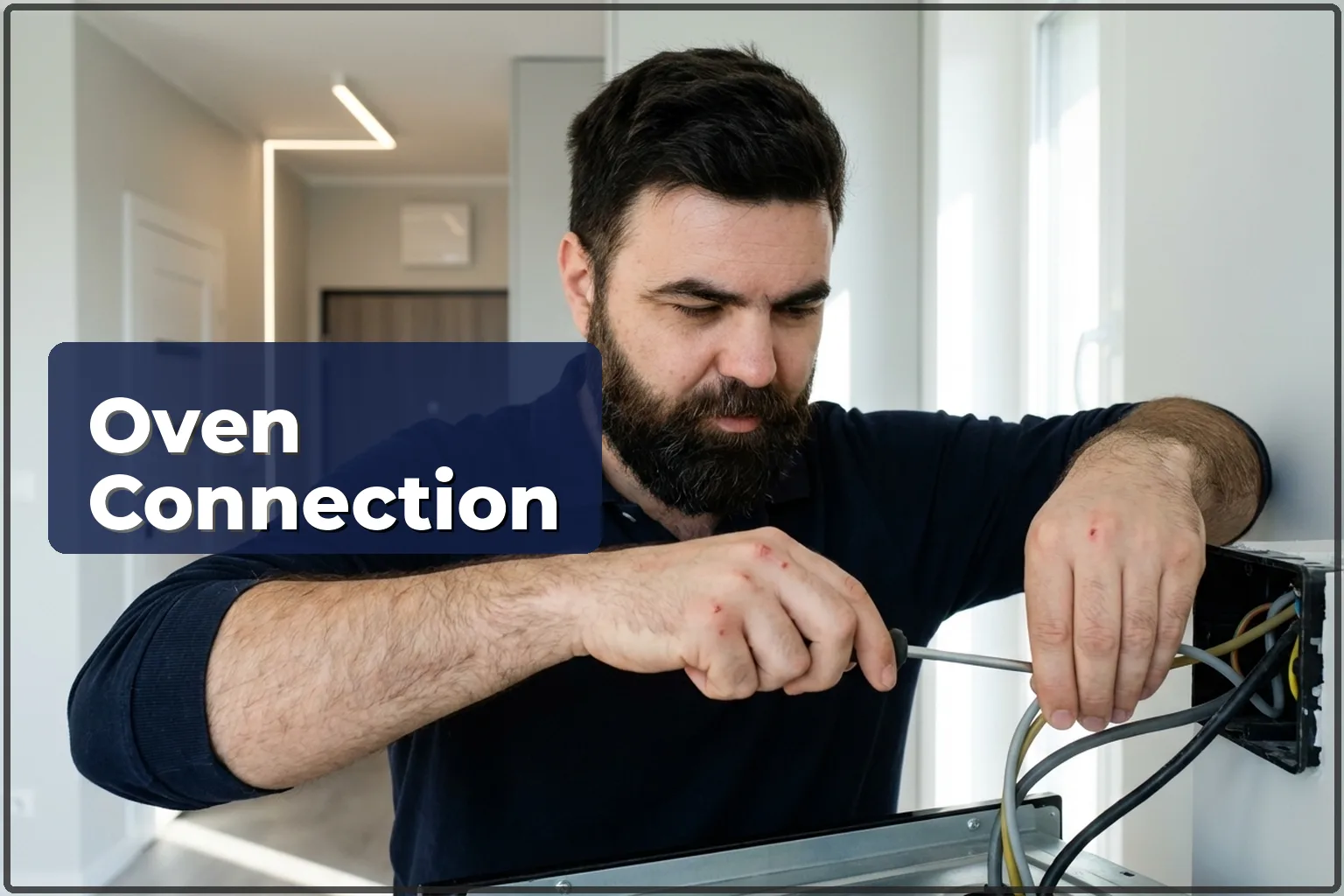
Important: hooking up an oven means dealing with electrics at up to 3.5 kW. If you’re not sure what condition the wiring is in or you don’t know which breaker controls what in your panel: don’t guess. Call a qualified electrician; this is about safety.
Oven connection: cost and what affects it
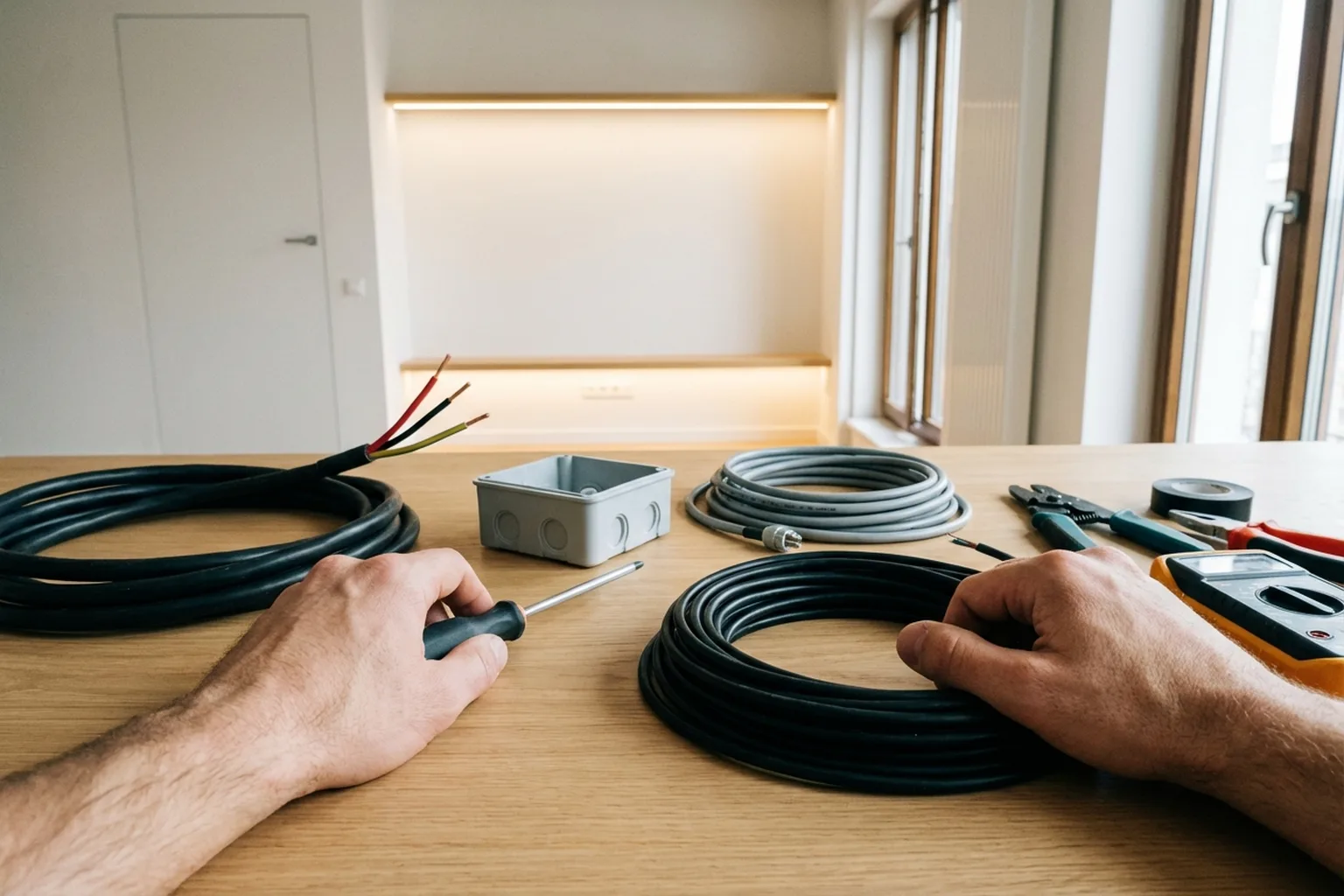
The price comes down to whether a dedicated line is already there or whether a cable has to be pulled from the distribution board. If the socket is already installed and the breaker is in place, the job takes 30–40 minutes. If you need to chase the wall, run a 2.5 mm² or 4 mm² cable, and install a separate breaker, then it’s a proper electrical installation job. Fixings are included; cables and breakers are billed separately. Up-to-date prices for all electrical services are listed in the table below.
| Service | Price |
|---|---|
| Socket installation | 30–90 zł/pkt |
| Socket replacement | 50–90 zł/pkt |
| Socket repair | 60–250 zł/szt |
| Light switch installation | 50–90 zł/pkt |
| Light switch replacement | 60–90 zł/pkt |
| Light switch repair | 150–350 zł/szt |
| New electrical point | 150–250 zł/pkt |
| LED transformer installation | 150–220 zł/szt |
| Bulb and halogen replacement | 30–50 zł/szt |
| Power socket installation 230/400 V | 150–350 zł/pkt |
| Connect induction / ceramic hob | 180–350 zł/szt |
| Stove/oven hookup | 200–350 zł |
| Built-in oven installation and connection | 180–420 zł/szt |
| Wall chasing for cables | 40–80 zł/mb |
| Running electrical cables | 15–50 zł/mb |
| Junction box wiring | 80–400 zł/szt |
| Light installation (lamp, chandelier) | 80–550 zł/pkt |
| Light fixture replacement | 150–450 zł/szt |
| Lighting repair | 120–350 zł |
| LED strip installation | 60–90 zł/mb |
Indicative prices. Ranges for a typical scope. Fixings included, materials separate. Minimum order 300 zł.
Rather hand the job over? More here: built-in oven installation in Warsaw.
Connection or fitting into units?
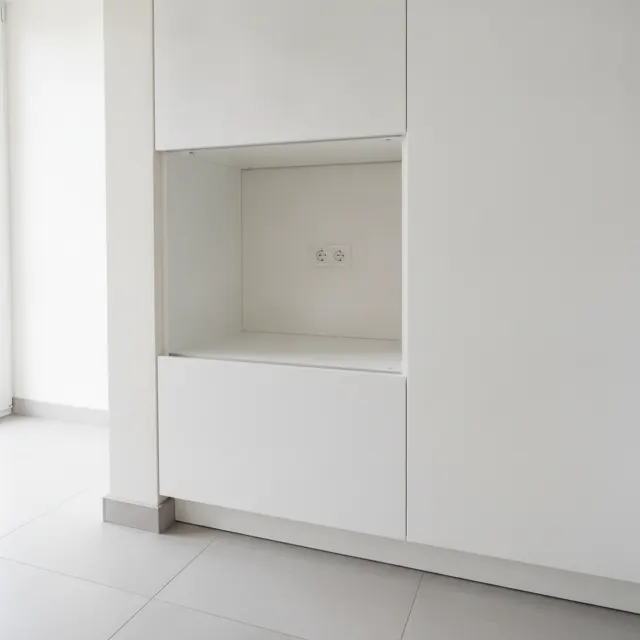
This article covers the electrics. If the oven still has to go into a tall unit or under the worktop, be screwed to the cabinet and keep its ventilation gaps, see built-in oven installation.
What’s needed for a proper connection
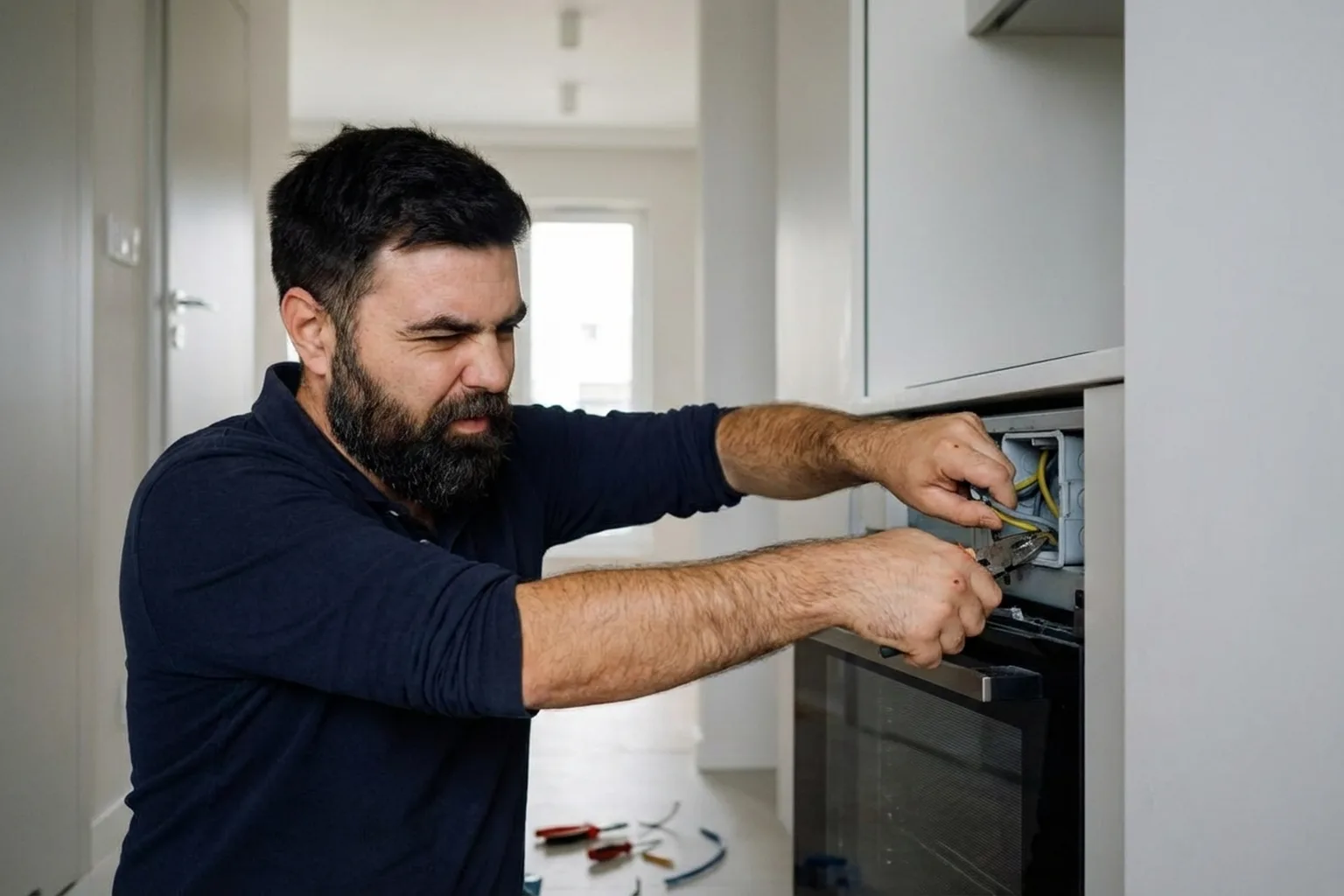
- A separate line from the distribution board — NYM or YDY 3×2.5 mm² cable (for ovens up to 3.5 kW) or 3×4 mm² (if the power rating is higher).
- A circuit breaker rated 16A (for 2.5 mm² cable) or 20A (for 4 mm²): it must match the cable cross-section exactly.
- An earthed socket: fitted behind the furniture niche or next to it, so the plug doesn’t get pressed in.
- Earthing — required. Polish new-builds have it; older buildings (kamienice) sometimes do not.
- A 230V single-phase oven is the standard setup for household models. Ovens do not need a three-phase connection.
Oven connection: how the work goes
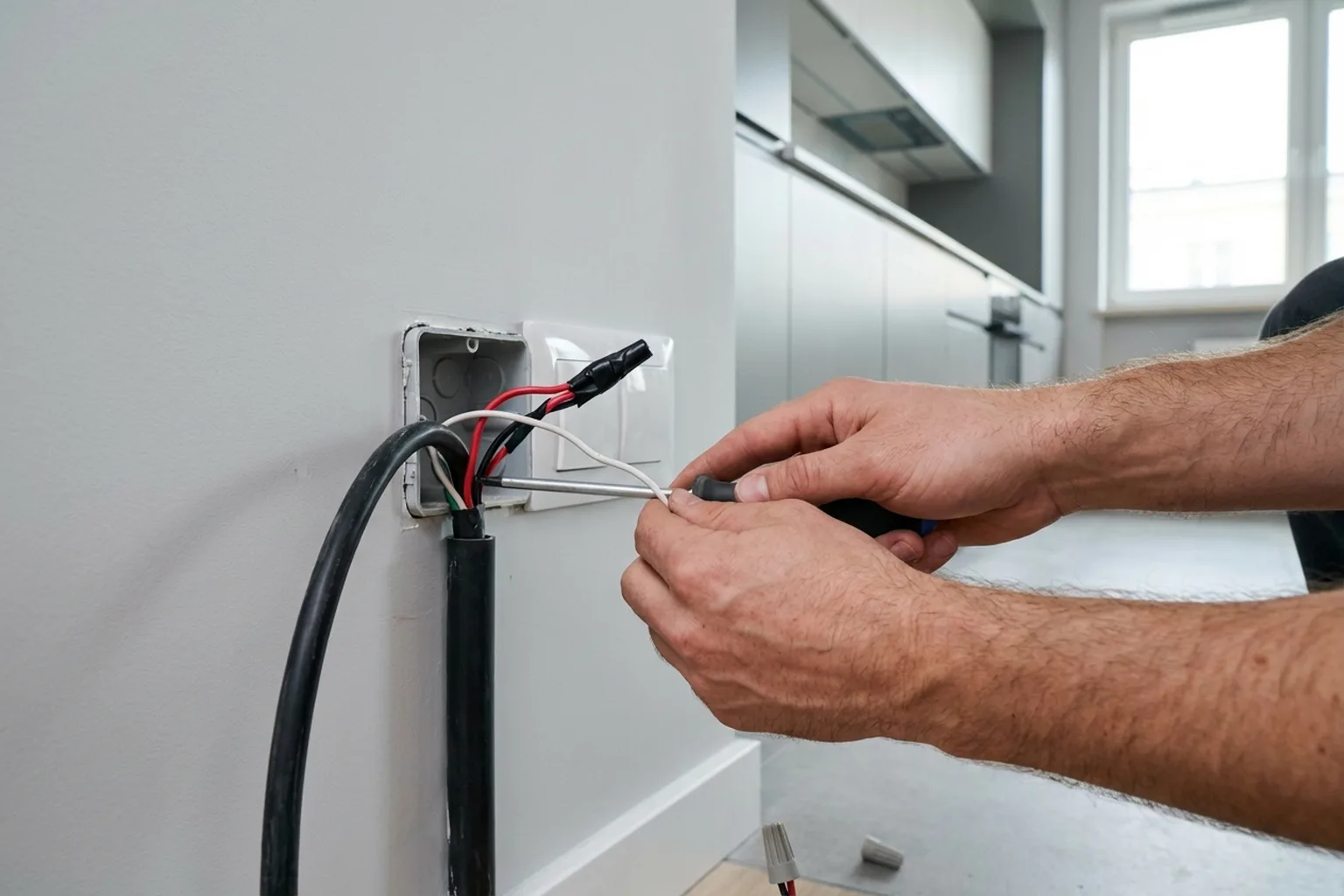
- You send photos of the niche, the distribution board, and the oven model, the technician checks what work is needed.
- You agree the visit time with the tradesperson you choose; it depends on their schedule.
- On site, the technician inspects the panel: whether there’s a spare breaker slot and what cable size goes to the kitchen.
- If there’s no dedicated line, a cable is taken from the panel to the installation point and a breaker is added.
- A socket is fitted in the correct place (behind the niche or to the side of the unit).
- The oven is connected, the earthing is tested, and a heating test is carried out.
- Then they clean up and explain which breaker feeds the oven and what to do if it trips.
Common mistakes when connecting an oven
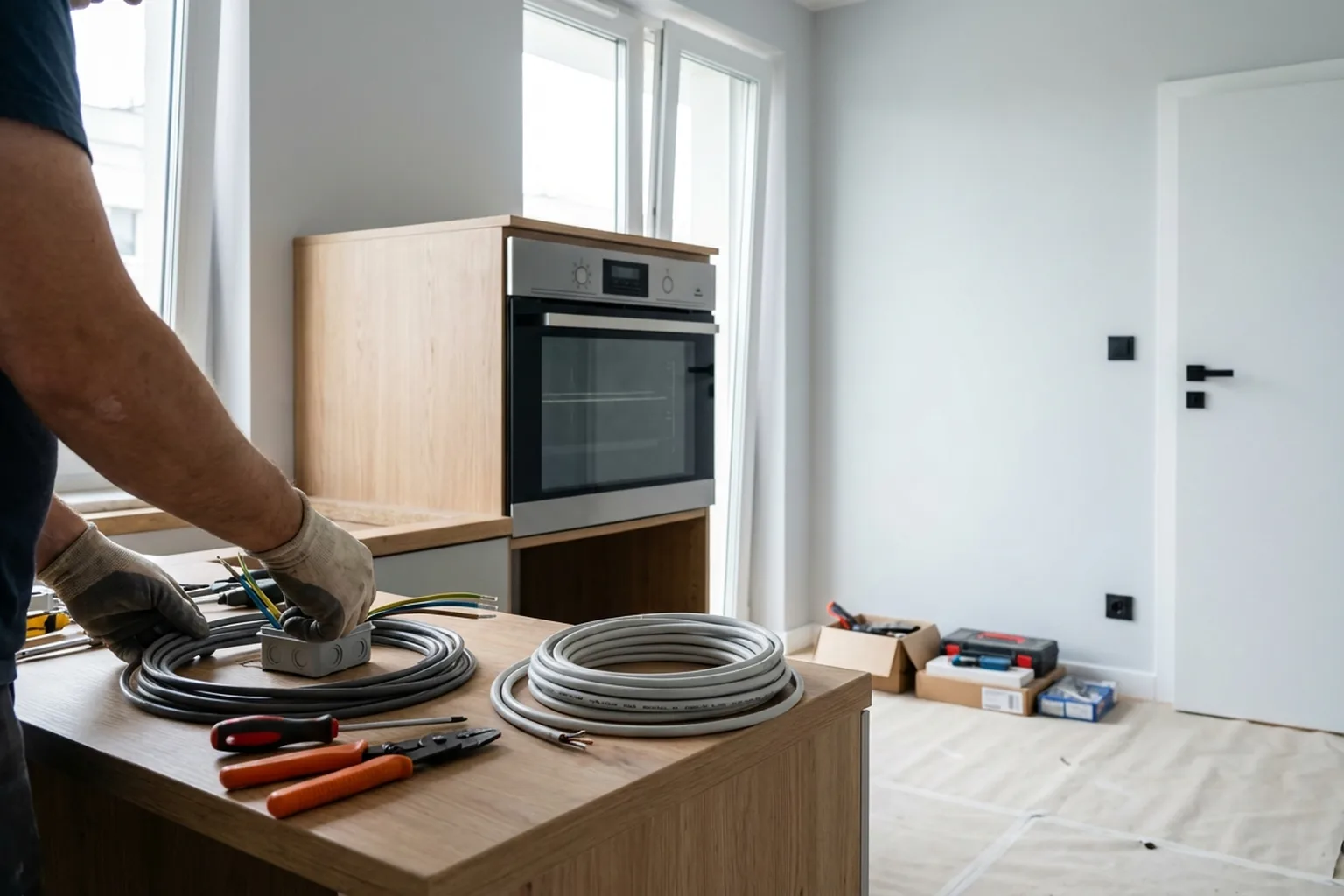
- Plugging it into a standard socket on a shared circuit, the breaker trips when a few appliances are running together.
- Using an extension lead or splitter: the contacts heat up and the plastic starts to melt.
- Running 1.5 mm² cable instead of 2.5 mm² — the wire won’t cope with the load and overheats inside the wall.
- Connecting without earthing: if the insulation fails, the oven casing becomes live.
- Installing the socket directly behind the oven, the plug presses against the back and the appliance won’t slide into the niche.
- Not checking whether the main breaker can take the extra load — switching the oven on cuts power to the whole flat.
- Joining aluminium wiring to copper cable without proper connectors, that leads to oxidation, arcing, and fire risk.
What to prepare before the technician arrives
- Check the exact oven model and its wattage (shown on the rating plate or in the manual).
- Take a photo of the distribution board: the technician needs to see which breakers are already there.
- See whether there is a free space in the panel for a new breaker.
- Show where the oven will be installed — the technician will work out the cable length.
- If the kitchen is still under renovation, this is the best moment to run the cable before the walls are finished.
- Make sure there is access to the panel (sometimes it’s on the stairwell landing, a key may be required).
- Empty the kitchen cabinets near the niche: the technician needs room to work.
- Say what kind of wall it is (concrete, brick, plasterboard): that changes the routing method.
- Give building access details: intercom code, parking info.
Oven connection in practice: a Warsaw case
A client in the Wola district bought a built-in Bosch oven rated at 3.4 kW. In the kitchen there was one socket on a 1.5 mm² circuit shared with the fridge and microwave. The first time the oven was turned up to full power, the 10A breaker tripped. The technician pulled a separate NYM 3×2.5 mm² cable from the panel, installed a 16A breaker, and moved the socket to the side of the niche so the plug wouldn’t obstruct the unit. Chasing the wall took about an hour; the rest of the work took another hour. After the connection, the oven ran steadily at maximum temperature without tripping. The client said he’d never even considered that a kitchen socket might not be suitable for an oven.
Frequently asked questions
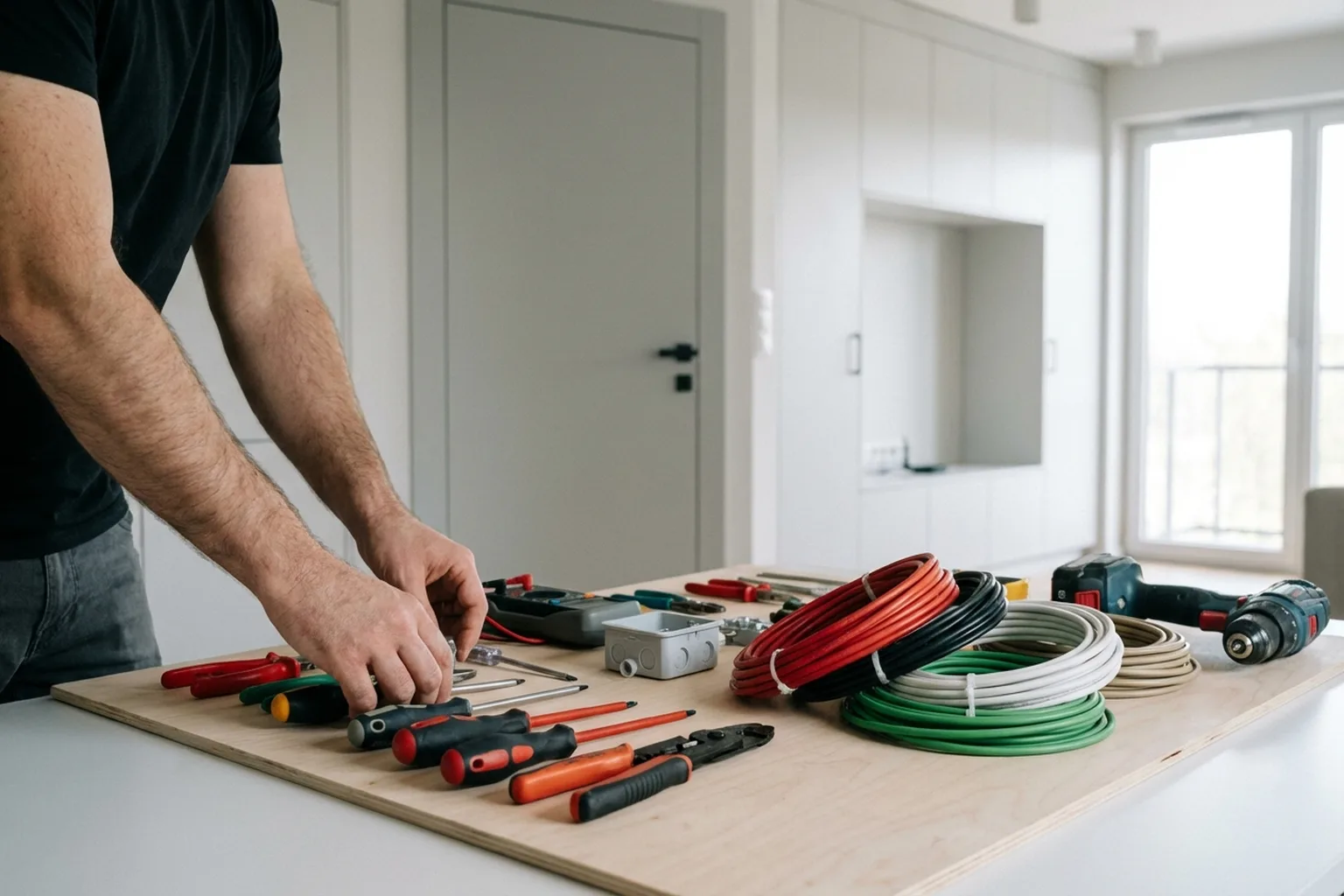
Can I plug the oven into a regular socket?
Yes, but only if that socket is on a dedicated line with at least 2.5 mm² cable and a 16A breaker. If the circuit is shared with other appliances — no, a separate line is required.
Is earthing required?
Yes, absolutely. An oven is a high-load appliance with a metal body. Without earthing, a fault can make the casing live.
What cable is needed?
For ovens up to 3.5 kW: NYM or YDY 3×2.5 mm². For higher wattage: 3×4 mm². The technician chooses the exact size according to the appliance rating.
Can the oven and induction hob share one circuit?
No. An induction hob draws 7–8 kW, while an oven uses up to 3.5 kW. Each appliance needs its own line and breaker.
How long does the connection take?
If the line is already there — 30–40 minutes. If a cable has to be run from the panel: 2–4 hours depending on the route length and wall type.
What’s included in the price?
Labour, fixings, and travel within Warsaw. Cable, breakers, and sockets are charged separately.
Do tradespeople work in older buildings without earthing?
Yes, but in that case they advise fitting an RCD (residual current device), it gives protection against electric shock.
Who does the work
Oven connections are done by technicians with real hands-on electrical installation experience. Tradespeople work across Warsaw and the nearby suburbs; the minimum order on the platform is 300 zł. Post a request in the HandyMan24 app with photos: tradespeople will assess the scope and send their price before the visit.
Order in the app
Describe the job, add photos and the address. Tradespeople send their own prices and dates, and you pick one of the offers.
Open the app