
How much does built-in fridge connection cost in Warsaw?
The price of connecting a built-in fridge depends on the rail system (sliding or fixed), whether the cabinet has to be altered, and how the ventilation in the niche is arranged. If the housing has a solid back panel and ventilation openings need to be cut, that adds extra labour. Fixings and small consumables are included in the price; the fridge itself and the door panel are billed separately. Current kitchen service prices are listed in the table below.
| Service | Price |
|---|---|
| Assemble kitchen units (base and wall cabinets) | 400–1000 zł/mb |
| Base kitchen cabinet installation | 120–270 zł |
| Wall kitchen cabinet installation | 120–270 zł |
| Kitchen front adjustment | 80–250 zł |
| Kitchen worktop installation | 70–200 zł/mb |
| Laminate worktop installation | 70–135 zł/mb |
| Composite worktop installation | 250–400 zł/mb |
| Worktop joining | 190–300 zł/szt |
| Worktop cut-out (sink, hob) | 150–300 zł/szt |
Indicative prices. Ranges for a typical scope. Fixings included, materials separate. Minimum order 300 zł.
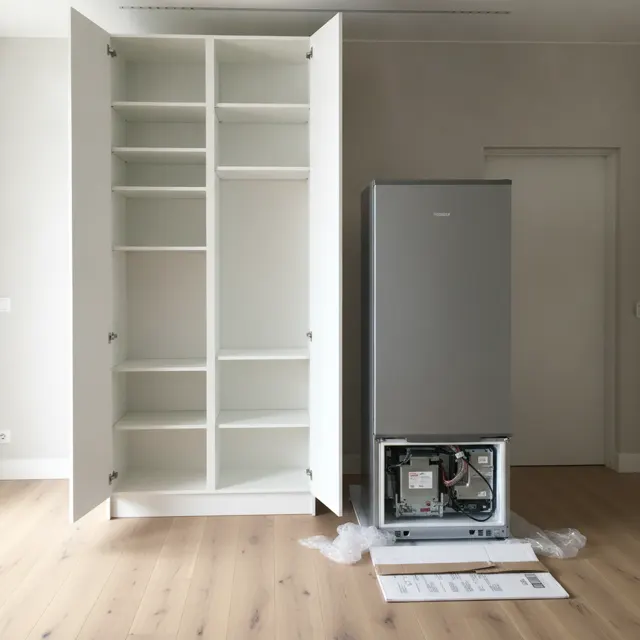
Rather hand the job over? More here: appliance installation in Warsaw.
How built-in fridge connection is done
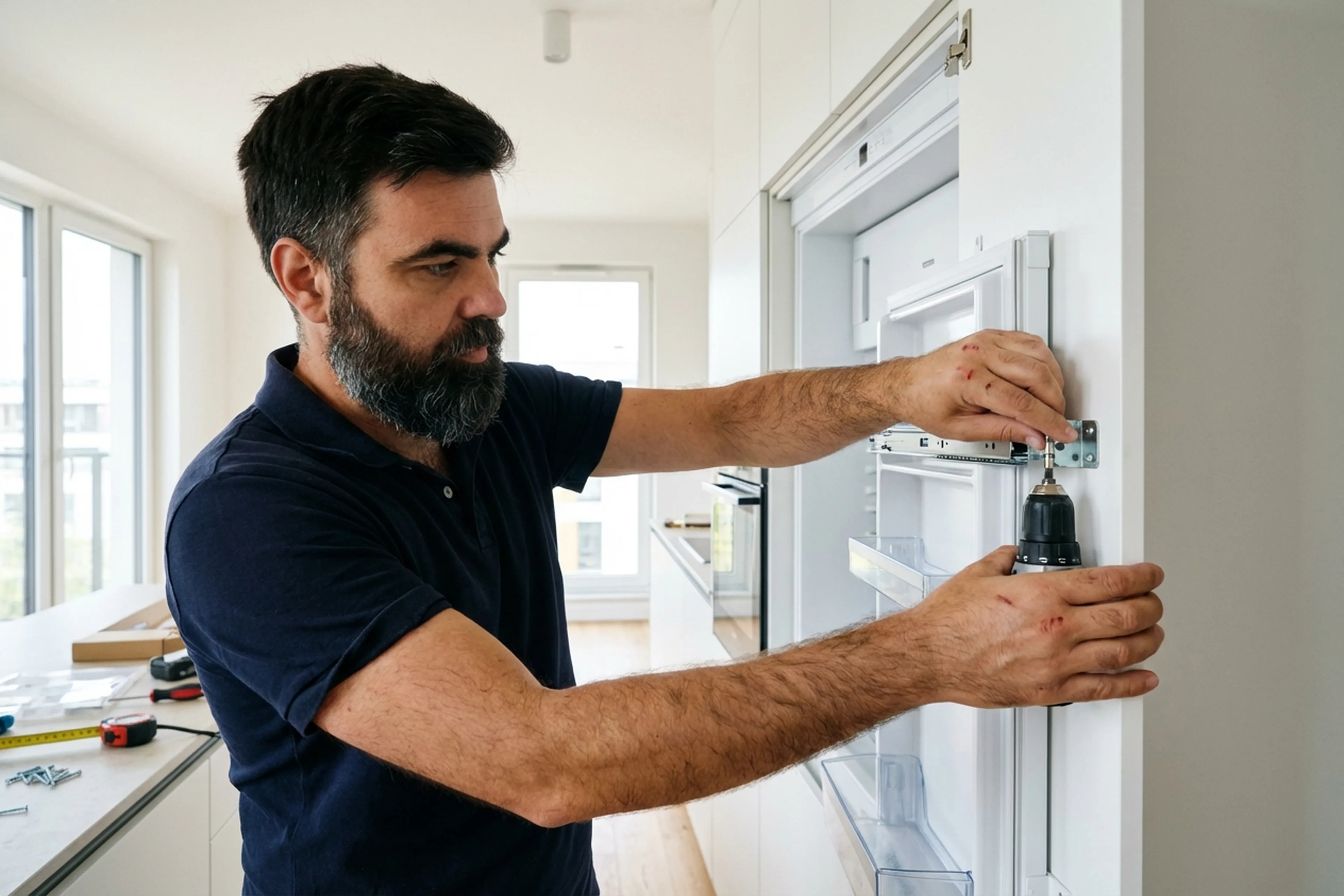
- You send a photo of the niche and the fridge model — the technician checks compatibility and the scope of work.
- Timing depends on the tradesperson you choose: they give the arrival time in their offer.
- On site, the technician measures the niche dimensions: depth, width, height, and socket position.
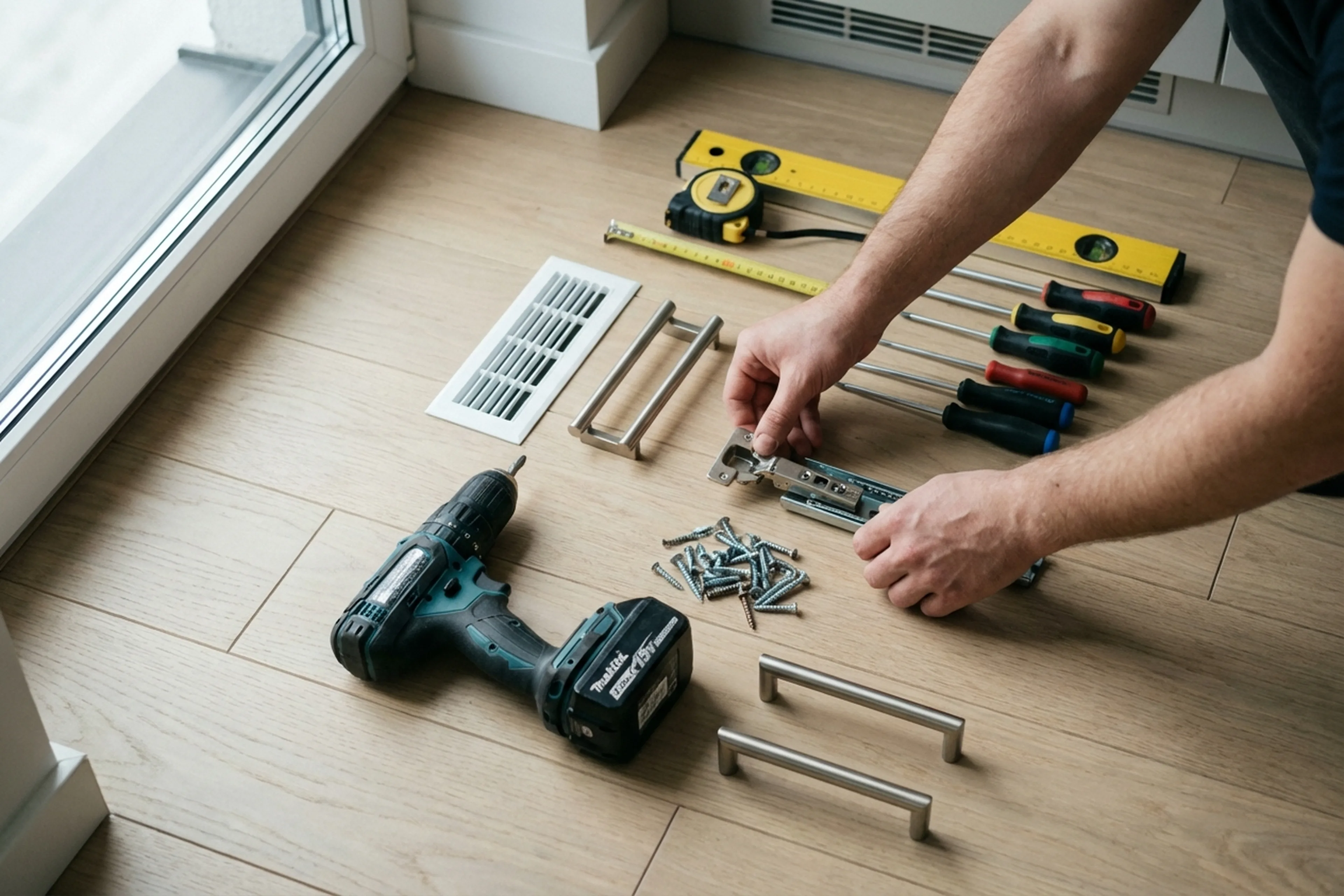
- If required, cuts ventilation openings in the back panel and fits a grille in the plinth.
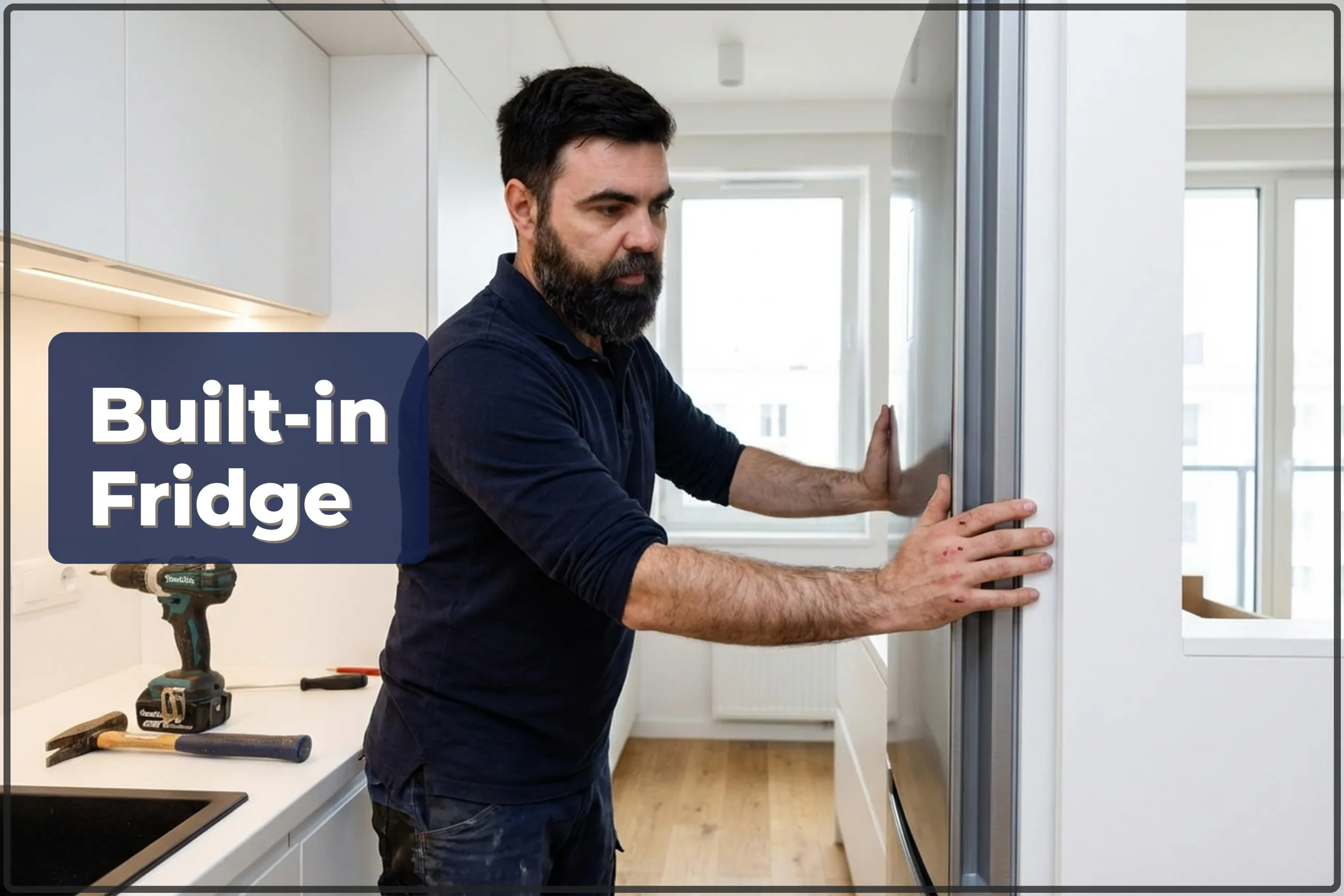
- Pushes the fridge into the niche, levels it with adjustable feet, the door has to line up with the neighbouring furniture fronts.
- Mounts the door panel using the slide-on rail system or fixed-hinge method.
- Checks opening and closing, seal contact, compressor operation. Cleans up after the job.
Common customer mistakes (and how to avoid them)
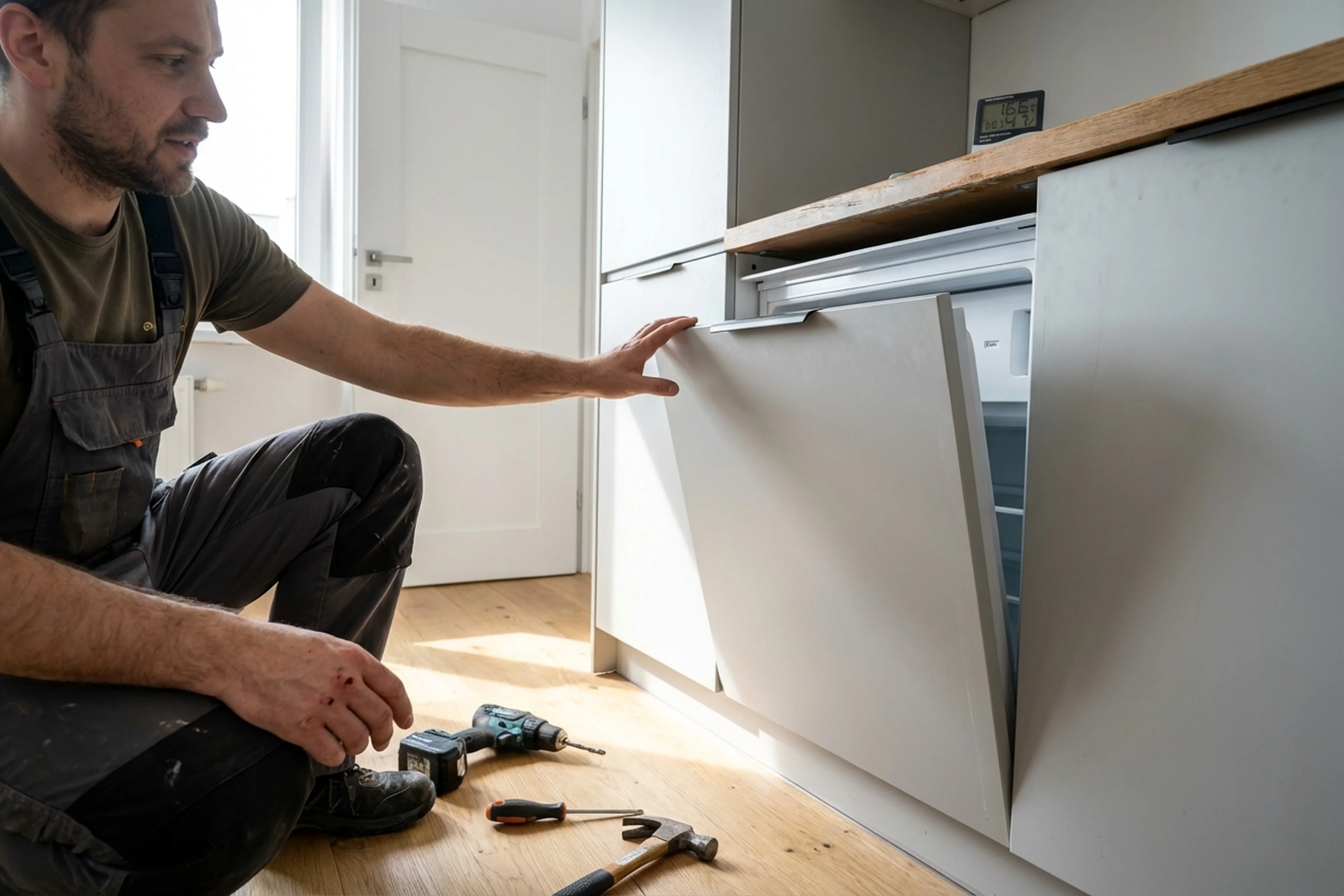
- Buying a fridge without checking the niche size — the appliance doesn’t fit in depth or height and has to be exchanged.
- Ignoring ventilation: without a plinth grille and a gap at the back, the compressor overheats, electricity use goes up, and service life gets shorter.
- Not checking the hinge side: the door opens the wrong way and bangs into the wall.
- Installing without a level — the front sits crooked against the neighbouring cabinets, and the gap is obvious at a glance.
- Screwing the door panel on instead of using rails, after six months the panel drops and the hinges loosen.
- Leaving no gap between the top of the fridge and the cabinet shelf, hot air has nowhere to escape, so the appliance keeps working harder than it should.
- Pushing the unit tight against the back panel — the hose bends and vibrations pass into the furniture frame.
What to prepare before the technician arrives
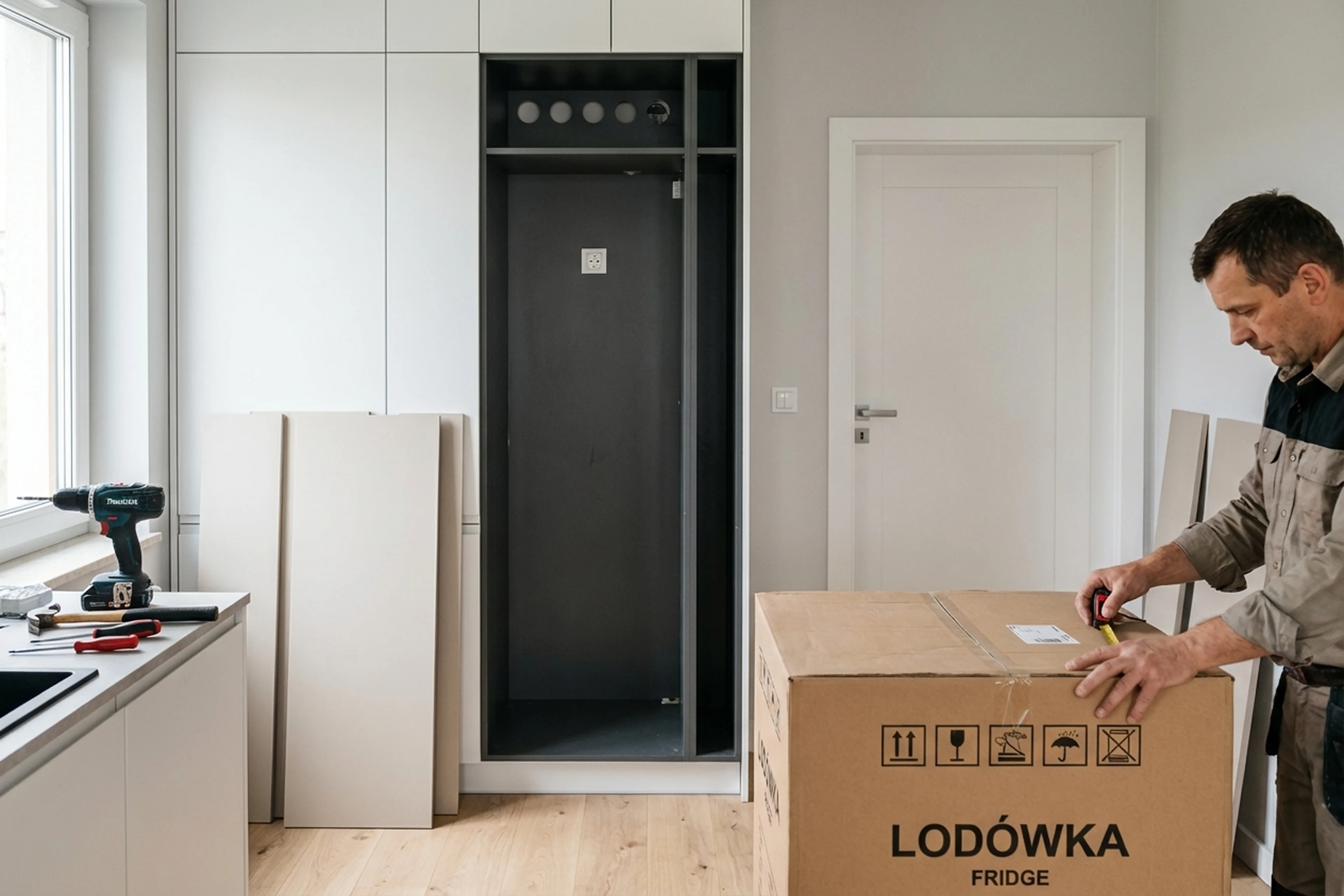
- Measure the niche: height, width, depth, and send these together with the fridge model.
- Check if there’s a socket inside or next to the niche (not behind the fridge — access to the plug must stay clear).
- Make sure the door panel is included or ordered separately, the size has to match the appliance.
- Clear the way to the kitchen: the fridge will need to be brought in and manoeuvred.
- Remove the plinth strip if it blocks access to the bottom of the niche.
- Keep the fridge manual ready — it shows the door mounting diagram and ventilation requirements.
- Confirm which way the door should open (left or right).
- Check that the floor under the niche is level, a difference of more than 2 mm makes levelling harder.
- Provide access to the building and apartment: intercom, lift, parking details.
A real case from Warsaw: built-in fridge connection
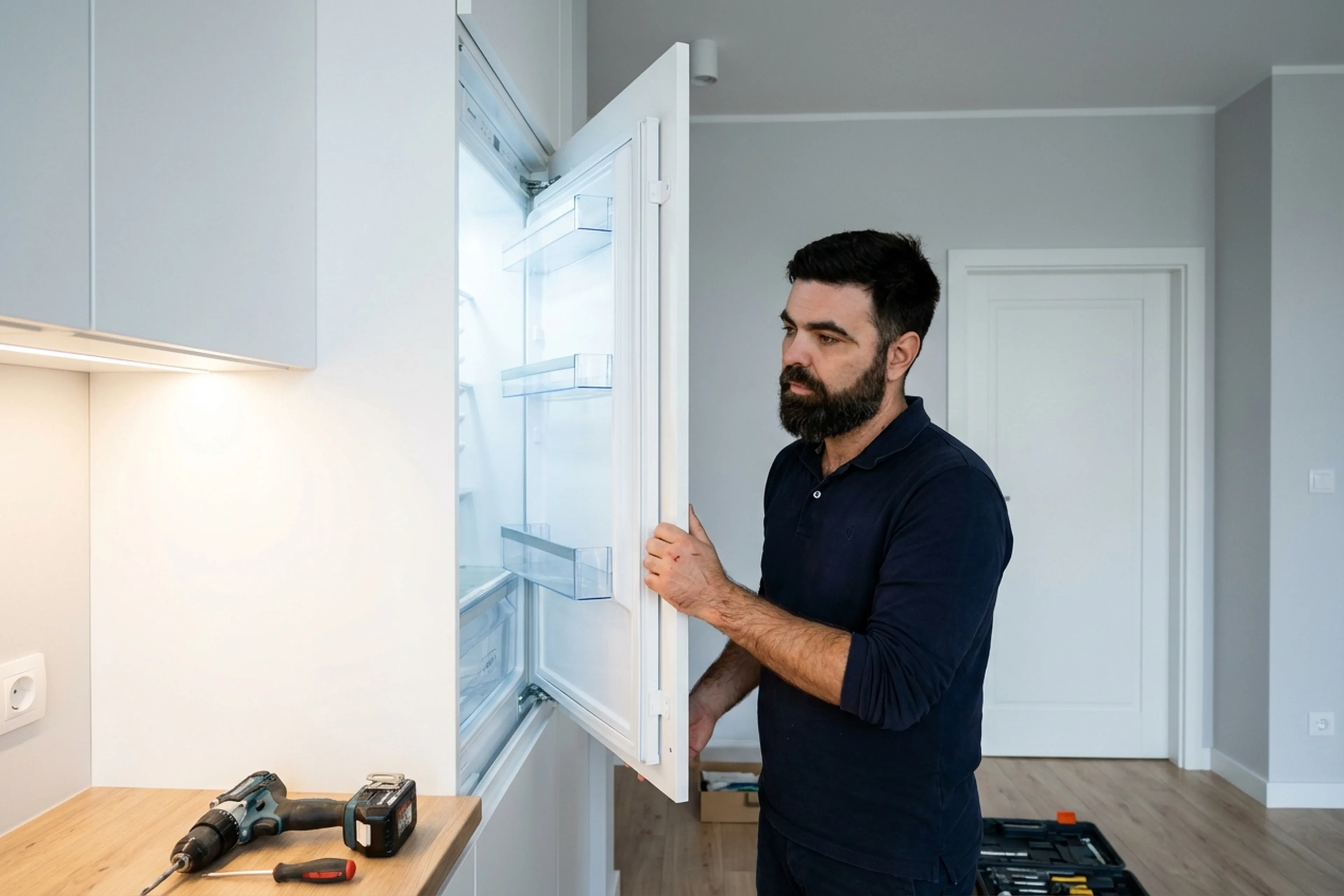
A client in Żoliborz ordered an IKEA kitchen and separately bought a Samsung 178 cm built-in fridge. When he tried fitting it himself, he discovered the housing back panel was solid with no ventilation, and the door panel didn’t fit the rails, IKEA brackets didn’t line up with Samsung’s mounting points. The technician came out, cut two ventilation openings in the back panel, installed a plastic grille in the plinth, and adjusted the mounting strips to suit the fridge’s slide-on system. He levelled the appliance: the floor had a 3 mm slope, so shims were needed to even it out. The front ended up perfectly aligned with the rest of the cabinets. The work took around 2 hours. Takeaway: brackets from different furniture and appliance brands almost never fit each other — some on-site adjustment is nearly always needed.
Frequently asked questions
Can a built-in fridge go into a regular cabinet?
In principle yes, but the cabinet has to be deep enough (at least 55 cm inside), with ventilation at the back and bottom. A standard kitchen cabinet usually needs modification before it will work.
Why is a ventilation grille in the plinth necessary?
The fridge compressor gives off heat. If air can’t move through the niche, the appliance overheats, uses more electricity, and breaks down sooner.
Does the door panel come with the fridge?
No. The door panel is usually ordered with the kitchen furniture. Its dimensions have to match the fridge model exactly.
What if the fridge door doesn’t line up with the other fronts?
Most often the cause is incorrect levelling. The technician adjusts the feet and hinges: in most cases that solves it.
How long does installation take?
From 1 to 2.5 hours, depending on whether the niche needs modification (ventilation, bracket adaptation).
Can the door be rehung on the other side?
On most models, yes. Switching the hinges takes 20–30 minutes.
Will the tradesperson carry the fridge into the apartment?
If the appliance is already inside, they’ll install it there and then. Carrying it in from the street or stairwell costs extra.
Who does the work
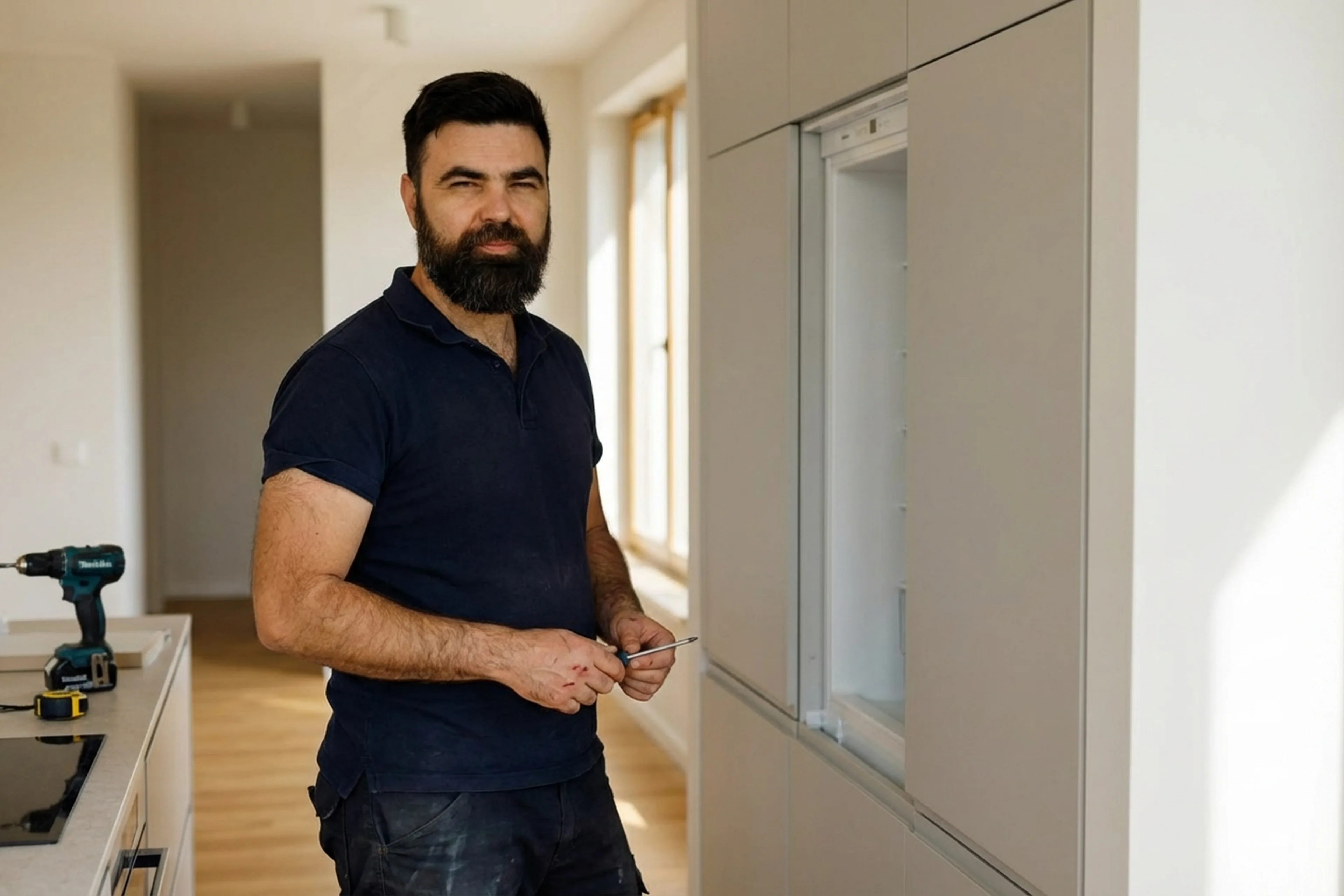
Built-in kitchen appliance installation is done by technicians with hands-on experience in IKEA, Nobilia, Black Red White, and custom kitchens. Tradespeople work across all of Warsaw and nearby suburbs.
Order in the app
Describe the job, add photos and the address. Tradespeople send their own prices and dates, and you pick one of the offers.
Open the app