
How much does it cost and what affects the price

Up-to-date prices are in the table below. The price for painting in several colours depends on how many shades are involved, how complicated the pattern is (straight lines are easier; diagonals and curves need more time), the total wall surface, and the state of the substrate. If the walls are already skimmed and primed, they can start painting right away. If not, prep work has to be done first. Paint is a consumable and is billed separately. Masking tape and protective film are included in the labour price.
| Service | Price |
|---|---|
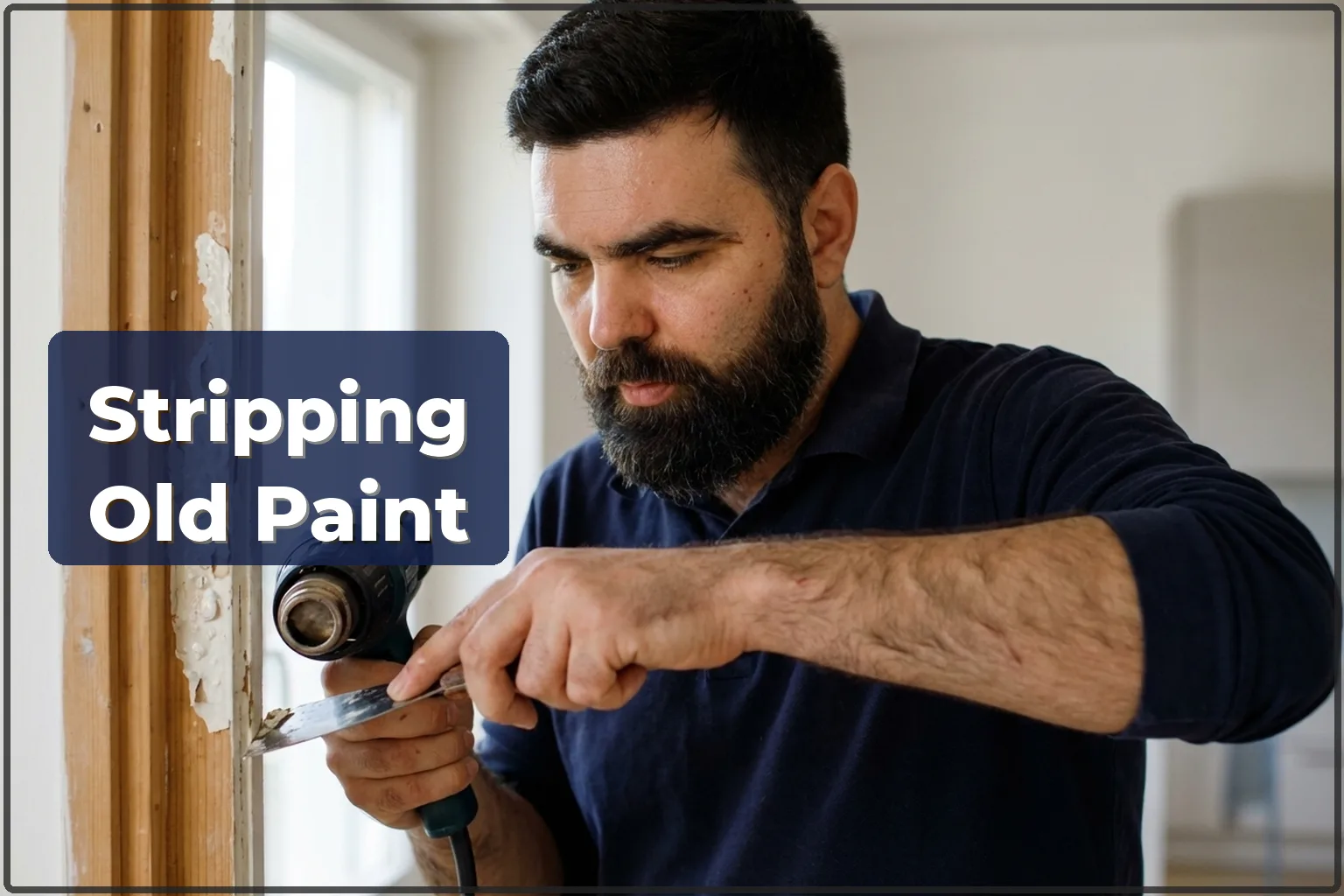
| Covering furniture, doors, windows and floors | 20–25 zł/m² |
| Wall cleaning before painting | 15–25 zł/m² |
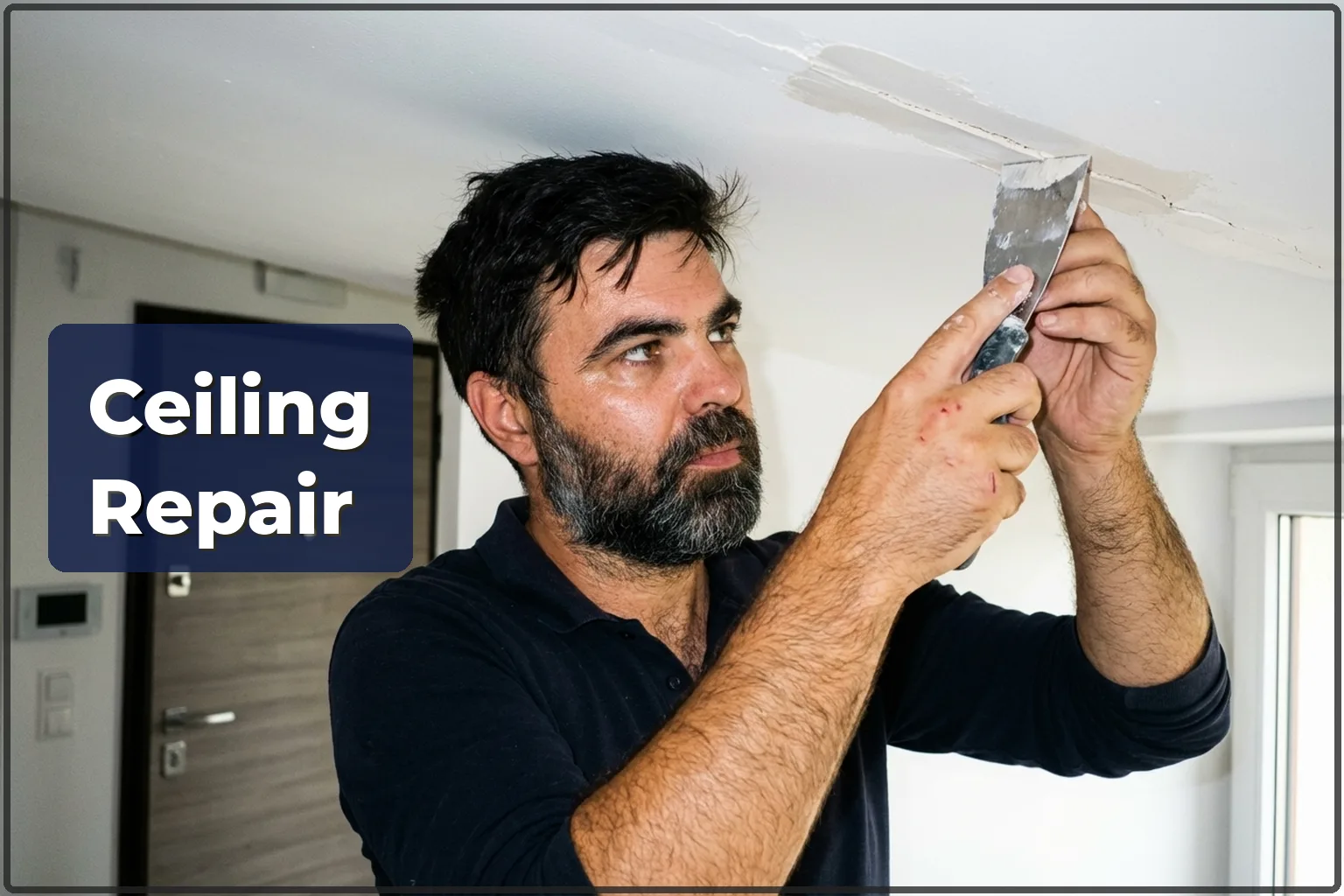
| Filling holes and damage | 20–35 zł/m² |
| Wall levelling after tile removal | 60–90 zł/m² |
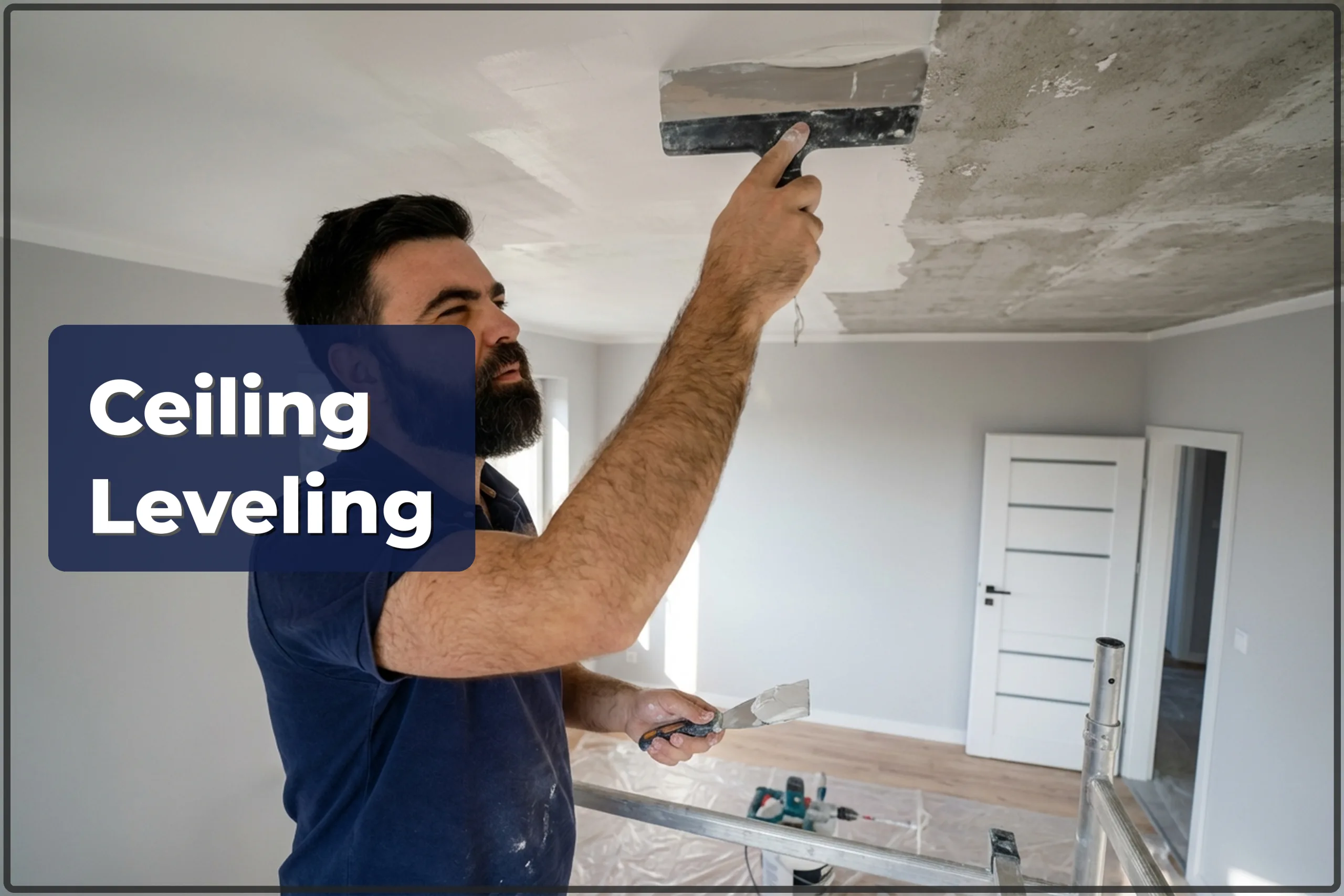
| Ceiling levelling | 45–80 zł/m² |
| Priming before painting | 8–14 zł/m² |
| Gypsum skim coating | 55–90 zł/m² |
| Walls and ceilings, one colour (2 coats) | 30–50 zł/m² |
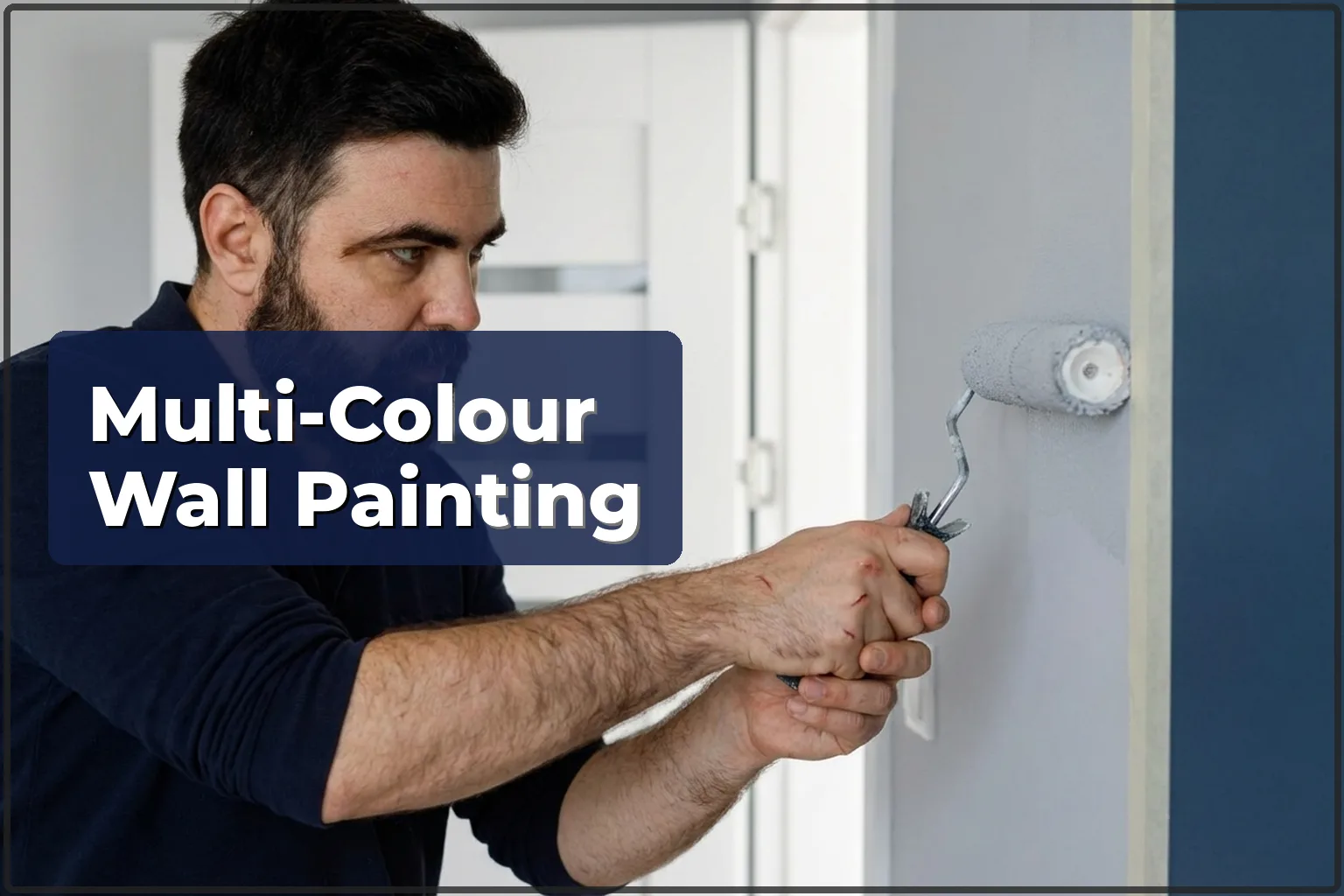
| Walls in different colours | 40–60 zł/m² |
Indicative prices. Ranges for a typical scope. Fixings included, materials separate. Minimum order 300 zł.
What it costs and how to book: painting services in Warsaw.
How the on-site work goes
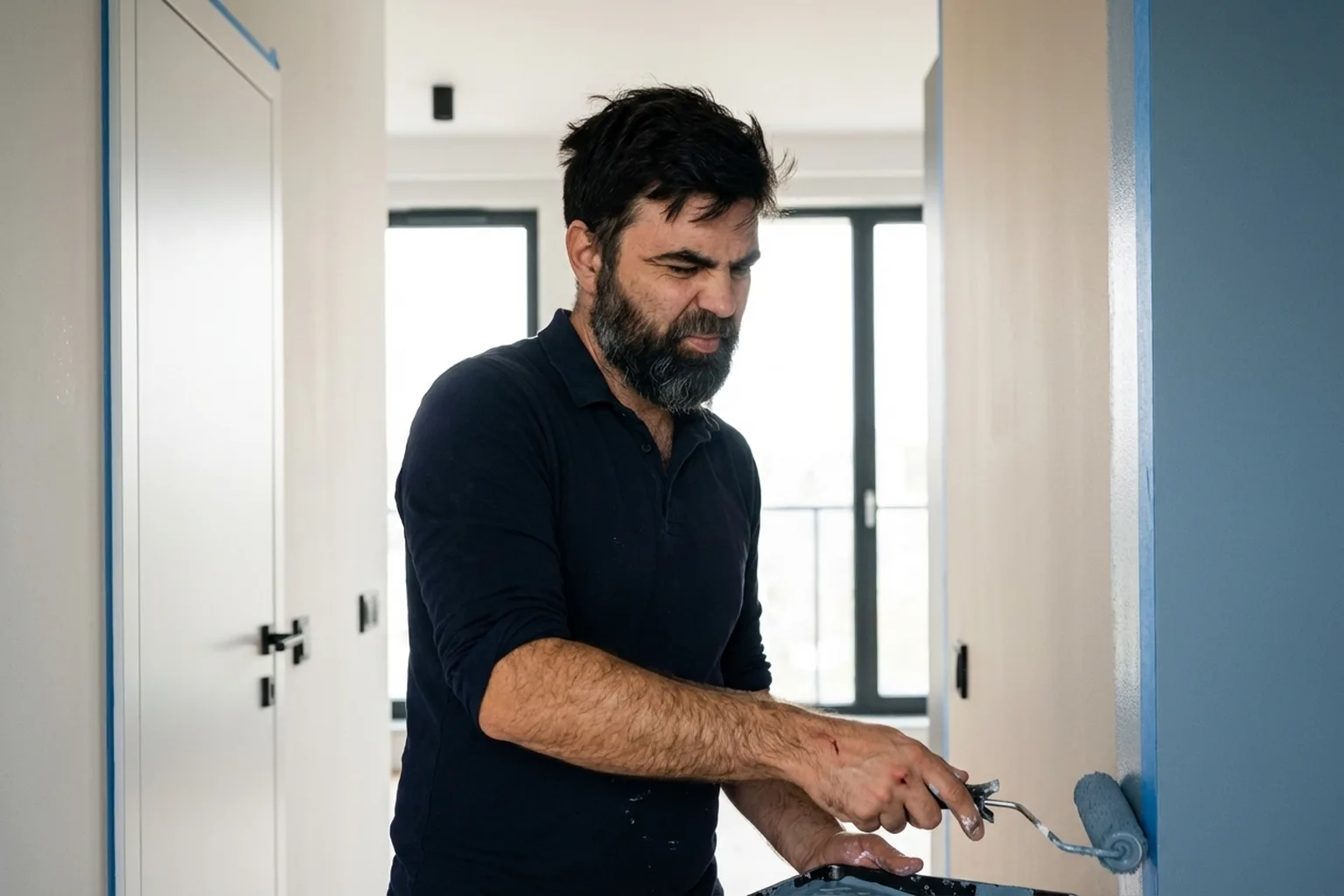
- The painter checks the walls: looks at flatness, cracks, and the condition of the existing coating if there is one. If the job is over fresh filler, makes sure it has dried fully.
- Tradespeople confirm the colours and the layout: which wall will be the accent, where the colour split will run, and whether any geometry is needed (stripes, blocks, diagonals). If there is no design brief, they help with NCS or RAL charts.
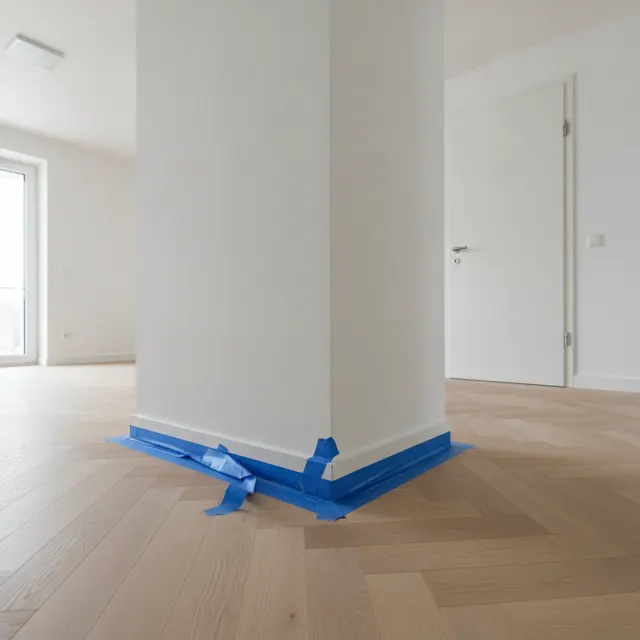
- The floor, furniture, and areas not being painted are covered with sheeting. Masking tape is applied to skirting boards, sockets, and window frames.
- The walls are primed (if needed) so the paint takes evenly.
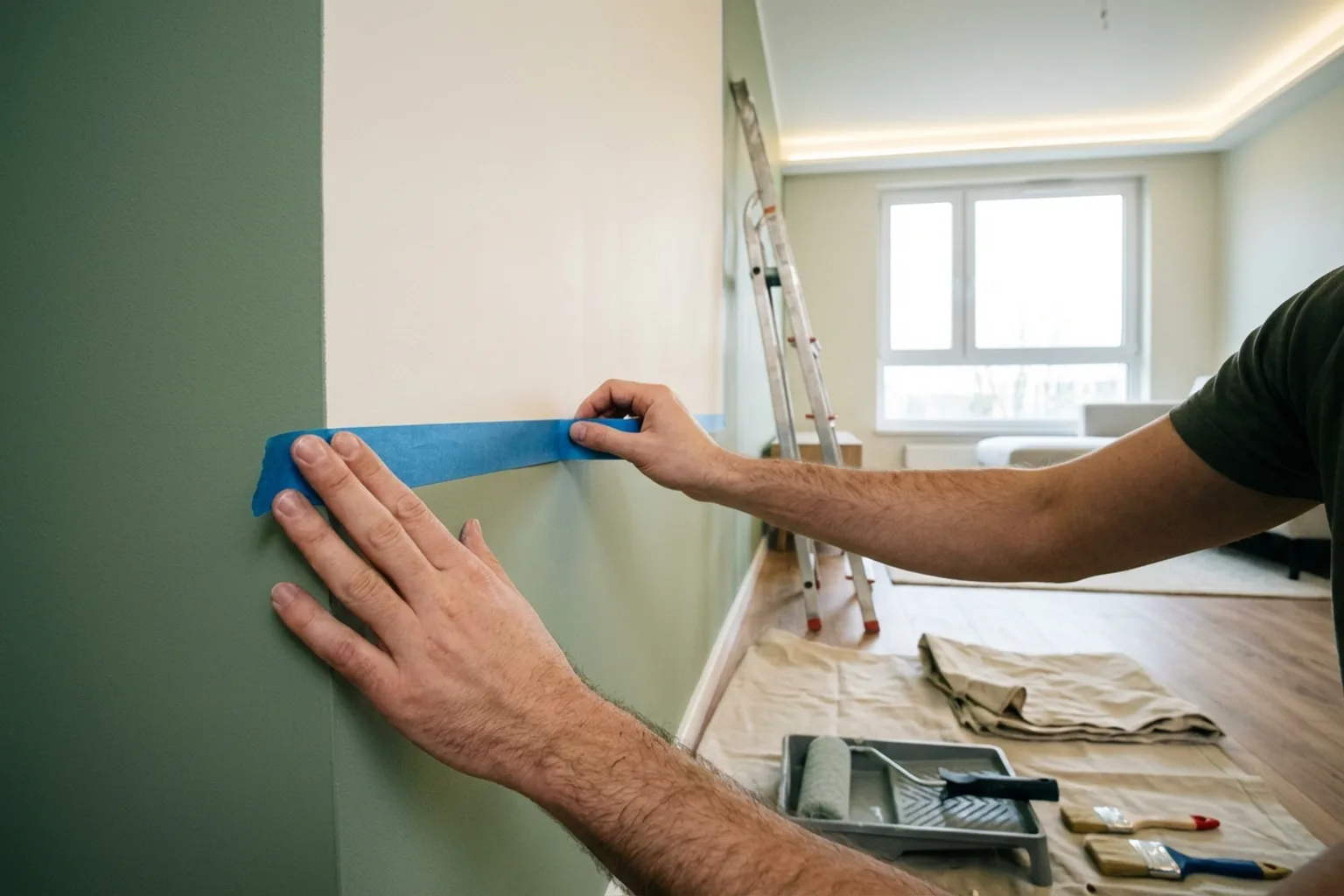
- The colour divisions are marked out. Masking tape is laid along the line and pressed down properly with a spatula so paint does not creep underneath.
- The first colour goes on — most often the lighter one. A roller is used on open sections, a brush in corners and along the tape. Two coats, with drying time in between.
- The tape comes off, new tape is applied along the line, and the second colour is painted. The same process is repeated for every extra shade.
Common customer mistakes (and how to avoid them)
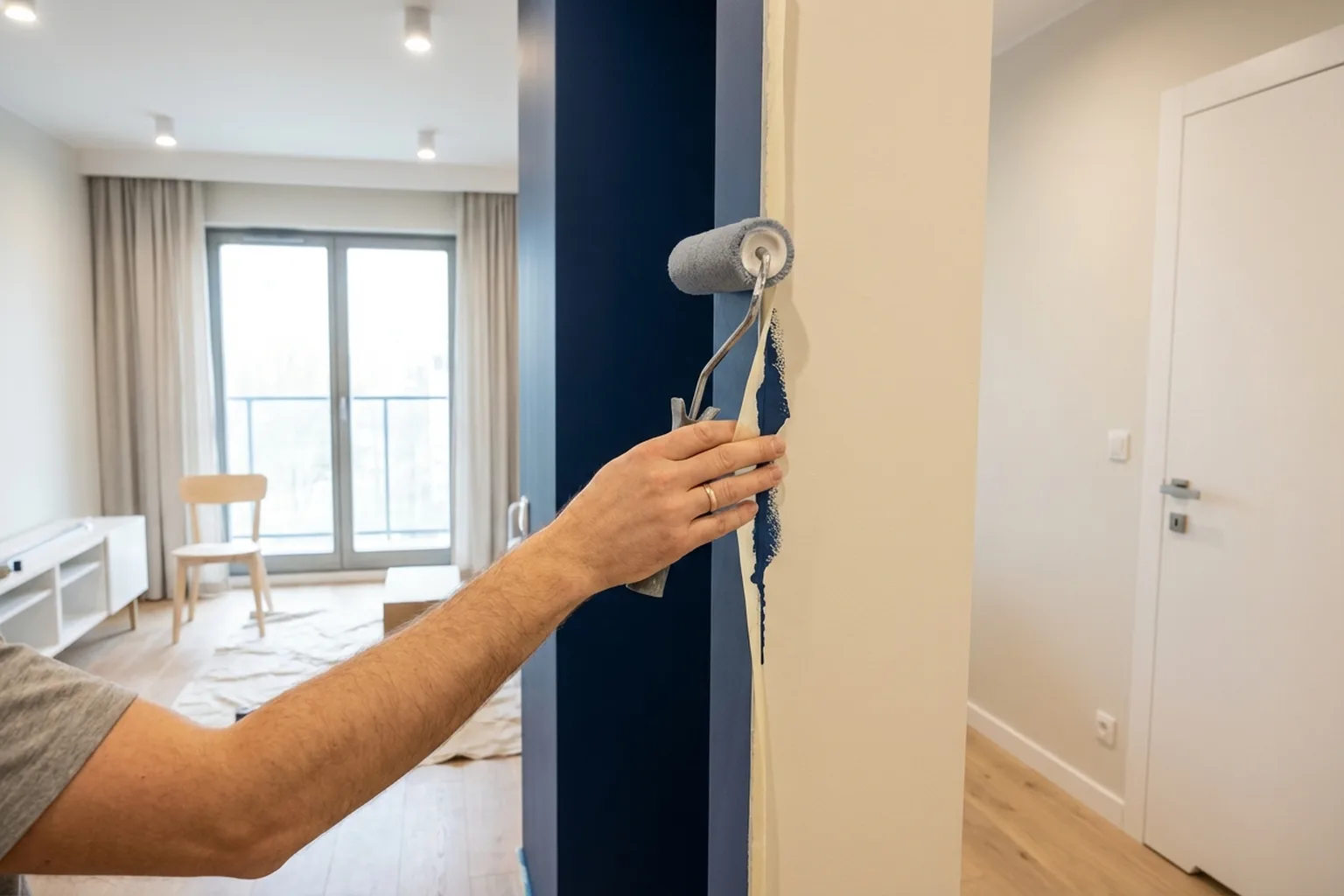
- Pulling off the tape after the paint has already dried, the paint layer rips along the edge and leaves an uneven line. Tape should be removed while the last coat is still slightly tacky.
- Picking colours from a phone screen: the same shade can look very different on an actual wall. Always make a test patch on the surface itself.
- Not pressing the tape down well enough — paint gets under the edge and makes a blurred boundary. Run a spatula or plastic card along the tape.
- Placing two very strong colours side by side: in a real room it can feel too much. The safer rule is one bold colour with one neutral.
- Painting without primer: the wall absorbs unevenly, and the finish comes out patchy.
- Making an accent wall too dark in a small room — the space starts to feel even tighter. Dark accent walls work best in larger rooms.
- Forgetting about lighting: the same shade can look completely different in daylight and under lamps. Check samples in both conditions.
What to prepare before the painter arrives
- Choose the colours in advance. Best option: buy testers (small 0.1 l tins) and make sample patches on the wall.
- If the walls need skimming, that must be done before painting. The painter will confirm this during inspection.
- Empty the room as much as you can. What stays should be moved to the middle and covered.
- Take off socket and switch face plates.
- If you have a colour layout plan (sketch, Pinterest image, designer render) — show it to the painter.
- Make sure there is ventilation: paint has a smell, even water-based products.
- Confirm how many walls and which rooms are being painted, that affects both timing and paint consumption.
- Buy paint with a 10–15% reserve — useful later for touch-ups. The painter can help work out the quantity.
- Pass on access details: intercom code, parking, keys.
A real case from Warsaw
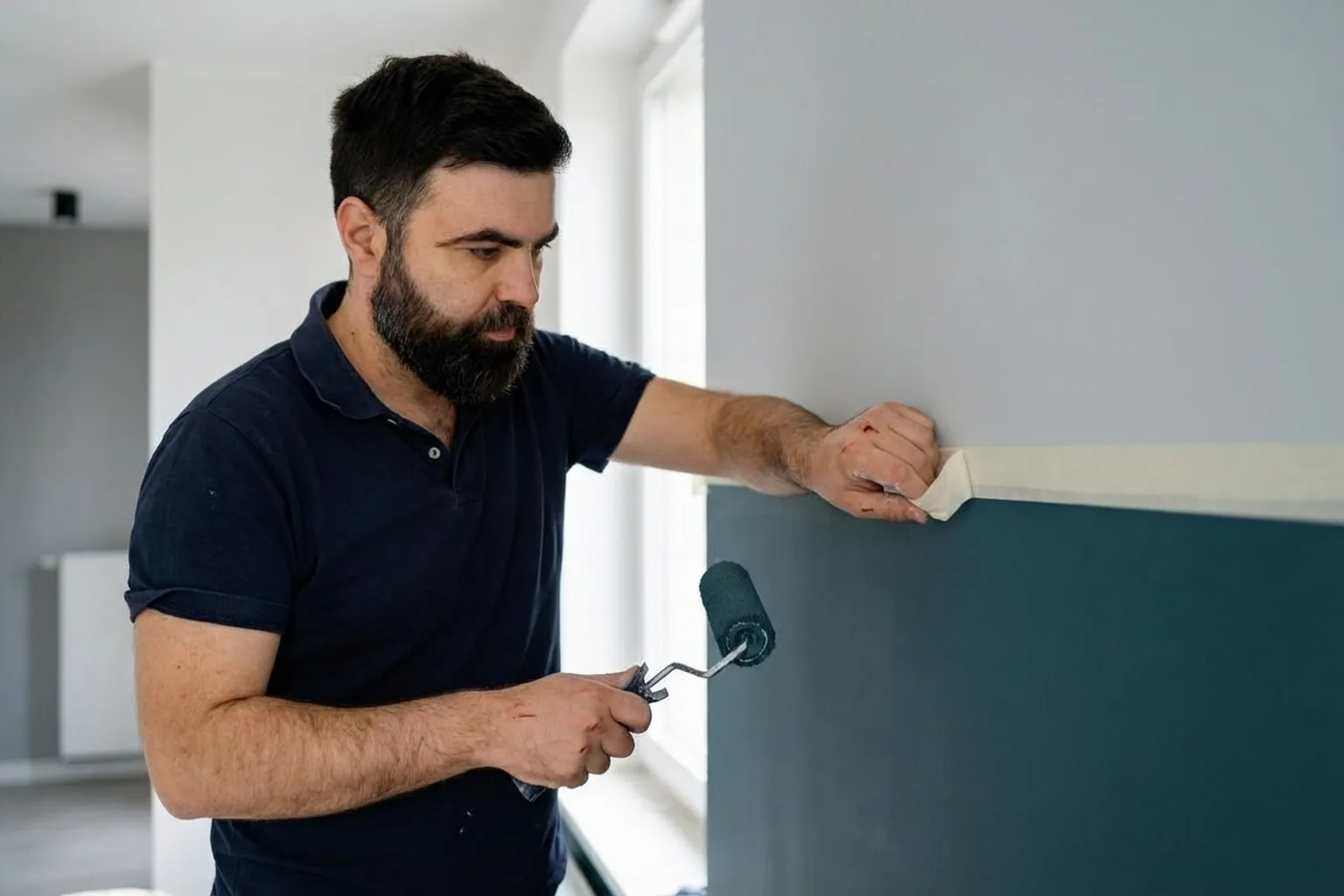
A one-bedroom flat in Wilanow, with an open-plan living space of 38 m². The owner wanted to visually separate the kitchen area from the lounge without putting up a partition wall. The answer was simple: the wall behind the kitchen counter in deep olive green (RAL 6003), and everything else in warm off-white (NCS S 0502-Y). The dividing line followed the corner where the two zones met, the easiest setup for a neat clean edge. The walls had already been primed after a recent skim coat. The painting took a day and a half: the off-white base was done first — two coats on day one, then the olive wall got its two coats the next morning. The tape was removed right after the second coat while still damp: the edge came out perfectly sharp. The result: the kitchen zone got its own character, and the olive wall became a background for open shelving. The owner said guests assume an interior designer planned it, in fact it was just two colours put on carefully.
Frequently asked questions
What paint should I choose?
For living areas — latex or acrylic, in a matt or eggshell finish. For kitchens and bathrooms: washable, moisture-resistant paint. Tradespeople can suggest specific brands on site.
How many coats are needed?
Minimum two. Sometimes three: if you are covering light with dark or the other way round.
Can a tradesperson do a sharp diagonal line?
Yes, but it is more demanding than a straight line. Tradespeople use a laser level and professional-grade tape. The price is a bit higher because the layout takes extra time.
How do I choose a colour combination?
If there is no design brief — match one saturated colour with a neutral (white, grey, beige). Another option is two neighbouring hues from the colour wheel. Strong combinations are best checked first with a sample patch on the wall.
When can I put furniture back?
24 hours after the final coat. Full curing of the paint takes 2–4 weeks: during that time, do not wash or scrub the walls.
What are NCS and RAL?
International colour coding systems. Any paint shop can tint paint to an NCS or RAL code, so you get the exact same colour every time.
Who does the work
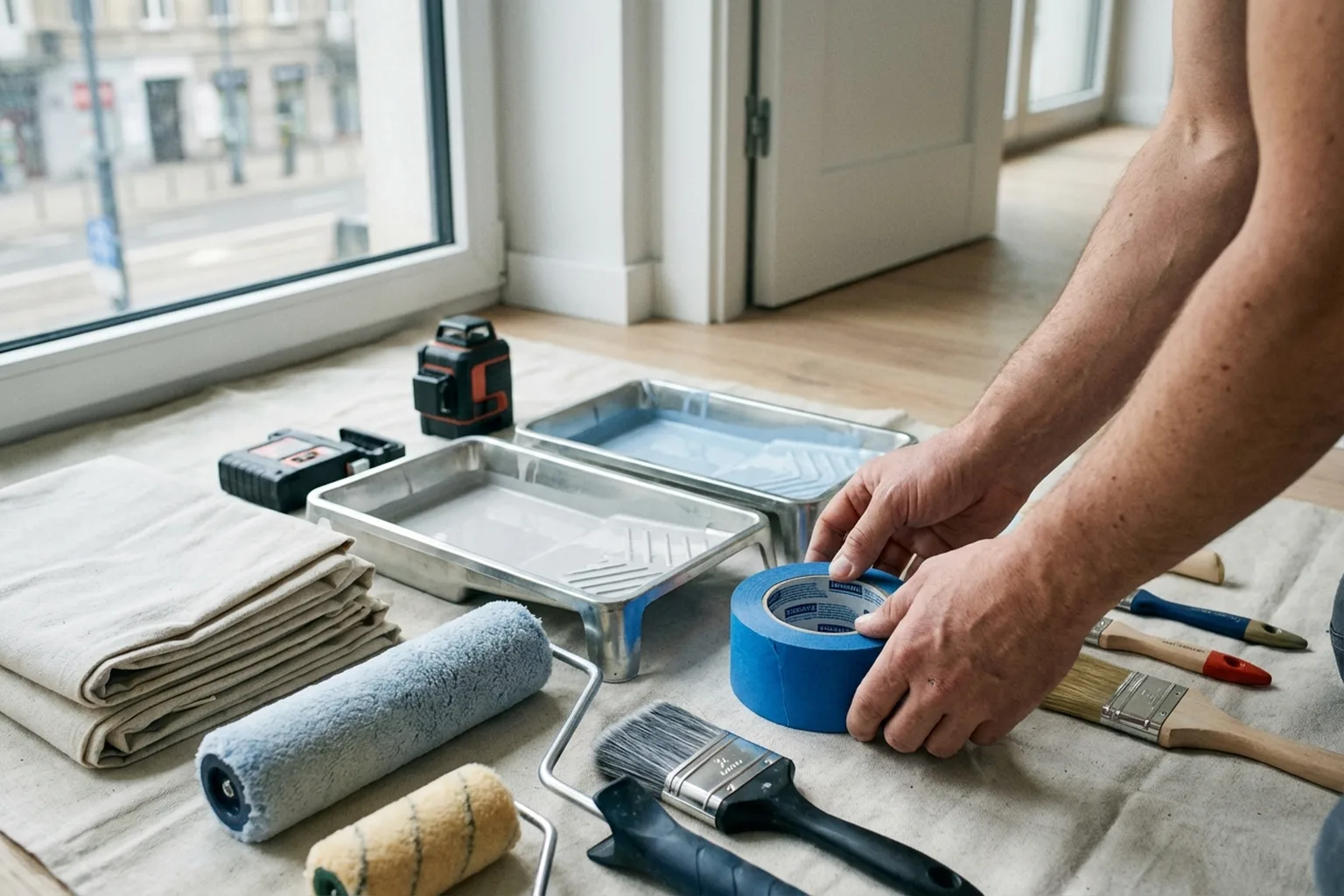
Multi-colour wall painting is done by experienced decorators who work with care and precision, across Warsaw. Post a request in the HandyMan24 app: tradespeople will talk through the colours, check the scope of work and send their offers.
Order in the app
Describe the job, add photos and the address. Tradespeople send their own prices and dates, and you pick one of the offers.
Open the app