
Wall cleaning and washing before painting: cost and what affects it
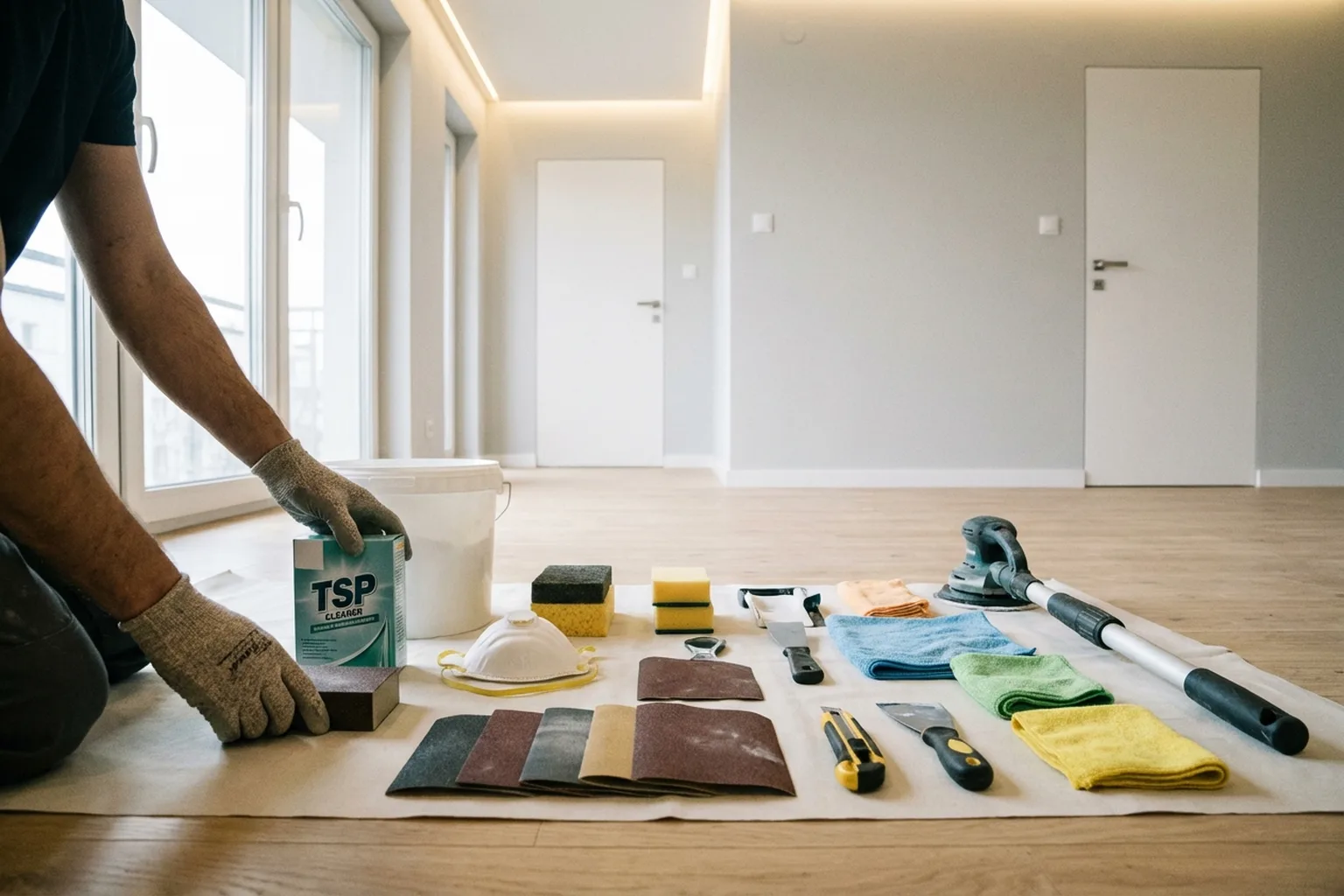
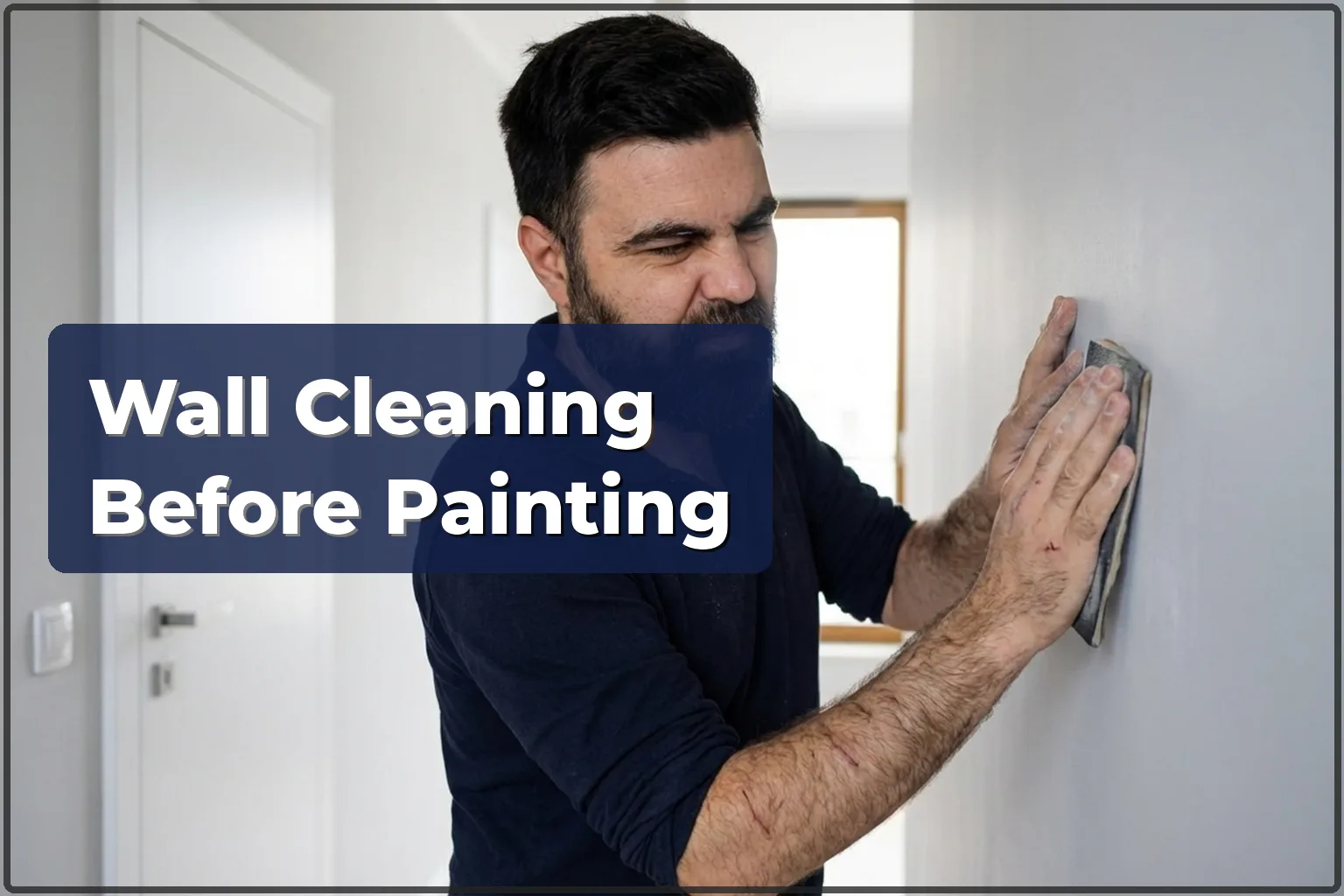
Washing and cleaning walls before painting in Warsaw costs 15 to 25 zł per m²: the same as priming. The current rates are in the table below. The final cost comes down to the wall condition (light dust or years of grease build-up), the size of the area, and the surface type. If the wall is only dusty, a simple wipe is enough. If it is greasy from cooking, it has to be washed with a degreasing product. Sponges and tools are included. Cleaning products are treated as consumables and billed separately.
| Service | Price |
|---|---|
| Covering furniture, doors, windows and floors | 20–25 zł/m² |
| Wall cleaning before painting | 15–25 zł/m² |
| Filling holes and damage | 20–35 zł/m² |
| Wall levelling after tile removal | 60–90 zł/m² |
| Ceiling levelling | 45–80 zł/m² |
| Priming before painting | 8–14 zł/m² |
| Gypsum skim coating | 55–90 zł/m² |
| Walls and ceilings, one colour (2 coats) | 30–50 zł/m² |
| Walls in different colours | 40–60 zł/m² |
| Oil paint painting | 70–150 zł/m² |
| Pipe painting (water, heating, gas) | 20–35 zł/mb |
| Radiator painting | 150–400 zł/szt |
| Window painting | 150–300 zł/szt |
| Old paint removal from wood | 30–70 zł/m² |
| Wood impregnation | 30–45 zł/m² |
| Old wallpaper removal | 20–35 zł/m² |
| Ceiling cornice installation | 40–75 zł/mb |
Indicative prices. Ranges for a typical scope. Fixings included, materials separate. Minimum order 300 zł.
What it costs and how to book: painter and decorator in Warsaw.
Wall cleaning and washing before painting: how the work goes
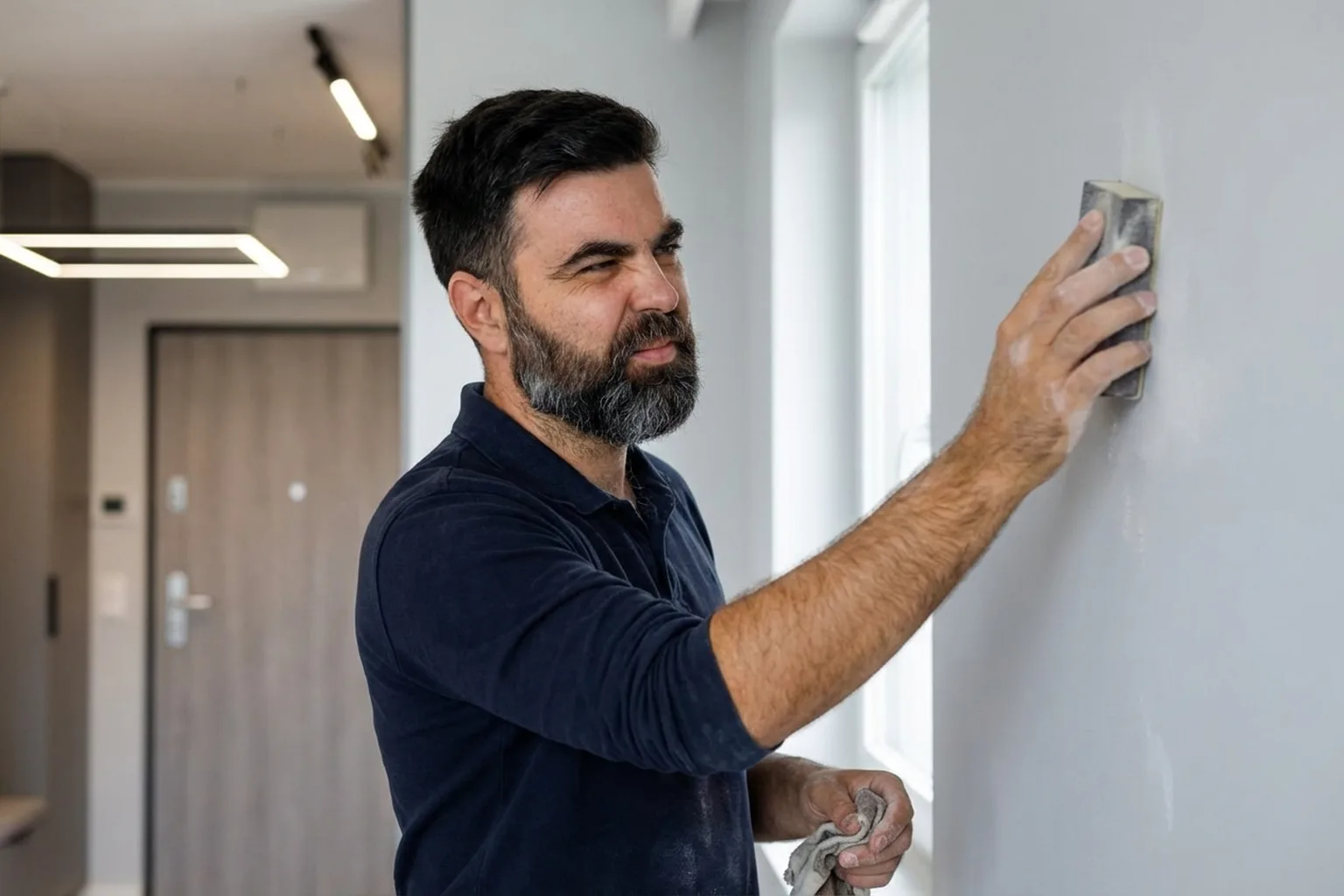
- The technician checks the walls and works out what kind of contamination is there: dust, grease, soot, nicotine, mould.
- The right cleaning method is selected: dry wiping, wet washing, or application of a specialist product.
- The walls are washed from top to bottom — this stops drips from marking areas that are already clean.
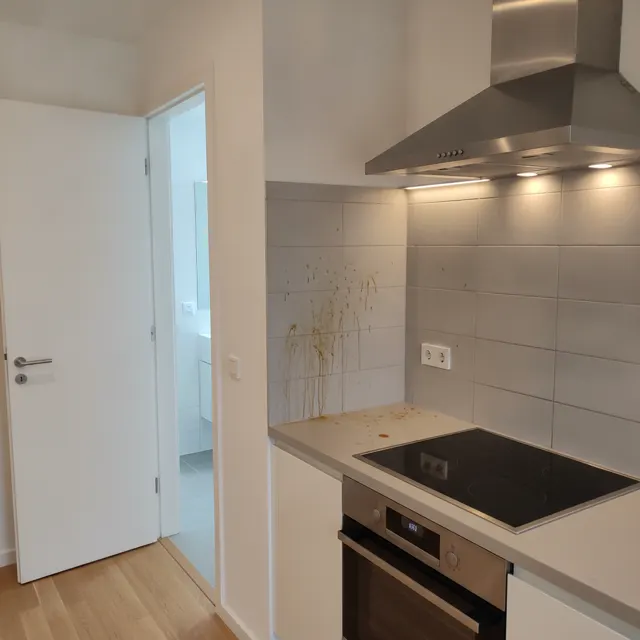
- Tricky spots (next to the hob, behind the fridge, above radiators) are handled separately.
- After washing, the walls need to dry fully: usually 2–4 hours.
- The technician passes a hand over the surface: if it doesn’t feel slippery, it is ready for priming and painting.
Common customer mistakes (and how to avoid them)
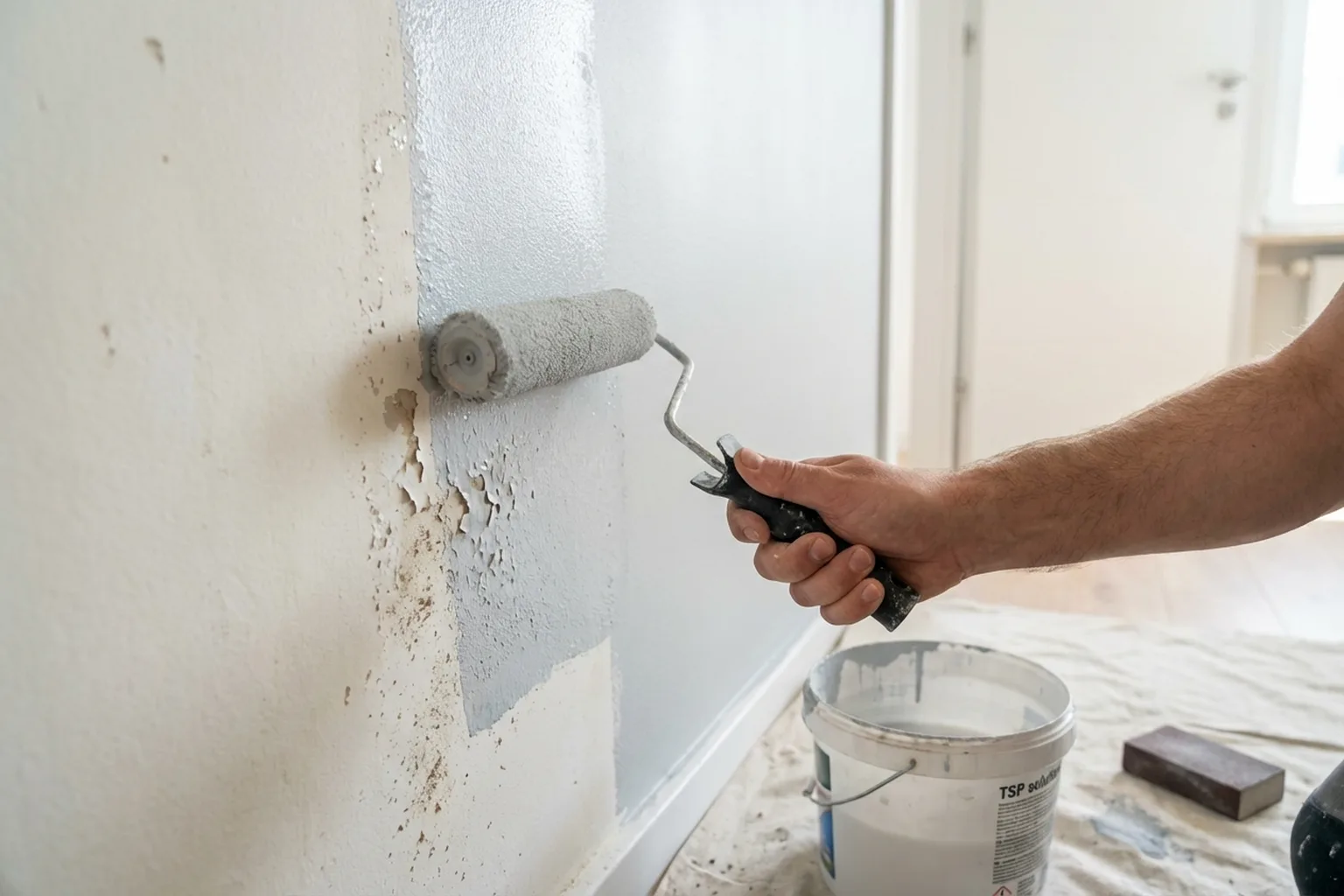
- Painting without cleaning first — the paint looks fine going on, then starts blistering and peeling after 2–3 months.
- Wiping walls with a dry cloth: the dust just gets spread around and the grease remains.
- Using aggressive cleaning products: they can damage the plaster or leave behind a chemical residue.
- Not waiting for the walls to dry after washing — paint will not bond to a damp surface.
- Ignoring the areas behind furniture: move the wardrobe and the wall behind it is full of dust and cobwebs.
- Cleaning only the visible parts: behind radiators and above cabinets also need washing.
A small patch of mould is something you can remove yourself, as long as you do it safely: how to remove mould from walls safely.
What to prepare before the technician arrives
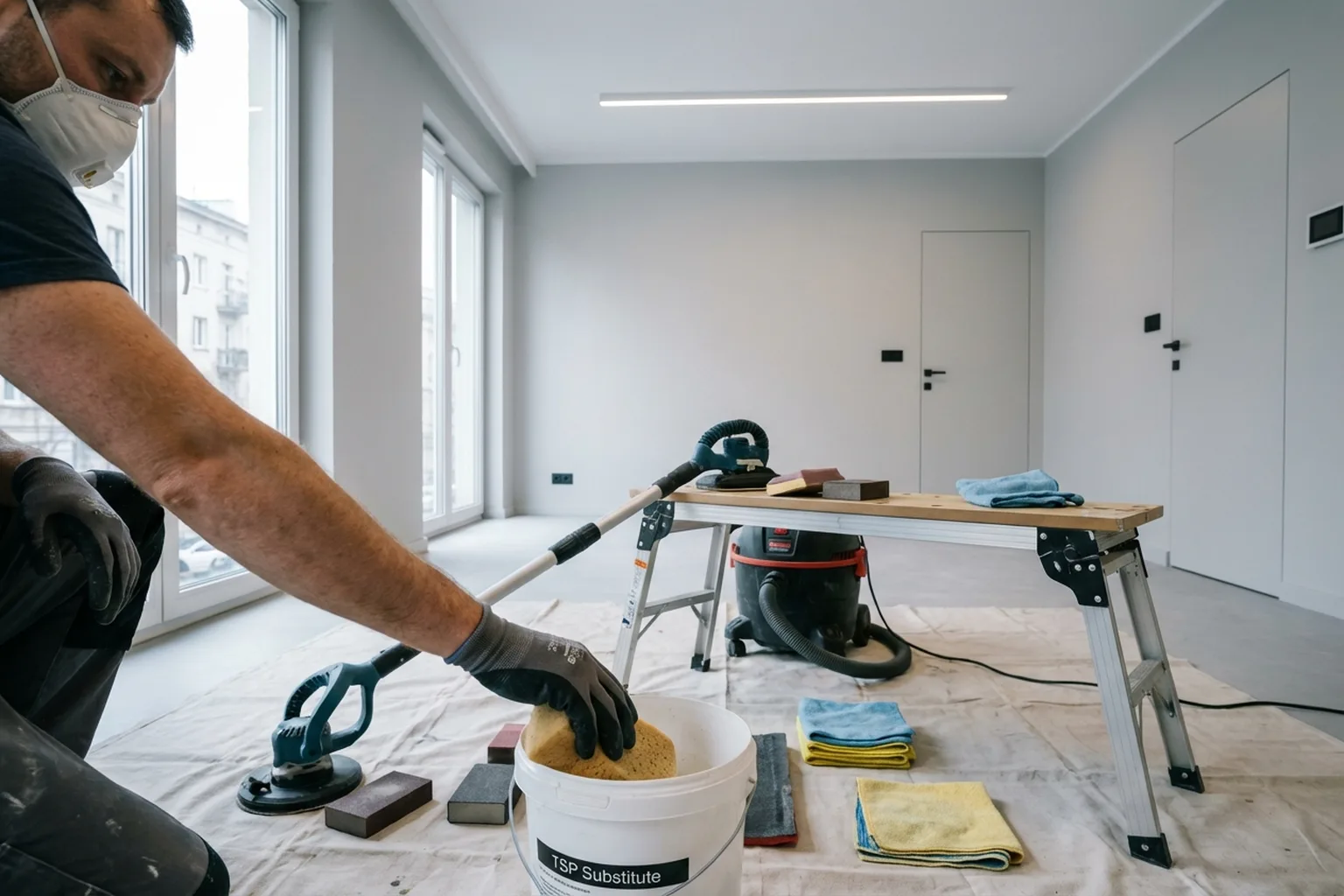
- Pull furniture 30–50 cm away from the walls or move it to the middle of the room.
- Remove pictures, clocks, shelves — anything fixed to the walls.
- Cover sockets and switches with masking tape if wet washing is planned.
- Make sure there is access to water (a tap and a bucket).
- If it’s a kitchen, tell the technician what sort of dirt is there (grease, soot).
- Check the ventilation: after wet washing, air movement is needed for drying.
- Clear rugs and belongings from the floor along the walls.
- Confirm the appointment time — the walls need at least 2 hours to dry before painting can begin.
Wall cleaning and washing before painting in practice: a Warsaw case
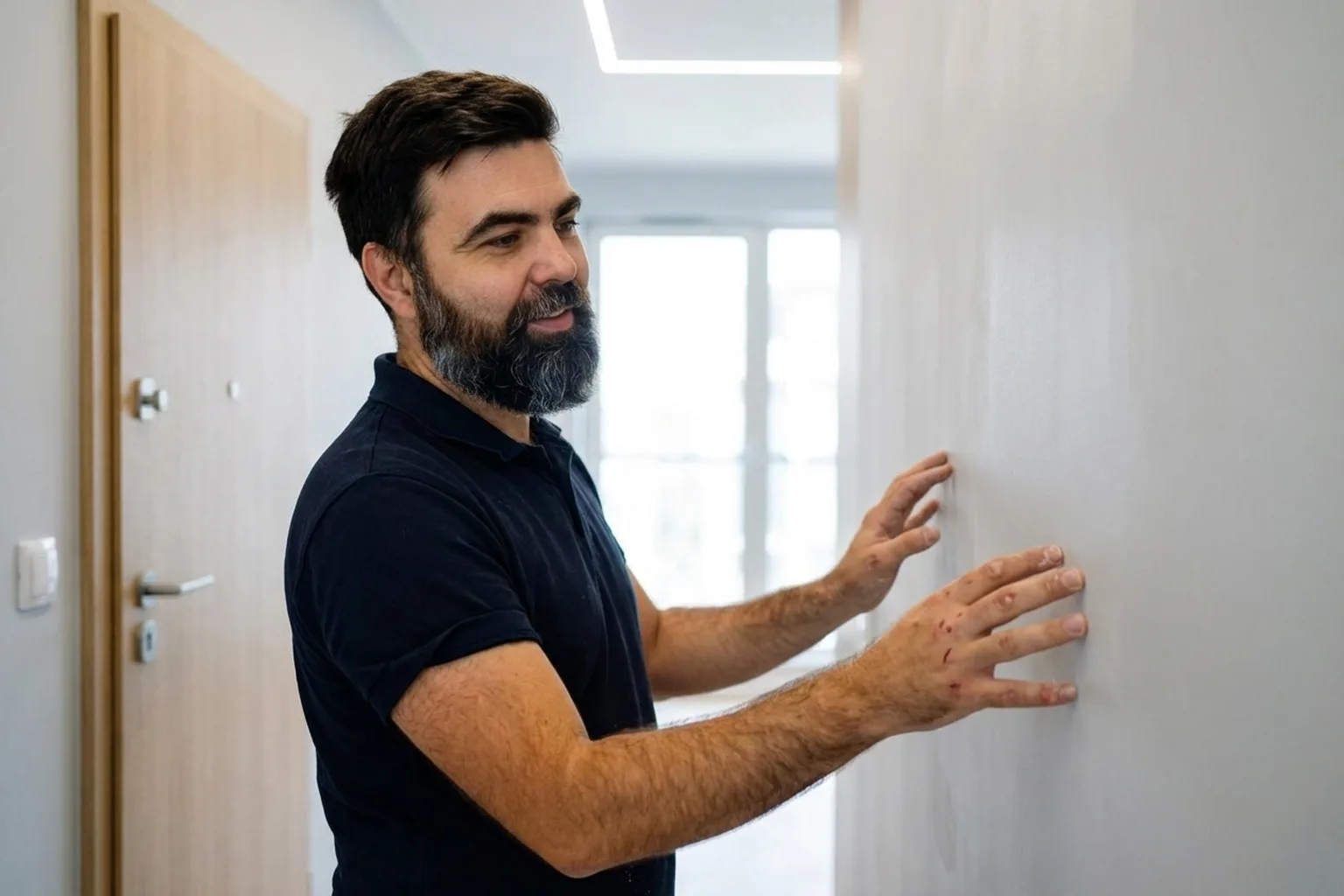
A two-bedroom flat in Żoliborz. The landlord wanted a fast repaint before the new tenants moved in. The previous decorator had painted straight over old walls covered in grease: the kitchen had no extractor, and the tenant had been a heavy smoker. Within a month the paint was coming off in sheets. Tradespeople removed the top layer, washed the walls twice with degreaser, left them to dry overnight, applied an isolating primer, and painted two coats. That was eight months ago: the finish still looks perfect. Proper wall prep adds a few hours to the job, but it saves you from having to do the whole thing again within weeks.
Frequently asked questions
Do I need to wash the walls if they look clean?
Yes — building dust is invisible, but it reduces paint adhesion. A wipe with a damp cloth is enough.
What should I use to wash kitchen walls?
A degreasing solution or TSP (trisodium phosphate). Ordinary soap will not fully remove the greasy film.
Can you wash plasterboard?
Yes, but with care: use a slightly damp sponge and do not soak it. Plasterboard does not handle excess moisture well.
How long do walls take to dry after washing?
Usually 2–4 hours with good ventilation. Walls with heavy grease that are washed thoroughly may need up to 24 hours.
Do tradespeople wash ceilings too?
Yes, if the ceiling is going to be painted. This matters most in kitchens and bathrooms.
Can I order wall washing without painting?
Yes, but booking the full package is more cost-effective.
Do walls need washing before painting?
When you are repainting in the same colour after a year or two, not always. But anywhere the wall carries grease, cigarette smoke, building dust or marks from furniture, washing is essential. Paint does not bond to the wall, it bonds to the dirt, and within months it starts peeling off in sheets together with that layer.
What should walls be cleaned with before painting?
Ordinary dust comes off with a vacuum and a damp sponge. Kitchen grease needs water with a degreaser or plain soap. Nicotine film calls for an ammonia-based cleaner followed by an isolating primer, without it the yellow patches bleed through even three coats. Mould gets a fungicidal treatment first and only then a wash.
Does a ceiling need priming before painting?
Yes, if it has been freshly filled, is very absorbent, was limewashed, or shows water stains. Primer evens out the absorbency so the paint goes on flat, without streaks along the edges. A ceiling painted a year ago in the same paint can skip it — primer would not improve anything there.
How much does washing walls before painting cost?
From 15 to 25 zł per m². Light building dust is the bottom of the range; years of greasy build-up in a kitchen, or nicotine film, is the top, it takes two passes and different products.
Who does the work
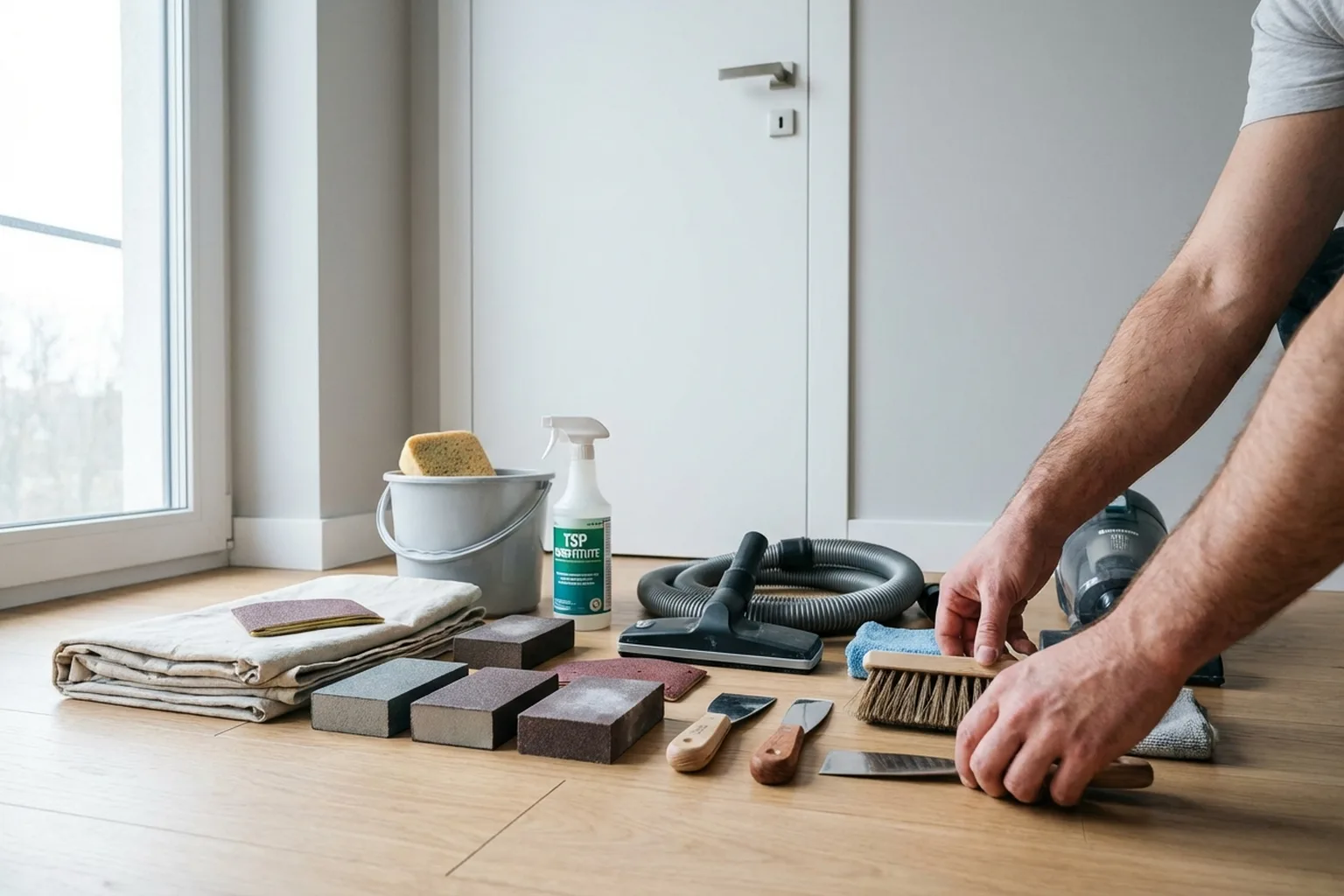
Wall preparation is done by painters with real renovation experience on site. Tradespeople work across all of Warsaw.
Order in the app
Describe the job, add photos and the address. Tradespeople send their own prices and dates, and you pick one of the offers.
Open the app