
How much does filling holes and wall damage repair cost in Warsaw?
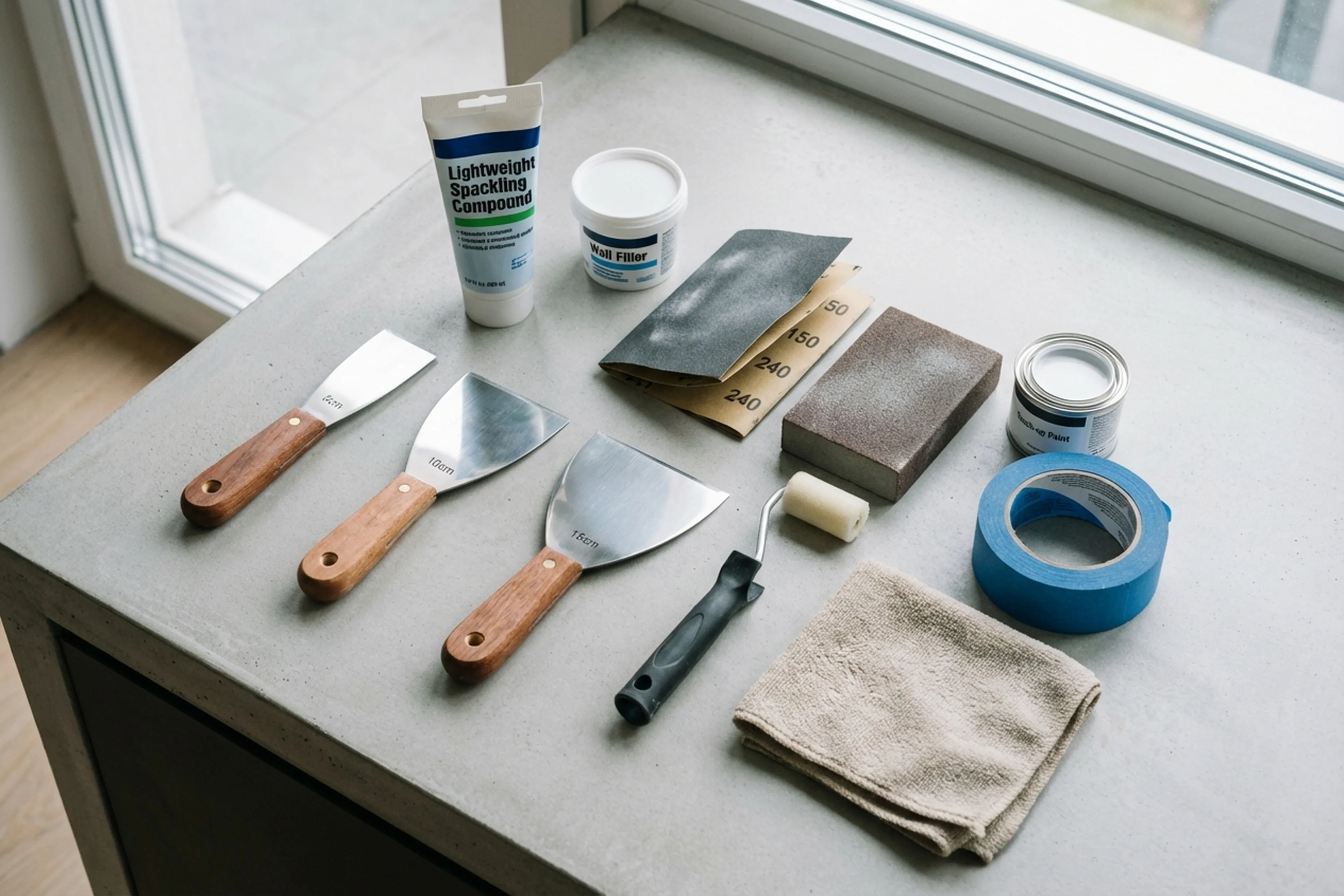
Up-to-date prices are listed in the table below. The final cost comes down to how many damaged spots there are, how deep they are, and what kind of wall surface you have. Small drill holes are fast and cheap to sort out. Deep chips or cracks need reinforcing mesh and several layers of filler, with sanding in between. Spatulas and sandpaper are included. Filler compound is treated as a consumable and billed separately.
| Service | Price |
|---|---|
| Covering furniture, doors, windows and floors | 20–25 zł/m² |
| Wall cleaning before painting | 15–25 zł/m² |
| Filling holes and damage | 20–35 zł/m² |
| Wall levelling after tile removal | 60–90 zł/m² |
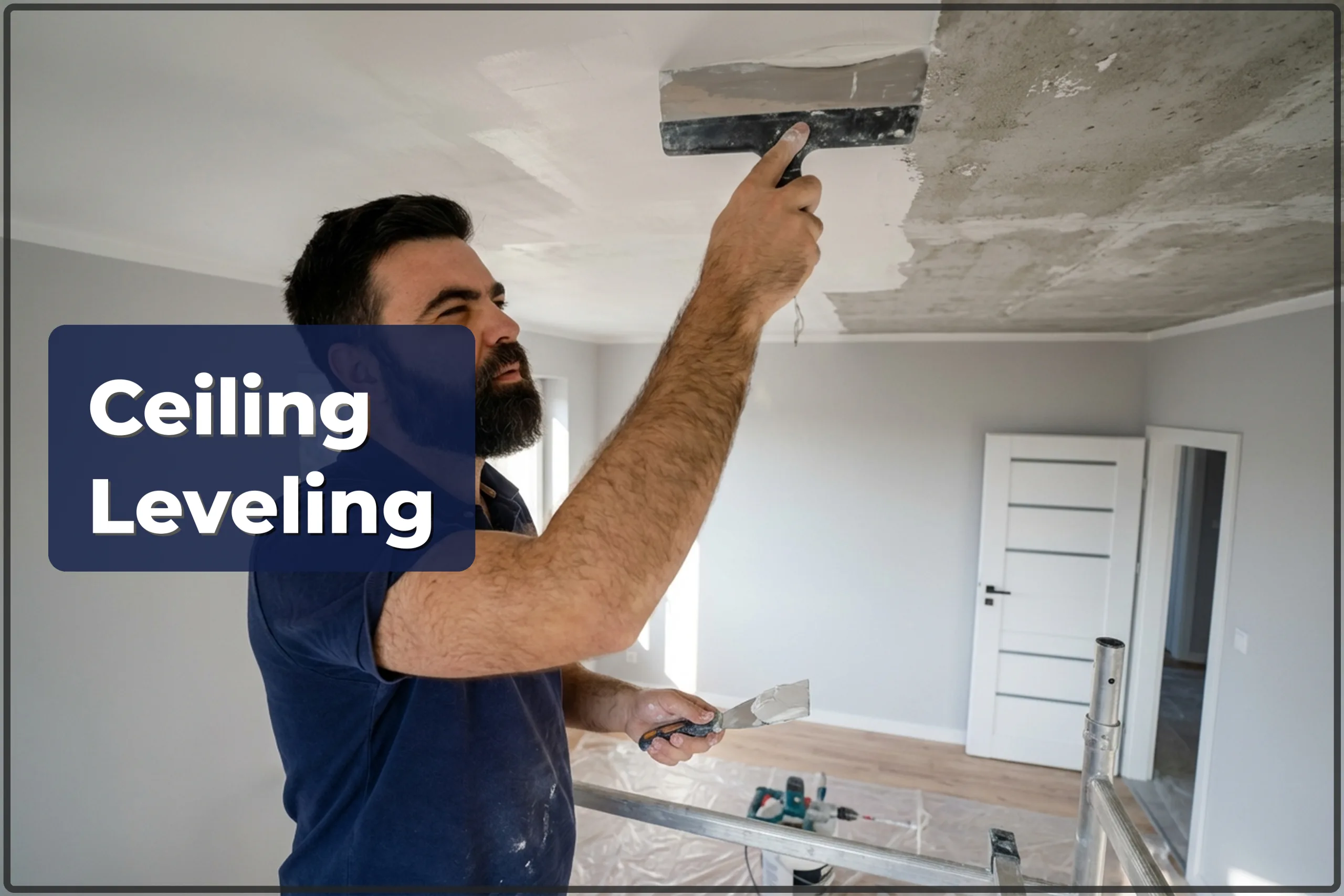
| Ceiling levelling | 45–80 zł/m² |
| Priming before painting | 8–14 zł/m² |
| Gypsum skim coating | 55–90 zł/m² |
| Walls and ceilings, one colour (2 coats) | 30–50 zł/m² |
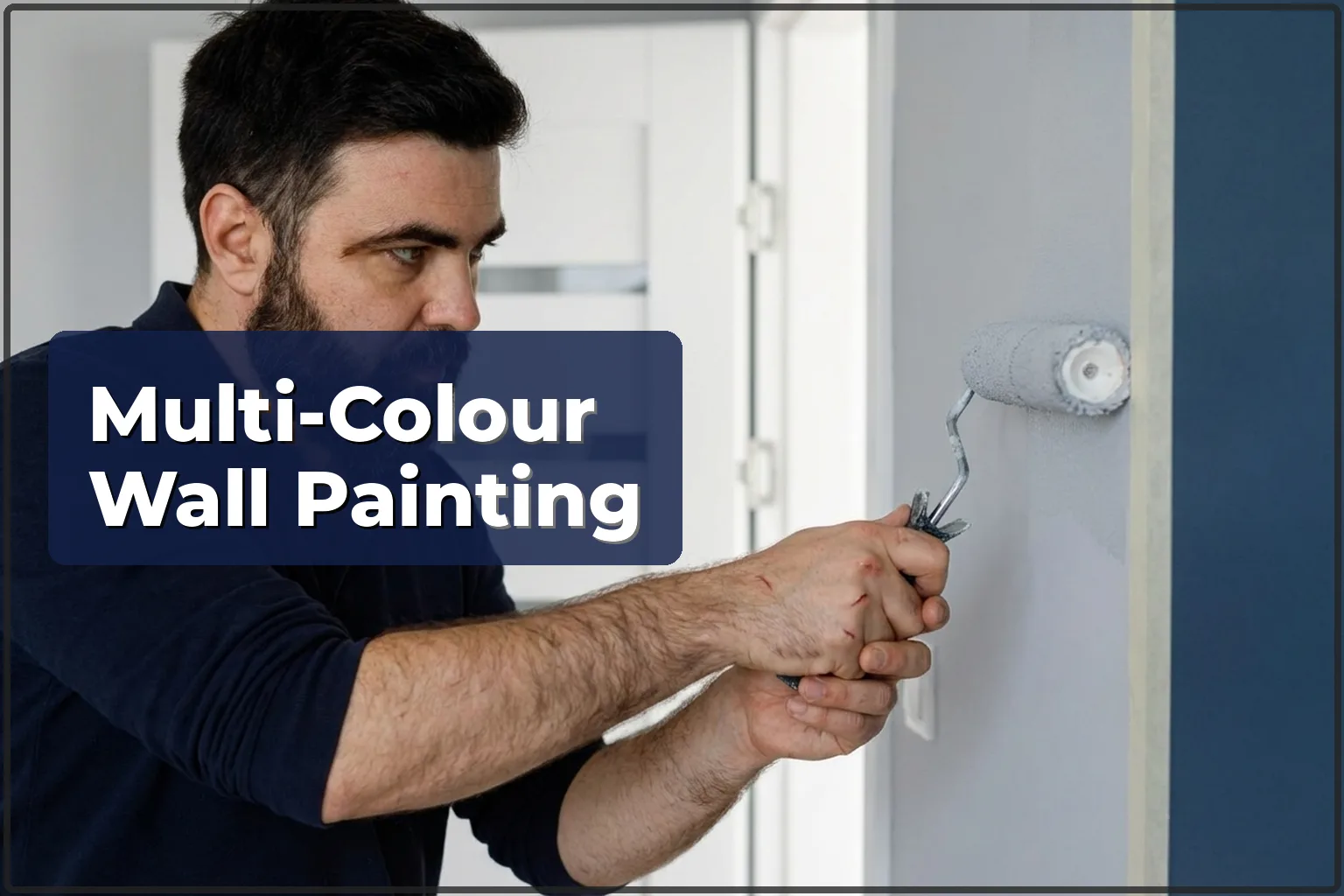
| Walls in different colours | 40–60 zł/m² |
Indicative prices. Ranges for a typical scope. Fixings included, materials separate. Minimum order 300 zł.
What it costs and how to book: apartment fit-out in Warsaw.
How filling holes and wall damage repair is done
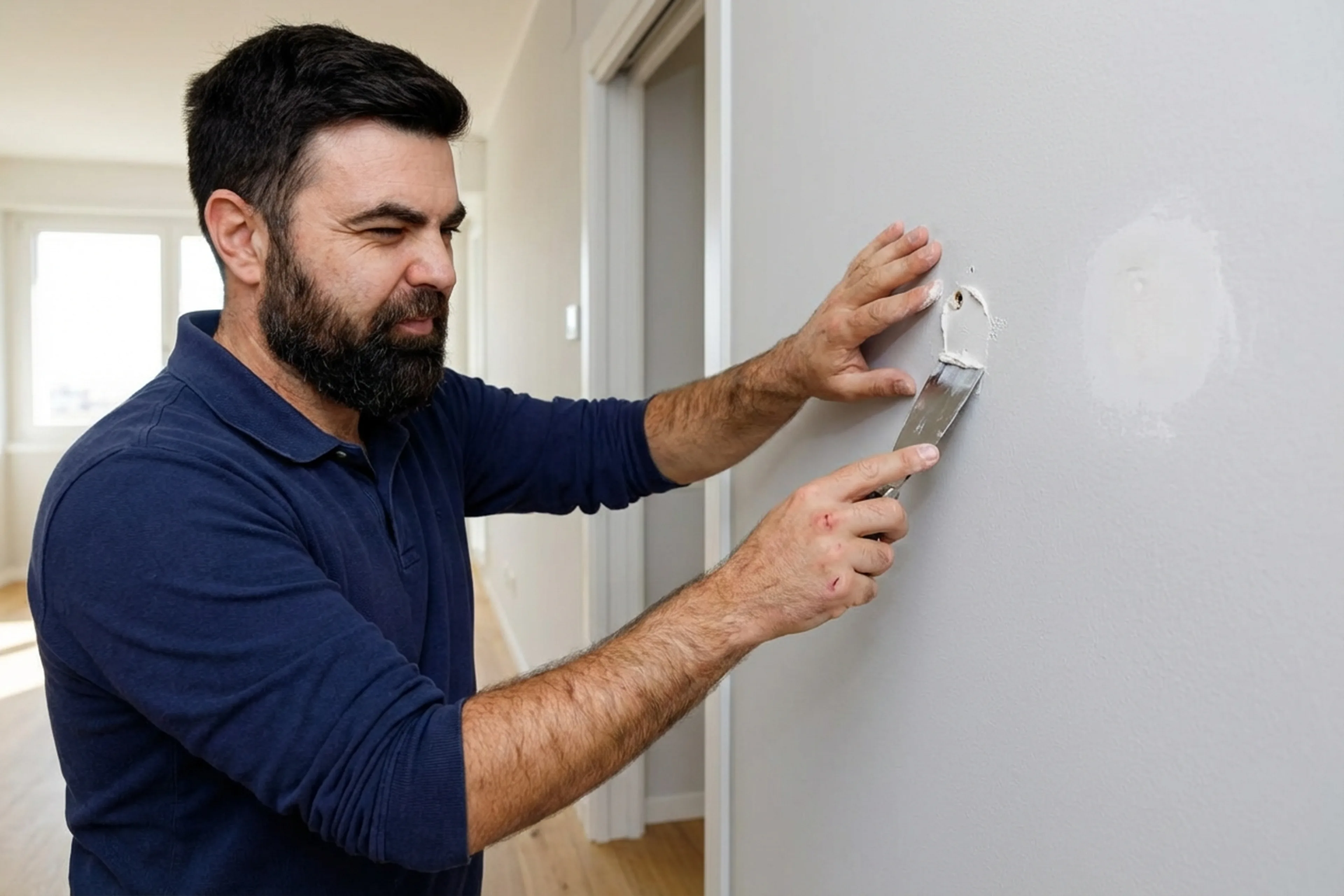
- The technician checks all the damage and plans the job: what needs filling, where mesh is required, and where a single coat is enough.
- Old rawlplugs and fixings are taken out of the walls.
- Holes and cracks are cleared of dust and primed.
- The first layer of filler goes on. Deep damage gets reinforcing mesh underneath.
- After drying (1–3 hours), the surface is sanded and a second layer is applied if needed.
- Final sanding for a smooth finish. The technician inspects the result under angled light: that shows every flaw.
- The surface is then ready for priming and painting.
Common customer mistakes (and how to avoid them)
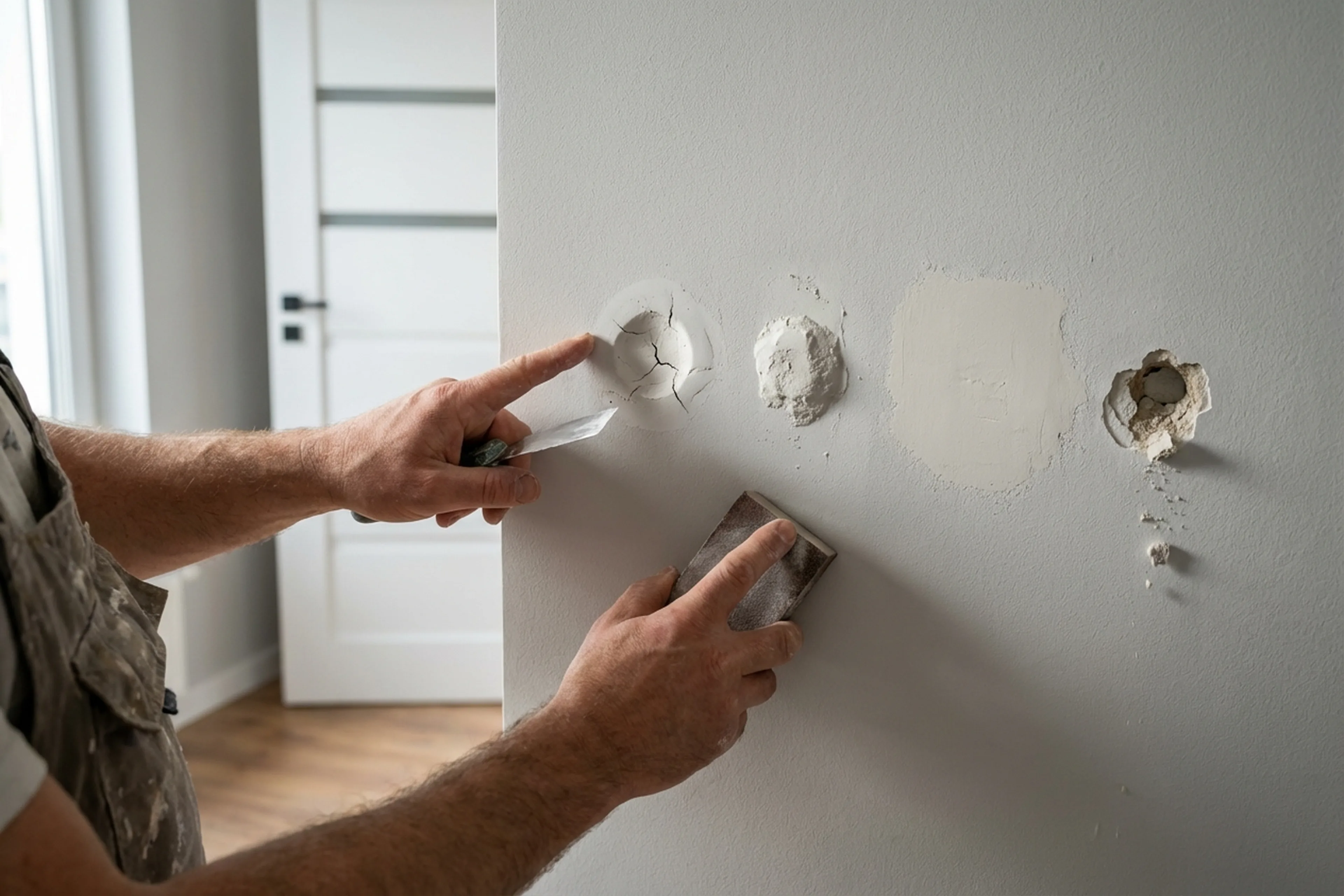
- Filling a hole without priming it first — the filler drops out within a week.
- Filling a deep hole in one heavy layer: the filler splits while drying.
- Leaving old rawlplugs in place: covering over them, then six months later the filler starts to sink.
- Sanding without a dust mask — fine plaster dust is bad for the lungs.
- Skipping the check under angled light: under direct light everything seems flat, but after painting the bumps stand out.
- Using the wrong filler type: gypsum filler in a bathroom will take in moisture; cement filler in a living room leaves too rough a finish.
A small hole is something you can fill yourself if you know how to go about it: how to fill a wall crack or hole.
What to prepare before the technician arrives
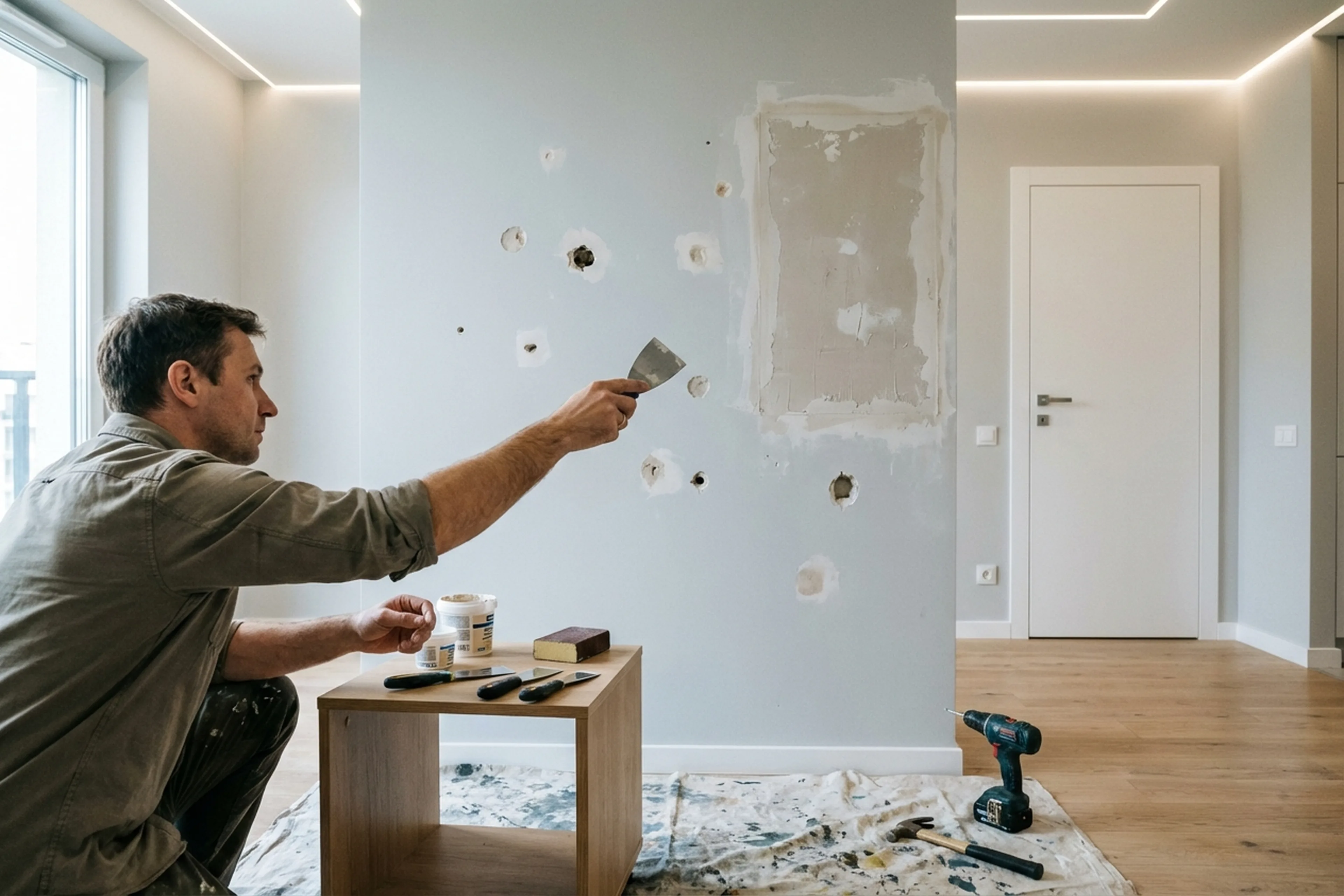
- Take down pictures, shelves and decorations from the walls, the technician needs access to the full surface.
- If there are rawlplugs in the wall, don't try to remove them yourself, the technician will handle it properly.
- Pull furniture away from the walls.
- Show all the damaged spots — now and then there are holes hidden behind furniture that get missed.
- If painting is planned, tell the technician so the right filler can be used for the finish coat.
- Make sure there is a power socket nearby: for the sander and an angled light.
- Cover the floors — sanding creates a lot of dust.
- Send access details: intercom code, parking.
A real case from Warsaw: filling holes and wall damage repair
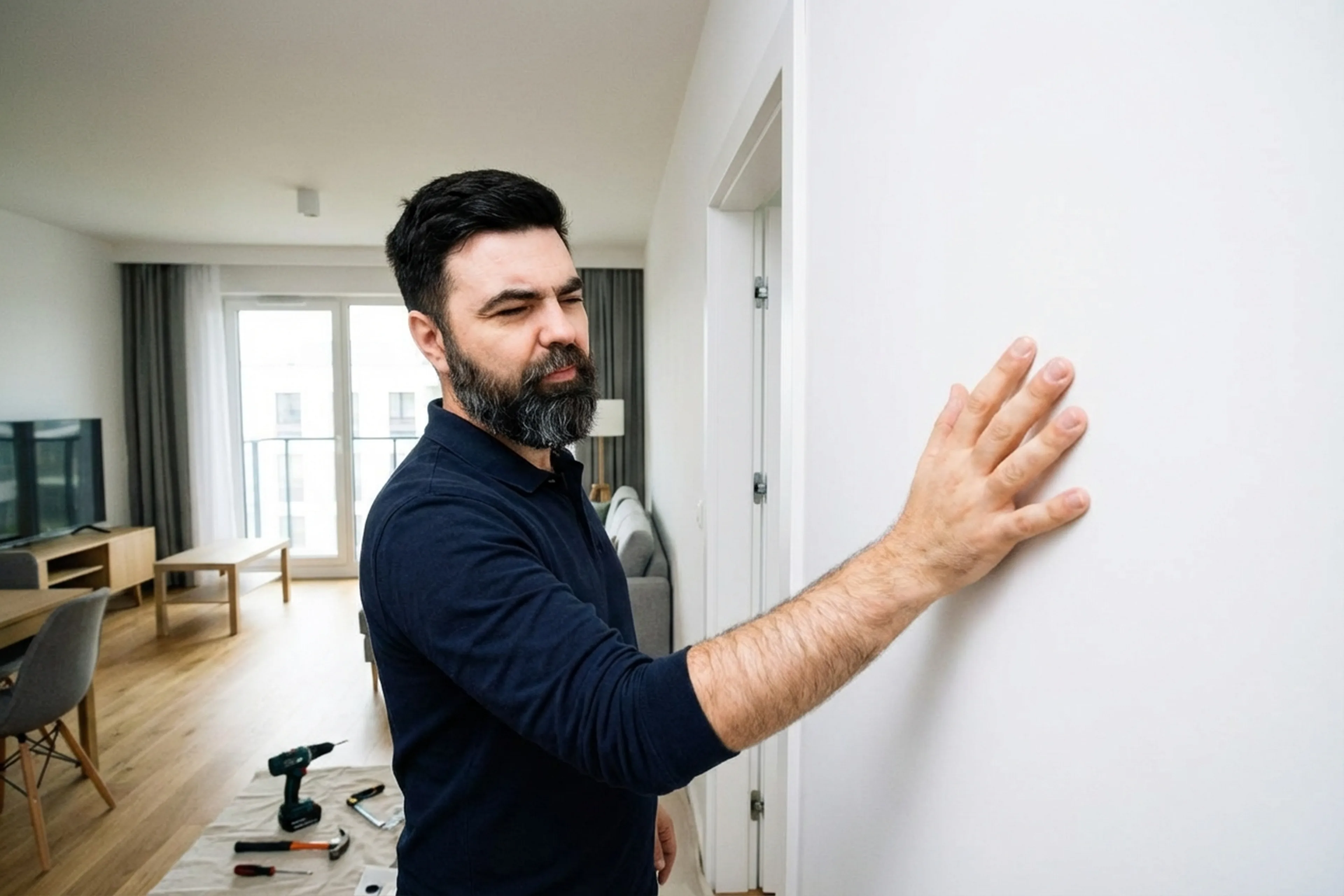
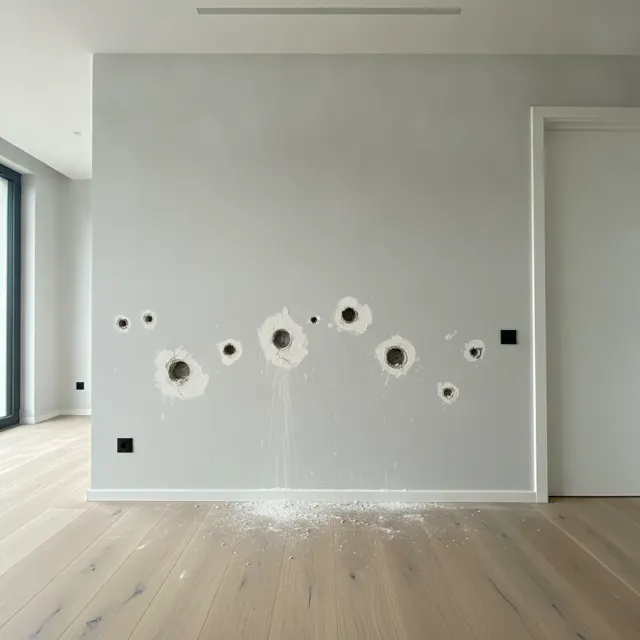
A rental flat in Praga-Północ. The previous tenants had drilled dozens of holes, for shelves, picture hooks, curtain tracks, cable clips. The landlord counted 38 holes in different sizes across two rooms and a hallway. The tradesperson removed every rawlplug, primed the spots, applied two coats of filler and sanded everything smooth: all during a single 4-hour visit. Painting followed the next day. The walls looked like new, with no sign of the old fixings. What would have cost the landlord a whole weekend of trial and error was done properly in one day.
Frequently asked questions
Can I fill a rawlplug hole myself?
One or two holes — yes, if you have filler and a spatula. But if you skip priming and sanding, the patch will still show after painting.
What filler should I use?
For dry rooms: gypsum finishing filler. For bathrooms and kitchens: polymer or cement-based. The technician will decide on site.
How many coats are needed?
Small holes — one coat. Deep damage: 2–3 coats with sanding between each one.
How soon after filling can I paint?
2–4 hours for small patches, 24 hours for larger areas. It depends on the coat thickness and ventilation.
Do tradespeople fill ceiling damage too?
Yes: cracks and damaged spots on ceilings are repaired in the same way.
Can filling and painting be done in one visit?
If the damage is minor — yes. If there is a lot to fill, the filler has to dry first, so painting is done the next day.
Who does the work

The filling work is done by experienced painters who focus on wall preparation, across Warsaw. Post a request in the HandyMan24 app: tradespeople will check the scope and send their offers.
Order in the app
Describe the job, add photos and the address. Tradespeople send their own prices and dates, and you pick one of the offers.
Open the app