Furniture and door adjustment pricing
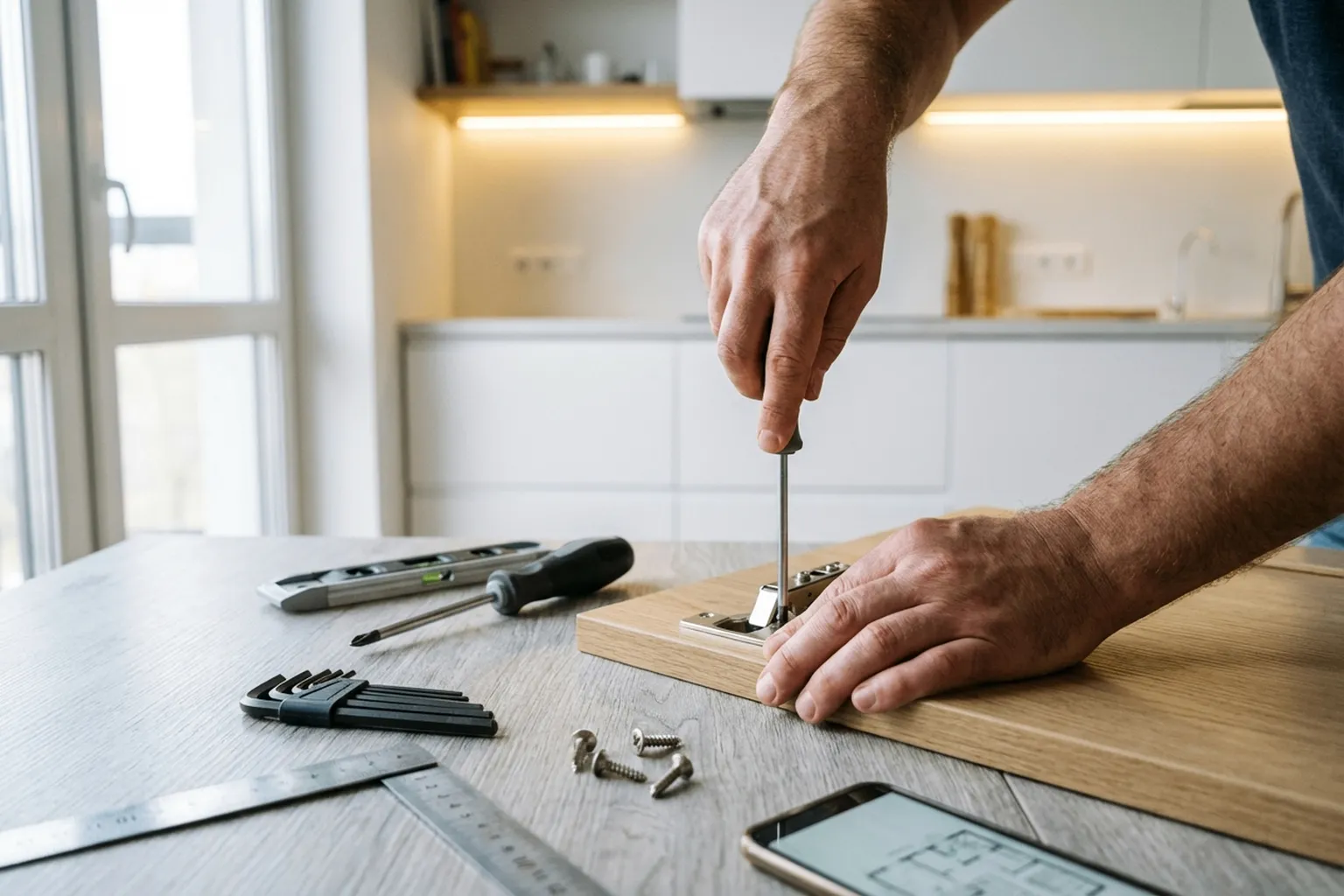
The cost depends on how many parts need work and what exactly has to be done: basic hinge adjustment is one job, while replacing concealed hinges or fixing a soft-close mechanism is another. If a hinge has ripped out of chipboard, the mounting hole has to be rebuilt, that adds time. Small fixings are included in the price. Hardware (hinges, soft-close units, handles), if replacement is required, is billed separately. Current rates are listed in the table below.
| Service | Price |
|---|---|
| Hinge adjustment | 150–350 zł |
Indicative prices. Ranges for a typical scope. Fixings included, materials separate. Minimum order 300 zł.
Price ranges and offers from tradespeople: hinge and drawer runner replacement in Warsaw.
How furniture and door adjustment is done
- You explain the problem: which doors or fronts are causing trouble, and send a photo.
- The technician checks what type of furniture it is and which hinge brand is fitted — Blum, Hettich, GTV, or another one.
- Each tradesperson says in their offer when they can come, and you pick the one that suits you.
- At the property, the technician looks over all faulty elements and checks how the hinges are fixed to the carcass.
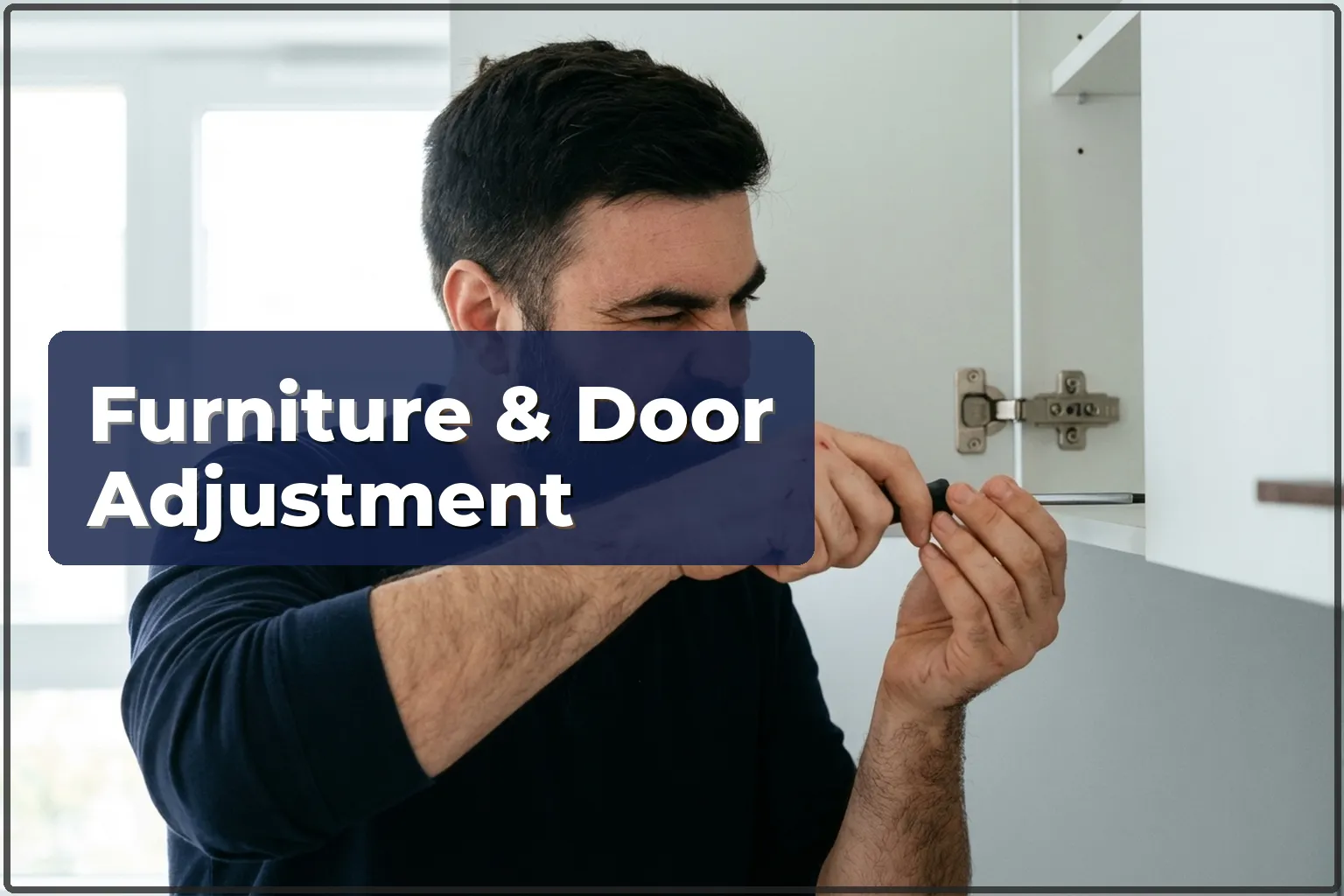
- Adjustment: fronts are set level horizontally, vertically, and in depth using the adjustment screws.
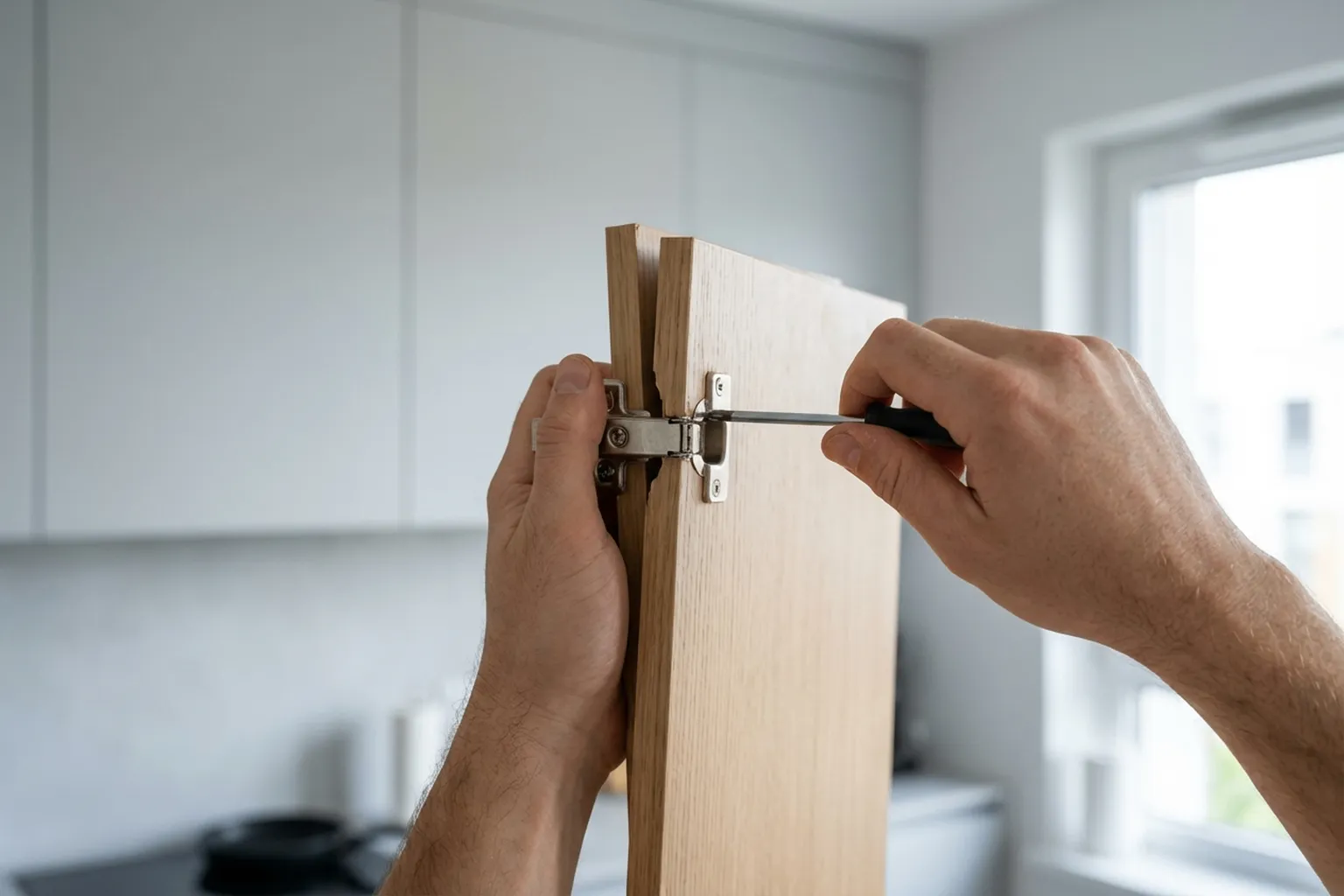
- If a hinge is broken or pulled out, replacement or rebuilding the seat with a dowel insert or epoxy.
- Final check: all doors open and close properly, gaps are even, and the soft-close mechanisms work.
Common adjustment mistakes
- Tightening just one hinge screw — the front looks level in one direction but twists in another.
- Trying to adjust a pulled-out hinge without fixing the seat first, it stays in place for a week, then drops again.
- Fitting the wrong hinge type during replacement (overlay instead of inset): the front no longer fits.
- Ignoring the soft-close unit — after hinge adjustment the door begins to slam.
- Adjusting an interior door without checking the frame, the real issue is a warped frame, not the hinges.
- Oiling hinges with WD-40 instead of silicone grease, the soft-close rubber starts to break down.
What to prepare before the technician arrives
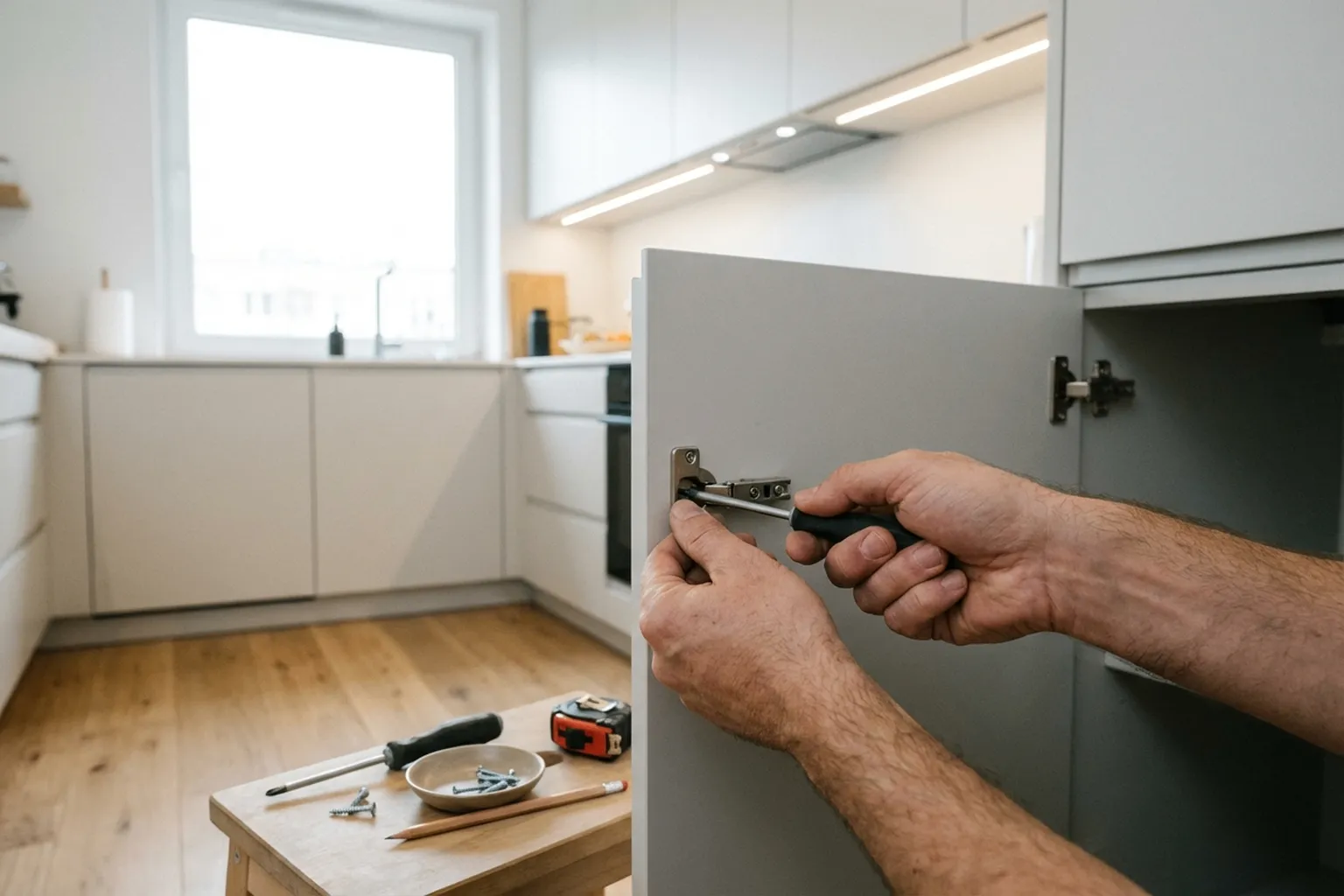
- Point out all problem doors and fronts: the technician can sort everything in one visit.
- Empty the cabinets if the doors may need to come off (especially the lower shelves).
- If you know the hardware brand (Blum, Hettich, IKEA), tell the technician beforehand.
- Take a close photo of the hinge — the technician will quickly recognise the mechanism type.
- For interior doors: check whether the door swings freely or catches on the threshold or trim.
- Send access details: intercom code, floor number, parking.
- If it is IKEA furniture, find the manual (the item number is often on the back panel).
- Make sure there is good light in the room — adjustment needs a clear view of the gaps.
A real case from Warsaw: furniture and door adjustment
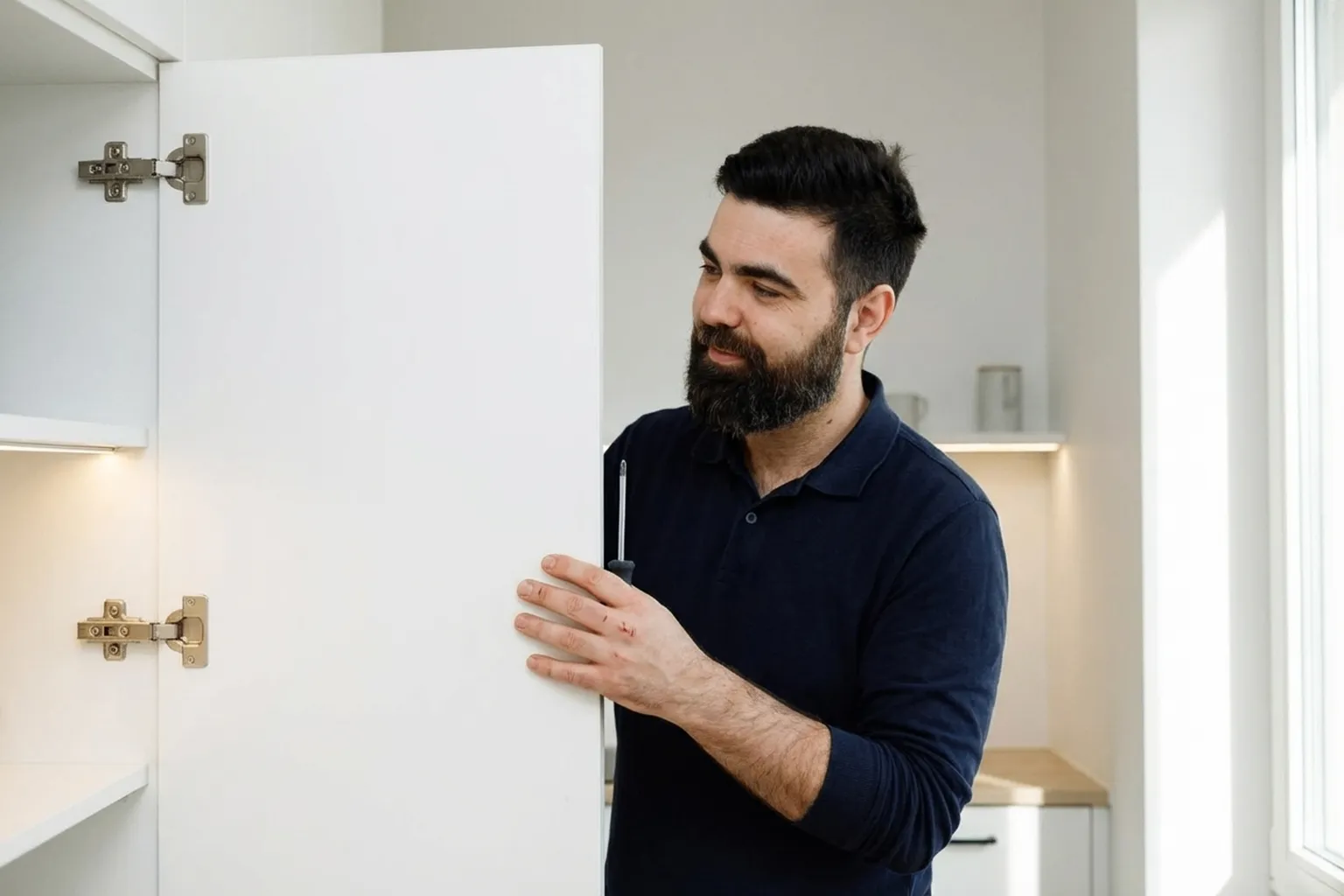
A client in Praga-Poludnie had bought a flat with an IKEA Metod kitchen fitted by the previous owner. Four out of six fronts would not close all the way: they had dropped by 3–5 mm. After inspection, the Blum hinges were installed correctly, but no one had adjusted the screws after fitting. Over eighteen months, the weight of the fronts had shifted the hinges out of position. The technician adjusted all six fronts in three directions and tightened the carcass fixings. On two hinges, the mounting plates (base plates) needed replacement because they were bent. The whole job took around an hour. The kitchen now looks like new again. Takeaway: after a kitchen is installed, a follow-up adjustment after a couple of months makes sense, the hinges settle and move a little.
Frequently asked questions
Can I adjust hinges myself?
You can do basic adjustment with a Phillips screwdriver, but if a hinge has torn out of the carcass or needs replacement, it is better to call a technician.
What hinge brands are most common in Warsaw?
Blum, Hettich, and GTV are the ones seen most often. IKEA furniture uses own-brand hinges that work with Blum.
How long does adjustment take?
One front takes a few minutes. Full adjustment of a kitchen with 8–10 fronts takes about an hour. An interior door — from 15 minutes.
What is included in the price?
Labour, small fixings, and travel within Warsaw. If hinges or soft-close units need replacing, hardware is charged separately.
Do tradespeople adjust entrance doors?
Tradespeople handle interior doors and furniture fronts. For metal entrance doors, they suggest using a specialised service.
A hinge tore out of the chipboard: can it be fixed?
Yes, the technician can rebuild the mounting hole with a dowel insert or epoxy compound. This lasts better than driving a screw back into the old hole.
Can I combine adjustment with other small repairs?
Yes. Many clients combine adjustment with small repairs or shelf installation: it gives better value on the call-out fee.
Do tradespeople work with Black Red White and Agata Meble furniture?
Yes, they handle cabinet furniture from Polish and European manufacturers. The hardware is standard — Hettich or GTV.
How quickly can a tradesperson come?
It depends on the tradesperson you choose: each one states in their offer when they can come. If it can’t wait, mark the job as urgent in the app. Tradespeople usually charge extra for urgent call-outs.
Who does the work
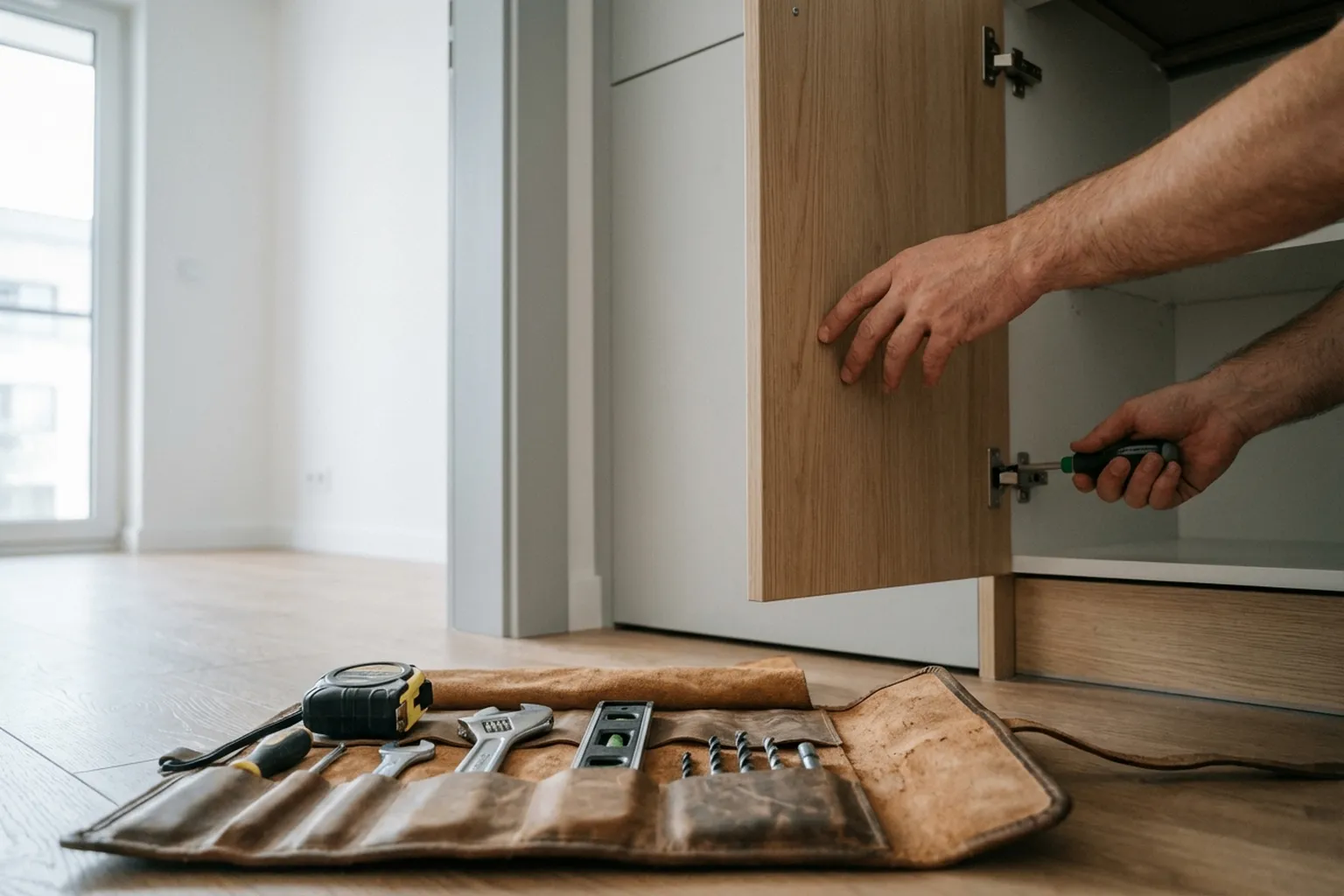
Furniture and door adjustment is done by technicians with hands-on experience in assembling and repairing cabinet furniture. Tradespeople work with every hinge type and all kinds of hardware: from IKEA to premium Blum. Tradespeople cover all of Warsaw and the suburbs.
Order in the app
Describe the job, add photos and the address. Tradespeople send their own prices and dates, and you pick one of the offers.
Open the app