
How much does washbasin installation cost
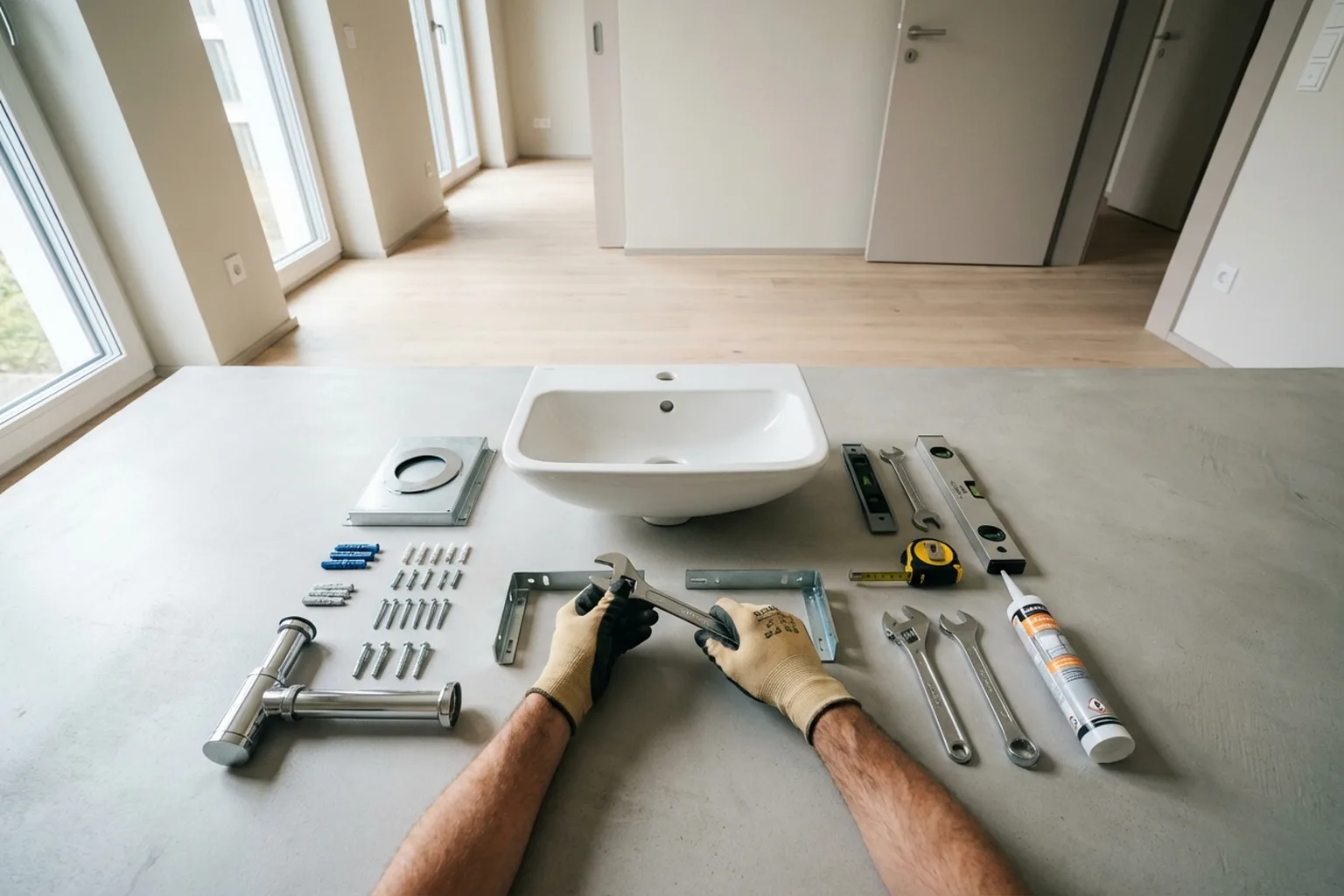
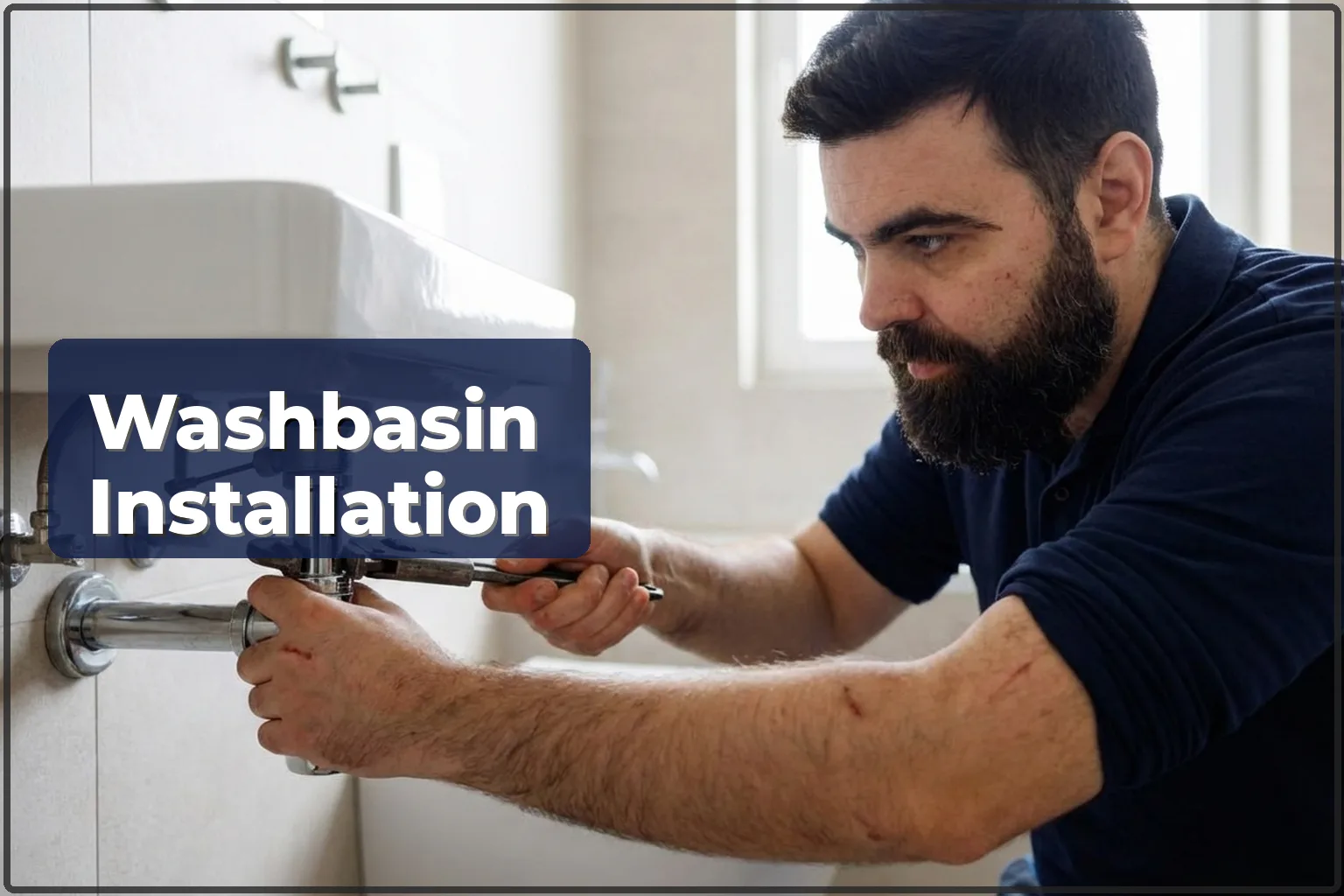
The price depends on the kind of basin and how tricky the connections are. A wall-hung basin without a cabinet is faster and easier to fit. A basin on a vanity unit also means furniture assembly, trimming cutouts, and making the connections inside the unit. A countertop-mounted basin takes the most work. The final cost also depends on whether the supply hoses need changing, whether a new trap is needed, and whether the connection point has to be relocated. Fixings and sealant are included. You can check the current prices in the table below.
| Service | Price |
|---|---|
| Washbasin installation | 200–500 zł |
| Washbasin replacement | 250–600 zł |
| Vanity unit installation | 300–600 zł |
| Basin tap installation | 150–250 zł |
Indicative prices. Ranges for a typical scope. Fixings included, materials separate. Minimum order 300 zł.
What it costs and how to book: drain unblocking in Warsaw.
Installation or replacement?
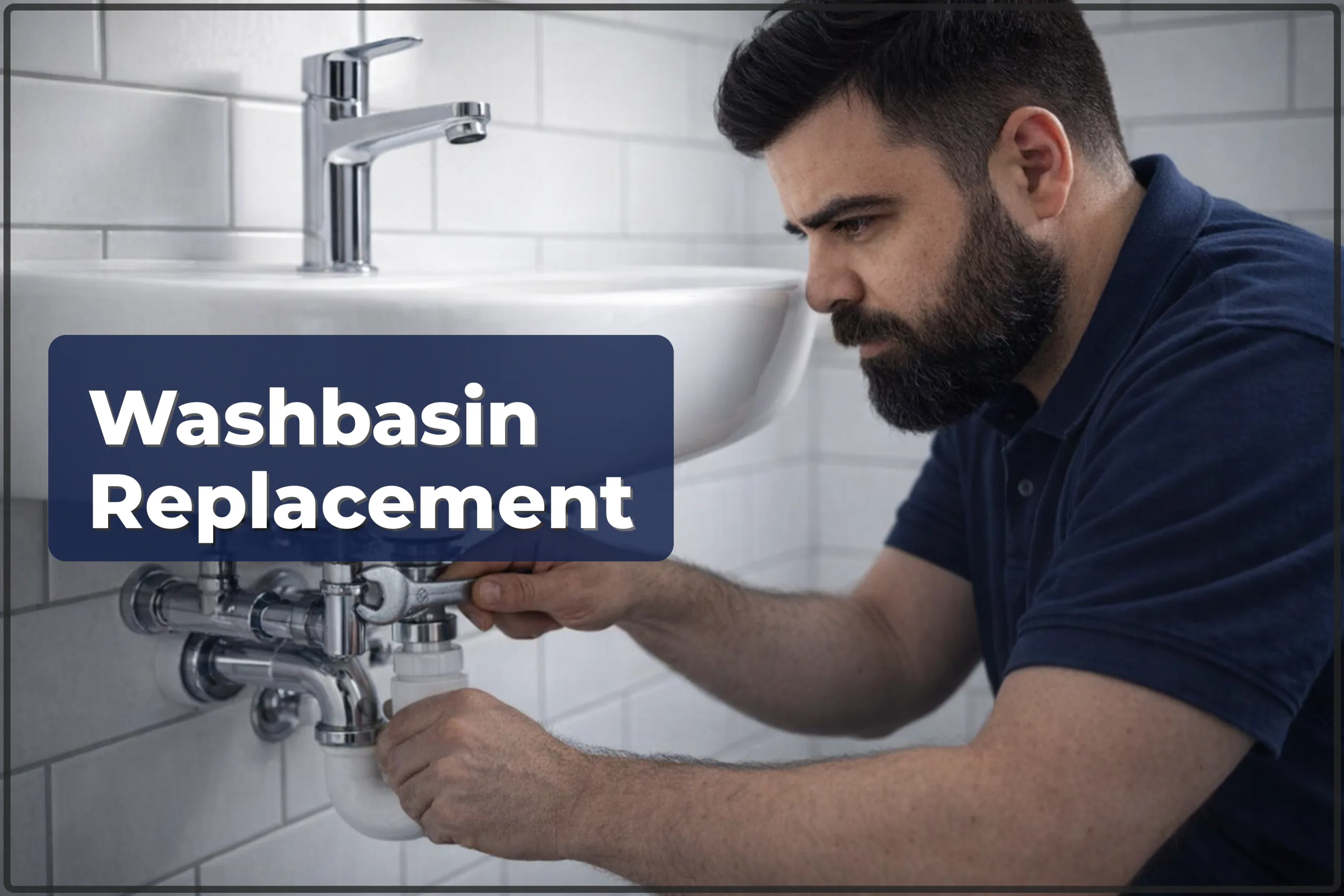
Installation assumes new pipework and a wall without old holes. If the old basin or vanity has to come off, a scaled-up trap needs undoing and new fixings have to fit around old ones, book washbasin replacement.
How washbasin installation is done
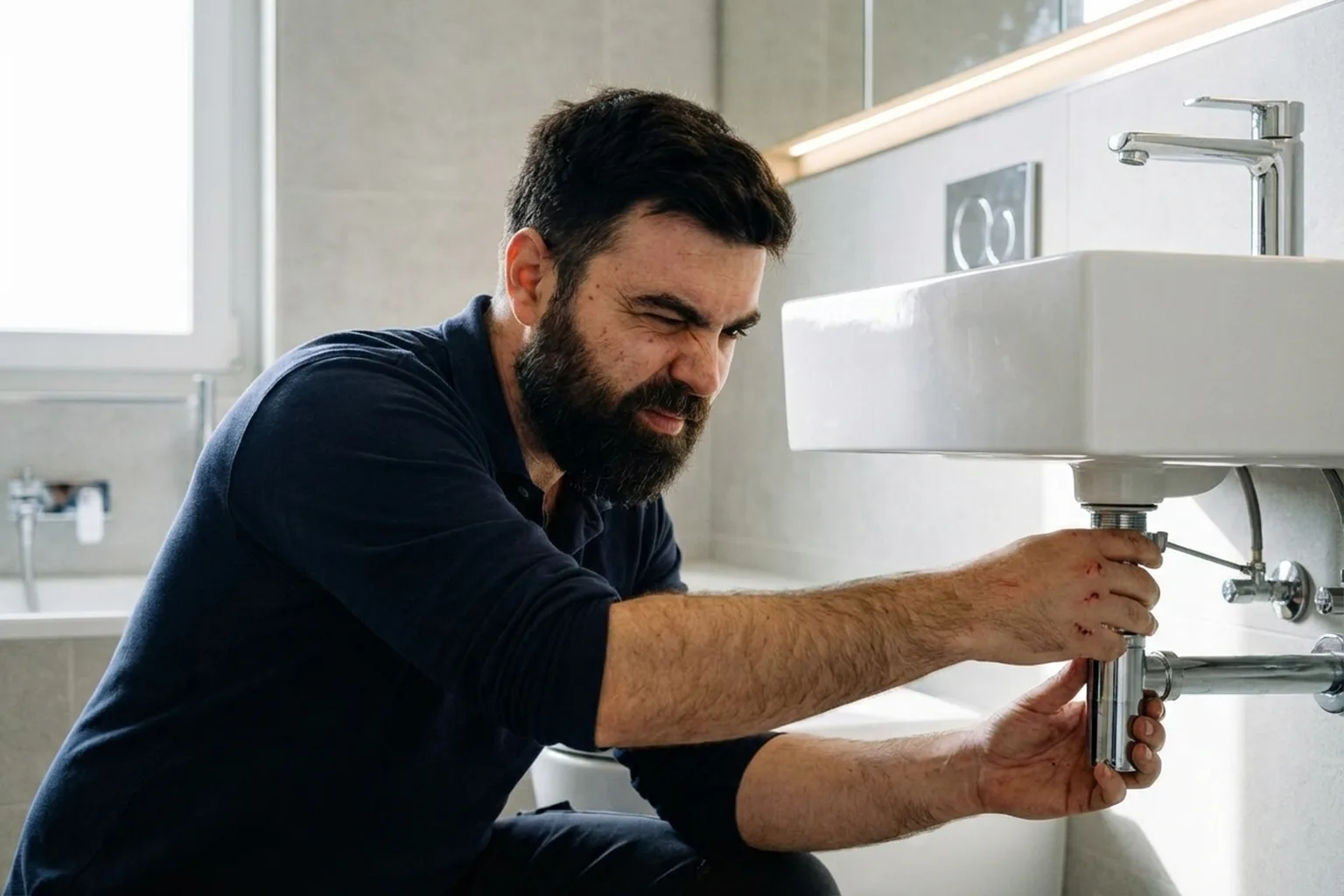
- Tradespeople turn off the water and empty the pipes.
- If there is an old basin in place, they take it off: disconnect the trap and tap, then remove the wall fixings.
- Tradespeople mark out the spot for the new basin with a spirit level. Standard height is 85 cm from the floor, but they adjust it to the people using it.
- Tradespeople drill the wall, install wall plugs and threaded rods (or brackets, depending on the model).
- Tradespeople hang the basin, check that it sits level, and tighten the fixings.
- Tradespeople fit the trap and connect it to the drain. Every joint gets rubber gaskets plus sealant.
- Tradespeople install the mixer tap (if supplied) and connect the flexible hoses to the water supply.
- Tradespeople turn the water back on and inspect every connection for leaks. Then they wipe everything down and clean up.
Common mistakes when installing a washbasin
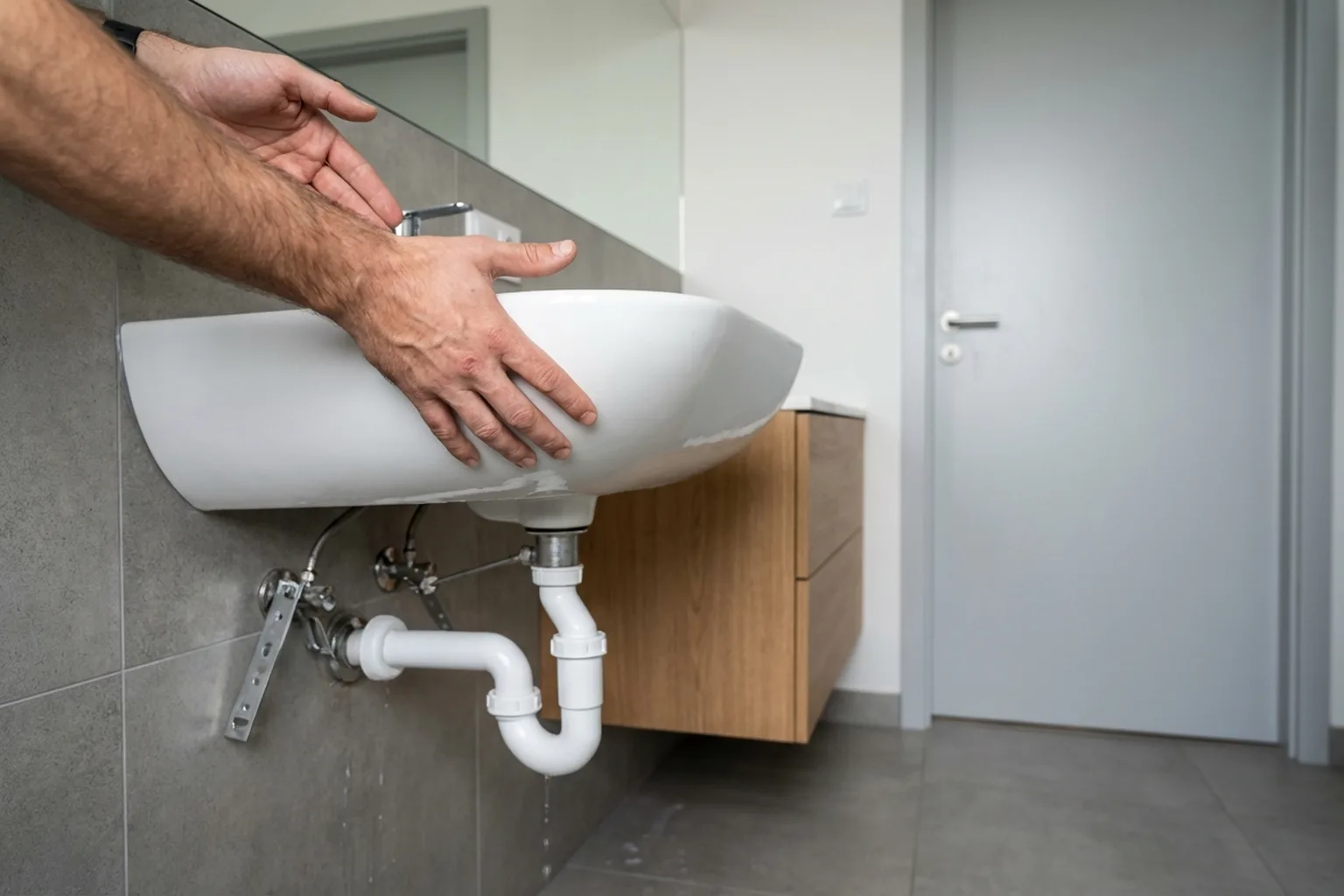
- Drilling without scanning the wall first, and hitting a pipe or cable. Tradespeople always run a detector over the wall before drilling any holes.
- Fixing the basin on plugs only, without threaded rods, over time it starts to loosen, especially with heavy ceramic models.
- Tightening ceramic hard against the wall: that causes cracks. Ceramic needs to be pulled up carefully with rubber washers.
- Putting the trap together without gaskets or leaving it at an angle — it starts leaking within days.
- Skipping the check on the drain slope: water stays in the bowl and a sewer smell appears.
- Using old flexible hoses again: the rubber lining ages and cracks, which means leak risk.
- Leaving the basin-to-wall joint unsealed — water gets behind the basin and soaks into the wall.
What to prepare before the technician arrives
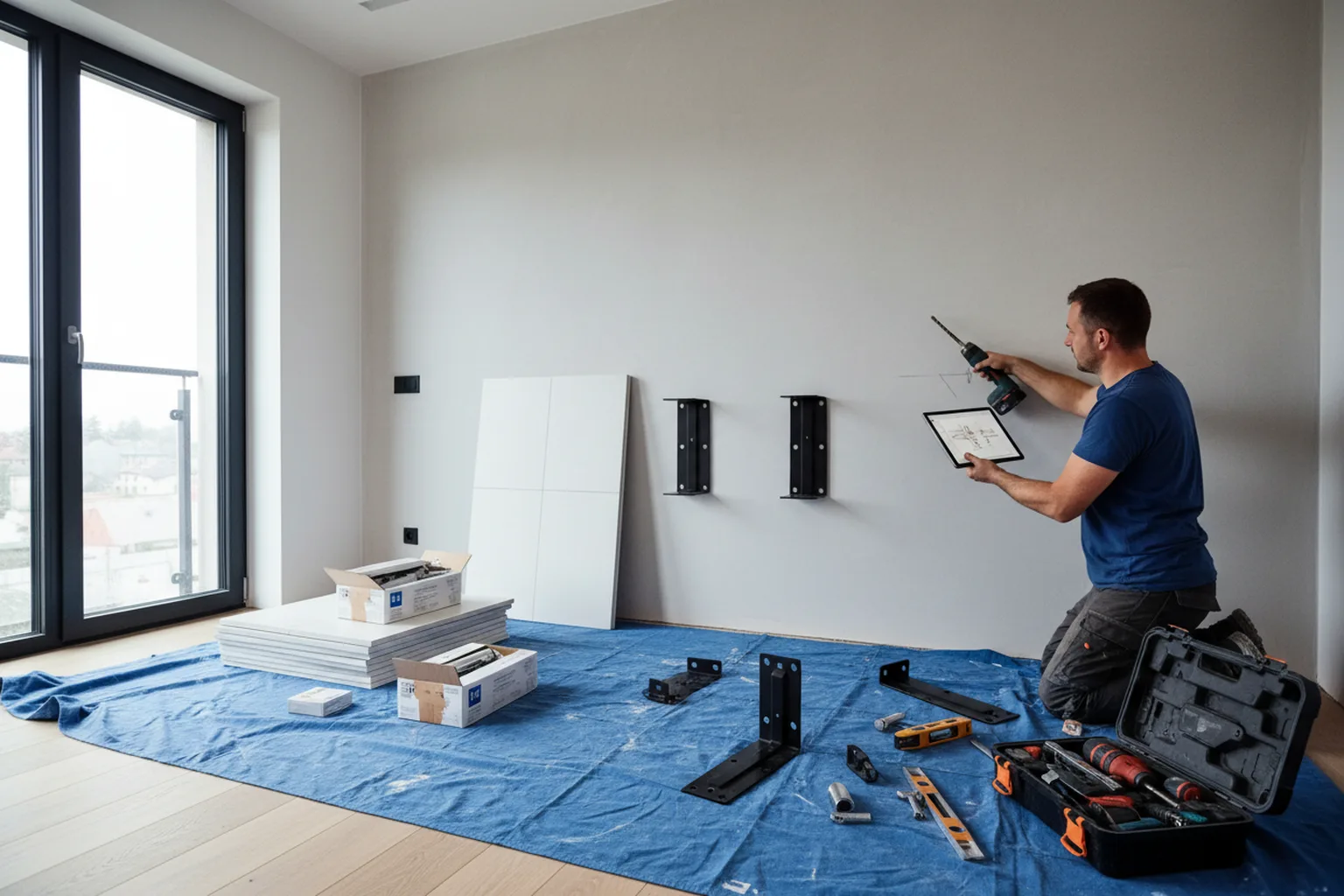
- The new basin should already be in the flat, unpacked and checked for any chips.
- If you have a tap, keep it ready as well (with the hoses included).
- Make sure there is access to the shut-off valves, the technician will need to switch off the water.
- Check what kind of wall it is (concrete, brick, plasterboard), that decides which fixings are used.
- If it is plasterboard, a backing support or special fixings will be needed (please say so in the order in advance).
- Remove everything from the area under the basin and make sure the pipes are easy to reach.
- Send the intercom code and parking details.
Case study: washbasin installation in Ursynow
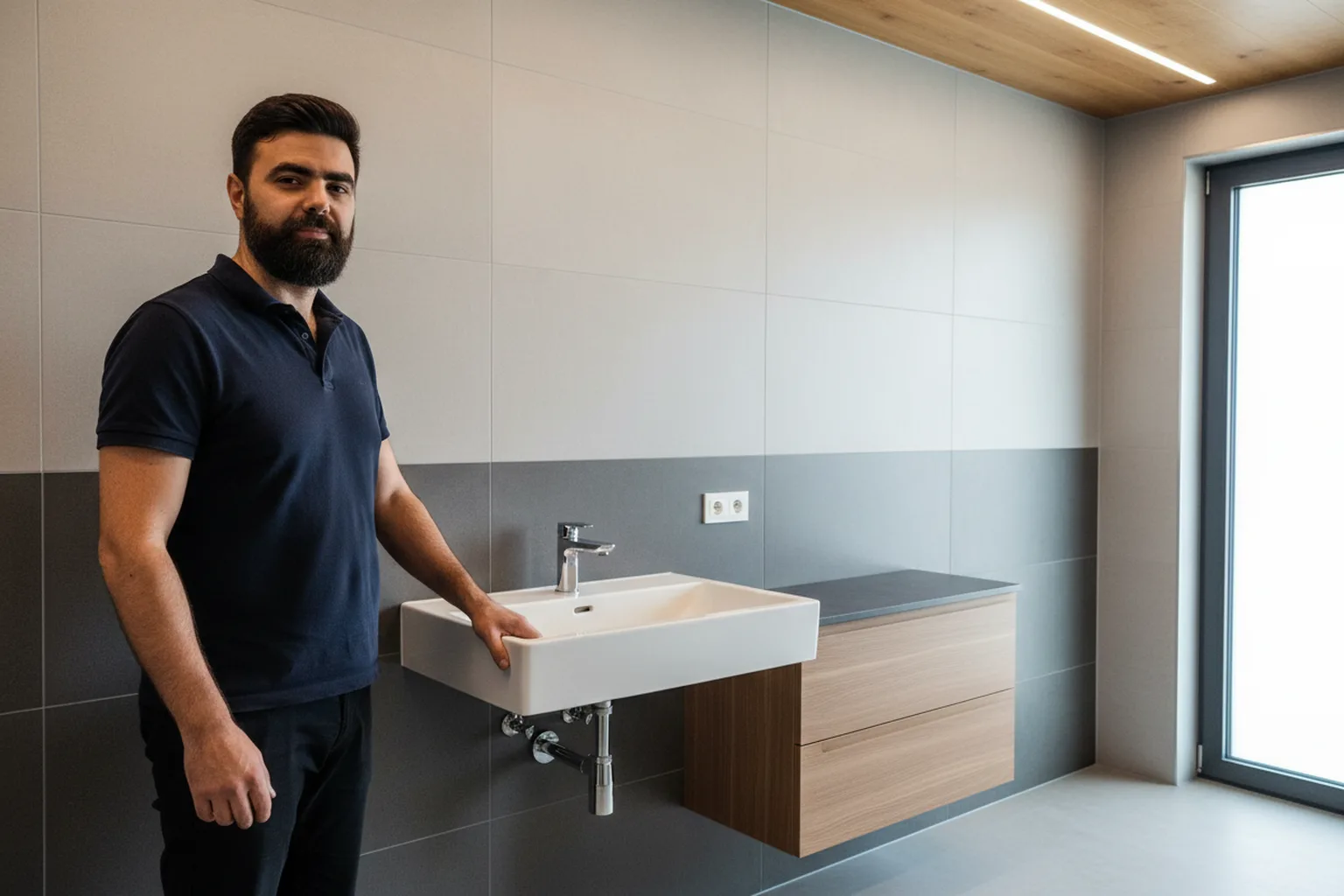
One client bought a wall-hung Cersanit basin for a guest bathroom. The wall was hollow brick, and the plugs from the box were not going to hold. Tradespeople changed them for 10×80 expansion anchors: solid as anything. The trap included in the kit had a short outlet, while the drain pipe was set deeper into the wall than normal. Tradespeople installed a flexible connector with an adapter. The client picked a tap with a pop-up waste: they connected it and adjusted the mechanism. The whole job took around an hour and a half. Tradespeople pressure-tested every joint — completely dry. A week later the client called to say everything was still working perfectly.
Cersanit washbasins: the type decides the installation
Cersanit offers a very wide range of ceramics: wall-hung, vanity, sit-on and pedestal or semi-pedestal basins. A wall-hung basin is held by the wall alone on two bolts, a vanity basin sits on its cabinet, and a sit-on basin stands on the worktop and needs a hole for the trap in the right place.
The bolts and plugs in the box are meant for brick and concrete. Plasterboard needs different fixings or a frame in the wall, otherwise an ordinary plug will pull out the first time someone leans on the basin. It is also worth checking in advance that the waste outlet height, the angle valves and the tap hole line up: a small difference is solved with an extended trap, a bigger one means rerouting the pipework.
Frequently asked questions
What basins do tradespeople install?
All types: wall-hung, pedestal, vanity-mounted, countertop-inset. Cersanit, Roca, Grohe, IKEA, Deante: brand makes no difference.
Do I need to buy a trap and hoses separately?
The trap usually comes with the basin, and the hoses usually come with the tap. If not, they can supply and fit them, materials are charged separately.
Can a tradesperson install a basin on plasterboard?
Yes, if there is a backing support in place (timber or metal profile behind the board). If there is not, they use specialist plasterboard fixings, but for heavy ceramics that is not the best option.
How long does installation take?
A basic wall-hung basin — 1 to 1.5 hours. With a vanity unit: 1.5 to 2.5 hours. Countertop-inset: 2 to 3 hours.
Is removal of the old basin included?
Removal is priced separately, but it is often inexpensive — it depends on the complexity.
Who does the work and how a job runs
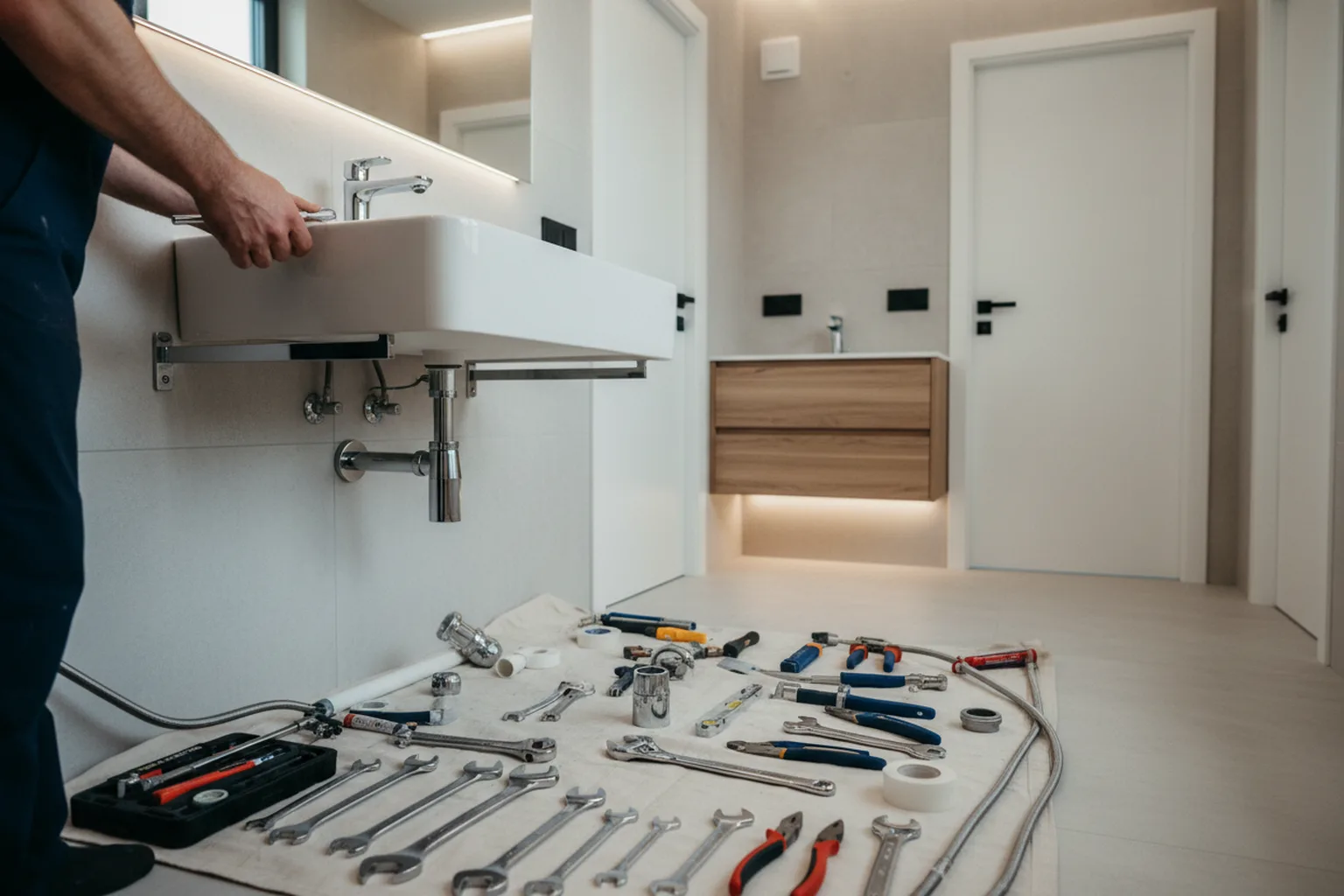
Plumbing work is done by technicians with hands-on experience in Warsaw bathrooms. Tradespeople know the oddities of local buildings: hollow brick in Mokotow newbuilds, solid concrete in Praga, plasterboard partitions in Wola. Tradespeople come with their own tools and consumables. Tradespeople work across all of Warsaw and nearby areas.
Order in the app
Describe the job, add photos and the address. Tradespeople send their own prices and dates, and you pick one of the offers.
Open the app