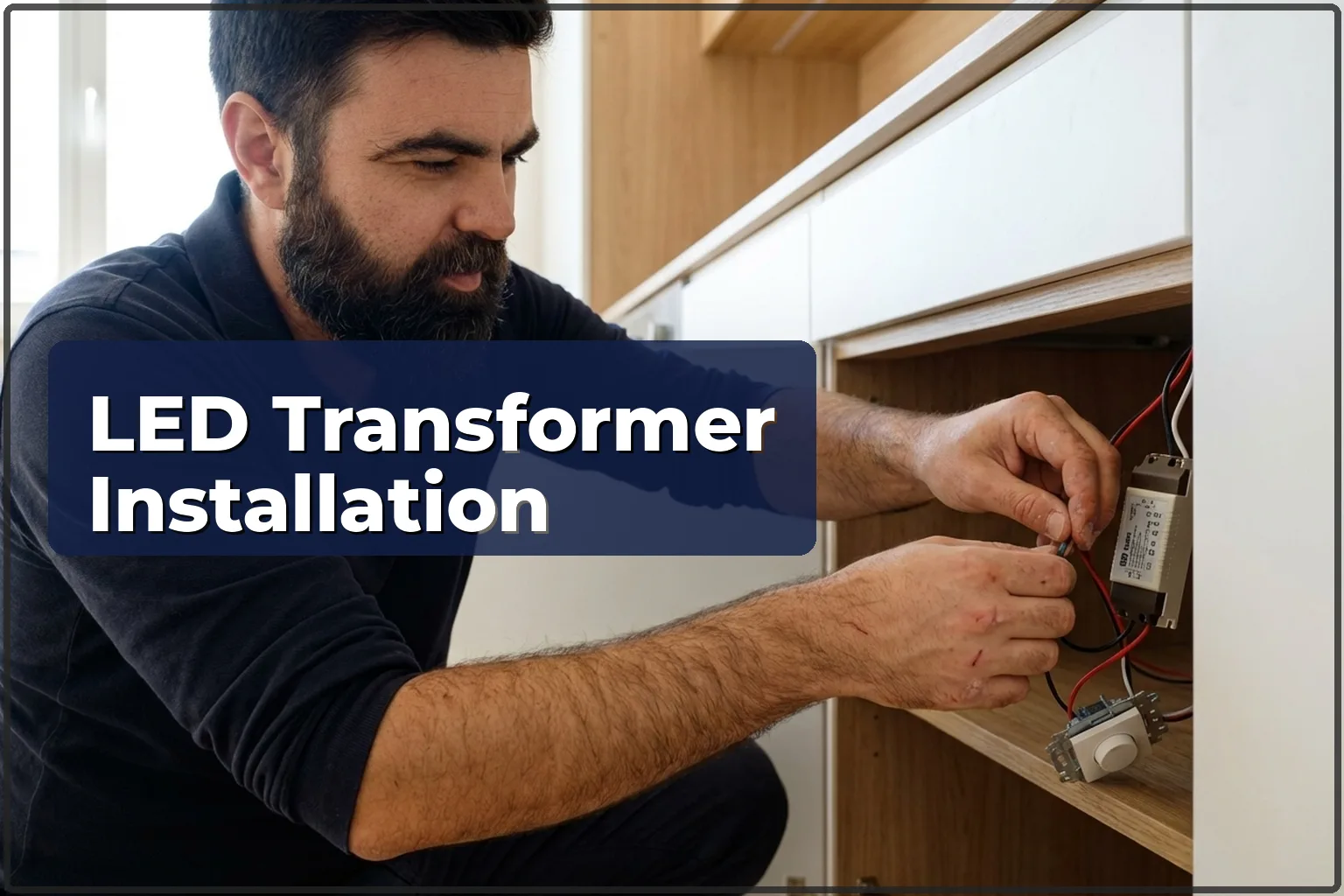

Caution: transformer installation means working with 230 V mains voltage. Wrong connections can lead to a short circuit, electric shock or fire. Do not wire a power supply yourself unless you really know what you are doing: call a professional.
Installation cost and what affects the price
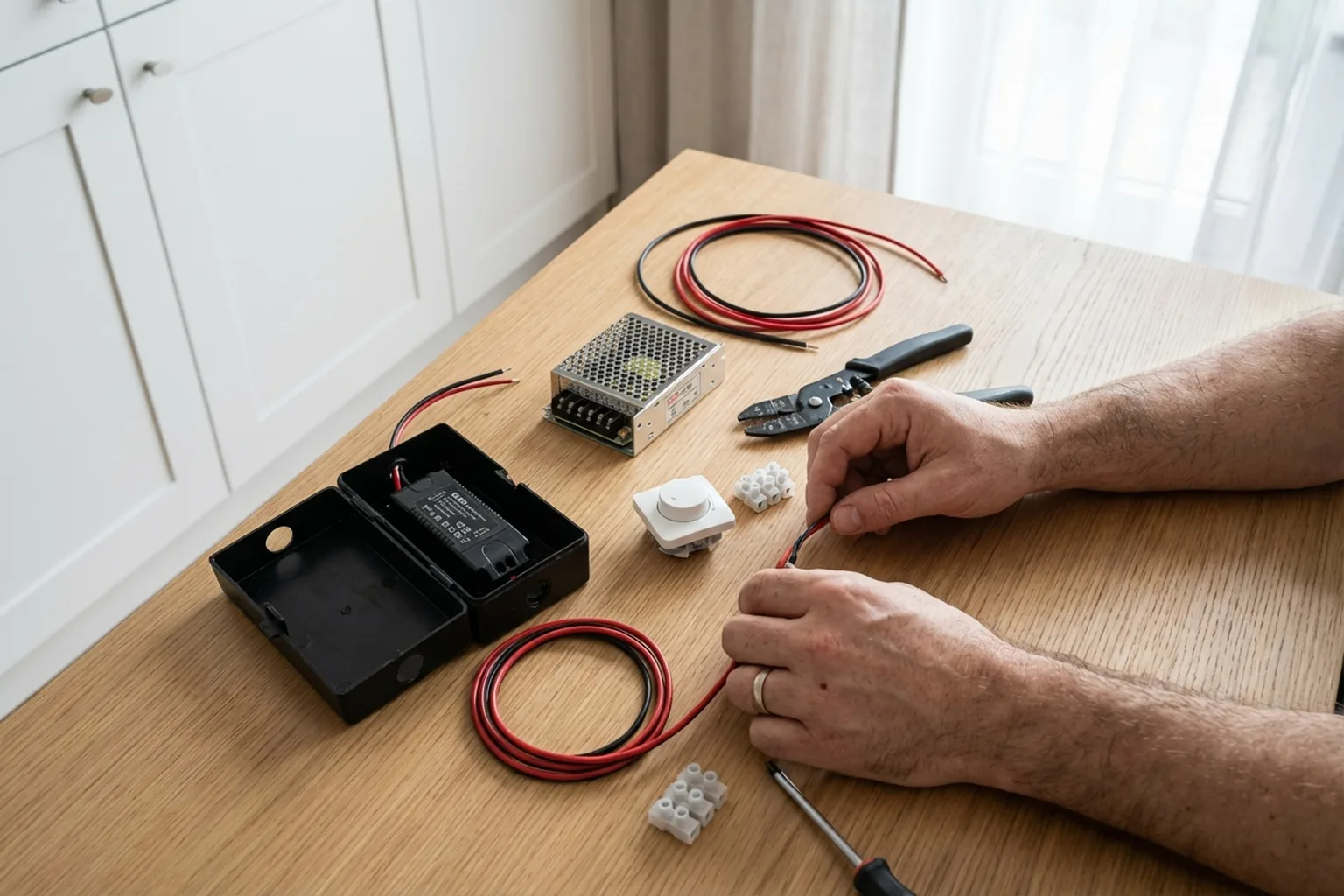
The cost comes down to where the unit is mounted, how long the cable run is, and how the installation has to be done. If the transformer is right by a socket, the work is fast. If the cable has to be routed through a wall, into trunking or above a ceiling, it takes more time. The client buys the power supply; they wire it in and secure it safely. Fixings are included. Up-to-date prices for all electrical services are listed in the table.
| Service | Price |
|---|---|
| Light switch installation | 50–90 zł/pkt |
| Light switch replacement | 60–90 zł/pkt |
| Light switch repair | 150–350 zł/szt |
| Socket installation | 30–90 zł/pkt |
| Socket replacement | 50–90 zł/pkt |
| Socket repair | 60–250 zł/szt |
| New electrical point | 150–250 zł/pkt |
| Wall chasing for cables | 40–80 zł/mb |
| Running electrical cables | 15–50 zł/mb |
| Junction box wiring | 80–400 zł/szt |
| Light installation (lamp, chandelier) | 80–550 zł/pkt |
| Light fixture replacement | 150–450 zł/szt |
| Lighting repair | 120–350 zł |
| LED strip installation | 60–90 zł/mb |
| LED transformer installation | 150–220 zł/szt |
| Bulb and halogen replacement | 30–50 zł/szt |
| Power socket installation 230/400 V | 150–350 zł/pkt |
Indicative prices. Ranges for a typical scope. Fixings included, materials separate. Minimum order 300 zł.
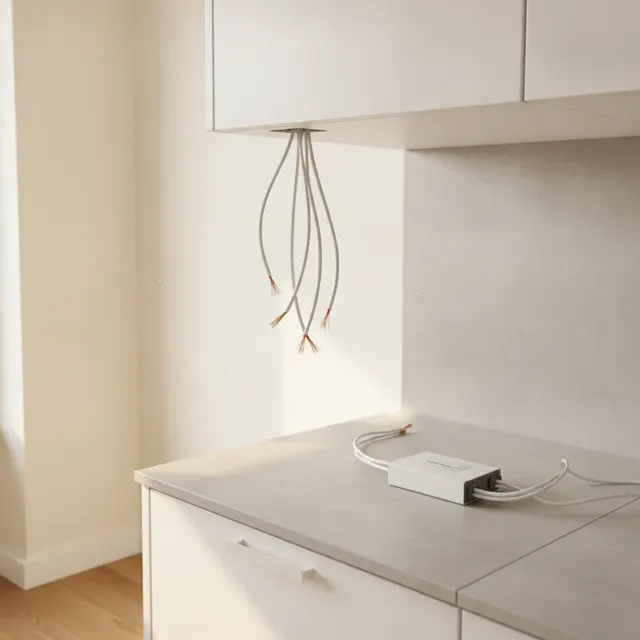
Rather hand the job over? More here: light fitting in Warsaw.
How transformer installation works
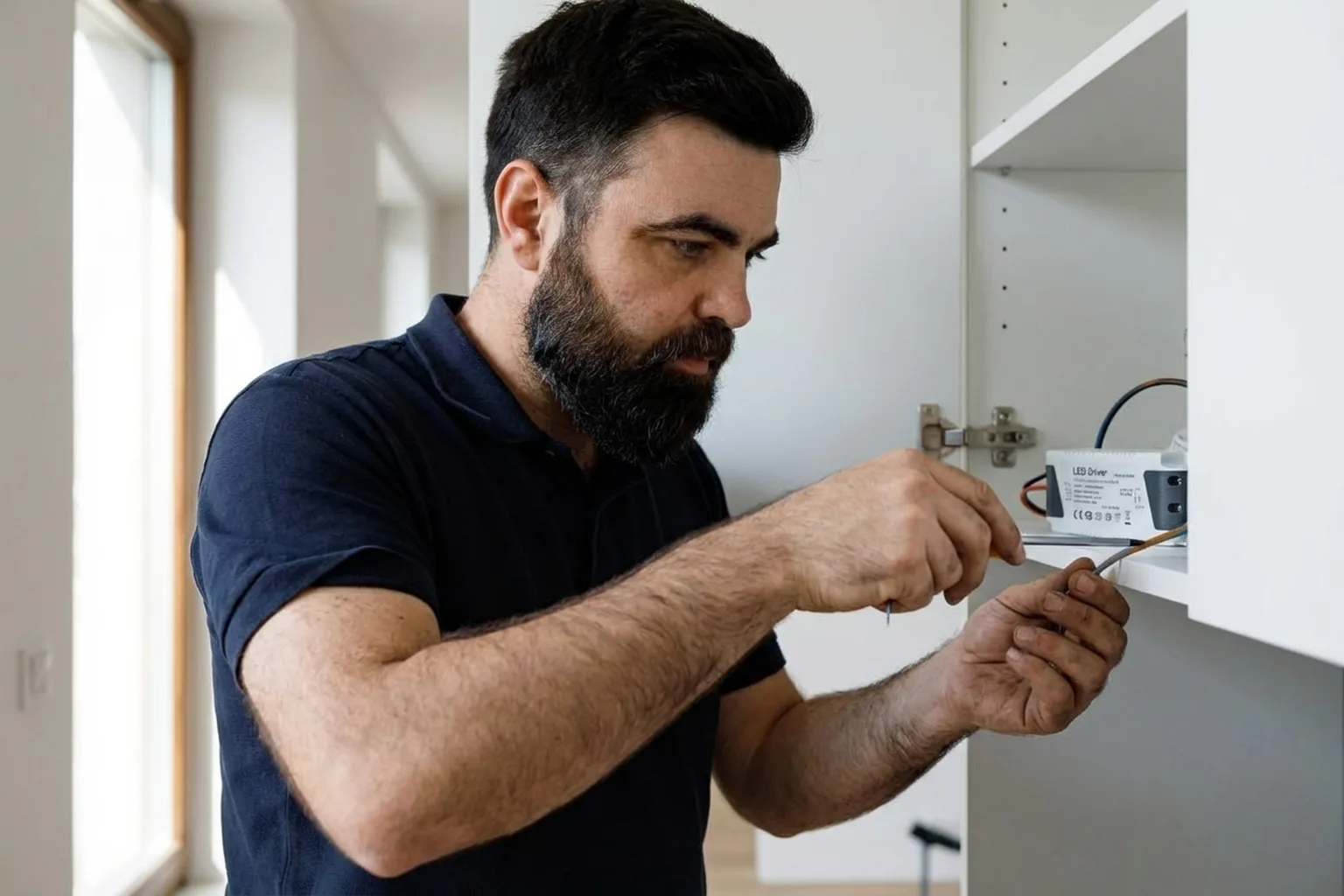
- Tradespeople switch off the circuit the transformer will be connected to.
- Pick the mounting spot: the power supply needs airflow and cannot be closed off in a space with no ventilation.
- Fix the transformer in place: with screws, inside trunking or on a DIN rail (depending on the model).
- Wire the 230 V input through terminals: live, neutral, earth (if included).
- Wire the 12/24 V output to the LED strip or fittings, keeping the polarity correct.
- Turn the breaker back on and test: the strip lights evenly and the transformer stays at a safe temperature.
- Neaten the cables into trunking or fasten them with clips; mark the circuit if needed.
Common mistakes when installing an LED transformer
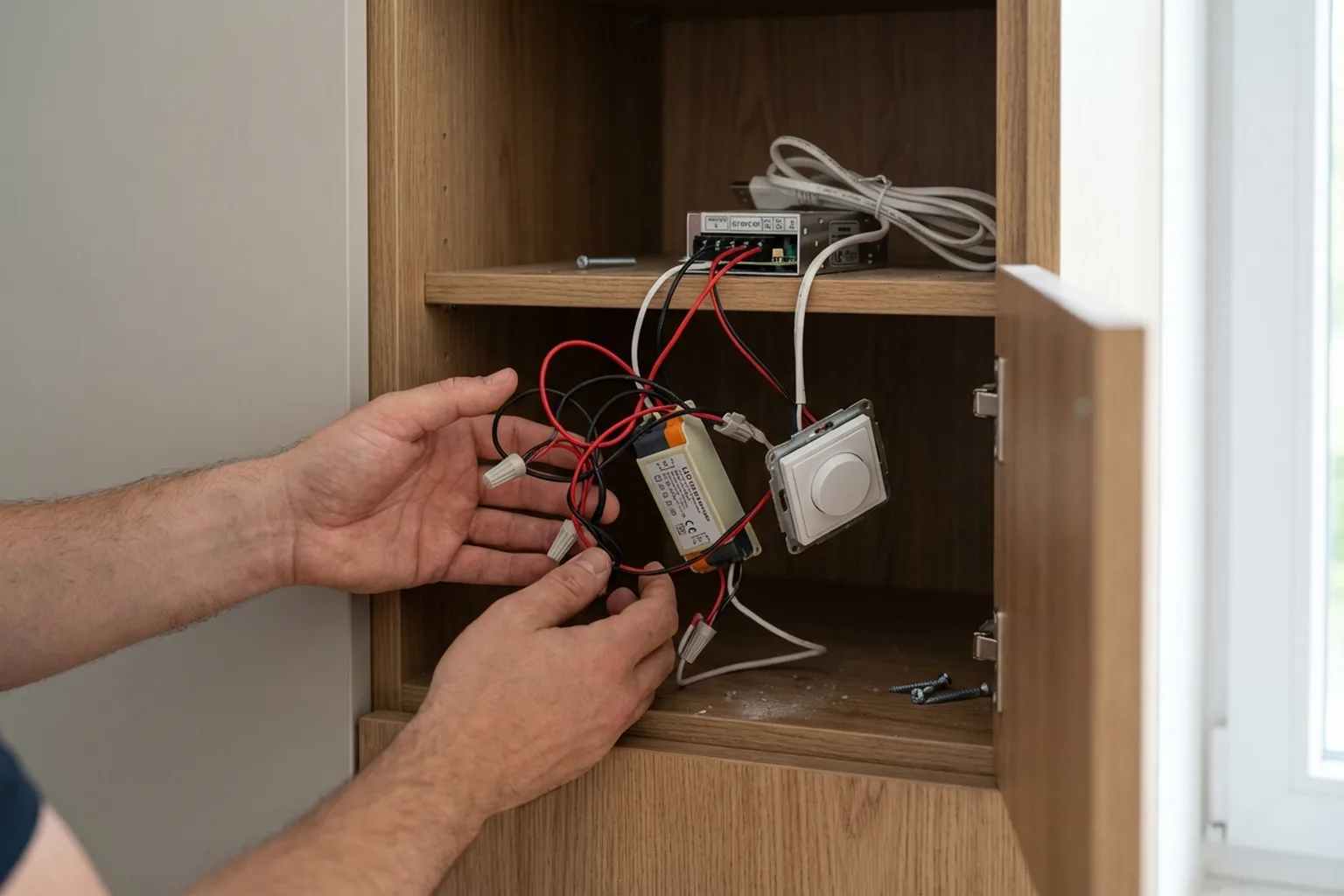
- Transformer selected with no power reserve — it overheats and packs in after a few months. Safe rule: at least 20% above the total strip wattage.
- Power supply built into a wall or boxed in without ventilation, it heats up until it cuts out or fails.
- Polarity swapped on the output: the strip does not run, or with RGB it lights the wrong way.
- Using 0.5 mm cable on a long run — voltage drops and the strip is weaker at the far end.
- Connecting more than 5 metres of strip in series, the far end overheats while the beginning shines brighter.
- Installing a non-waterproof transformer in a bathroom, moisture gets in, then short circuit.
What to prepare before the technician arrives
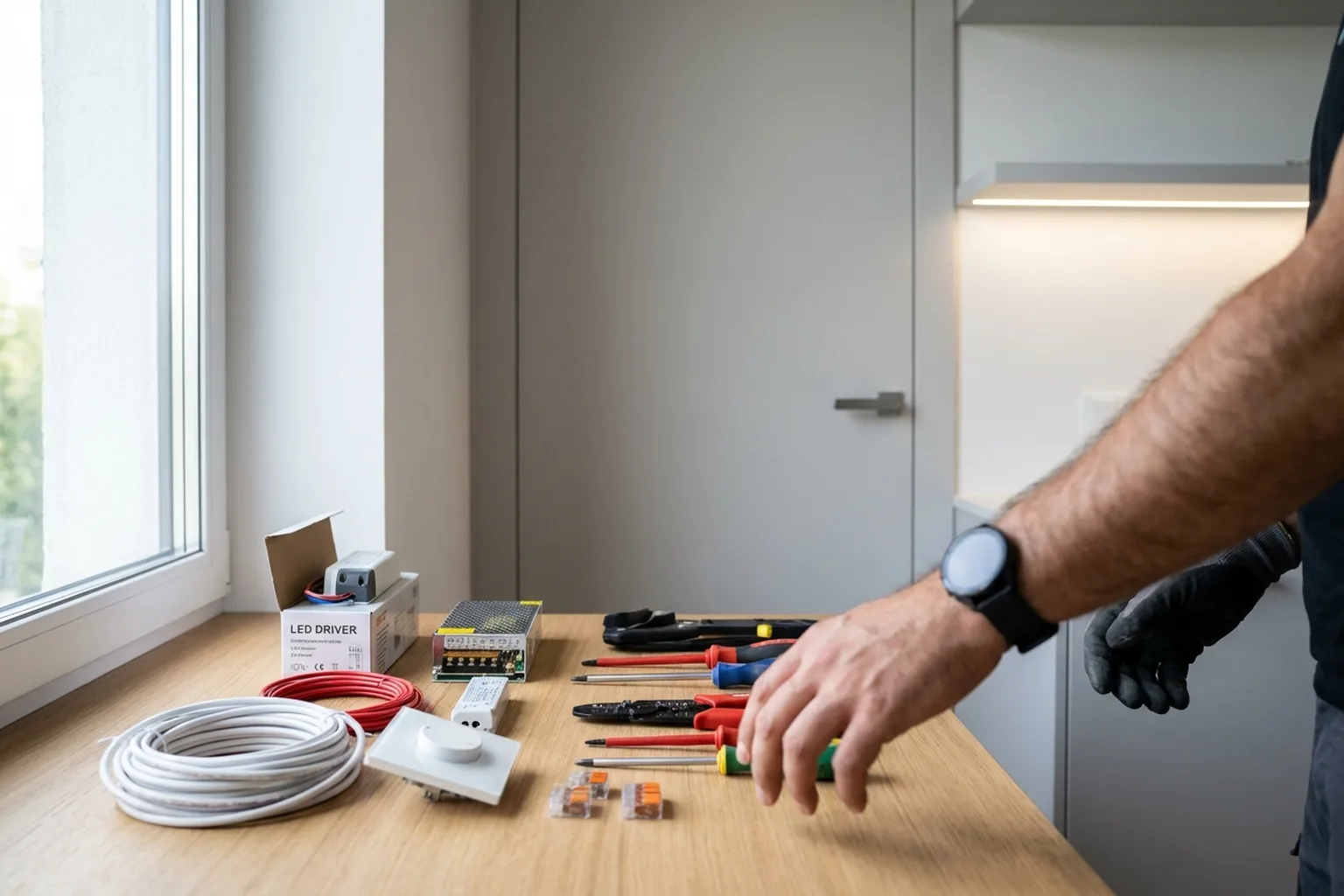
- Buy a transformer with the right wattage and voltage (12 V or 24 V — matching your strip).
- Decide where the power supply will be installed — close to the strip or in a separate place (consumer unit, recess, cupboard).
- If cable has to be routed, get the trunking ready or let the technician know beforehand.
- Show in the order where the consumer unit is and which breaker controls the lighting circuit.
- If the strip is already fixed in place, make sure its wires reach the correct point.
- Provide access details: intercom code, parking, clear route to the installation spot.
- If the lighting has several zones (kitchen + living room) — go over the layout in advance.
- Confirm whether a dimmer or controller is required, this changes the transformer choice.
LED transformer installation in practice: a Warsaw case
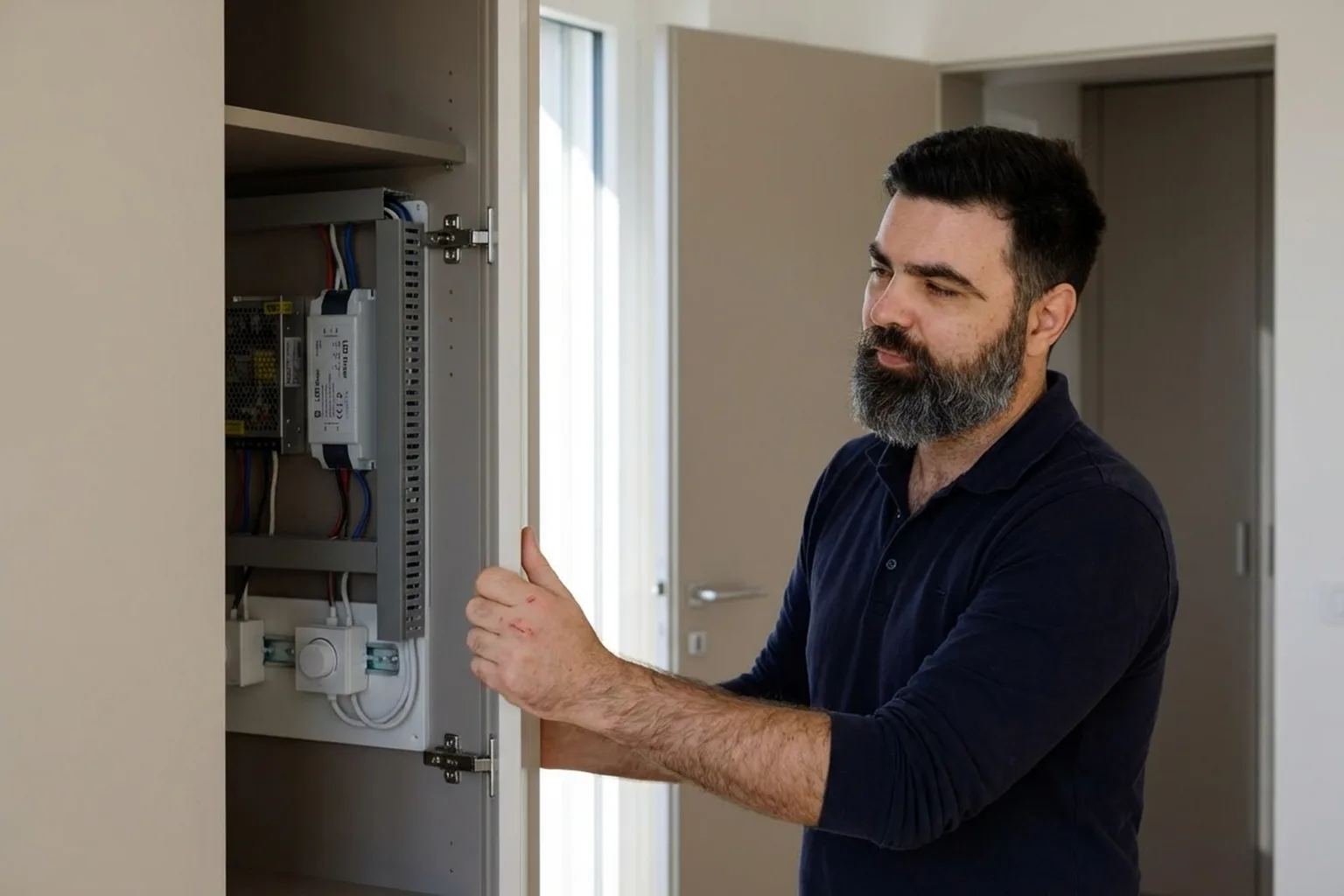
A client in Zoliborz ordered under-cabinet LED strip lighting (24 V) for his kitchen worktop. The strip was already fixed under the wall units, but the transformer was lying loose on top of the cabinet, plugged into a standard socket. The cable was hanging down the wall. Tradespeople moved the power supply into an upper cabinet with ventilation, connected it to a dedicated circuit from the consumer unit using Wago connectors and concealed the cable in plastic trunking. Tradespeople also fitted a switch under the cabinet for easier use. The whole job took about an hour and a half. Now no cable is left hanging, the transformer is hidden from view, and the lighting comes on with one button.
Frequently asked questions
Which transformer do I need for LED strip?
It depends on the strip voltage (12 or 24 V) and the total wattage. The transformer should have a rating 20–30% higher than the strip’s total power consumption.
Can the transformer be hidden above the ceiling?
Yes, but there must be ventilation. A power supply closed off completely overheats and fails fast.
The transformer is buzzing: is that normal?
A slight buzz in cheaper models is fairly common. If it is buzzing loudly, it is likely overloaded or faulty. Best to replace it.
Can the transformer be connected to a dimmer?
Only if the unit is dimmable. Standard power supplies cannot work with dimming — the strip will flicker.
Is the transformer included in the price?
No, the client provides the power unit. Tradespeople help pick the right wattage and type.
Does LED lighting need a dedicated circuit?
For short strips: not always. For longer runs or several zones, adding a separate breaker is the better option.
Book an LED transformer installation
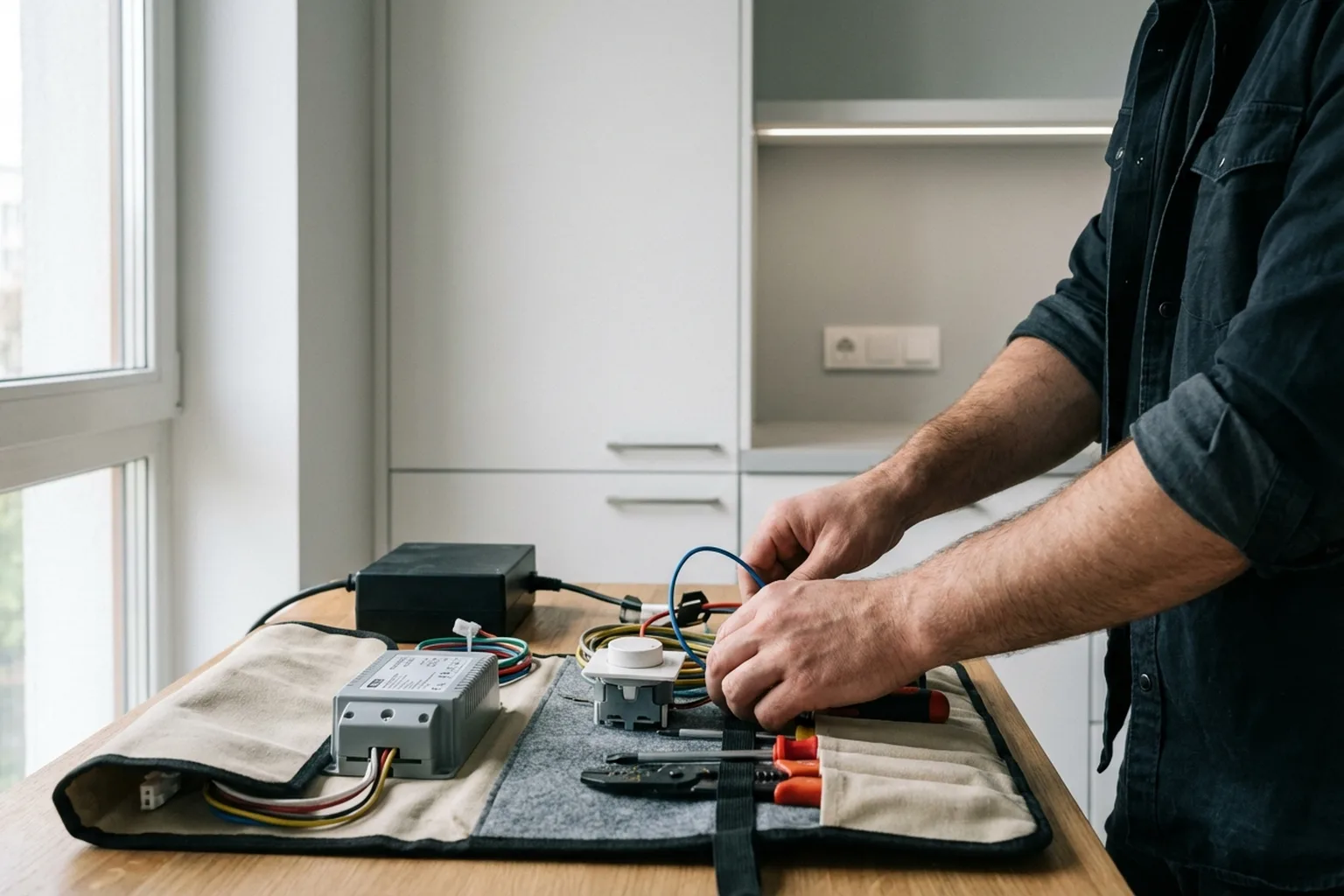
Tradespeople install transformers and LED lighting all over Warsaw. Tradespeople connect, mount and test the whole setup.
Order in the app
Describe the job, add photos and the address. Tradespeople send their own prices and dates, and you pick one of the offers.
Open the app