How much does door removal cost and what affects the price
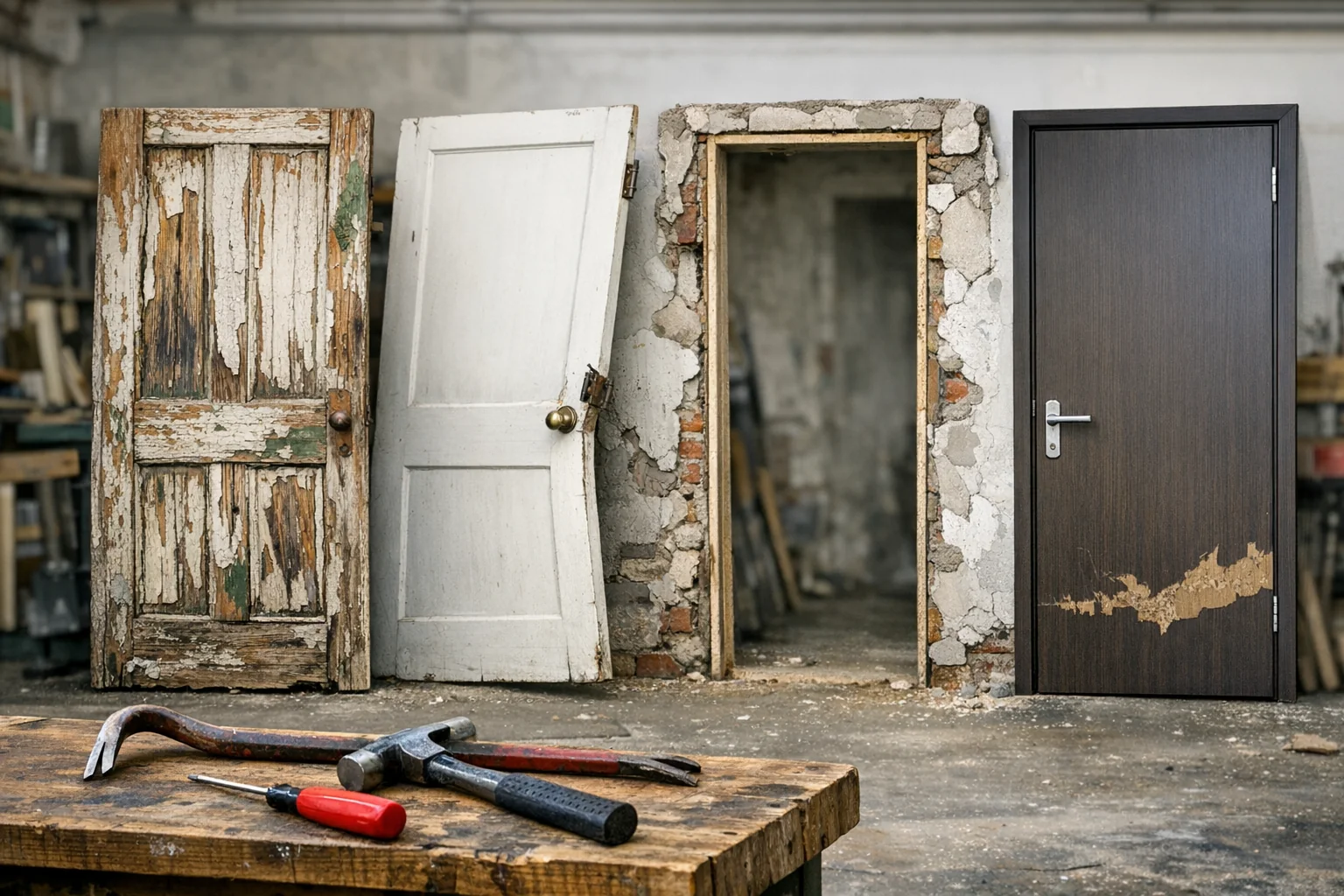
The price of removal depends on the construction type and the state of the wall around the opening. An easy job is a hinged door on butterfly hinges with a foam-fixed frame: that can be out in 20-30 minutes. A hard one is a 1970s door nailed into a concrete wall, with the frame buried under paint and plaster. That sort has to be cut out section by section. The number of doors matters too: if several are removed in the same flat, the price per unit drops.
Fixings and consumables used during removal are included in the labour charge. Taking away the old door and construction waste is a separate service. If you need trimming, adjustment, or installation of a new door after removal, one technician can do the whole job. Up-to-date prices for all their door services are in the table below.
| Service | Price |
|---|---|
| Door removal | 200–250 zł |
| Door trimming | 200–400 zł |
| Door frame installation | 250–450 zł |
| Door adjustment | 80–150 zł |
| Door handle replacement | 180–280 zł |
Indicative prices. Ranges for a typical scope. Fixings included, materials separate. Minimum order 300 zł.
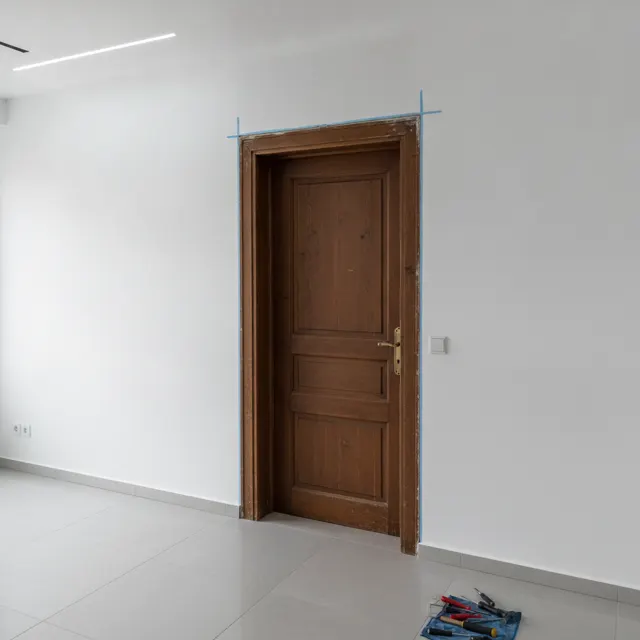
Send over a photo of the door and opening — the technician will judge the difficulty and give you an exact quote with no hidden add-ons.
Price ranges and offers from tradespeople: apartment finishing in Warsaw.
How door removal works: step by step
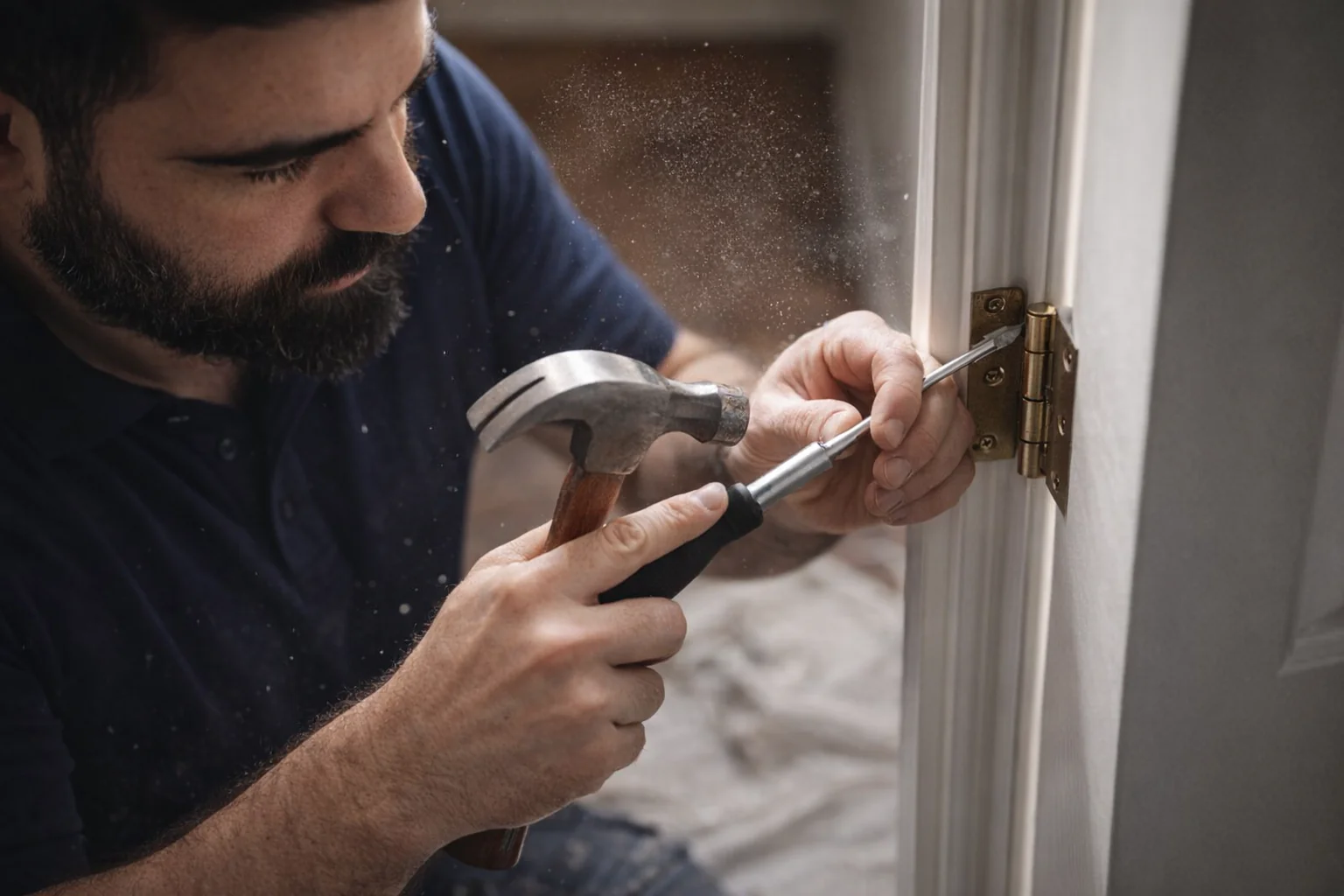
Removing a door is not about using more force. Every fixing method needs its own approach, and one wrong move can leave damage on the wall. This is how the technician does it:
- Checking the assembly. The technician identifies the frame type (timber, MDF, metal), the fixing method (foam, nails, plugs, anchors) and the wall condition. That decides the tools and the sequence of work.
- Taking off the architraves. Architraves are gently prised away with a chisel or scraper. If they are pinned, they usually come off easily. If glued, they cut them loose, doing their best not to mark the wall.
- Removing the door leaf. The leaf is lifted off the hinges. With surface-mounted hinges, lifting is enough. With mortice hinges, the screws are removed. The leaf is then moved out of the way.
- Removing the frame. This is the key stage. If the frame is set in foam, they cut the foam all around with a knife and work the frame out carefully. If it is nailed or plugged, they unscrew or saw through the fixings. In older buildings in Mokotow and Ochota, frames are often nailed straight into brick: this needs extra caution.
- Cleaning the opening. Tradespeople clear out leftover foam, old fixings and bits of plaster. The opening has to be clean, with no nails sticking out or built-up residue. If a new door is planned, the opening is levelled and primed.
- Clean-up. Tradespeople remove dust, cut-offs and debris. The old door and frame are stacked separately. The client inspects the result and signs off.
The full job takes from 30 minutes to an hour and a half, depending on the fixing method and the state of the wall.
Common mistakes when removing doors yourself
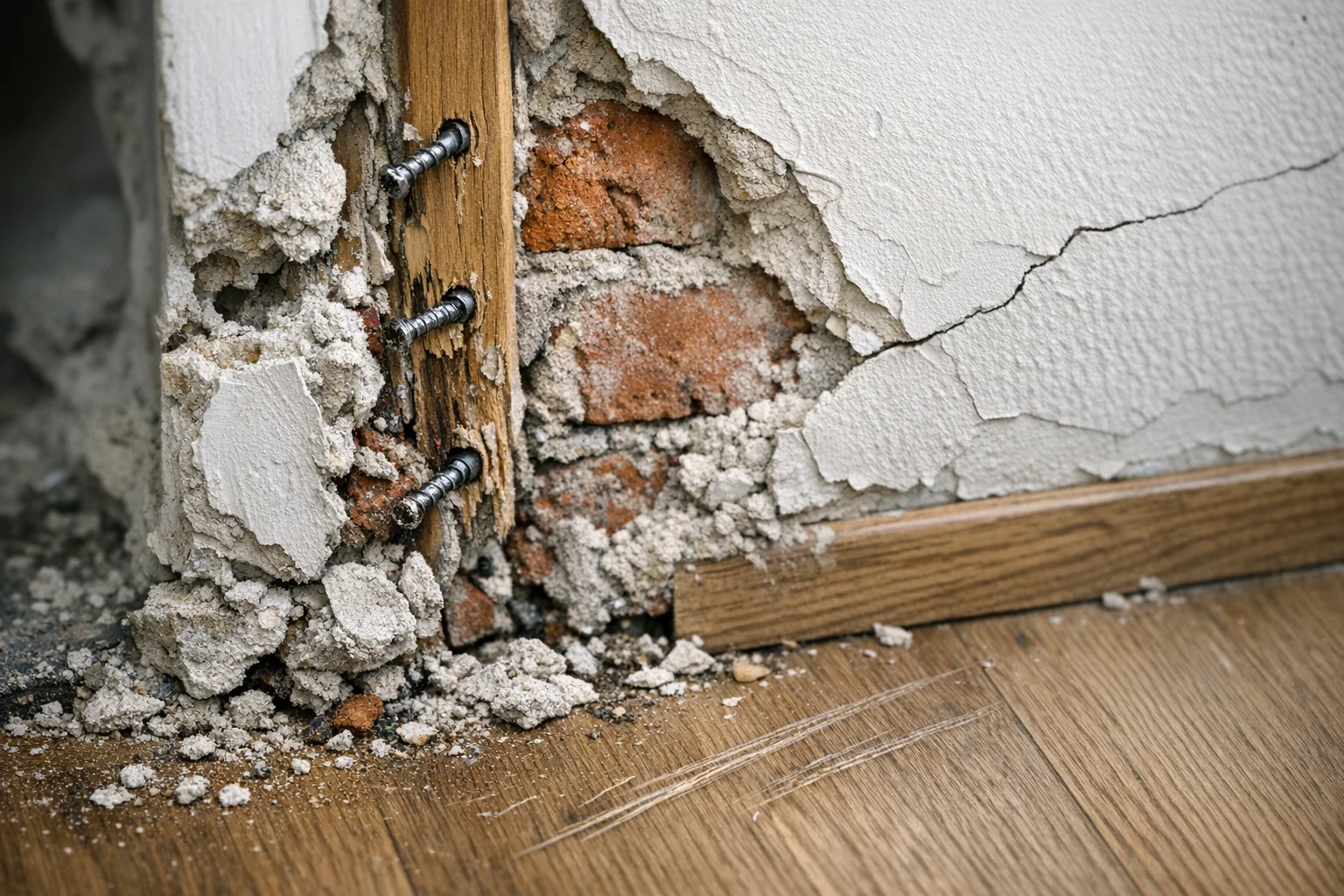
It may look like simple work, but this is exactly where walls and openings get damaged most often. Here is what people get wrong:
- Prying the whole frame out with a crowbar. The frame comes out along with chunks of plaster and brick. Fixing the wall afterwards can cost more than the whole removal job.
- Leaving the architraves on before removing the frame. They tear away together with the frame, damaging wallpaper or paint 10-15 cm around the opening.
- Pulling the frame without cutting the foam first. Foam holds the frame like adhesive. If you yank it without cutting, parts of the reveal come off with it.
- Cutting the frame with an angle grinder indoors. An angle grinder throws sparks and fills the room with dust. In an occupied flat that means fire risk and a huge mess. The proper tool is a reciprocating saw or a hand saw.
- Missing hidden fixings. Screws can be hidden under caps or under a layer of filler. If you do not find them, the frame will not move, and forcing it will crack the wall.
- Not protecting the floor. Bits of plaster, nails and fragments fall onto laminate or tiles, leaving scratches and chips that cannot be reversed.
- Leaving nails in the opening. Nails and screws sticking out get in the way when fitting the new frame and can also cause injury.
What to prepare before the technician arrives
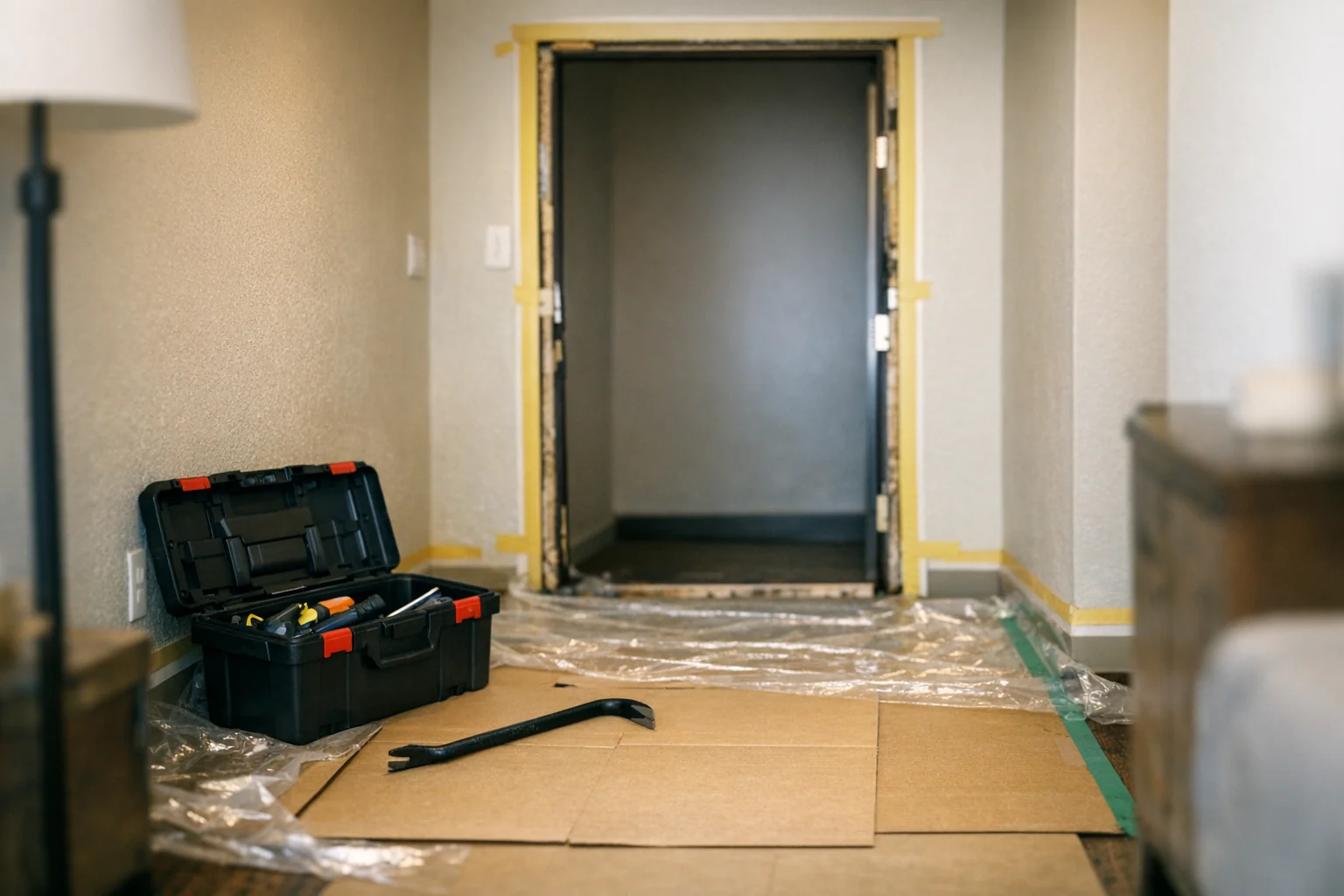
Removal means dust and noise even when the work is done with care. Here is what to sort out beforehand:
- Clear at least a metre around the door on each side. Move furniture, things from shelves and rugs away.
- Cover the floor with plastic or cardboard — there will be debris and dust.
- Decide what happens to the old door: leave it by the entrance, take it to the skip, or get rid of it yourself. Removal by the technician is a separate service.
- If a new door is going in after removal, make sure the new door, frame and hardware are already on site.
- Make sure there is a power socket within 5 metres of the opening for the tools.
- Give the entry code, floor number and lift details, especially if waste removal is included in the job.
- If you have pets, keep them in another room while the work is going on.
- Let the neighbours know if the walls are thin: removal can get noisy.
- Take photos of the door and opening in advance and send them to the technician — this makes the estimate faster.
- Decide if you need any extra work: trimming a nearby door, adjusting hinges, changing a lock. All of it can be done in one visit.
A real case: removing old doors in Mokotow
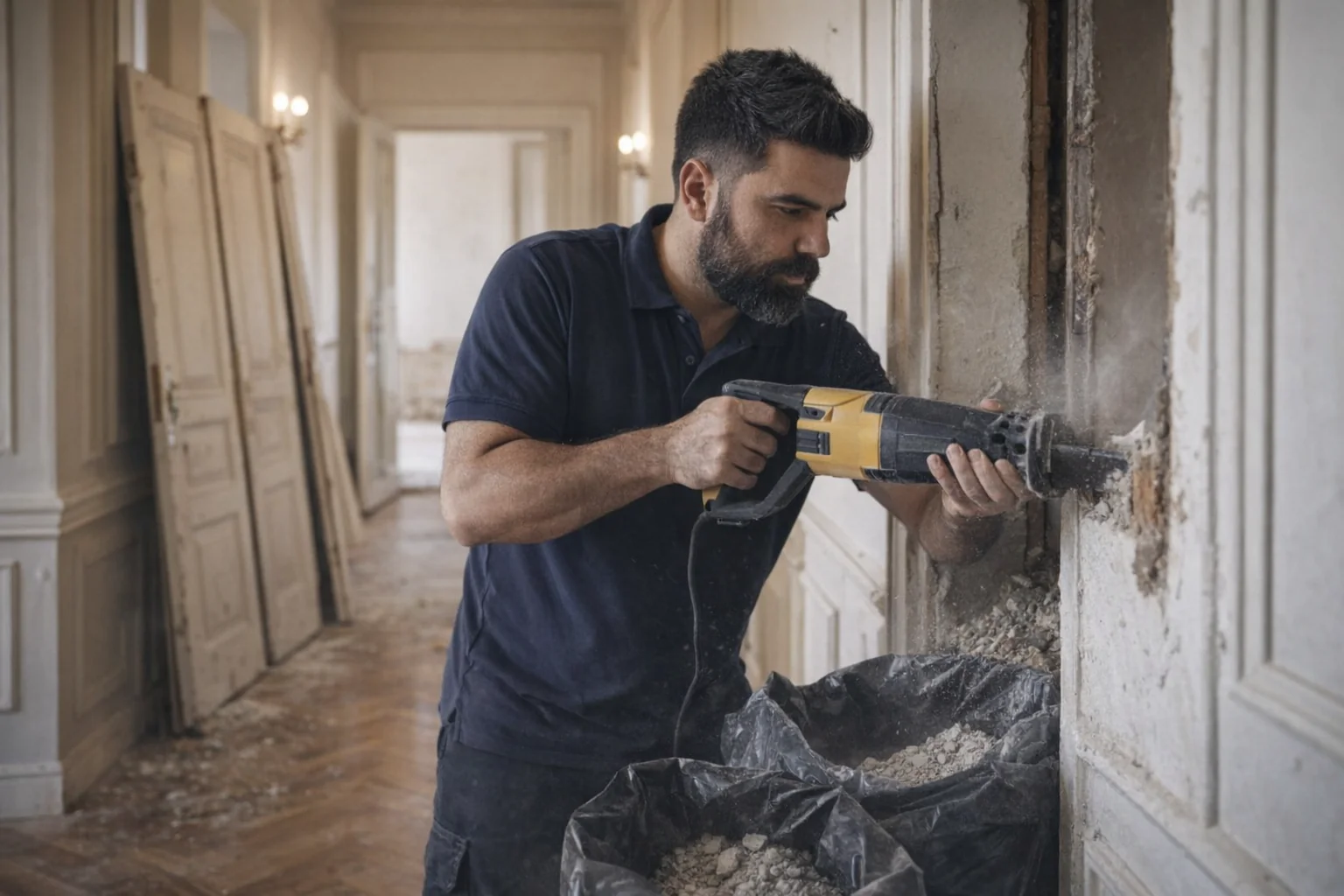
A client in Mokotow was beginning a full renovation of a 1970s flat. Four internal doors had to be removed: three standard ones and one double set opening into the living room. The standard doors were fitted in timber frames nailed into concrete walls. After fifty years the foam had gone rock hard, and behind the architraves they found gaps packed with newspaper and plaster. Each frame had to be cut with a reciprocating saw in four places and then carefully knocked out in sections. The double doors were more awkward: the frame was strengthened with metal angle brackets sunk into the wall. Tradespeople had to chisel the brackets out with a breaker, controlling the depth so they would not break through to the other side.
By lunchtime all four openings were cleaned up. The reveals came through in decent condition: small chips, nothing major. The client later asked the same tradesperson to fit the new doors as well. The takeaway is simple: in older buildings, removal takes more time because of odd fixings, but careful work leaves the opening ready for the next stage without costly wall repairs.
Who does the work
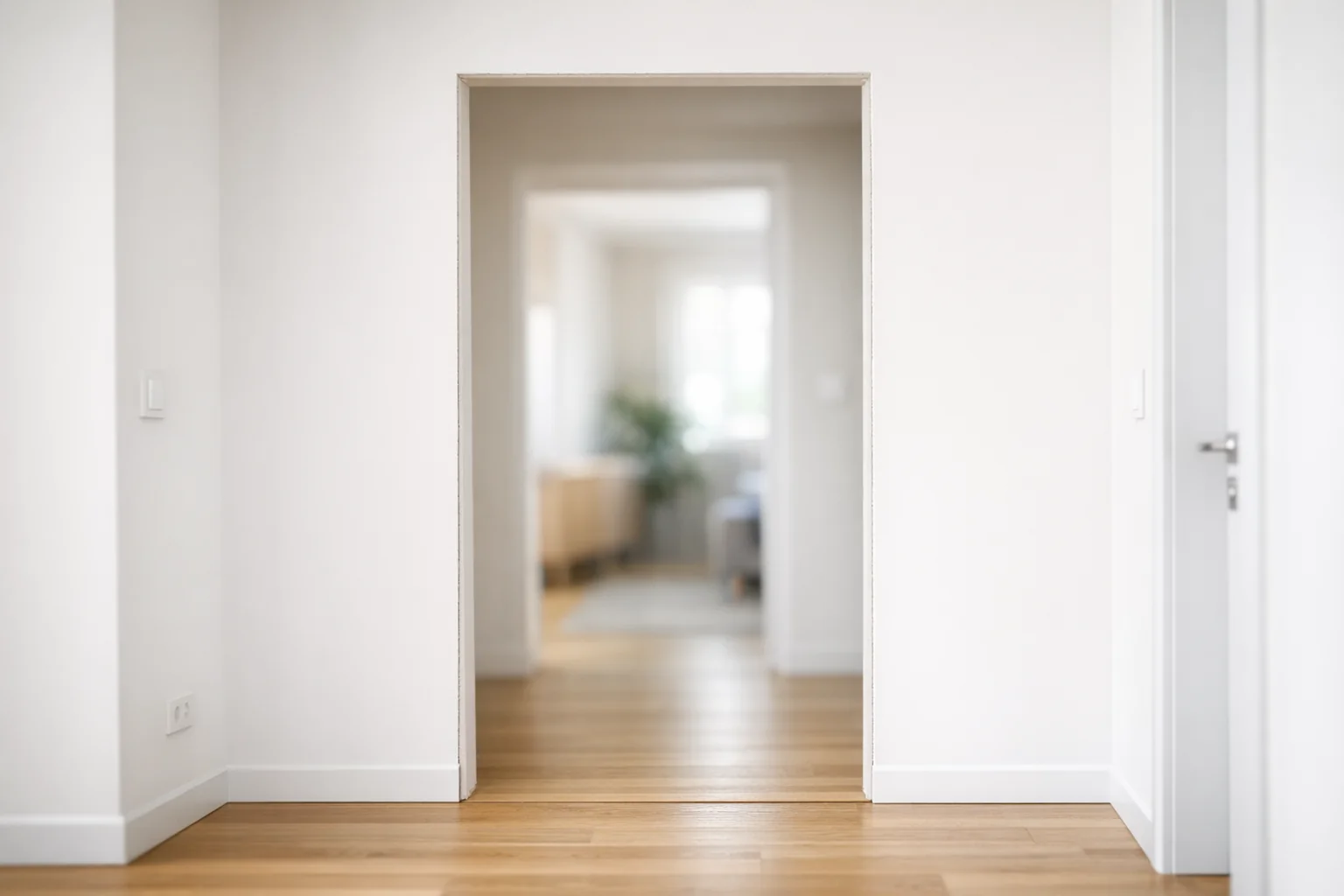
Door removal is done by tradespeople with hands-on experience in joinery and finishing — people who deal with openings from every period and of every construction type day in, day out. Tradespeople come with a full set of tools: reciprocating saw, chisels, scrapers, breaker when needed. Tradespeople work across all of Warsaw and the surrounding area. You can expect the opening will be clean, even and ready for the next stage, no nails sticking out, no foam lumps, no broken-up reveals. If anything goes wrong during removal because of their mistake, they fix it at their own cost.
Order in the app
Describe the job, add photos and the address. Tradespeople send their own prices and dates, and you pick one of the offers.
Open the app