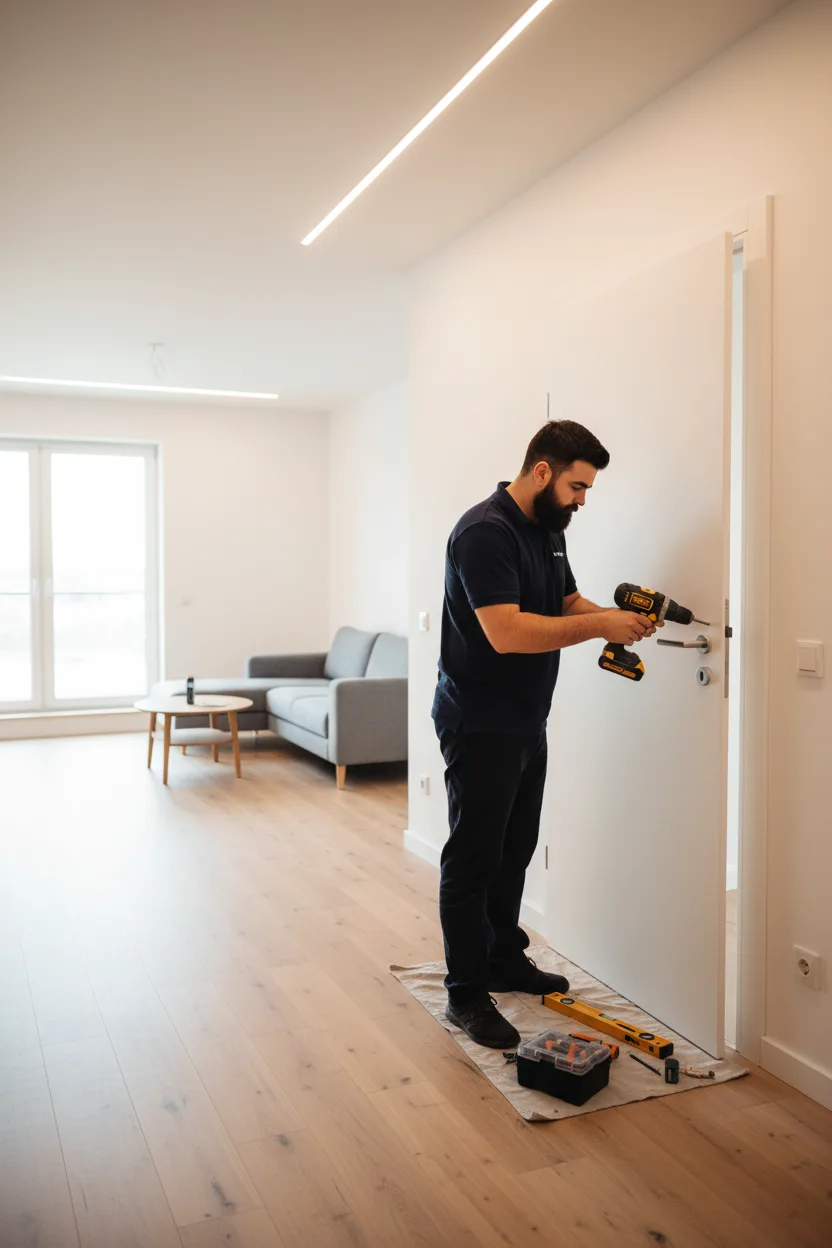
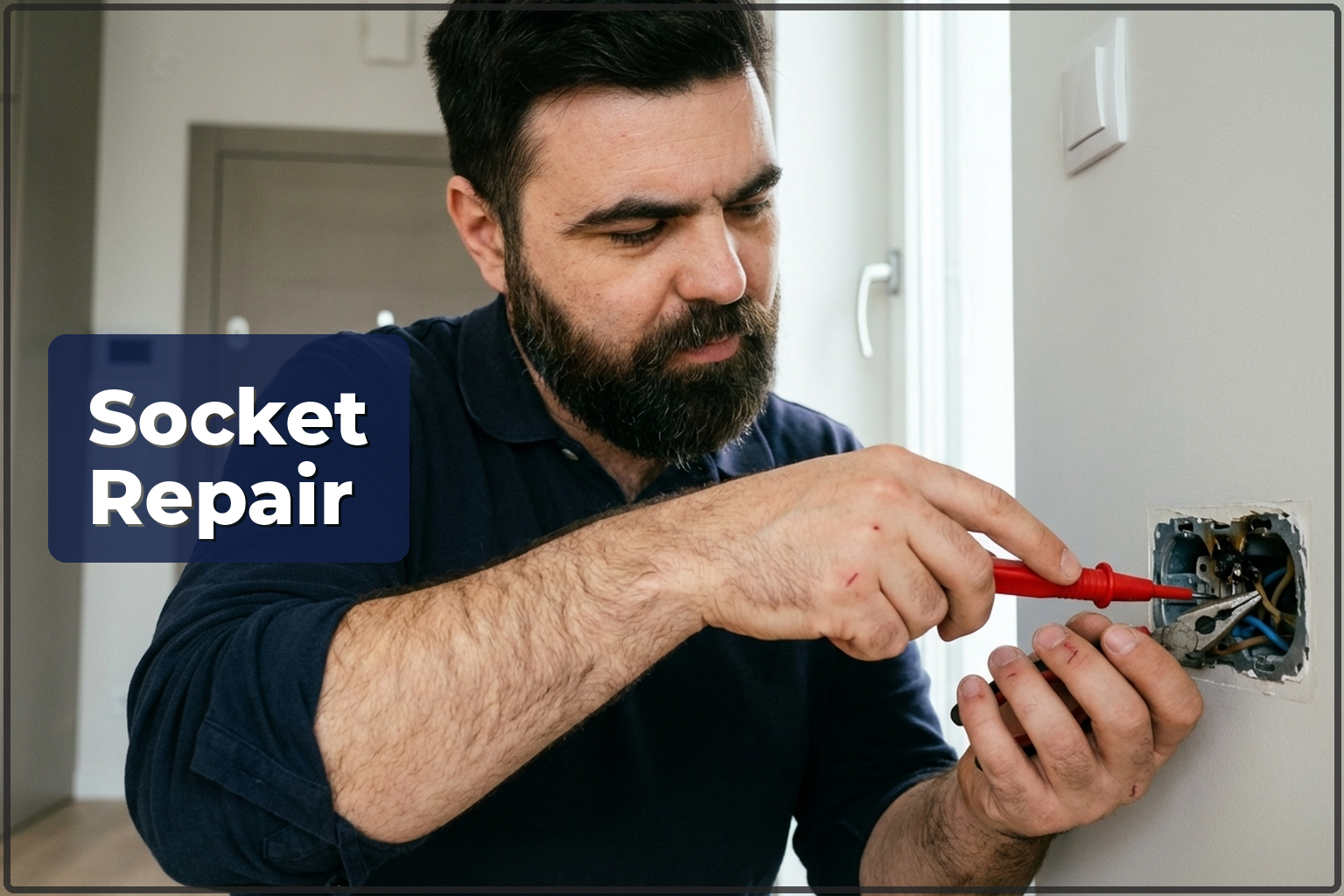
A socket does not always have to be replaced in full. In many cases, the issue can be fixed: tightening slack contacts, changing a burnt terminal, or firming up a loose mechanism in the back box. If the housing has not melted and the mechanism itself is still sound, repair is the cheaper and quicker route. In Mokotow and Zoliborz we often see sockets that only need the contacts tightened after years of use. But when the damage is too severe, we will tell you straight that replacement makes more sense.
Cost and what affects it
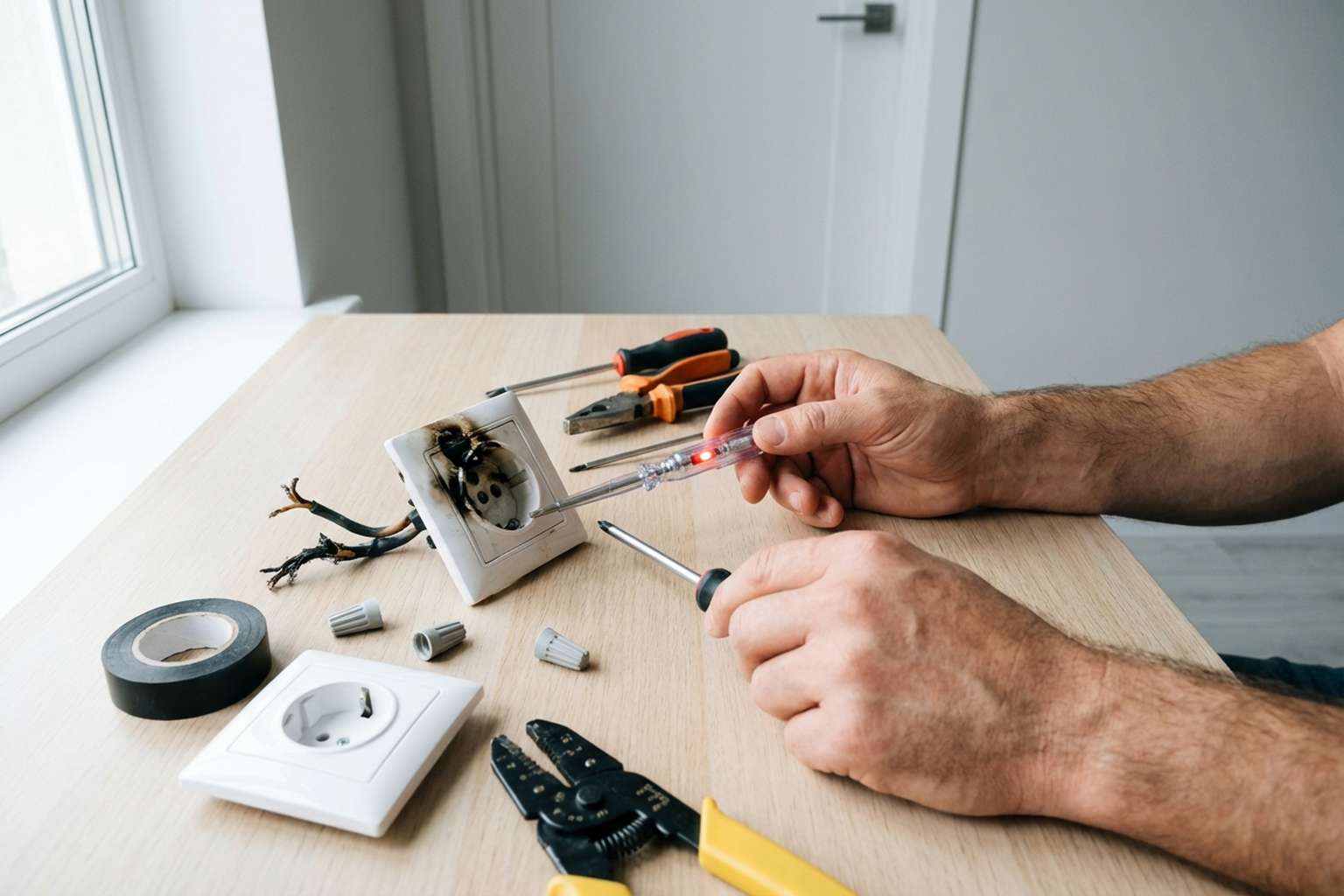
The repair cost depends on what has gone wrong. A basic contact retightening is fast and low-cost. Changing a terminal block, restoring cable insulation, or repairing the back box costs a bit more. If the socket is too badly damaged to repair sensibly, we advise replacing it. Up-to-date prices for all electrical work are listed in the table below.
| Service | min | max |
|---|---|---|
| Light switch installation | 50 zł/szt | 90 zł/szt |
| Light switch replacement | 60 zł/szt | 60 zł/szt |
| Light switch repair | 60 zł/szt | 120 zł/szt |
| Electrical socket installation | 80 zł/szt | 120 zł/szt |
| Electrical socket replacement | 50 zł/szt | 80 zł/szt |
| Electrical socket repair | 60 zł/szt | 100 zł/szt |
| Electrical point installation | 120 zł/pkt | 180 zł/pkt |
| Wall chasing for wiring | 40 zł/mb | 70 zł/mb |
| Electrical wiring installation | 15 zł/mb | 30 zł/mb |
| Junction box wiring connection | 40 zł/szt | 80 zł/szt |
| Lighting installation (lamp, chandelier) | 80 zł/szt | 150 zł/szt |
| Lighting replacement | 150 zł/szt | 150 zł/szt |
| Lighting repair | 120 zł | 250 zł |
| LED strip installation | 60 zł/mb | 90 zł/mb |
| LED transformer installation | 150 zł/szt | 220 zł/szt |
| Light bulb / halogen replacement | 30 zł/szt | 50 zł/szt |
| Power socket installation 230/400 V | 120 zł/szt | 220 zł/szt |
What faults can be repaired
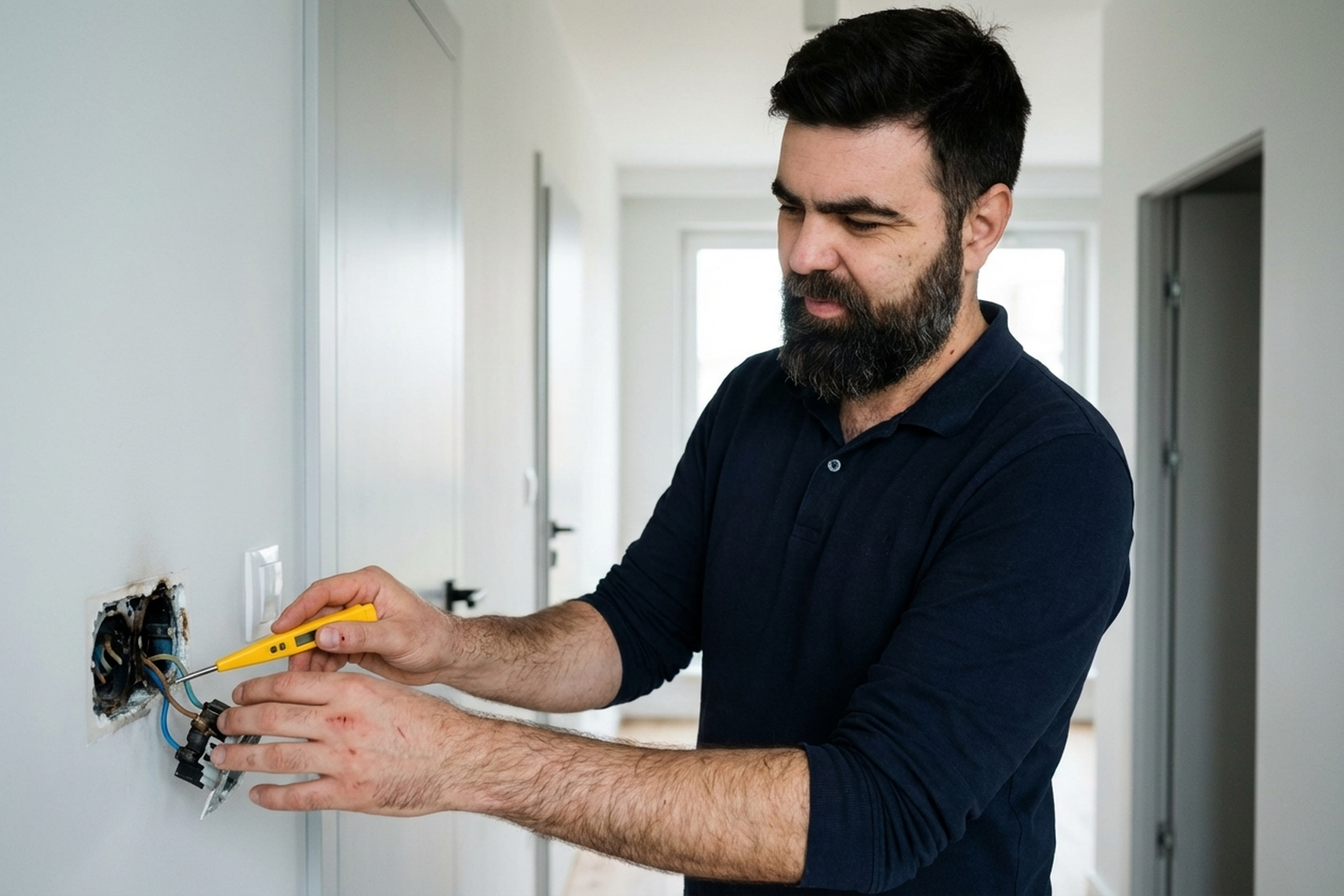
- Loose terminal contacts — the cable is not held tightly, and the socket sparks or gets hot.
- Loose mechanism — the socket shifts in the wall and the plug slips out.
- Cracked faceplate or frame — decorative parts can be changed without replacing the mechanism.
- Oxidised contacts — cleaned and tightened again.
- Short cables — extended with WAGO connectors or crimp sleeves.
- Damaged back box — the box is replaced while the socket mechanism stays in place.
How the repair works
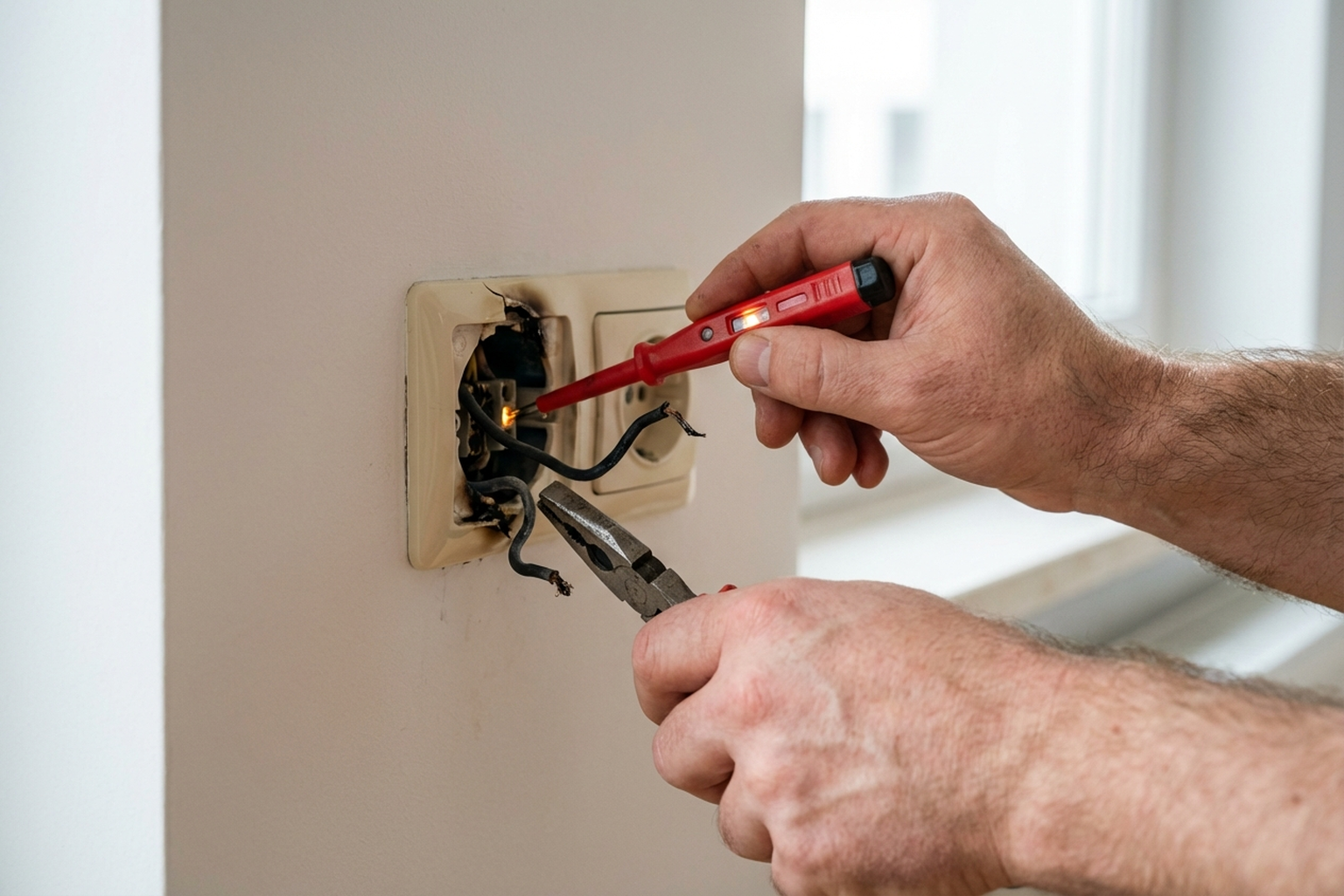
- Diagnosis: we isolate the circuit, take off the faceplate, and inspect the mechanism, cables, and back box.
- Finding the cause: we check how tight the terminals are, the state of the insulation, and whether the contact plates are still sound.
- Repairing the fault: we tighten contacts, clean oxidised cables, and extend short ends where necessary.
- Securing the mechanism: we fasten the socket in the back box with fixing lugs or screws.
- Testing: we turn the circuit back on, measure voltage, and test it under load.
When repair is no longer an option
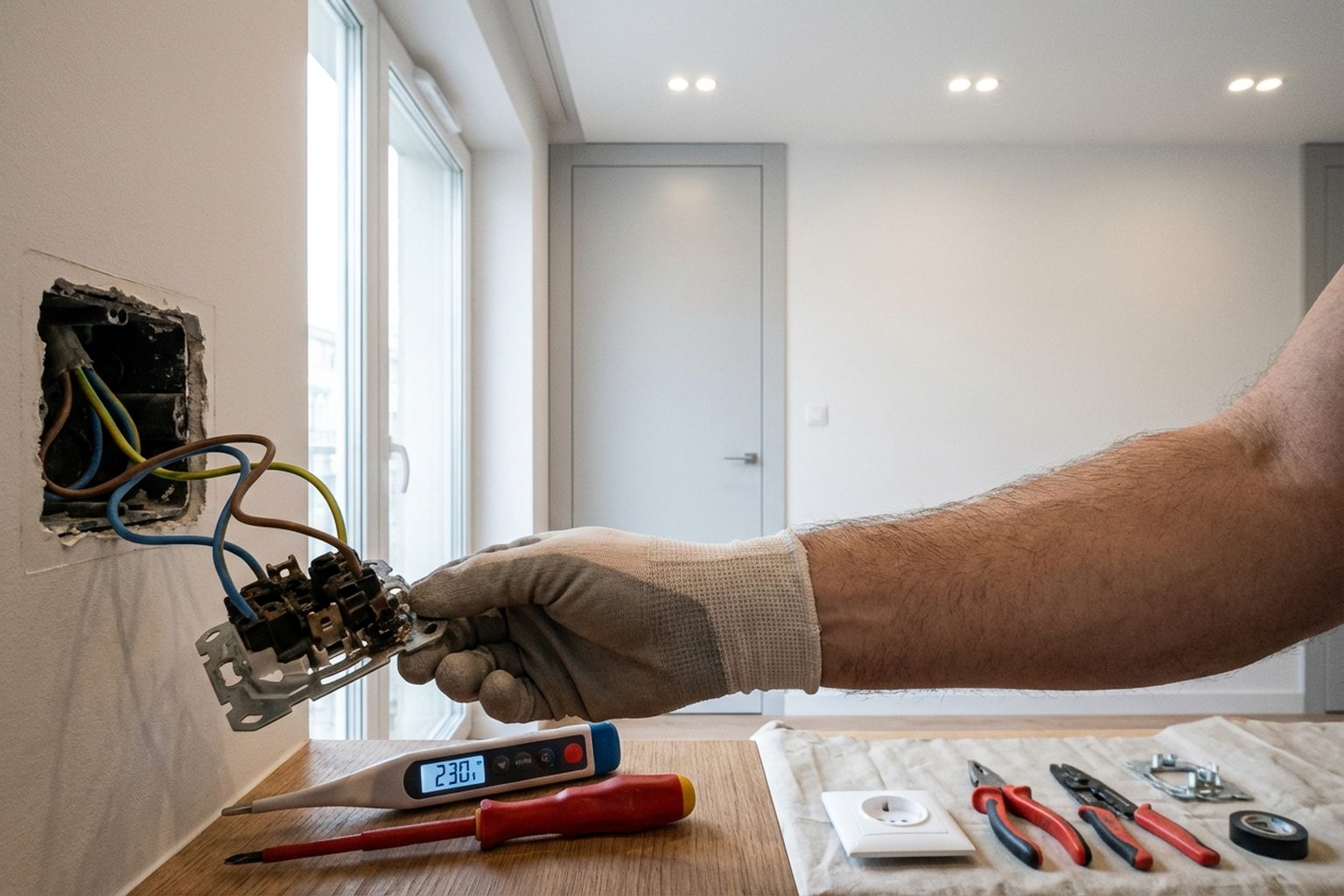
- The mechanism housing has melted or deformed from overheating.
- Contact plates are ruined — they no longer grip the plug.
- There are signs of a short circuit inside — black marks, burnt smell.
- The mechanism is an outdated standard — spare parts are no longer available.
- Cables are scorched so badly that stripping back to good wire is impossible without chasing the wall.
Warning: any electrical repair involves working at or close to live voltage. Wrong connections can cause a short circuit or fire. Do not risk it — call a professional.
What to prepare before the visit
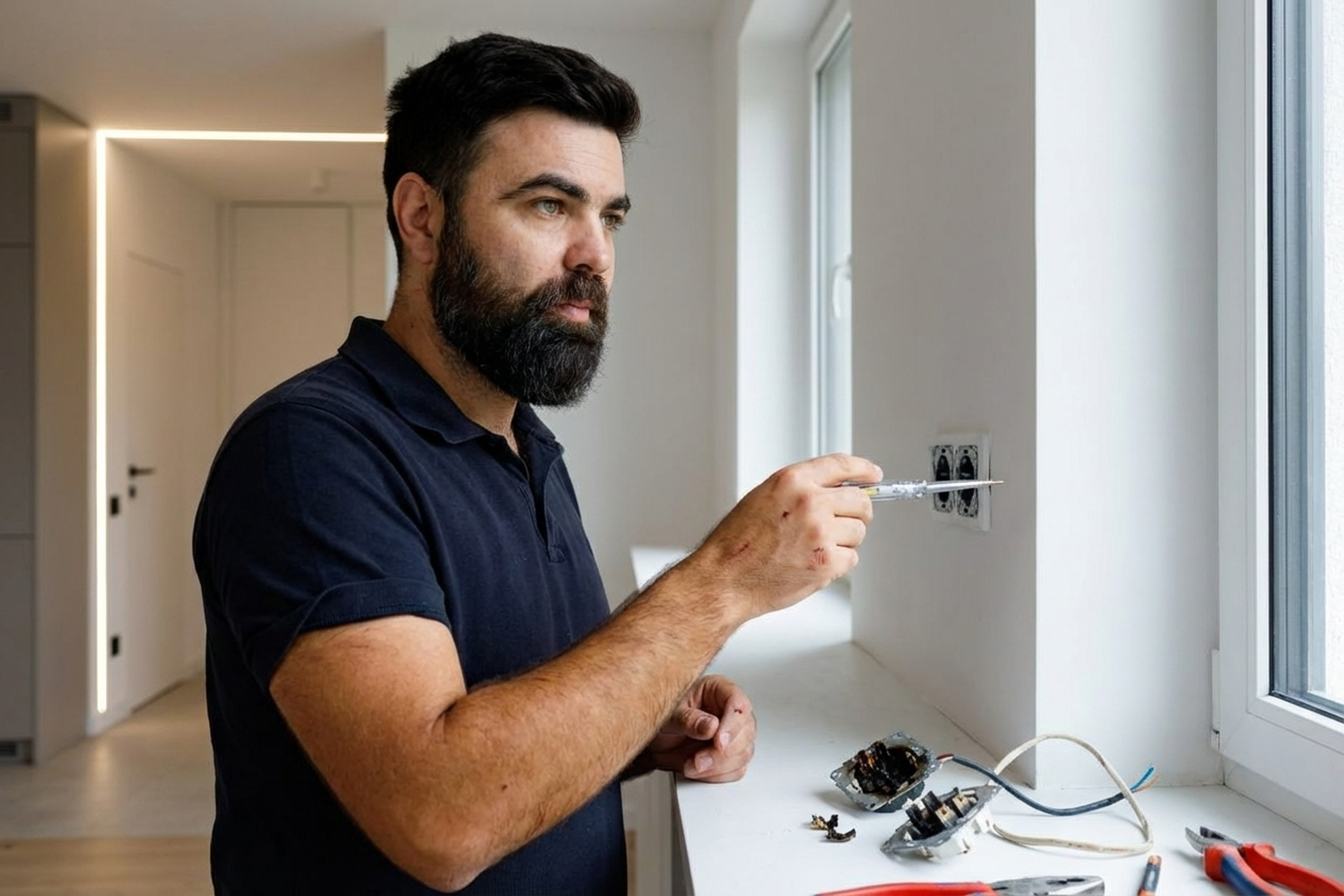
- Show us where the consumer unit is — the technician will need to isolate the circuit.
- Explain the problem: sparking, overheating, loose, not working — the more detail you give, the quicker the diagnosis.
- Make sure there is clear access to the socket — move furniture aside.
- If the socket is smoking or sparking badly, isolate the circuit at once and stop using it.
- If several sockets are causing trouble, tell us in advance — we will check them all in one visit.
A real case from Warsaw
A client in Zoliborz said a living-room socket kept ‘cutting out’ — the TV would switch off and come back a minute later. When we opened it up, the cable in the terminal was hanging on by a single strand — the rest had snapped from vibration. We stripped the cable, re-crimped it in the terminal, and checked every other contact in the socket. We also fixed the mechanism, which was loose because one fixing lug had broken — we screwed it straight into the back box. The issue was gone, and there was no need for replacement (compatible with Legrand, Schneider Electric, ABB and similar).
Frequently asked questions
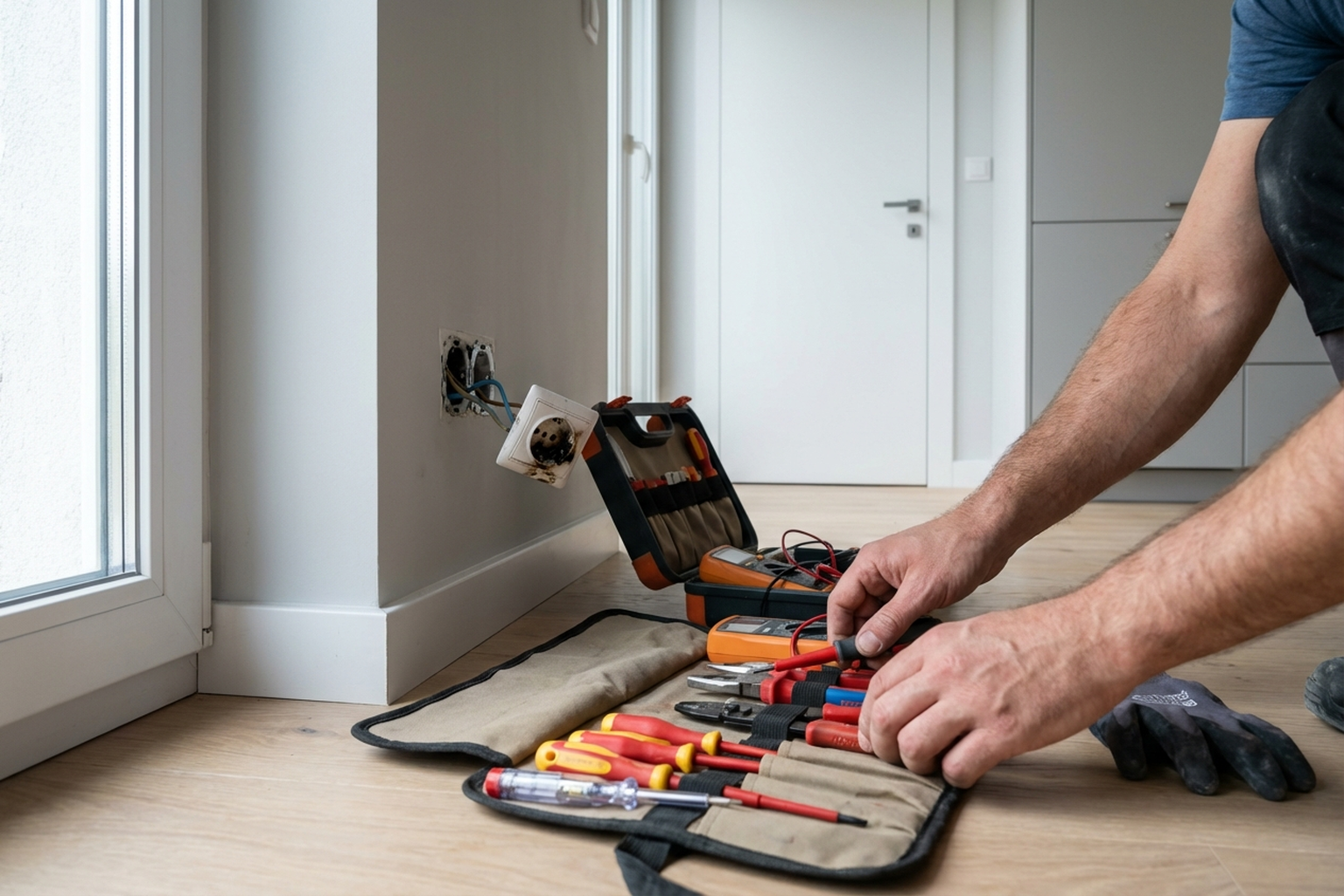
Can I repair a socket myself?
Tightening a contact is simple in itself, but you still need to isolate the circuit and test it with an indicator. If you do not have experience with electrics, it is safer to call a professional.
What is the difference between repair and replacement?
Repair keeps the existing mechanism: contacts are tightened, terminals are cleaned, and the body is secured. Replacement means installing a completely new socket.
Why does a socket spark?
A poor terminal contact, cable oxidation, or worn contact plates. Any of these can be repaired if the mechanism itself is not destroyed.
How long does a repair take?
A simple retightening — 15–20 minutes. Replacing the back box and extending cables — up to an hour.
Can the technician decide on the spot — repair or replace?
Yes. Once the faceplate is removed, you can see the state of the mechanism, contacts, and cables. The decision is made right away.
Book a socket repair
We repair sockets across Warsaw: tighten contacts, clean terminals, secure mechanisms, and extend short cables. If fixing it no longer makes sense, we will say so plainly and recommend replacement. Get in touch — we will come out, inspect it, and sort it.