Repair after flooding in a Warsaw apartment — floors, doors and drying
Water from the neighbours upstairs or a burst whirlpool-washing-machine-connection-warsaw/">washing machine hose leaves the same set of problems behind: swollen floor panels, skirting boards pulling away from the wall, soaked underlay beneath the floor and doors that no longer close. Repair after flooding is not one job but an order of operations — first find out how far the water travelled, then dry the place out, and only at the end rebuild the floor and the finish. We handle apartments like this across Warsaw: opening up the floor, drying it, then relaying panels, fitting skirting and adjusting doors. Until everything is dry, do not switch on sockets in the flooded area — if water got into a back box or into a ceiling light fitting, the order is fixed: electrician first, us second. Message us with photos before you start pulling anything apart.
How much repair after flooding costs and what the price depends on
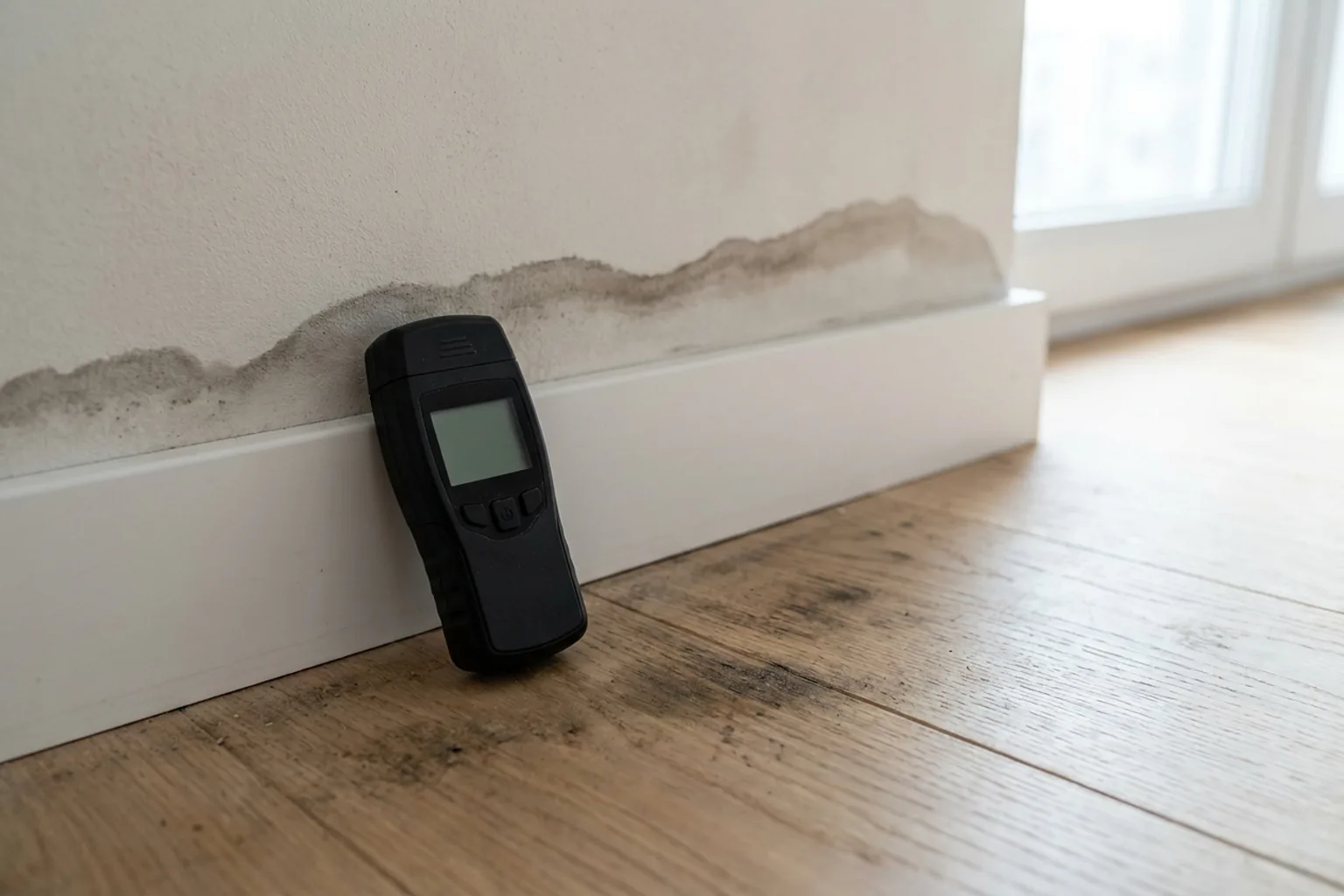
The price depends first of all on how far the water travelled and whether it got underneath the floor. A puddle covering two metres of hallway is one job; water that ran under the thresholds into two rooms is another. The second factor is the floor type: click panels can sometimes be lifted and relaid, while glued vinyl and parquet rarely forgive that treatment. The third is time — the longer the floor stayed closed with water underneath, the more likely it is that drying, underlay replacement and work along the bottom of the walls get added. Some items are replaced after any flood regardless of the rest: underlay, MDF skirting boards and thresholds in doorways. Current rates for each job are in the table below.
Rebuilding the finish is quoted separately, because it belongs to a different stage and a different moment — filling and skim coat only make sense on a dry wall. We covered painting an apartment after a flood in a separate article, with more detail on water stains and stain-blocking primer.
| Service | min | max |
|---|---|---|
| Protection of furniture, doors, windows and floors with film | 10 zł/m² | 15 zł/m² |
| Filling holes and damages | 20 zł/m² | 35 zł/m² |
| Wall leveling after tile removal | 45 zł/m² | 70 zł/m² |
| Ceiling leveling | 45 zł/m² | 70 zł/m² |
| Priming before painting | 15 zł/m² | 25 zł/m² |
| Gypsum putty application | 55 zł/m² | 90 zł/m² |
| Painting walls / ceilings in one color (2 coats) | 30 zł/m² | 45 zł/m² |
| Floor panel replacement | 70 zł/m² | 100 zł/m² |
| Floor panel removal | 15 zł/m² | 25 zł/m² |
| Baseboard installation | 30 zł/mb | 45 zł/mb |
Fixings and small hardware come with us. Materials — panels, underlay, skirting, thresholds, adhesive, primer — are paid separately, as are removal of wet waste and carrying materials up to the flat. Soaked underlay and cut-up skirting take far more space than people expect, so we agree on waste removal in advance rather than at the end of the job.
How the visit works — step by step
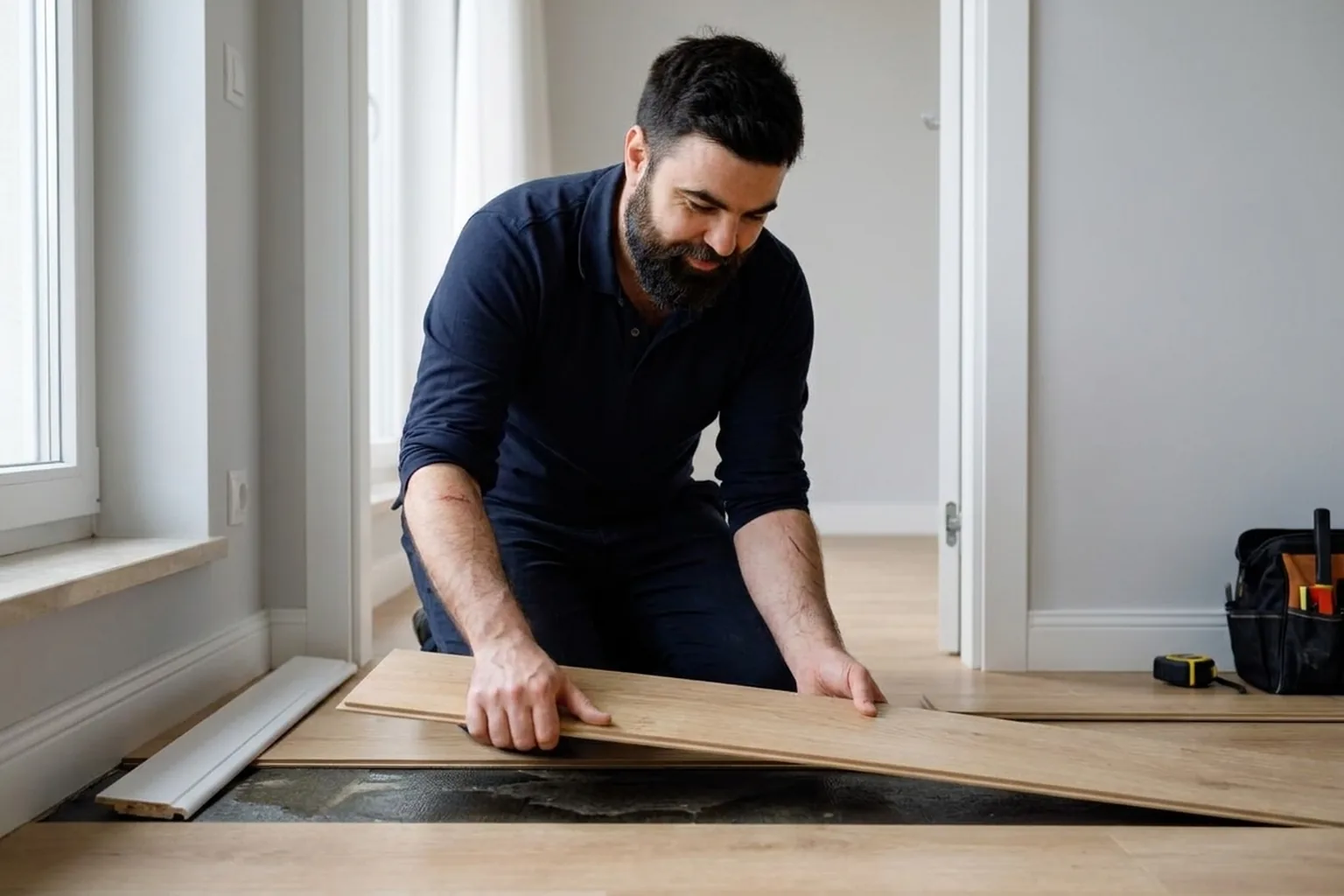
- We check how far the water reached, not just what is visible. A moisture meter goes over the panels, the skirting and the lower part of the wall, and we look under thresholds and behind cabinet plinths — water usually travels a few metres past the visible stain.
- We sort out electrical safety. The circuit in the flooded area stays off, we do not run power tools on a wet substrate, and we do not test sockets to see what happens. If water reached a back box, a socket or a ceiling fitting, an electrician assesses the wiring and decides when the circuit may be switched on again.
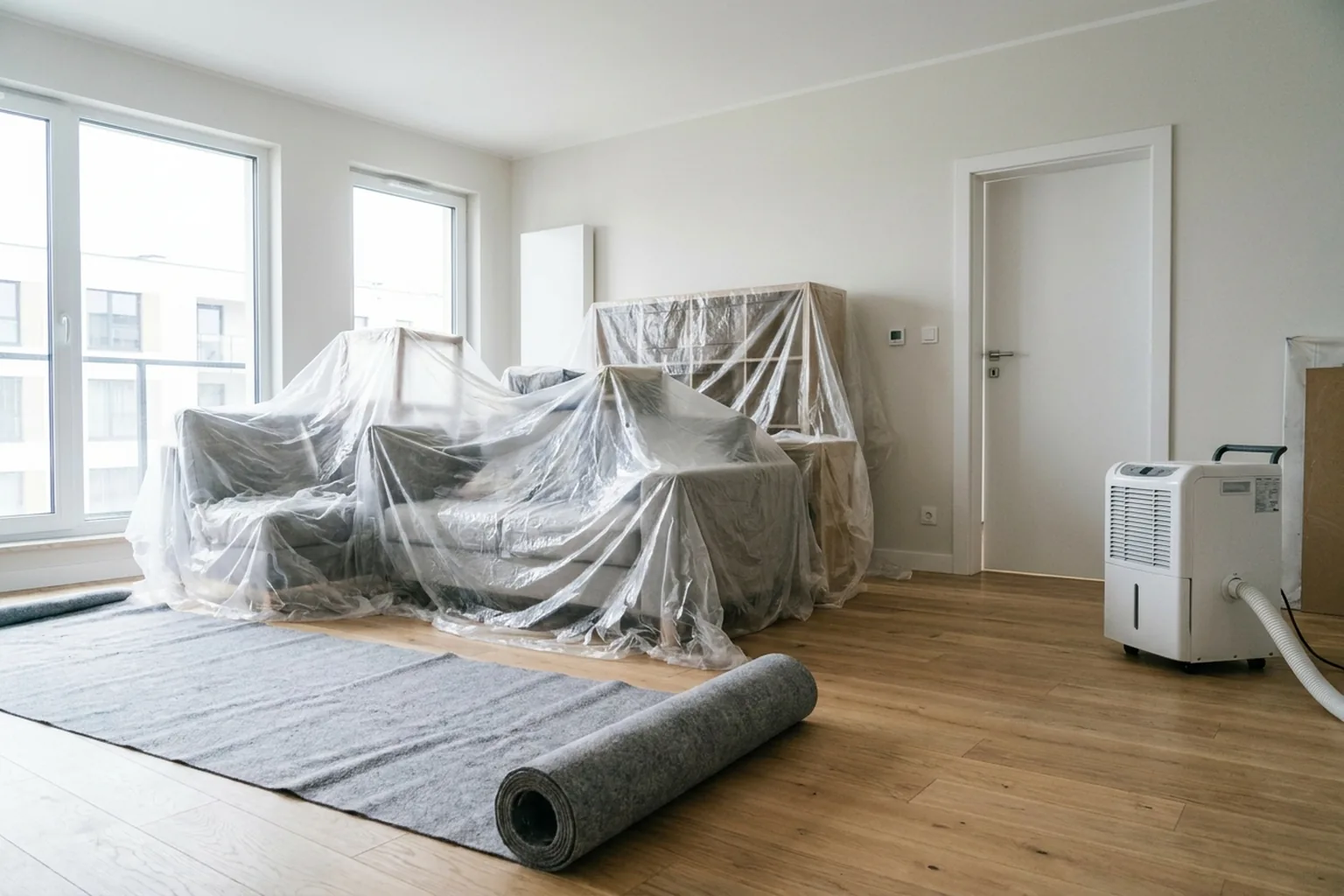
- We protect what stays in place: film over furniture, doors and appliances, skirting boards lifted and stacked in order, kitchen cabinet plinths unclipped so we can reach underneath the units.
- We open the floor in the wet area — panels and underlay come up, we inspect the screed and, if needed, widen the opening until we reach dry material. Panels worth reusing are marked and stood on edge to dry.
- We dry the structure. That means a dehumidifier and moving air, not heat turned up to maximum: a sudden rise in temperature ends with a cracked screed and warped boards. Screed dries in days rather than hours, so the date for closing the floor comes from a measurement, not from how the surface feels under your hand.
- We rebuild the floor: new underlay, panels with proper expansion gaps at walls and pipes, thresholds in the doorways and new skirting. Doors that swelled along the bottom get trimmed and their edge sealed, then we adjust the hinges and the strike plate — replacing the layers almost always changes the geometry of the opening.
- What is left at the end is localised damage to the finish: filling blown patches, levelling the bottom strip of the wall or the ceiling under the leak, priming. We clean up, walk the floor to check for creaks and level differences, and make sure every door closes.
Two things leave no room for improvisation. The first is electricity: a wet back box or a flooded light fitting is a job for an electrician, not for a hairdryer and optimism. The second is the source of the water — while it is still leaking, any repair is provisional, so the valve gets closed first, or we establish with the building management who closes it at the neighbour’s. If the flat is rented out or you are reporting the damage on a policy, take photos before anything is dismantled; once the panels are up there is nothing left to document.
Common client mistakes (and how to avoid them)
- Closing the floor over a wet screed. The surface dries first and looks ready while water stays underneath. A month later the panels swell again, this time together with the new underlay.
- Heat on maximum and a fan heater aimed at the ceiling. Fast drying warps boards and cracks screed. Slower and steadier works better: a dehumidifier plus a constant exchange of air.
- Throwing out every panel straight away. Part of the floor usually goes back down, and if the range has been discontinued that is the only way to keep the floor uniform.
- Reusing the old underlay. After a flood the underlay holds moisture and smell inside and cannot be dried back to its original state. It is the cheapest layer in the whole build-up and the wrong place to save money.
- Testing sockets in a flooded room. A damp back box looks exactly like a dry one from the outside. Until the wiring is assessed, the circuit stays off.
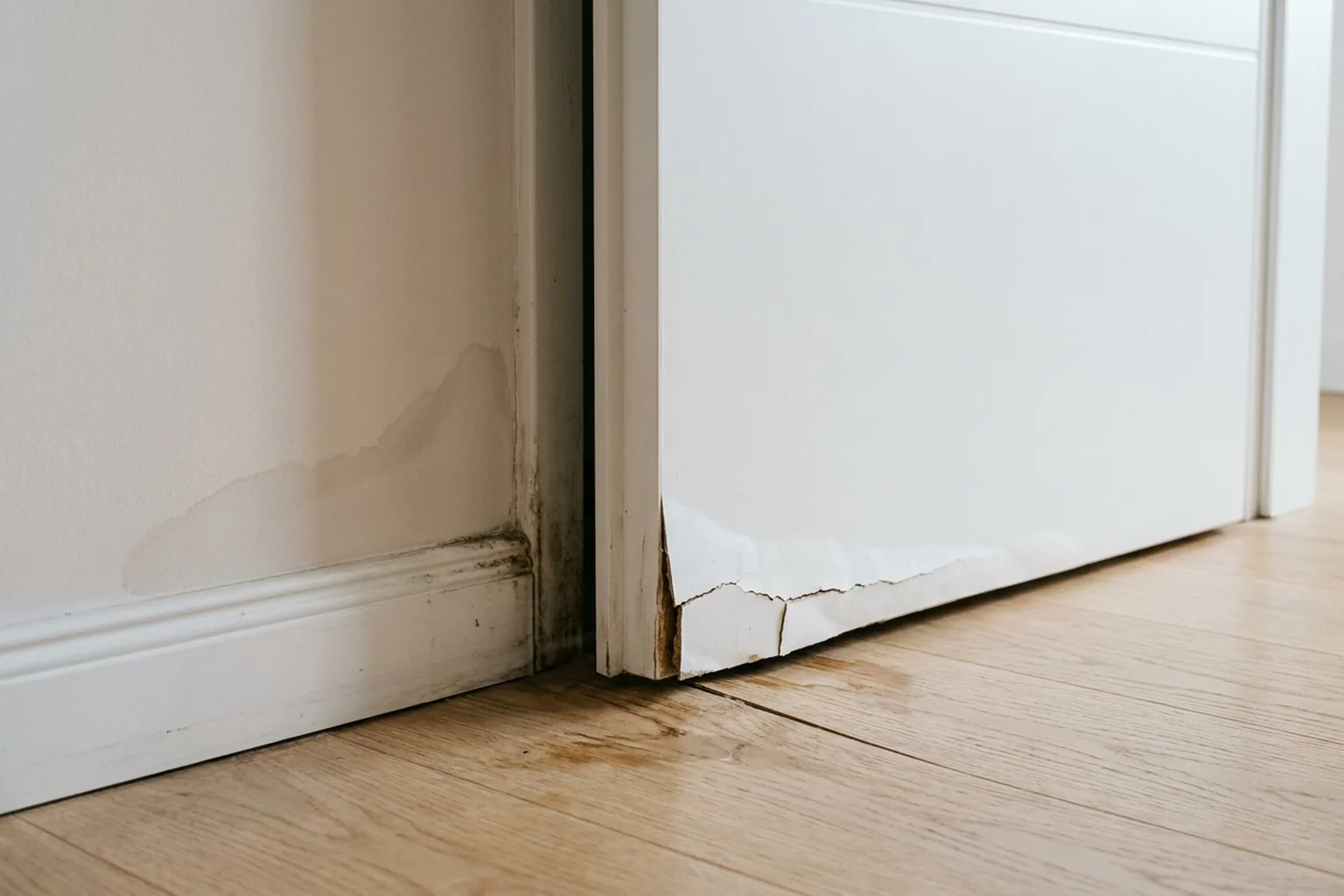
- Silicone or foam on a swollen door edge. That covers the symptom. The edge has to be trimmed and sealed, otherwise the material keeps drawing moisture further up the leaf.
- Putting it off. Mould starts behind the skirting and under cabinet plinths, where there is no airflow. A week of a closed wet floor is a completely different scope of work from reacting straight away.
- Pushing the furniture back the next day. A flooded area still needs airflow after the floor goes back down, and a wardrobe against the wall is the most effective way to cut it off.
What to prepare before the visit
- Photos: the whole room, a close-up of where the floor meets the wall, and the skirting separately.
- Where the water came from and when — and whether the source is already shut off.
- Whether the flat has been dried, and for how long.
- The floor type: click panels, glued vinyl, parquet or engineered board.
- Any leftover panels and skirting from the original installation, with the range name if you have it.
- Information about underfloor heating in the flooded room.
- What you know about pipes and cables running in the floor or along the bottom of the wall.
- Clear space: furniture moved aside, cabinets emptied in the area we will be opening.
- The circuit in the flooded area switched off if water could have reached the sockets, plus a free socket outside that area for tools.
- Whether a dehumidifier is already on site or we should bring ours.
- Any inspection by the insurer or the building management: if one is still due, we leave the floor untouched until it happens.
- Who takes the wet waste away, and whether the building has a lift — removal is a separately paid item for us.
You do not need everything on this list. Message us with what you already know — photos and the date of the flood are usually enough to work out the scope and a visit date.
A case from our practice in Warsaw
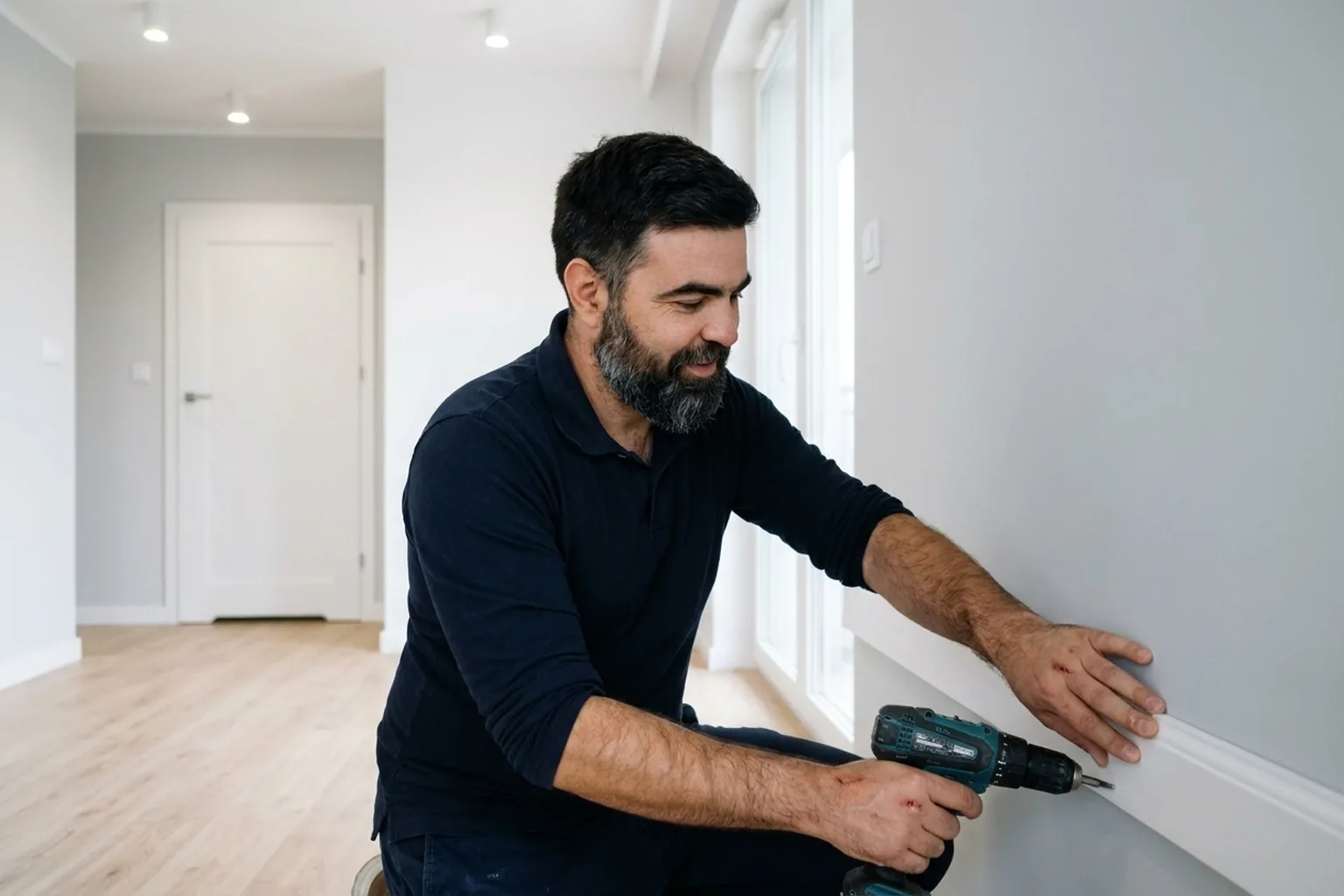
An apartment in Ursynów, where the supply hose to the washing machine split. Water ran under the threshold into the hallway and reached the first metre of the living room, and the owner only noticed it when he got home from work. He mopped up the puddle and left a fan running for two days; the panels looked dry and the plan was to swap a few boards near the bathroom door. The moisture meter said otherwise: readings by the wall and under the threshold were high, and once two panels came up the underlay could be wrung out by hand. We opened the floor across the whole hallway and along the join with the living room, took out the underlay and left a dehumidifier running for four days with a reading taken once a day. Panels stood on edge dried without warping and went back down; nine boards near the threshold had to be replaced, and here the leftovers from the original installation, sitting in the basement, saved the day. The MDF skirting had swollen along the bottom and darkened, so new lengths went in, and we reworked the threshold in the doorway to the living room while we were at it. The bathroom door leaf had swollen a few millimetres at the bottom and was catching on the floor: we trimmed the lower edge, sealed it and adjusted the hinges. The blown strip of wall behind the skirting was sanded back and filled, and the owner ordered painting two weeks later, once the wall was completely dry. The whole job spread over three visits across two weeks, and what stretched it out was mostly the drying. The conclusion is simple: those four days with a dehumidifier were the cheapest part of the repair, because without them the new floor would have swollen within a month.
Frequently asked questions
Does the whole floor have to be replaced after a flood?
Rarely. What needs replacing is the area the water reached, and the scope depends mainly on the state of the underlay and the screed. Click panels often go back down after drying, provided the locks and edges have not swollen. Glued vinyl and parquet are less forgiving, and there the scope is usually larger.
How long does drying take before the floor can be closed?
It depends on how much water went into the screed and how well the flat ventilates. After a small flood it is a matter of days; where water sat under the floor for weeks it can take several weeks. A measurement decides, not the calendar, which is why we come back to check the readings instead of promising a date up front.
Can click panels be laid a second time?
Sometimes. The conditions are intact locks and edges, plus drying on edge in moving air and without added heat. Boards with a swollen core are out — only the ones that hold their dimensions go back down.
Does the underlay always have to be replaced?
In practice, yes. Underlay traps moisture and smell inside, and it is the cheapest layer in the whole build-up. Leaving the old one in is the main reason a floor swells a second time after the repair.
The doors will not close after the flood — can that be fixed?
Usually yes. We trim the swollen bottom edge and seal it, then adjust the hinges and the lock strike plate. If the core of the leaf has come apart over its full height and the veneer is lifting, replacing the leaf makes more sense.
Can you paint the walls straight away?
Not straight away, and it is not a matter of willingness. Paint applied to a damp wall peels off in sheets, and the stain bleeds through the coating. Painting after a flood is a separate stage ordered once things are dry; we described it in a separate article on the blog.
Is it safe to use the sockets in a flooded room?
Not until the wiring has been assessed. A damp back box looks no different from a dry one, and water travels along the cable a few metres further. The circuit in the flooded area stays off and an electrician checks the installation.
How do you know there is no moisture left under the floor?
From meter readings taken at several points and from a simple test: a piece of film taped to the screed for a few hours must not fog up on the underside. The surface can be dry while the middle is still wet, so we measure instead of judging by touch.
Do you bring your own dehumidifier?
Yes, if there is none on site — we agree on that before the visit, because the work plan depends on it. Sometimes the building management or the insurer provides one; in that case we coordinate the dates and simply keep an eye on the readings.
A neighbour flooded my flat — will you help with the paperwork?
We photograph the extent of the damage before anything is dismantled and put together a list of the work carried out, which is usually enough for a conversation with the building management. We do not prepare valuations or reports for insurers, as that is a loss adjuster’s job. If an inspection is still due, tell us — we will leave the floor alone until then.
Who does the work and where we stand
The work is done by a handyman with practical experience in finishing and floor laying, not by a full-renovation crew — after a flood what matters is the order of operations and the measurements, not the number of people in the flat. We travel across Warsaw and the nearest suburbs with tools, a moisture meter and, when agreed in advance, a dehumidifier. Materials, removal of wet waste and carrying materials up to the flat are charged separately, and we say so before we start.
We set out the limits of responsibility plainly. We answer for the quality of what we do ourselves: how the panels sit and their expansion gaps, the fit of skirting and thresholds, trimming and adjusting doors, and tidy execution. We do not take on the behaviour of a substrate we could not see before the floor was opened, or the consequences of someone else’s installation work: if the screed is wet deeper than can realistically be dried in a sensible time, or there is mould behind the plaster, we say so on site and propose a scope that makes sense. We do not handle electrical work after a flood or insurance matters — the first needs an electrician, the second a loss adjuster. Send us a request through the form and attach photos showing how far the water reached; from those we can usually tell right away what has to be opened up and what can stay in place.