How much does replacement cost
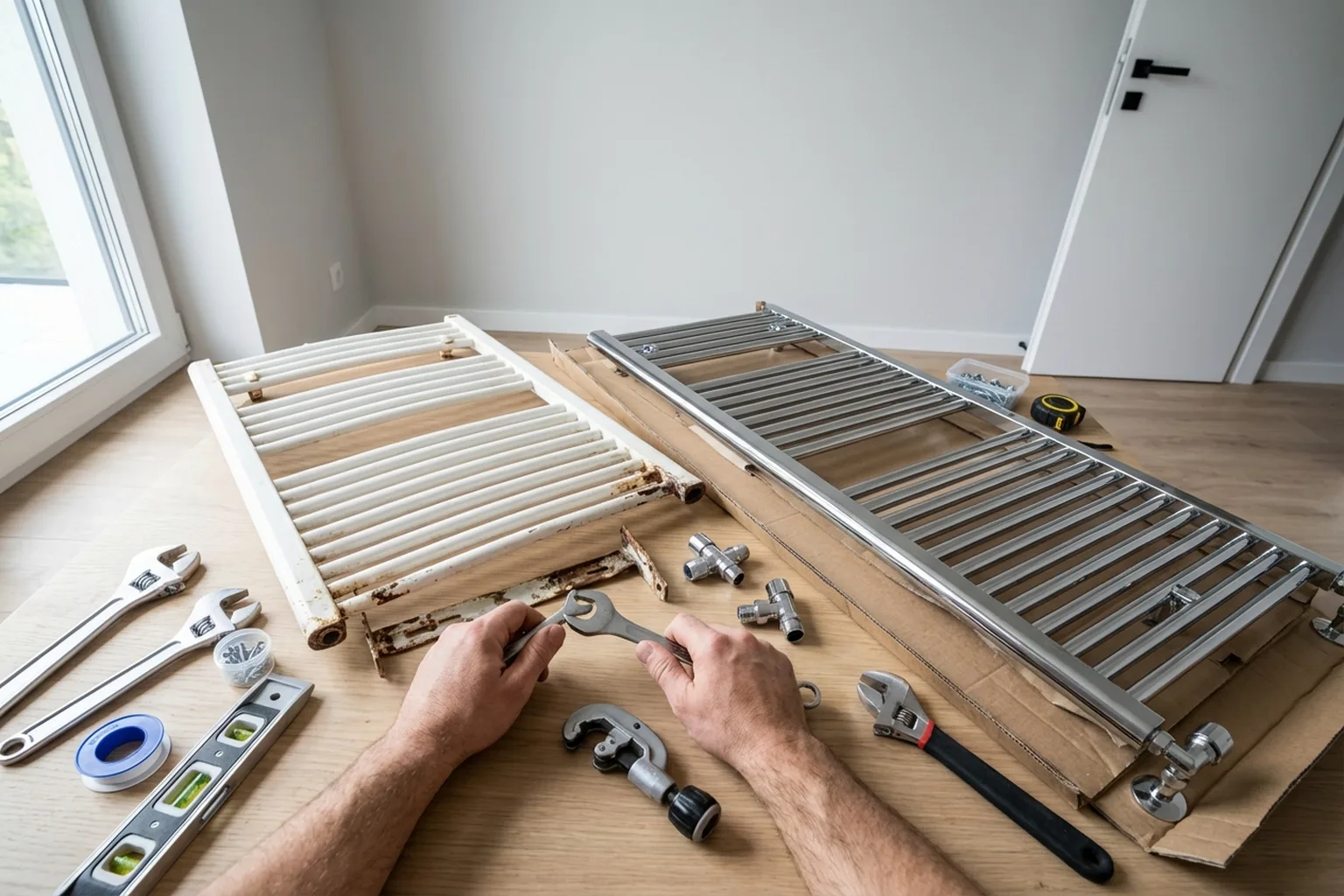
The price depends on the kind of old and new radiator, the state of the pipes and threaded joints, whether the pipework has to be altered, and how hard the old unit is to take off. If the old radiator is welded to the pipes or the pipes are hidden in the wall, the work takes more time. If the new unit has a different centre-to-centre distance than the old one, adaptors or pipe changes will be needed. Current prices for all bathroom work are in the table below. Removal and brackets are included in the replacement price; the new radiator and fittings are provided by the client.
| Service | Price |
|---|---|
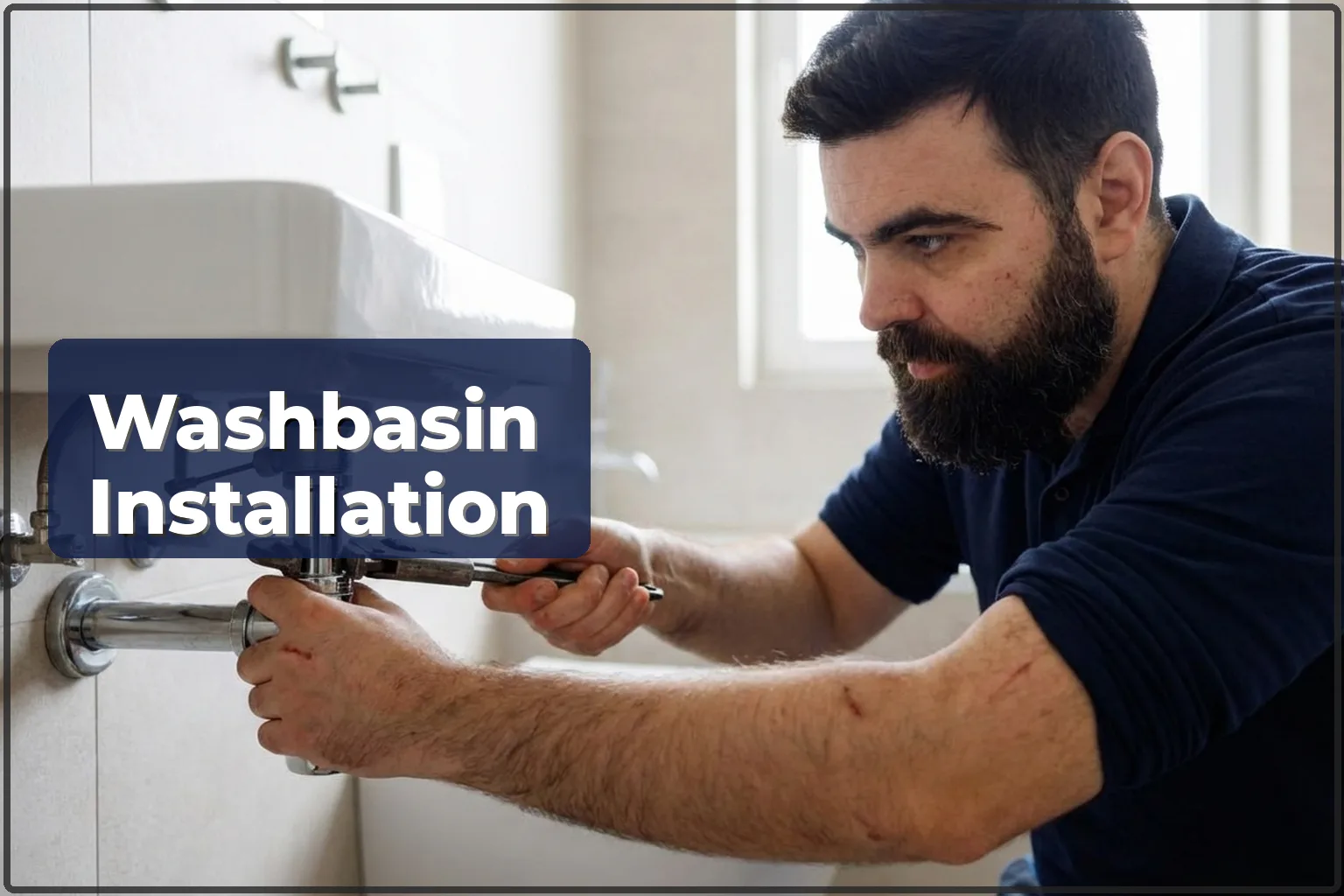
| Washbasin installation | 200–500 zł |
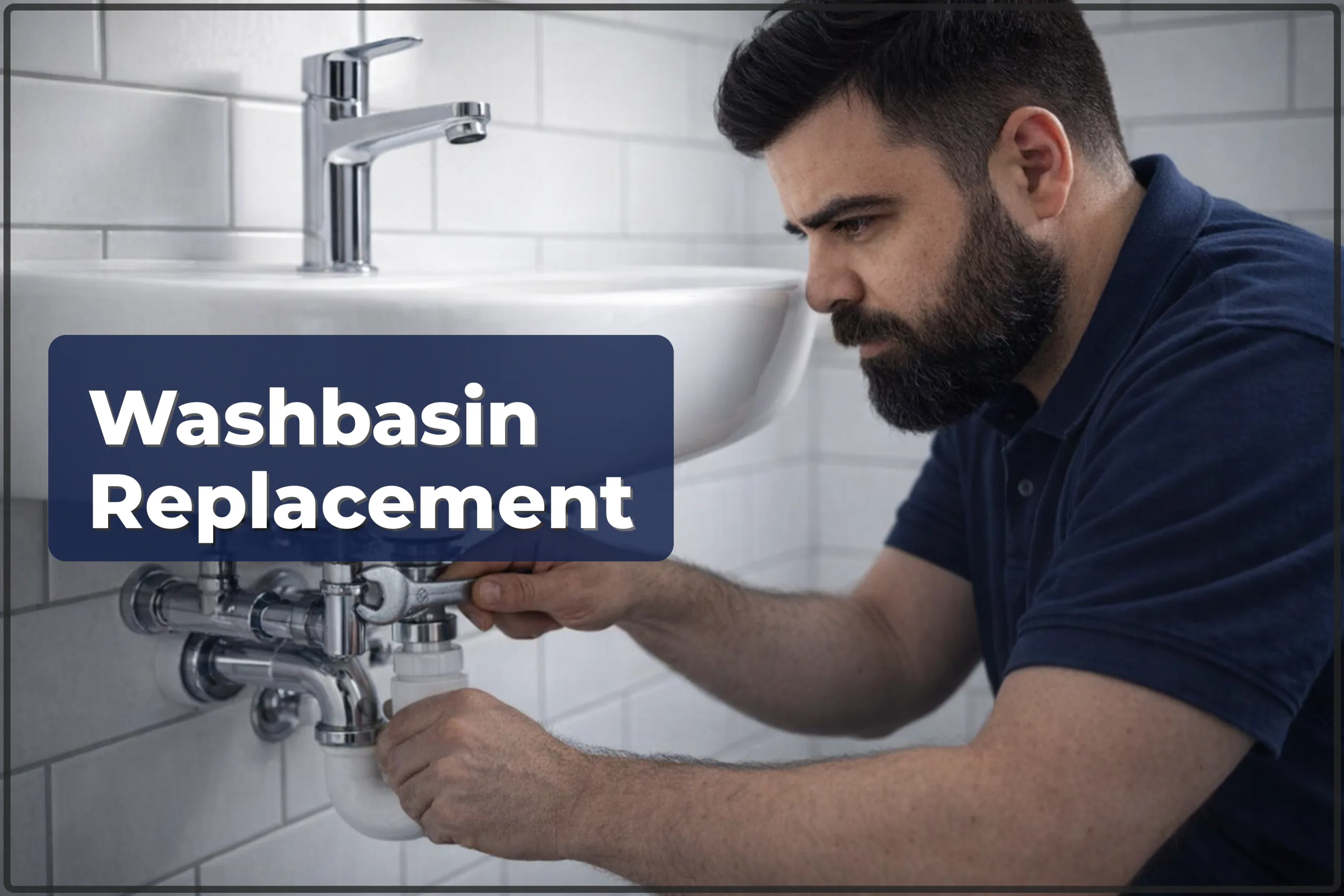
| Washbasin replacement | 250–600 zł |
| Vanity unit installation | 300–600 zł |
| Basin tap installation | 150–250 zł |
| Basin tap replacement | 250–400 zł |
| Floor toilet installation | 300–500 zł |
| Floor toilet replacement | 350–600 zł |
| Wall-hung toilet installation (frame) | 450–700 zł |
| WC frame replacement | 600–1500 zł |
| Bathtub installation | 400–900 zł |
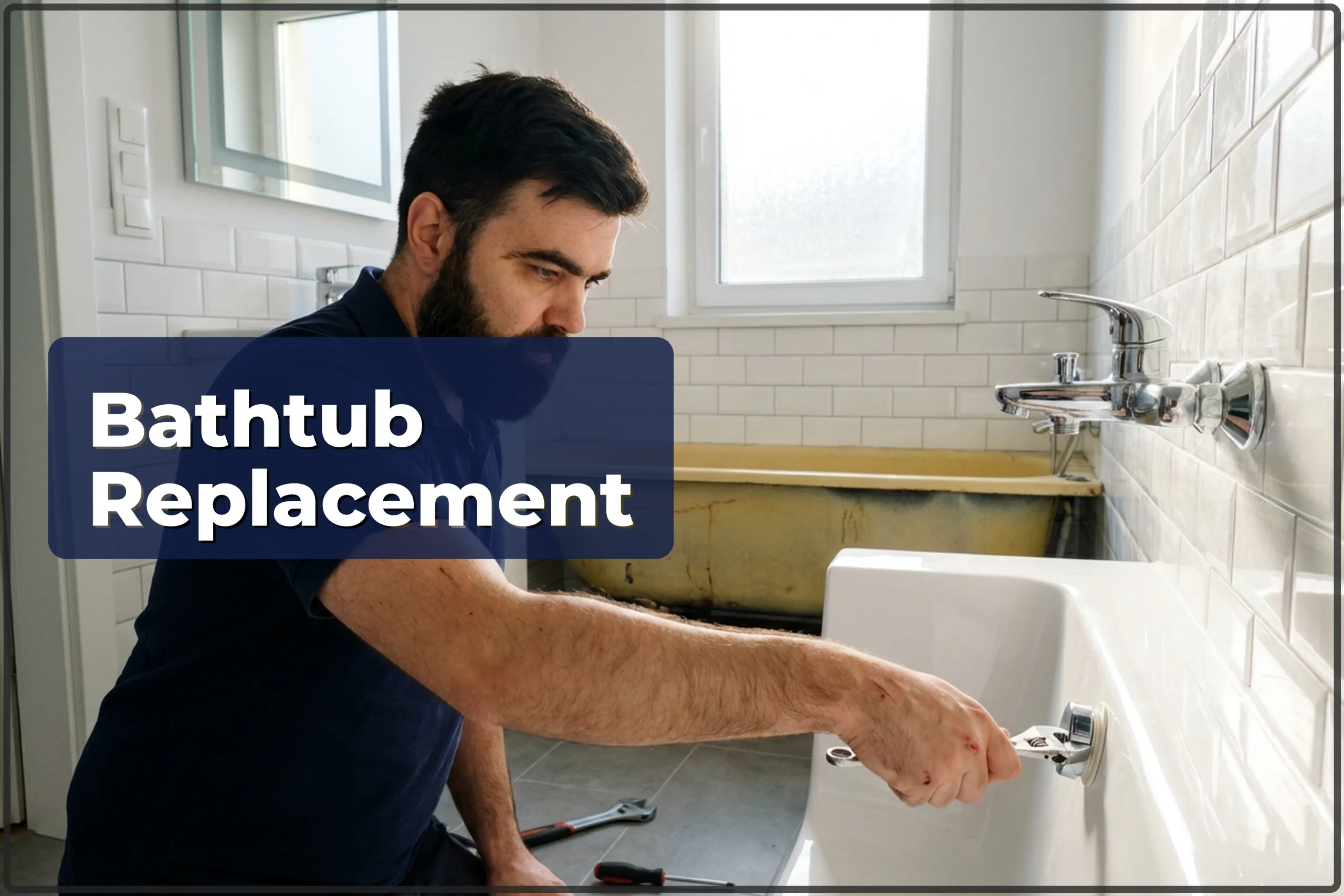
| Bathtub replacement | 500–1000 zł |
| Shower cabin installation | 350–1200 zł |
| Shower tray installation | 500–800 zł |
| Shower tray replacement | 600–1000 zł |
| Linear drain installation | 400–900 zł |
| Re-sealing shower and bathtub | 250–600 zł |
| Towel radiator installation | 300–600 zł |
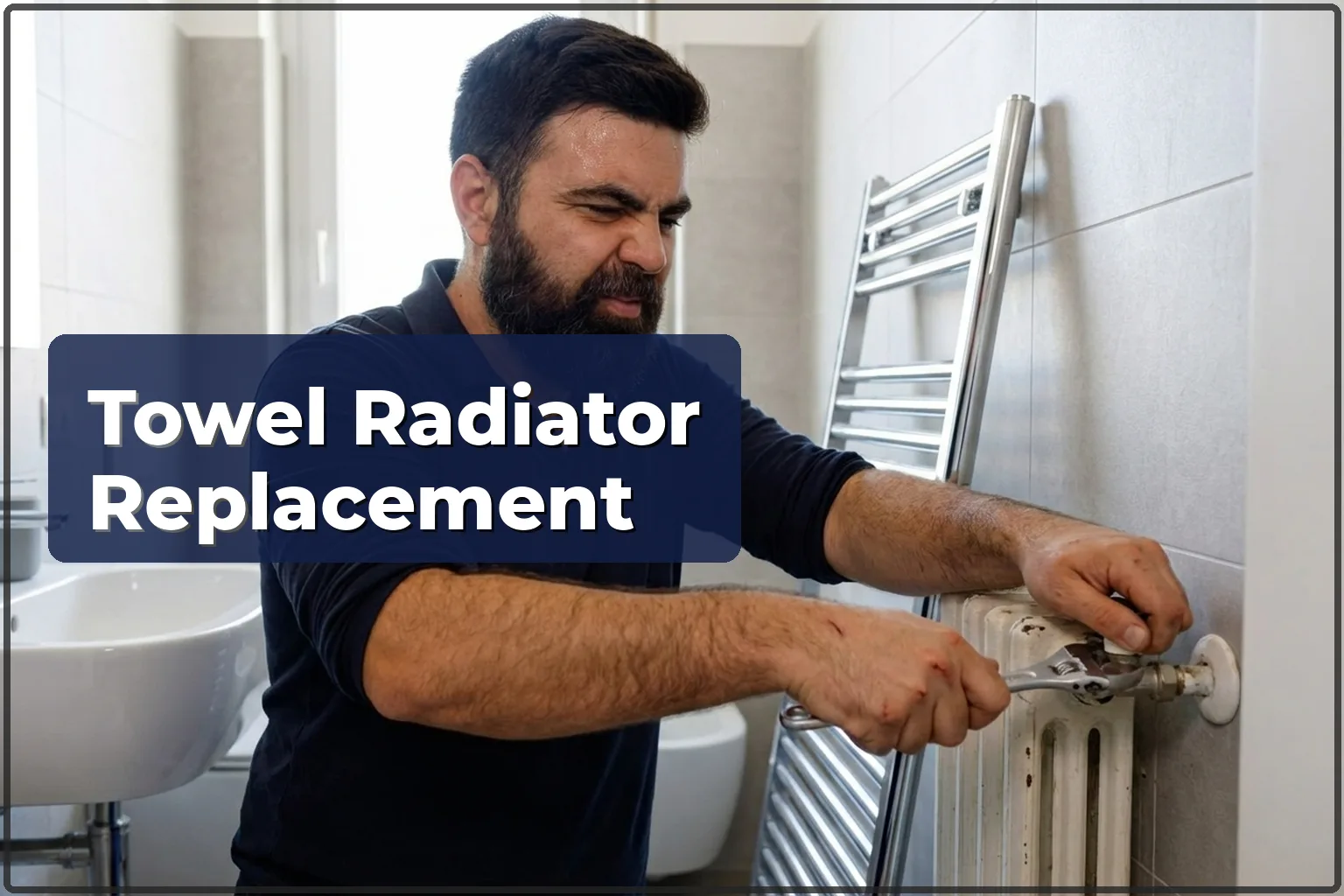
| Towel radiator replacement | 350–700 zł |
| Drain cleaning | 200–800 zł |
| Trap (siphon) replacement | 120–400 zł |
Indicative prices. Ranges for a typical scope. Fixings included, materials separate. Minimum order 300 zł.
Rather hand the job over? More here: plumber in Warsaw.
Why replacing a towel radiator takes longer than installing one
A new radiator on new pipes is a few hours’ work. An old one on old pipes can take longer.
- Seized valves. Unions and valves stop turning after years, and old valves often start leaking once disturbed.
- Shutting the riser. In a block with central heating this is arranged with the building administration, which is harder in the heating season.
- Different centres. A new radiator rarely matches the old pipes exactly, so adaptors are needed.
- Marks on the wall. Removal leaves holes from the old brackets and an unpainted patch.
- Disposal of the old radiator is charged separately.
If the pipes are new and there is no old radiator, towel radiator installation is enough.
How the replacement works
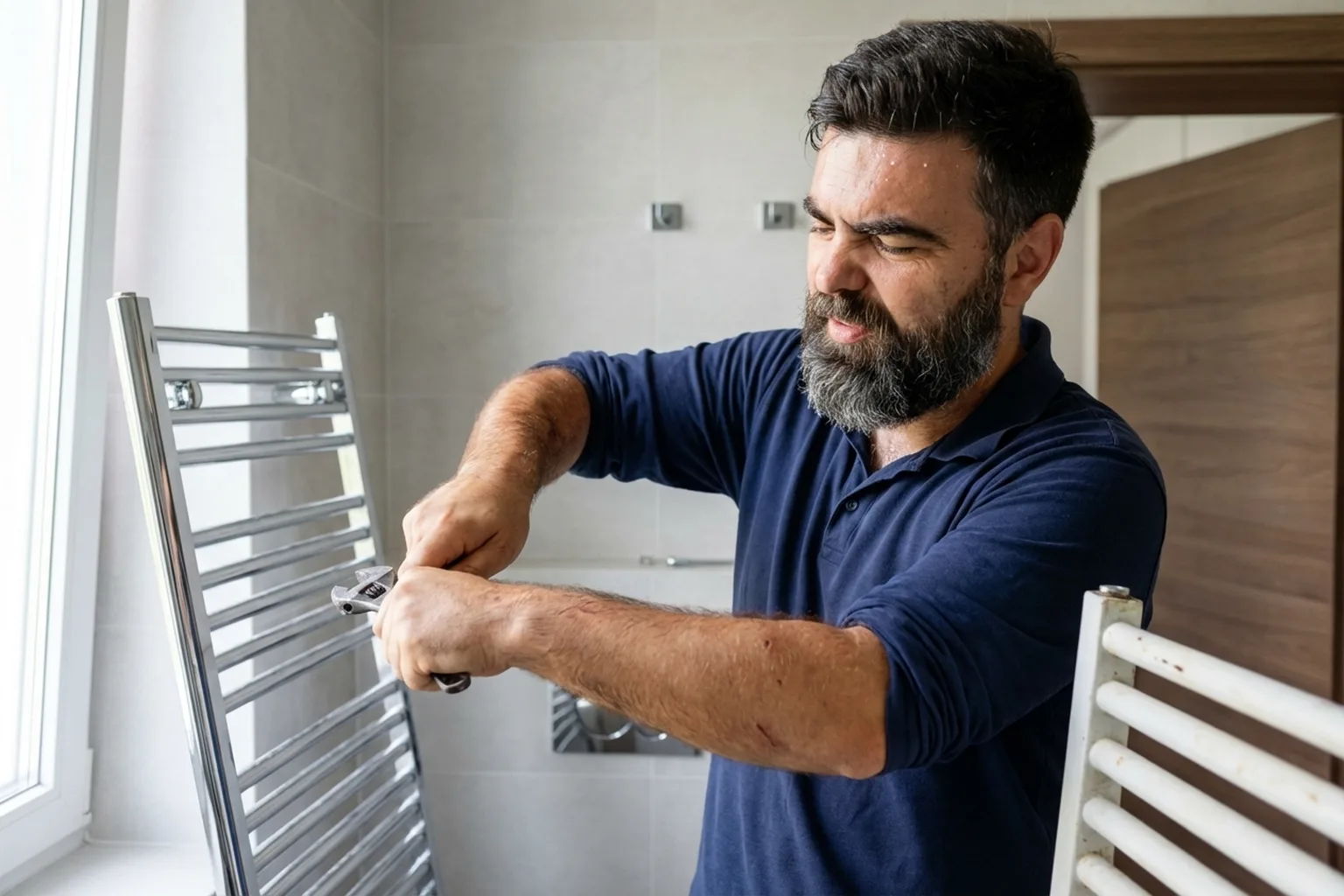
- Inspection: they check the old unit’s connection type (threaded or welded), the pipe condition, and the new radiator’s centre-to-centre distance.
- Shutting off the water: they close the isolation valves. If there are none, they shut off the riser (arranged with building management).
- Draining: they drain the radiator and feed pipes.
- Removing the old unit: they undo the connections and lift it off the brackets. If it is welded, they cut it free with an angle grinder.
- Pipe check: they inspect the threads and pipes for corrosion. If the threads are damaged, they cut new ones or install press fittings.
- Fitting the new radiator: they install brackets (re-drilling if needed), hang the unit, connect the pipe tails, and tighten each joint with proper sealing.
- Testing: they turn the water back on, bleed the air through the bleed valve, and check every connection for leaks.
Common mistakes during replacement
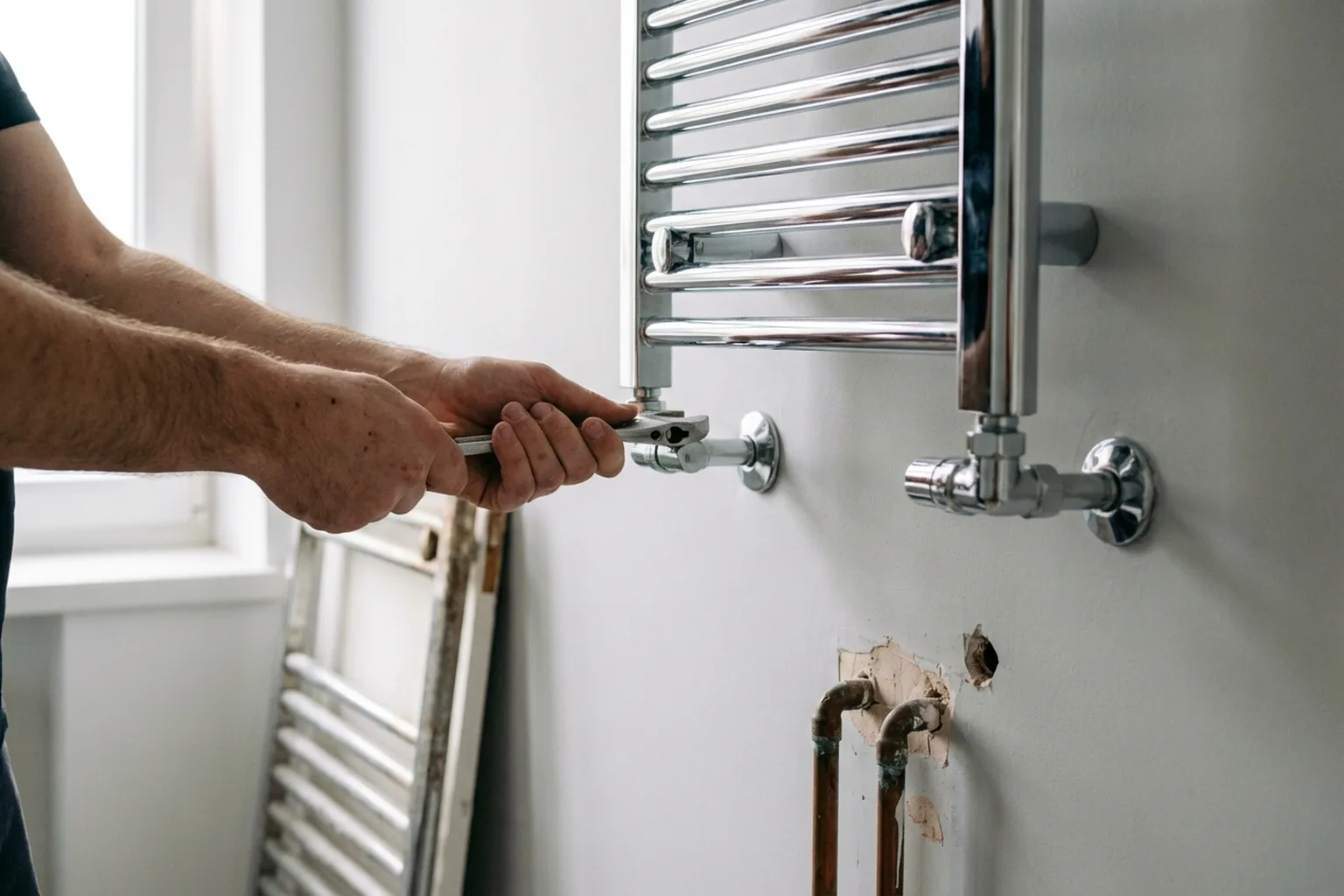
- Failing to check the centre-to-centre distance before buying, the new unit does not line up with the existing pipe outlets.
- Using the old valves and fittings again — they are already worn and begin to drip after a few weeks.
- Not shutting the riser off completely: water pours out once the connections are undone.
- Using sealant paste instead of PTFE tape or hemp on threaded joints: the seal gives up over time.
- No bleed valve on the new radiator — an air lock stops circulation.
- Mounting on old brackets that do not fit: the unit hangs crooked, putting strain on the joints.
- Cutting off the old radiator and leaving pipe stubs too short for re-threading.
Important: replacing a hydronic towel radiator means working on a pressurised heating or hot-water system. One badly sealed joint will leak as soon as the water is turned back on. If you do not have plumbing experience, call a professional.
What to prepare before the visit
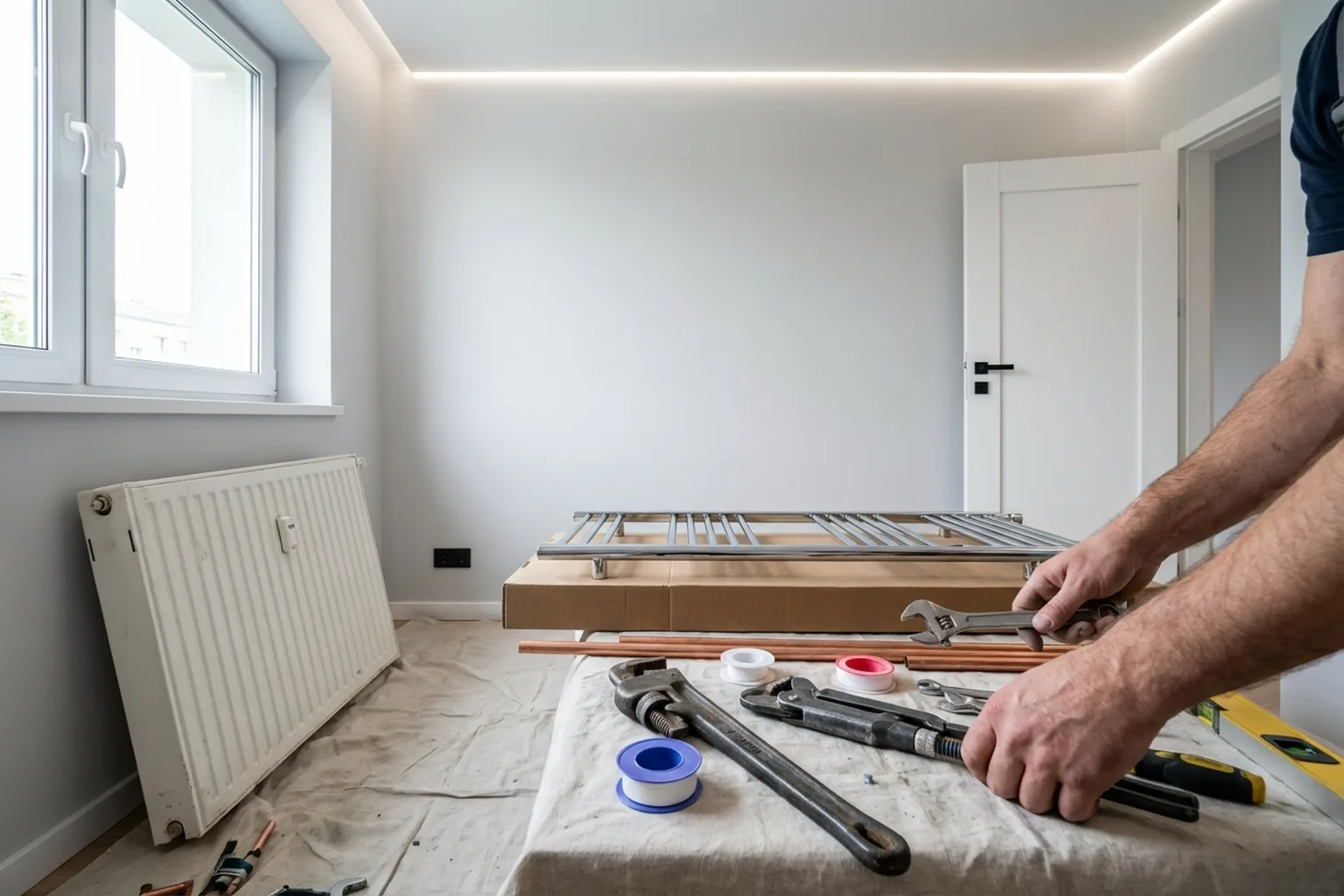
- Buy the new radiator: measure the old unit’s centre-to-centre distance (between pipe-tail centres).
- Confirm the connection type: side, bottom or diagonal — the new one must connect the same way or adaptors will be required.
- Buy isolation valves, a bleed valve and union connectors, the technician will advise you if you are not sure.
- Arrange riser shutdown with building management if there are no isolation valves.
- Prepare a basin and cloths: some residual water will spill when the old unit is disconnected.
- Clear the space around the radiator — you need access to the pipes and brackets.
- If the wall is tiled and the new brackets do not line up with the old holes, new drilling will be needed.
- Check the pipe material (steel, copper, polypropylene), this affects how the radiator is connected.
Towel radiator replacement in practice: a Warsaw case
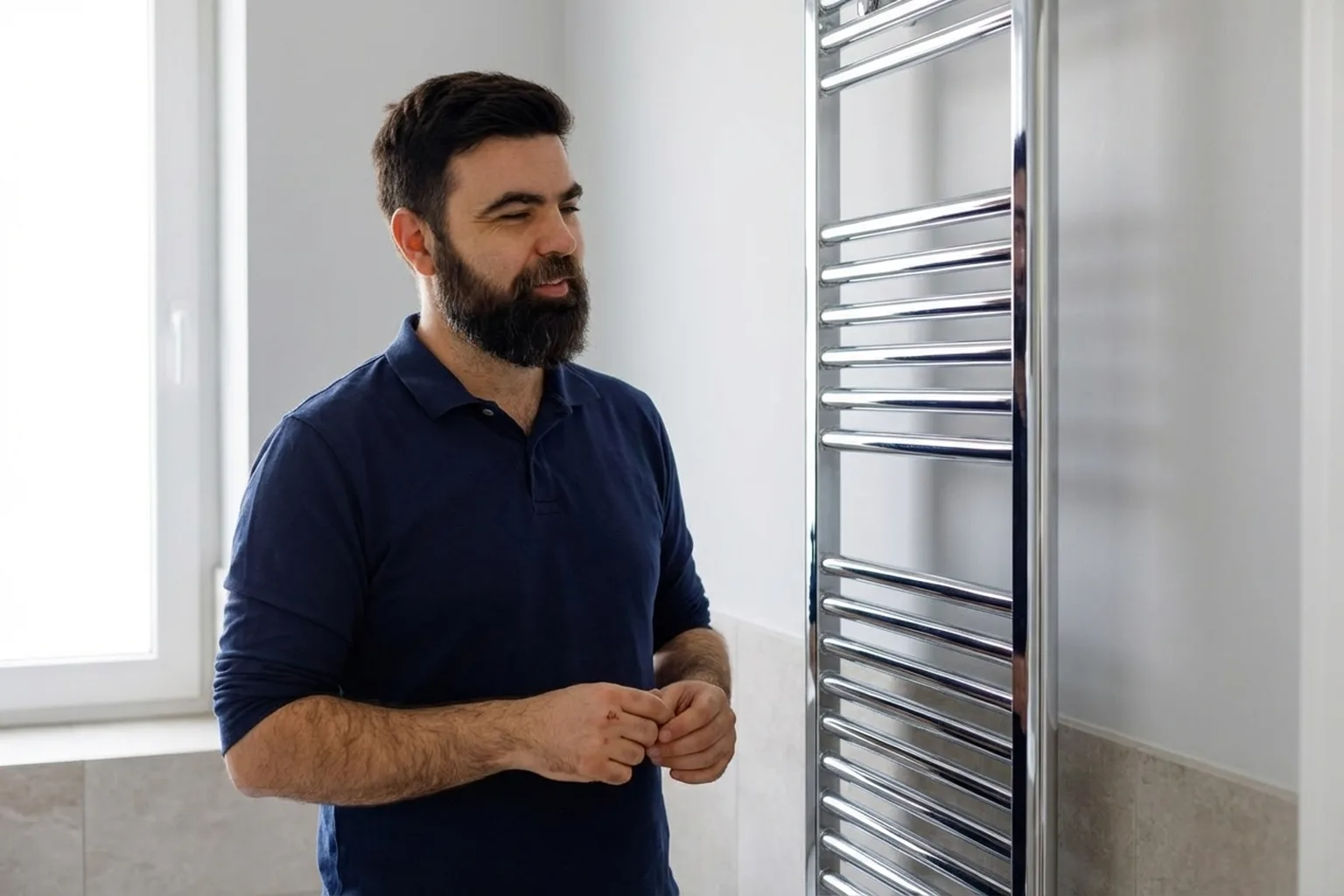
Tradespeople were called to a flat on Praga Poludnie. The bathroom had an old steel coil radiator — rusted, one joint dripping, green marks on the pipes. The owners had bought a new chrome ladder-style radiator, but the centre-to-centre distance was 5 cm off. Tradespeople shut down the riser and drained the system. The old coil was welded in place, so they cut it off with an angle grinder. Tradespeople cut new threads on the pipe stubs and fitted eccentric connectors to make up the 5 cm difference. Isolation valves and unions were installed, and the new radiator was hung and connected. Water on, air bled: the unit warmed up within a minute and every joint stayed dry. The work took about 3 hours, including arranging the riser shutdown.
Frequently asked questions
Can I install a radiator with a different centre-to-centre distance?
Yes, with eccentric connectors or by modifying the feed pipes. It takes more time but is technically simple enough.
Does the riser need to be shut off?
If there are isolation valves on the feed pipes, closing them is enough. If not, the riser has to be shut down, usually through building management.
Should valves and fittings be replaced at the same time?
Yes. Old fittings are often the same age as the radiator. Saving on them is the quickest way to end up with a leak a few months later.
What about the old screw holes in the tiles?
If the new brackets match the old holes, great. If not, the old holes are filled and new ones are drilled.
How long does replacement take?
A like-for-like swap with matching centres — 2–3 hours. If pipe changes or weld cutting are needed, 3–5 hours.
Can I switch from hydronic to electric?
Yes. The old pipe connections are capped and the water supply is closed off. The electric unit is mounted on the wall and plugged into a socket. It is easier and faster if you do not need water-based heating.
Book the replacement
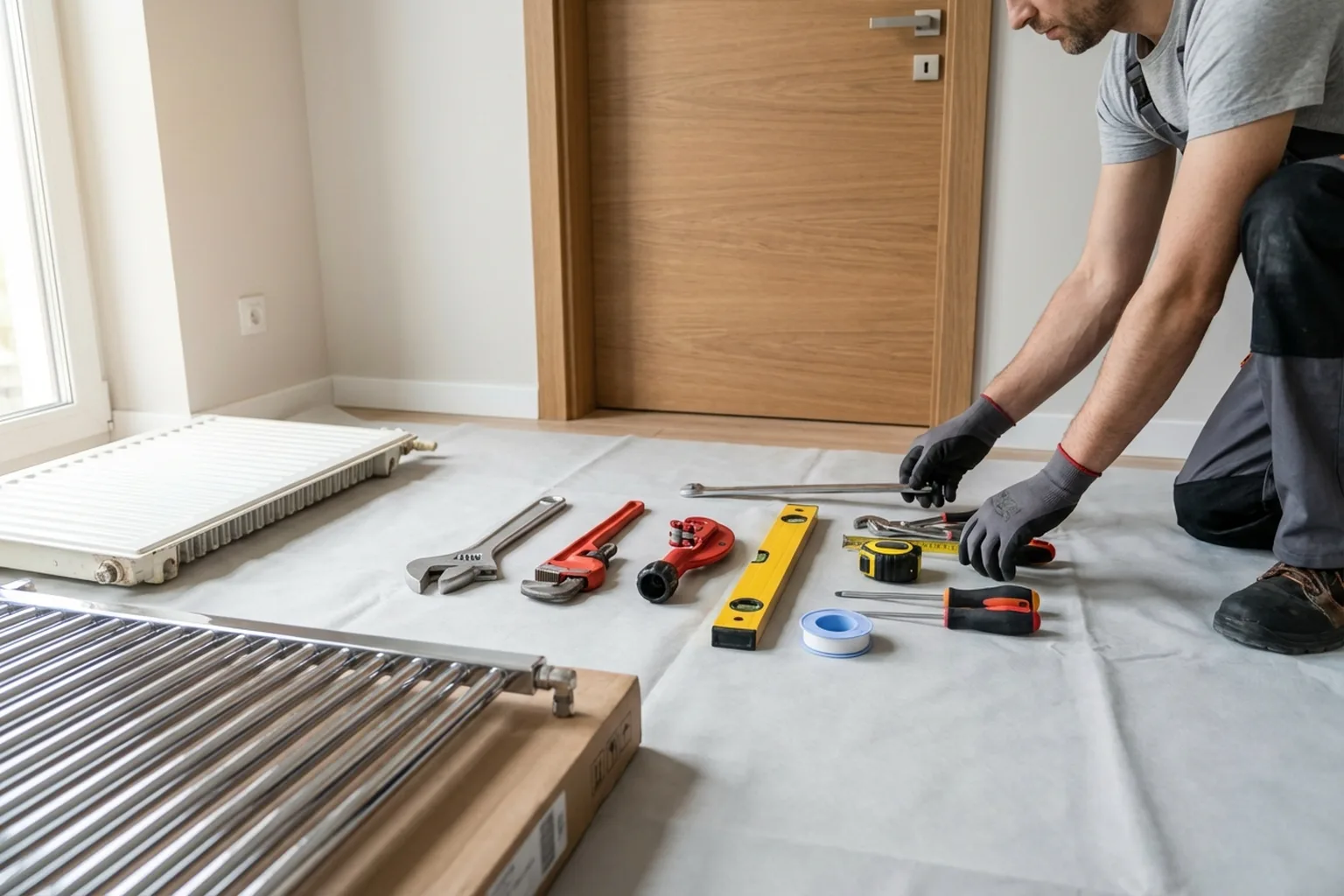
Tradespeople replace towel radiators across Warsaw, they take out the old unit, prepare the pipes, and install the new one with a full leak check. Tradespeople work with hydronic, electric and dual-fuel models. Brackets included.
Order in the app
Describe the job, add photos and the address. Tradespeople send their own prices and dates, and you pick one of the offers.
Open the app