
579 328 023

Wall Cabinet Installation in Warsaw

Wall Cabinet Installation in Warsaw

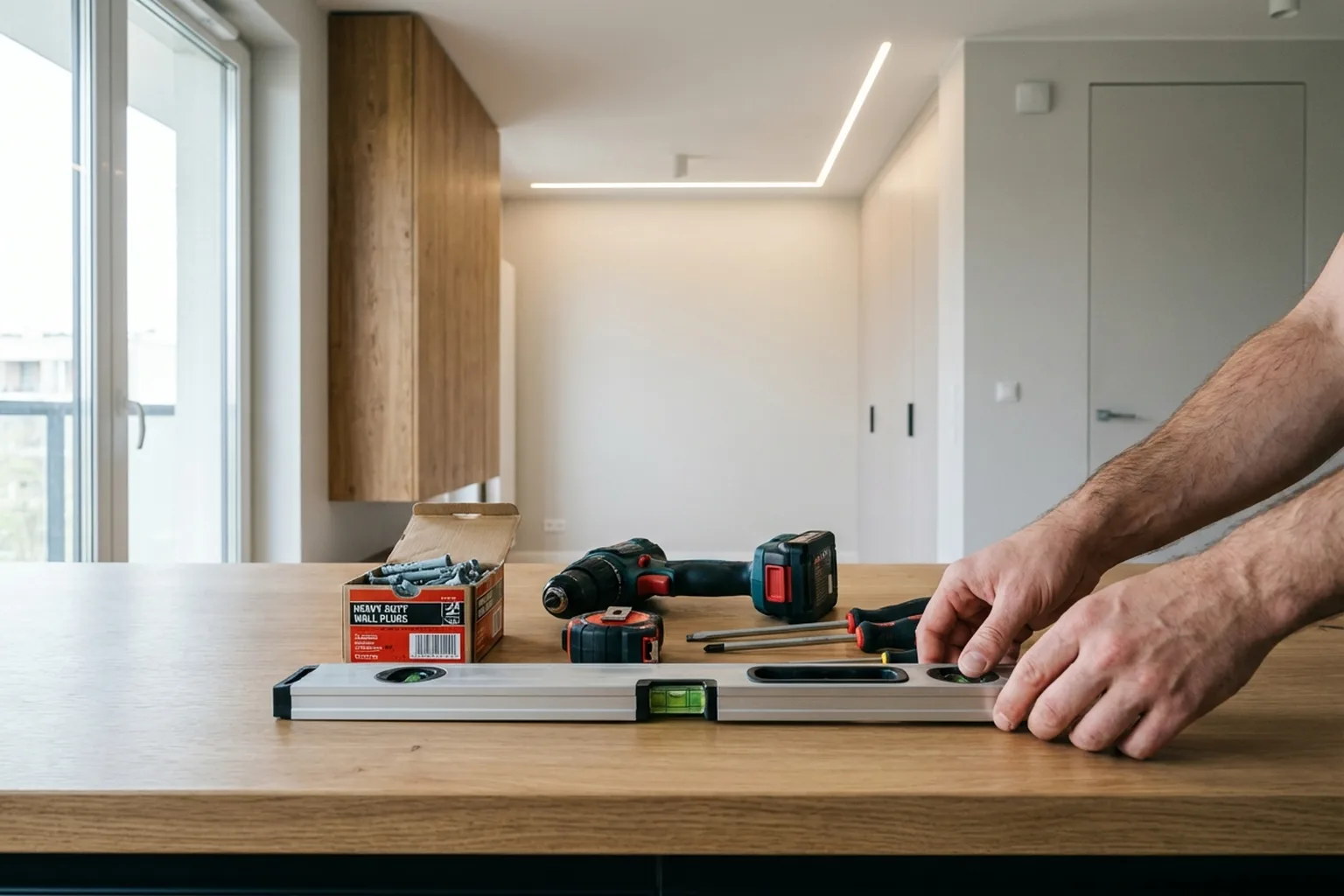
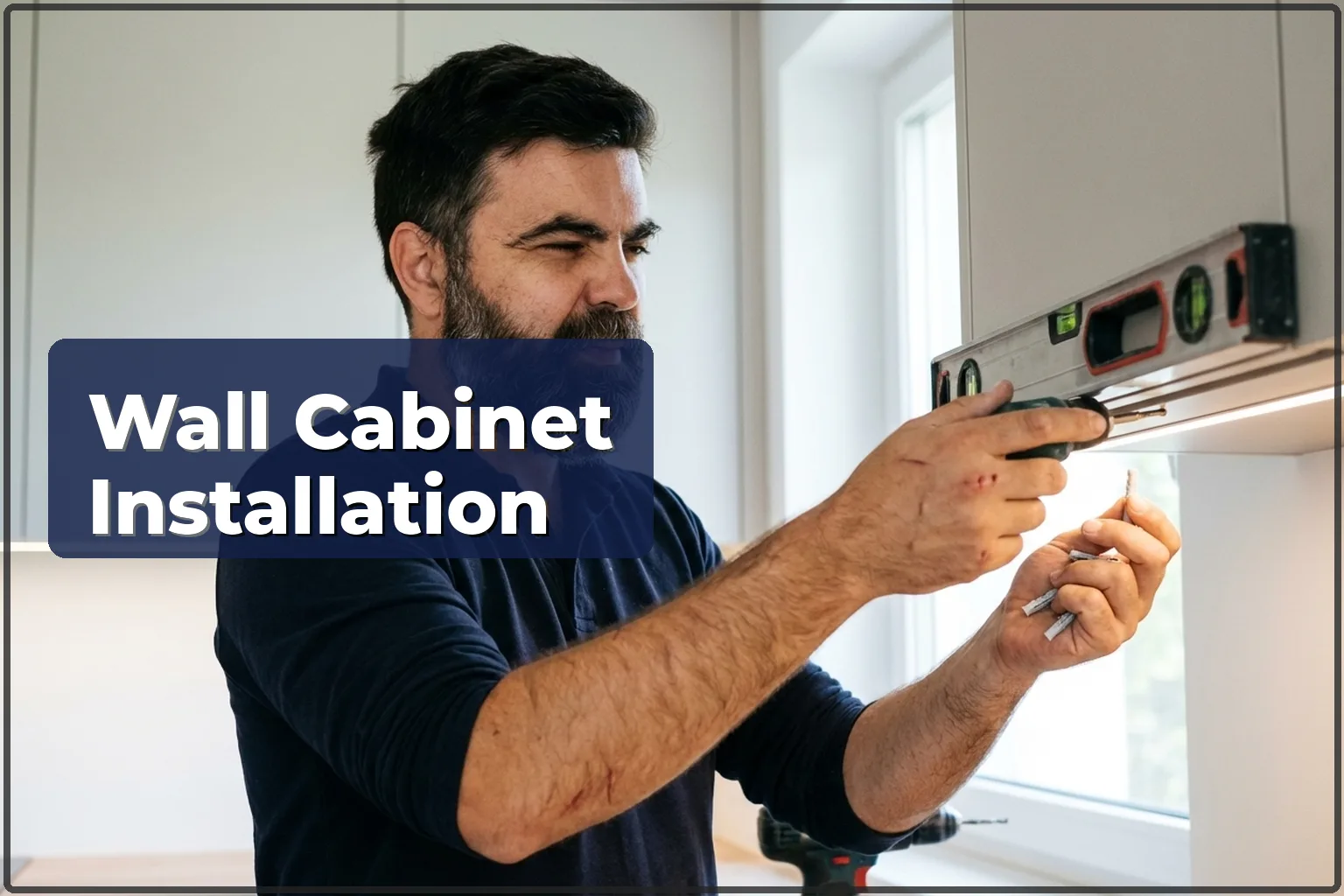
A wall cabinet is not just a shelf on two screws. Assembled, it weighs 15 to 40 kg, and loaded with dishes — easily 60. If the wall is plasterboard and the fixings are wrong, within a couple of months the cabinet and everything in it ends up on the floor. We hang kitchen cabinets across all of Warsaw: from Żoliborz to Ursynów. We arrive with a hammer drill, a laser level, and the right fixings for your specific wall type.

Current kitchen service prices
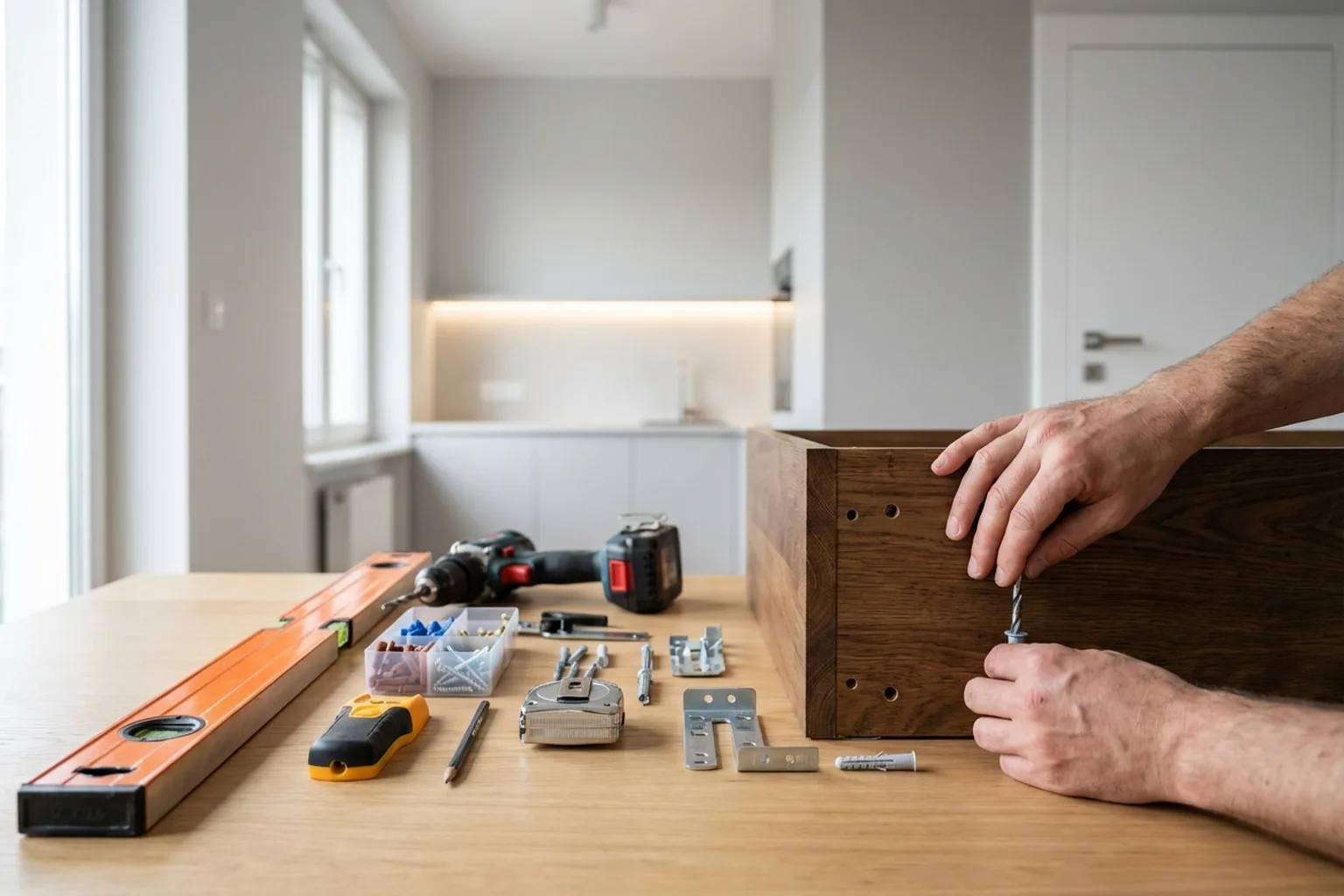
The cost of wall cabinet installation depends on the wall type, number of cabinets, and complexity of utilities behind them. Current prices for all kitchen services are in the table below. Fixings are included in the labour cost. The cabinets themselves and additional materials are charged separately.

Serviceminmax
Kitchen furniture installation (complete set) 20% od ceny25% od ceny
Kitchen base cabinet installation 250 zł400 zł
Wall cabinet installation 250 zł400 zł
Kitchen cabinet door adjustment 80 zł150 zł
Hinge replacement 60 zł/szt120 zł/szt
Kitchen countertop installation 200 zł/mb350 zł/mb
Laminate countertop installation 150 zł/mb250 zł/mb
Composite countertop installation 250 zł/mb400 zł/mb
Countertop joining 190 zł/szt300 zł/szt
Countertop cutout (sink / hob) 120 zł/szt200 zł/szt

How wall cabinet installation works

  1. You send a photo of the kitchen and a description — how many cabinets, what wall type, whether there are ventilation ducts or pipes behind the cabinets.
  2. The technician confirms the wall type (brick, concrete, plasterboard, hollow block) and gives an approximate price.
  3. On site, we measure the height: the standard is the bottom edge of the wall cabinet at 140–160 cm from the floor, but it depends on the residents’ height and the height of the base units.
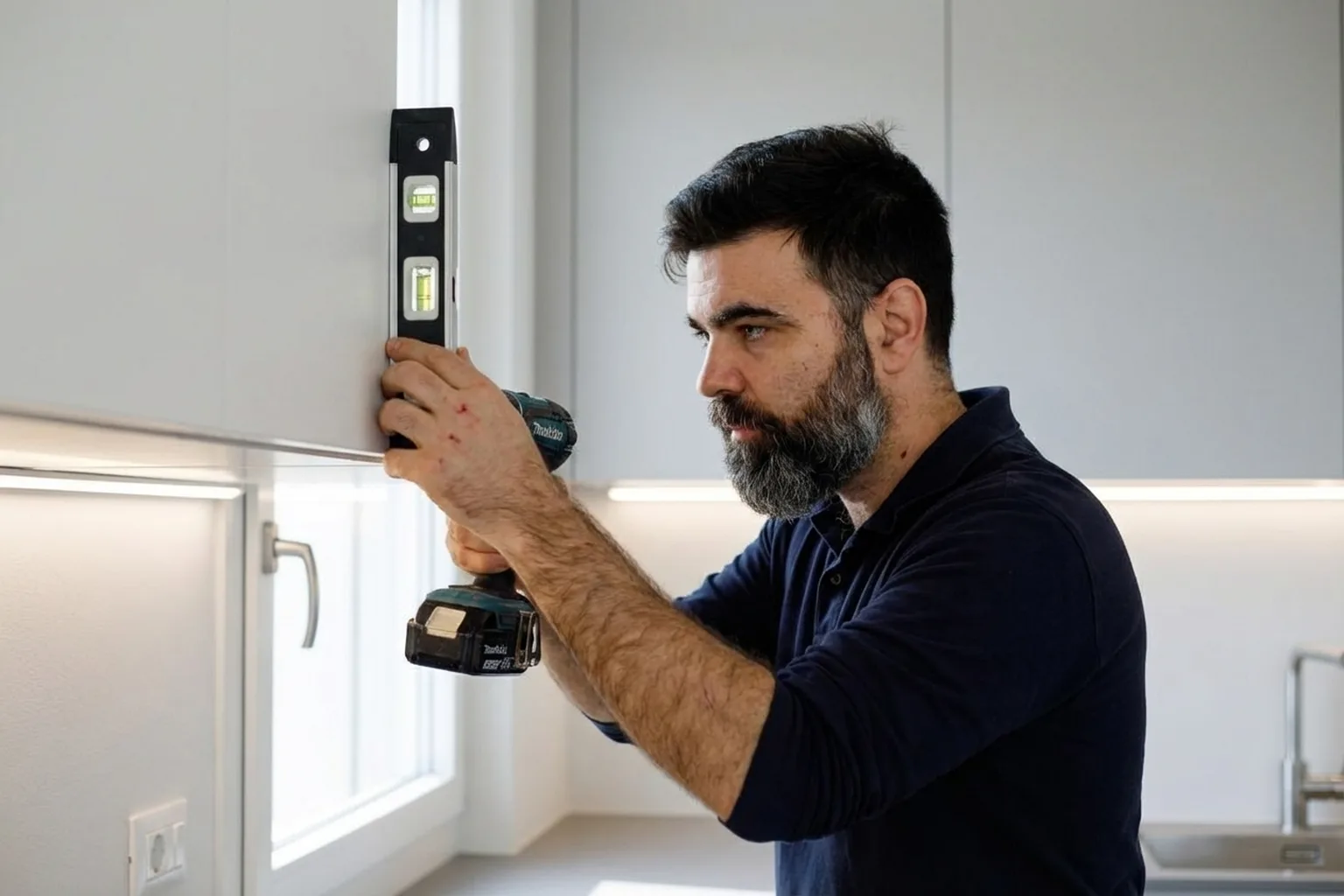
  4. We mark the mounting line with a laser level — all cabinets must hang in a perfectly straight line.
  5. We drill and install fixings: anchor bolts for concrete, wall plugs for brick, special toggle fixings for plasterboard or mounting through the stud frame.
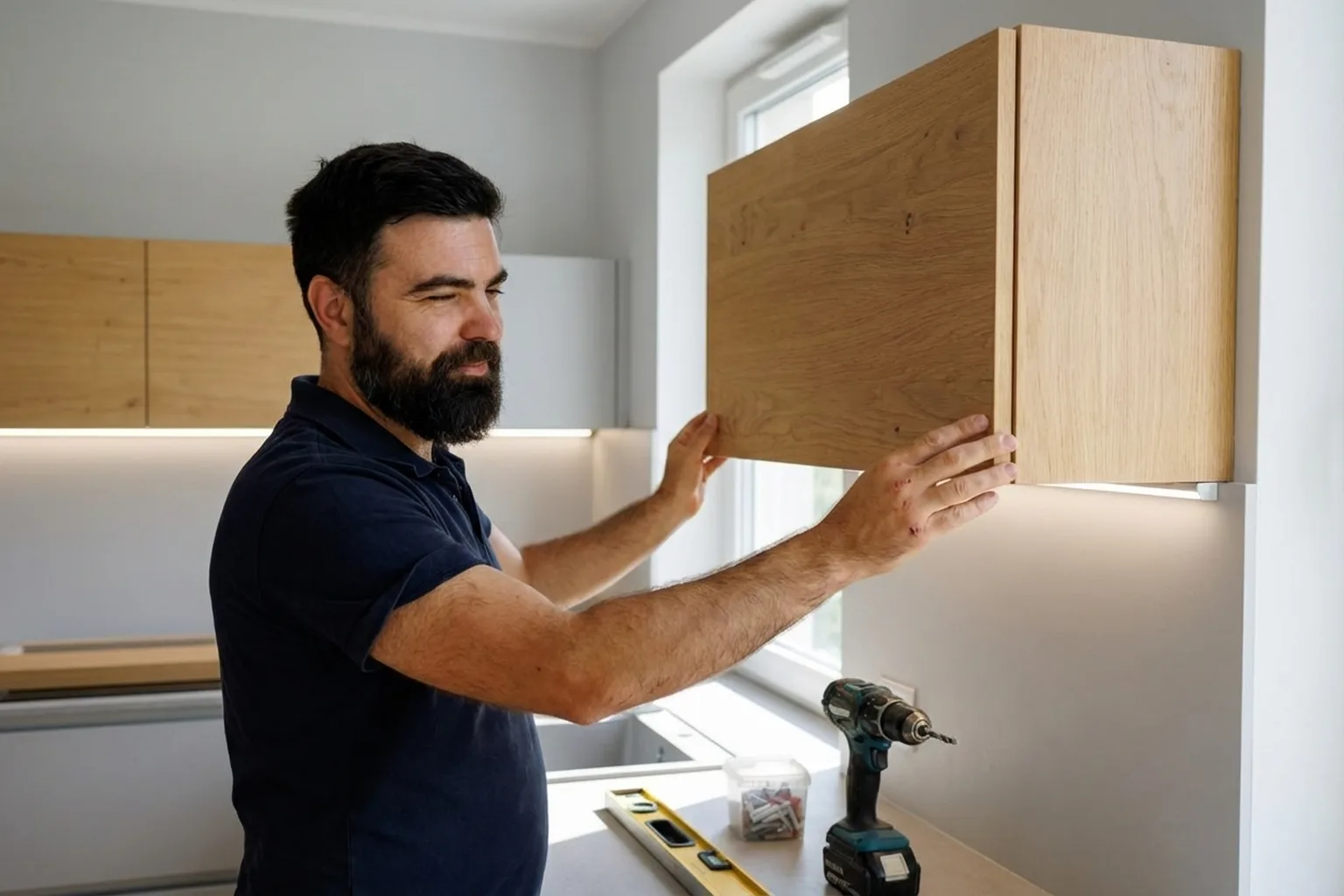
  6. We hang the cabinets on a mounting rail, then fine-tune with adjustment screws.
  7. We check everything: the cabinet doesn’t wobble, doors open evenly, fronts align with neighbouring modules.

Common mistakes when hanging cabinets (and how to avoid them)
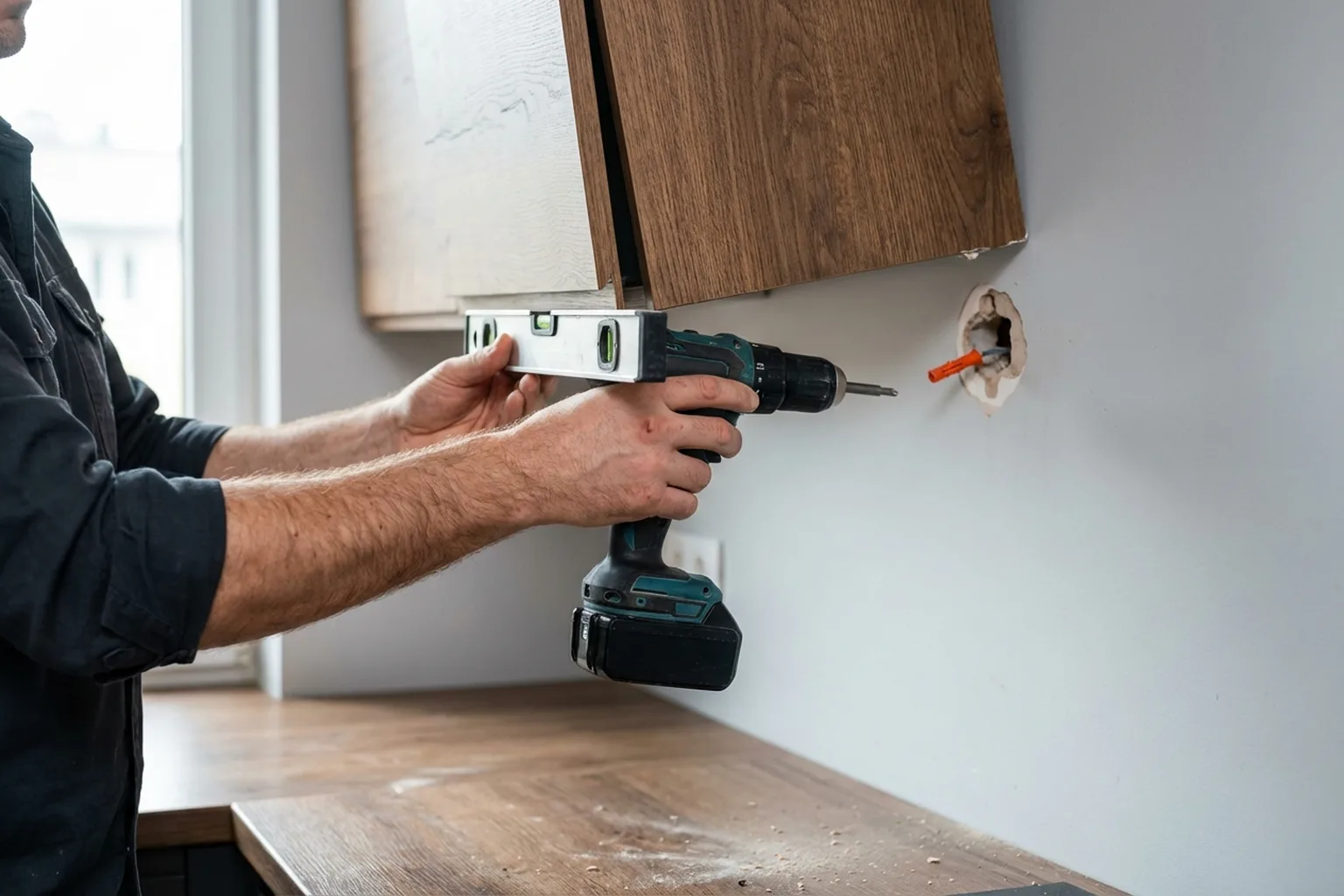
  • Hanging a cabinet on plasterboard with ordinary screws — within a month the fixings pull out under load.
  • Not checking where wiring or ventilation runs — the drill hits a cable or punctures a duct.
  • Using a cheap mounting rail or hanging cabinets on individual hooks — they shift and tilt over time.
  • Marking the height by eye without a level — one cabinet ends up a centimetre higher than the next, and the fronts don’t line up.
  • Forgetting the gap above the worktop for a splashback — the cabinet blocks panel installation.
  • Ignoring the weight of contents: loading heavy dishes into a corner cabinet on weak fixings.
  • Buying cabinets without adjustable hanging brackets — impossible to fine-tune height and depth later.

What to prepare before the technician arrives
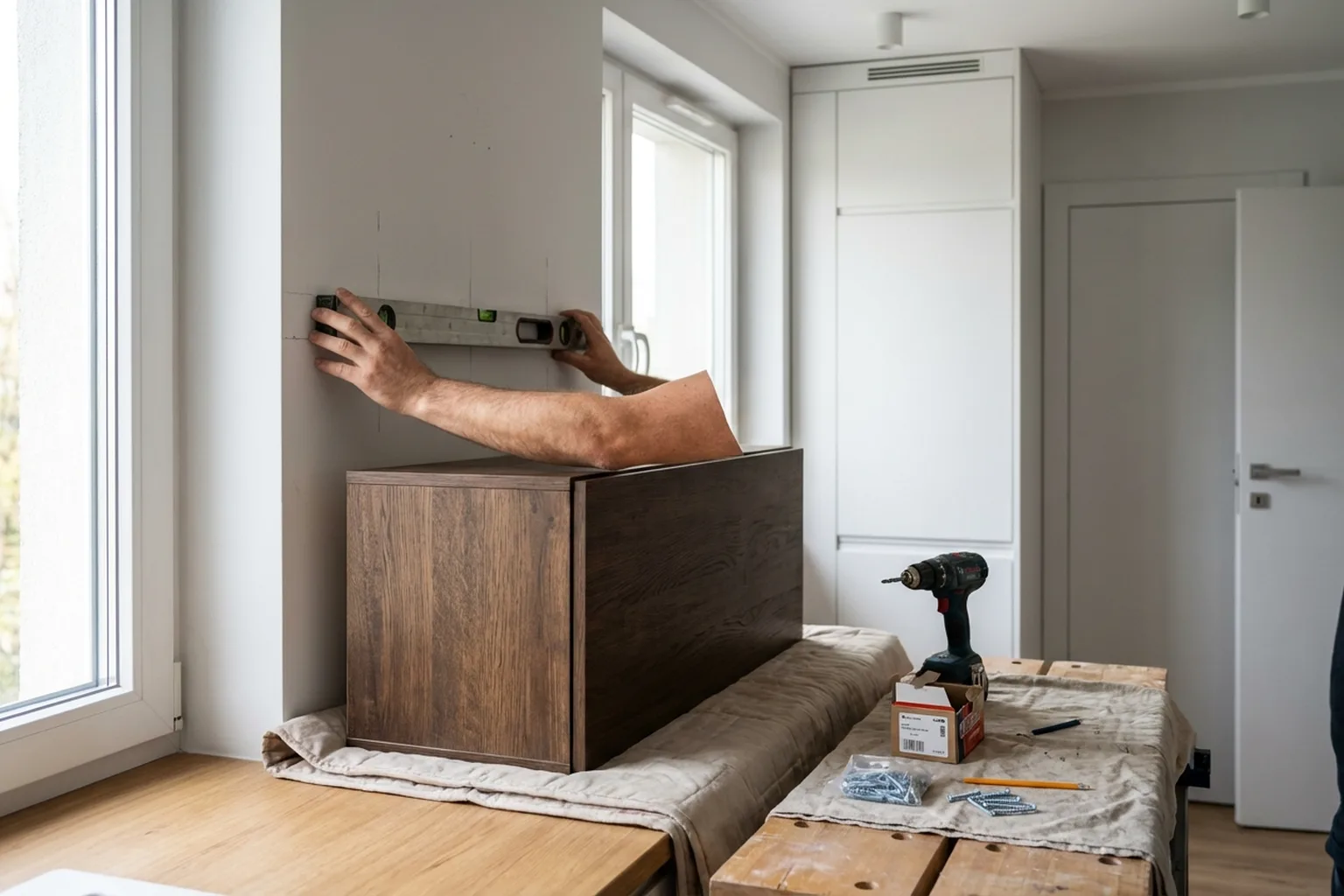
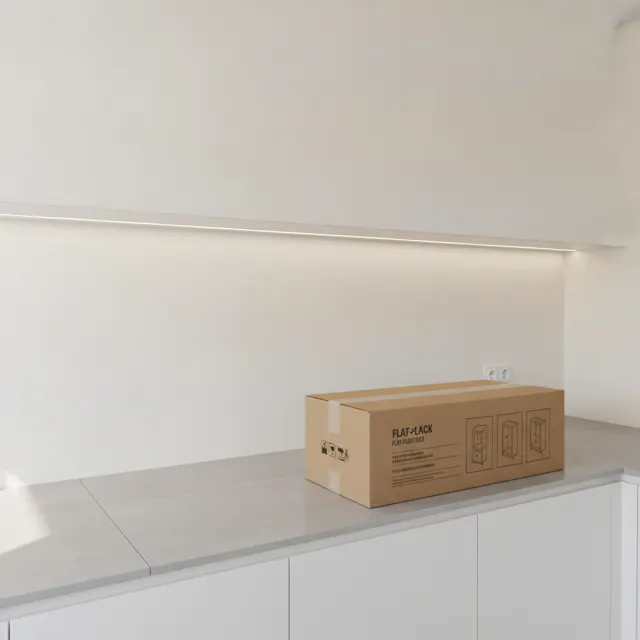
  • Assemble the cabinets if they came flat-packed (or order assembly separately).
  • Clear the work area — remove everything from the worktop, move the table aside.
  • If you know the wall type (brick, concrete, plasterboard on frame) — let the technician know in advance.
  • Photograph the wall at the mounting location and send it over — especially if there are sockets, pipes, or vents.
  • Decide on the height: what bottom-edge height is comfortable for your reach.
  • Have a power socket ready for the hammer drill — it will definitely be needed.
  • If the kitchen is new and there’s no worktop yet — specify its planned height so we get the gap right.
  • Remove rugs or cover the floor with sheeting — concrete drilling creates dust.
  • Check the hardware in the cabinets: hanging brackets, hinges, shelf supports.
  • Provide access details: intercom code, parking info.

A real case from Warsaw

A client in Ochota ordered the hanging of 5 upper IKEA Metod cabinets after assembling the kitchen himself. The wall turned out to be hollow silicate block — standard wall plugs held poorly. We used chemical anchors: drilled holes, filled them with resin, inserted threaded rods. After 24 hours of curing, we mounted all cabinets on a single mounting rail. An added complication — a ventilation duct in the corner: we had to trim one cabinet and work around it. All fronts were aligned using adjustment screws. The client mentioned he had drilled the wall himself in two places — the plugs pulled out the next day. With chemical anchors, that problem doesn’t exist. The whole job took about 4 hours.

Frequently asked questions

Can you hang a cabinet on a plasterboard wall?
Yes, but only through the metal stud frame or with special plasterboard anchors. A single screw into the plasterboard alone — no.

At what height should upper cabinets be hung?
The standard is the bottom edge at 140–160 cm from the floor. We adjust based on the residents’ height and the base unit dimensions.

Do the cabinets need to arrive assembled?
Preferably. Assembly can be ordered separately. You cannot hang a disassembled cabinet.

What’s included in the price?
Labour, fixings (anchors, plugs, mounting rail), travel within Warsaw. Cabinets and additional materials are separate.

How many cabinets can you hang in one visit?
Usually 4–6 cabinets in 3–5 hours. For larger kitchens, we agree on the scope beforehand.

Do you work with all kitchen brands?
Yes: IKEA, Castorama, Leroy Merlin, Polish manufacturers, custom-made — makes no difference. What matters is the mounting type and the wall.

Do you guarantee the fixings?
Yes, we guarantee the workmanship and installed fixings. If the cabinet has a factory defect, that falls under the manufacturer’s warranty.

Who does the work

Installation is carried out by technicians experienced in hanging kitchen furniture on every wall type: concrete, brick, hollow blocks, plasterboard. We cover all of Warsaw and nearby suburbs. To book — call or message us, we reply within an hour and arrange a convenient time.

Reviews from our clients

Wall Cabinet Installation in Warsaw

Wall Cabinet Installation in Warsaw

A wall cabinet is not just a shelf on two screws. Assembled, it weighs 15 to 40 kg, and loaded with dishes — easily 60. If the wall is plasterboard and the fixings are wrong, within a couple of months the cabinet and everything in it ends up on the floor. We hang kitchen cabinets across all of Warsaw: from Żoliborz to Ursynów. We arrive with a hammer drill, a laser level, and the right fixings for your specific wall type.

Current kitchen service prices

The cost of wall cabinet installation depends on the wall type, number of cabinets, and complexity of utilities behind them. Current prices for all kitchen services are in the table below. Fixings are included in the labour cost. The cabinets themselves and additional materials are charged separately.

Serviceminmax
Kitchen furniture installation (complete set) 20% od ceny25% od ceny
Kitchen base cabinet installation 250 zł400 zł
Wall cabinet installation 250 zł400 zł
Kitchen cabinet door adjustment 80 zł150 zł
Hinge replacement 60 zł/szt120 zł/szt
Kitchen countertop installation 200 zł/mb350 zł/mb
Laminate countertop installation 150 zł/mb250 zł/mb
Composite countertop installation 250 zł/mb400 zł/mb
Countertop joining 190 zł/szt300 zł/szt
Countertop cutout (sink / hob) 120 zł/szt200 zł/szt

How wall cabinet installation works

  1. You send a photo of the kitchen and a description — how many cabinets, what wall type, whether there are ventilation ducts or pipes behind the cabinets.
  2. The technician confirms the wall type (brick, concrete, plasterboard, hollow block) and gives an approximate price.
  3. On site, we measure the height: the standard is the bottom edge of the wall cabinet at 140–160 cm from the floor, but it depends on the residents’ height and the height of the base units.
  4. We mark the mounting line with a laser level — all cabinets must hang in a perfectly straight line.
  5. We drill and install fixings: anchor bolts for concrete, wall plugs for brick, special toggle fixings for plasterboard or mounting through the stud frame.
  6. We hang the cabinets on a mounting rail, then fine-tune with adjustment screws.
  7. We check everything: the cabinet doesn’t wobble, doors open evenly, fronts align with neighbouring modules.

Common mistakes when hanging cabinets (and how to avoid them)

  • Hanging a cabinet on plasterboard with ordinary screws — within a month the fixings pull out under load.
  • Not checking where wiring or ventilation runs — the drill hits a cable or punctures a duct.
  • Using a cheap mounting rail or hanging cabinets on individual hooks — they shift and tilt over time.
  • Marking the height by eye without a level — one cabinet ends up a centimetre higher than the next, and the fronts don’t line up.
  • Forgetting the gap above the worktop for a splashback — the cabinet blocks panel installation.
  • Ignoring the weight of contents: loading heavy dishes into a corner cabinet on weak fixings.
  • Buying cabinets without adjustable hanging brackets — impossible to fine-tune height and depth later.

What to prepare before the technician arrives

  • Assemble the cabinets if they came flat-packed (or order assembly separately).
  • Clear the work area — remove everything from the worktop, move the table aside.
  • If you know the wall type (brick, concrete, plasterboard on frame) — let the technician know in advance.
  • Photograph the wall at the mounting location and send it over — especially if there are sockets, pipes, or vents.
  • Decide on the height: what bottom-edge height is comfortable for your reach.
  • Have a power socket ready for the hammer drill — it will definitely be needed.
  • If the kitchen is new and there’s no worktop yet — specify its planned height so we get the gap right.
  • Remove rugs or cover the floor with sheeting — concrete drilling creates dust.
  • Check the hardware in the cabinets: hanging brackets, hinges, shelf supports.
  • Provide access details: intercom code, parking info.

A real case from Warsaw

A client in Ochota ordered the hanging of 5 upper IKEA Metod cabinets after assembling the kitchen himself. The wall turned out to be hollow silicate block — standard wall plugs held poorly. We used chemical anchors: drilled holes, filled them with resin, inserted threaded rods. After 24 hours of curing, we mounted all cabinets on a single mounting rail. An added complication — a ventilation duct in the corner: we had to trim one cabinet and work around it. All fronts were aligned using adjustment screws. The client mentioned he had drilled the wall himself in two places — the plugs pulled out the next day. With chemical anchors, that problem doesn’t exist. The whole job took about 4 hours.

Frequently asked questions

Can you hang a cabinet on a plasterboard wall?
Yes, but only through the metal stud frame or with special plasterboard anchors. A single screw into the plasterboard alone — no.

At what height should upper cabinets be hung?
The standard is the bottom edge at 140–160 cm from the floor. We adjust based on the residents’ height and the base unit dimensions.

Do the cabinets need to arrive assembled?
Preferably. Assembly can be ordered separately. You cannot hang a disassembled cabinet.

What’s included in the price?
Labour, fixings (anchors, plugs, mounting rail), travel within Warsaw. Cabinets and additional materials are separate.

How many cabinets can you hang in one visit?
Usually 4–6 cabinets in 3–5 hours. For larger kitchens, we agree on the scope beforehand.

Do you work with all kitchen brands?
Yes: IKEA, Castorama, Leroy Merlin, Polish manufacturers, custom-made — makes no difference. What matters is the mounting type and the wall.

Do you guarantee the fixings?
Yes, we guarantee the workmanship and installed fixings. If the cabinet has a factory defect, that falls under the manufacturer’s warranty.

Who does the work

Installation is carried out by technicians experienced in hanging kitchen furniture on every wall type: concrete, brick, hollow blocks, plasterboard. We cover all of Warsaw and nearby suburbs. To book — call or message us, we reply within an hour and arrange a convenient time.

Reviews from our clients