
Kitchen filler panels and trim: cost and what affects it
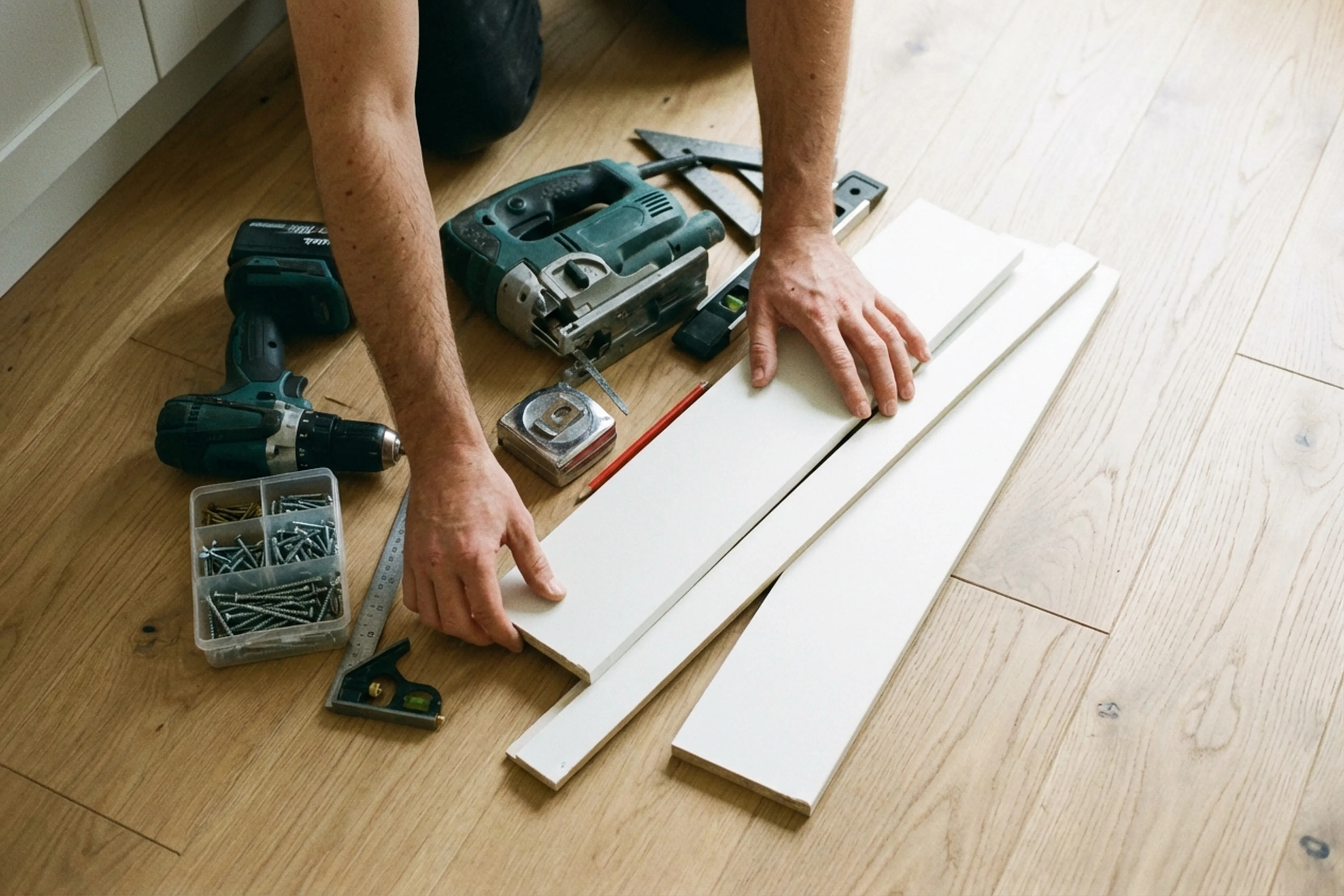
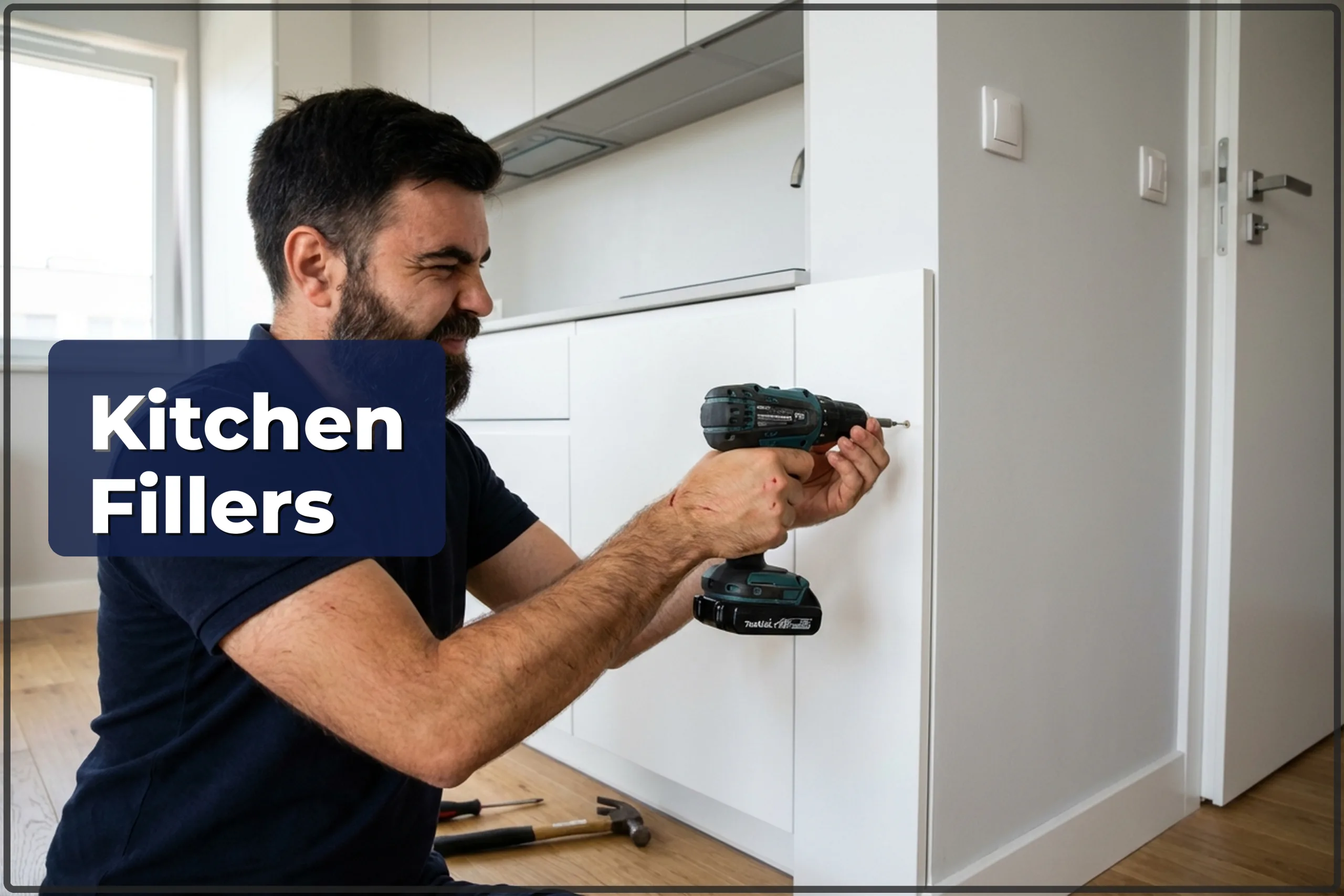
The price of fitting one filler comes down to the type of piece, the material, and how much cutting has to be done. A plain end cap on a cabinet side is one rate; a dishwasher or oven infill panel cut to size on site is another. If the panel needs trimming in height or width, the cost can go up. Fixings (screws, adhesive, clips) are part of the labour price. The filler panels themselves are bought by the client — they can tell you exactly what to buy and where to find it. Current prices for kitchen services are in the table below.
| Service | Price |
|---|---|
| Assemble kitchen units (base and wall cabinets) | 400–1000 zł/mb |
| Base kitchen cabinet installation | 120–270 zł |
| Wall kitchen cabinet installation | 120–270 zł |
| Kitchen front adjustment | 80–250 zł |
| Kitchen worktop installation | 70–200 zł/mb |
| Laminate worktop installation | 70–135 zł/mb |
| Composite worktop installation | 250–400 zł/mb |
| Worktop joining | 190–300 zł/szt |
| Worktop cut-out (sink, hob) | 150–300 zł/szt |
Indicative prices. Ranges for a typical scope. Fixings included, materials separate. Minimum order 300 zł.
What it costs and how to book: apartment finishing in Warsaw.
Kitchen filler panels and trim: how the job goes
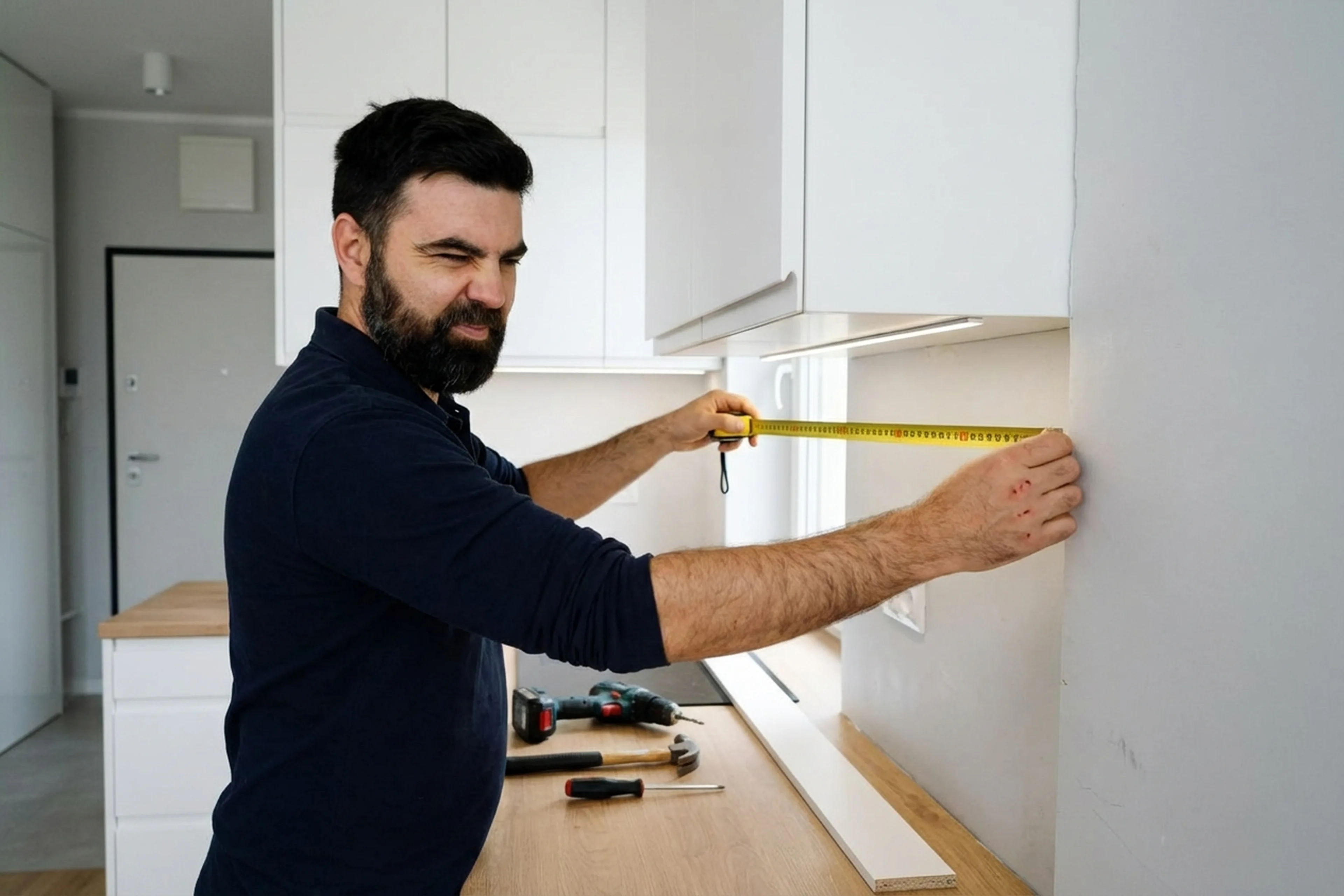
- You send a photo of the kitchen and explain what needs to be installed: end panels, filler strips between a cabinet and the wall, pelmet, plinth.
- The technician checks the kitchen brand (IKEA, Castorama, custom) and dimensions: from photos or measurements.
- Each tradesperson says in their offer when they can come, and you pick the one that suits you.
- On site, the technician test-fits each piece and cuts it to length, width or angle where needed.
- The fixing method depends on the part — clips, screws, adhesive, or a mix of them.
- Final adjustment: checking the gaps, tidying the edges if needed.
- Clean-up and a short explanation of how to look after the joints.
Common customer mistakes (and how to avoid them)
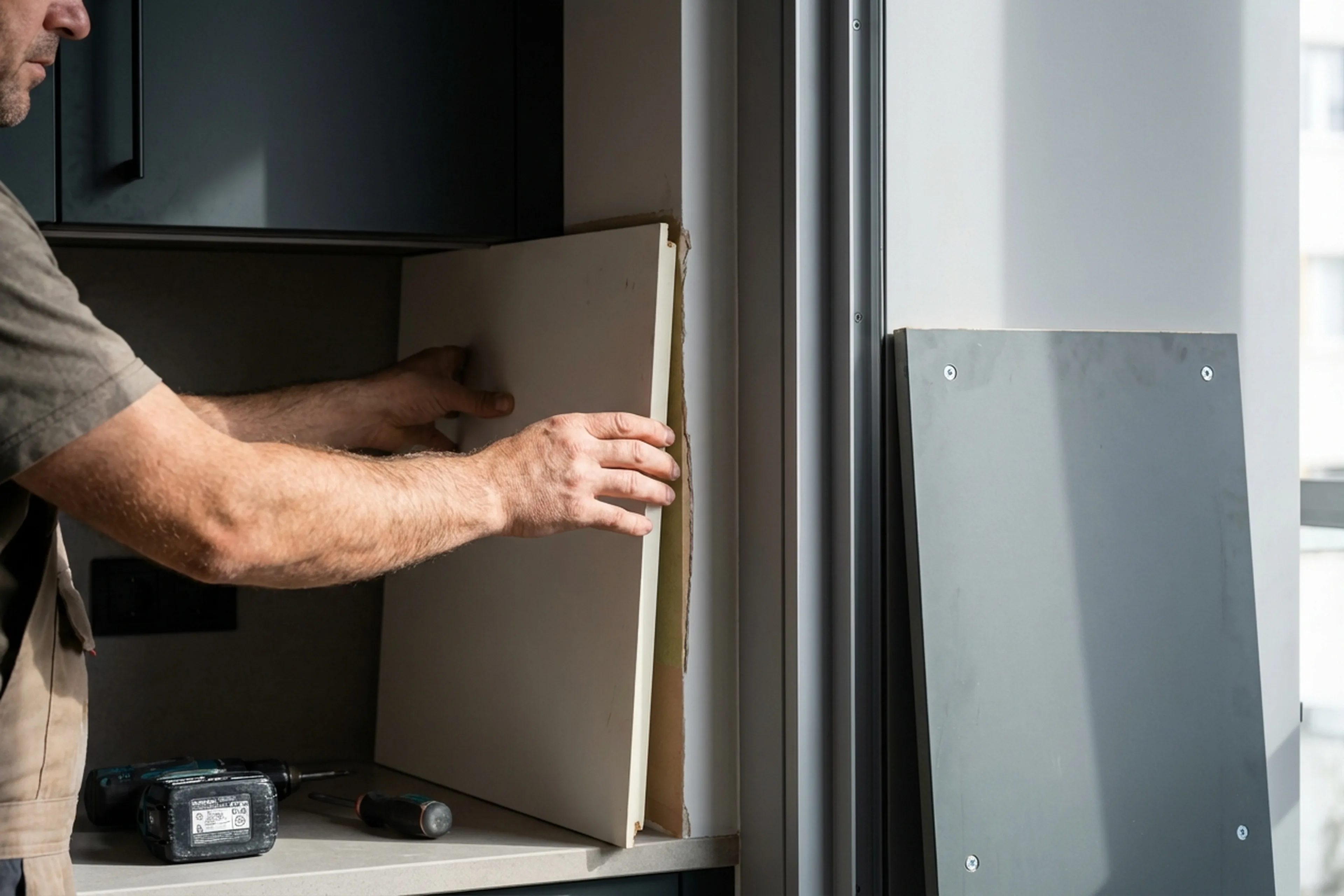
- Buying an end panel in the wrong colour or finish, one manufacturer may have 3-4 shades of white. Always take a door sample to the shop.
- Ordering a filler strip with no spare length — cutting it down is easy, extending it neatly is not.
- Trying to stick a panel to an uneven wall using adhesive only: it comes off within a month. You need mechanical fixings plus adhesive.
- Forgetting the infill panel between the oven and the drawer, that gap fills up with grease and crumbs.
- Not allowing for filler thickness when measuring — the cabinet ends up tight against the wall or the handle will not open all the way.
- Fitting a cornice on clips only with no adhesive, after some time it starts to sag under its own weight.
- Cutting a laminated panel with a jigsaw and no guide rail: chips along the full length.
What to prepare before the technician arrives
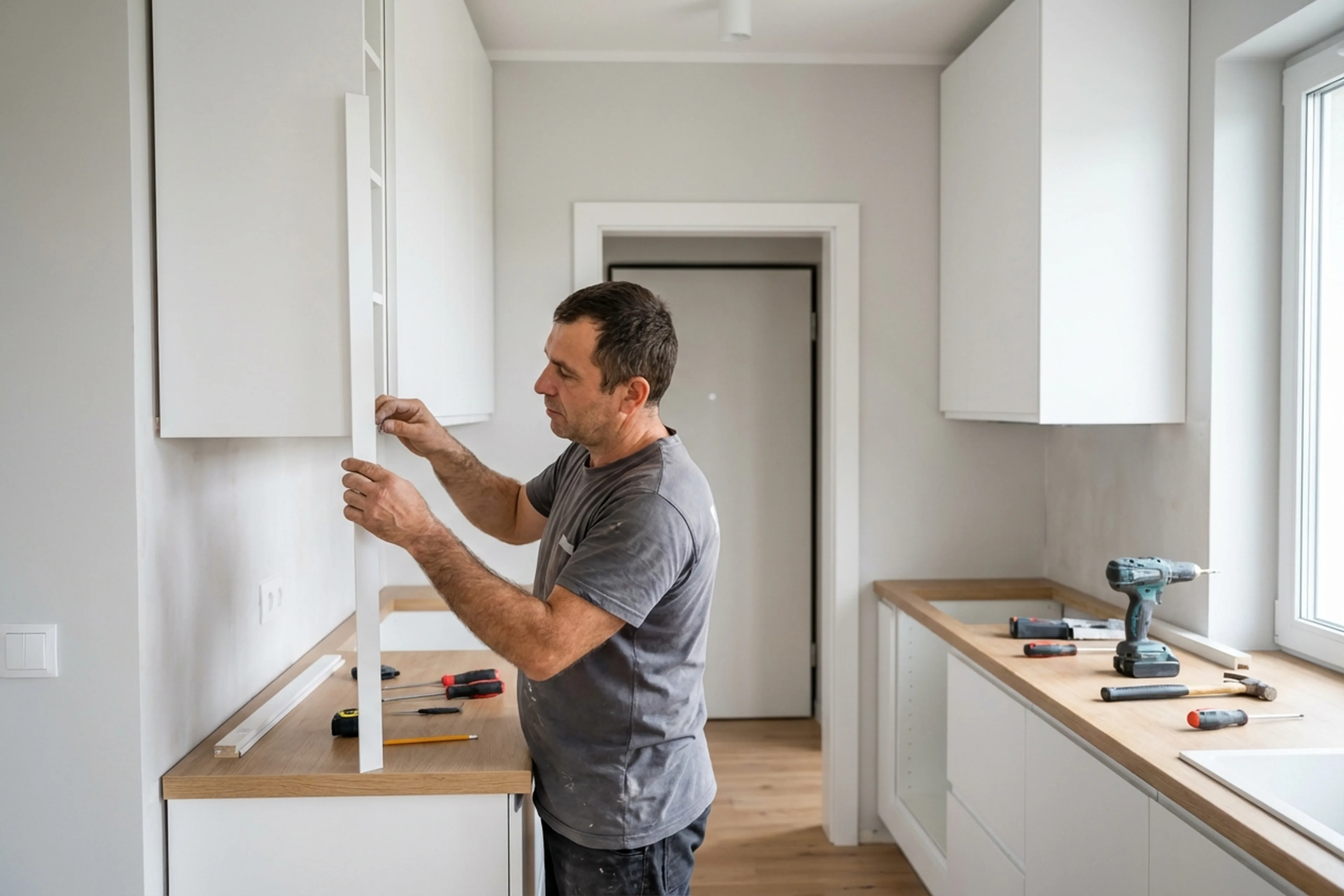
- Buy the fillers beforehand: the technician fits them, he does not go shopping.
- Know your kitchen brand and model: IKEA fillers, for example, are made for that brand and will not suit other kitchens.
- If you are unsure about sizes — send a photo with a tape measure, and the technician will advise.
- Clear the work area: take everything off the worktop, move chairs out of the way.
- If the wall is uneven, say so, because it affects how the parts are fixed.
- Have a power socket free for tools (mitre saw, jigsaw).
- Check that you have everything: strips, end caps, clips, corner pieces: all there?
- If the fillers need to match the door colour — put a door sample next to them and compare in daylight.
- Provide access details: intercom code, parking info, especially in areas like Srodmiescie or Wilanow, where parking is awkward.
A real case from Warsaw
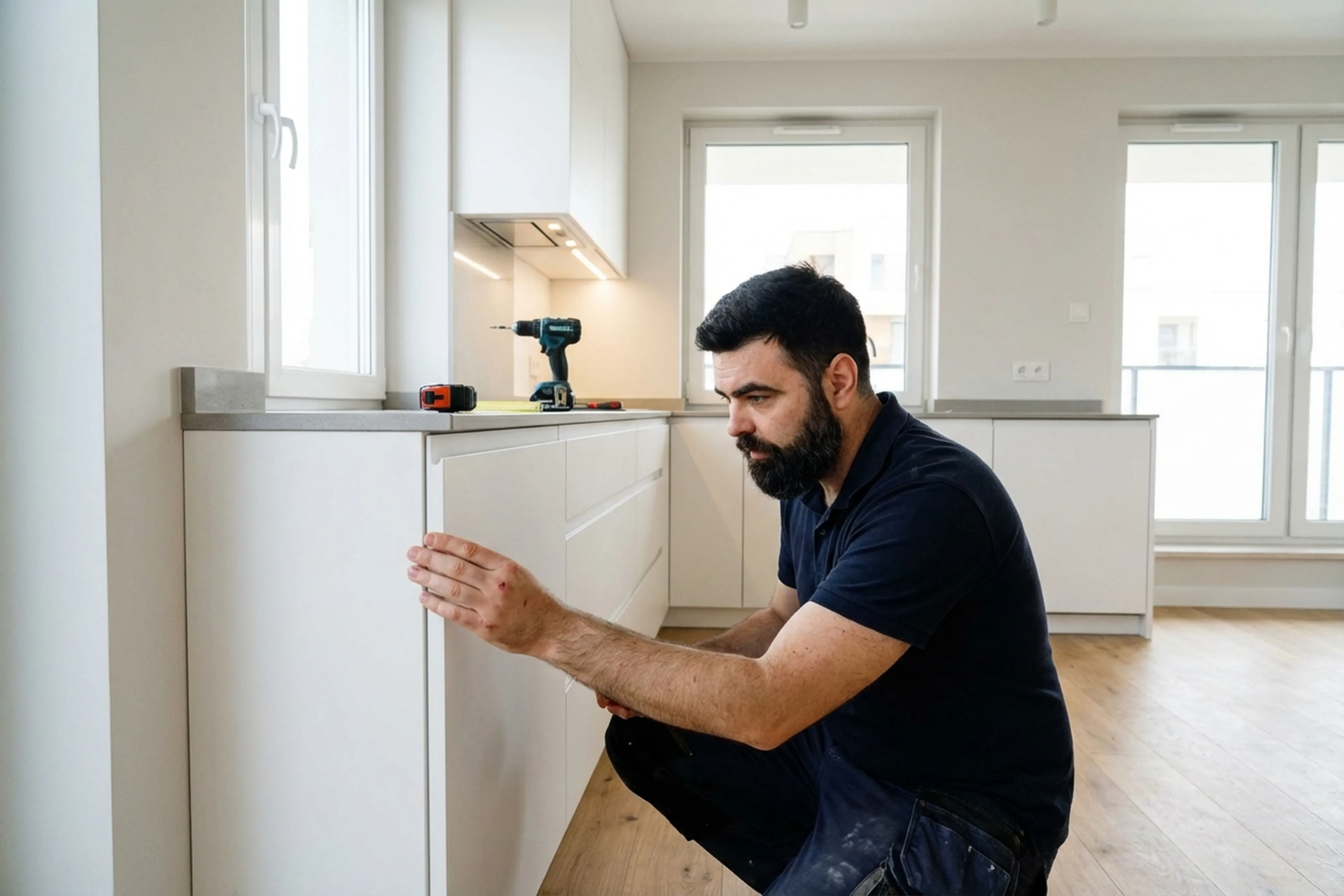
A client in Ursynow ordered a kitchen from a well-known chain, but the fitters installed only the cabinets and worktop: no finishing parts at all. There was a 4 cm gap between the last cabinet and the wall, the side of the fridge was visible from the hallway, and a bare strip of wall could be seen above the wall units. Tradespeople came with a set of end panels and a cornice matched to the door colour. The fridge side panel had to be cut down in height — the ceiling turned out to be a centimetre lower than standard. The gap by the wall was closed with a filler strip trimmed on site. The cornice was fixed with clips and spot-glued as well. The whole job took about two hours. After the installation, the kitchen looked properly finished, the client said it finally looked like the catalogue photo. Takeaway: fillers are not just decoration: they are a required finishing stage of any kitchen installation.
Frequently asked questions
What are kitchen fillers?
They are finishing parts: end panels, infill strips, blanking plates, cornices (pelmets), plinth strips. They hide gaps, exposed cabinet sides and unfinished spaces between furniture, walls and appliances.
Can fillers be fitted to a kitchen from a different manufacturer?
Yes, as long as the colour and size are matched correctly. Universal fillers are sold in any DIY store, but a perfect colour match only comes from the same brand.
Does the technician bring fillers?
No, the client buys the parts. Tradespeople will advise exactly what is needed and suggest where to get it.
How long does installation take?
One or two pieces — from 30 minutes. A full set (end panels, cornice, plinth, infill strips): 2-3 hours.
Can a filler be cut to a non-standard size?
Yes, the technician comes with precision cutting tools. Just make sure you buy the piece with a bit of extra length.
What is included in the price?
Labour, fixings, travel within Warsaw. The filler panels themselves are paid for by the client.
How quickly can a tradesperson come?
It depends on the tradesperson you choose: each one states in their offer when they can come. If it can’t wait, mark the job as urgent in the app. Tradespeople usually charge extra for urgent call-outs.
Who does the work
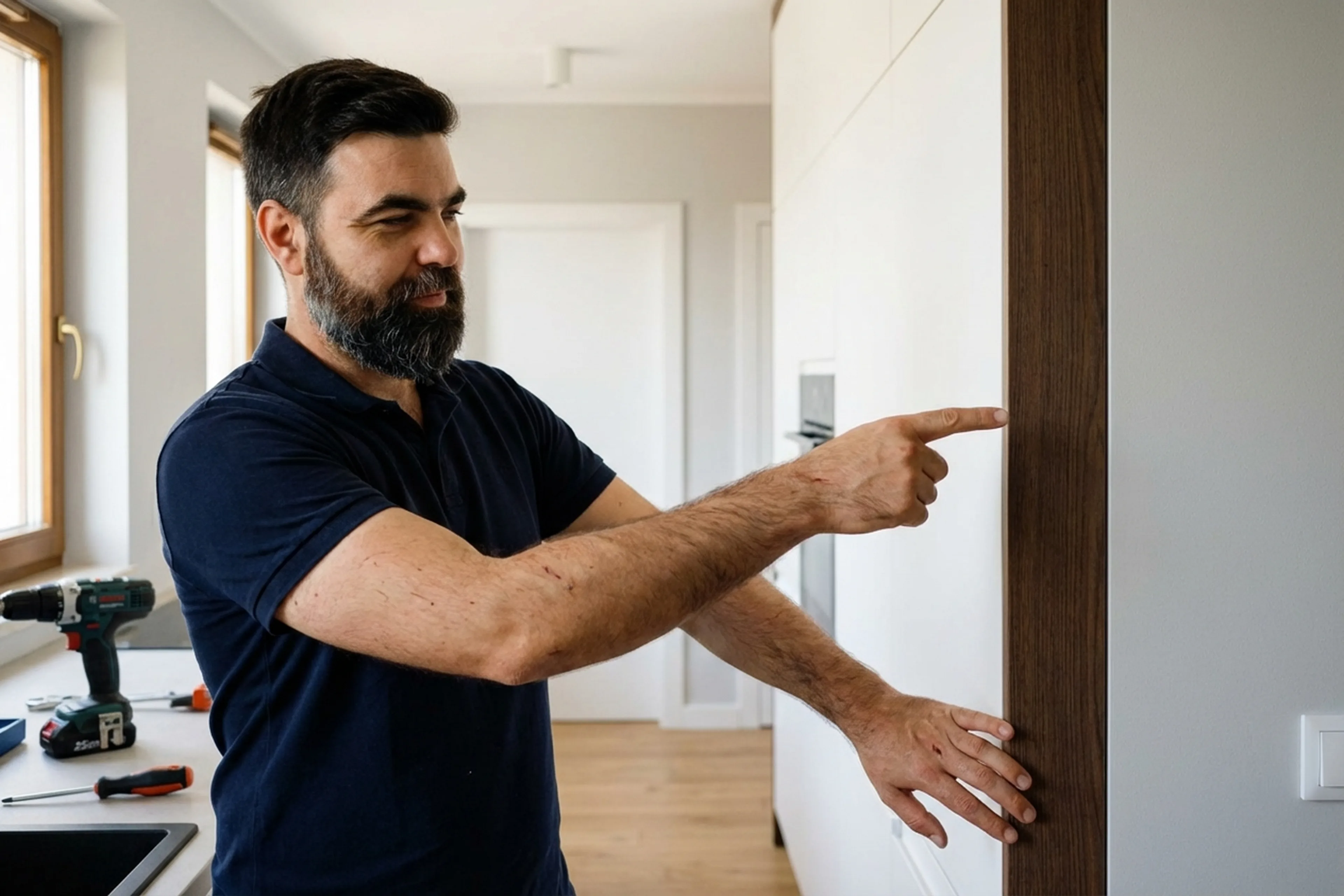
Kitchen filler installation is done by technicians with hands-on experience in kitchen assembly and fitting. Tradespeople know the details of IKEA, Castorama and custom-made kitchens. Tradespeople work across all of Warsaw and the surrounding area.
Order in the app
Describe the job, add photos and the address. Tradespeople send their own prices and dates, and you pick one of the offers.
Open the app