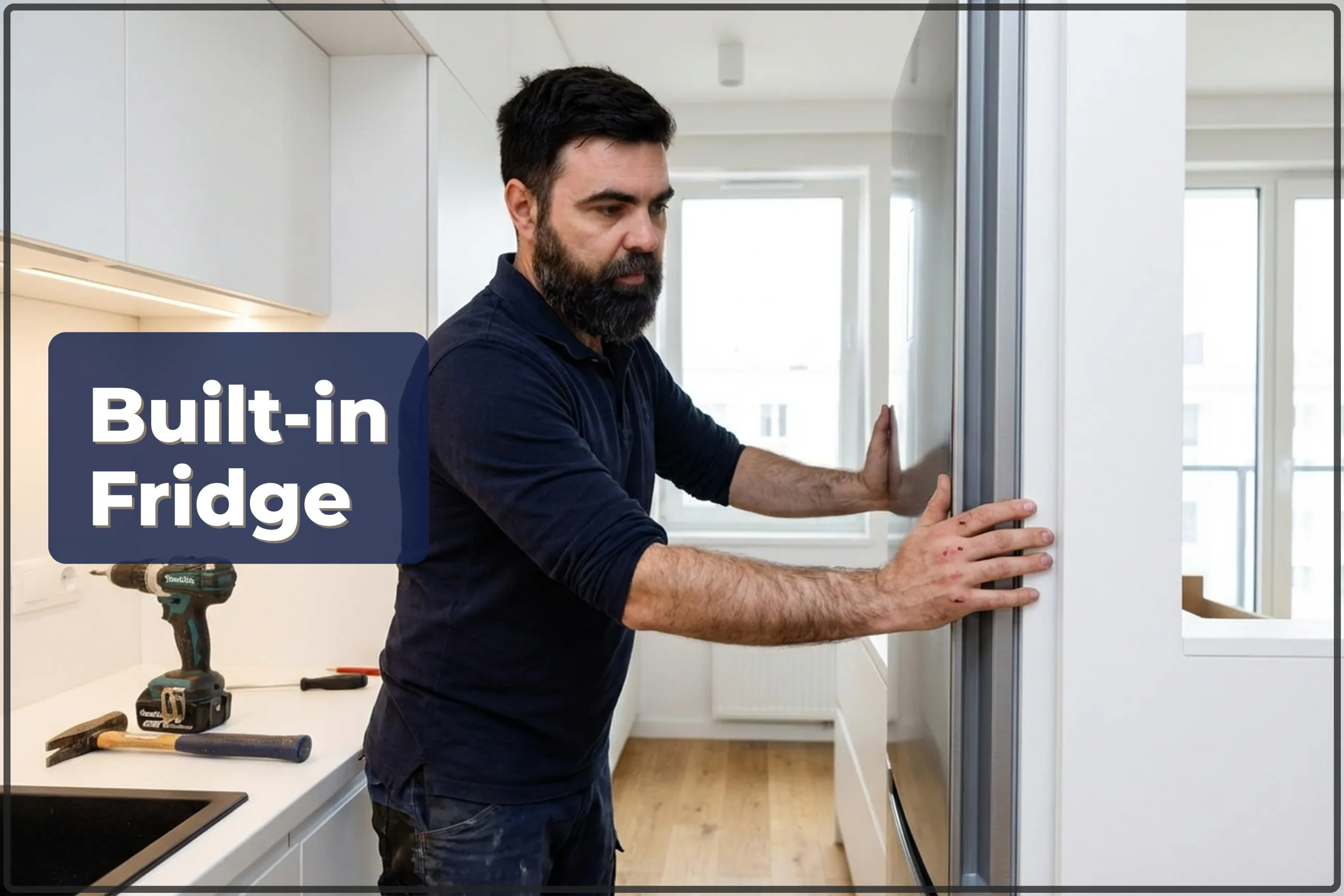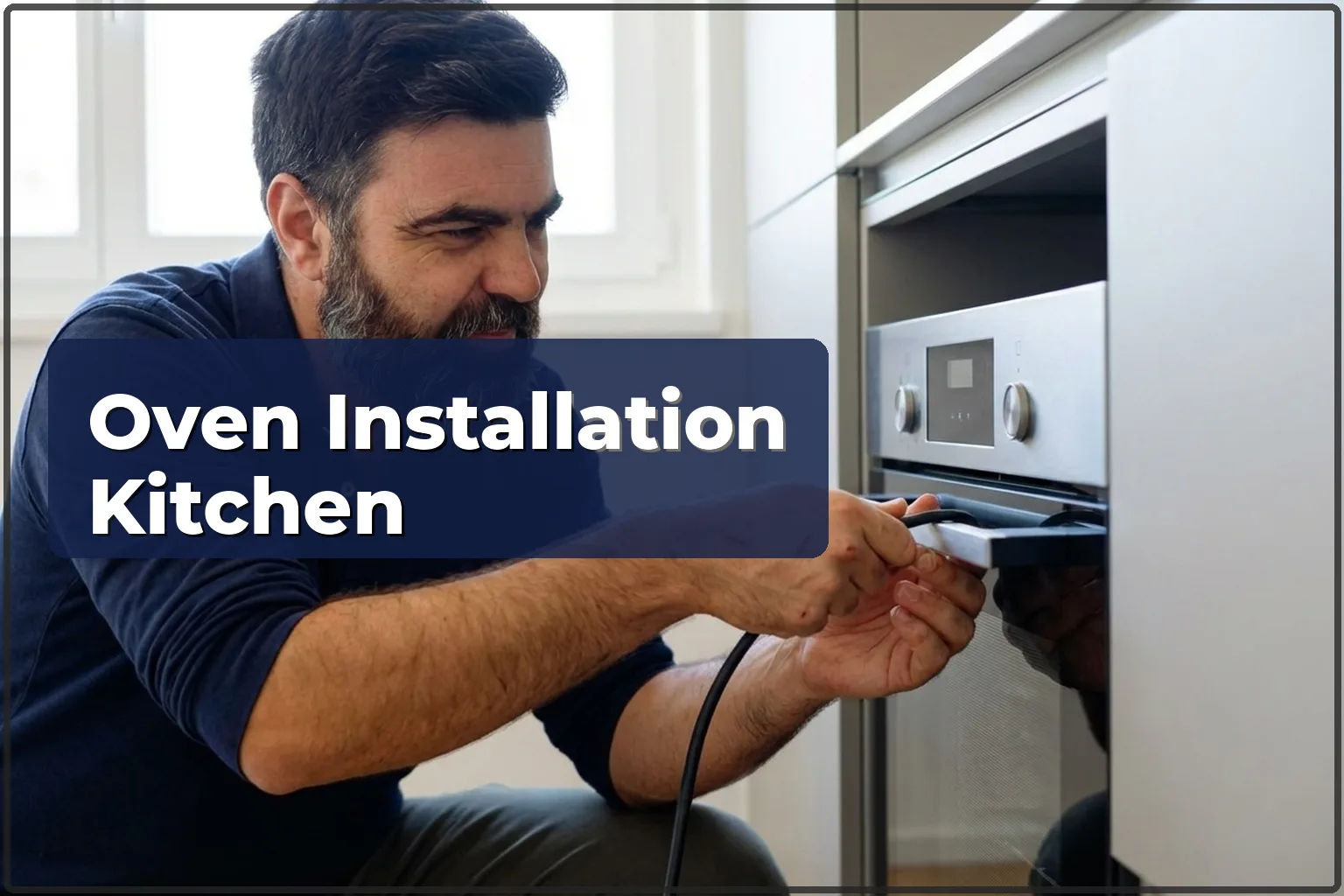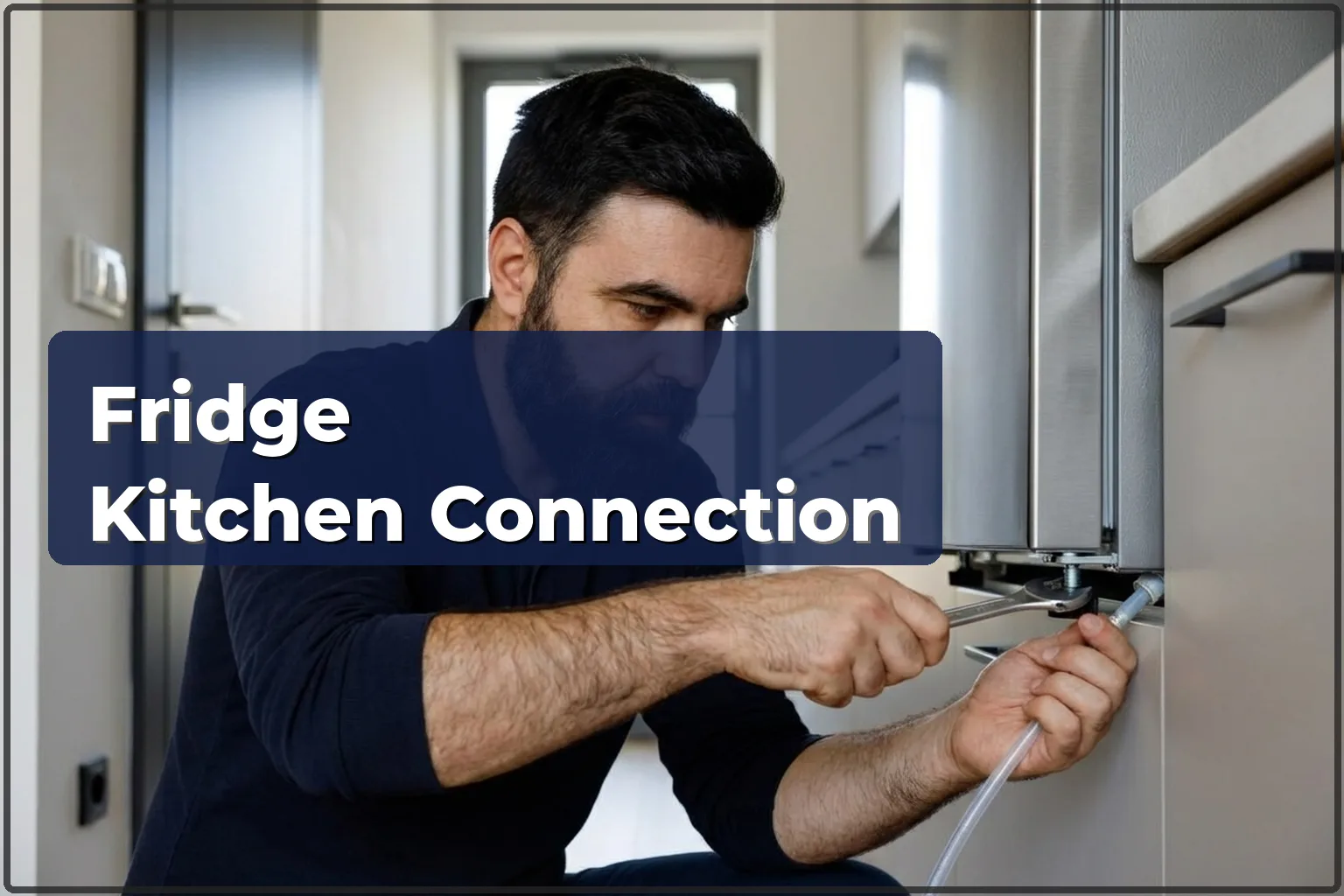

How much does it cost and what affects the price
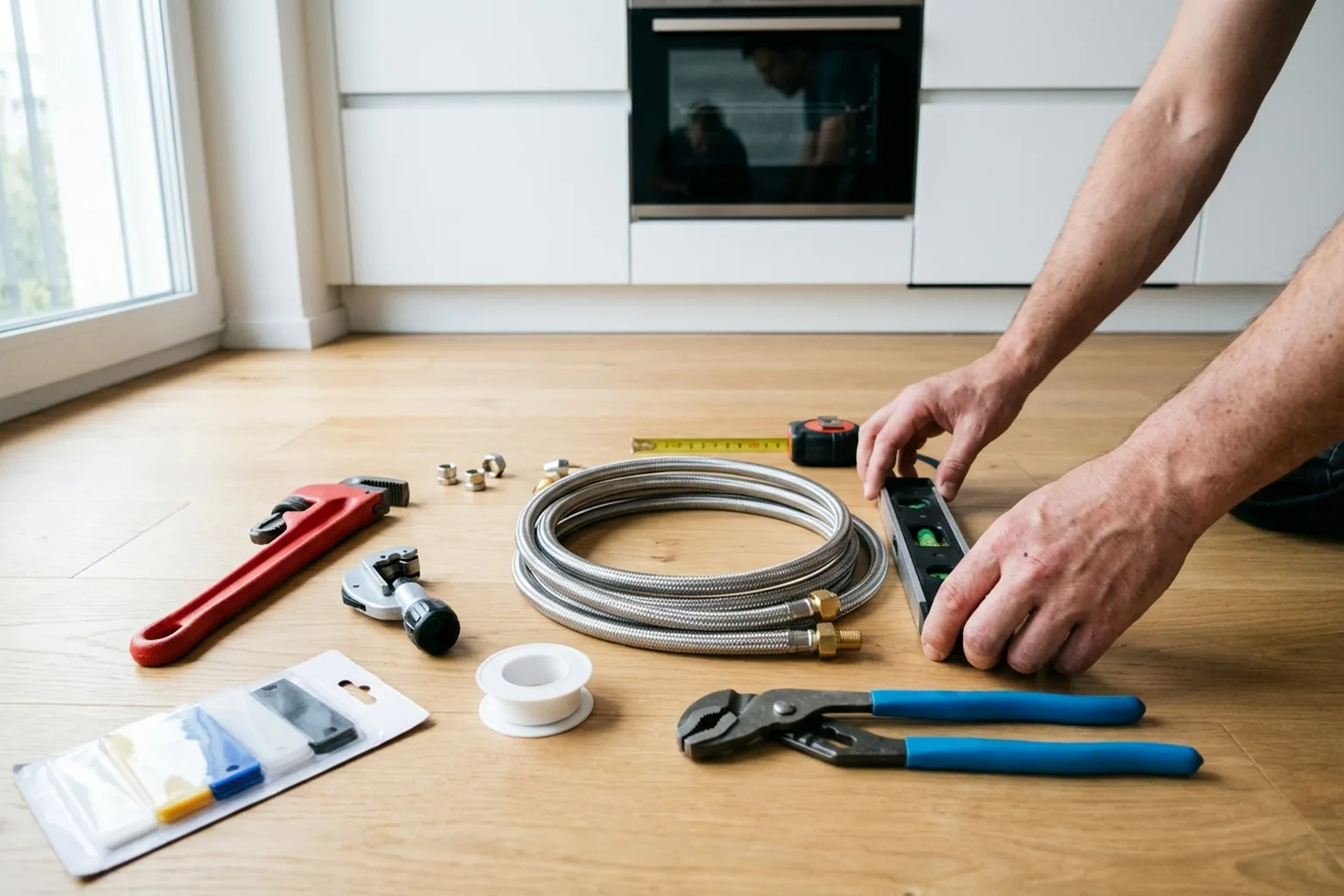
The price of connecting a fridge depends on a few things: whether the feet need setting, whether there is a proper socket nearby, and whether a water feed for the ice maker is needed. A standard connection covers positioning the appliance, levelling it, and checking that everything works. If the socket has no grounding or is too far away, extra electrical work is required as a separate service. Up-to-date prices for all kitchen jobs are listed in the table below.
| Service | Price |
|---|---|
| Assemble kitchen units (base and wall cabinets) | 400–1000 zł/mb |
| Base kitchen cabinet installation | 120–270 zł |
| Wall kitchen cabinet installation | 120–270 zł |
| Kitchen front adjustment | 80–250 zł |
| Kitchen worktop installation | 70–200 zł/mb |
| Laminate worktop installation | 70–135 zł/mb |
| Composite worktop installation | 250–400 zł/mb |
| Worktop joining | 190–300 zł/szt |
| Worktop cut-out (sink, hob) | 150–300 zł/szt |
Indicative prices. Ranges for a typical scope. Fixings included, materials separate. Minimum order 300 zł.
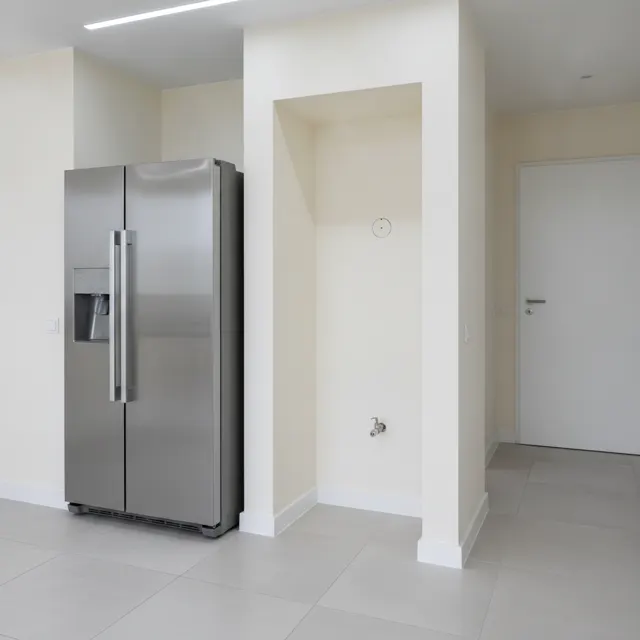
What it costs and how to book: appliance installation in Warsaw.
How the on-site work goes
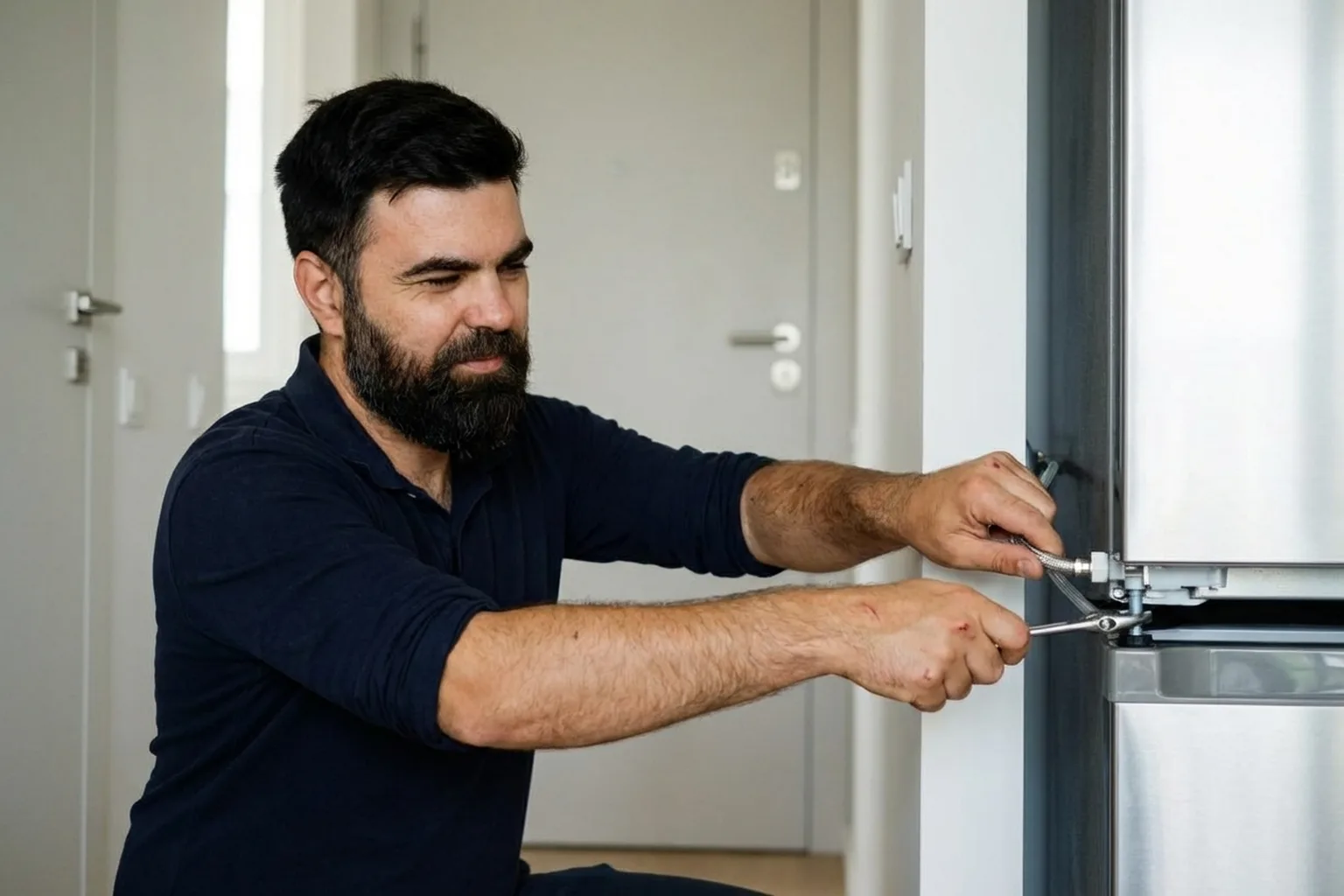
- You say so in the order what needs doing: the fridge model, a photo of the kitchen, and whether there is a socket and water supply nearby.
- The technician reviews the job and gives you an estimated price.
- Each tradesperson says in their offer when they can come, and you pick the one that suits you.
- At the property, the technician checks the socket (grounding, load capacity) and looks over the alcove or where the fridge will stand.
- The fridge is set in place with the correct ventilation gap (5–10 cm behind and above).
- Feet adjustment: the front is made slightly higher than the back: so the door shuts by itself.
- If there is an ice maker, it is connected to the water supply with a shut-off valve and flexible hose.
- Final test: the fridge switches on, the compressor runs evenly, and the door seals properly.
Common mistakes when installing a fridge
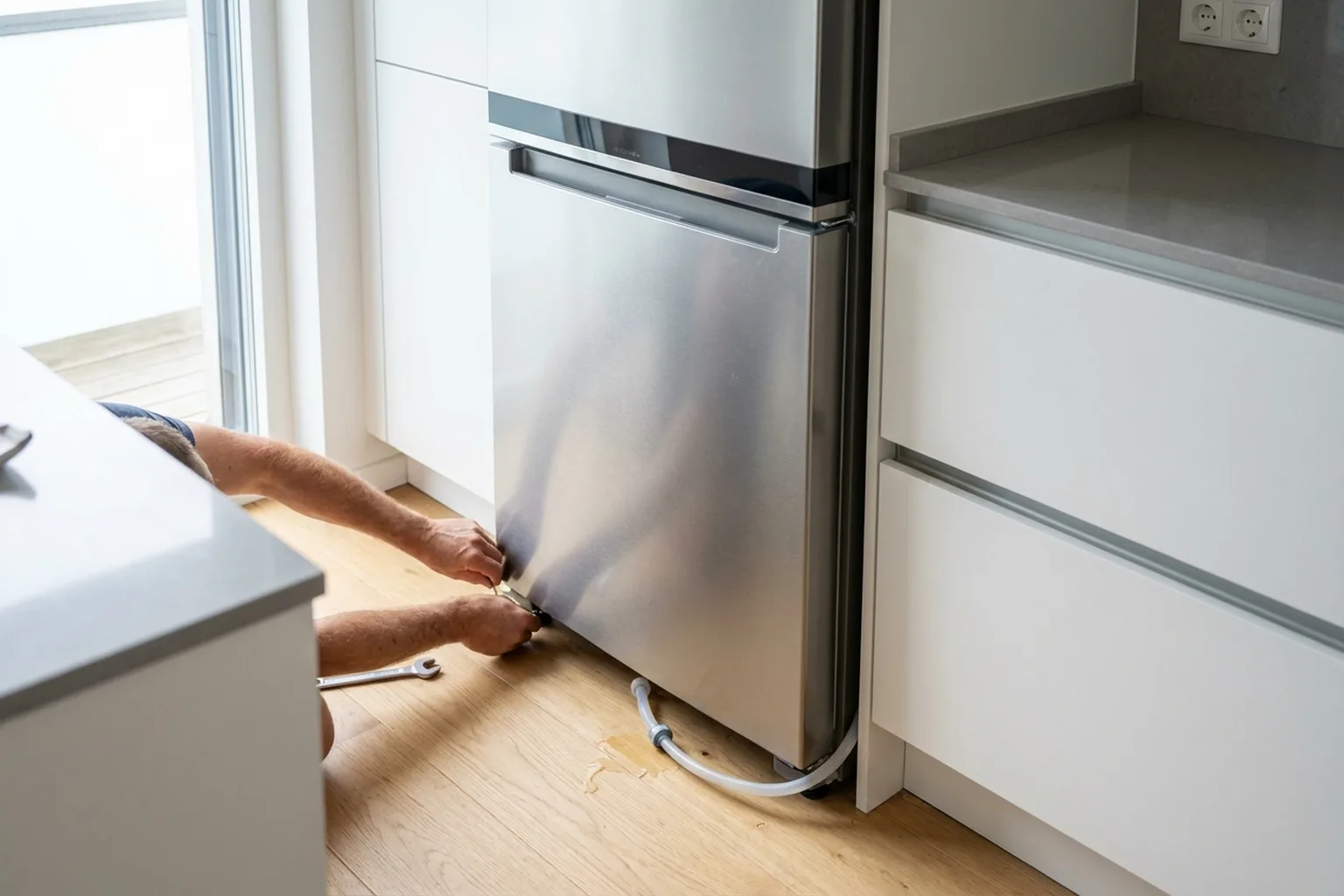
- Shoving the fridge tight to the wall: no airflow, so the compressor overheats and wears faster.
- Skipping feet adjustment: the fridge hums, shakes, and the door fails to close properly.
- Plugging it into an ungrounded socket — if the casing shorts, it can give an electric shock.
- Standing it next to an oven or radiator: the fridge has to work harder to make up for the heat.
- Turning it on right after delivery: you need to wait at least 2–4 hours for the compressor oil to settle back down.
- Leaving transit bolts and protective film on the door seals in place.
- Connecting the ice-maker water line without a shut-off valve — then you can’t stop a leak quickly.
What to prepare before the technician arrives
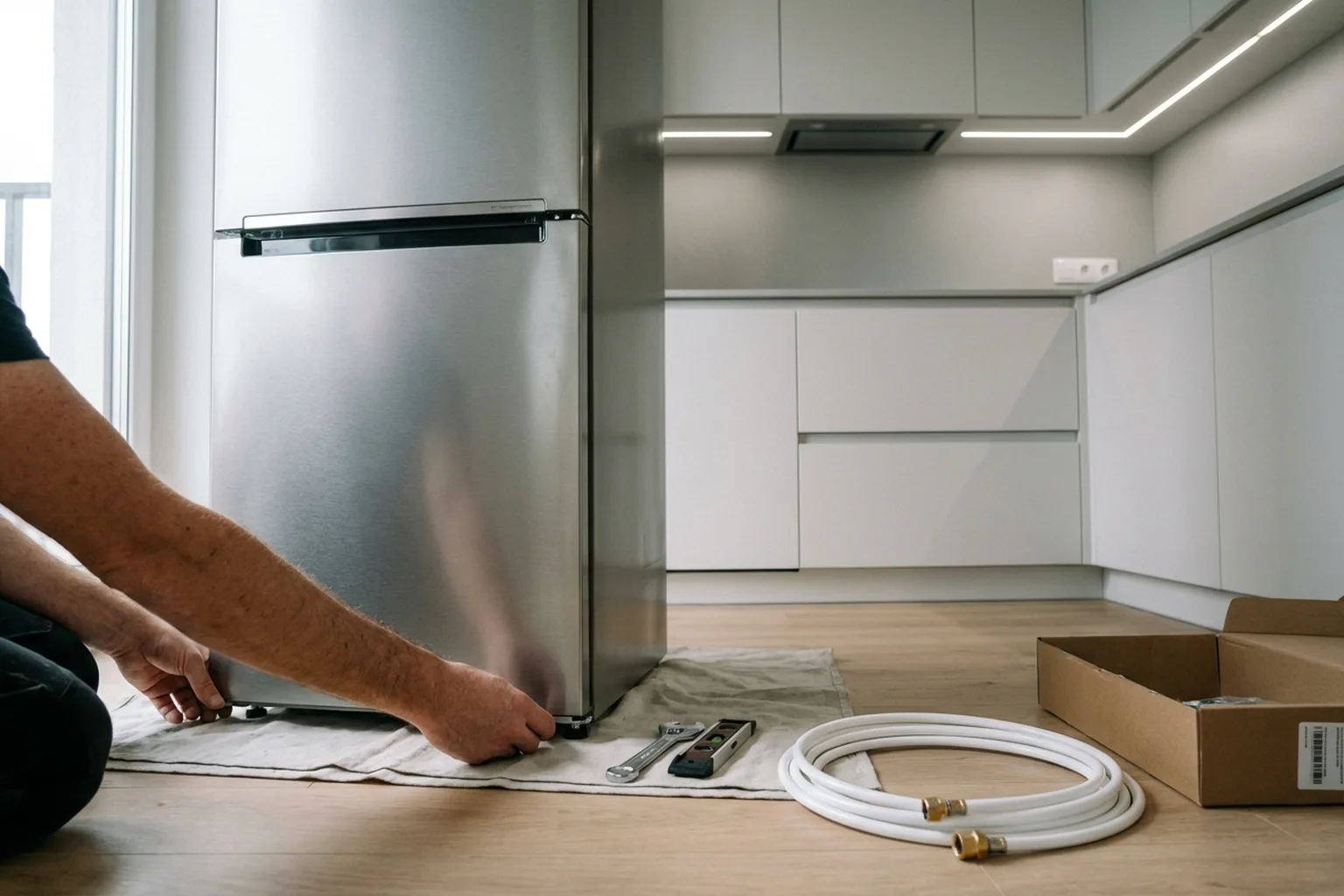
- Clear the area where the fridge will stand: remove the old appliance if it is still there.
- Make sure the fridge will pass through the doorways: measure everything beforehand.
- Check that there is a socket close to the installation spot (best with grounding, on a dedicated circuit or with enough capacity).
- If a water connection is needed — see whether there is a water point nearby.
- Remove the packaging and transit fixings (if the delivery came earlier).
- Keep the fridge manual at hand: it shows the installation requirements.
- Pass on access details: intercom code, whether there is a lift.
- If the kitchen has just been renovated, tell the technician so the floors and walls can be protected.
A real case from Warsaw
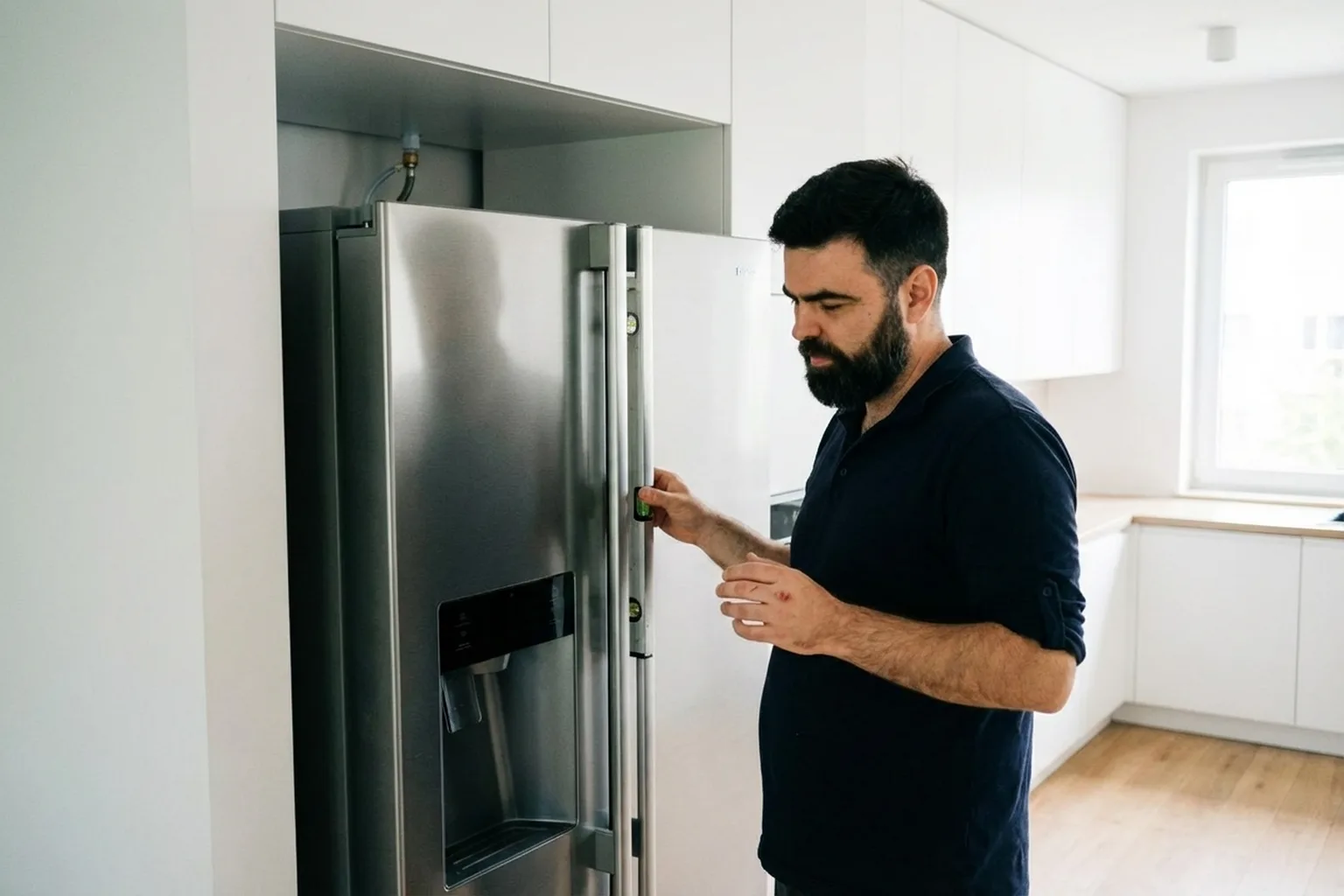
A client in Zoliborz bought a new two-door Samsung fridge with an ice maker. The kitchen had just gone through a full renovation, and the fridge was meant to fit into a plasterboard alcove. Once they took measurements, it turned out the alcove was 2 cm too narrow — they had to carefully trim the side panel. The socket had no earth, so the technician pulled a new line from the consumer unit with an RCD. The water feed for the ice maker was taken from the nearest tap under the sink through a shut-off valve. After fitting everything, they adjusted the feet so the door now shuts smoothly on its own. The whole job took around 3 hours. The lesson here: a built-in fridge needs exact alcove measurements before you buy it, and an ice maker needs a water supply prepared in advance.
Frequently asked questions
Is grounding mandatory for a fridge?
Yes. A fridge has a metal body and a compressor. Without grounding, an insulation fault can lead to electric shock. If the socket is old, replacing it is the better option.
Why tilt the fridge slightly backward?
A small backward tilt (front feet 5–10 mm higher than the rear) helps the door close under its own weight. Most manufacturers recommend this.
Can the fridge be placed next to the cooker?
Better not. The minimum gap is 30 cm, and it’s best to separate them with a cabinet or panel. Otherwise the fridge uses more electricity and wears out quicker.
When can I switch on the fridge after delivery?
If it was moved upright, after 1–2 hours. If it was transported on its side, after 4–6 hours. That gives the oil time to return to the compressor.
What is included in the connection price?
Positioning the fridge, levelling the feet, and checking that it works. Electrical changes, water supply work, and carrying the fridge into the apartment are charged separately.
Do tradespeople connect built-in fridges?
Yes, built-in models are exactly the kind of job where a professional is a good idea. Accurate fitting to the cabinetry and proper ventilation matter a lot.
Will the tradesperson carry the fridge into the apartment?
Carrying large appliances is a separate service. If you need it taken upstairs without a lift, say so in the order in advance.
Who does the work
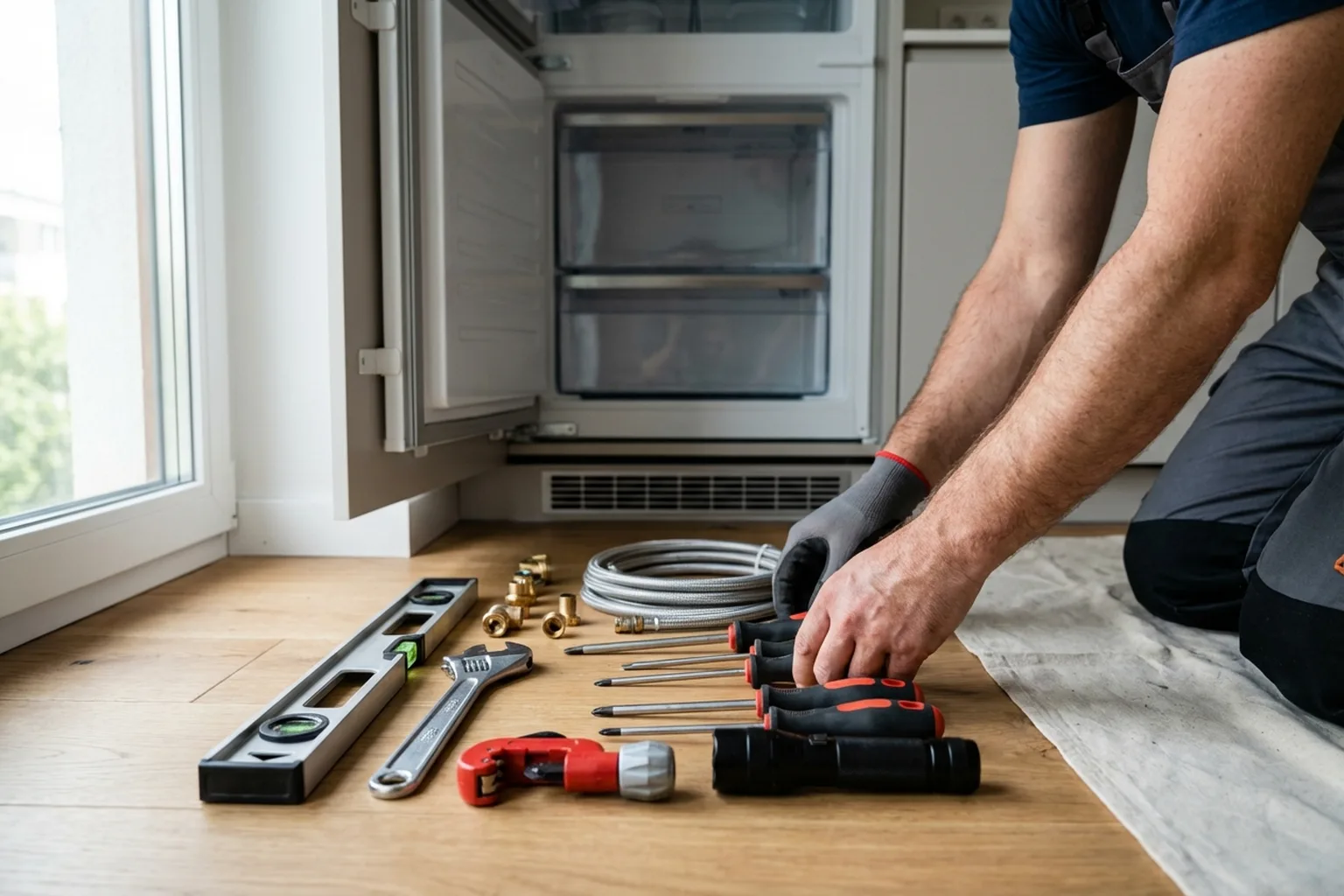
Kitchen appliance connections are done by technicians with hands-on experience in household equipment and electrics. Tradespeople work across all of Warsaw and the nearby suburbs.
Order in the app
Describe the job, add photos and the address. Tradespeople send their own prices and dates, and you pick one of the offers.
Open the app