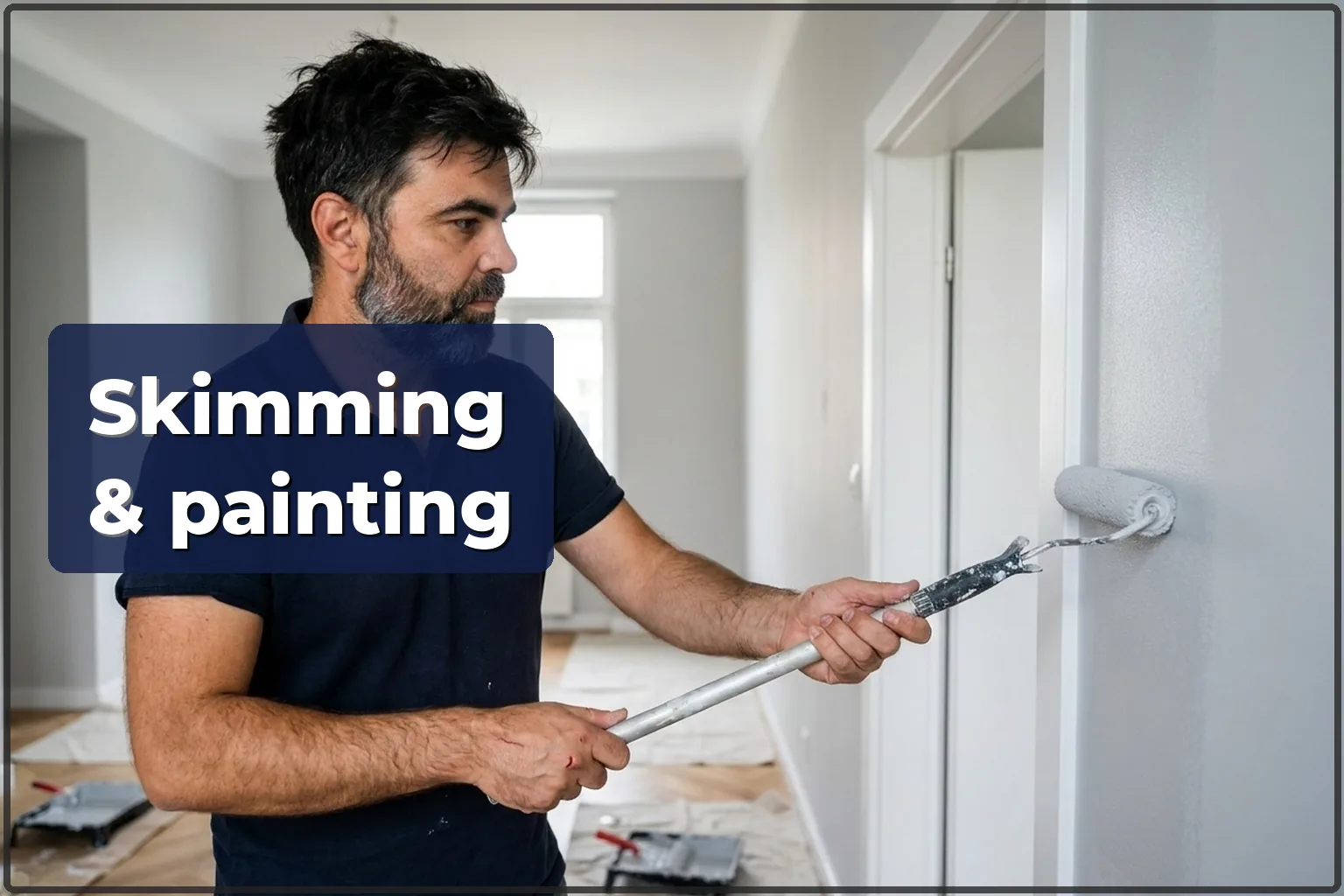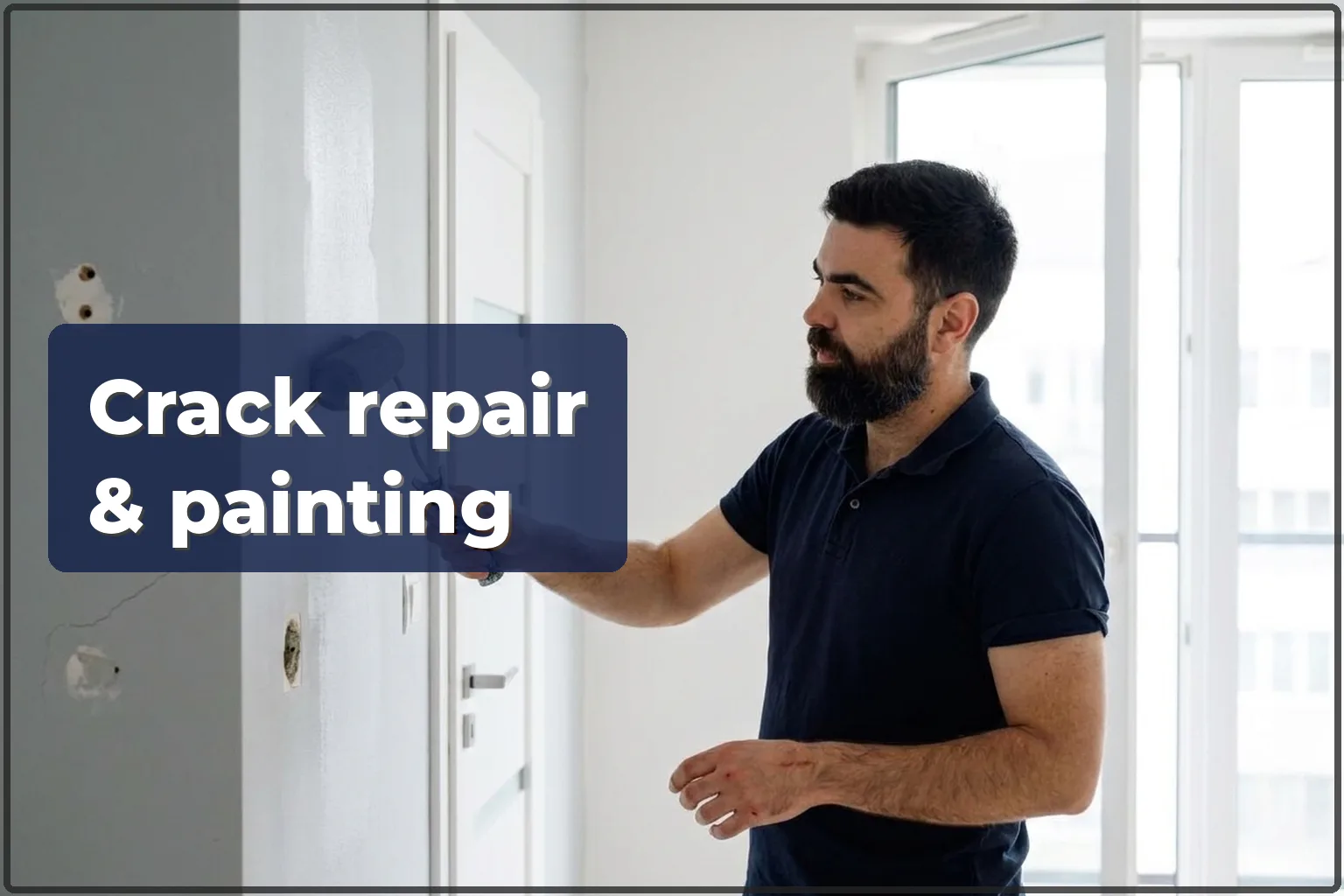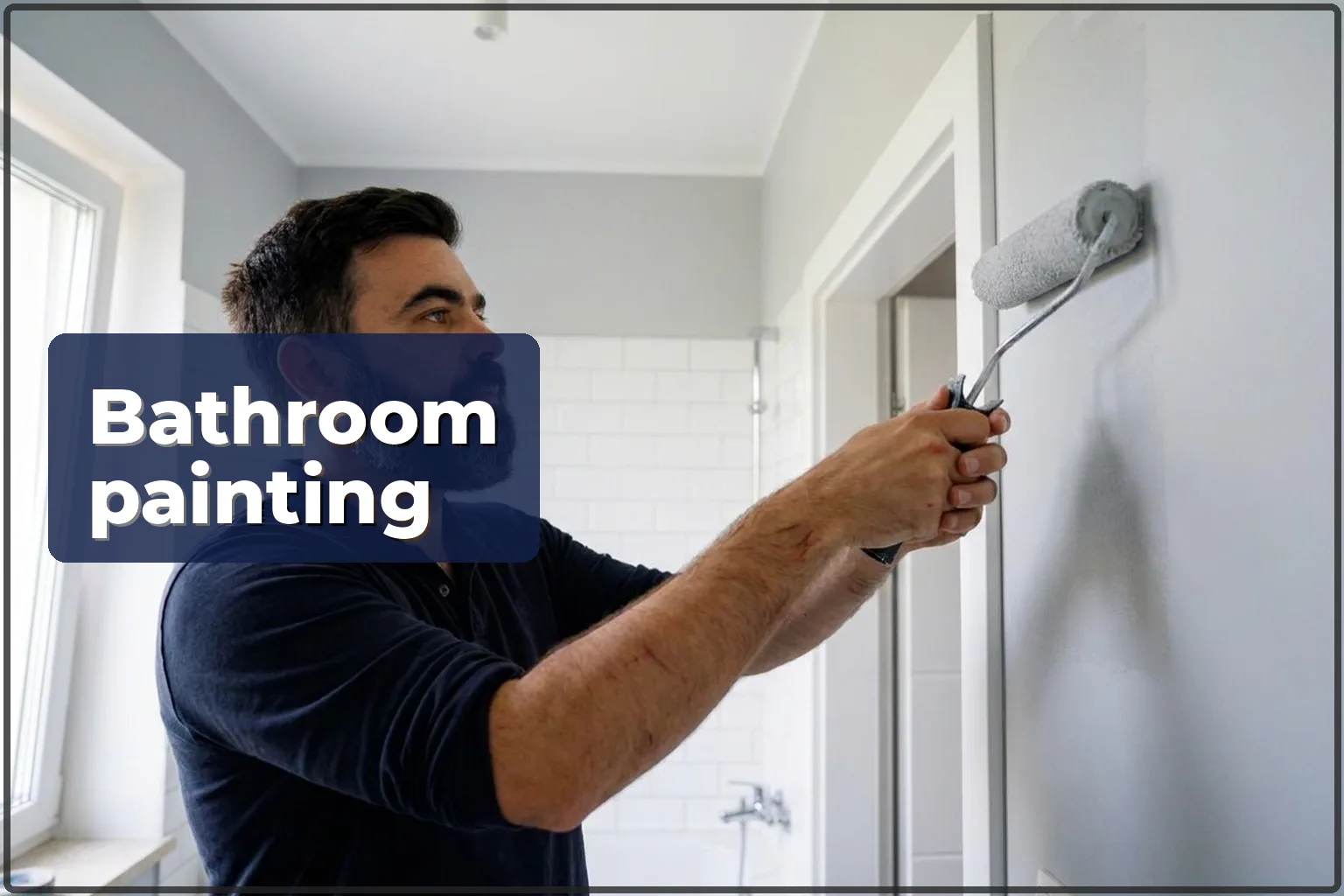
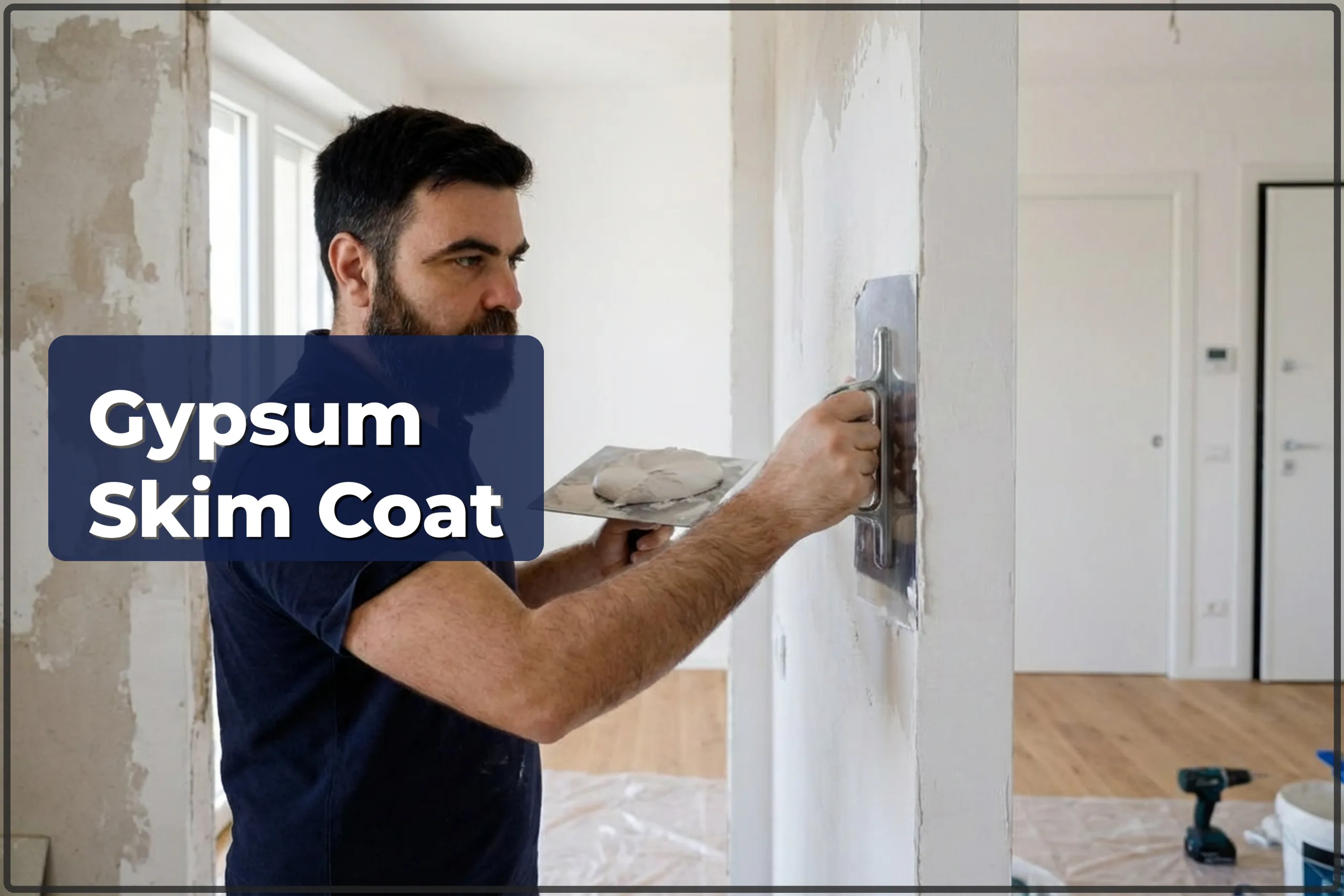
A gypsum skim coat is the final layer that changes rough render into a smooth, even surface ready for paint. Without it, even premium paint will still reveal the texture and imperfections of the base plaster. This is especially important in Warsaw’s new-builds — developers hand over flats with machine-applied render, but if you want a proper paint finish, you need a skim. We work across Warsaw — Żoliborz, Kabaty, Ochota — wherever walls need to be smooth as glass.
How much does it cost and what affects the price
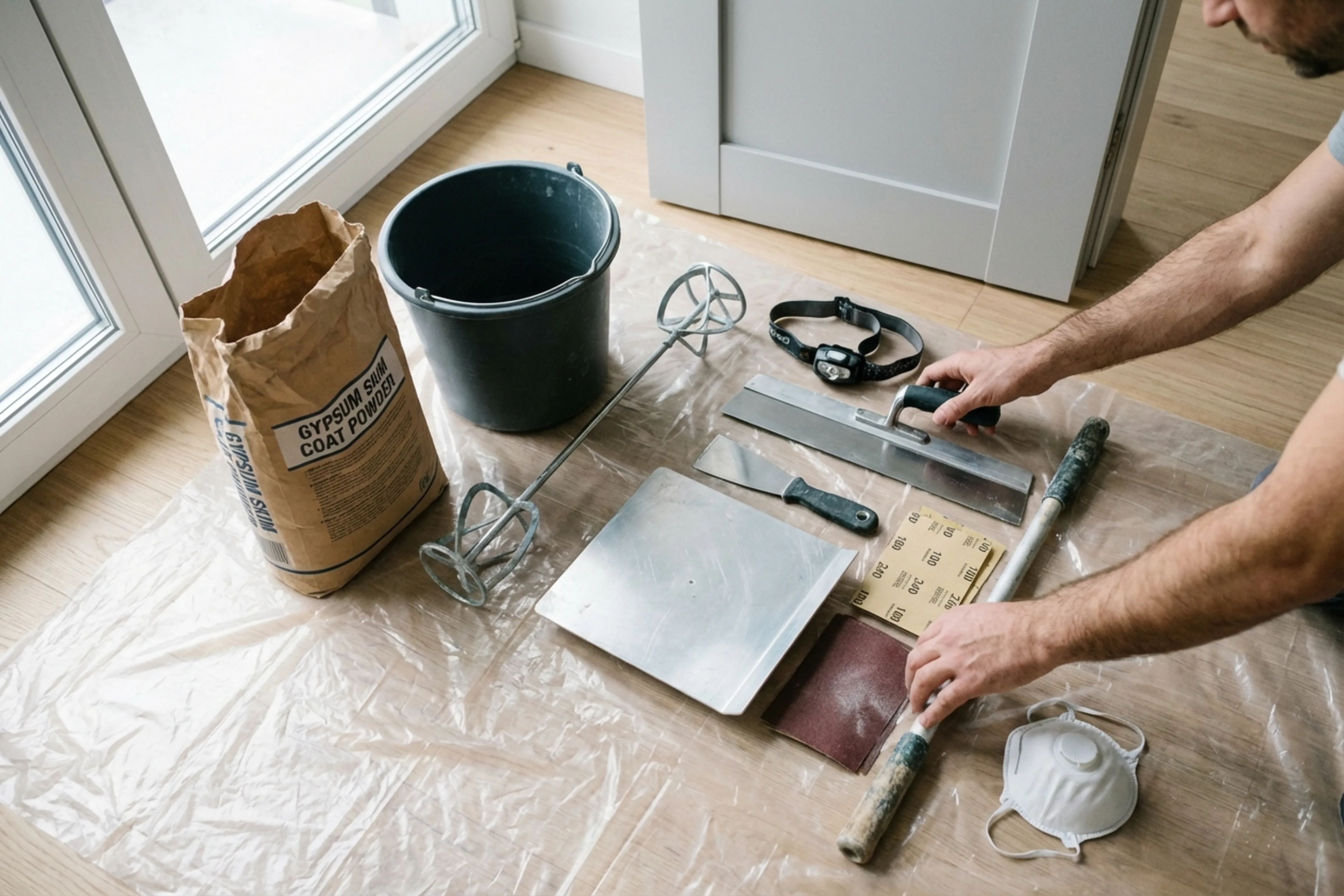
Up-to-date prices are in the table below. The final cost depends on the area, the number of coats, and the condition of the base. On fairly even render — one coat of finishing plaster. On a rougher wall — a base coat and then a finishing coat. Tools are included. Plaster compound is a consumable and is billed separately.
| Service | min | max |
|---|---|---|
|
Protection of furniture, doors, windows and floors with film
Book this service → | 10 zł/m² | 15 zł/m² |
|
Cleaning and washing walls before painting
Book this service → | 15 zł/m² | 25 zł/m² |
|
Filling holes and damages
Book this service → | 20 zł/m² | 35 zł/m² |
|
Wall leveling after tile removal
Book this service → | 45 zł/m² | 70 zł/m² |
|
Ceiling leveling
Book this service → | 45 zł/m² | 70 zł/m² |
|
Priming before painting
Book this service → | 15 zł/m² | 25 zł/m² |
|
Gypsum putty application
Book this service → | 55 zł/m² | 90 zł/m² |
|
Painting walls / ceilings in one color (2 coats)
Book this service → | 30 zł/m² | 45 zł/m² |
|
Painting walls in different colors
Book this service → | 35 zł/m² | 55 zł/m² |
How the on-site work goes
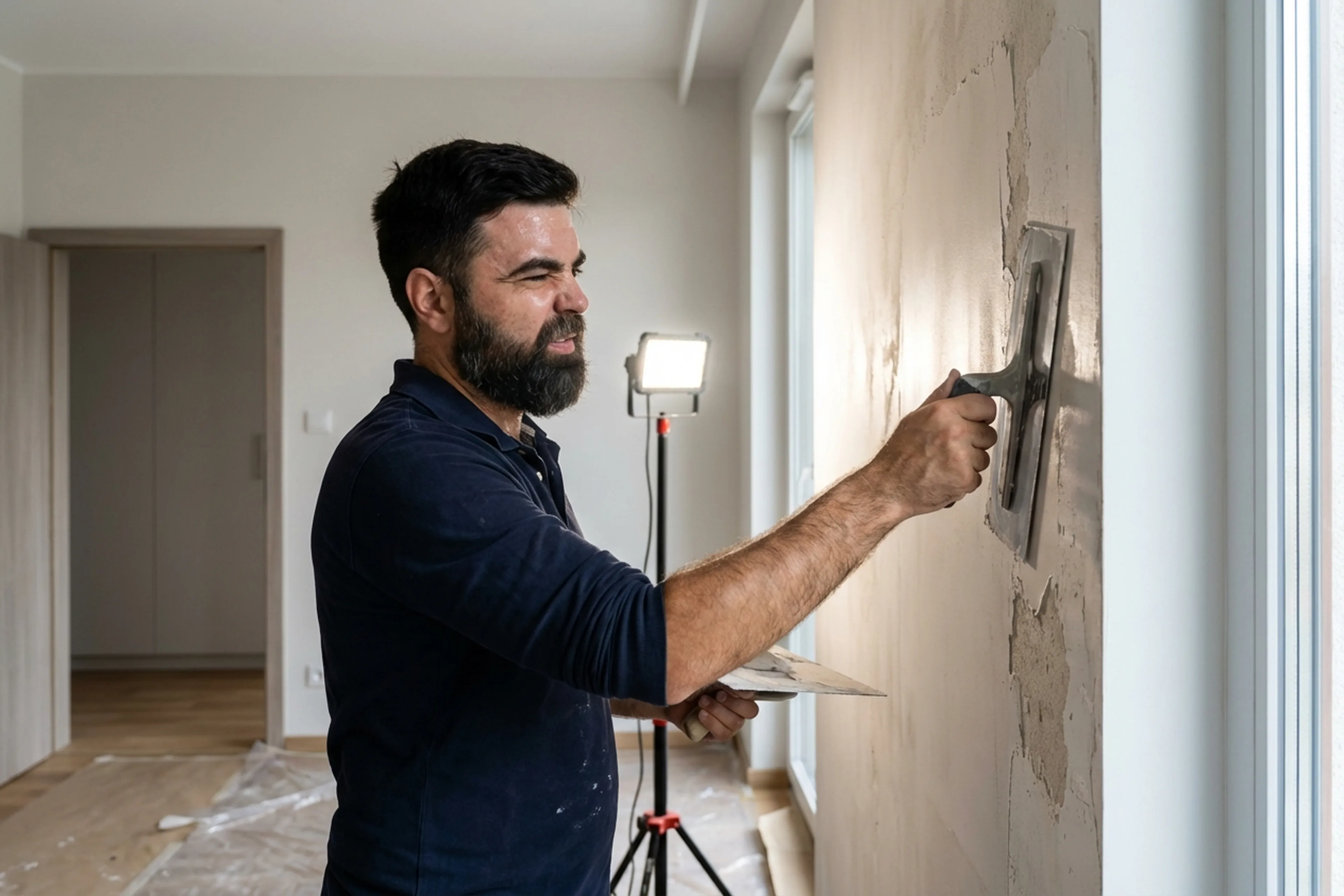
- The technician checks the substrate: how even the render is and whether there are dips, raised lines, or screed guide marks.
- The surface is primed so the skim adheres properly to the base.
- First coat — spread with a wide trowel (300–600 mm), filling all low spots and covering the texture.
- After drying (2–4 hours) — sanding to knock down any ridges.
- Second coat — thin and final. It hides the trowel lines left from the first coat.
- Final sanding with fine-grit paper. The surface is checked under angled light.
- Priming before painting.
Common customer mistakes (and how to avoid them)
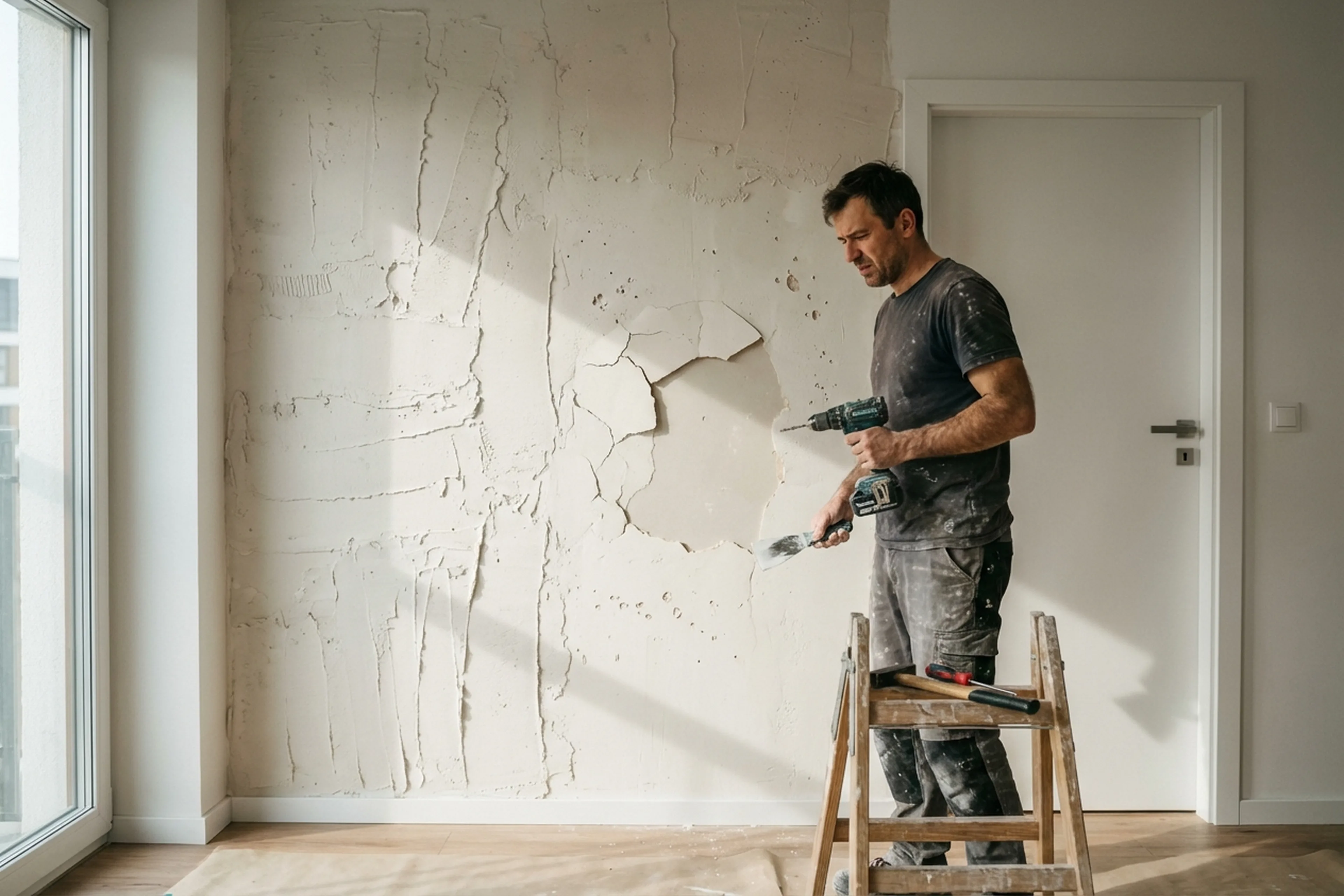
- Putting on one thick coat instead of two thin ones — a heavy layer cracks and takes forever to dry.
- Skipping sanding between coats — the second coat sits over ridges from the first and the wall ends up uneven.
- Mixing too much at one time — gypsum filler sets in 30–40 minutes, and there’s no way to use it all fast enough.
- Working with a dull or narrow trowel — it leaves grooves that remain visible under paint.
- Skipping primer before skimming — the plaster loses bond with the substrate.
- Skimming over damp render — moisture stops the plaster from gripping properly.
What to prepare before the technician arrives
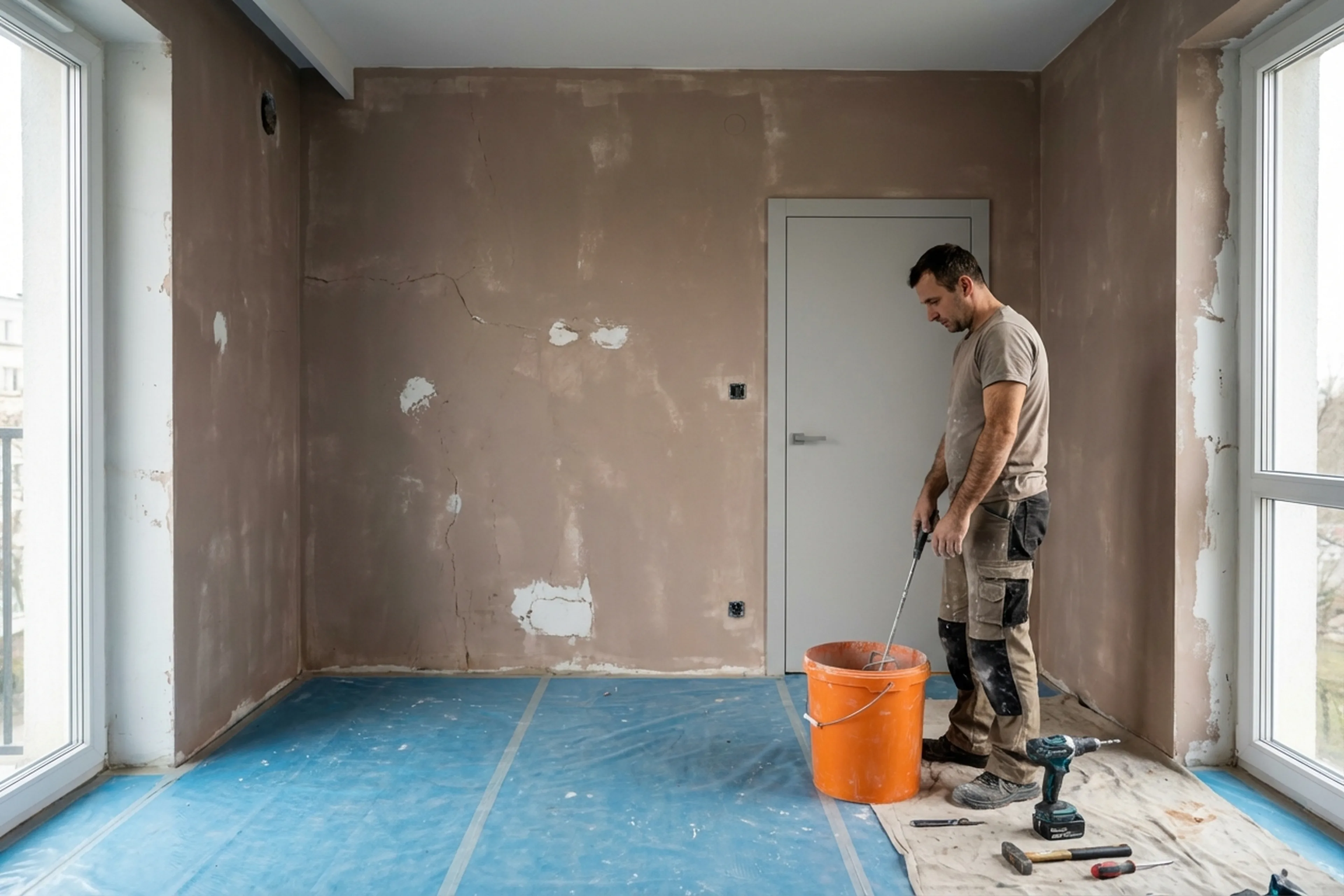
- Walls must be dry — fresh render needs at least 2 weeks to dry properly.
- Empty the room or cover everything with sheeting — sanding produces fine dust.
- Remove socket and switch cover plates.
- Make sure power is available for the sander and a work light.
- If the skim is going under wallpaper — that requires a different level of smoothness; tell the technician in advance.
- Open the windows for ventilation.
- Confirm how many rooms need skimming — this affects the timeline.
- Provide access details: intercom, parking.
A real case from Warsaw
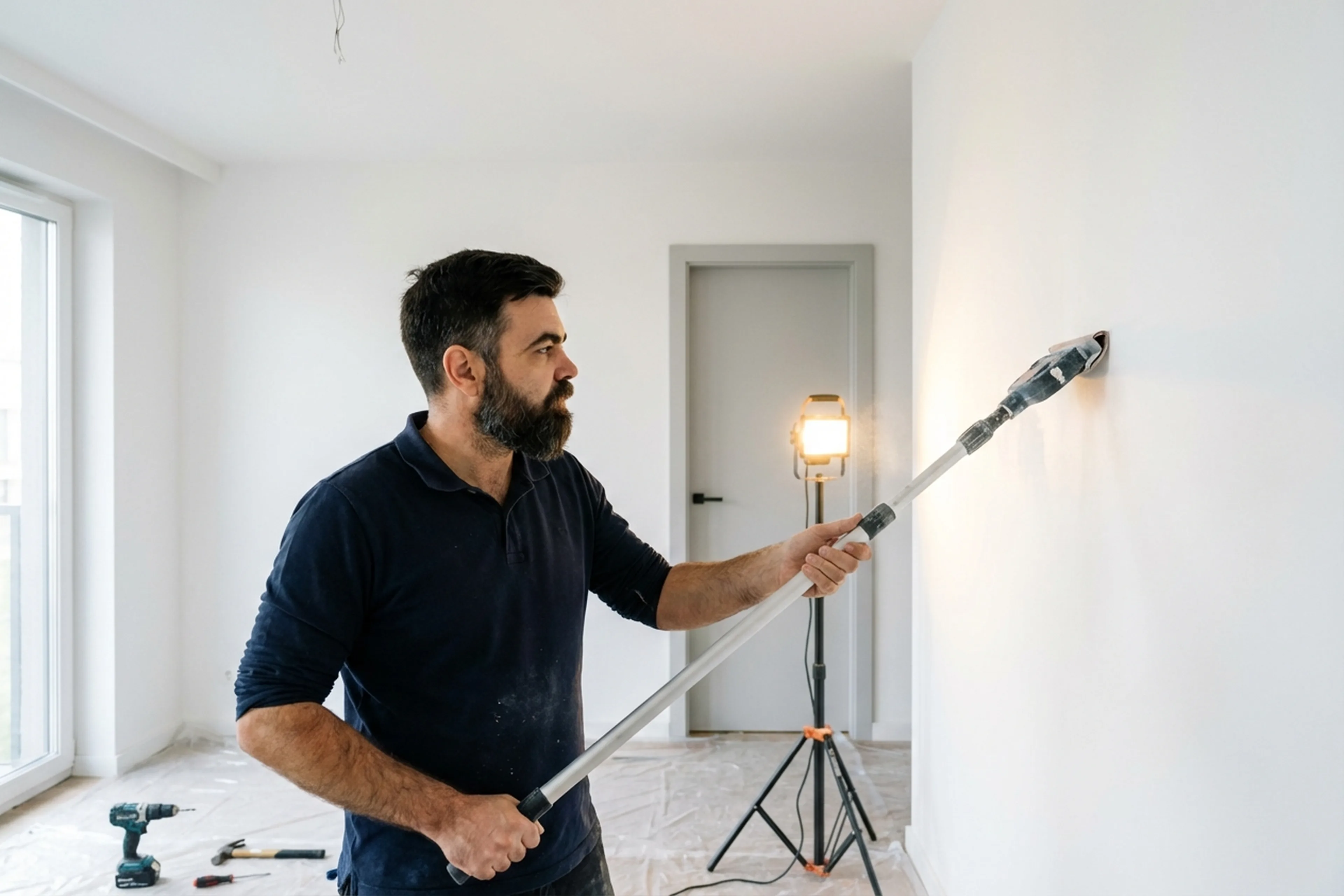
A new-build flat in Białołęka, 60 m² — developer finish with machine-applied render. The walls were fairly even but had a sandpaper-like texture and visible guide marks. The owners wanted pale grey paint — a colour that shows every defect. Our plasterer primed the walls, applied two coats of finishing plaster with sanding between them, then carried out a full final sand. The whole job took four days for the entire flat. After painting, the walls looked like a showroom finish — completely smooth, without a single visible flaw. The owners said the skim coat made the biggest difference in the whole flat.
Frequently asked questions
What’s the difference between base and finishing plaster?
Base is used for rough levelling (up to 5 mm thick). Finishing gives you a smooth surface (1–2 mm thick).
How many coats are needed?
Most often, two coats of finishing plaster. If the substrate is rough — first a base coat, then a finishing coat.
Can plasterboard be skimmed?
Yes — plasterboard should be skimmed: joints and screw heads first, then the full surface.
How long does gypsum plaster take to dry?
2–4 hours between coats. Before painting — at least 12 hours.
Can you skim in winter?
Yes, as long as the room stays above +5°C and is heated. Low temperature slows drying a lot.
Is gypsum plaster suitable for bathrooms?
Standard gypsum — no, it doesn’t cope with moisture. For bathrooms we use polymer or cement-based filler.
Who does the work
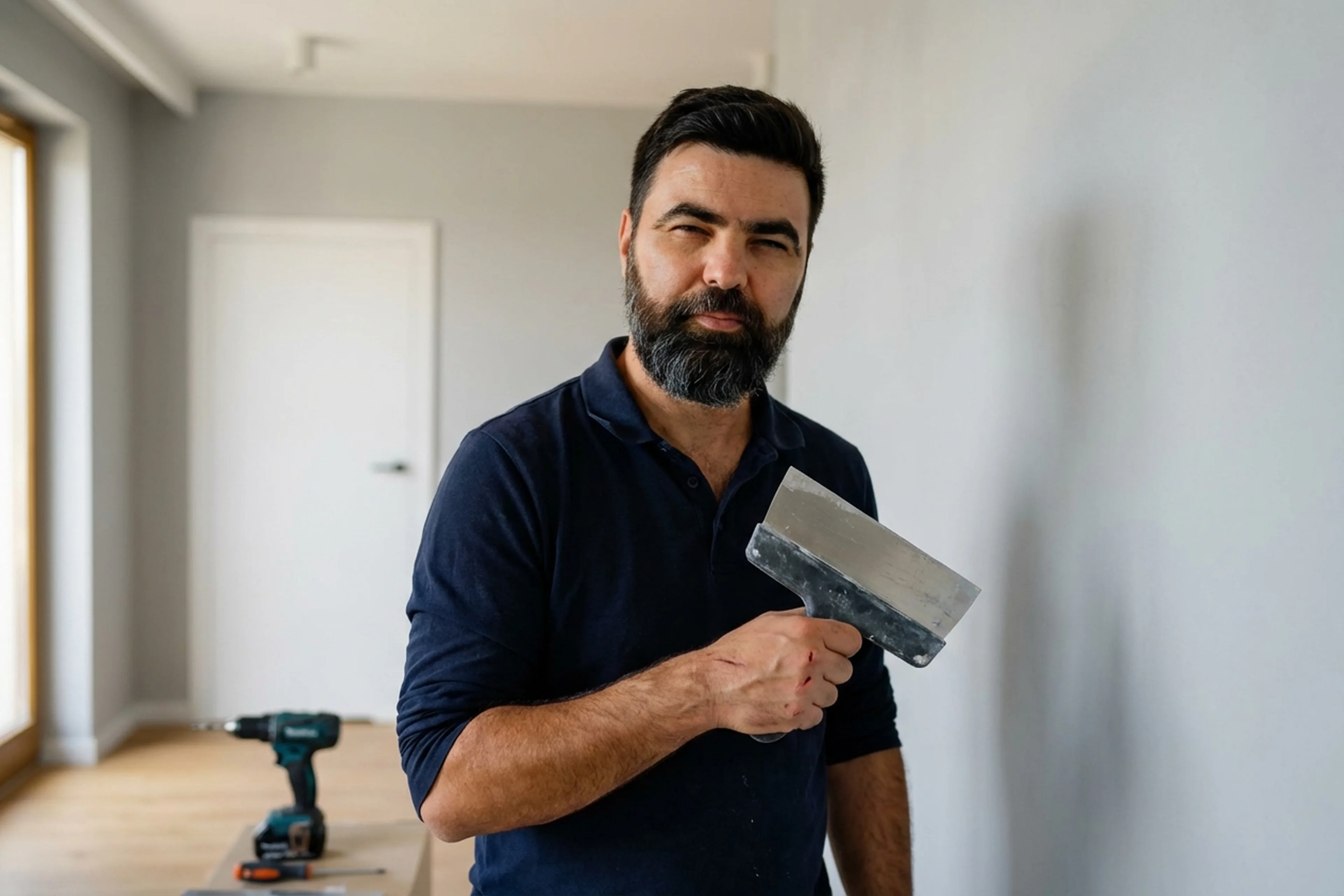
Gypsum skim coating is done by experienced plasterer-painters. We work across all of Warsaw. Call or message — we’ll check the scope and arrange a suitable date.