
How much does parquet gap filling cost
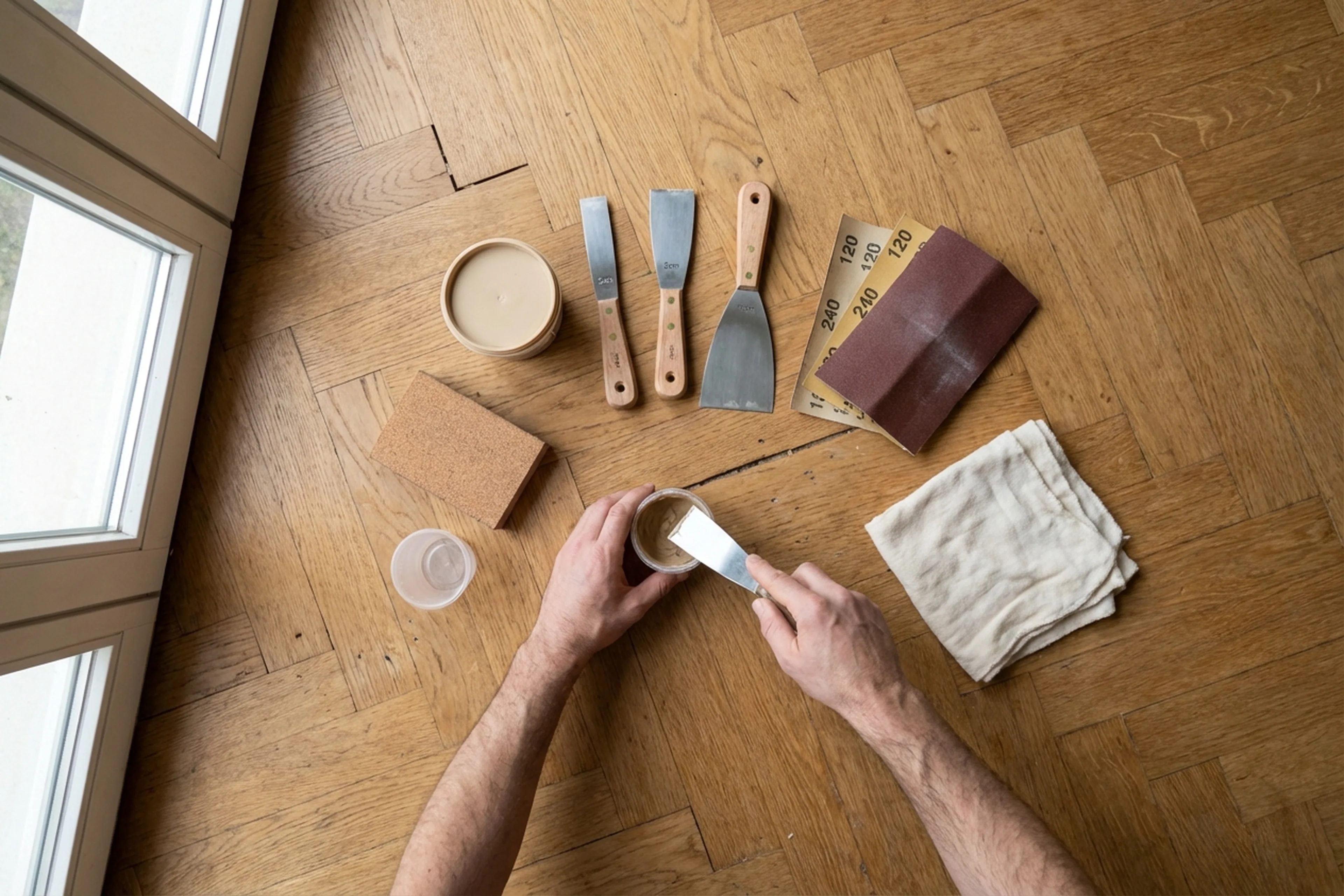
The cost is based on the floor size, the width of the gaps, and the condition of the boards. Small gaps under 2 mm can be closed in one pass. Larger gaps over 5 mm need several coats or timber inserts. Up-to-date rates for all flooring services are listed in the table below.
| Service | Price |
|---|---|
| Floor panel removal | 20–30 zł/m² |
| Floor panel installation | 50–90 zł/m² |
| Floor panel replacement | 70–100 zł/m² |
| Vinyl plank installation | 45–80 zł/m² |
| Skirting board installation | 25–45 zł/mb |
| Skirting board removal | 8–12 zł/mb |
| Old flooring removal | 20–30 zł/m² |
| Carpet laying | 55–70 zł/m² |
| PVC flooring laying | 45–75 zł/m² |
| Glued flooring laying | 45–75 zł/m² |
| Parquet sanding | 45–55 zł/m² |
| Parquet varnishing | 40–60 zł/m² |
| Parquet oiling | 25–45 zł/m² |
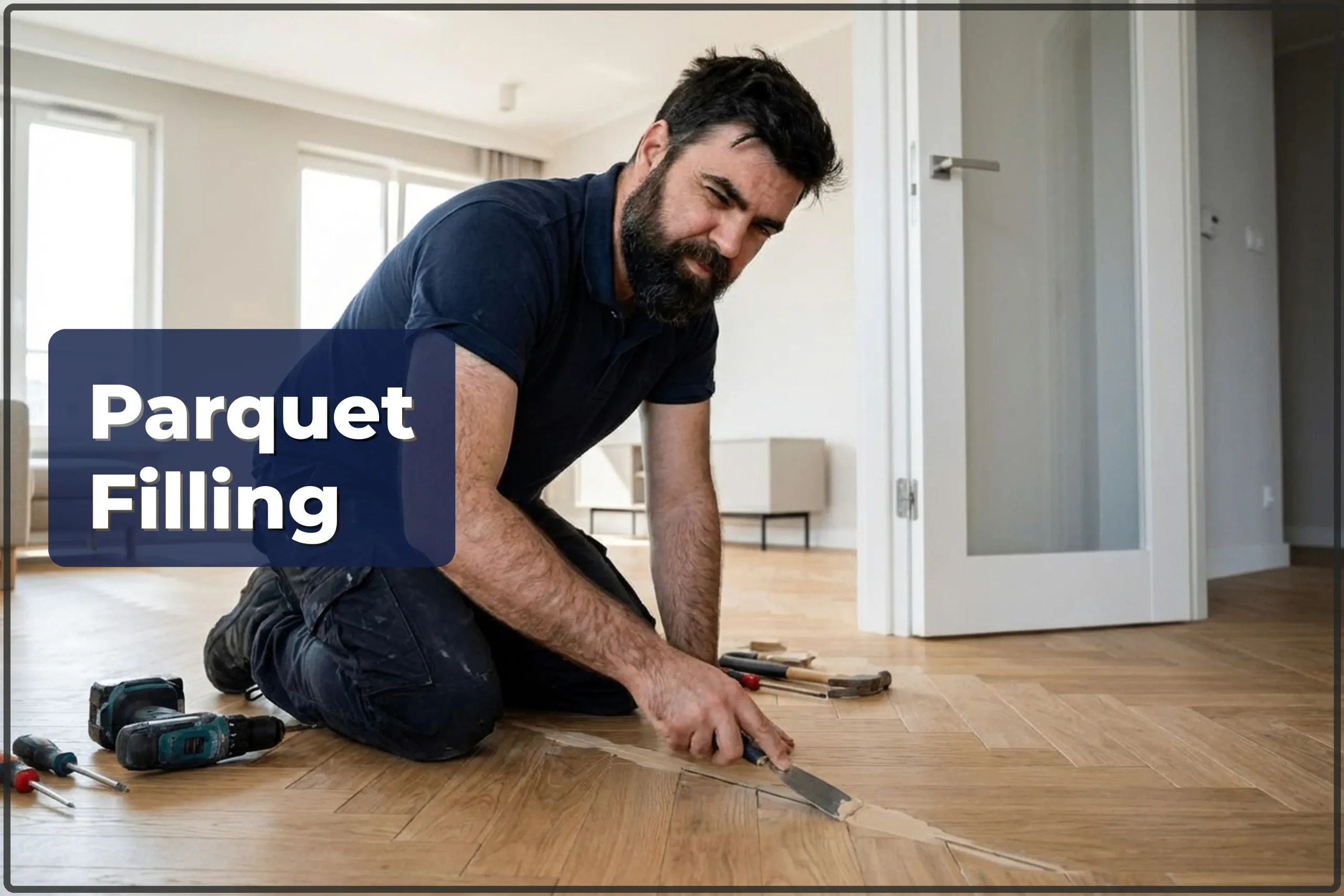
| Parquet filling | 25–45 zł/m² |
| Floor threshold installation | 180–300 zł |
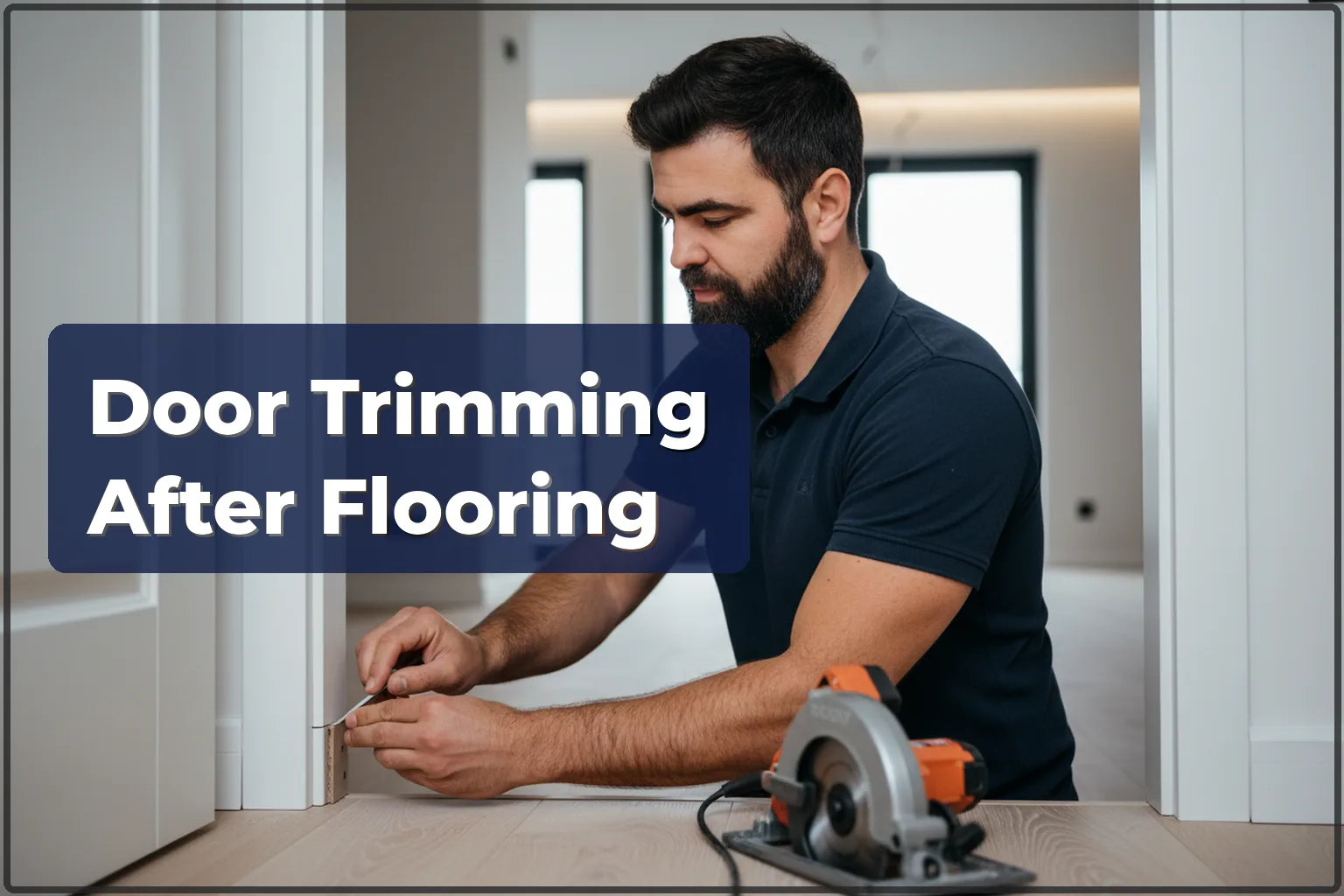
| Door trimming | 200–400 zł |
Indicative prices. Ranges for a typical scope. Fixings included, materials separate. Minimum order 300 zł.
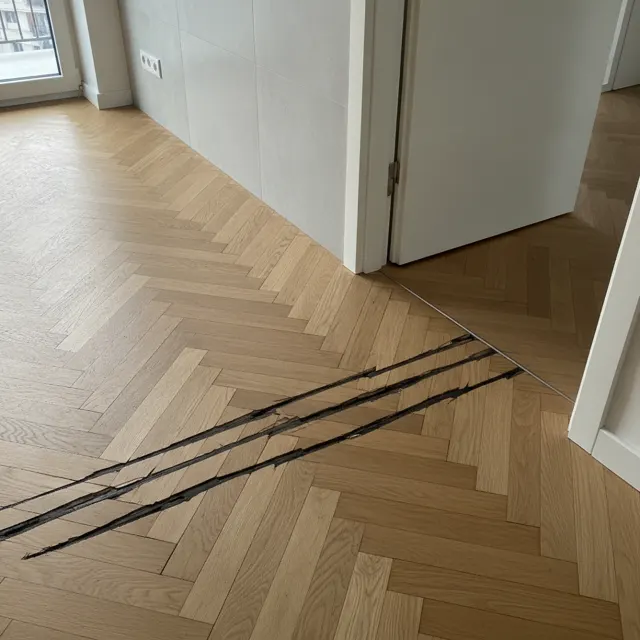
Price ranges and offers from tradespeople: apartment finishing in Warsaw.
How parquet gap filling works: step by step
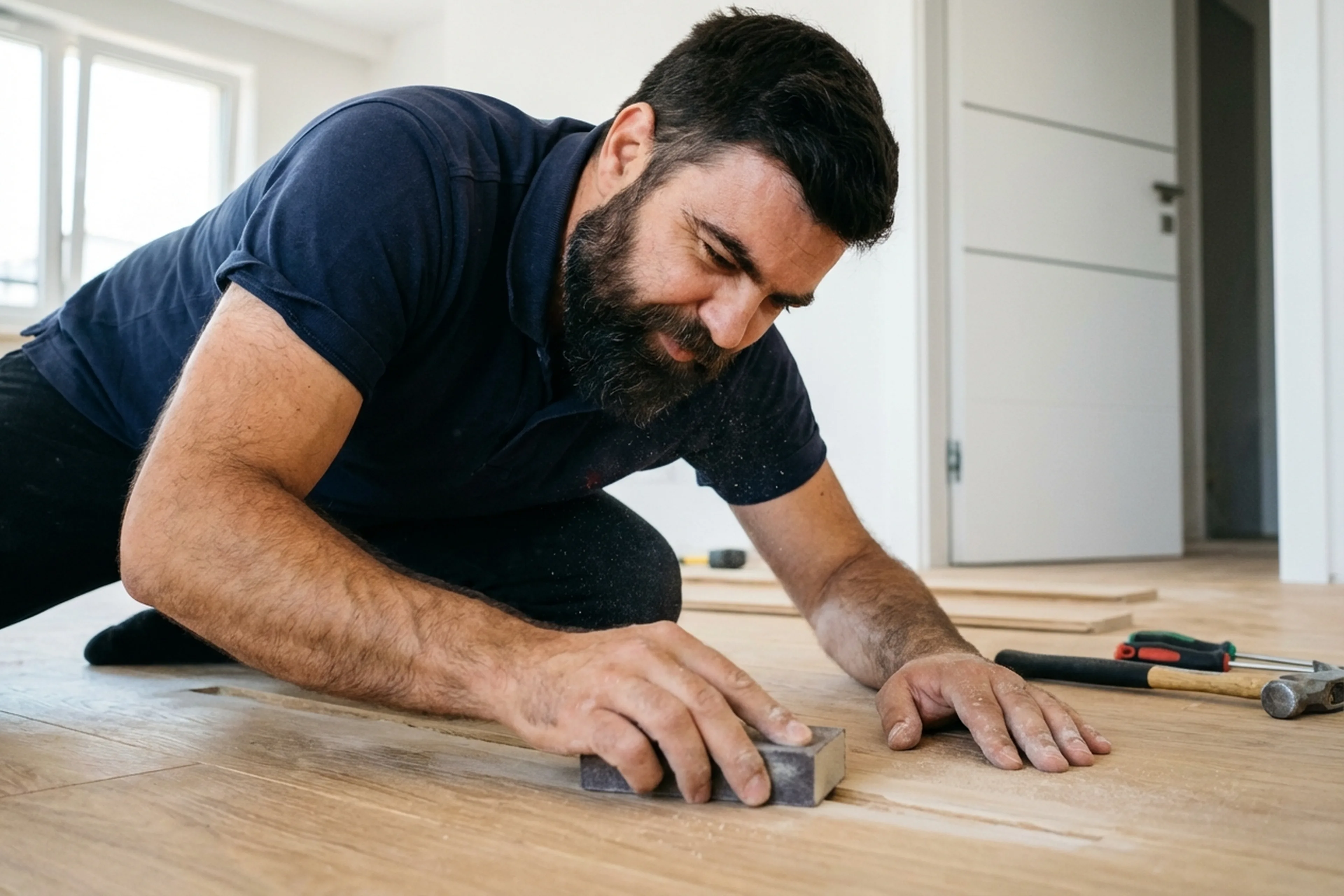
- The parquet is sanded — the old lacquer comes off and the surface is evened out. Filling over an existing finish makes no sense.
- Sanding dust is gathered: this becomes the base for the filler. Dust from your own floor gives an exact colour match.
- The dust is blended with a binder (nitrocellulose or acrylic compound) until it reaches a thick cream consistency.
- The paste is worked across the whole floor with a spatula, filling every gap, crack and defect.
- The surplus is removed with a wide blade: the paste stays only in the low spots.
- After drying (2–4 hours) the floor is sanded with a fine 120–150 grit abrasive.
- Vacuum, wipe the surface — the floor is ready for lacquer or oil.
Common mistakes with parquet filling
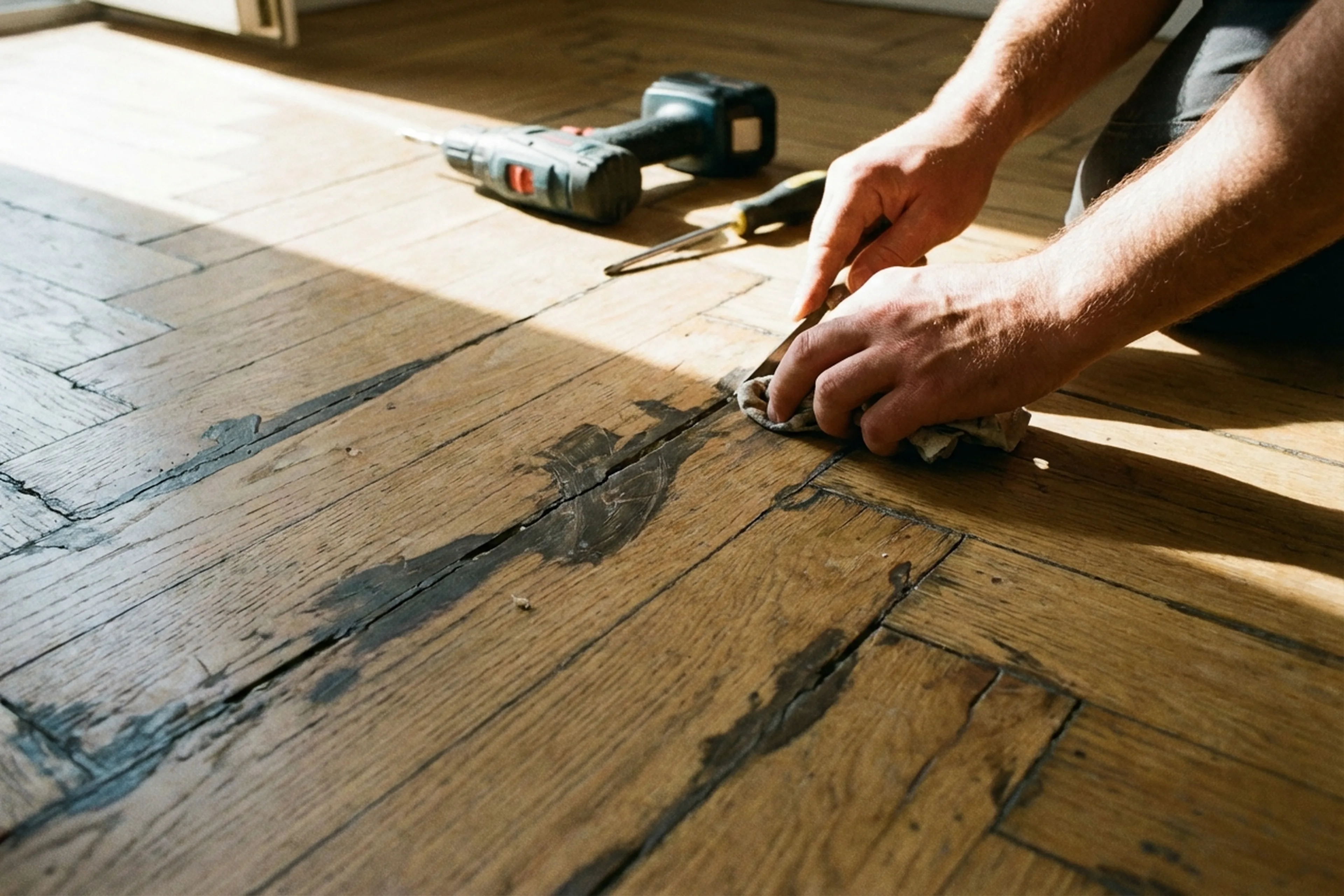
- Using a ready-made filler from the shop instead of mixing one with your own sanding dust, the shade will be off and patches will show under the lacquer.
- Filling over old lacquer — the compound won’t grip and will start popping out when the floor is under load.
- Making the paste too runny: it goes straight through the gaps instead of staying in them.
- Not waiting for the filler to dry all the way before final sanding, the abrasive clogs up and the surface remains uneven.
- Skipping the last sanding pass after filling — lacquer ends up on ridges and the floor feels rough to the touch.
- Filling only the most visible gaps and leaving the rest, the contrast stands out badly after lacquering.
What to prepare before the technician arrives
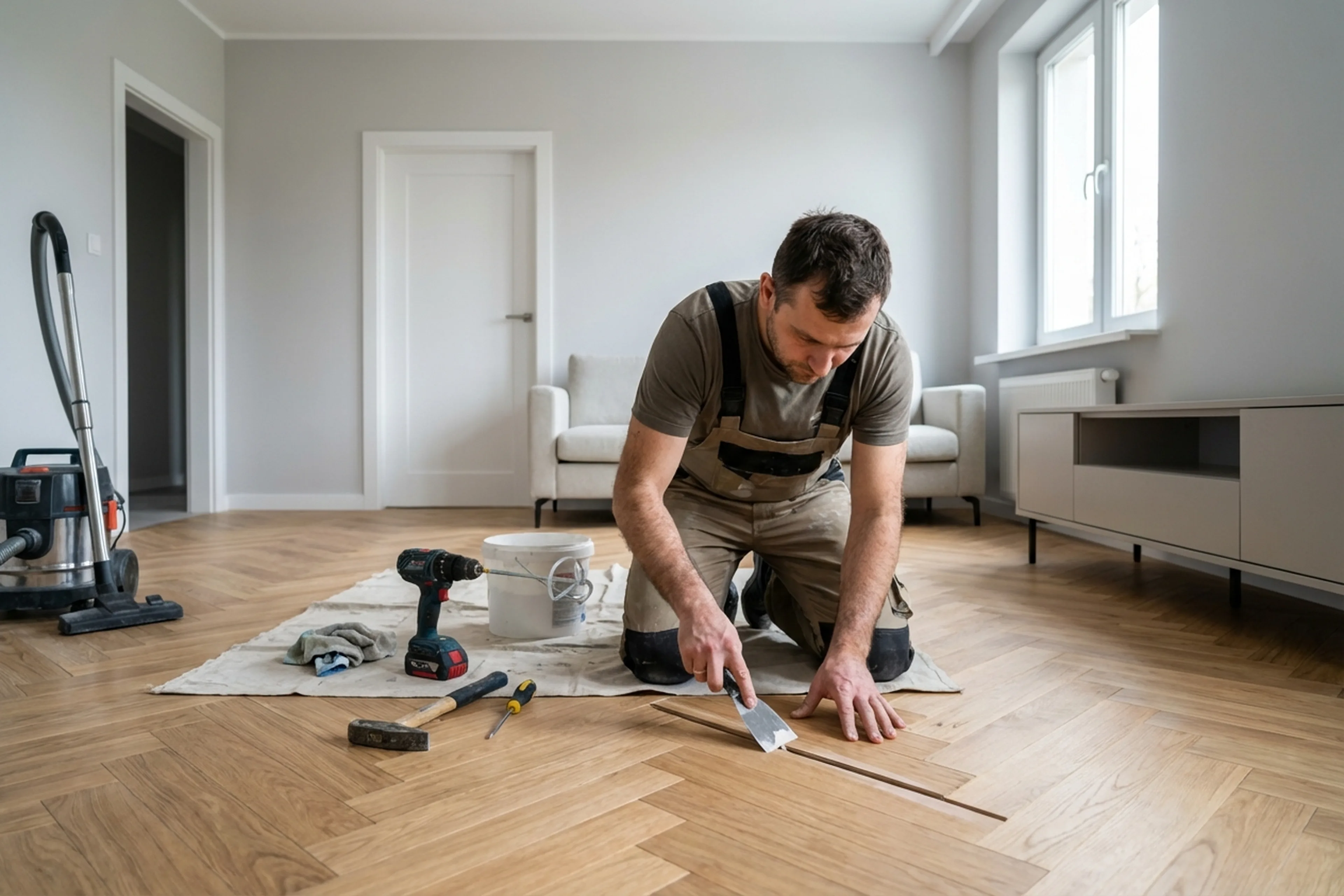
- Empty the room fully: they fill the whole floor area.
- Check for nails sticking up and hammer them down flush — they will rip the sanding belt.
- Make sure there is working power: the sander pulls a lot of wattage.
- Choose the final finish (lacquer, oil, wax): this decides the primer type.
- Let your neighbours know — sanding is loud, even though modern machines use dust extraction.
- Send access details: intercom code and parking information.
A real case from Warsaw: parquet gap filling
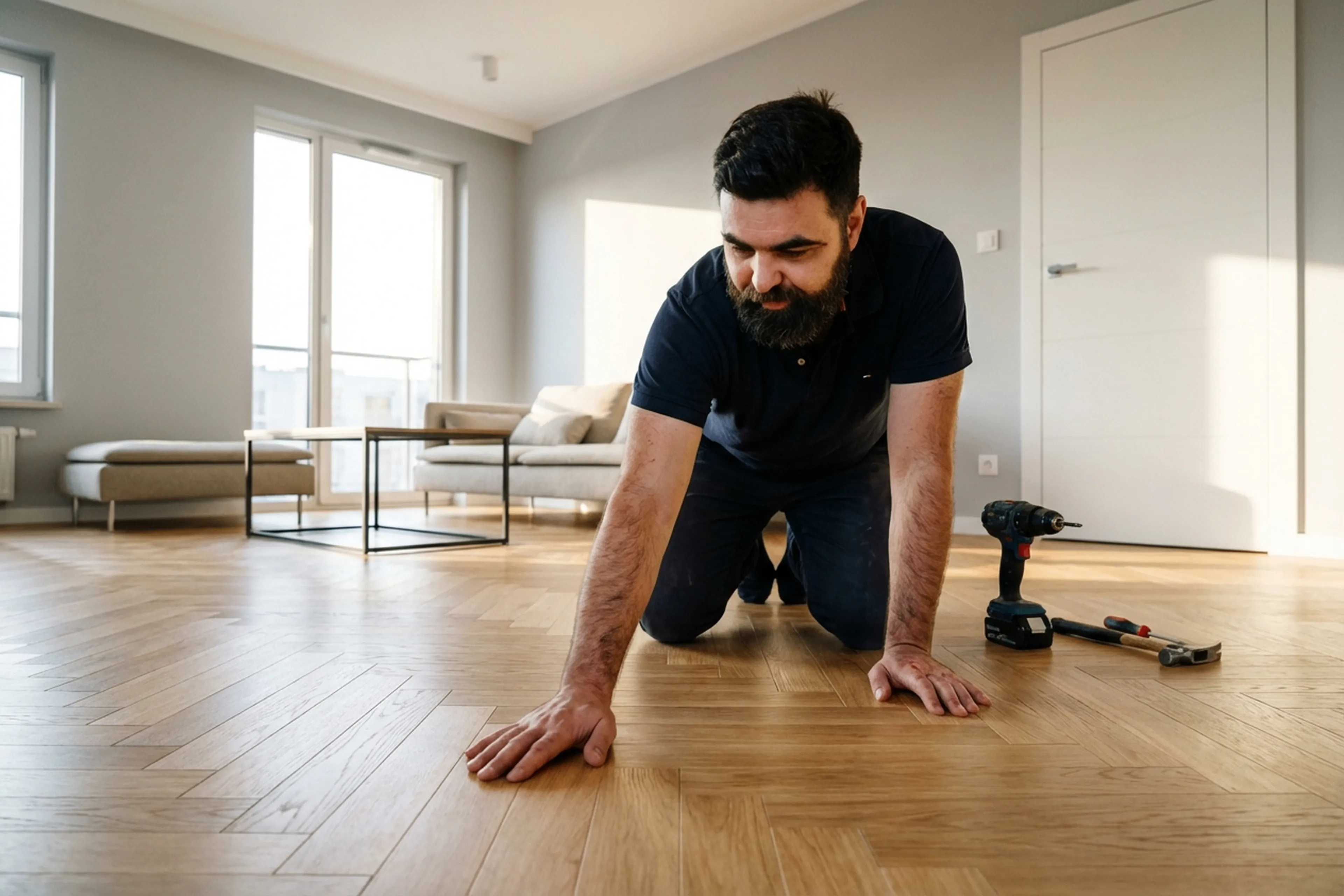
A flat in Bielany, oak herringbone parquet, 40 m². Once the sanding was done, gaps of 3–5 mm showed up, years of central heating had dried the wood out. The technician collected the sanding dust and combined it with a nitro binder. Two passes: the first took care of the main gaps, the second dealt with smaller cracks. After drying, the floor got a finishing sand at 120 grit. Result: the floor looks like one solid surface — not a single gap in sight, and the filler colour blends into the wood completely. The next day, two coats of polyurethane lacquer: the parquet looks factory fresh. The owner had been thinking about replacing it with laminate but changed his mind after seeing the original floor brought back to life.
Frequently asked questions
Can parquet be filled without sanding first?
No. Filler goes onto bare wood only. It will not stick to old lacquer.
Does the filler work under any finish?
Yes: lacquer, oil and wax. What matters is using a binder that matches your chosen finish.
Will the gaps come back?
Wood is a natural material — it expands and shrinks as humidity changes. Small gaps can show up again after 3–5 years. Keep indoor humidity at 45–60% to make the result last longer.
How long does the filling take?
The filling itself takes 2–3 hours for 30 m². Then add drying time (2–4 hours) and finish sanding. Tradespeople usually get the whole job done in one working day.
Can a tradesperson fill just part of the floor?
In theory yes, but the end result will be worse. Dust from sanding one spot comes out a different shade. It is better to do the whole room.
Who does the work

Parquet filling and restoration is done by technicians with real hands-on experience in wood flooring. Tradespeople come with a sander, consumables, and binding compounds. Tradespeople cover all of Warsaw and nearby areas.
Order in the app
Describe the job, add photos and the address. Tradespeople send their own prices and dates, and you pick one of the offers.
Open the app