
Safety note: work on waste pipes needs a careful hand. A trap put together badly means a leak that can damage the vanity unit below or even soak through to the flat underneath. If you are not sure about pipe diameters or connection types — call a professional.
How much does siphon replacement cost
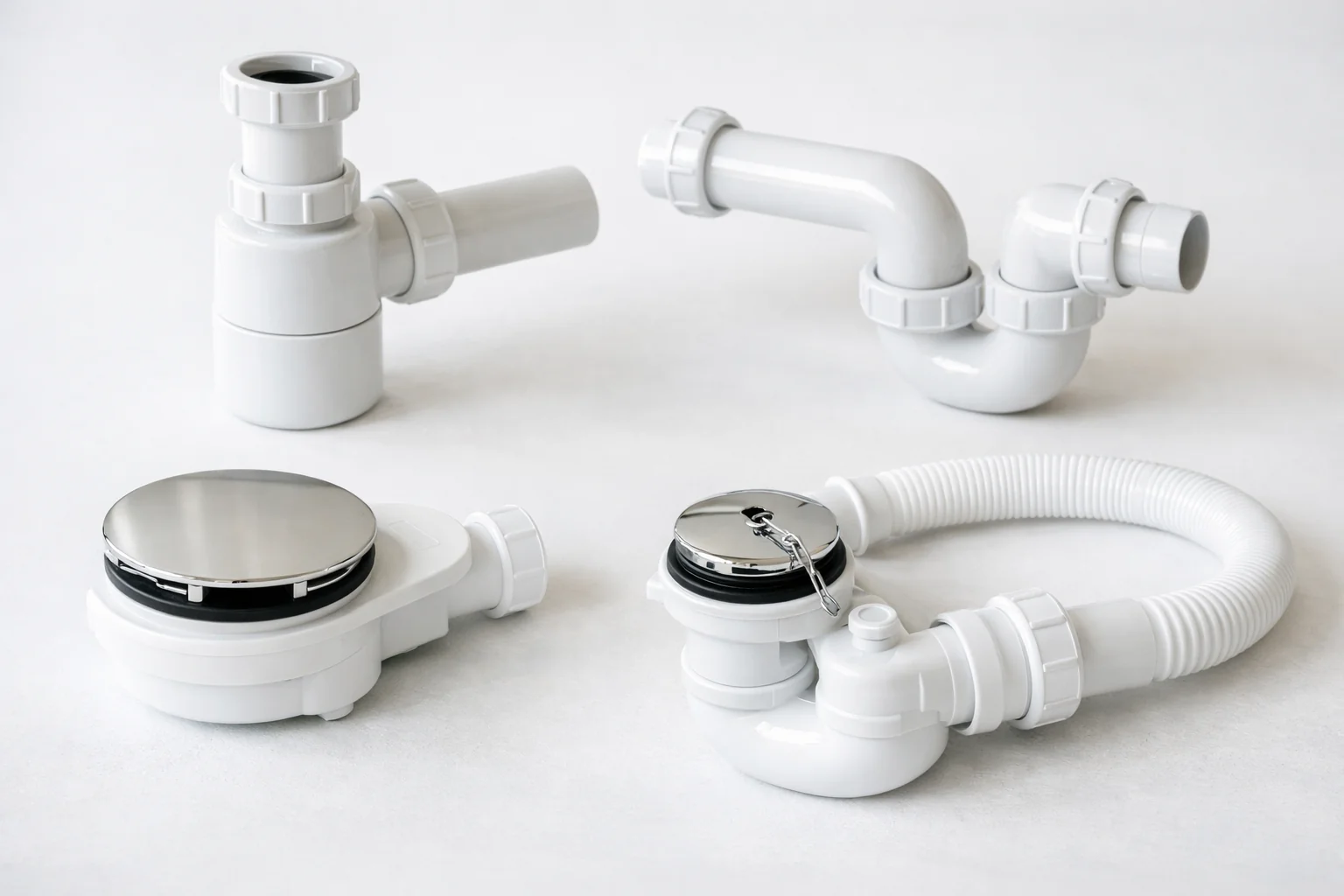
The cost depends on the kind of trap (bottle trap, tubular trap, flat shower trap, bath trap with overflow) and on how easy it is to reach the connections. If the pipes are still in decent condition, replacing it takes about half an hour. If the old trap is stuck fast or the waste pipe needs an adapter, the job takes more time and costs more. Fixings are included in the price; the trap itself is provided by the client (or they can source and bring one for an extra fee). Current rates for all bathroom services are in the table below.
| Service | Price |
|---|---|
| Washbasin installation | 200–500 zł |
| Washbasin replacement | 250–600 zł |
| Vanity unit installation | 300–600 zł |
| Basin tap installation | 150–250 zł |
| Basin tap replacement | 250–400 zł |
| Floor toilet installation | 300–500 zł |
| Floor toilet replacement | 350–600 zł |
| Wall-hung toilet installation (frame) | 450–700 zł |
| WC frame replacement | 600–1500 zł |
| Bathtub installation | 400–900 zł |
| Shower tray replacement | 600–1000 zł |
| Linear drain installation | 400–900 zł |
| Re-sealing shower and bathtub | 250–600 zł |
| Towel radiator installation | 300–600 zł |
| Towel radiator replacement | 350–700 zł |
| Drain cleaning | 200–800 zł |
| Trap (siphon) replacement | 120–400 zł |
Indicative prices. Ranges for a typical scope. Fixings included, materials separate. Minimum order 300 zł.
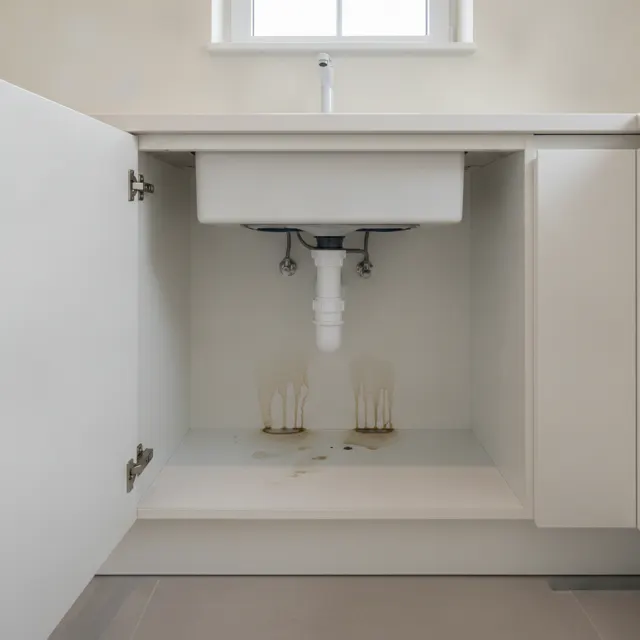
Rather hand the job over? More here: handyman in Warsaw.
How the replacement works
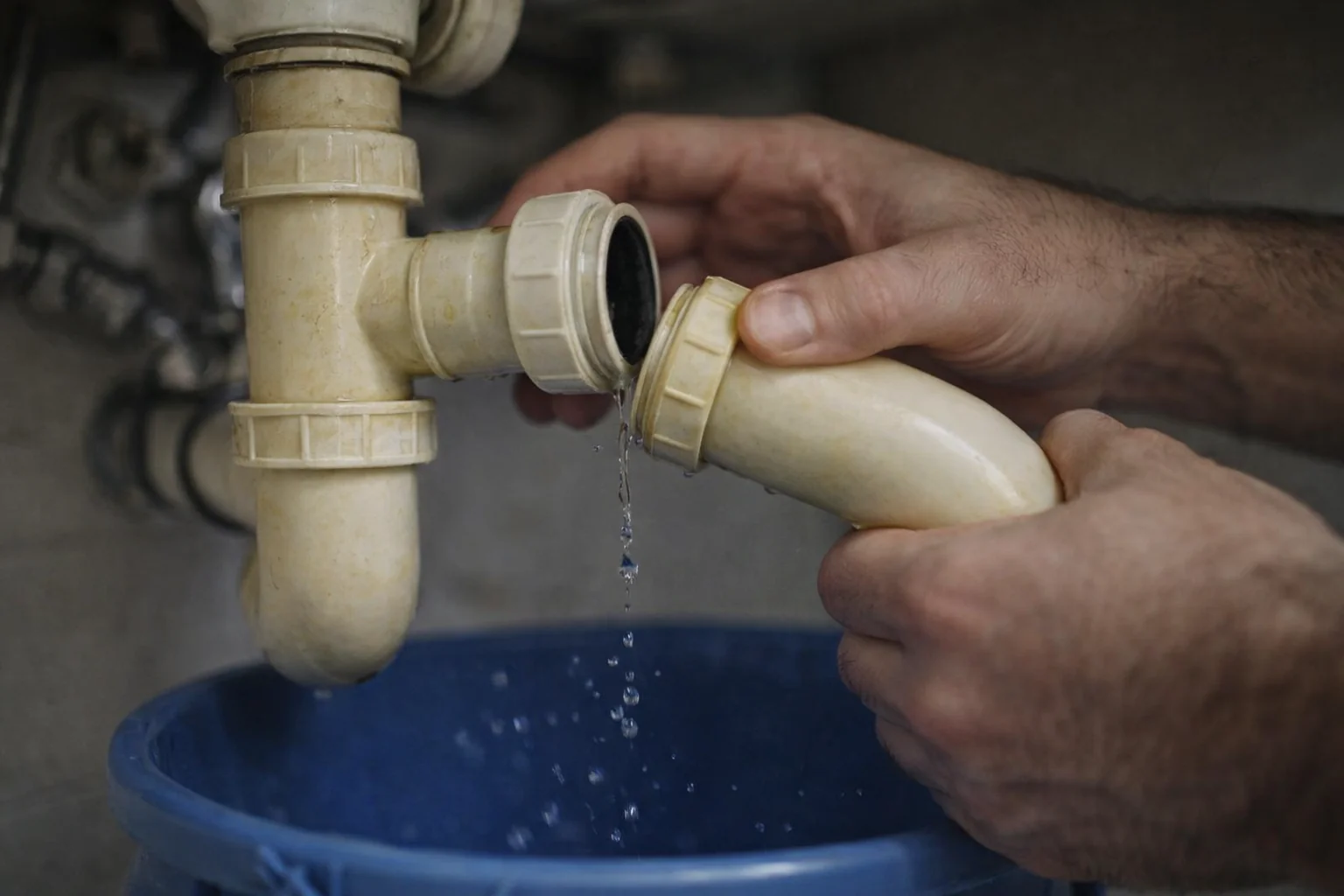
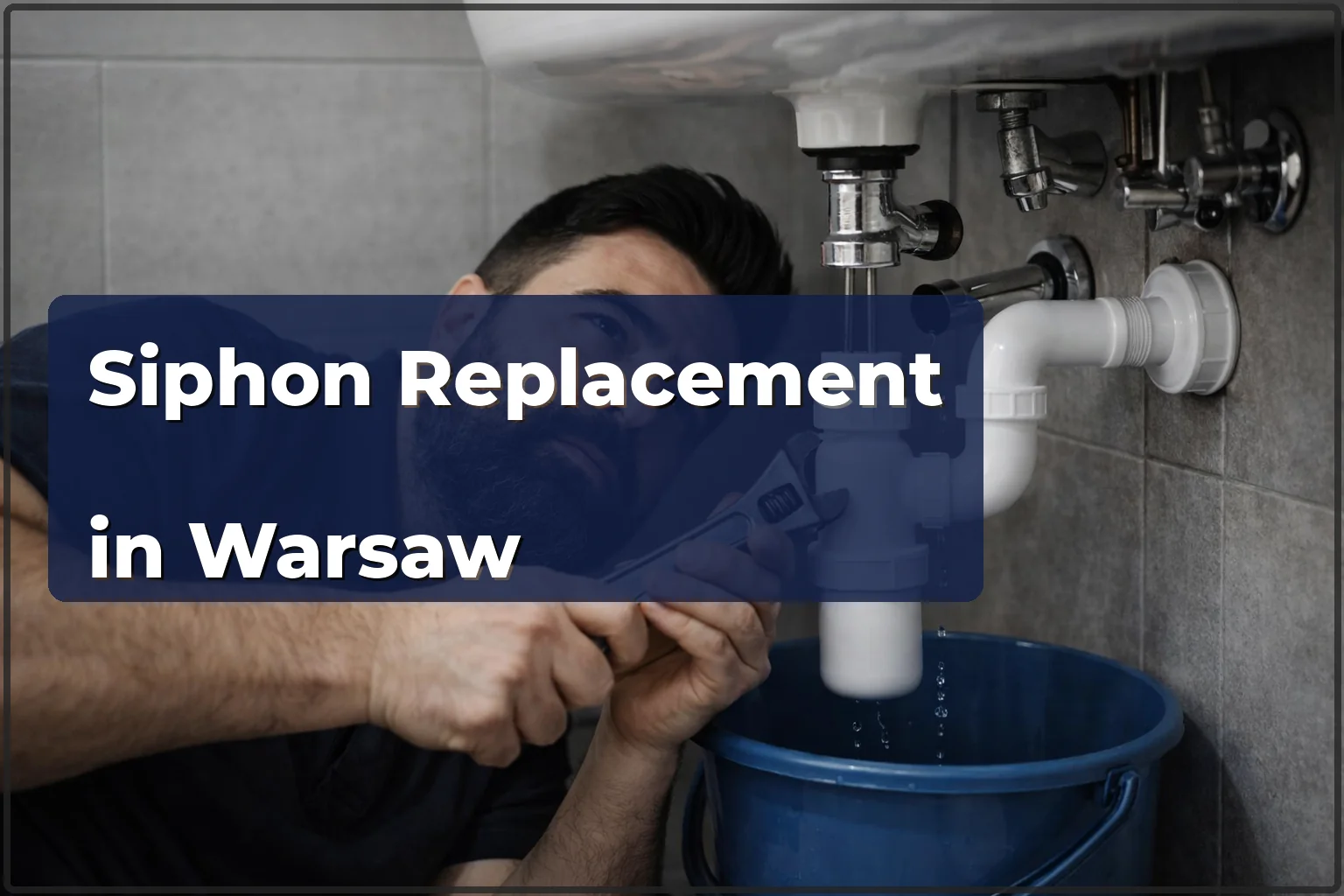
- Tradespeople shut off the water and put a bucket or basin under the trap, there is always some water left inside it.
- Tradespeople remove the old trap: disconnect it from the basin waste outlet (or bath waste) and from the drain pipe. If the plastic has gone brittle, they work gently so the spigot in the wall does not snap.
- Tradespeople clean the waste outlet thread and the edge of the drain pipe, taking off old sealant, limescale and dirt. This is important: new seals need a clean surface to sit properly.
- Tradespeople put together the new trap: fit the waste outlet with a fresh gasket, attach the trap body, and connect the outlet to the drain pipe. All nuts are tightened by hand only — plastic threads split if you use a wrench.
- Tradespeople turn the water back on, fill the basin and let it drain. Every joint is checked with a dry paper towel run along the seams. If anything comes up damp, they tighten the nut slightly or replace the seal.
Common mistakes
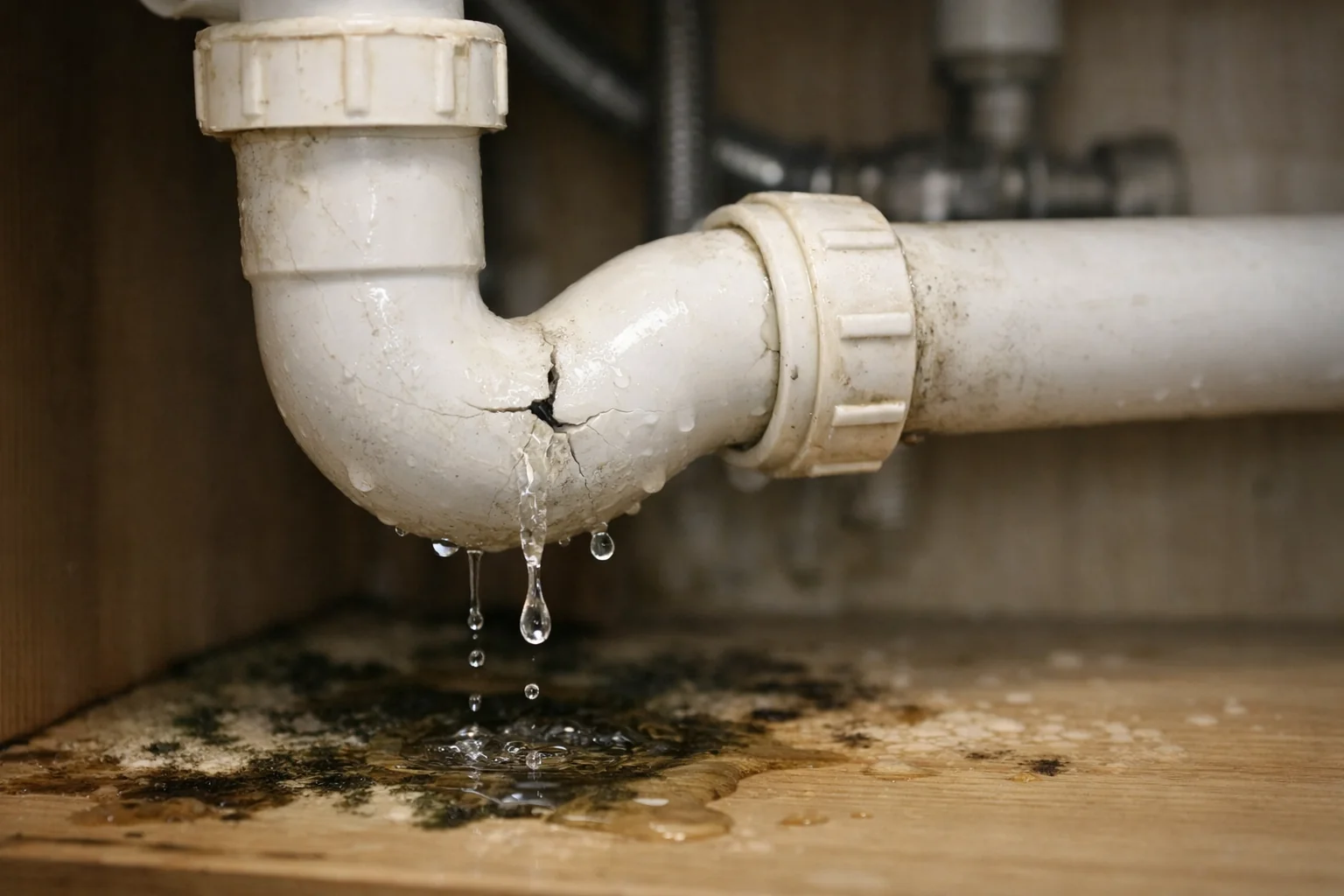
- Using a wrench on plastic nuts: the thread cracks and the trap starts leaking straight away or a few days later.
- Buying the wrong diameter — the standard for a basin is 32 mm, for a bath 40 mm, but there are exceptions. Measure before you buy.
- Installing a new trap with old rubber seals: the rubber is already misshapen and will not seal properly.
- Leaving old sealant inside the drain pipe: the new compression ring sits unevenly and starts dripping.
- Ignoring alignment: if the basin waste and the drain inlet are not on the same axis, the trap sits crooked and will leak sooner or later.
- Closing the trap in after a renovation with no access panel — traps need cleaning from time to time and must stay accessible.
Before replacing the trap, check whether a good clean will do: how to clear a clogged bathroom drain yourself.
What to prepare before the visit
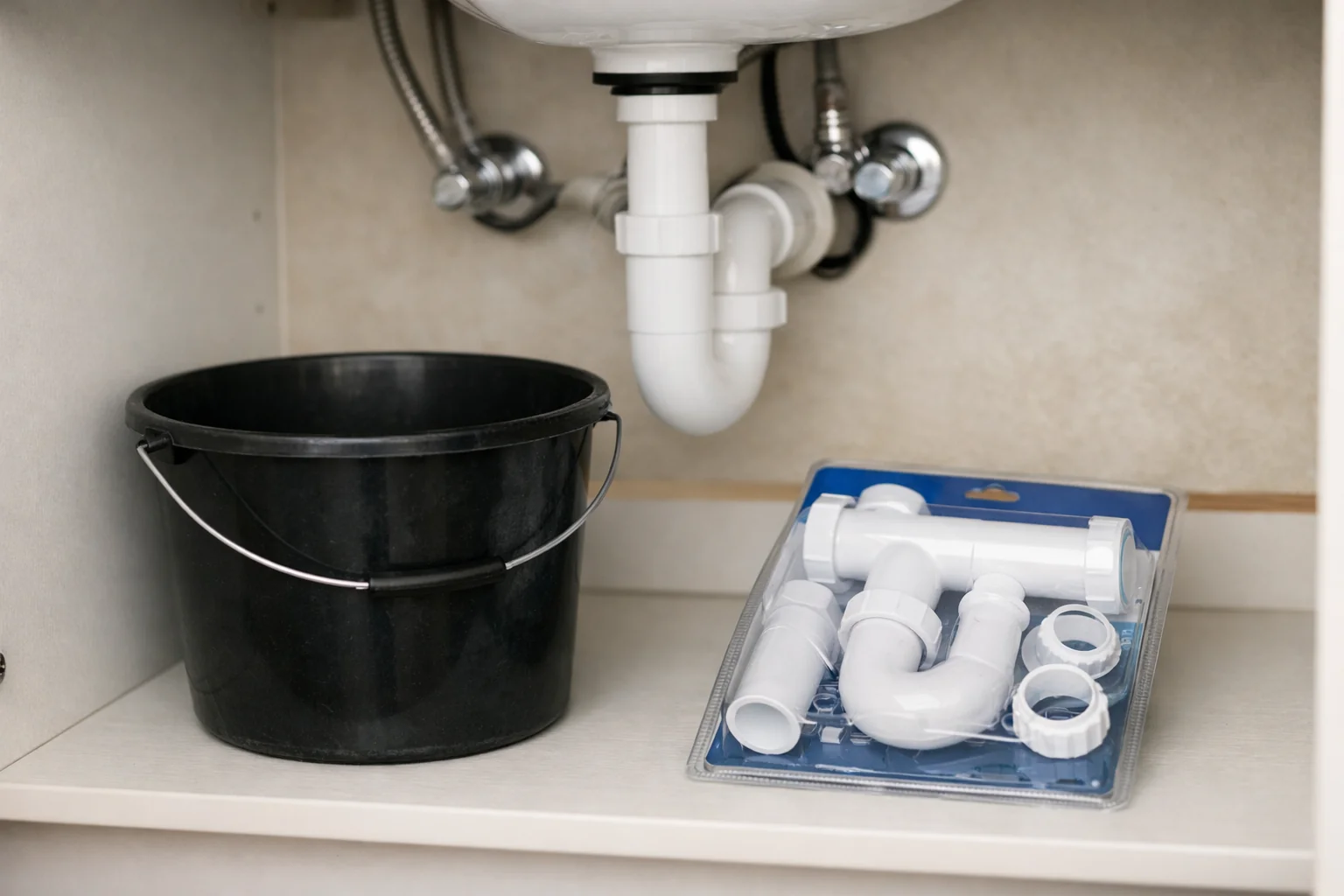
- Clear out the space under the basin (or access to the bath), remove cleaning products and anything else that gets in the way.
- If you have already bought a new trap, make sure the diameter matches your basin and drain pipe.
- Keep a cloth and a container nearby — water will come out when the old trap is removed.
- Know where the isolation valve for your flat is.
- If the issue is with a bath or shower, make sure the inspection hatch can be opened (if there is one).
- If the building has old cast-iron drainage, say so in the order beforehand, as an adapter may be required.
A real case from Warsaw: siphon replacement
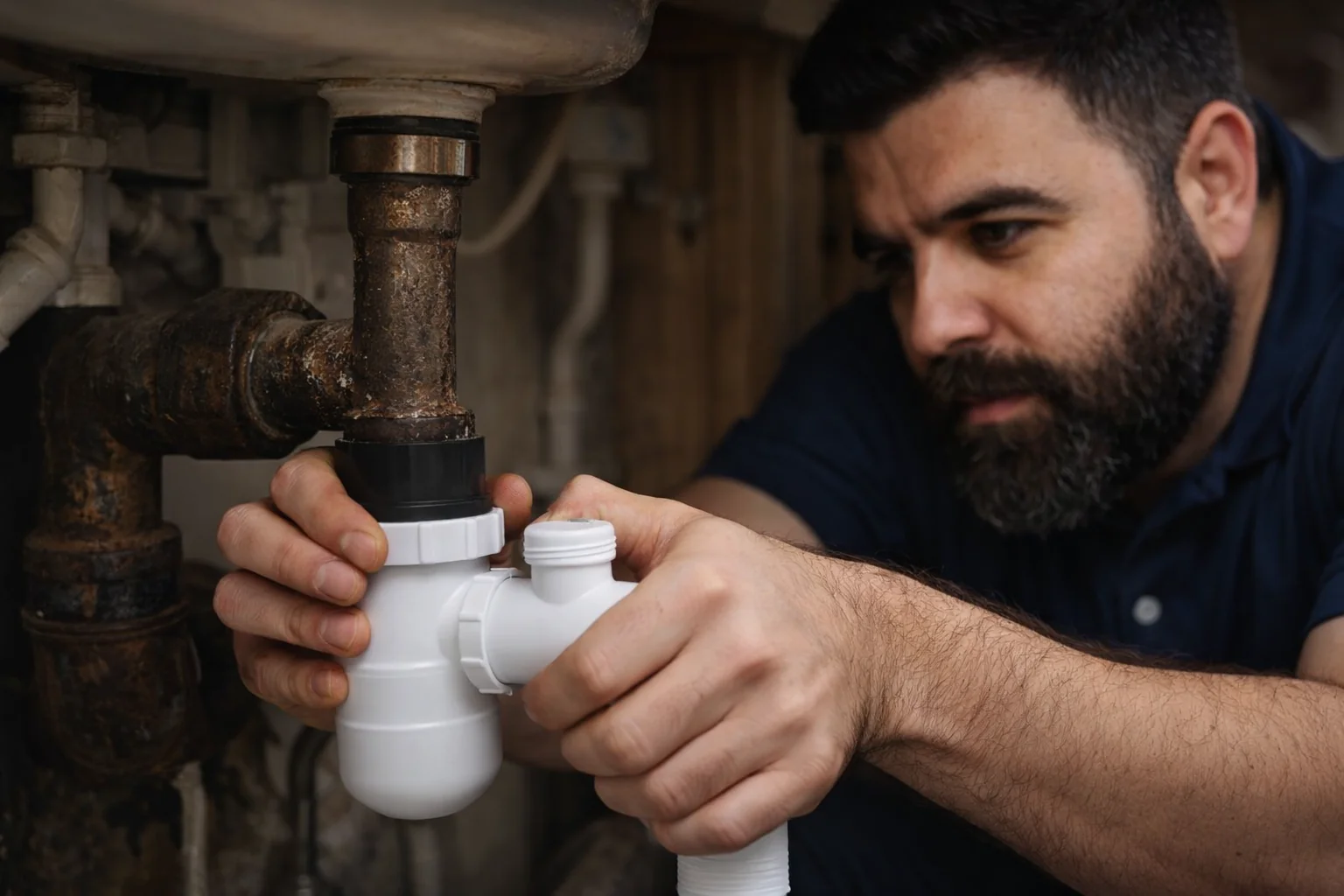
Tradespeople were called to an older flat in Srodmiescie — there was a constant puddle under the bathroom basin. The owner had tried tightening the trap herself, but the plastic was so old the nut split in her hands. The trap had been there for about fifteen years, yellowed and fragile. The drain pipe was cast iron with a rough edge. Tradespeople took out what was left of the old trap, cleaned the edge of the cast-iron pipe, and installed a rubber reducer from 50 to 40 mm. The new bottle trap was connected in twenty minutes. Tradespeople tested it: completely dry. The whole job took about forty minutes including cleaning the old pipe.
Frequently asked questions
How long does a siphon replacement take?
Anywhere from 30 minutes to an hour. If the pipes are in good condition and the diameters match, quicker. If an adapter or cast-iron cleanup is needed — longer.
Can I replace the trap myself?
For a basic basin: yes, if you have the right diameter and type. But if the connection is non-standard, the pipe is cast iron, or it is a bath trap with overflow, better to call a professional so you do not end up with a leak.
How often should traps be replaced?
Plastic traps usually last 10–15 years. If you notice cracks, yellowing, or a lingering smell even though the water seal is working — it is time to fit a new one.
What if it smells like sewage but the trap looks fine?
Check whether the water seal has dried out (this happens when a basin has not been used for a long time). Run some water and wait. If the smell stays, the problem may be with the stack vent.
Does the same trap fit a basin and a bath?
No. A basin waste is 32 mm, a bath waste is 40 mm, and the bath also has an overflow. They are not the same product.
What about a kitchen trap?
The principle is the same, but kitchen traps often have a double bowl, a dishwasher branch or a disposal unit connection. Tradespeople replace kitchen traps too.
Book a siphon replacement
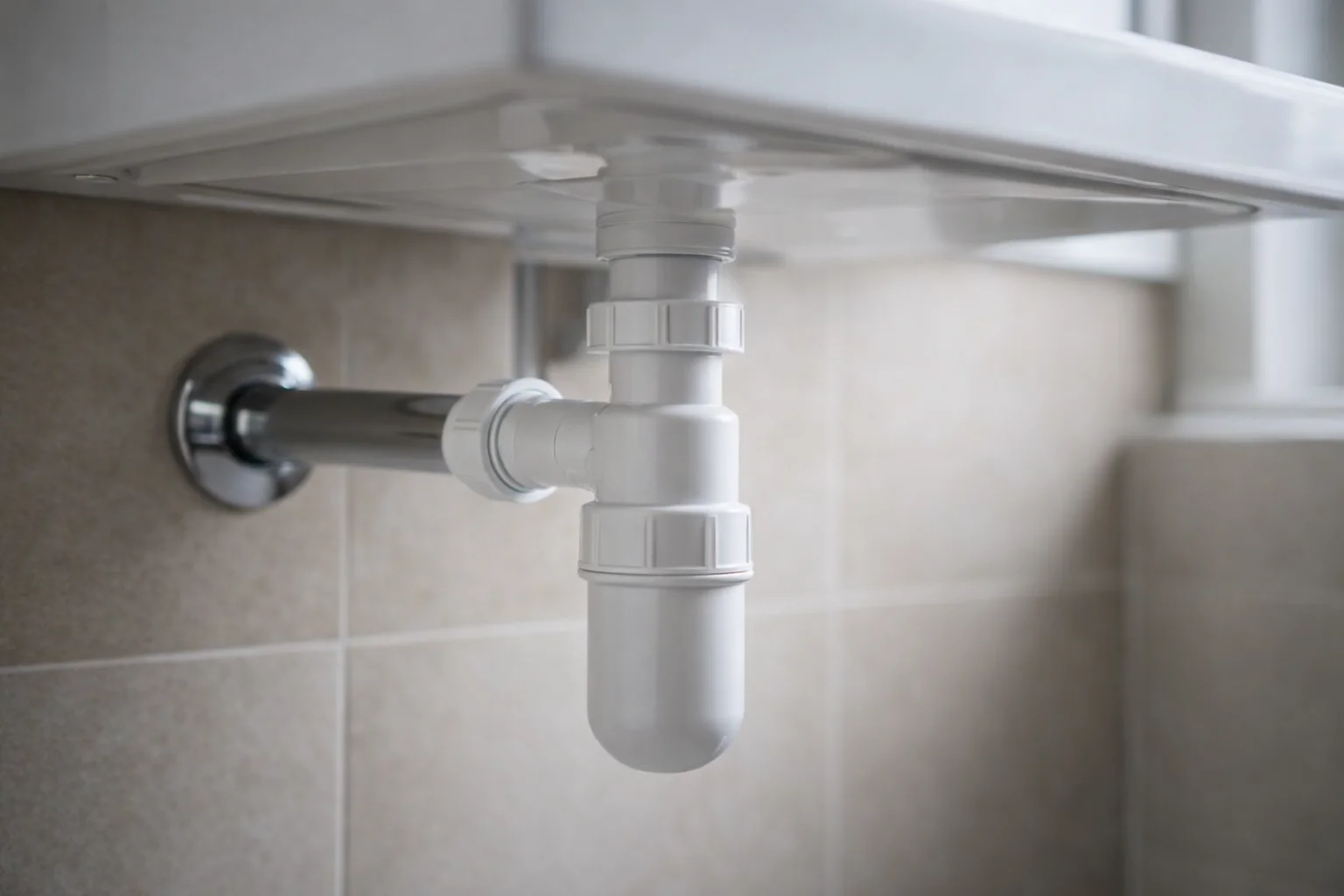
A leaking or blocked trap may look minor, but it quickly becomes a proper headache: a damp cabinet, bad smells, a damaged floor. Replacing it takes less than an hour, and afterwards the plumbing is dry and free of odours for years. Tradespeople work across Warsaw and come with tools and standard consumables.
Order in the app
Describe the job, add photos and the address. Tradespeople send their own prices and dates, and you pick one of the offers.
Open the app