
Vanity Unit Installation in Warsaw — Assembly, Mounting and Plumbing Connection
22.02.2026A vanity unit is not just a piece of furniture — it is a junction where plumbing, fixings and finishes all come together. Assembling the cabinet is only half the job. You still need to connect the trap, supply lines and mixer tap, level the unit and seal the joints so water does not seep behind the furniture. In new developments around Wilanow and older buildings in Wola the story is the same: the vanity arrived from IKEA or Leroy Merlin, but there is nobody to install it. That is exactly what we do.
How much does vanity unit installation cost
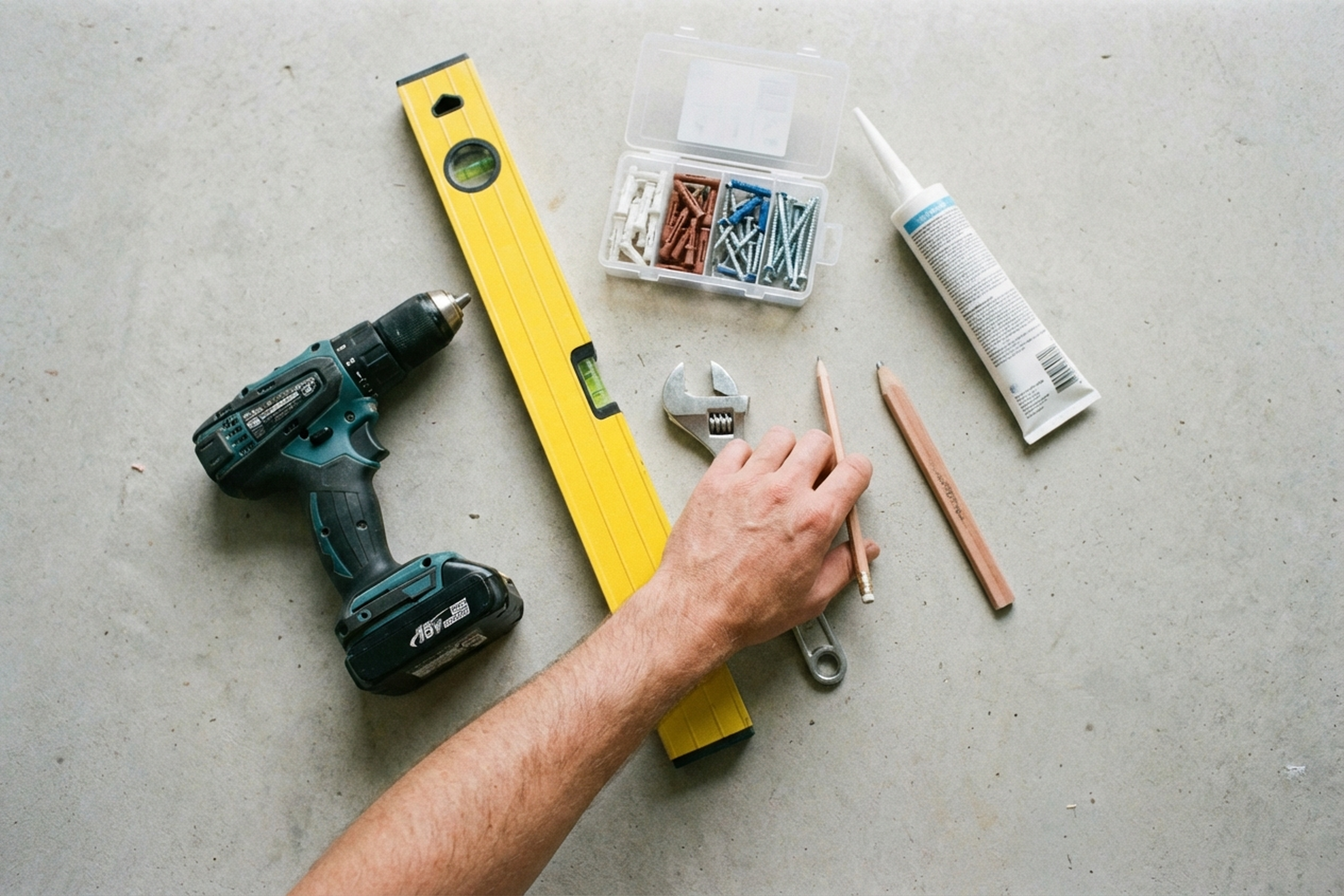
The price depends on the unit type (freestanding or wall-hung), the connection method and the condition of existing pipework. A wall-hung unit must be anchored to the wall — that is more involved than simply setting a freestanding cabinet in place. If water or waste connections need relocating, that is additional work. Current rates for all bathroom services are in the table below. Fixings are included; materials (silicone, flexible hoses, trap) are charged separately if replacement is needed.
| Service | min | max |
|---|---|---|
| Washbasin installation | 200 zł | 300 zł |
| Washbasin replacement | 150 zł | 250 zł |
| Vanity unit with basin installation | 250 zł | 450 zł |
| Basin mixer tap installation | 150 zł | 250 zł |
| Basin mixer tap replacement | 180 zł | 300 zł |
| Floor-standing toilet installation | 200 zł | 350 zł |
| Floor-standing toilet replacement | 250 zł | 400 zł |
| Wall-hung toilet installation (frame) | 350 zł | 600 zł |
| Toilet frame replacement | 600 zł | 1200 zł |
| Bathtub installation | 700 zł | 1000 zł |
| Bathtub replacement | 900 zł | 1400 zł |
| Shower cabin installation | 900 zł | 1200 zł |
| Shower tray installation | 500 zł | 800 zł |
| Shower tray replacement | 600 zł | 1000 zł |
| Linear drain installation | 800 zł | 1500 zł |
| Shower cabin / bathtub sealing | 35 zł/mb | 60 zł/mb |
| Towel radiator installation | 250 zł | 450 zł |
| Towel radiator replacement | 350 zł | 700 zł |
| Drain cleaning | 150 zł | 300 zł |
| Trap replacement | 120 zł | 220 zł |
How the installation works
- Bathroom survey: we check the position of water supply points and the waste outlet, and measure the recess or wall.
- Cabinet assembly following the manufacturer’s instructions — hinges, shelves, drawers. If the unit arrived flat-packed, we build it from scratch.
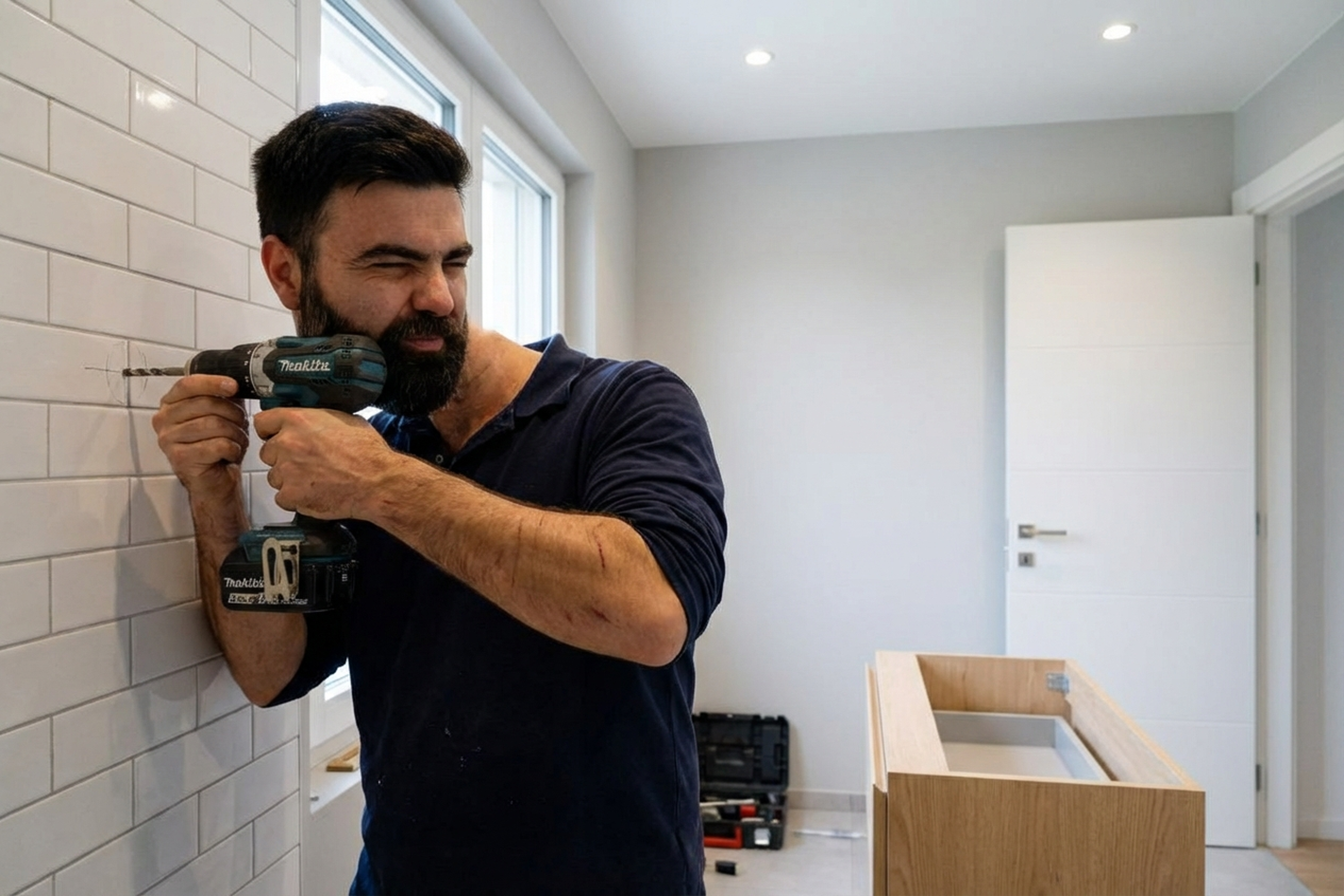
- Wall marking (for wall-hung models): we mark fixing points, drill and insert anchors. For freestanding units we adjust the feet with a spirit level.
- Fitting the basin onto the cabinet: we secure the bowl and seal the joint with silicone.
- Connecting the trap to the waste pipe. We verify that the trap bend fits inside the cabinet without fouling the shelves.
- Connecting the mixer tap: flexible hoses to the hot and cold supply. If the tap is not yet fitted to the basin, we install it.
- Testing: we turn on the water and watch every joint for several minutes. We seal the gap between the unit and the wall.
Common mistakes
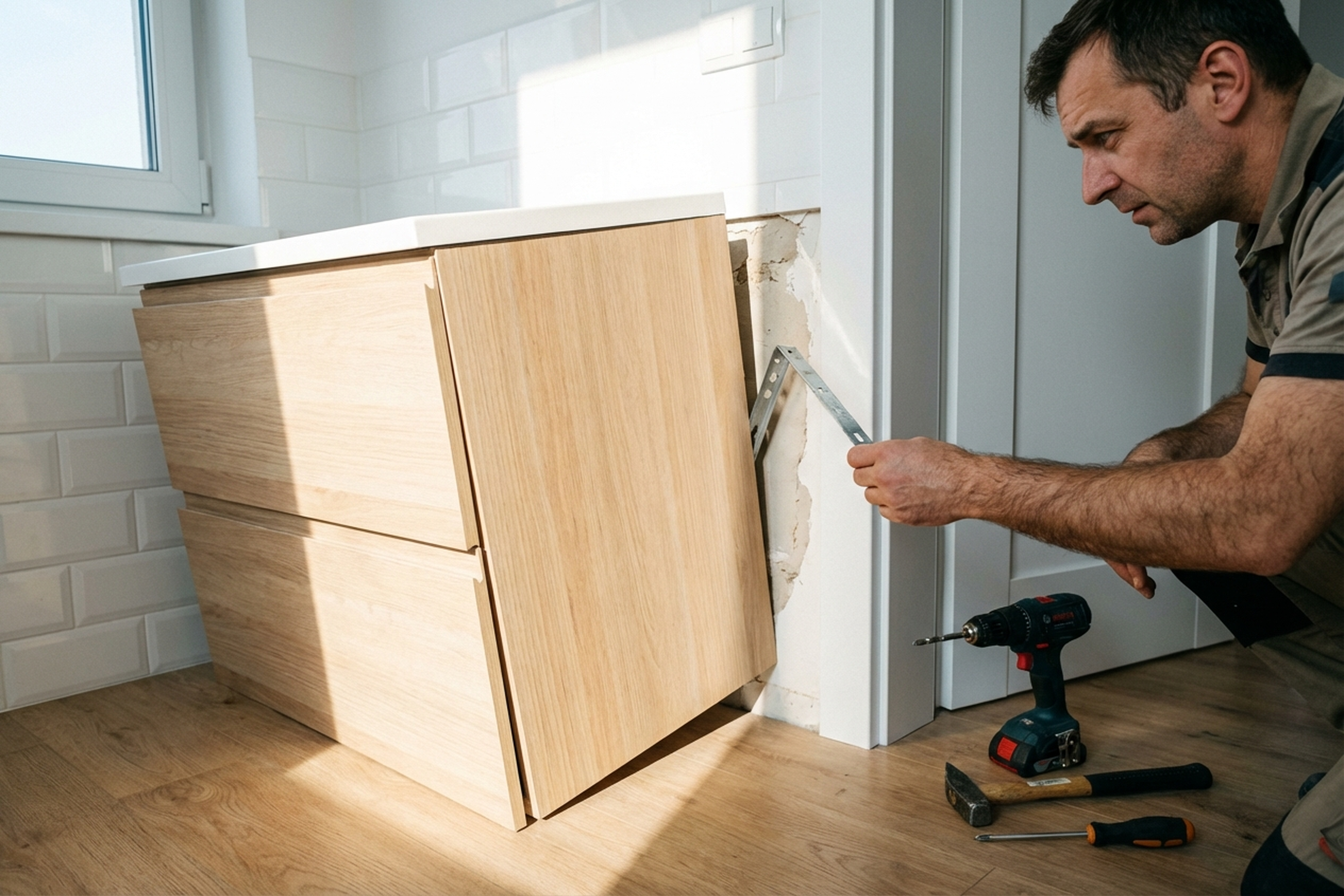
- Hanging a wall-mounted unit on plain plasterboard with no backing — within a month it tears away, taking a chunk of wall with it.
- Not checking whether the trap fits inside the cabinet — then you have to cut the shelf or swap to a flat trap.
- Skipping silicone between the basin and the wall — water runs behind the unit, mould follows.
- Over-tightening flexible hoses with an adjustable spanner — the thread cracks and water floods the flat below.
- Pushing the unit flush against the riser — later it is impossible to reach the shut-off valves.
- Not levelling the cabinet — water pools in the basin instead of draining.
- Reusing old flexible hoses during reinstallation — the rubber inside is already cracked, a leak is only a matter of time.
Important: any work involving water supply carries a risk of leaks. If you are unsure about the condition of your pipes or valves, it is better to call a professional than to deal with the aftermath of a flood.
What to prepare before the visit
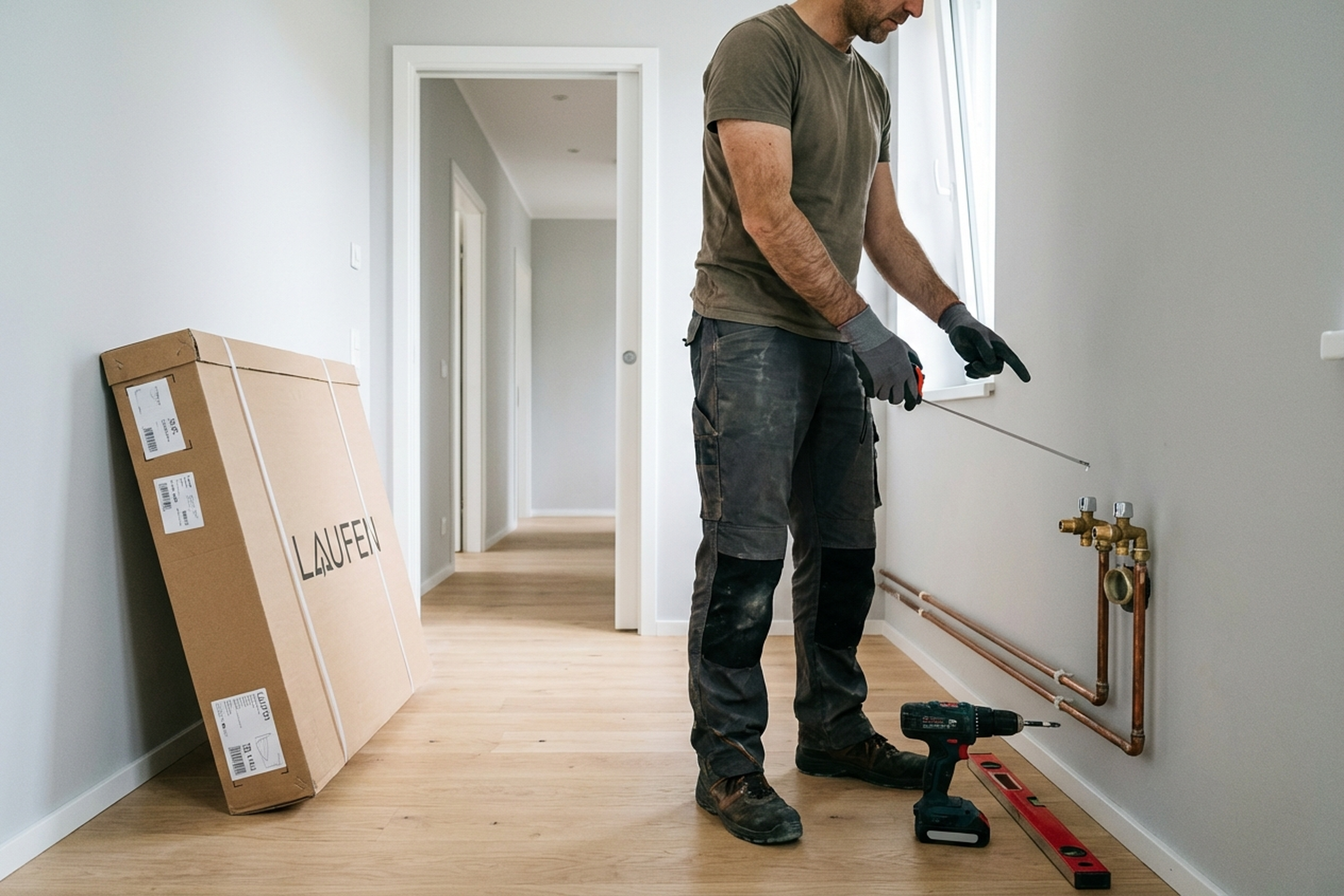
- The vanity unit and basin must be on site — boxed or already unpacked.
- Mixer tap and flexible supply hoses — if you are buying them yourself, check the hose length (usually 30-50 cm).
- Trap — if it is not included with the basin, buy one in advance (bottle trap or flat trap for narrow cabinets).
- Make sure the water supply points are in the right position and the shut-off valves work.
- Clear the bathroom — remove the old unit or basin if they are still in place.
- Check the wall behind the unit: plasterboard needs special anchors; brick or concrete takes standard wall plugs.
- Ensure the waste outlet is accessible — it must not be tiled over.
- If you want both hot and cold connections but only cold is available, let us know in advance.
A real case from Warsaw
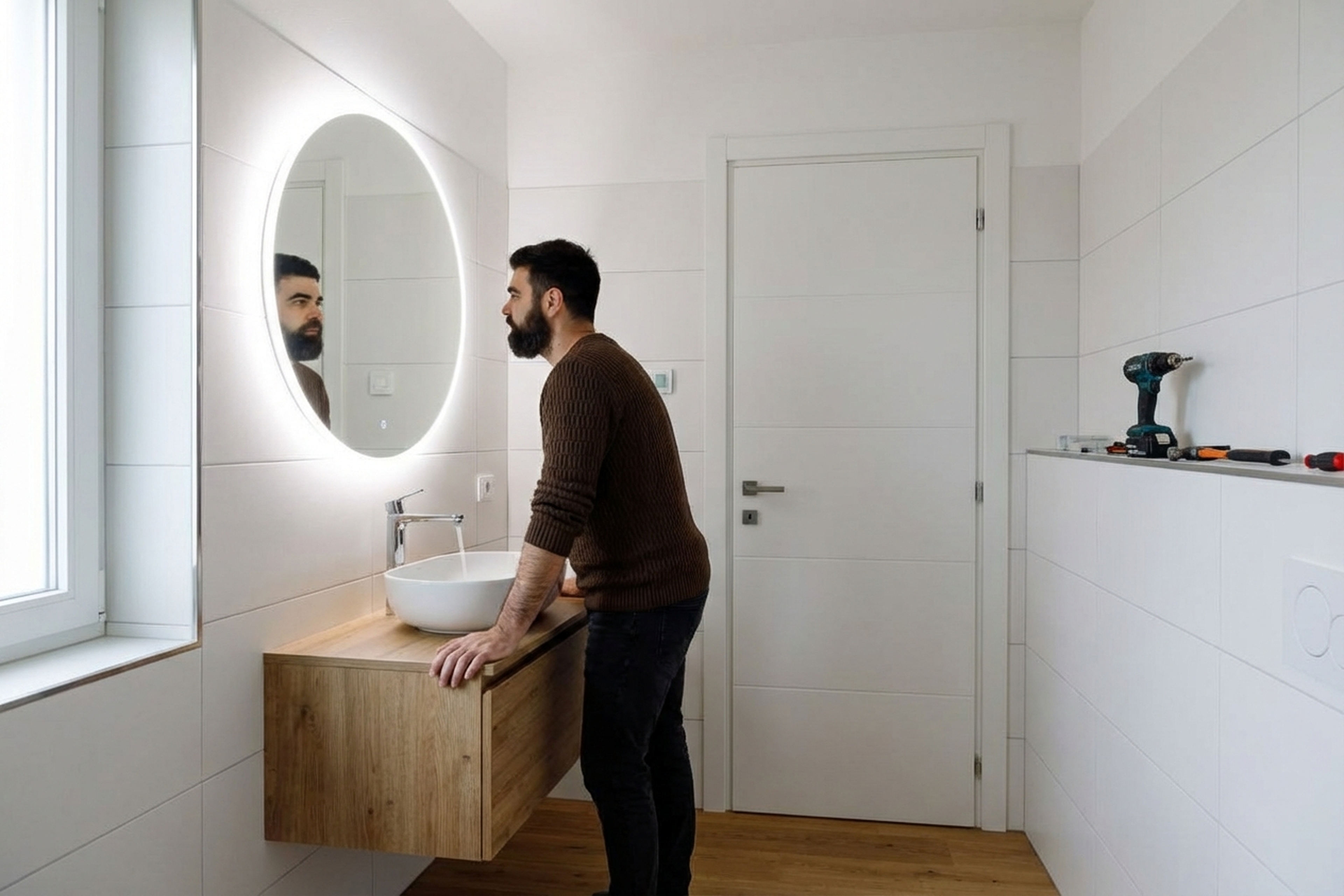
We were called to Wilanow. A young couple had bought a wall-hung double vanity, 120 cm wide. The wall was plasterboard on a metal frame with no timber backing. The previous tradesman had refused the job. We located the frame profiles with a detector and fitted specialist plasterboard anchors at each fixing point. The unit holds firm — we tested it under load. We assembled the cabinet, seated both basins, connected two traps and the mixer tap. Joints with the wall were sealed with white silicone. The job took around three hours. A week later the clients confirmed everything was dry and nothing had moved.
Frequently asked questions
Wall-hung or freestanding — which is easier to install?
Freestanding is simpler: position it, level the feet, connect the plumbing. Wall-hung requires anchors, and if the wall is plasterboard you need backing or specialist fixings. The time difference is roughly one hour.
Can the unit stand on underfloor heating?
A freestanding unit can, but the feet must not press on the heating cable. A wall-hung unit does not touch the floor at all, so there is no issue.
Do I need a new trap when replacing the vanity?
If the existing trap is sound and the height works, you can keep it. More often, though, a compact bottle trap or flat trap is needed so it does not block the drawers.
Does the installer bring silicone and fixings?
Yes, standard fixings and silicone sealant are included. If you need a specific silicone colour or non-standard anchors, we arrange that beforehand.
How long does the installation take?
A freestanding single-basin unit takes one to one and a half hours. Wall-hung or double units take two to three hours. If supply pipes need rerouting, it takes longer.
What if the pipes do not line up with the unit?
We relocate the connection points or use flexible fittings. It is extra work, but it can be done in a single visit.
Book vanity unit installation
A properly installed vanity unit means a dry floor, working plumbing and furniture that will not fall off the wall a month later. We work across Warsaw and arrive with tools and fixings ready. Get in touch and we will arrange a convenient time.