
How much does bathtub replacement cost
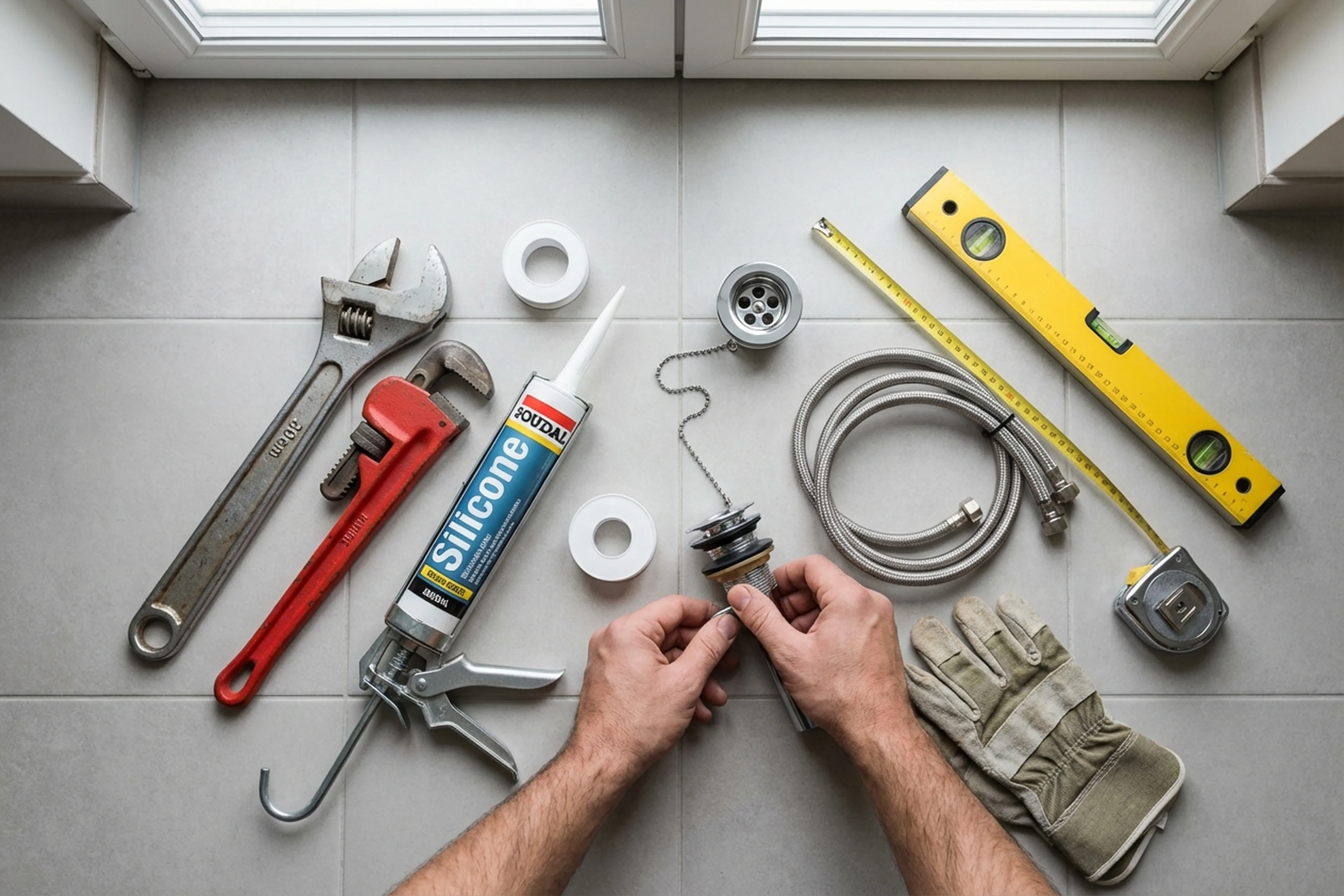
The final amount includes removing the old tub, getting the area ready, and fitting the new one with complete plumbing connections. The cost is affected by the bathtub material (acrylic, steel or cast iron), how awkward the pipe layout is, and what condition the walls behind the bath are in. Moving connection points or changing the trap assembly is priced separately. Fixings and sealant are part of the labour price. Materials (the bathtub itself, trap, bath panel) are provided by the client. Up-to-date rates for all bathroom jobs are shown in the table below.
| Service | Price |
|---|---|
| Washbasin installation | 200–500 zł |
| Washbasin replacement | 250–600 zł |
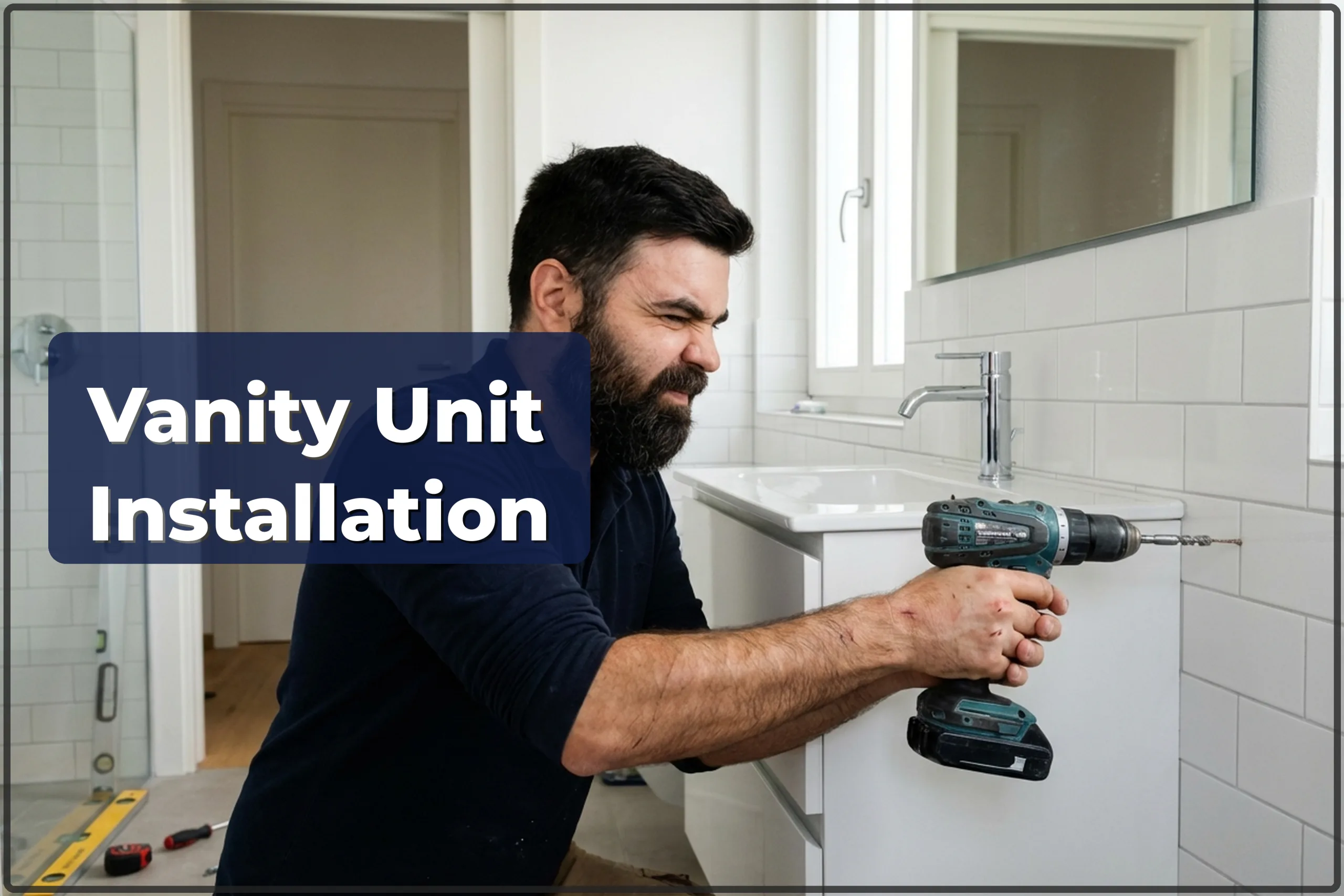
| Vanity unit installation | 300–600 zł |
| Basin tap installation | 150–250 zł |
| Basin tap replacement | 250–400 zł |
| Floor toilet installation | 300–500 zł |
| Floor toilet replacement | 350–600 zł |
| Wall-hung toilet installation (frame) | 450–700 zł |
| WC frame replacement | 600–1500 zł |
| Bathtub installation | 400–900 zł |
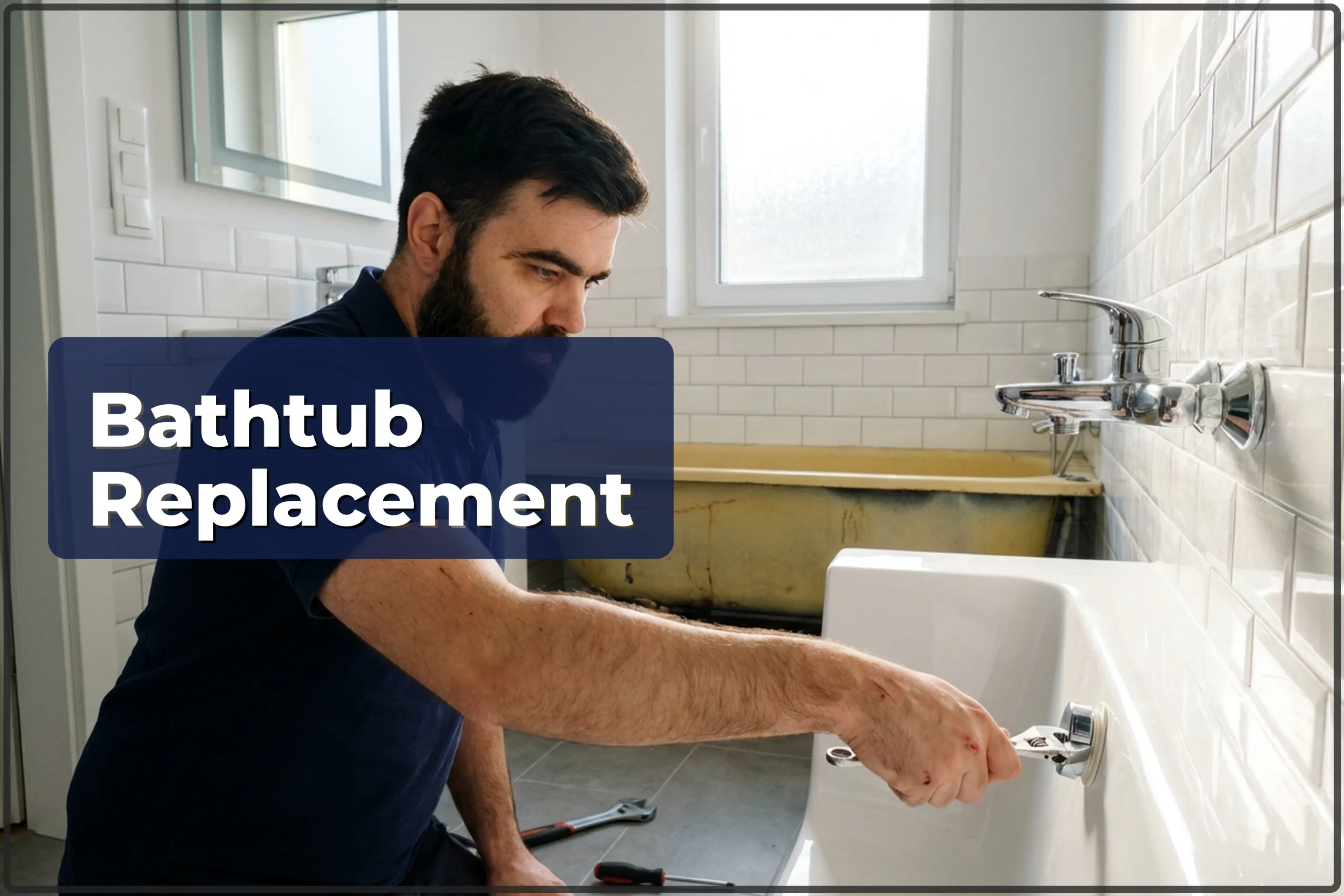
| Bathtub replacement | 500–1000 zł |
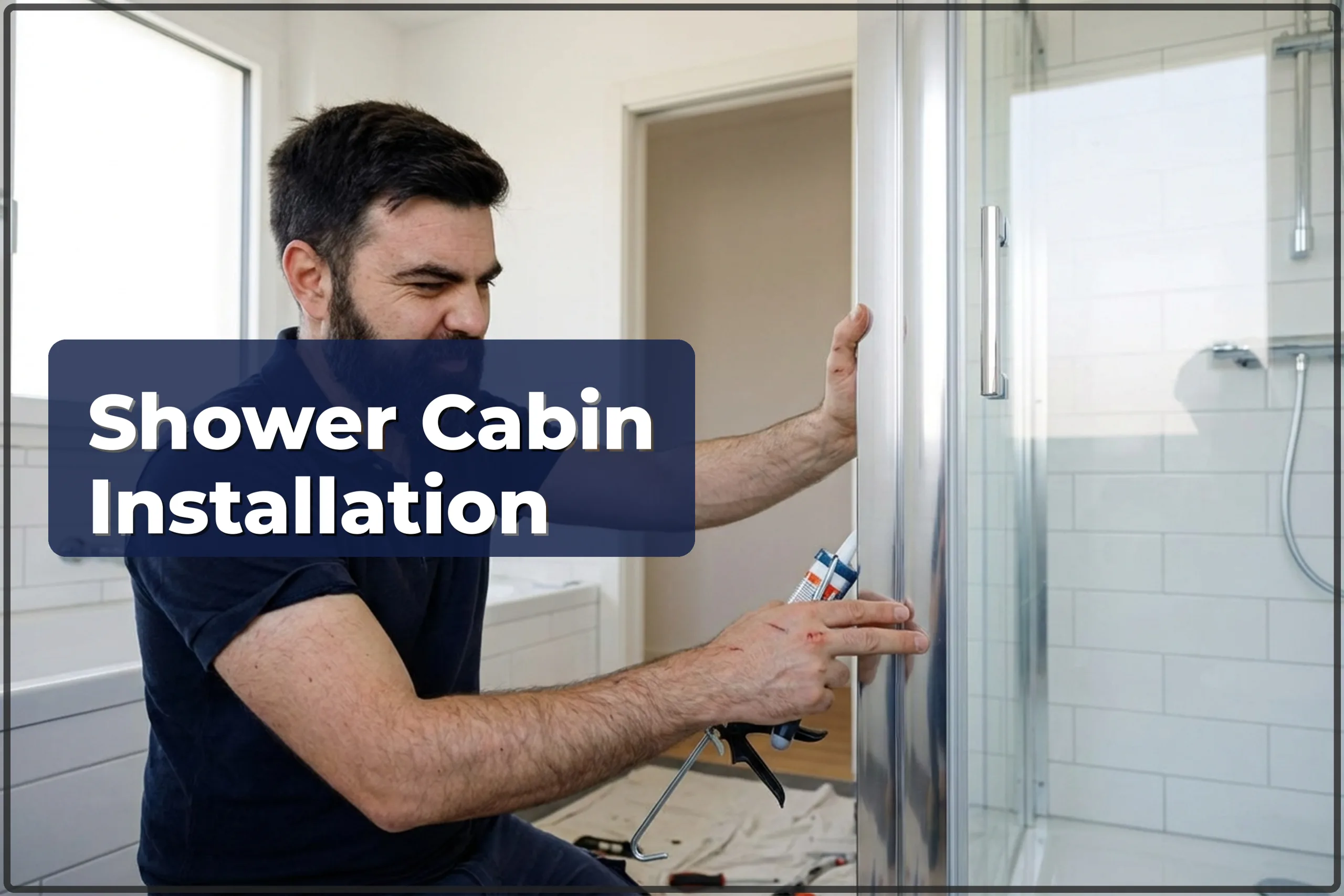
| Shower cabin installation | 350–1200 zł |
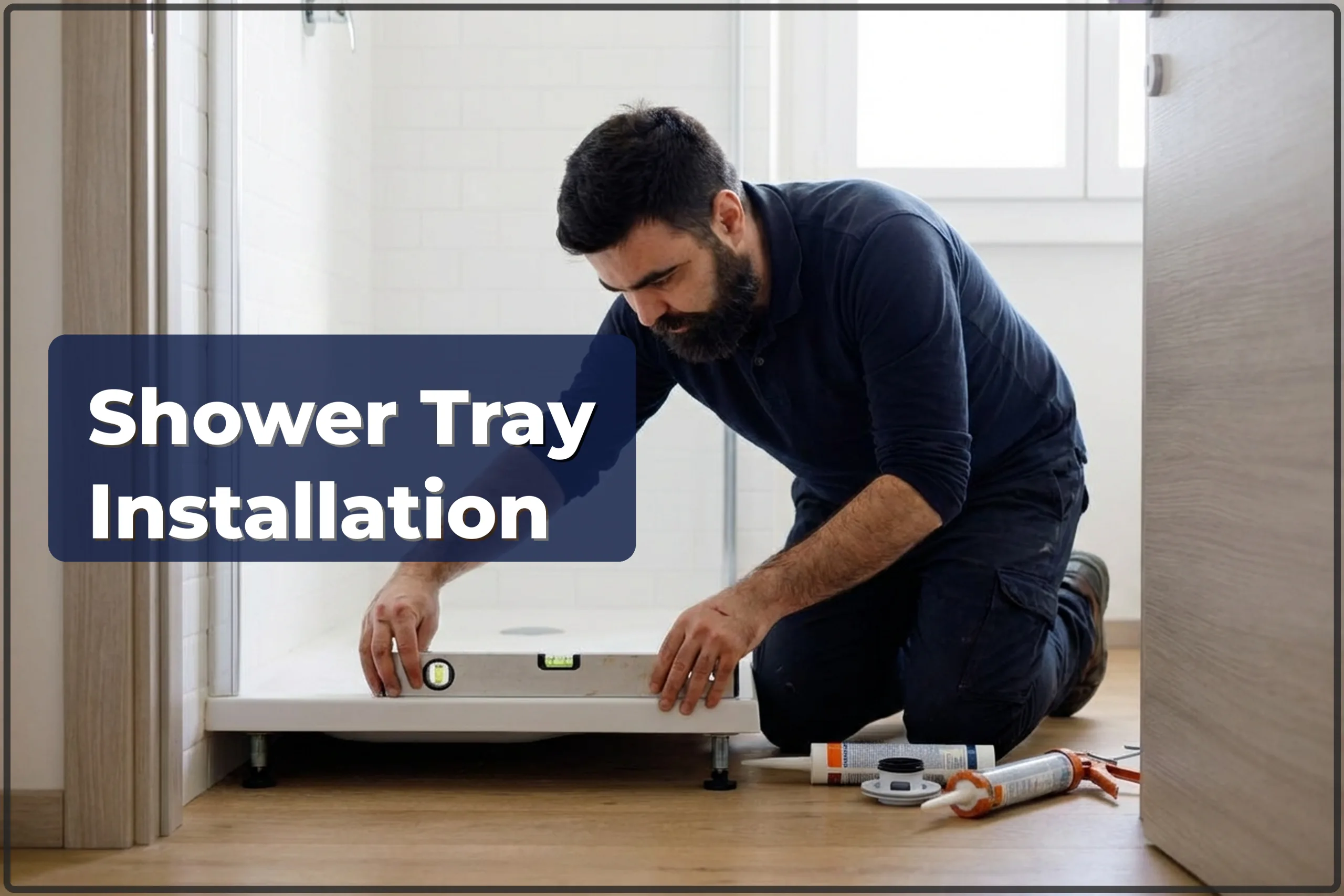
| Shower tray installation | 500–800 zł |
| Shower tray replacement | 600–1000 zł |
| Linear drain installation | 400–900 zł |
| Re-sealing shower and bathtub | 250–600 zł |
| Towel radiator installation | 300–600 zł |
| Towel radiator replacement | 350–700 zł |
| Drain cleaning | 200–800 zł |
| Trap (siphon) replacement | 120–400 zł |
Indicative prices. Ranges for a typical scope. Fixings included, materials separate. Minimum order 300 zł.
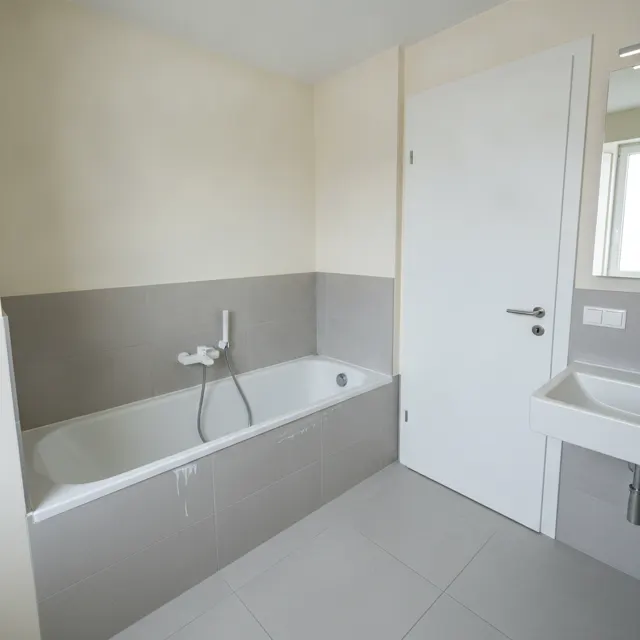
Price ranges and offers from tradespeople: plumber in Warsaw.
Why replacing a bath takes longer than installing one
With an installation, the handyman works on a prepared spot. With a replacement, the handyman first takes apart what someone built years ago, rarely with removal in mind.
- Tiled bath panel. Tubs are often bricked in and tiled, so the panel has to be broken out without cracking the wall tiles next to it.
- Seized trap and nuts. Old joints scale up and rust, and sometimes cutting them off is the only way.
- Cast iron. A cast-iron tub is very heavy and often won’t fit through the door in one piece, so it gets broken up on site.
- What’s underneath. Removal tends to reveal old leaks, a damp screed or pipes that need replacing, and the job grows.
- Taking the old tub away. Carrying it down the stairs in a block without a lift and disposal are charged separately.
If there is no old bath, because the bathroom is freshly renovated or a developer finish, bathtub installation is enough.
How the replacement works
- Inspection and measurements: they check the niche size, pipe locations, and the state of the subfloor under the tub.
- Shutting off the water: they turn off the hot and cold valves and let the remaining water out of the pipes.
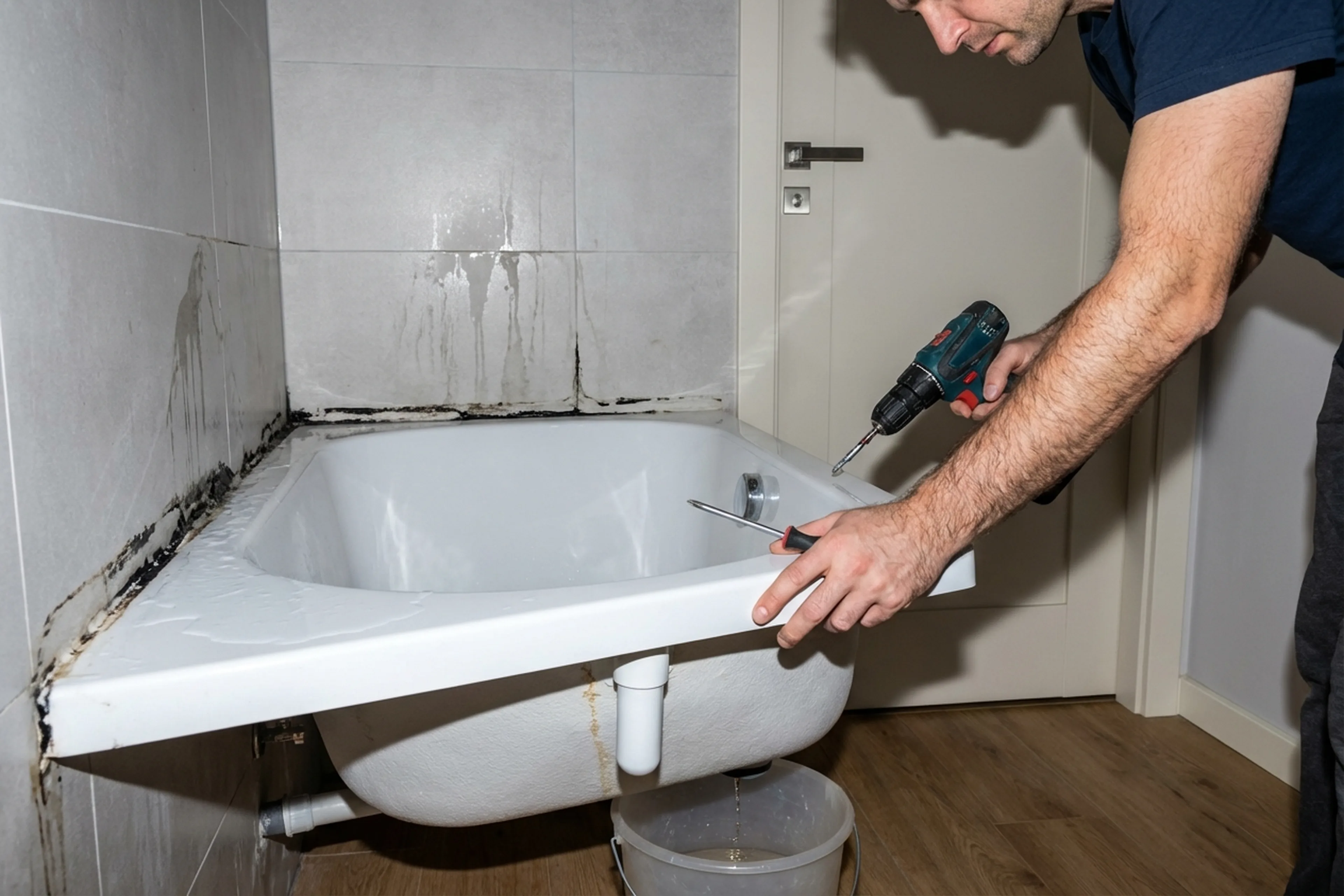
- Removing the old bathtub: they disconnect the trap, remove the bath panel, and take the tub out. A cast-iron bath sometimes has to be broken apart on site — otherwise it simply will not go through the doorway.
- Preparing the base: they level the floor and, where needed, replace sections of pipe or move the connection points.
- Installing the new bathtub: they place it level on adjustable legs and fasten it to the wall (acrylic tubs are mounted on a support frame).
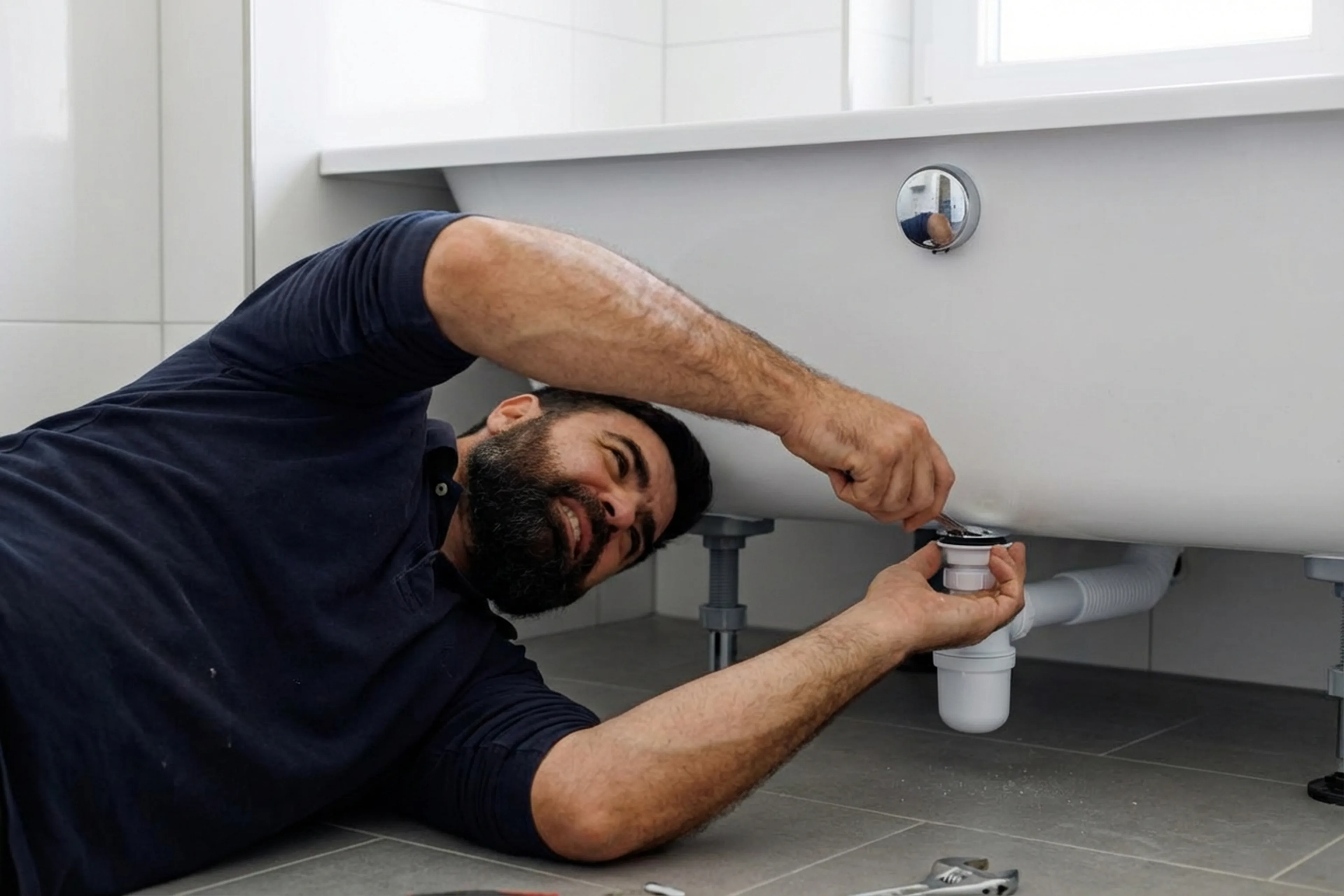
- Connecting the plumbing: they install the trap, hook up the overflow and drain to the waste pipe, and fit the mixer tap if it is included in the order.
- Sealing the joints: they run sanitary silicone around the entire edge where the tub meets the wall, then check for leaks by filling the bath fully.
Important: all plumbing jobs are done with the water supply turned off, followed by a full leak test. If they find problems with the riser or pipe layout, they tell you before the installation starts. Do not try to connect the plumbing on your own, one bad joint can flood the flat downstairs.
Common mistakes when replacing a bathtub
- Skipping the alcove measurement before purchase — the new tub will not fit, or wide gaps are left on both sides.
- Buying the cheapest trap: thin plastic splits within six months, and sewer smells start coming into the room.
- Installing an acrylic tub without a support frame, the bottom bends under load and sooner or later cracks.
- Ignoring the spirit level — water sits at one end and the drain works badly.
- Sealing the wall joint with expanding foam instead of silicone, foam falls apart from damp and mould starts growing underneath.
- Not checking the waste-pipe slope: water runs off slowly and dirt builds up in the trap.
- Taking out a cast-iron tub without proper prep — door frames and corridor tiles end up damaged.
What to prepare before the visit
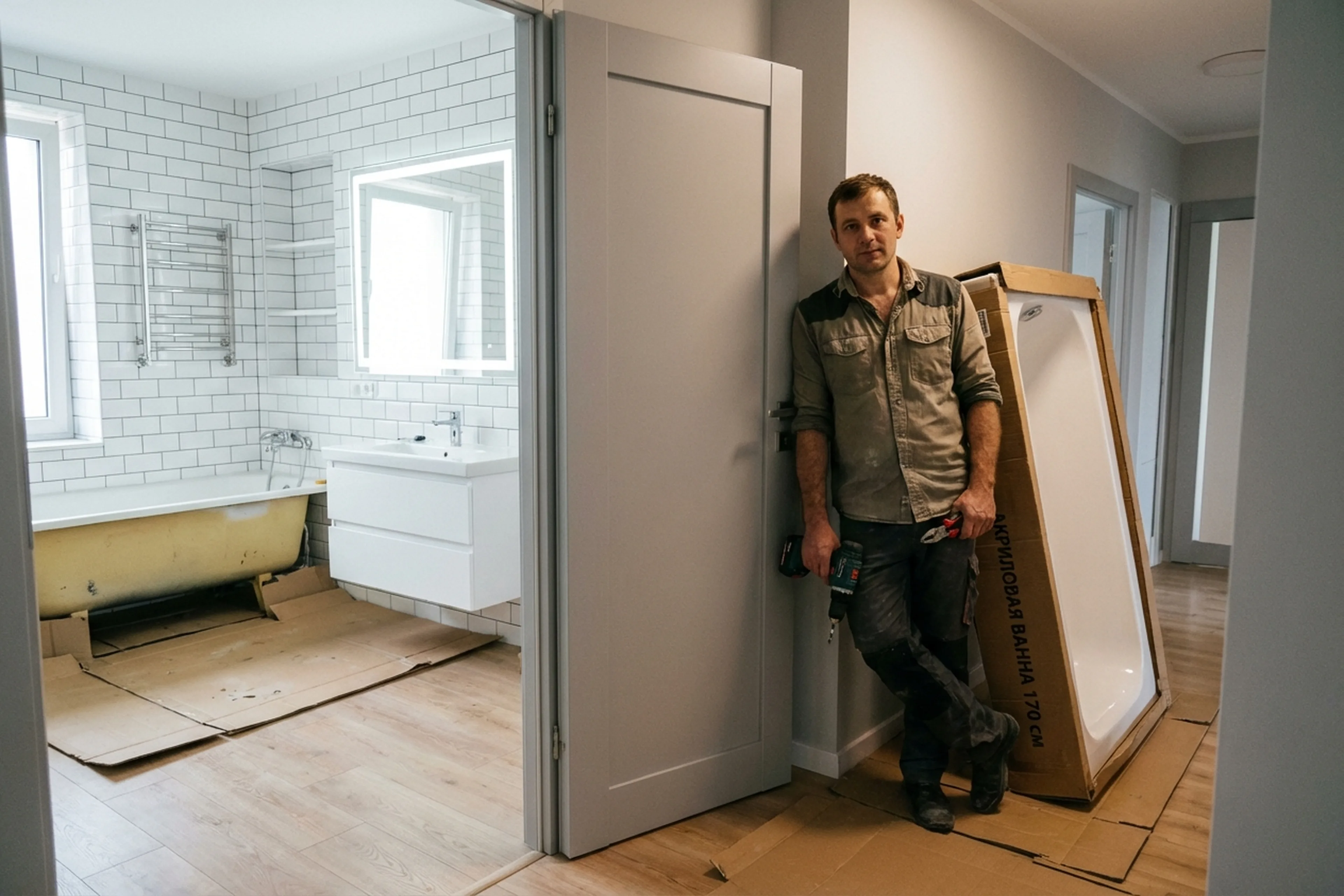
- Purchase the new bathtub and check that it will fit through the doorway (or at least into the stairwell).
- Get a trap with an overflow, a semi-automatic version is more dependable.
- If you want a bath panel, buy it beforehand so the technician can install it during the same visit.
- Check that the shut-off valves can be reached easily (in the bathroom or on the riser).
- Remove unnecessary things from the bathroom: move the washing machine aside if you can, take down shelves.
- Leave a free route from the front door to the bathroom: the old tub has to be carried out.
- If the existing tub is cast iron, say so in the order in advance so they can plan the disposal.
- Decide whether you want the mixer tap changed as well — it is simplest to do it at the same time.
- Ask your building management whether there are any restrictions on noisy work hours.
A real case from Warsaw: bathtub replacement
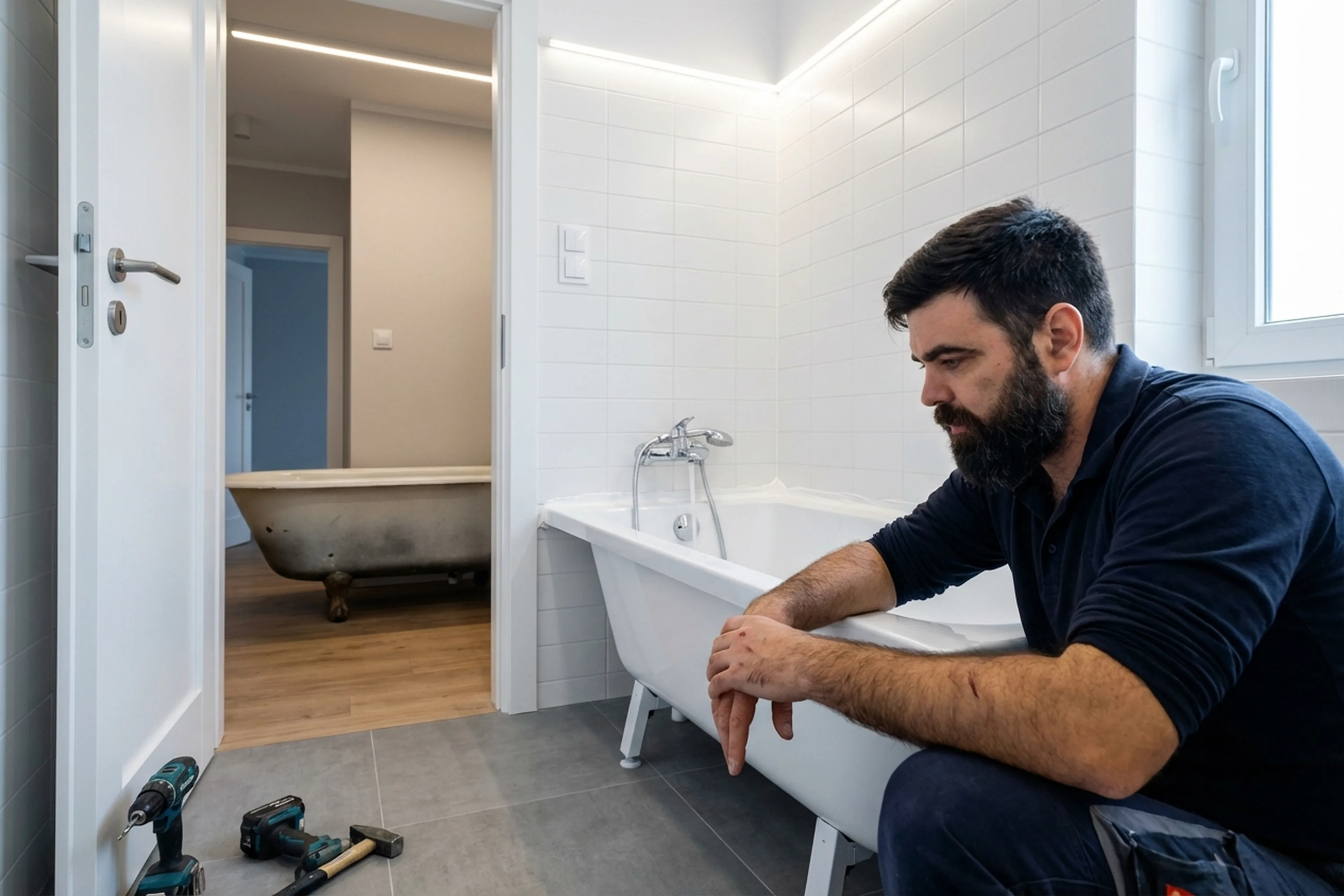
Tradespeople got a call to a flat in Ursynow. The owners had purchased a 170 cm acrylic tub to replace their old cast-iron one. The cast-iron bath weighed nearly 100 kg and would not go through the door, so they smashed it up with a sledgehammer right in the bathroom after protecting the floor and wrapping the toilet in plastic sheeting. The pieces were taken out in heavy-duty bags. Under the bath they found a crack in the waste pipe, they changed that section there and then. The new tub was installed on its factory frame, levelled, and connected to a semi-automatic trap. Tradespeople sealed the joint to the wall with sanitary silicone and did the test: filled the tub right to the top, waited fifteen minutes — not one drop on the floor. The whole job took about four hours, including demolition and pipe repair. The owners were pleased: the tub is light, warm to the touch, and drains fast.
Frequently asked questions
How long does a bathtub replacement take?
A normal replacement takes 3 to 5 hours. If pipes have to be replaced or walls need repair, the work can take a full day.
Can I install a different-sized tub?
Yes, but the alcove will have to be adjusted: extending or cutting pipes, and possibly building a partition from plasterboard or tiles. That adds to the amount of work.
Acrylic or steel: which is better?
Acrylic is lighter, feels warmer, and makes less noise when filling. Steel costs less and is tougher, but it is noisy and cools down fast. Cast iron is a classic option but very heavy and hard to install.
Do I need to replace the tiles behind the tub?
If the current tiles are in good shape and the dimensions line up — no. If the new tub has a different length or the tiles are damaged, some re-tiling will be necessary.
What happens to the old bathtub?
Steel and acrylic tubs are carried out and left near the waste container. Cast iron is broken up and taken away in bags. Removal of bulky waste is billed separately.
Do tradespeople install shower enclosures instead of a bathtub?
Yes, but that is a separate kind of job: it needs a shower tray or floor drain and a different pipe layout. Tradespeople go over it case by case.
Book your bathtub replacement
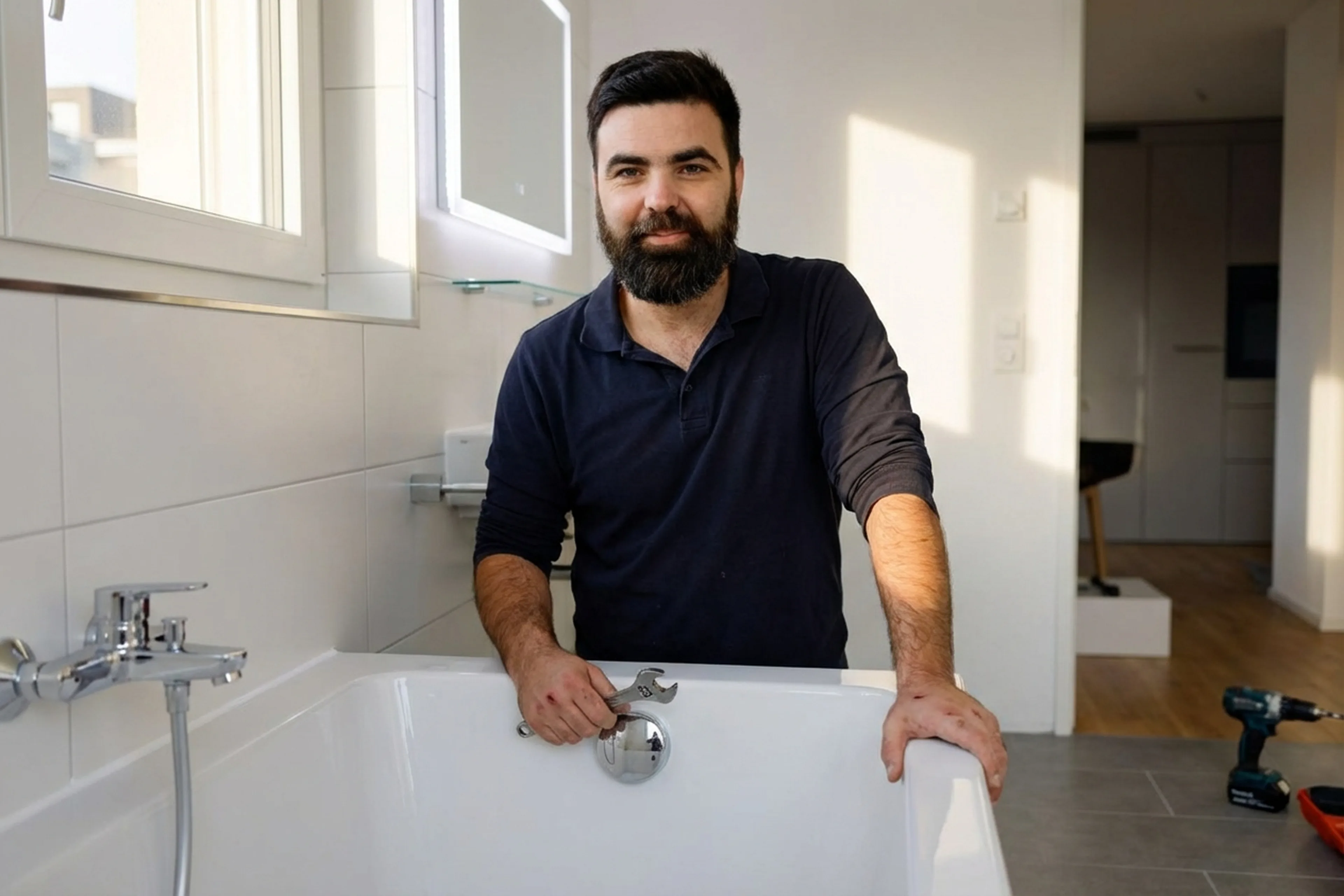
Tradespeople cover all of Warsaw: from Praga-Poludnie to Bemowo. Tradespeople come with tools and fixings, connect everything, and test it in front of you. If you want help choosing a bathtub or trap before the visit, give them a ring.
Order in the app
Describe the job, add photos and the address. Tradespeople send their own prices and dates, and you pick one of the offers.
Open the app