
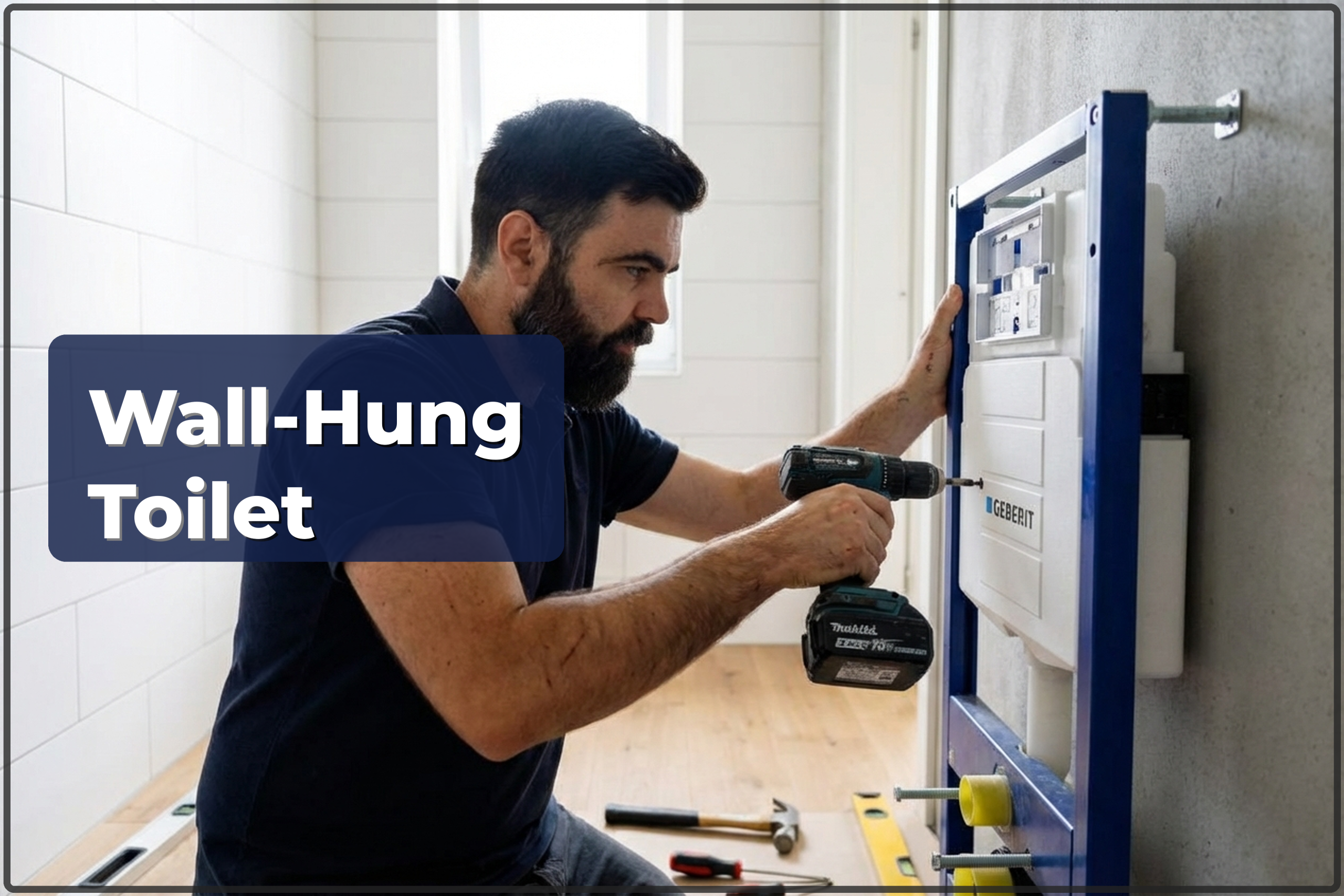
Wall-Hung Toilet Installation in Warsaw — Frame and Bowl Mounting
22.02.2026A wall-hung toilet is more than a design choice. The floor underneath stays clear and easy to clean, the cistern is hidden inside the wall, and the bathroom gains an extra 15–20 centimetres of usable space. In new developments around Wilanow and renovated flats in Mokotow, concealed-frame toilets are becoming the default. But the installation is more involved than a standard floor-standing unit: you need a steel support frame (concealed cistern frame), precise connections to the drain, and solid fixings into the wall. Get it wrong, and water leaks inside the partition where you cannot see it until the damage is done.
Safety note: plumbing work demands care. A single poorly sealed joint can send water into the wall cavity or through to the flat below. If you are not confident — call a professional. We handle sanitary installations every day and know exactly what to check.
How much does it cost
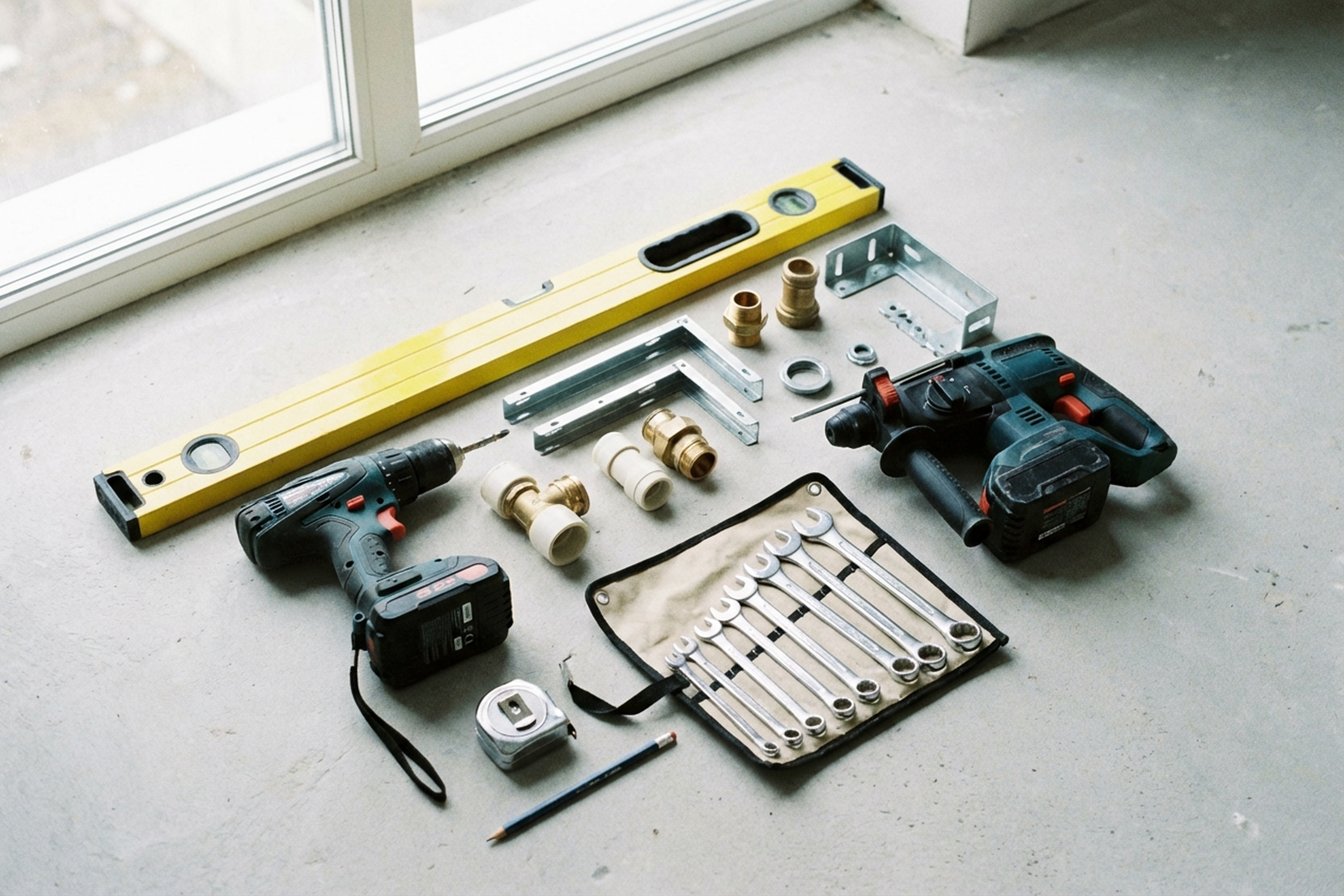
The price depends on the frame type, the condition of existing pipework and the complexity of boxing-in. Mounting into a solid masonry wall is one scope; fitting inside a stud partition is another. Replacing an old frame costs more because the existing cladding has to come off and the new frame must be aligned. Current rates for all bathroom services are in the table below. Fixings are included in the price; the frame, bowl and flush plate are supplied by the client.
| Service | min | max |
|---|---|---|
| Washbasin installation | 200 zł | 300 zł |
| Washbasin replacement | 150 zł | 250 zł |
| Vanity unit with basin installation | 250 zł | 450 zł |
| Basin mixer tap installation | 150 zł | 250 zł |
| Basin mixer tap replacement | 180 zł | 300 zł |
| Floor-standing toilet installation | 200 zł | 350 zł |
| Floor-standing toilet replacement | 250 zł | 400 zł |
| Wall-hung toilet installation (frame) | 350 zł | 600 zł |
| Toilet frame replacement | 600 zł | 1200 zł |
| Bathtub installation | 700 zł | 1000 zł |
| Bathtub replacement | 900 zł | 1400 zł |
| Shower cabin installation | 900 zł | 1200 zł |
| Shower tray installation | 500 zł | 800 zł |
| Shower tray replacement | 600 zł | 1000 zł |
| Linear drain installation | 800 zł | 1500 zł |
| Shower cabin / bathtub sealing | 35 zł/mb | 60 zł/mb |
| Towel radiator installation | 250 zł | 450 zł |
| Towel radiator replacement | 350 zł | 700 zł |
| Drain cleaning | 150 zł | 300 zł |
| Trap replacement | 120 zł | 220 zł |
How the installation works
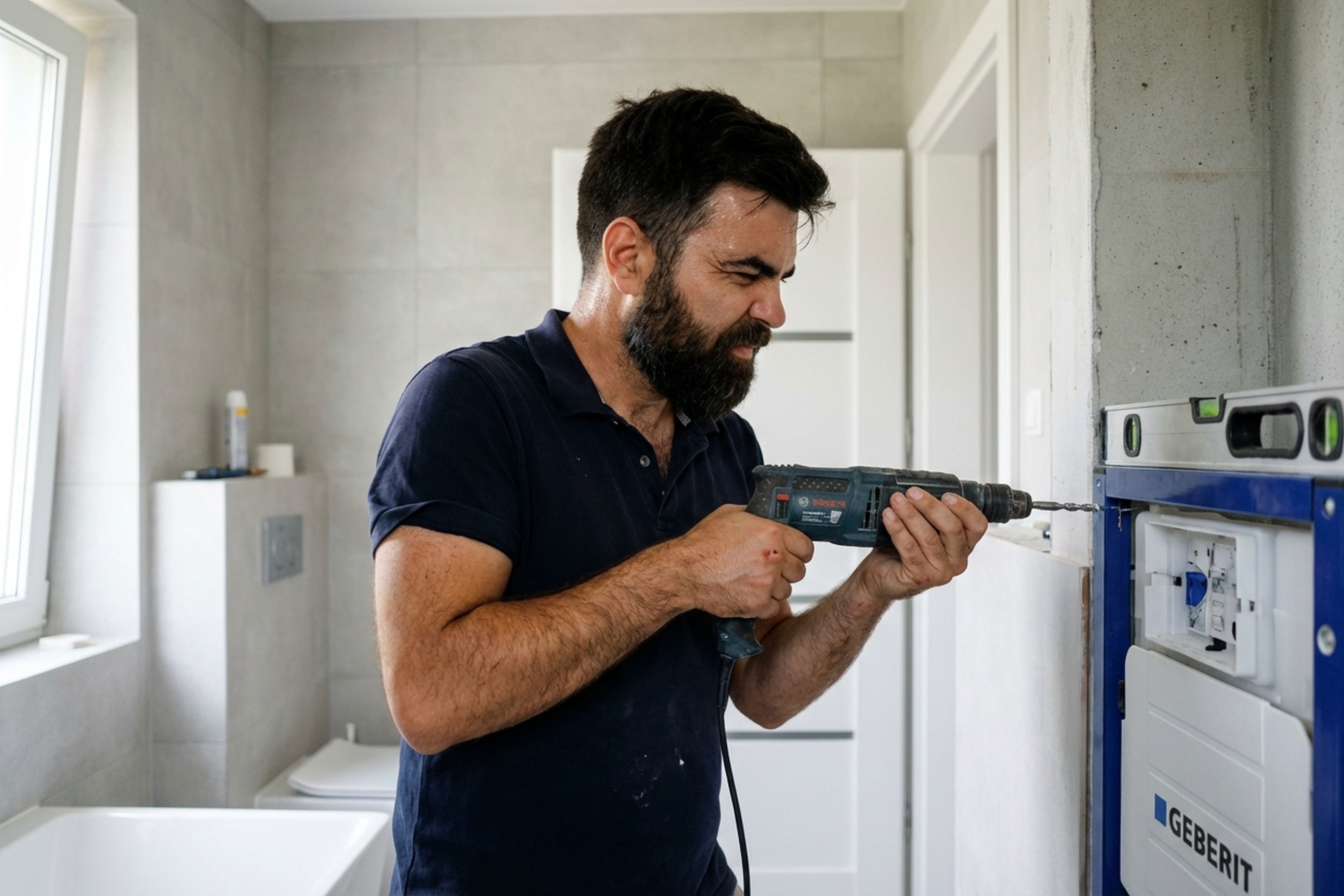
- Site inspection: we check the wall (load-bearing or partition), location of the soil stack and water supply point. We set the bowl height — the standard is 40–43 cm from the finished floor.
- Marking out and fixing the frame: the frame is levelled vertically and horizontally, then anchored to the floor and wall with expansion bolts. It must be completely rigid — the frame carries loads up to 400 kg.
- Connecting the drain: the frame outlet is joined to the soil pipe via a connector sleeve. We verify the fall — at least 2 cm per metre, otherwise blockages will follow.
- Connecting the water supply: cold water is run to the concealed cistern. We use a flexible hose or rigid pipe depending on the layout.
- Leak test: the cistern is filled, a test flush is made, and every joint is inspected. This happens BEFORE the frame is boxed in — afterwards, reaching the connections is much harder.
- Boxing in the frame: the frame is clad with moisture-resistant plasterboard or another suitable panel. An access opening is left at the flush-plate position so the cistern internals remain reachable.
- Hanging the bowl: the toilet is mounted on the threaded rods, connected to the flush and waste outlets, and the flush plate is fitted. Final check — flush cycle, refill, no movement in the bowl.
Common mistakes
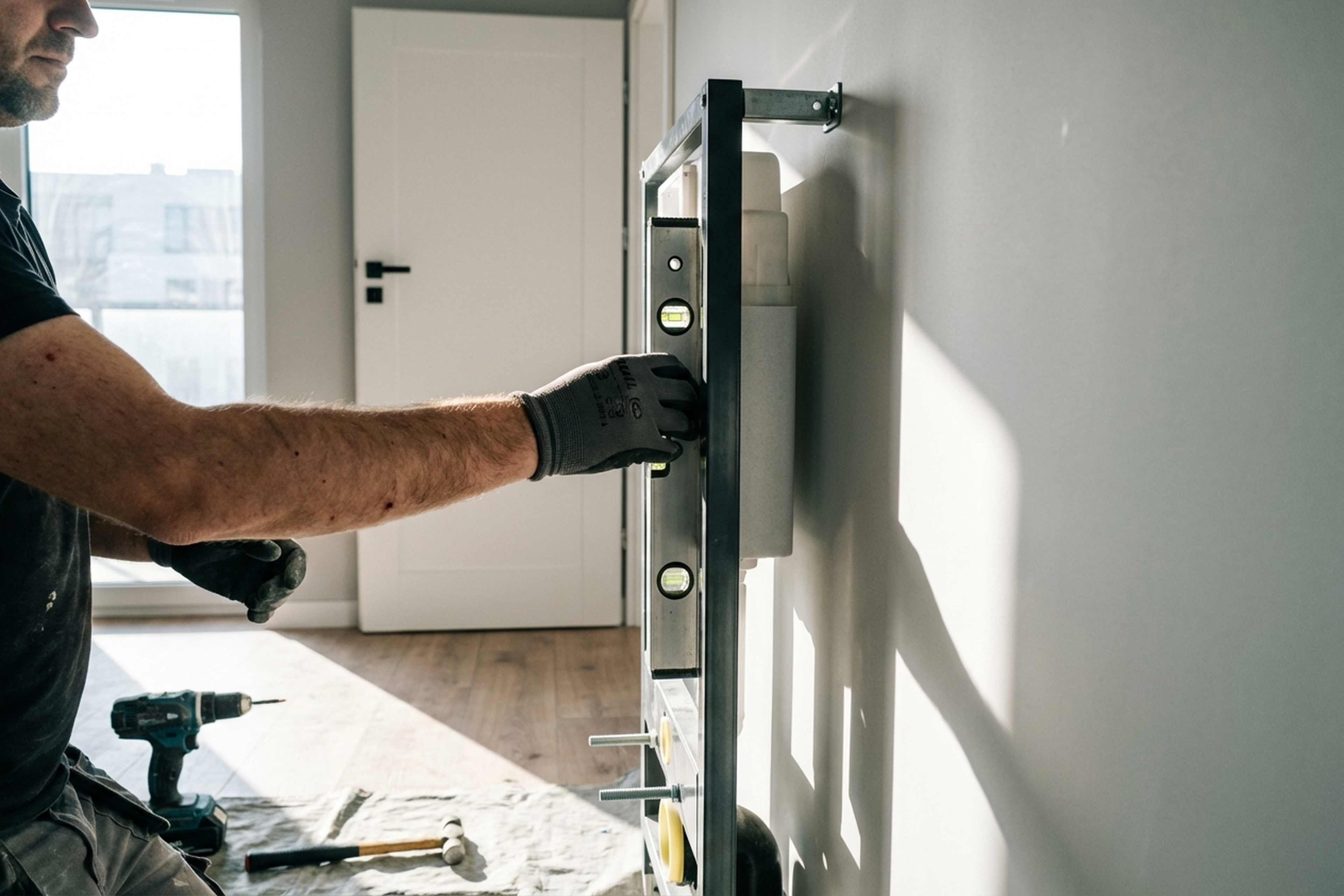
- Frame fixed to plasterboard only, with no noggins or reinforcement — after a few months it starts to move.
- No leak test before boxing in — the leak is discovered when water appears on the neighbour’s ceiling.
- Frame not levelled properly — the bowl hangs crooked and it shows.
- Buying a cheap no-name frame — spare parts are unavailable and the flush mechanism fails within a year.
- No service access to the cistern — when something breaks, the entire cladding has to be demolished.
- Wrong fall on the drain pipe — the toilet flushes poorly and an odour develops.
- Connector sleeves cut too short — when the bowl is hung, the joint does not seat fully and starts to drip.
What to prepare before the visit
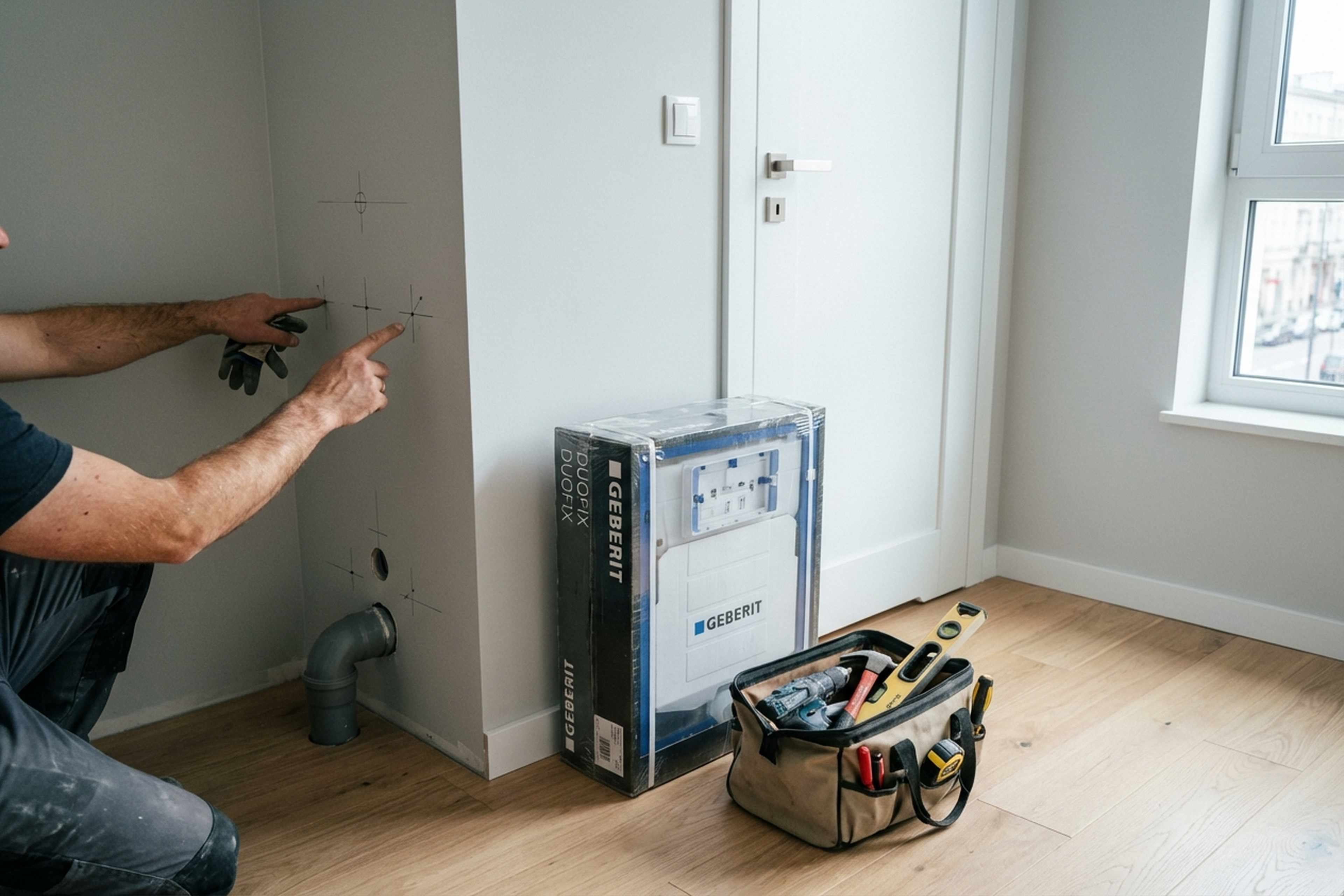
- Purchase the frame (with integrated cistern), the bowl and the flush plate — check compatibility of all components in advance.
- Make sure cold water and a waste outlet are available at the installation point.
- Clear the bathroom of furniture and loose items — the installer needs unobstructed access.
- Find out the wall thickness where the frame will be fixed — this determines the frame depth.
- If you plan to tile over the cladding — let us know, it affects the overall build-out thickness.
- Ensure the isolation valves for the water supply are accessible — they will need to be shut off during the work.
- If the building has old cast-iron drainage — mention it beforehand, an adapter may be required.
A real case from Warsaw
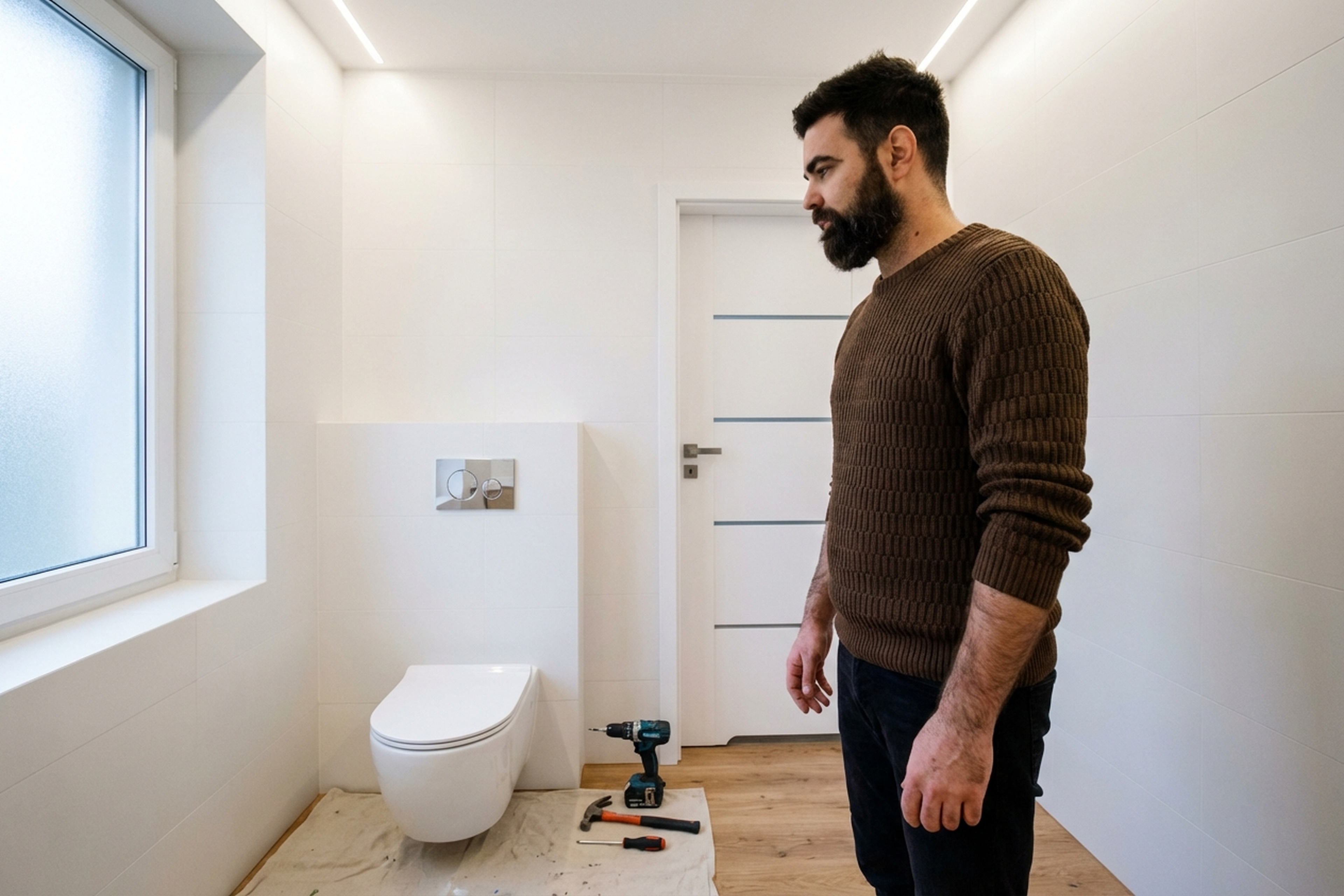
We were called to a new-build flat in Wilanow. The owners were renovating the bathroom and wanted to swap a floor-standing toilet for a wall-hung model. The wall was aerated concrete, and the waste outlet was positioned to the side of the stack — not in the standard spot. We anchored a Geberit frame with expansion bolts and routed the drain through an angled connector at the correct fall. The cistern was plumbed with a rigid supply line — more reliable for a concealed installation. Before cladding, we tested every joint twice — completely dry. We boxed in with moisture-resistant board, leaving the flush-plate opening clear. The bowl was hung and levelled. The whole job took around four hours. The owners later tiled the wall — clean result, no leaks at all.
Frequently asked questions
Will a wall-hung toilet support a heavy person?
Yes. The steel frame is engineered for loads of 400 kg and above — that is the standard across all major manufacturers. The anchoring to the wall and floor distributes the weight evenly.
Can the frame be fitted to a plasterboard wall?
Only if reinforced profiles or timber noggins are built into the stud wall. The frame bolts to the structural members behind the board, not to the plasterboard itself. Without reinforcement it is not possible.
What if the cistern breaks inside the wall?
Access to the flush mechanism and cistern internals is through the flush-plate opening. The valve, fill mechanism and seals can all be replaced through that opening without removing the cladding.
Which frame should I buy?
Established brands — Geberit, Grohe Rapid SL, Viega. Spare parts and service support are readily available. Budget no-name frames save money upfront but cause headaches when repairs are needed.
How long does the installation take?
Between 3 and 5 hours, depending on the wall condition, pipe layout and whether cladding is required. If the frame is already built in, hanging the bowl alone takes about an hour to ninety minutes.
Can the toilet be relocated to a different position?
It can, but the waste outlet must be rerouted with the correct fall maintained. This increases the scope and cost. Discuss it with the installer before starting the renovation.
Book the installation
A wall-hung toilet means a clear floor, more space and a modern-looking bathroom. But the installation demands precision: frame, drainage, watertight joints — every stage matters. We work across Warsaw and arrive with all tools and fixings. Get in touch — we will find a convenient time and get it done properly.