
Washbasin replacement in Warsaw — careful removal and new installation
22.02.2026A cracked basin, a chip on the rim, or simply an outdated design that no longer fits the bathroom — sooner or later the washbasin has to go. Sometimes the basin itself is fine, but a renovation calls for a different style: wall-mounted instead of pedestal, countertop-inset instead of surface-mounted. In flats across Wola and Srodmiescie we deal with this every week. The key is removing the old unit without damaging the tiles, connecting the trap and mixer properly, and making sure nothing leaks onto the neighbours below. Here is how we handle it.
How much does a washbasin replacement cost
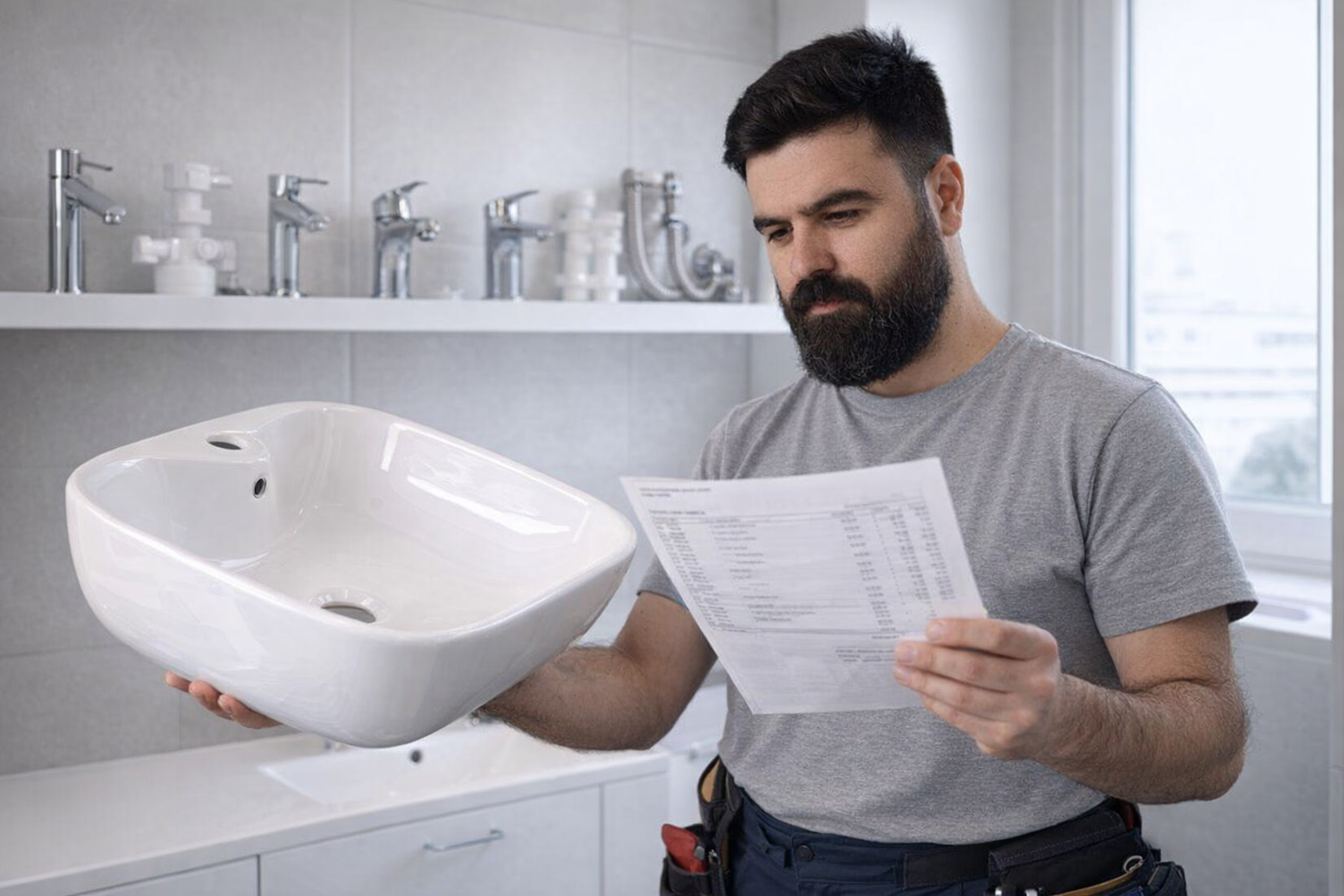
The price depends on the basin type, mounting method and the state of the plumbing. A wall-hung basin on brackets is one scope of work, a pedestal basin is another, and a countertop inset is yet another. If the supply hoses are old and need replacing, or if the pipe diameter does not match, that is an extra item. Current rates for all bathroom work are in the table below. Fixings are included in the price — the basin and mixer tap are supplied by the client.
| Service | min | max |
|---|---|---|
| Washbasin installation | 200 zł | 300 zł |
| Washbasin replacement | 150 zł | 250 zł |
| Vanity unit with basin installation | 250 zł | 450 zł |
| Basin mixer tap installation | 150 zł | 250 zł |
| Basin mixer tap replacement | 180 zł | 300 zł |
| Floor-standing toilet installation | 200 zł | 350 zł |
| Floor-standing toilet replacement | 250 zł | 400 zł |
| Wall-hung toilet installation (frame) | 350 zł | 600 zł |
| Toilet frame replacement | 600 zł | 1200 zł |
| Bathtub installation | 700 zł | 1000 zł |
| Bathtub replacement | 900 zł | 1400 zł |
| Shower cabin installation | 900 zł | 1200 zł |
| Shower tray installation | 500 zł | 800 zł |
| Shower tray replacement | 600 zł | 1000 zł |
| Linear drain installation | 800 zł | 1500 zł |
| Shower cabin / bathtub sealing | 35 zł/mb | 60 zł/mb |
| Towel radiator installation | 250 zł | 450 zł |
| Towel radiator replacement | 350 zł | 700 zł |
| Drain cleaning | 150 zł | 300 zł |
| Trap replacement | 120 zł | 220 zł |
How the replacement works
- We shut off the water — isolation valves under the basin or the main riser valve if the local ones do not hold. We confirm the water has fully stopped.
- We disconnect the trap and flexible supply hoses. A bucket goes underneath — there is always residual water in the trap.
- We remove the old basin from its brackets or unscrew it from the wall. For pedestal models: the bowl comes off first, then the column.
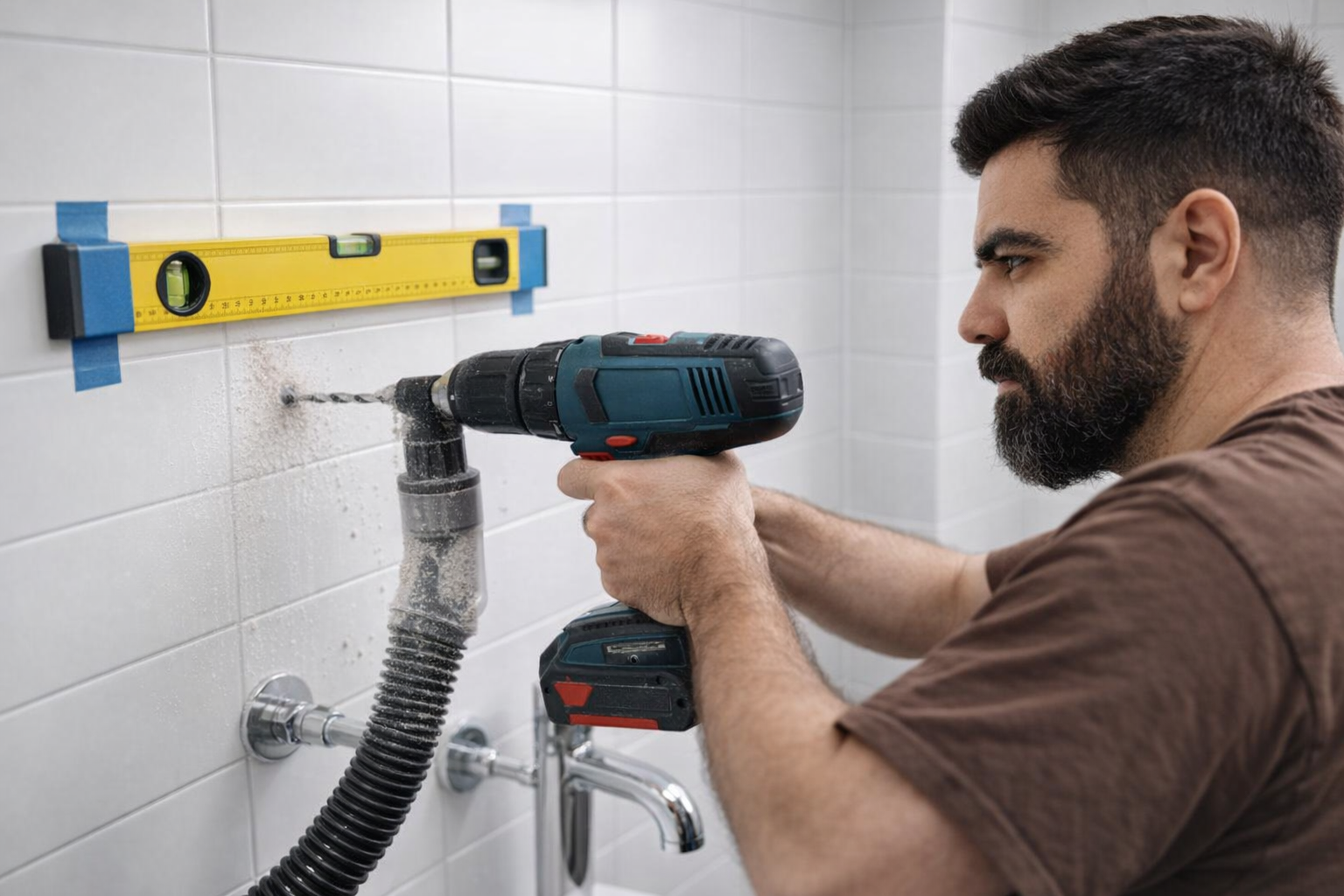
- We inspect the wall: condition of anchors, tiles and pipe outlets. If the new basin’s fixings do not line up with the old holes, we drill new ones.
- We install new brackets or threaded studs, hang the basin and level it.
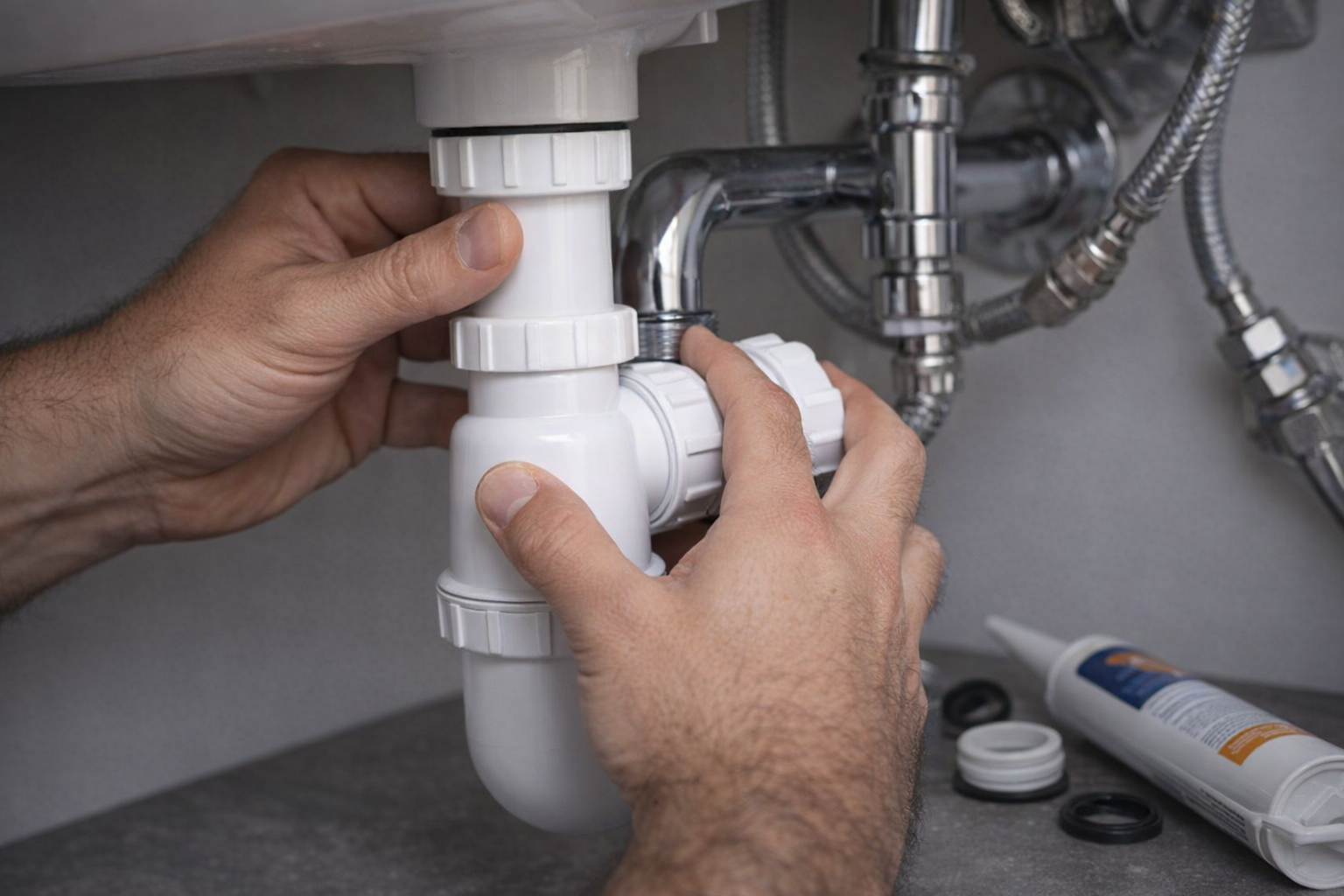
- We connect the mixer tap, flexible hoses and trap. If the hoses are old or too short, we replace them.
- We open the water, check every joint for leaks, run water through the trap and watch under the basin for a few minutes.
Working with water demands attention: a poorly tightened connection can start dripping an hour later, long after the technician has left. That is why we check every joint twice and leave a dry tissue under the trap — if it is still dry after ten minutes, everything is sealed. When there is any doubt about the condition of valves or pipework, it is better to replace them straight away than to risk a leak later.
Common mistakes during washbasin replacement
- Not shutting off the water fully — the valve is turned but still drips. When the hose is disconnected, water pours onto the floor.
- Reusing old flexible hoses — after a year or two they start leaking, especially if they are more than five years old.
- Buying a basin without measuring the distance between the hot and cold water outlets — the mixer tap cannot reach.
- Drilling tiles with a standard bit — the tile cracks, and repairing it costs more than the entire replacement job.
- Mounting a heavy ceramic basin on old anchors — within a month it sags or pulls away from the wall.
- Using silicone sealant instead of proper thread tape on screw joints — on hot water, silicone loses elasticity over time.
- Not checking the trap gradient — water sits in the pipe and begins to smell.
What to prepare before the visit
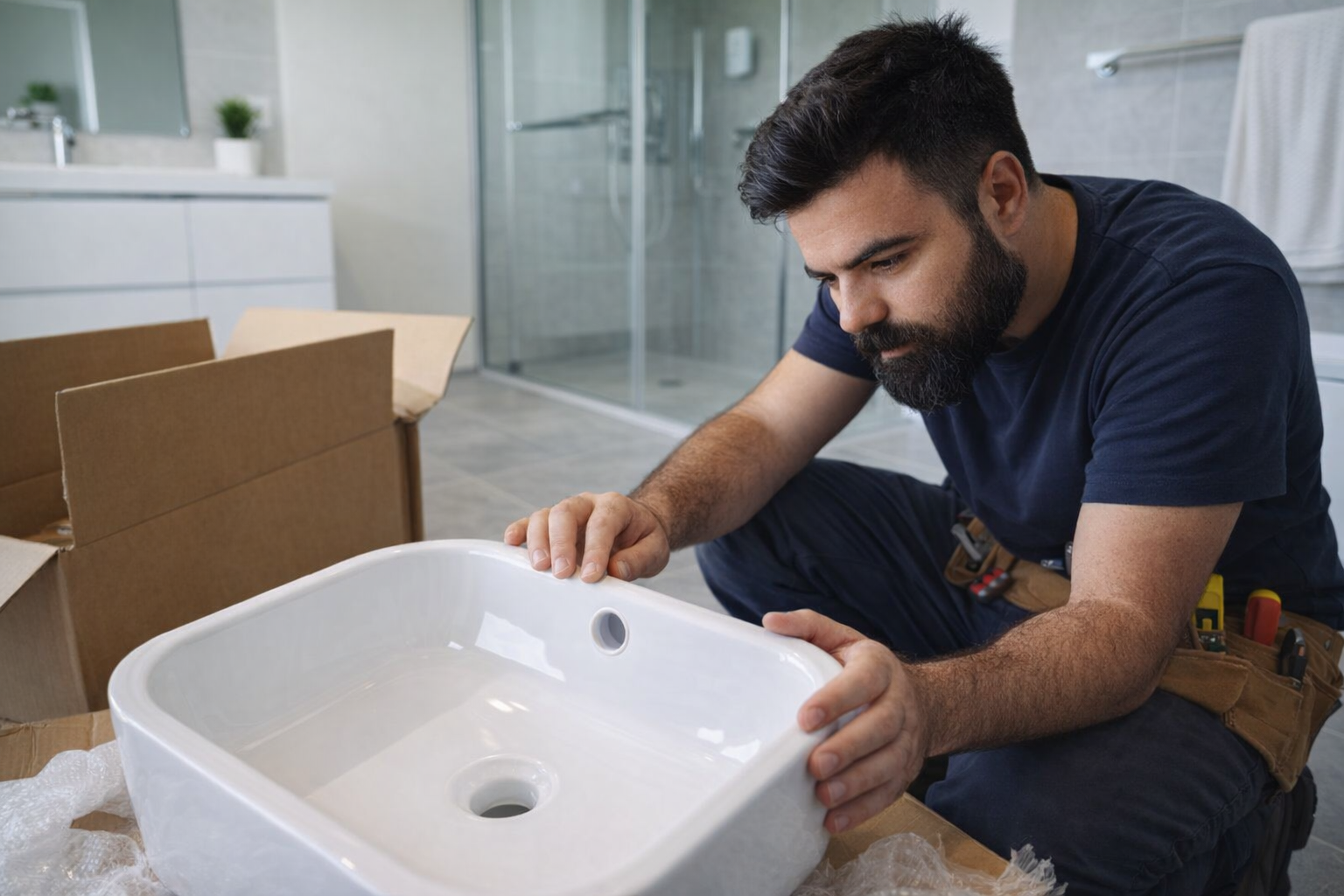
- Buy the new washbasin — measure the distance between mounting centres and between water outlets beforehand.
- Buy a mixer tap if the old one does not fit the new basin (different hole type or hole count).
- Check whether the isolation valves under the basin work — if they do not close fully, let us know.
- Clear everything from under the basin — cleaning products, baskets, the vanity unit if it is in the way.
- Prepare a spot in the hallway for the old basin — we will remove it, but disposal from the flat is a separate charge.
- If you need a specific trap model or a trap with a washing-machine branch, buy it in advance.
- Make sure the new basin fits the space — it should not press against the wall, bathtub or furniture.
- If you want to move the basin to a different position (shift it sideways), that is a different job requiring pipe relocation.
A real case from Warsaw
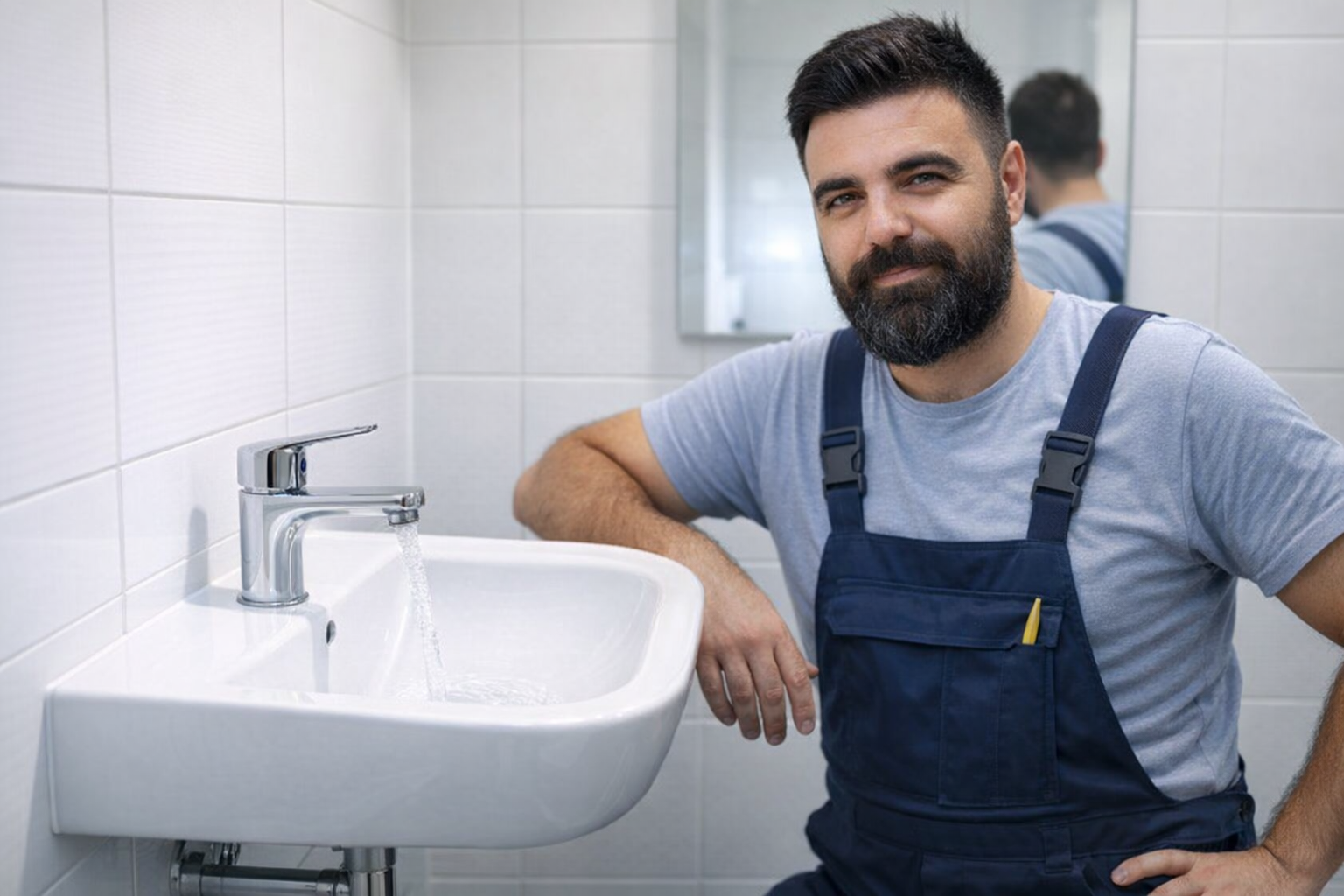
We were called to a flat in Wola. The owner had bought a new wall-mounted basin but discovered that the old brackets did not match — the mounting centres were 7 cm apart from where the new fixings needed to be. The previous basin had been on a pedestal, and the brackets behind it were barely anchored at all. We had to drill new holes through the tiles. We used a diamond-tipped bit to avoid cracking the ceramic. We fitted heavy-duty anchors — the new basin weighs 13 kg, and you have to account for the downward force when someone leans on it. We replaced both flexible hoses and the trap — the originals were about six years old and the rubber seals had hardened. Everything was connected and tested — completely dry. The job took just under an hour. The owner checked three days later and confirmed there was not a single drop.
Frequently asked questions
Do I have to replace the trap when changing the basin?
It is not mandatory, but we recommend it. If the trap is more than three or four years old, the seals are already stiff and may not form a tight connection when refitted. A new trap is inexpensive and guarantees a leak-free result.
Can I install a different type of basin in the same spot?
Usually yes, as long as the water and waste outlets line up. But if you are switching from a pedestal to a wall-mounted model, new anchors will be needed. If you are moving to a vanity-mounted basin, we need to confirm the vanity unit fits the space.
Do you need to shut off water to the whole flat?
No, if there are working isolation valves under the basin. If there are no valves or they do not hold, we close the riser. It takes a couple of minutes and we let you know in advance.
What if there are no tiles behind the old basin?
It happens — tiles were never laid because the pedestal hid the wall. A new wall-mounted basin may not cover that area. The options are either adding tiles or choosing a larger basin that covers the gap.
How long does a replacement take?
A straightforward swap takes forty minutes to an hour and a half. If new holes need drilling, hoses need replacing, or valves need adjusting, it can take up to two hours.
Can you supply the washbasin?
No — the client purchases the basin. We can advise on dimensions and mounting type so you buy one that fits correctly.
Book your washbasin replacement
We work across Warsaw. We arrive with tools, fixings, sealing materials and a full set of spanners. We remove the old basin, install the new one, connect the water supply and check every joint for leaks. Clean, efficient, no fuss. Get in touch and we will arrange a convenient time.