How much does parquet lacquering cost and what affects the price
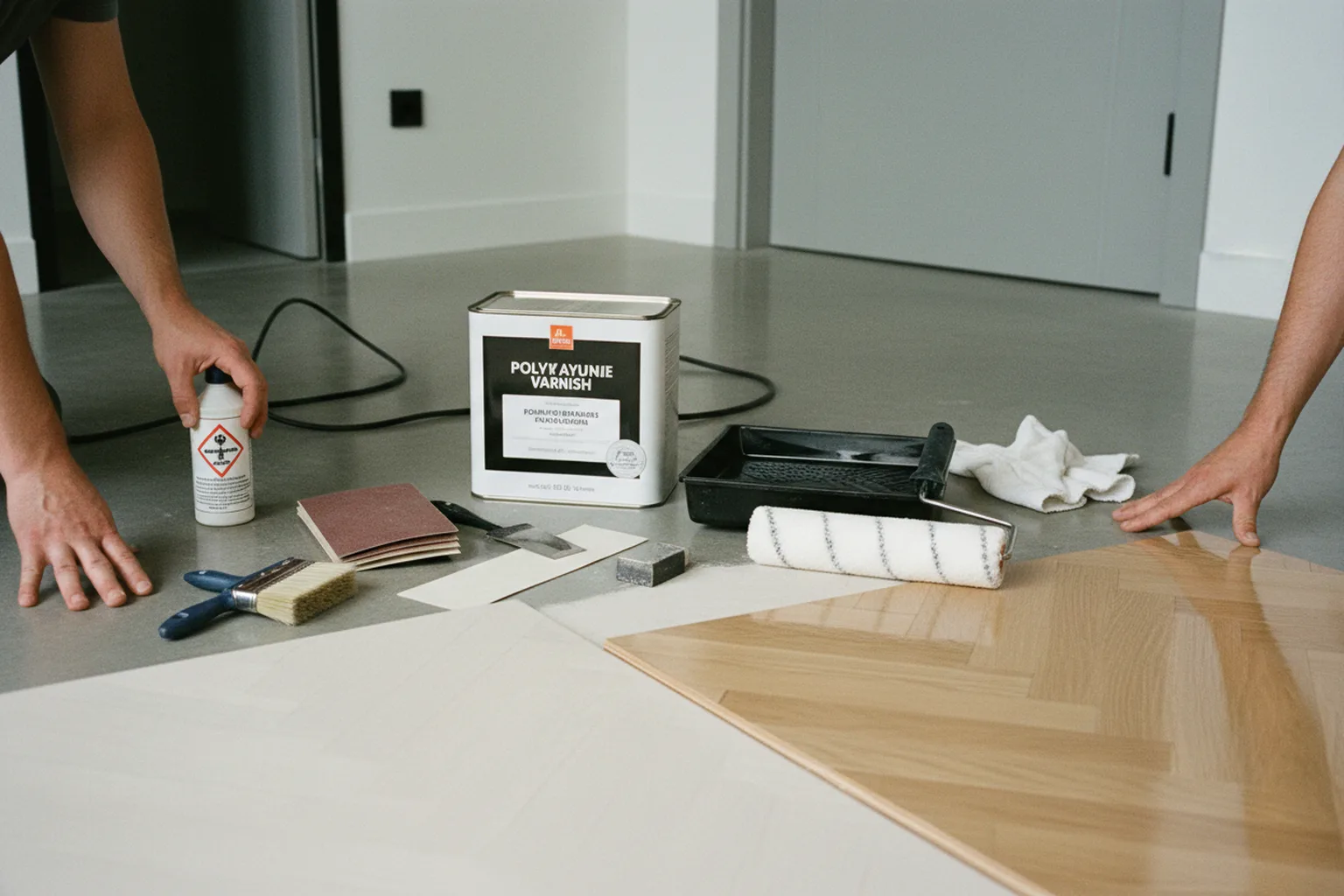
The cost is based on the size of the area, the state of the old finish, the lacquer chosen and the number of coats. Water-based lacquer costs less and dries quicker; polyurethane costs more but lasts much longer. Extra work such as filling gaps, repairing single blocks and priming also changes the final price. See the table below for up-to-date prices for all flooring services.
| Service | Price |
|---|---|
| Floor panel removal | 20–30 zł/m² |
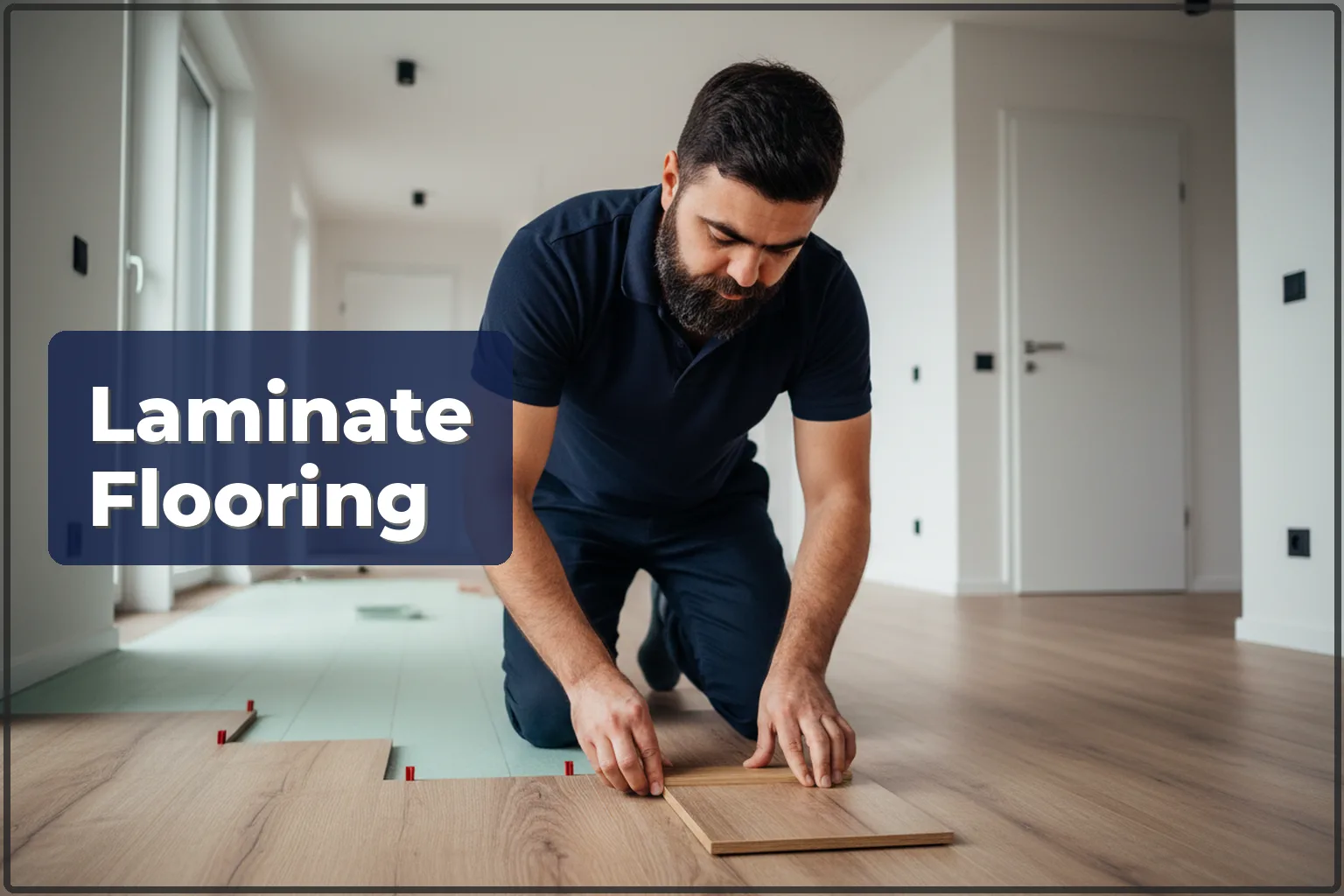
| Floor panel installation | 50–90 zł/m² |
| Floor panel replacement | 70–100 zł/m² |
| Vinyl plank installation | 45–80 zł/m² |
| Skirting board installation | 25–45 zł/mb |
| Skirting board removal | 8–12 zł/mb |
| Old flooring removal | 20–30 zł/m² |
| Carpet laying | 55–70 zł/m² |
| PVC flooring laying | 45–75 zł/m² |
| Glued flooring laying | 45–75 zł/m² |
| Parquet sanding | 45–55 zł/m² |
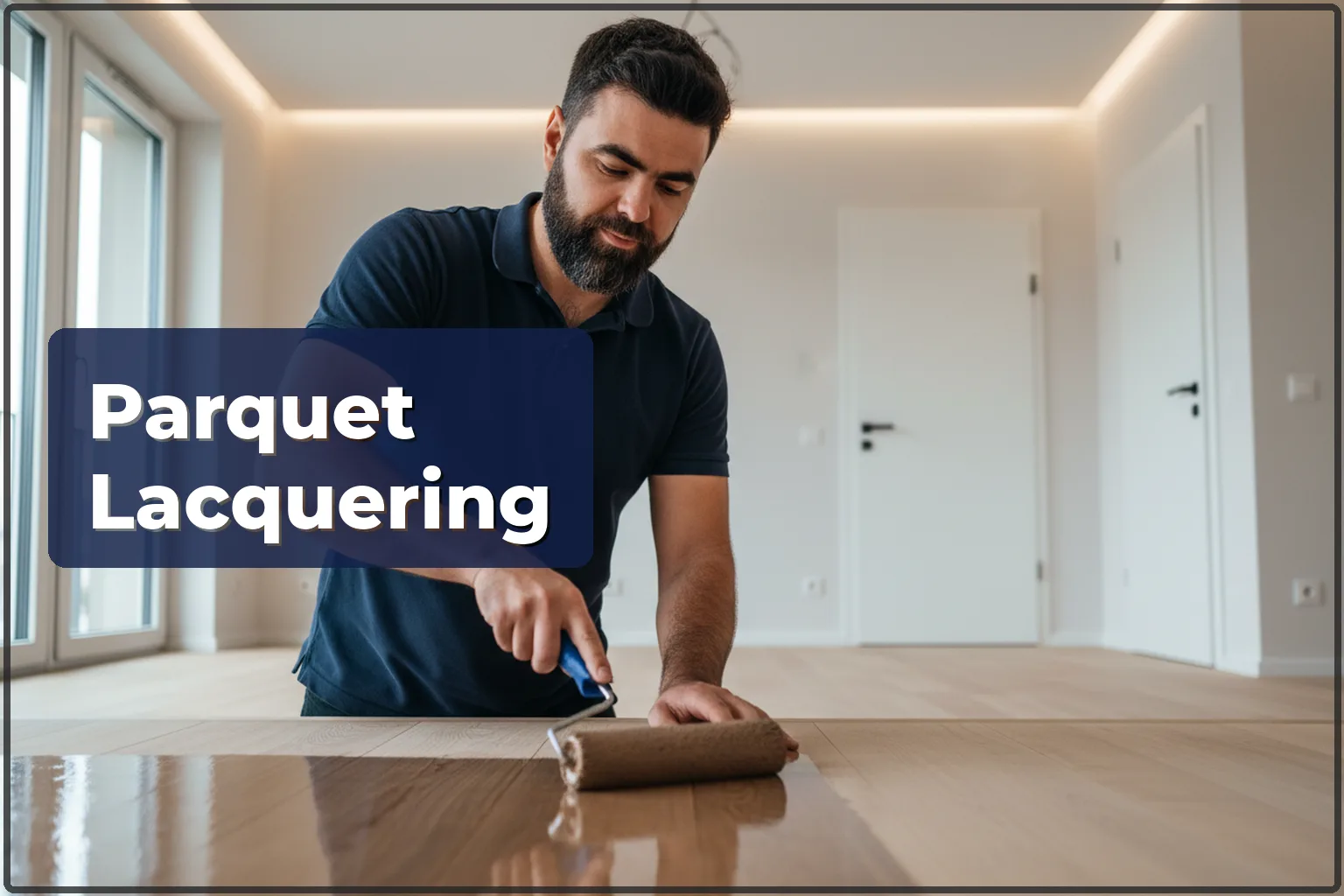
| Parquet varnishing | 40–60 zł/m² |
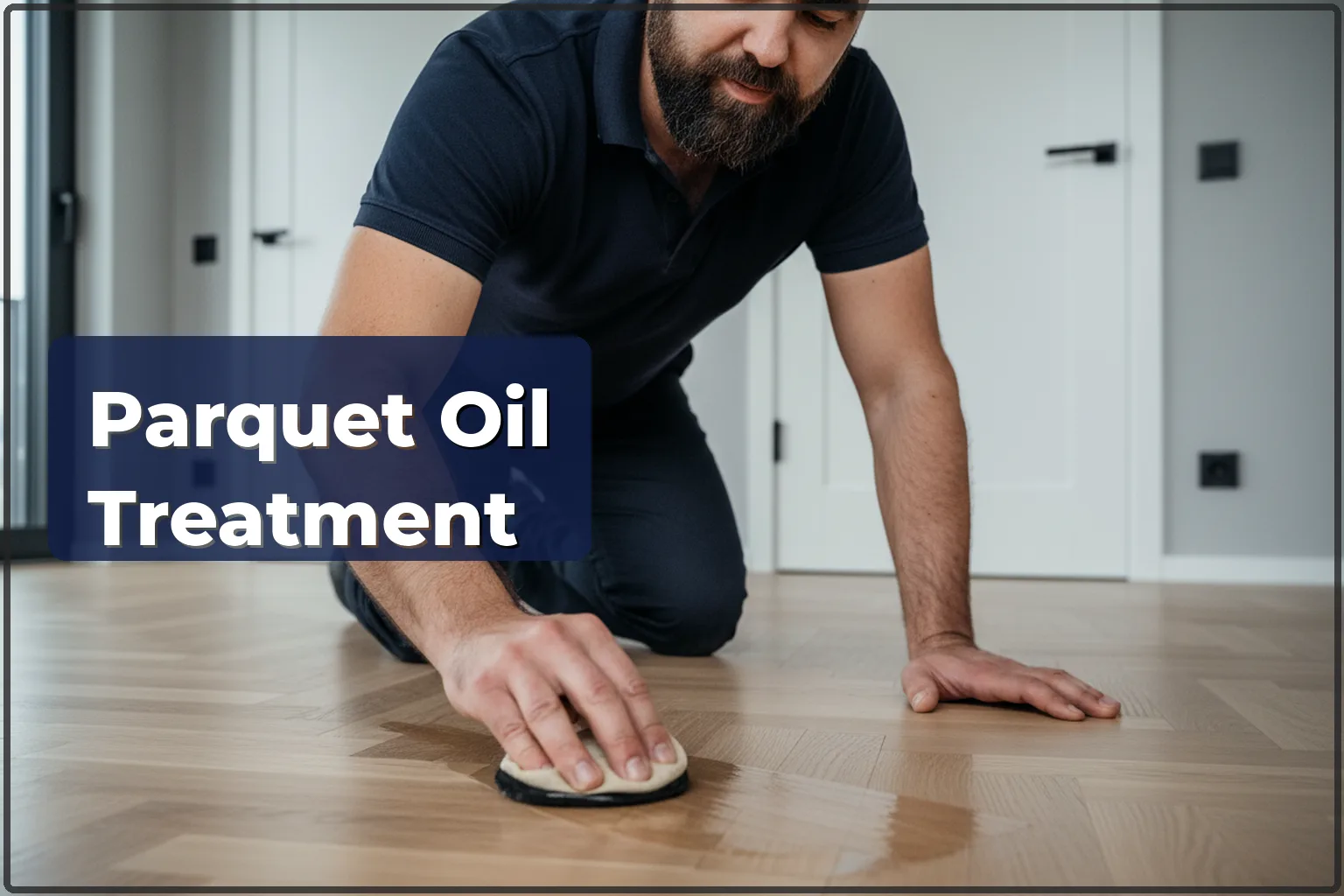
| Parquet oiling | 25–45 zł/m² |
| Parquet filling | 25–45 zł/m² |
| Floor threshold installation | 180–300 zł |
| Door trimming | 200–400 zł |
Indicative prices. Ranges for a typical scope. Fixings included, materials separate. Minimum order 300 zł.
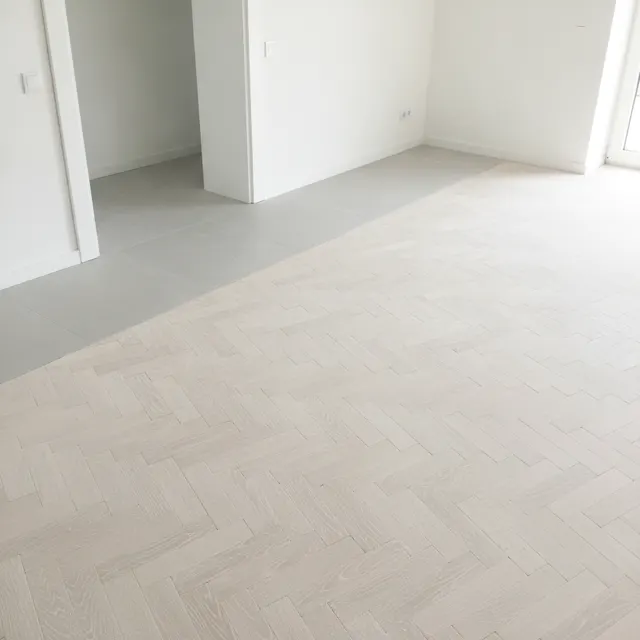
What it costs and how to book: apartment finishing in Warsaw.
How parquet lacquering works: step by step
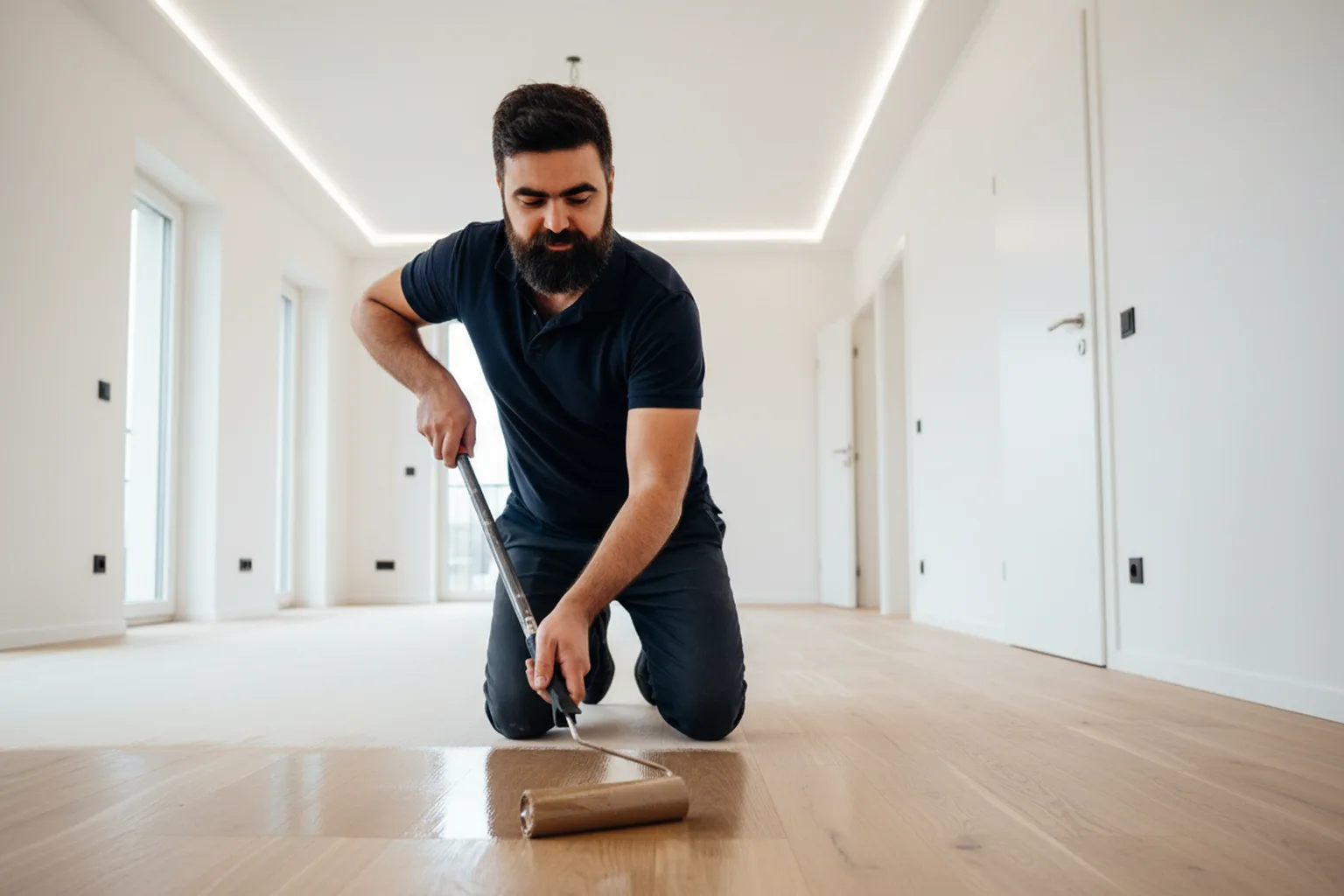
- Floor inspection: they examine the condition of the blocks, check for loose pieces and squeaks, and judge how deep the damage goes in the old finish. Damaged elements are fixed in place or replaced.
- Room preparation: all furniture must be taken out by the client in advance. Tradespeople seal door openings with plastic sheeting to keep dust contained.
- Sanding: they strip off the old lacquer with drum and rotary sanders. Usually three passes — coarse, medium and fine grit. Corners and edges by the walls are finished by hand.
- Gap filling: small spaces between blocks are filled with specialist filler mixed with sanding dust, this gives a perfect colour match with the floor.
- Priming: they put on a base layer of primer lacquer that closes the wood pores and gives good adhesion. Drying time is 2 to 4 hours depending on the product.
- Lacquer application: at least two coats, best three. Between coats they do a light sand with fine-grit paper to improve adhesion. Each coat needs 4 to 12 hours to dry.
- Final check and care instructions: they inspect the finish in side light and explain the next steps, when furniture can go back, when the floor can be washed, and which cleaning products to use.
Common mistakes with parquet lacquering
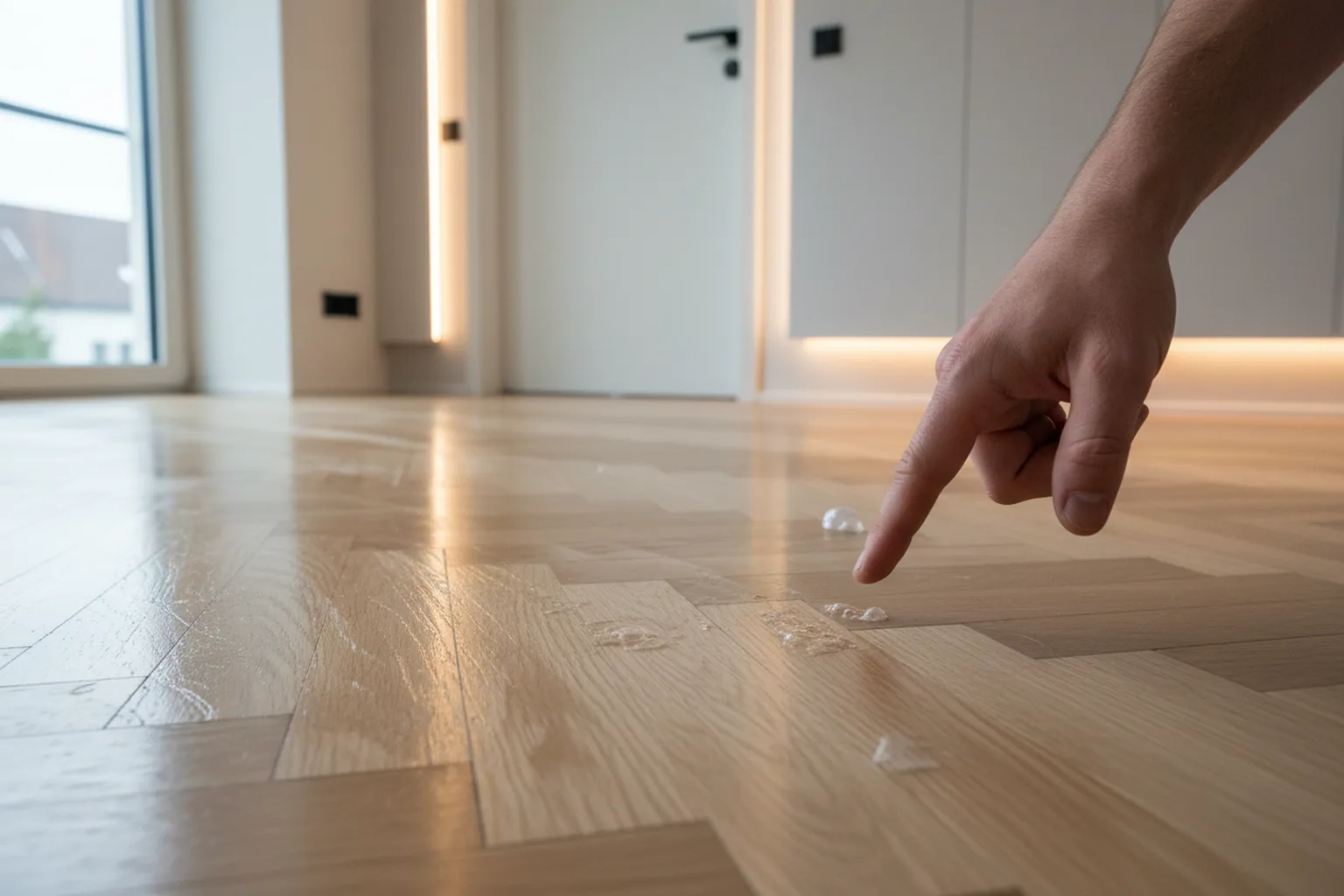
- Putting new lacquer on top of the old finish without sanding — after a few months the new layer starts peeling off in sheets.
- Using only one coat of lacquer: that is not a proper finish, just a primer layer. The floor needs at least two coats, better three.
- Lacquering in a room with no ventilation: the finish dries unevenly and gets cloudy areas.
- Opening windows while the lacquer is drying — dust and dirt land on the wet surface and leave it rough.
- Walking on the floor too early: shoe marks get pressed permanently into the uncured lacquer.
- Mixing lacquer types (water-based over alkyd): the finish starts bubbling and separates.
What to prepare before the technician arrives
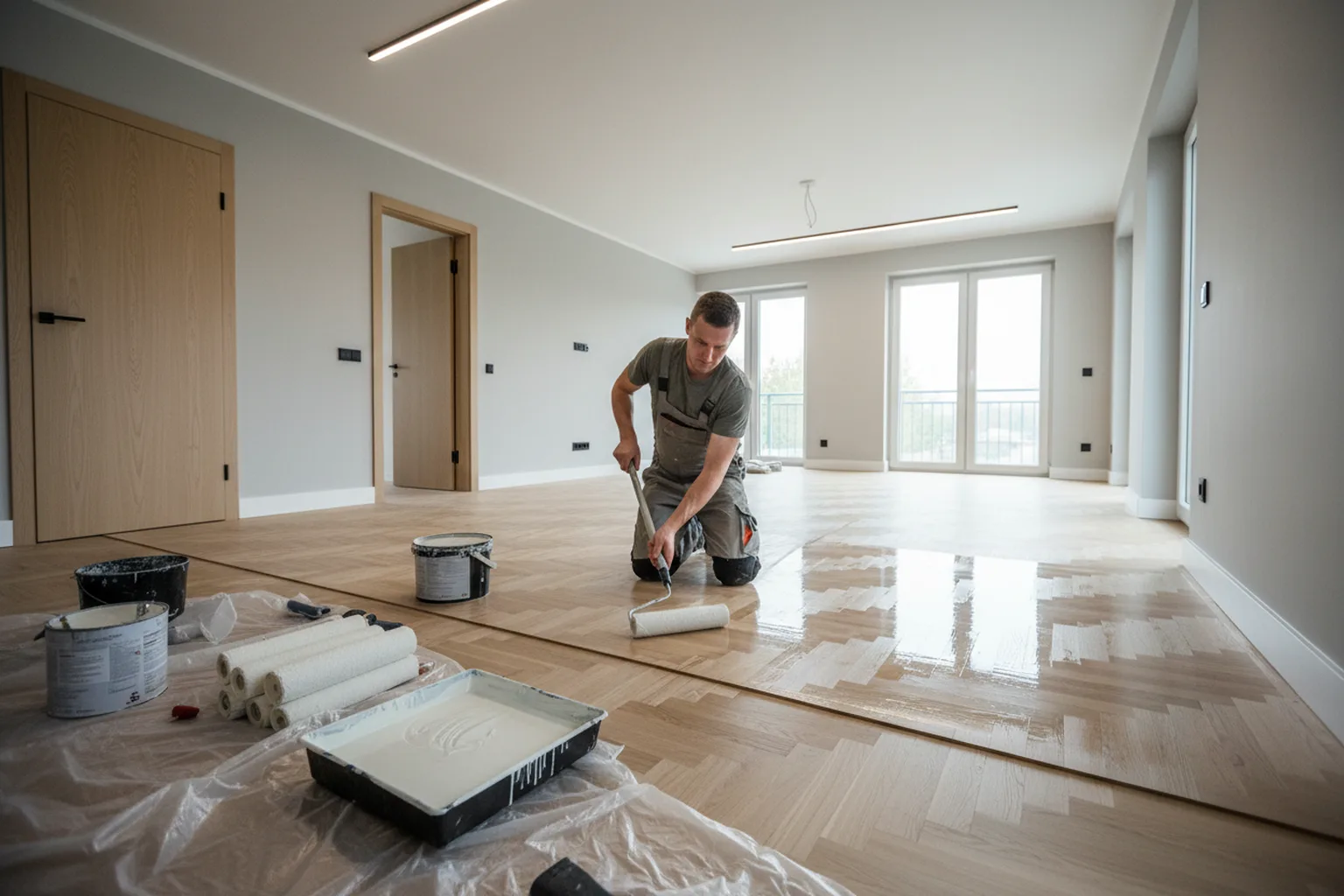
- Empty the room fully — the sanding machine needs clear access from wall to wall.
- Take off skirting boards if you are going to replace them. If they are staying, the technician will cover them with painter’s tape.
- Make sure there is a working power supply: the sander draws at least 2 kW and needs a 230V outlet.
- Let the neighbours know about the noise: sanding runs for several hours.
- Remove curtains and anything that stains easily, fine dust gets into everything despite the dust bag.
- Provide ventilation after lacquer application (but not during!) — open the windows when the technician tells you.
A real case from Warsaw
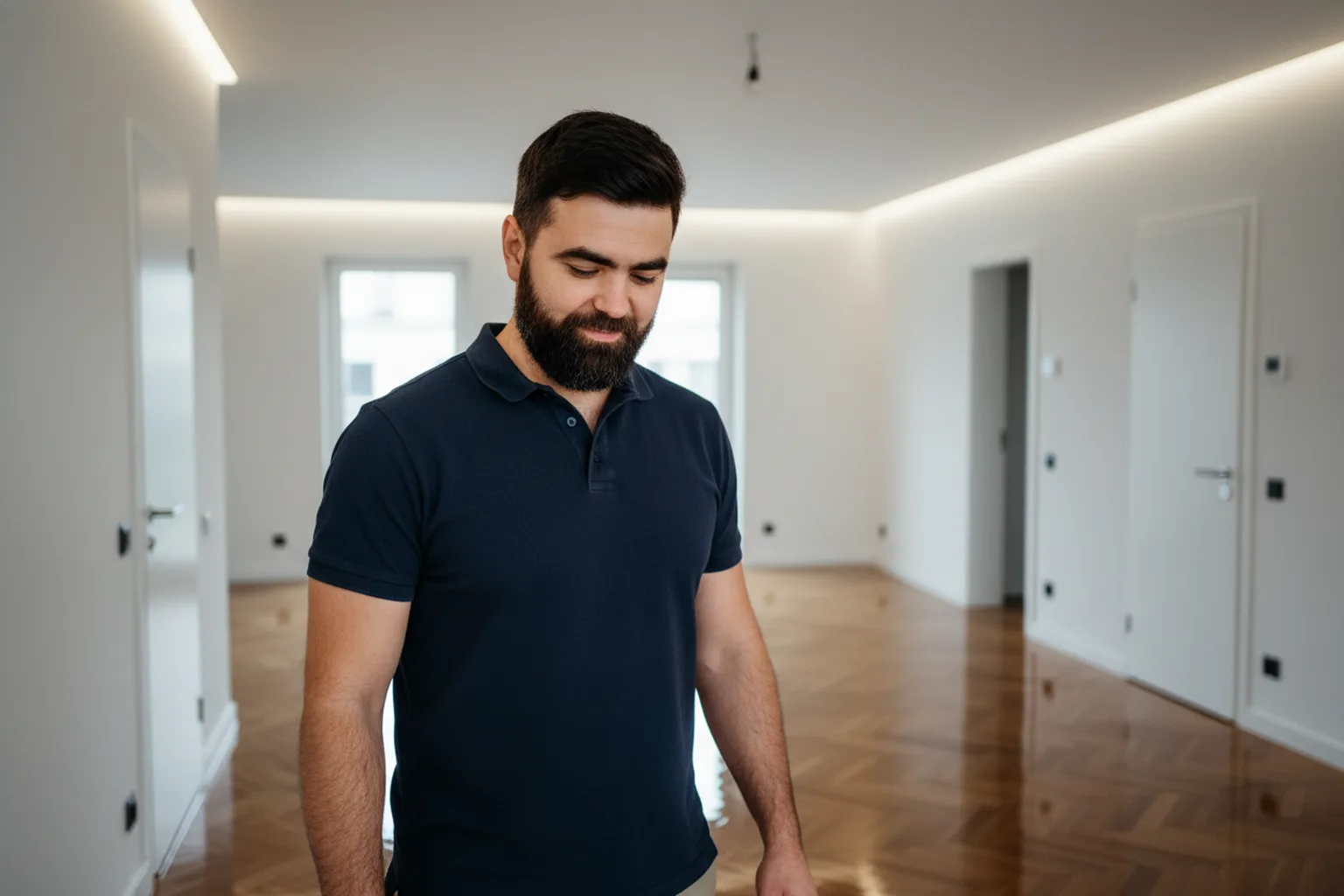
A flat in Wola, a 1960s block, oak herringbone parquet. The new owners were ready to tear it out and install vinyl: the floor looked finished. After inspection they found the timber still had enough thickness for sanding and all blocks were firmly fixed. Tradespeople removed three layers of old finish, filled the gaps, and put on three coats of water-based polyurethane lacquer. The work took three days including drying time between coats. The result was a floor that looked like new. The owners dropped the vinyl idea and saved a good amount of money. A year later they confirmed the finish was still in perfect shape — no scratches, no wear marks.
Frequently asked questions
Which lacquer is better: water-based or polyurethane?
Water-based dries quicker and has almost no smell, so it works well if you are staying in the flat during the job. Polyurethane is harder and stands up better to abrasion: best for hallways and kitchens.
How many coats of lacquer are needed?
At least two, best three. The first coat soaks into the wood and works as a primer; the second and third create the protective top layer.
When can I move furniture back?
After 48 to 72 hours from the last coat. Full lacquer curing takes up to 7 days — do not drag heavy items across the floor during this time.
Can parquet be lacquered in winter?
Yes, as long as the room temperature is at least +15°C and humidity is 40–60%. The heating season actually helps: the lacquer dries faster.
Do I need to move out during the work?
It is best for 2 to 3 days. Sanding creates a lot of dust, and drying lacquer gives off fumes, especially alkyd-based products.
Who does the work
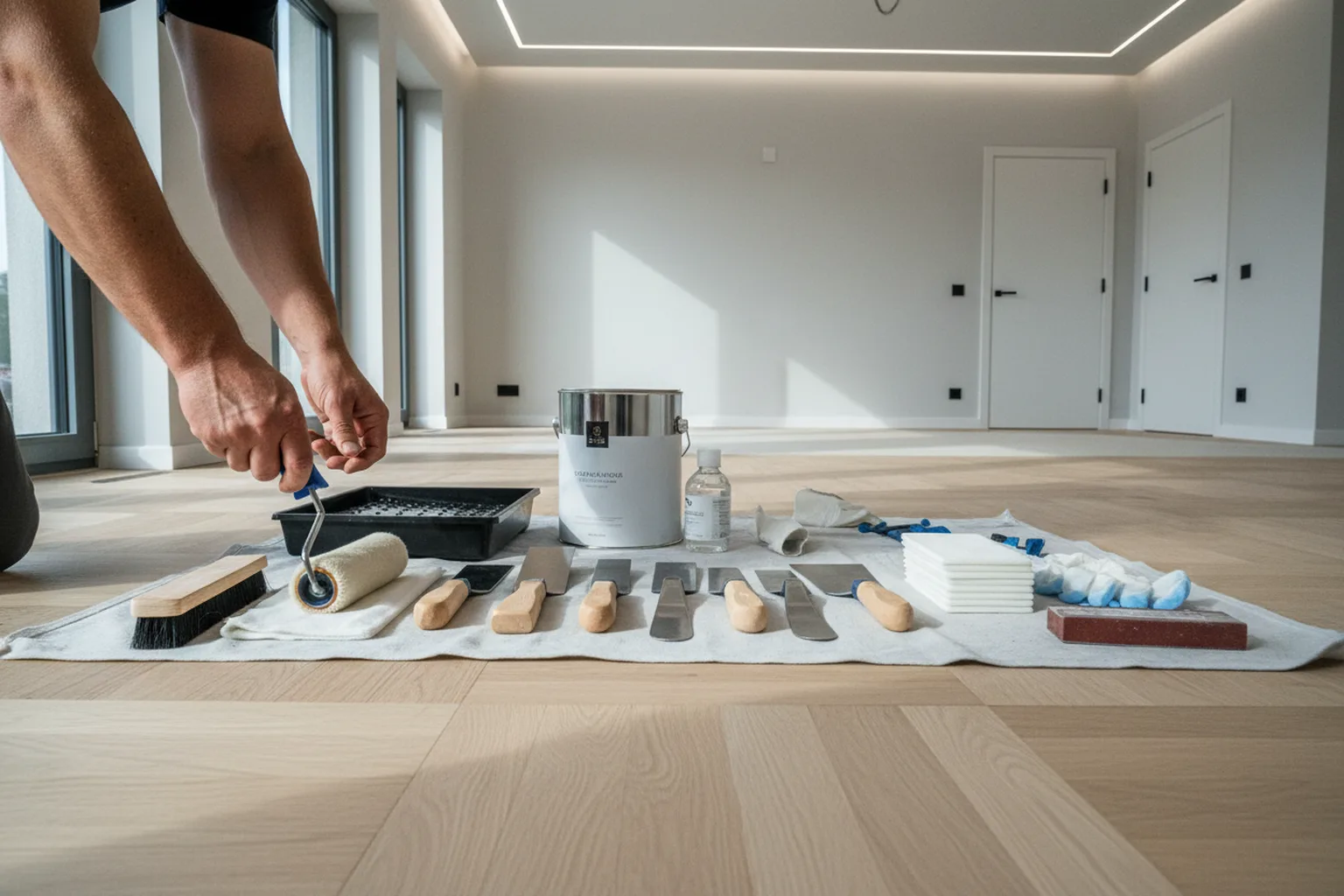
Parquet lacquering and sanding are done by craftsmen with hands-on experience in restoring hardwood floors. Tradespeople use professional machines: drum and rotary sanders with dust extraction systems. Tradespeople work across all of Warsaw and the surrounding area.
Order in the app
Describe the job, add photos and the address. Tradespeople send their own prices and dates, and you pick one of the offers.
Open the app