Handyman24 B2B
Handyman service for offices and coworking in Warsaw
A socket by the desk, the light in the meeting room, a door that sticks: in an office every small fault is multiplied by the number of people who run into it. The job is taken by a tradesperson from the app, and we set the hour around your schedule, evening or weekend, when the desks are empty.
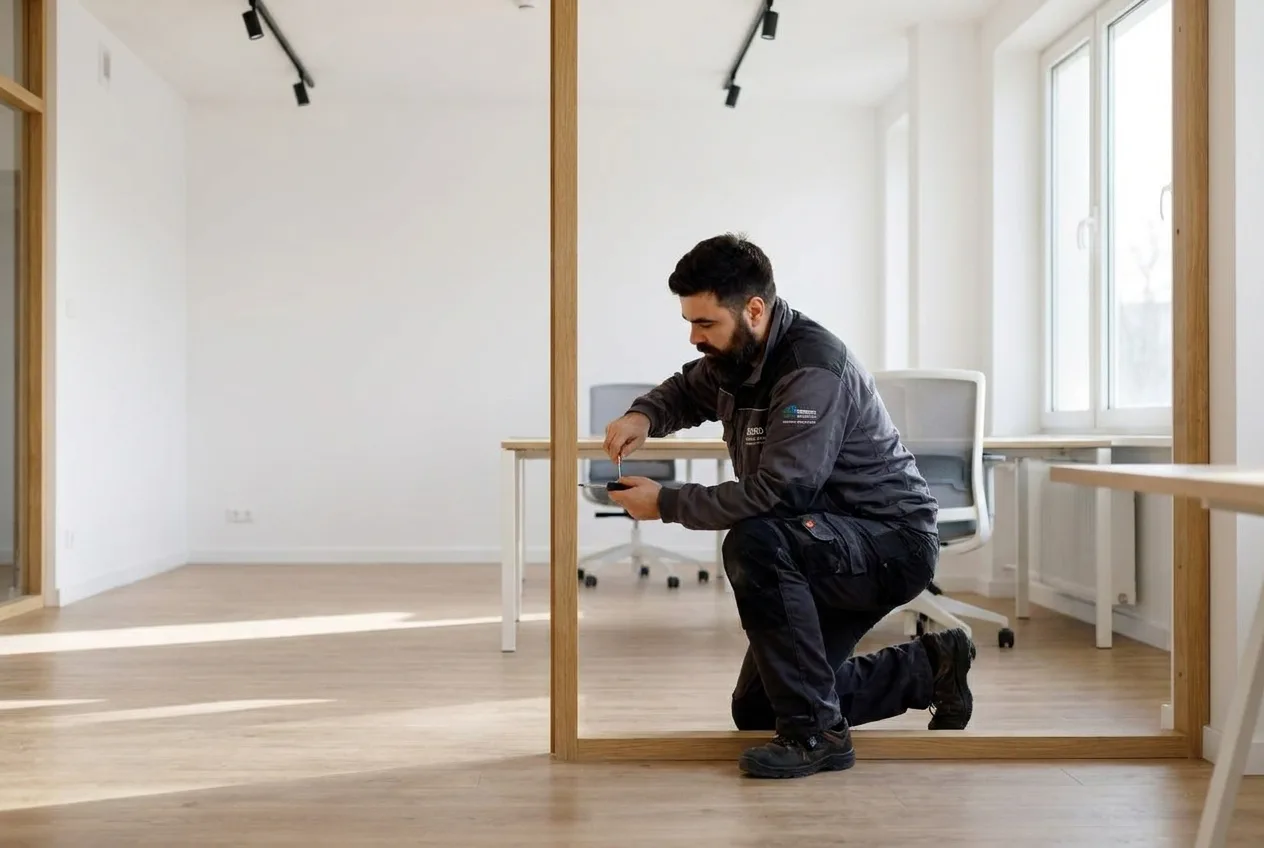
What is different here
An office breaks quietly and in small pieces. One socket by a desk, one fitting in the meeting room, one door you have to pull twice: separately it is nothing, together it is a list nobody wants to own. The tradesperson closes it in one visit, and the call-out counts once.
The second thing is people. Drilling next to a working open space makes no sense: you lose more working time than the job itself costs. So the slot is picked around the calendar: evening, early morning, weekend. An hour of a tradesperson is a separate price list item, and with a longer list it works out cheaper than each fault on its own.
The third thing is paperwork. A company needs an invoice with its details, not a receipt. It comes from the tradesperson who did the work, and the details come from the request: put them in at once so nothing has to be reissued later.
What breaks most often
Six things that come back on these premises month after month.
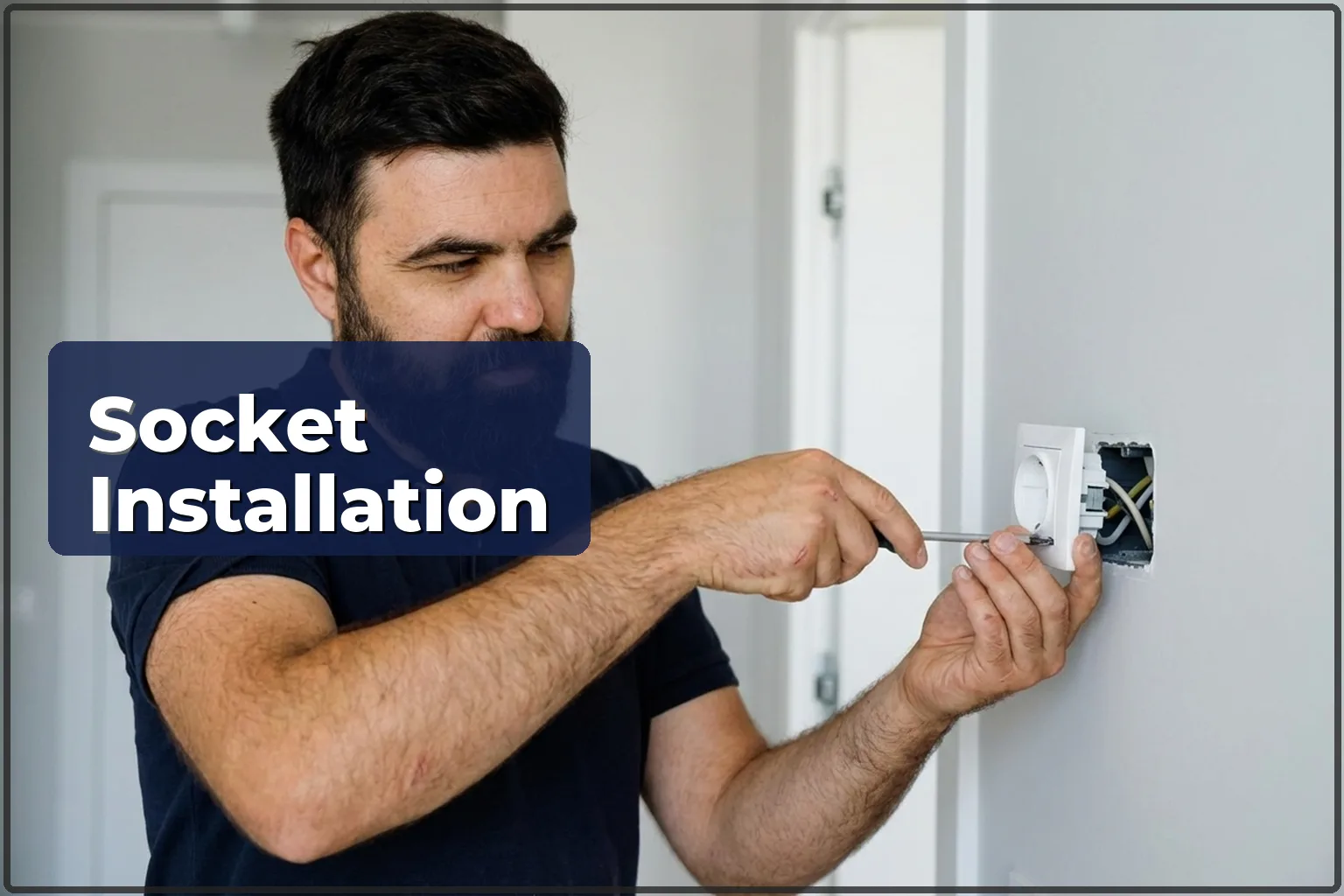
- Sockets and switches Adding a point at a new desk, replacing a dead one, fixing a switch.
- Lighting in the open space and meeting rooms Burnt-out panels, flickering light, fittings in the meeting room before a meeting.
- Assembling and moving desks Desks, pedestals, cabinets: assembled, taken apart for a move, levelled in place.
- Screen mounts A screen and its mount on the wall or the desk, checked that the wall will hold it.
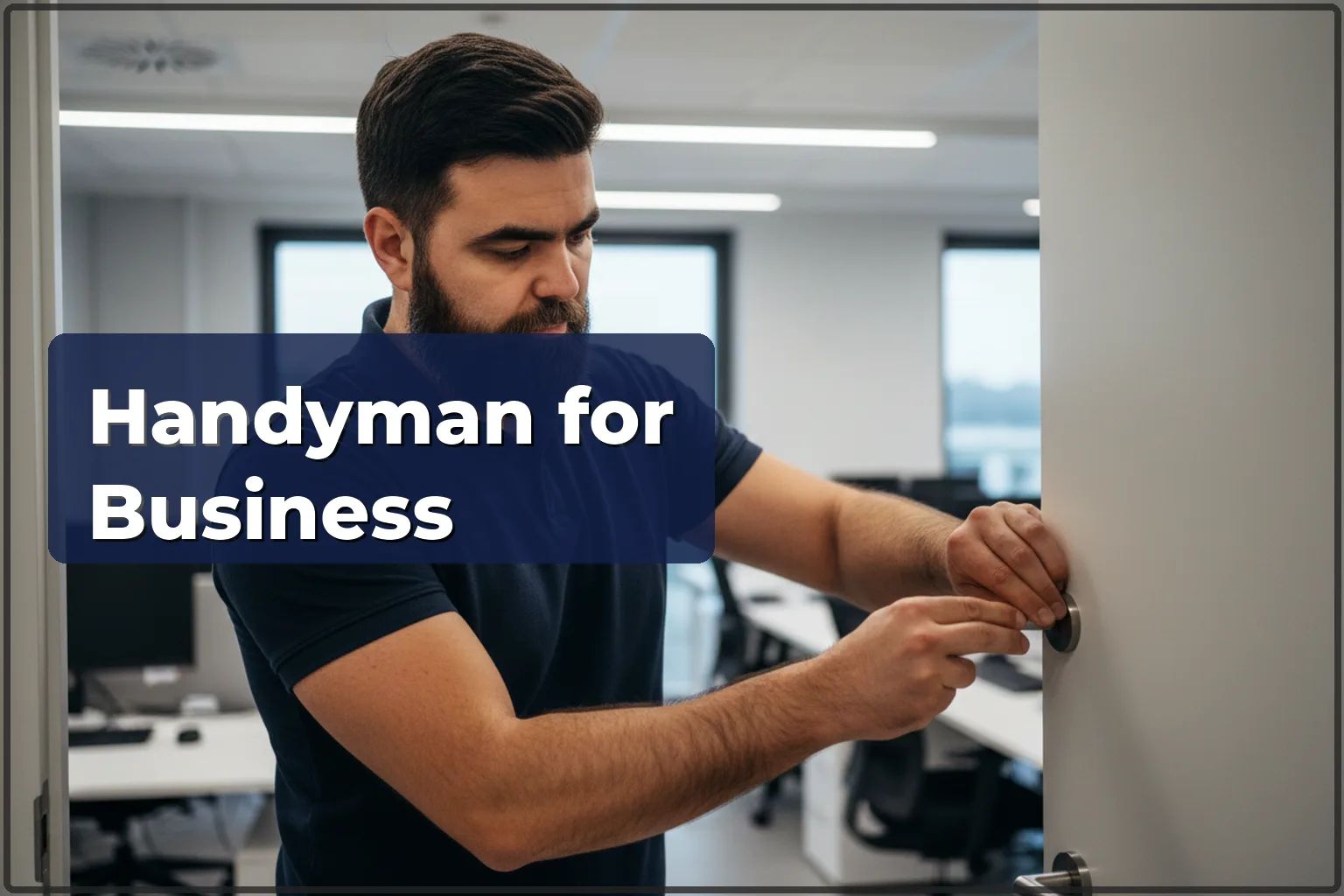
- Adjusting doors and furniture Cabinet doors, drawers, and an entrance door that stopped closing on its own.
- Small fixes after a move Shelves, boards, hooks and everything you did not get to hang when you moved in.

What it looks like
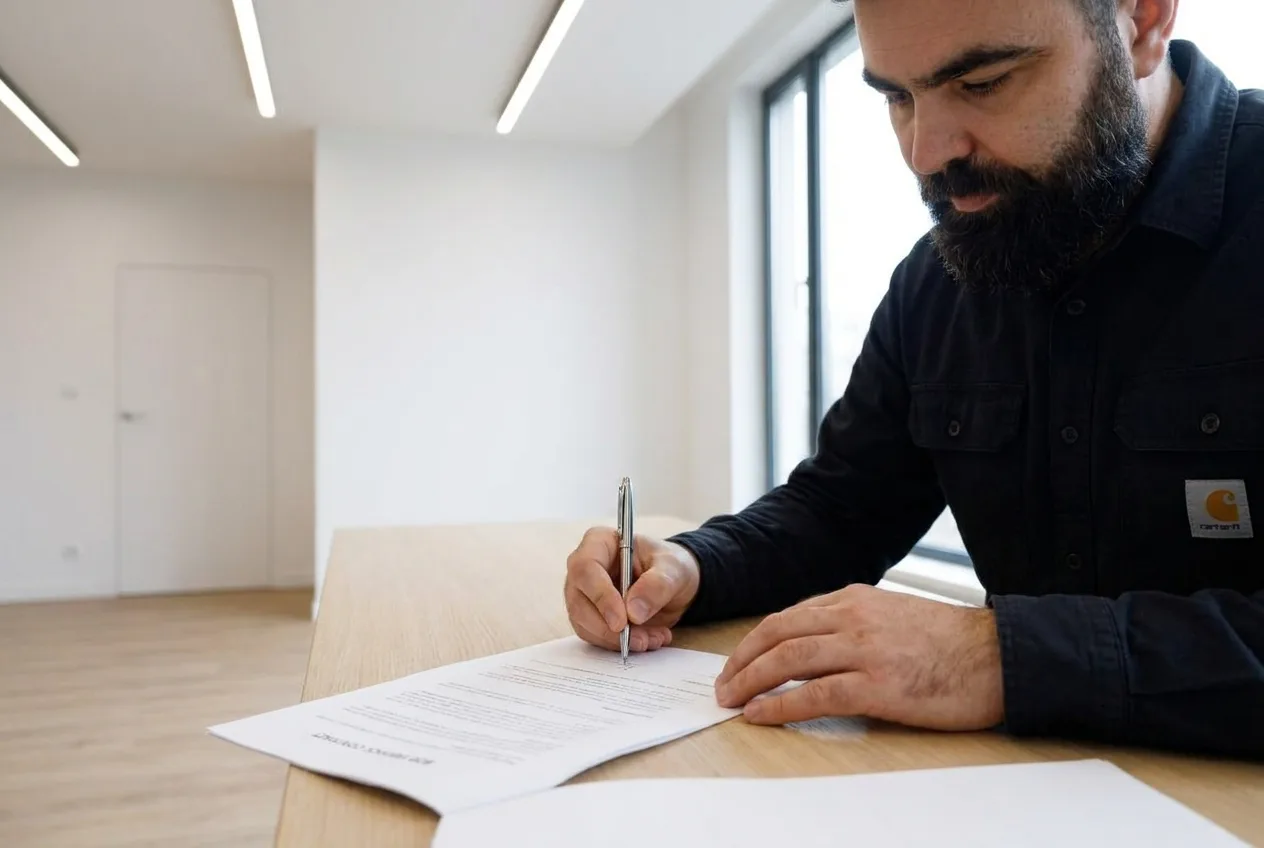
The task list from the office manager 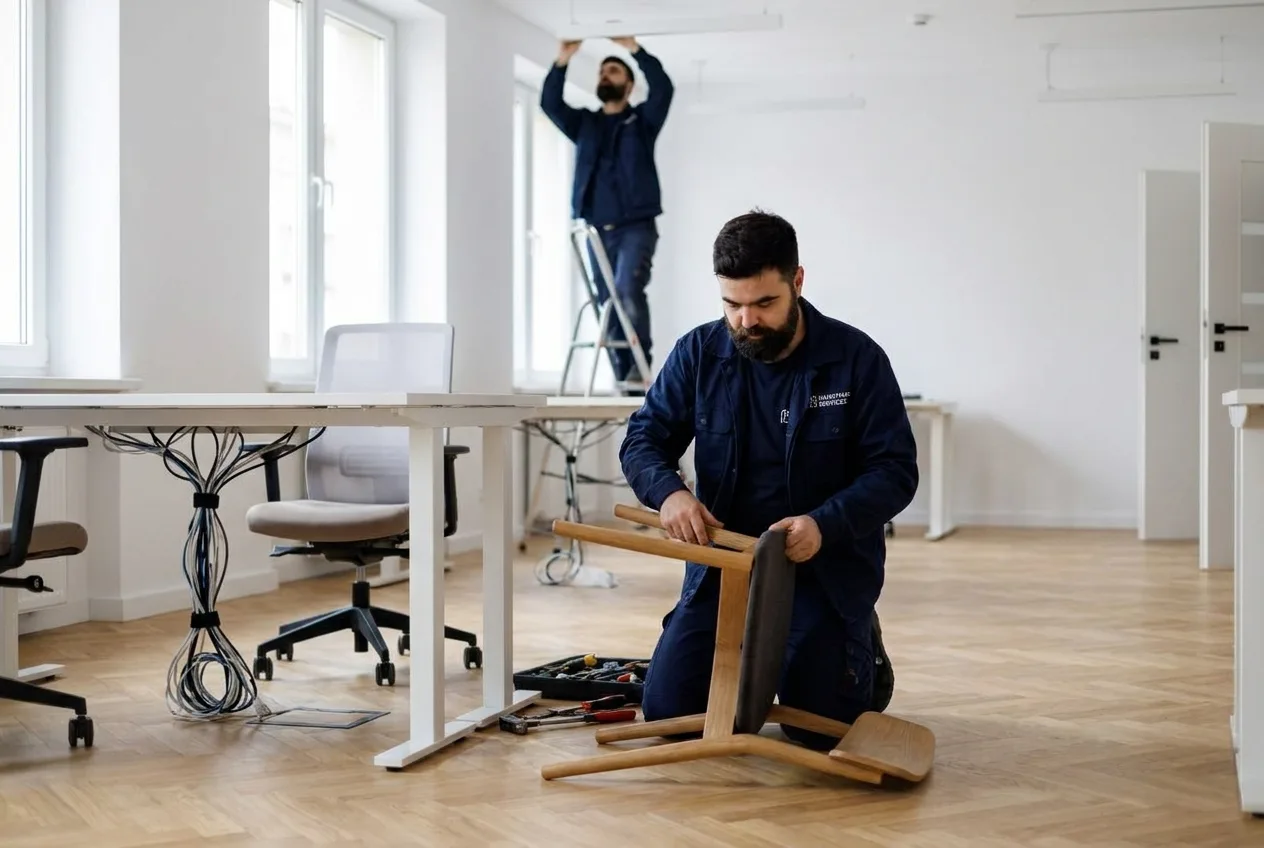
Assembly after the delivery 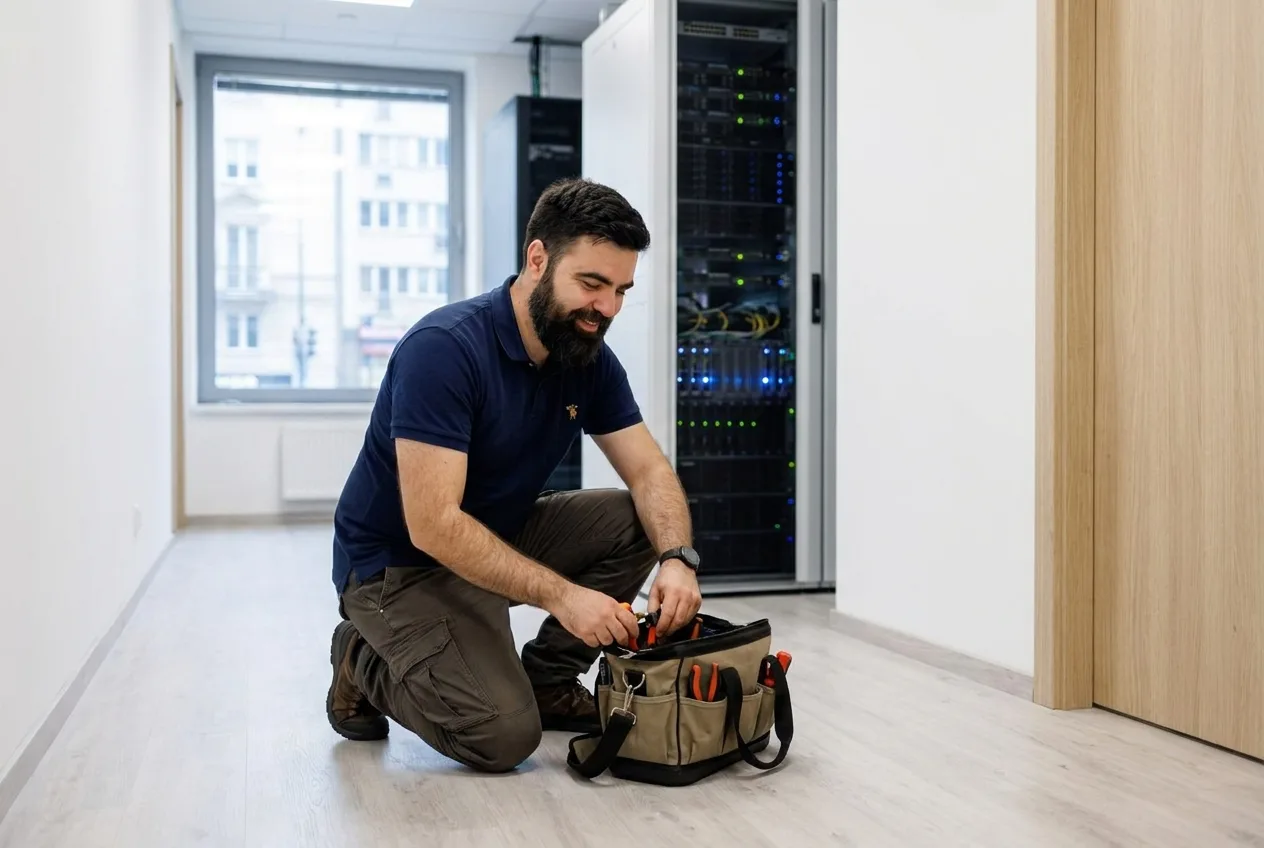
Switchboard and server room: licence needed
Evenings and weekends
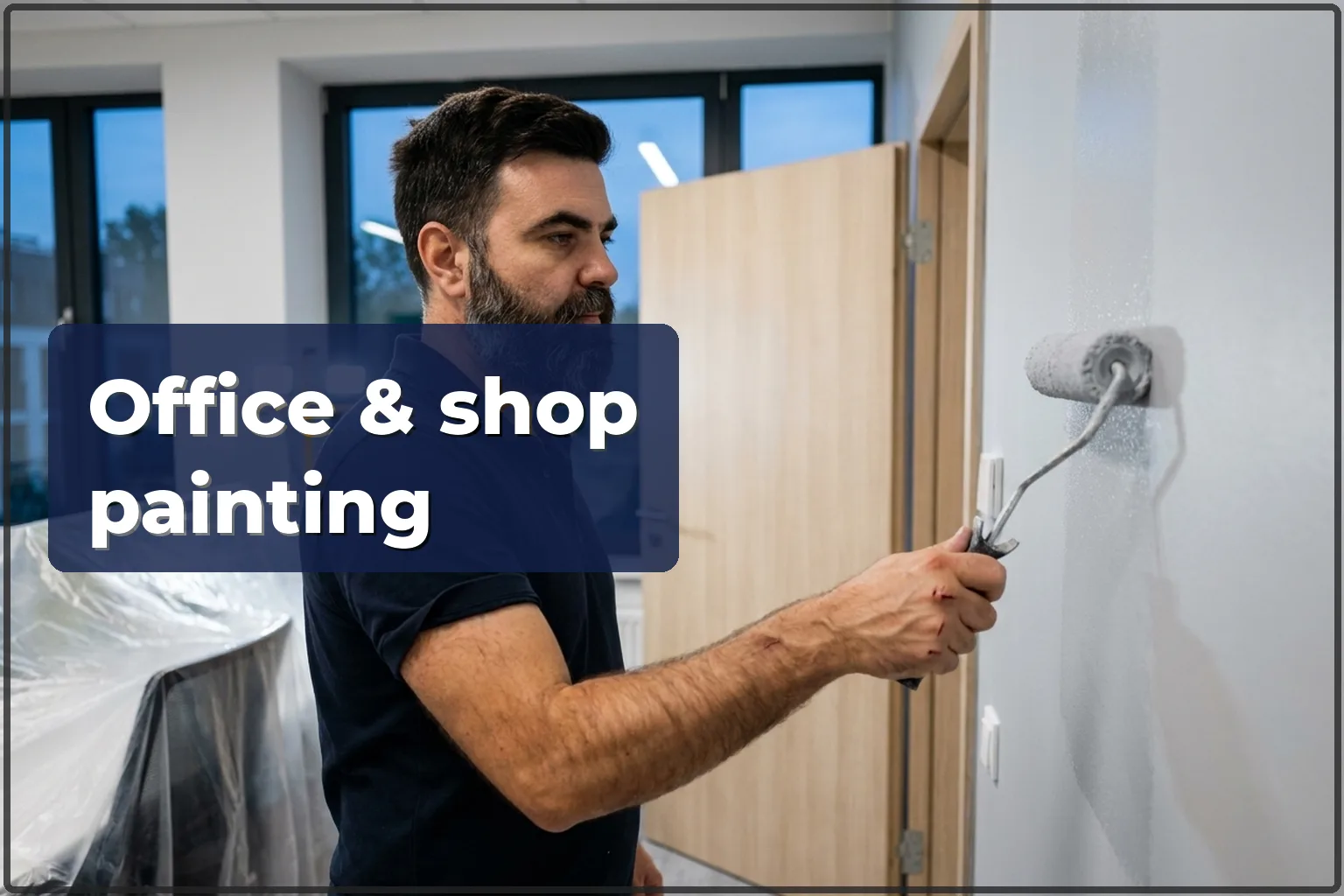
Noisy work (drilling, partitions, changing light fittings) is better done when nobody is around. The tradesperson works around your meeting calendar; evening and weekend hours carry a surcharge in the price list and you see it before ordering.
How it runs
Four steps. The third one belongs to the tradesperson rather than to us, and that is the difference that matters here.
-
The request
Describe what does not work and attach a photo of the desk. If there are several jobs, list them together and the tradesperson plans a route through the floors.
-
The range
We answer with a range from the price list. Materials, carrying them in and taking the rubbish out count separately, and we say so up front.
-
A tradesperson takes it
The job shows up in the app and the tradesperson confirms the hour. If the slot does not work, you hear it early rather than an hour before the visit.
-
Settlement
The invoice comes from the tradesperson who did the work: they sell the service, we do not. Need paperwork for the company, say so in the request.
What to have ready
Four things that keep the visit to one trip instead of two.
- A photo of the desk and the socket
- Who lets us in and until when the floor is open
- A security pass, if one is needed
- Clear access: cables and boxes moved aside
How it gets done in a hurry
Four mistakes that come back most often on premises like these.
-
A daisy chain of extension leads
Four leads in a row is not a solution, it is a postponed problem: it heats, it trips, sometimes it smokes. A socket where you need it costs less than downtime.
-
A screen on plasterboard with no backing
A mount with a panel weighs tens of kilograms. Without backing or an anchor the fixing tears out along with a piece of wall.
-
Furniture assembled by eye
A desk out of true comes apart within a month and the drawers stop closing. Levelling it takes minutes and settles the matter.
-
Requests saved up to critical mass
Ten small jobs together are one call-out. One by one they are ten reasons to pull people away from work.
The same price list as for flats
Items from the general catalogue: there is no separate business tariff. You see the range before ordering, and the app shows the same one.
| Service | Range |
|---|---|
| Table / desk assembly | 180–300 zł |
| Electrical socket installation | 80–120 zł/szt |
| Lighting installation (lamp, chandelier) | 80–150 zł/szt |
| TV bracket mounting | 250–600 zł |
| Furniture and door adjustment | 80–150 zł |
| Shelf installation | 80–150 zł |
| Air conditioner service | 300–600 zł |
| CCTV camera installation (1 pc.) | 250–500 zł |
The work
From price list items. The range is visible before ordering and the exact amount is quoted before the start.
The call-out
Within Warsaw it is included. Outside the city it is a separate item, up to 30 km from the limits.
Materials
Small fixings come with the tradesperson. Everything else is separate, along with carrying in and rubbish removal.
The hour
Night and weekend hours, and an urgent call-out, carry a surcharge from the price list.
Assembling four desks in the evening is four items from the table above, one call-out and the out-of-hours surcharge.
Full price listWhat nobody here will promise
We do not refuse on principle. Some jobs need paperwork, and some dates we simply cannot keep, so it is better said before than after.
-
LICENCE NEEDED
Gas line
We take it, but only through a tradesperson with a current gas licence. Without the paperwork nobody touches it.
Load-bearing walls and risers
Those too, when there is a design and the building manager agrees. Cutting into structure by eye is out.
-
NOT PROMISED
Network and server hardware
Switches, patch panels and network setup stay with your IT: the tradesperson answers for power and fixings.
Work with a full office
Drilling next to a call makes no sense: we agree on an evening or a weekend.
We check tradespeople before letting them into the app and hold them to the amount they quoted. Whoever did the installation answers for it. Write to us if something went wrong: that is how we learn who stays in the app.
AFTER 18:00
Noise in an open space costs more than the job itself. So we drill when there is nobody left at the desks.
Before you order
We have several floors and different tenants.
List in the request where each fault is: the tradesperson plans a route through the building instead of running from call to call. With a longer list, part of it closes in one visit.
Access to the server room and the switchboard is needed.
Say so in advance: for rooms like these the tradesperson goes in with someone from your side. Work behind the switchboard needs a licence, and without one nobody looks in there.
Access after 20:00, and security works from a list.
Say in the request how a pass is issued and in whose name: the tradesperson brings ID and arrives at the agreed hour. We pass on the details for the pass before the visit.
We are moving to a new floor.
A move breaks down into plain items: take furniture apart and put it back, move screens, add sockets in the new places. List in the request what is moving and how much of it, and the range gets closer to the truth.
The invoice has to go to the tenant, not to us.
Put in the request whose details the paperwork needs. The invoice comes from the tradesperson, and they take the details from the request rather than guessing on site.
How fast will someone arrive?
The slot depends on who is free. We name it before you order and confirm it. An urgent call-out exists in the price list and costs more.
We need a VAT invoice for the company.
The invoice comes from the tradesperson who did the job: they sell the service. Say in the request that you need company paperwork and we will pick someone who issues it.
Who is answerable for the work?
The person who did it: the tradesperson is the contractor. We vet them before they get into the app and read every complaint, which is how we know who stays.
Worth reading
The same jobs written out step by step, with ranges and the usual mistakes.

One sentence
is enough.
Describe the fault in your own words and add a photo. We answer with a range from the price list, and you finish the order in the app.
No phone calls. It all runs in writing, so the order keeps a history.