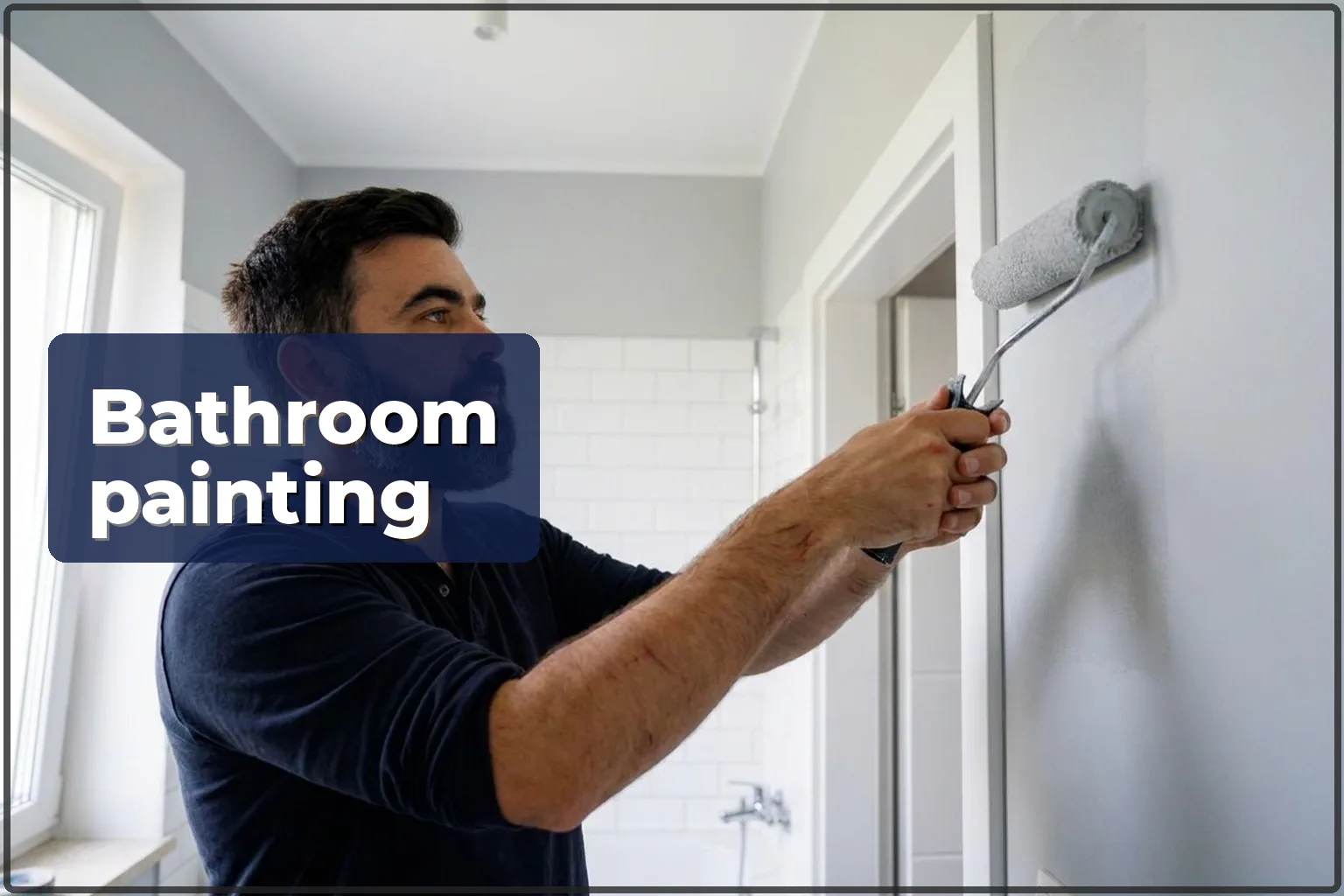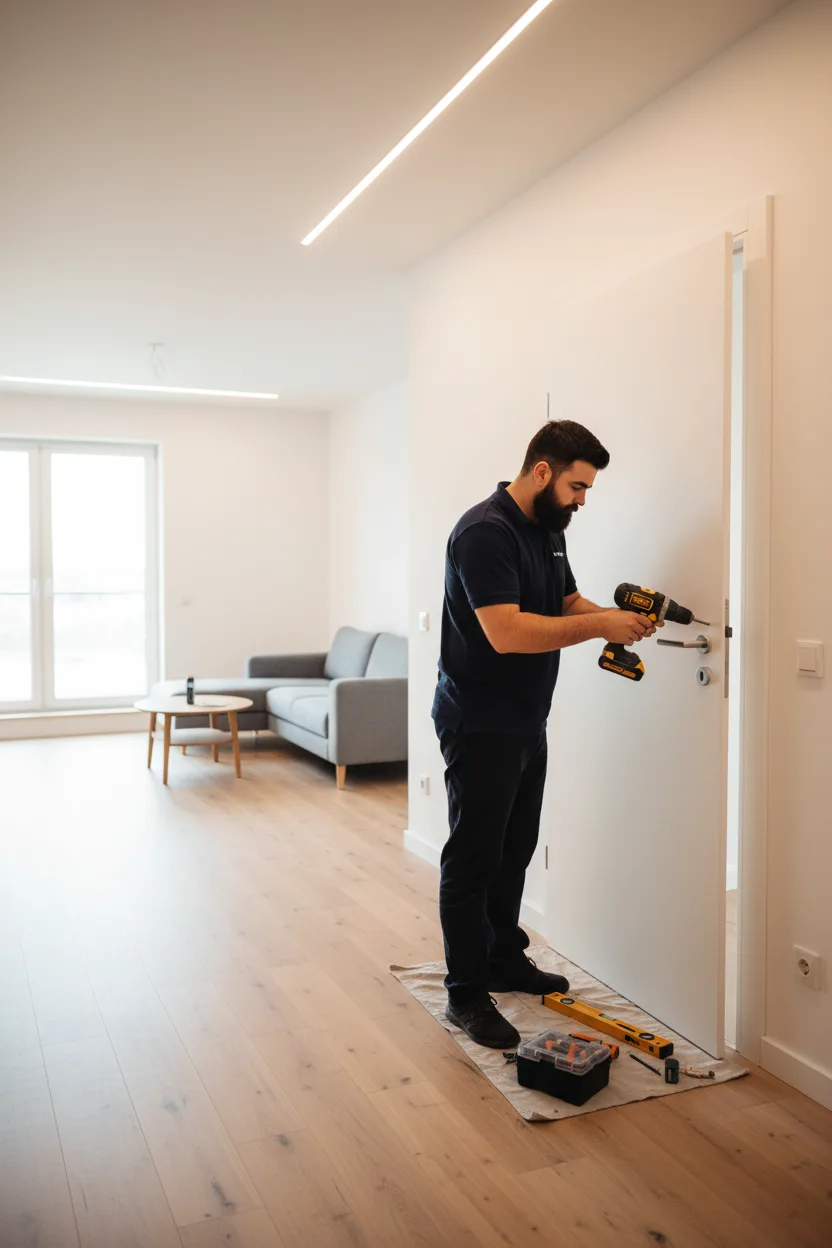

Two coats of paint is the baseline for solid, even colour without anything showing through. One coat still lets the base come through — especially when you’re covering dark with light or the other way round. Two coats seal the surface properly, and the wall looks like that colour was there from day one. We paint all over Warsaw — Kabaty, Wola, Śródmieście — wherever walls need a proper professional finish.
How much does it cost and what affects the price
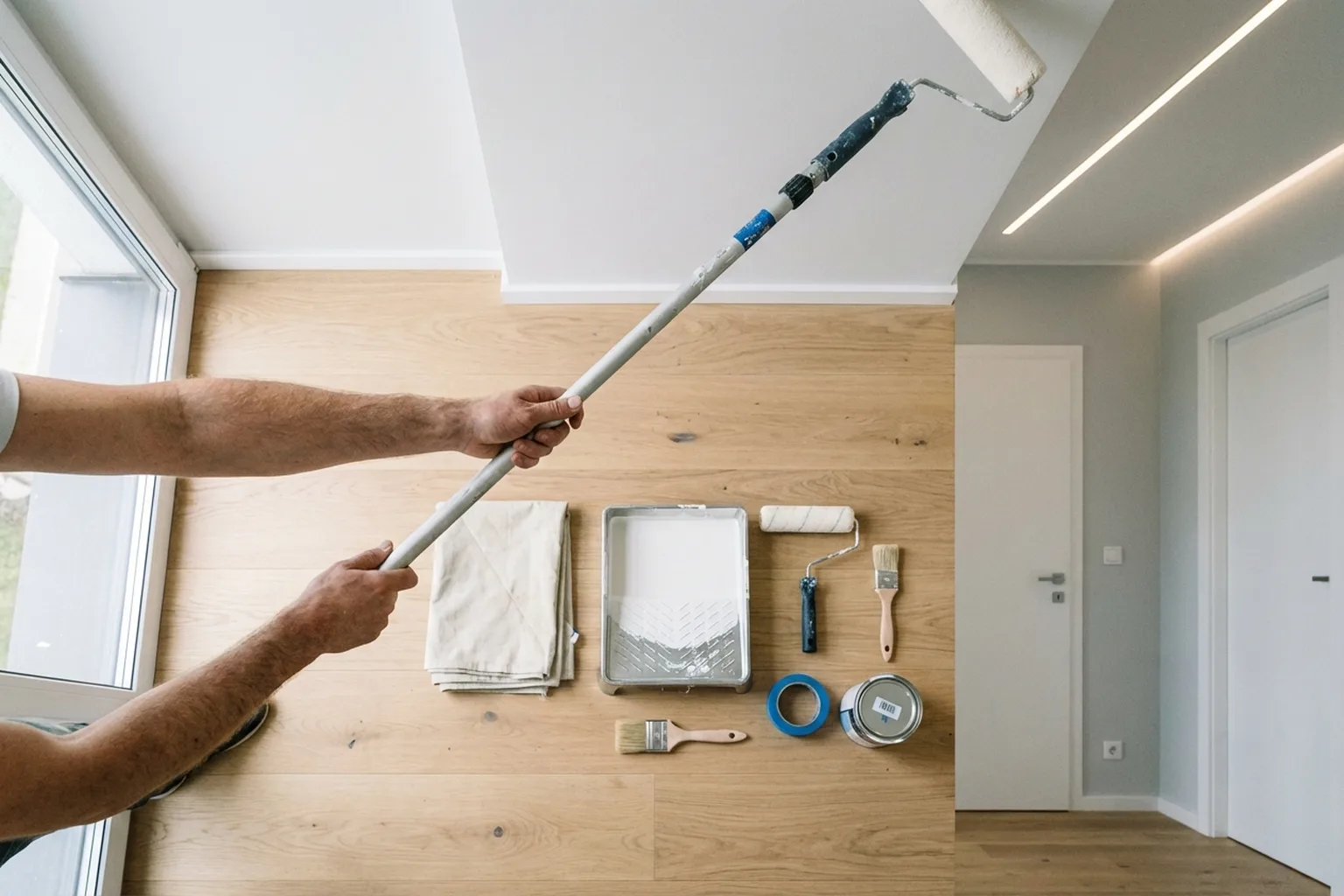
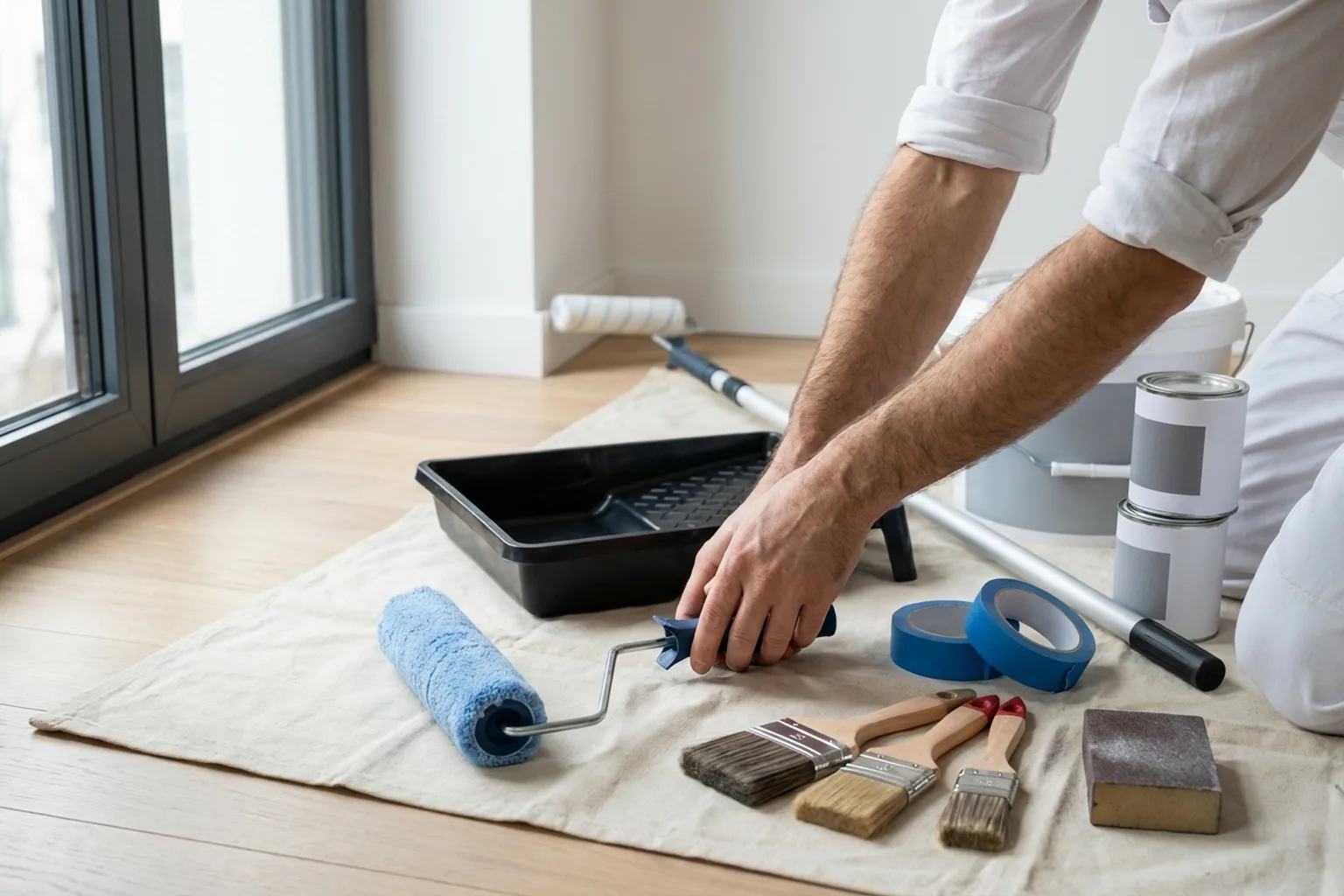
Up-to-date prices are in the table below. The final cost comes down to the area, ceiling height, and the condition of the walls. If the walls are already prepared (skimmed and primed) we can start painting straight away. If they aren’t, prep work is priced separately. Paint, primer, and masking tape are consumables — billed separately. Tools (rollers, brushes, trays) are included in the labour price.
How the on-site painting goes
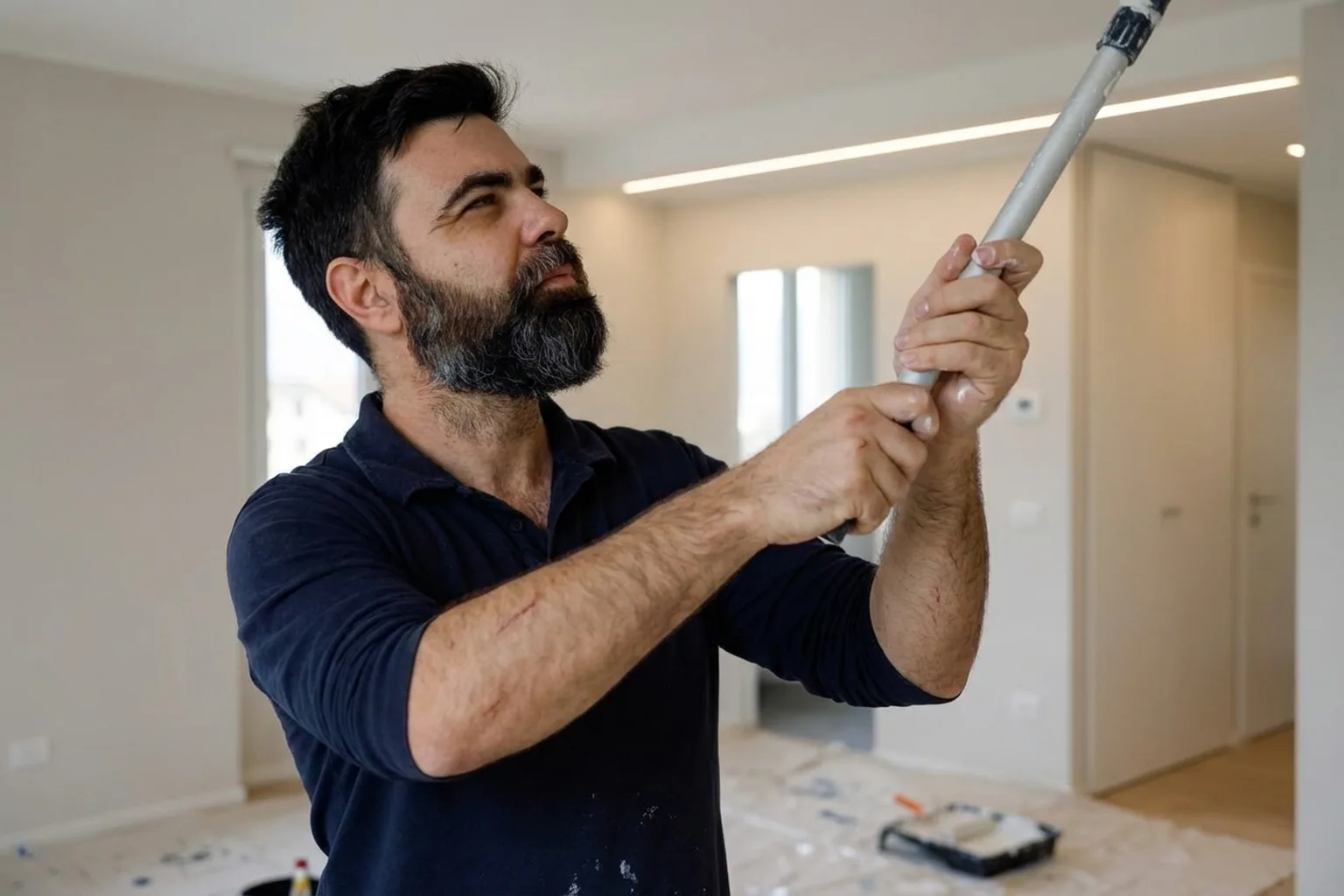
- The painter comes in and checks the walls and ceiling — looking for cracks, damp stains, uneven areas, and heavy old paint layers.
- Protection: floors, any furniture left in the room, door frames, and windows are covered with dust sheets and taped off at every joint — ceiling-to-wall, wall-to-frame.
- Priming, if the walls are new or very absorbent. Primer reduces paint use and helps the first coat stick properly.
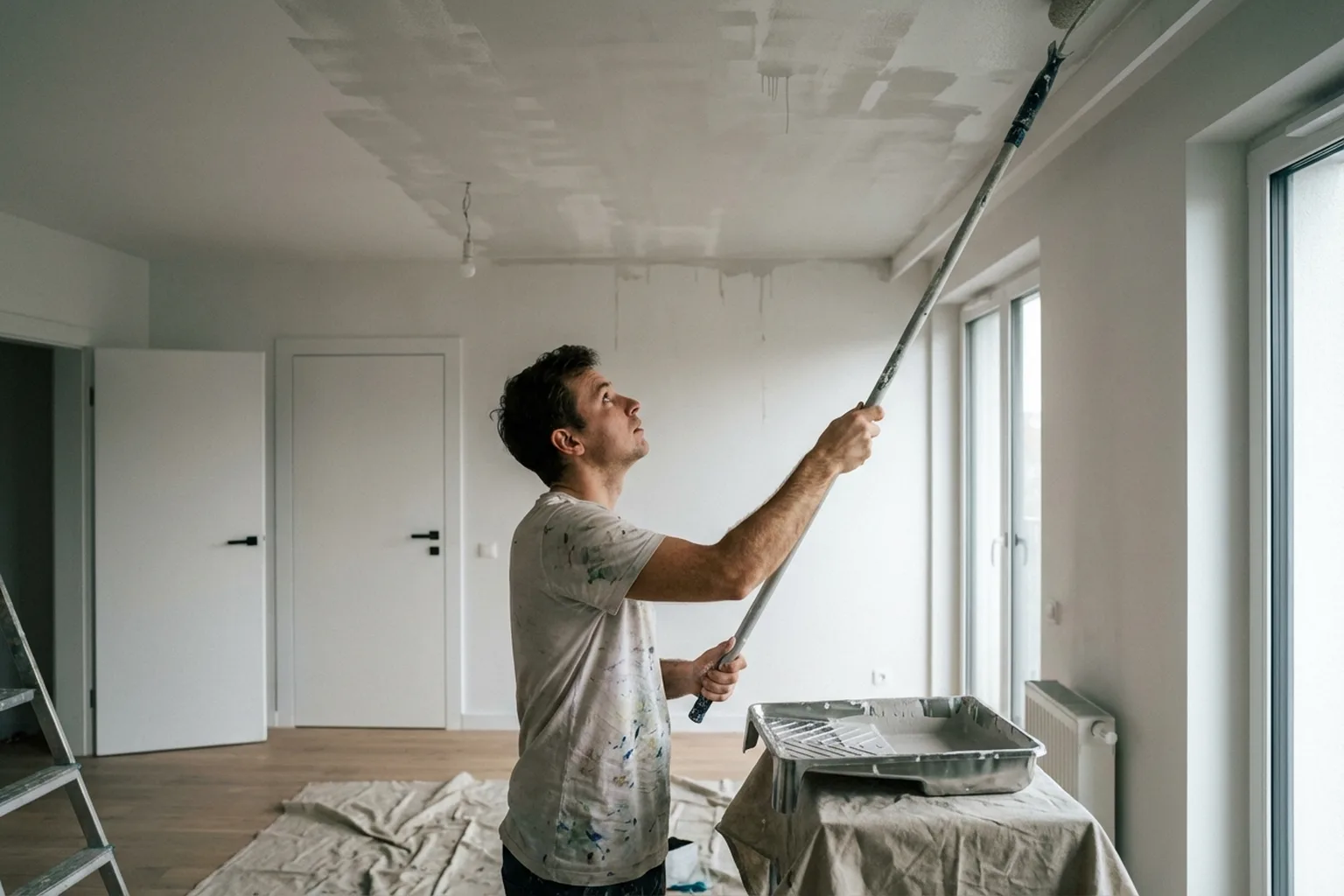
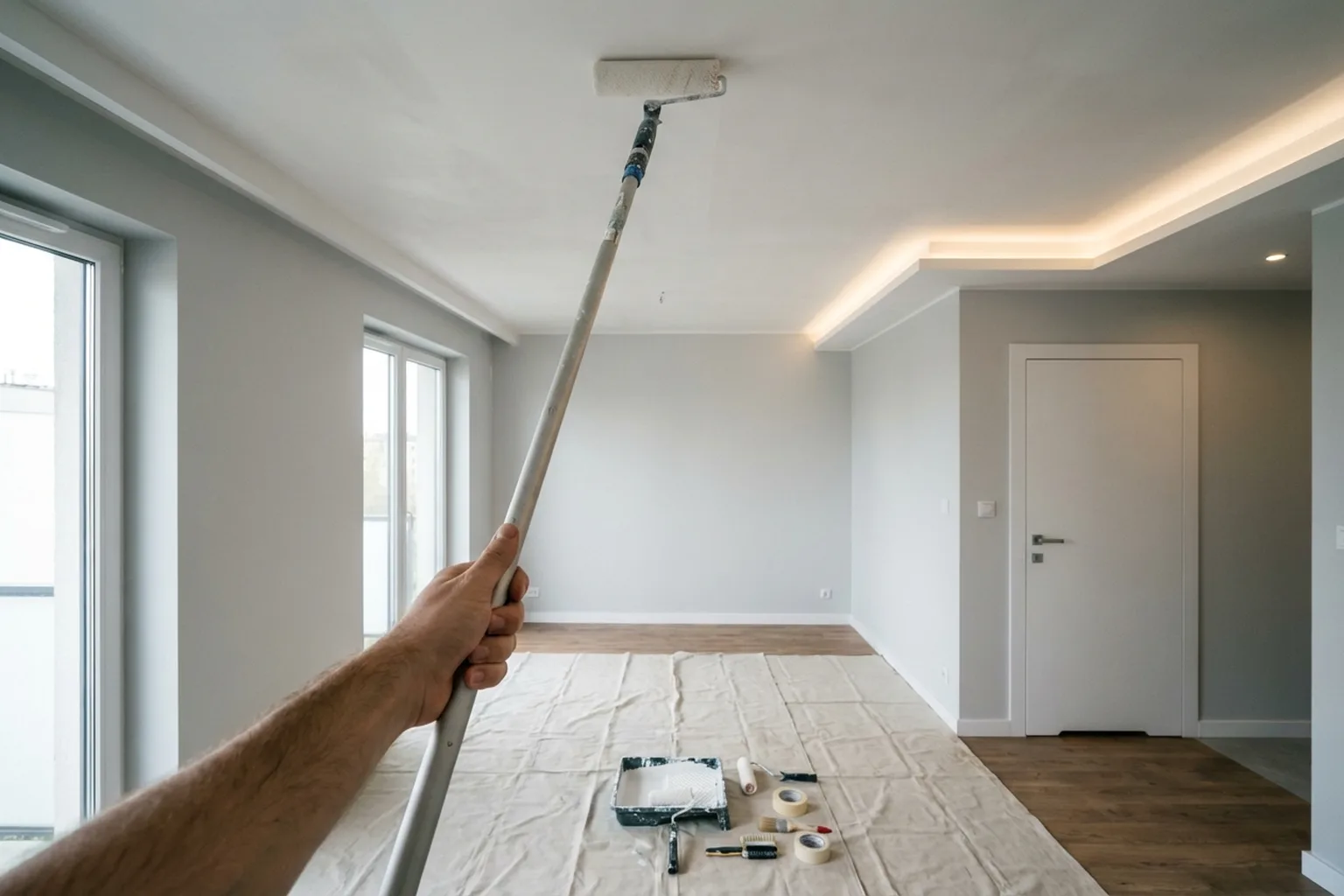
- First coat — applied with a long-handle roller, starting from the ceiling. Corners and edges are brushed in first. Smooth, parallel runs with a 5–10 cm overlap.
- A 2–4 hour break for the first coat to dry completely. The exact drying time depends on the paint and how well the room is ventilated.
- Second coat — rolled at a right angle to the first. This cross pattern gives even coverage with no visible roller lines.
- Tape is removed, corners and edges are checked, and any small spots are touched up with a brush if needed.
Common customer mistakes (and how to avoid them)
- Painting without primer — the paint absorbs unevenly, and patches still show even after two coats.
- Putting on the second coat before the first one is dry — the paint starts to pull, leaving streaks and lap marks.
- Choosing the cheapest paint on the shelf — weak opacity means 3–4 coats, so you spend more on time and materials anyway.
- Not masking the ceiling line — you end up with a shaky, uneven edge that spoils the whole room.
- Painting in hot weather with windows open — the paint dries too quickly, and the joins between roller passes stay visible.
- Using the same roller for ceiling and walls — different nap lengths leave different textures, so the surfaces don’t match.
- Skipping the brush work in corners — the roller doesn’t get into angles, so white lines stay along every joint.
- Mixing paint from different batches without combining it first — small colour differences become visible in daylight.
What to prepare before the painter arrives
- Walls need to be skimmed and sanded. Painting over rough render makes no sense — the texture will spoil the finish.
- Move furniture out of the room, or at least into the middle — the painter needs clear access to every wall.
- Remove socket and switch face plates.
- Pick your colour beforehand. Buy a tester pot and check it on the wall — the shade in the tin and the shade on the wall can look completely different.
- If the paint has already been bought, check that there’s enough for two coats. Typical coverage: 1 litre per 8–10 m² per coat.
- Make sure the room can be ventilated — fresh paint fumes need somewhere to go.
- If the ceiling is being painted — a stable stepladder or platform is required. The painter brings their own, but let us know the ceiling height in advance.
- Take down curtains, curtain rods, pictures — anything fixed to the walls.
- Arrange parking close to the building and provide intercom access.
A real case from Warsaw
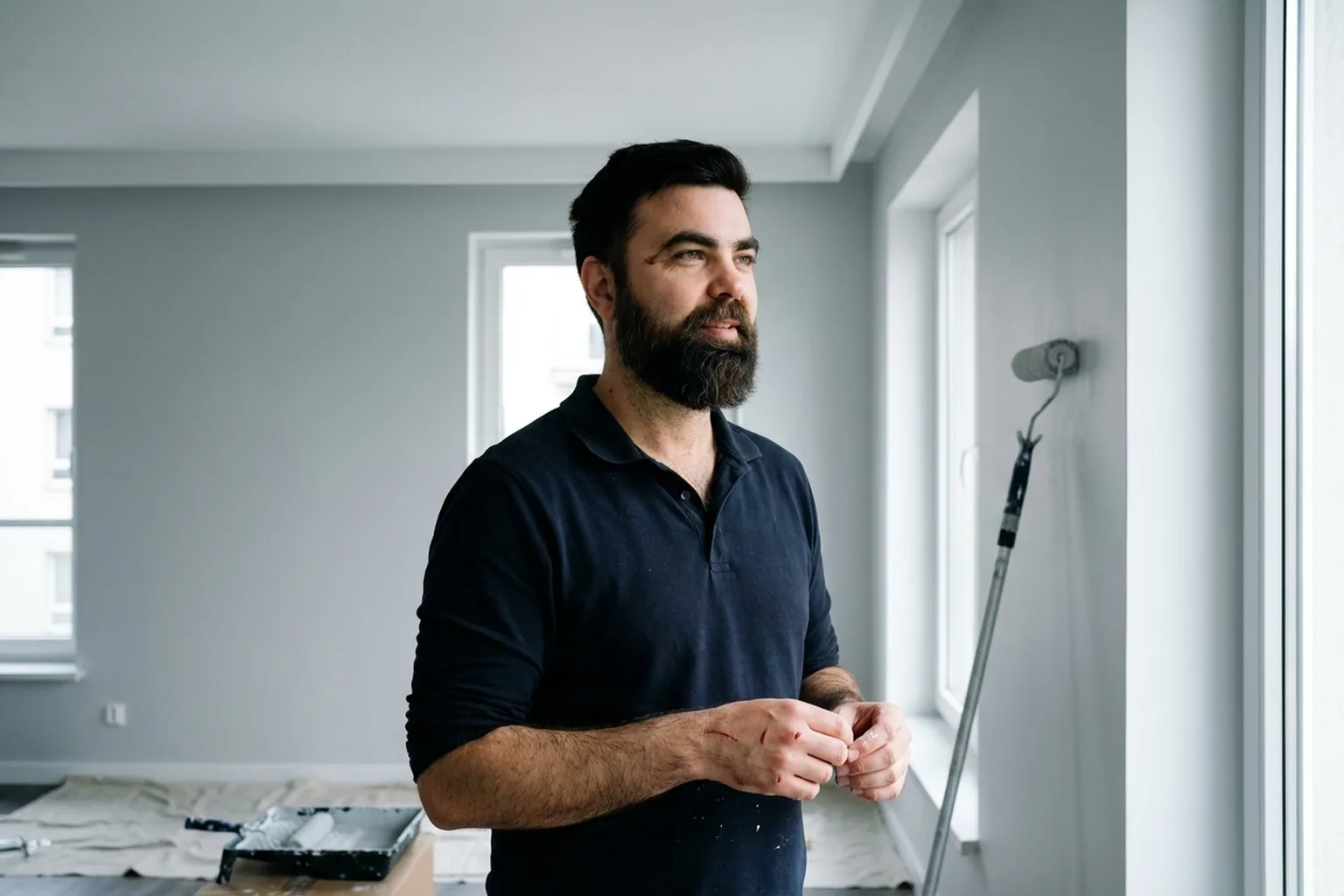
A flat in Wola, 63 m² — three rooms plus a hallway, freshly skimmed after a full renovation. Colour: Dulux ‘Timeless’ — a warm off-white popular in Warsaw apartments. The tricky part: one long hallway connected all three rooms, so any difference in tone would be visible straight away. Our painter began with the hallway ceiling, using a short-nap roller to avoid drips. Corners were cut in with a 50 mm angled brush before rolling. Once the ceiling dried (about 3 hours), he moved on to the walls — first coat in horizontal passes, second coat vertical. Each room was finished as one section to avoid drying-edge marks halfway across a wall. The hallway was painted last, bringing the whole flat together. Total time: three days. The result: even, consistent colour across the entire flat. In both natural and artificial light, there wasn’t a single streak, lap mark, or shade difference. The owners said the flat looked twice the size because of the consistent finish.
Frequently asked questions
Why two coats and not one?
One coat doesn’t cover the base properly. Even if it looks good while wet, once it dries you’ll notice patchiness and roller lines — especially in daylight.
Which paint should I choose?
For living spaces — acrylic or latex, scrub-resistance class 1–3. For ceilings — dead matt; it helps hide small imperfections.
How long does one coat take to dry?
It depends on the paint and the temperature. Usually 2–4 hours before recoating. Full cure takes 2–3 weeks.
Can walls and ceiling be done in one day?
Yes, for areas up to about 40–50 m². Bigger spaces need two days because the coats need time to dry in between.
Is primer necessary if the walls are already skimmed?
Yes. Skim plaster is very absorbent. Without primer the first coat dries unevenly — darker wherever more paint has soaked in.
Does the painter supply the paint?
Most often the client buys the paint — it’s your choice of colour and brand. The painter can suggest proven products and work out how much you need.
Who does the work
Wall and ceiling painting is done by experienced painters working in Warsaw flats every day. We know the small headaches that come with both new-builds and older buildings. Call or message us — we’ll check the scope, advise on paint, and arrange a date that works for you.