
Window painting: cost and what affects it
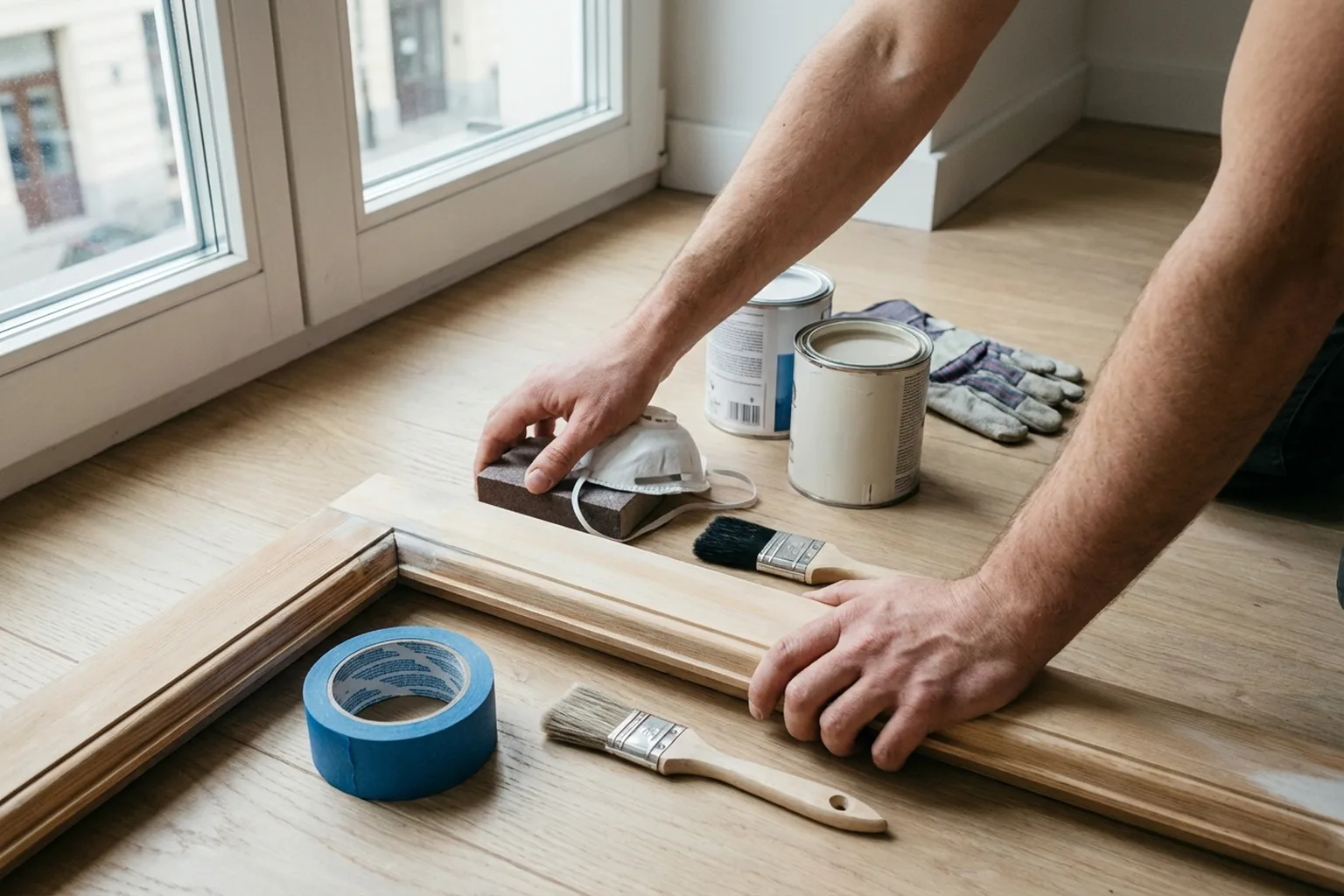
Current rates are shown in the table below. The price depends on how many sashes there are, what shape the old coating is in, and whether the job needs full stripping back to bare wood or just light sanding is enough. If the frame is seriously damaged, wood filler has to be used before painting. Masking tape and minor materials are included. Paint, primer, and solvent are consumables and are billed separately.
| Service | Price |
|---|---|
| Covering furniture, doors, windows and floors | 20–25 zł/m² |
| Wall cleaning before painting | 15–25 zł/m² |
| Filling holes and damage | 20–35 zł/m² |
| Wall levelling after tile removal | 60–90 zł/m² |
| Ceiling levelling | 45–80 zł/m² |
| Priming before painting | 8–14 zł/m² |
| Gypsum skim coating | 55–90 zł/m² |
| Walls and ceilings, one colour (2 coats) | 30–50 zł/m² |
| Walls in different colours | 40–60 zł/m² |
| Oil paint painting | 70–150 zł/m² |
| Pipe painting (water, heating, gas) | 20–35 zł/mb |
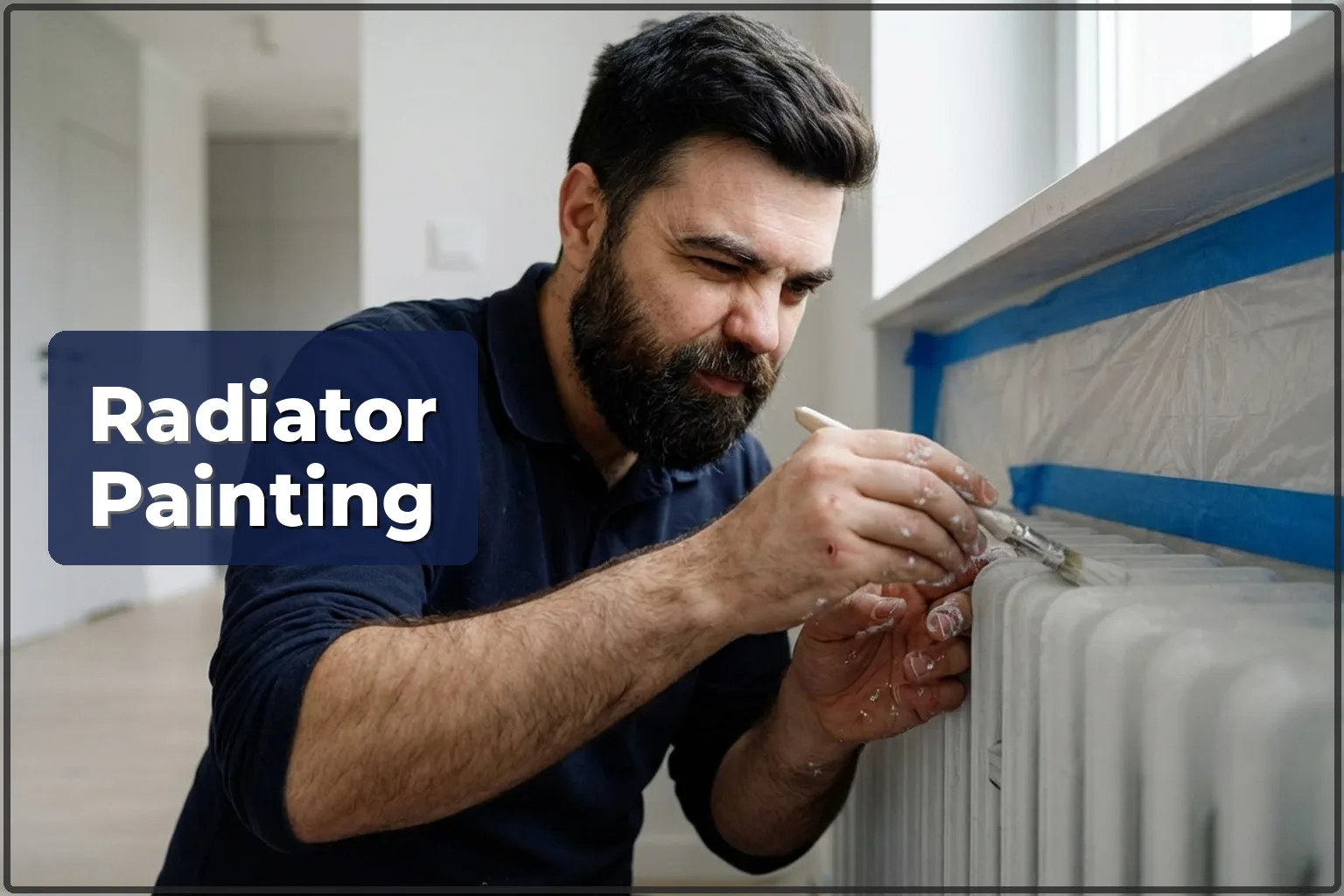
| Radiator painting | 150–400 zł/szt |
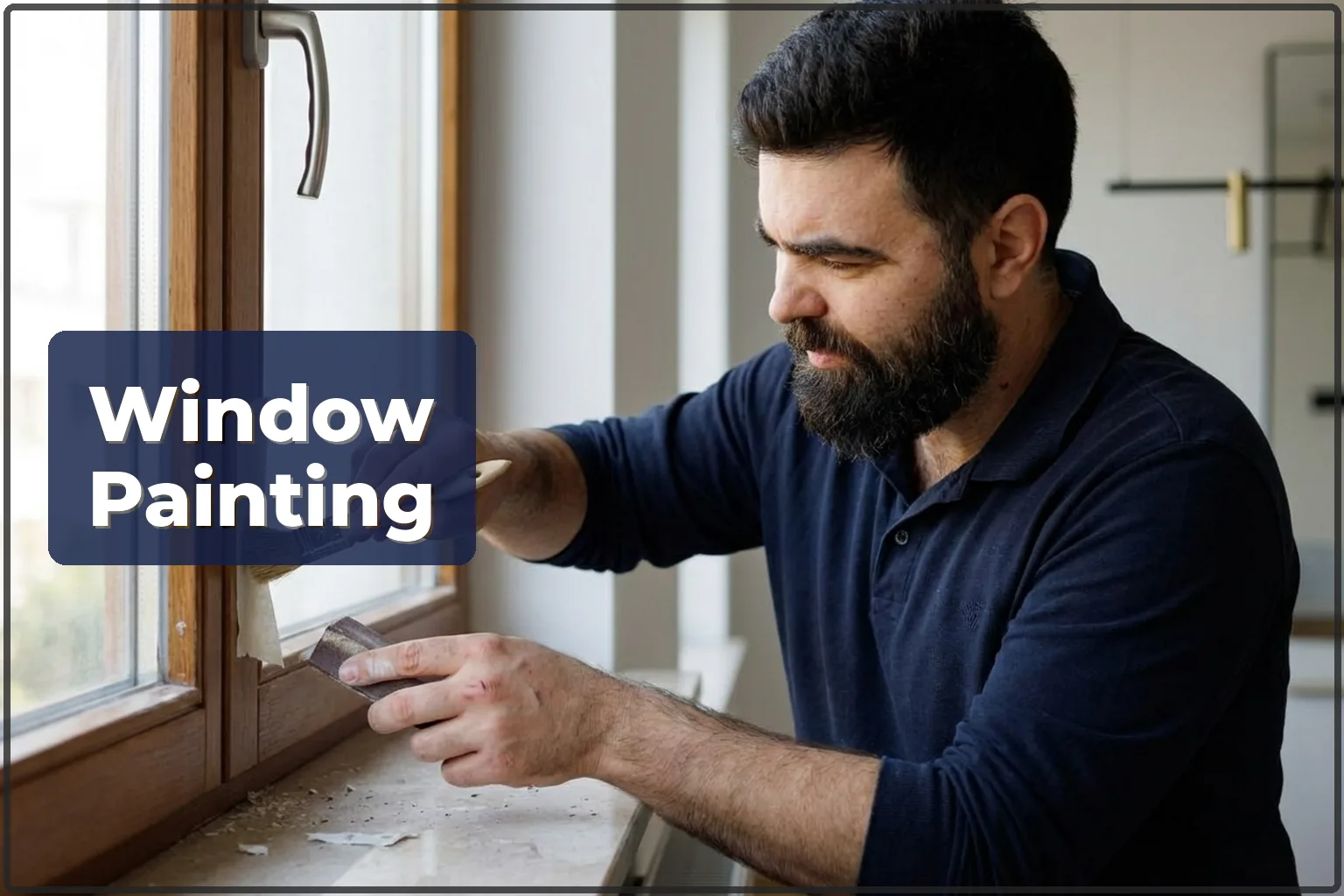
| Window painting | 150–300 zł/szt |
| Old paint removal from wood | 30–70 zł/m² |
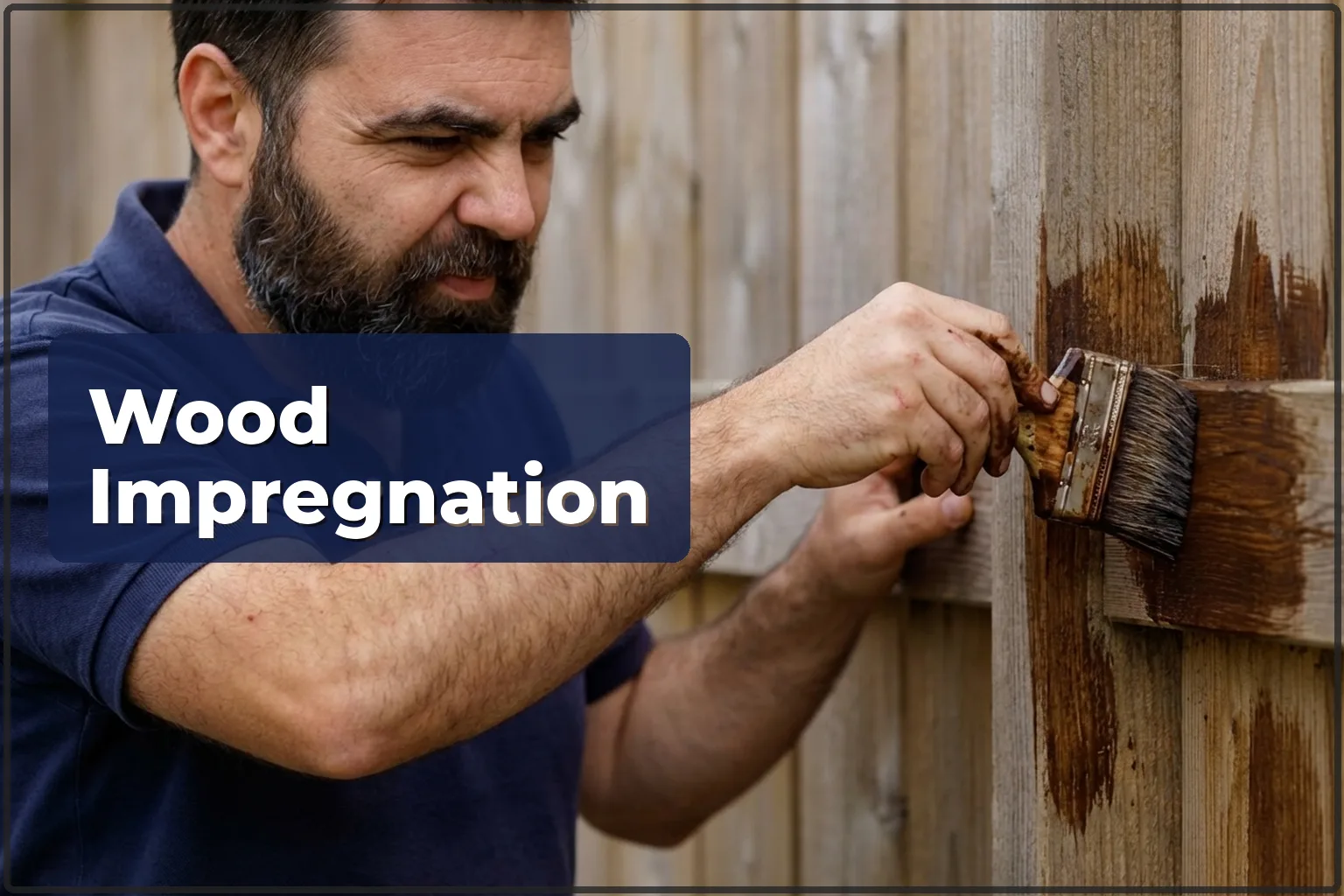
| Wood impregnation | 30–45 zł/m² |
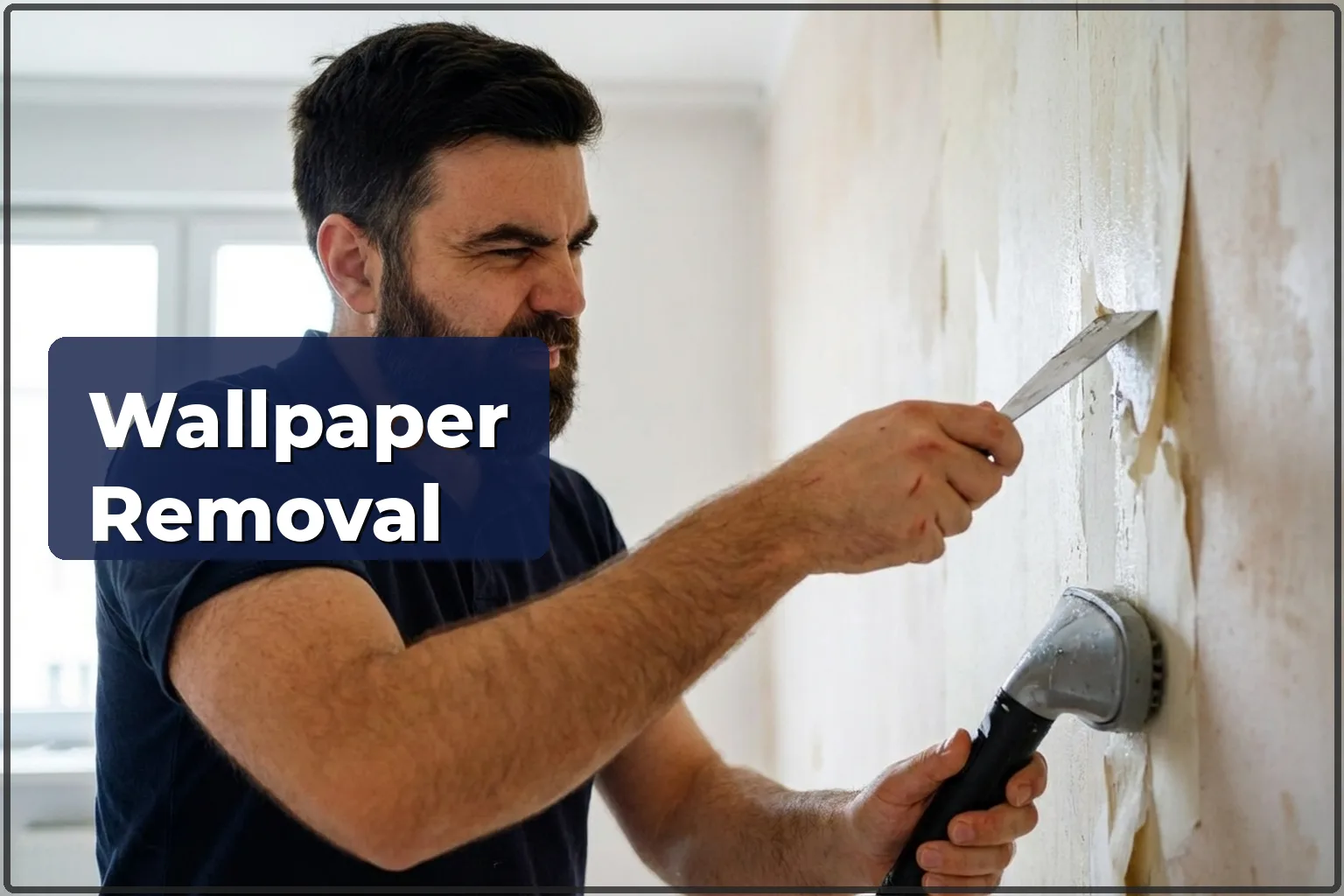
| Old wallpaper removal | 20–35 zł/m² |
| Ceiling cornice installation | 40–75 zł/mb |
Indicative prices. Ranges for a typical scope. Fixings included, materials separate. Minimum order 300 zł.
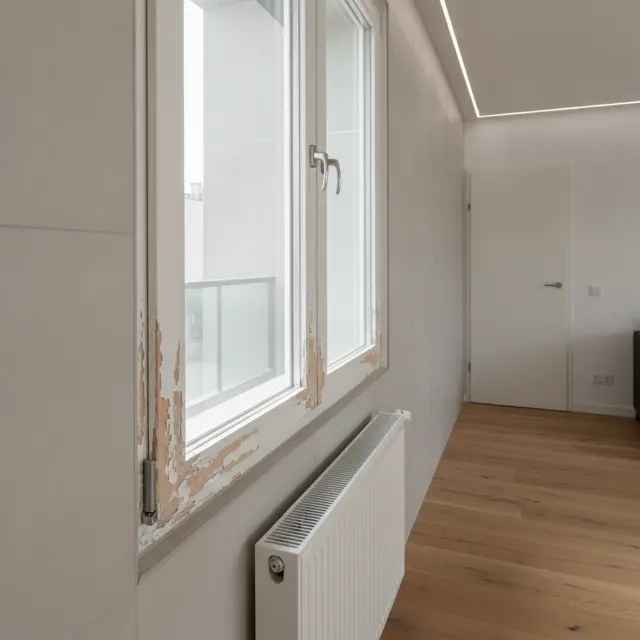
Price ranges and offers from tradespeople: painter and decorator in Warsaw.
Window painting: how the work goes
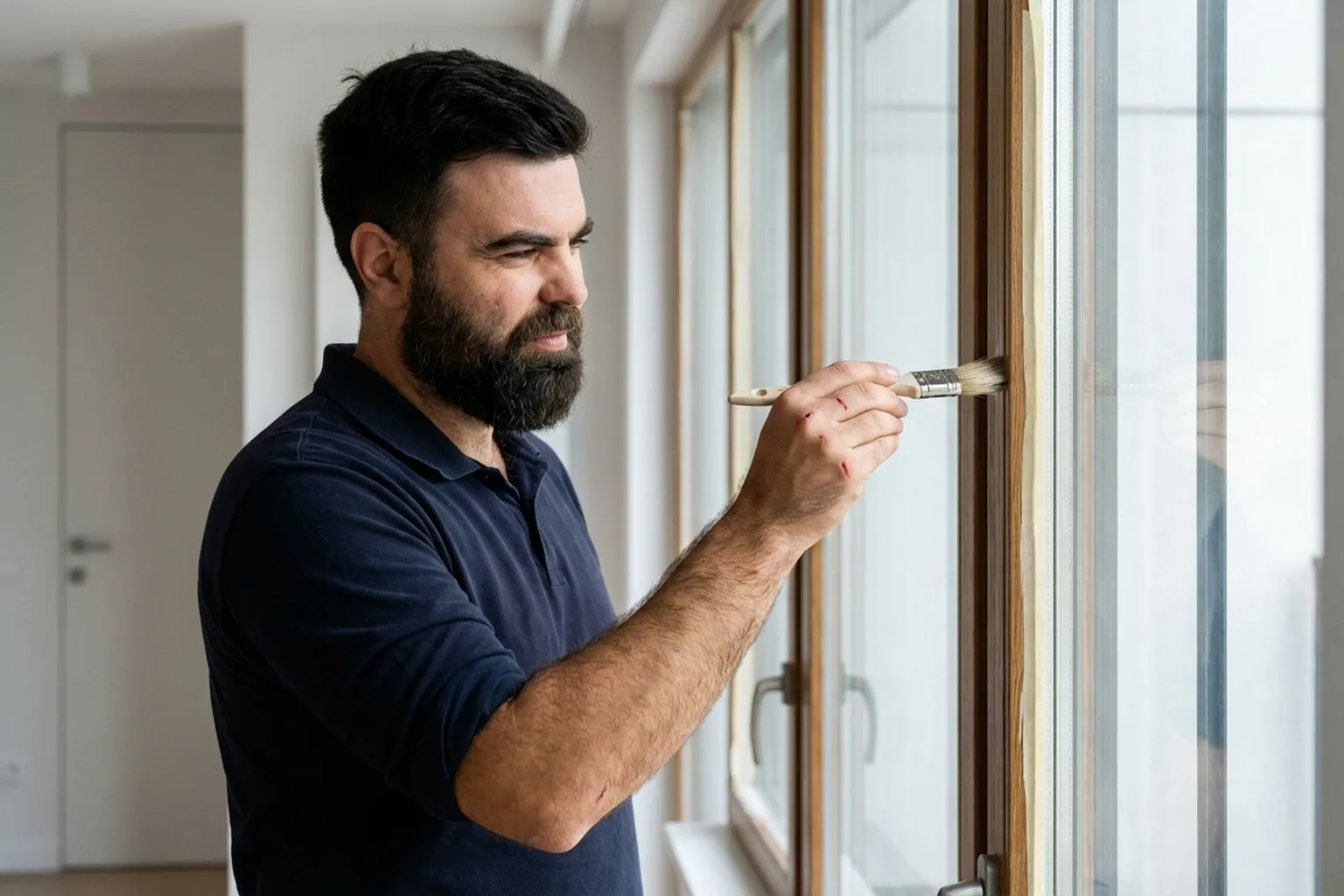
- The technician checks the windows: number of sashes, condition of the wood, cracks, rot, and peeling paint.
- The old coating is taken off — by sanding, heat gun, or chemical stripper, depending on how many layers there are and what kind of old paint was used.
- Defects in the wood are repaired: deep cracks with epoxy filler, smaller ones with acrylic filler.
- The glass is protected with painter’s tape. Hardware is removed or masked.
- Wood primer is applied: this helps the paint bond properly and gives extra protection from moisture.
- First coat of paint: brushed on along the grain of the wood. Drying time follows the manufacturer’s instructions.
- Second coat — after light sanding between coats. Final check, tape removed, hardware put back.
Common customer mistakes (and how to avoid them)
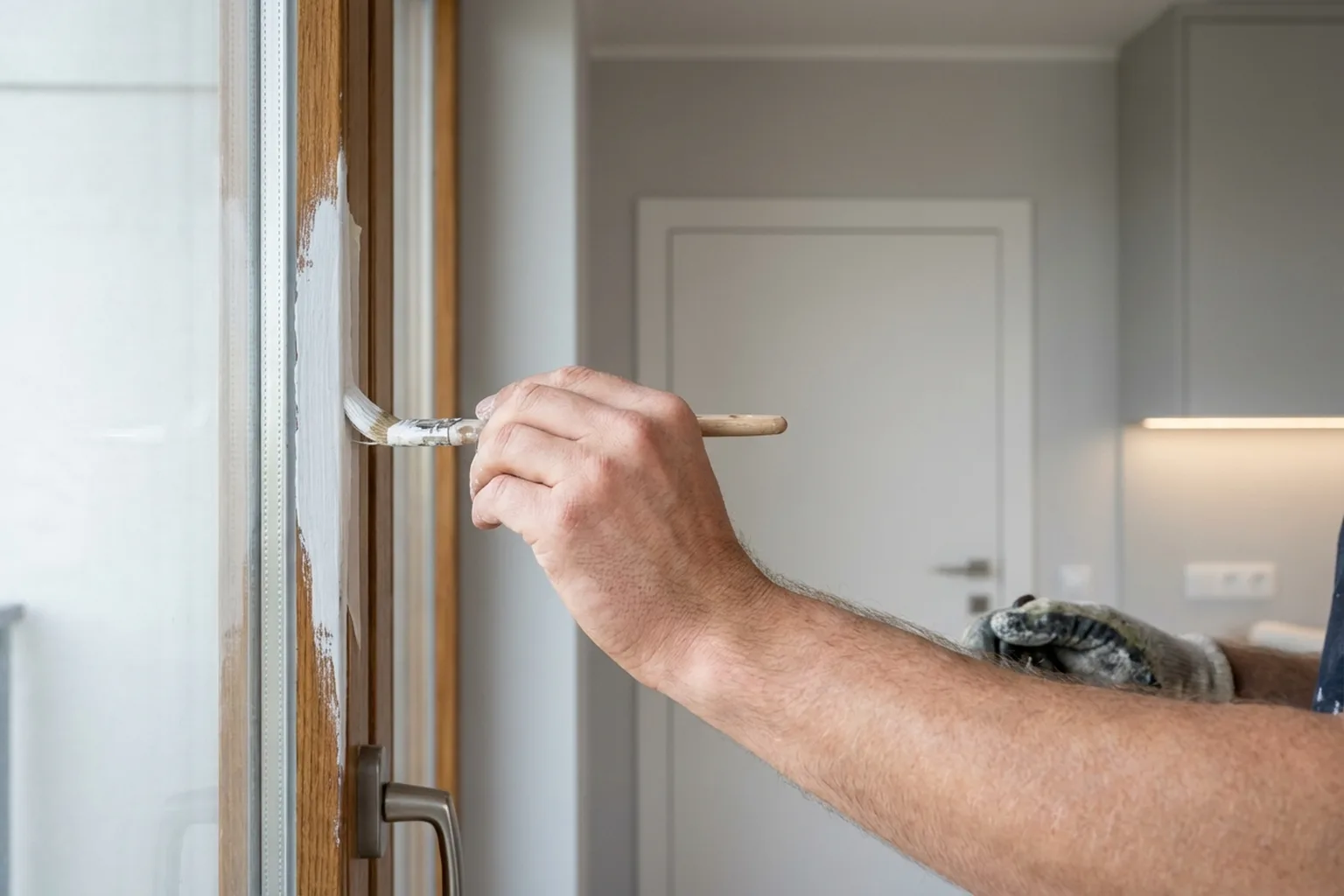
- Painting over old paint that is already peeling, the fresh coat will start coming off together with the old one within months.
- Leaving out primer: the paint soaks in unevenly, looks patchy, and starts peeling fast.
- Painting during rain or high humidity — the paint will not grip properly, and bubbles will appear.
- Putting on one heavy coat instead of two thin ones, a thick layer dries slowly, cracks, and leaves runs.
- Using interior paint outside: it will not handle UV, rain, or temperature changes.
- Not masking the glass: then trying to scrape dried paint off with a razor blade and scratching the pane.
- Trying to paint uPVC windows with standard paint — it will not bond to plastic without a specialist adhesion primer.
What to prepare before the technician arrives
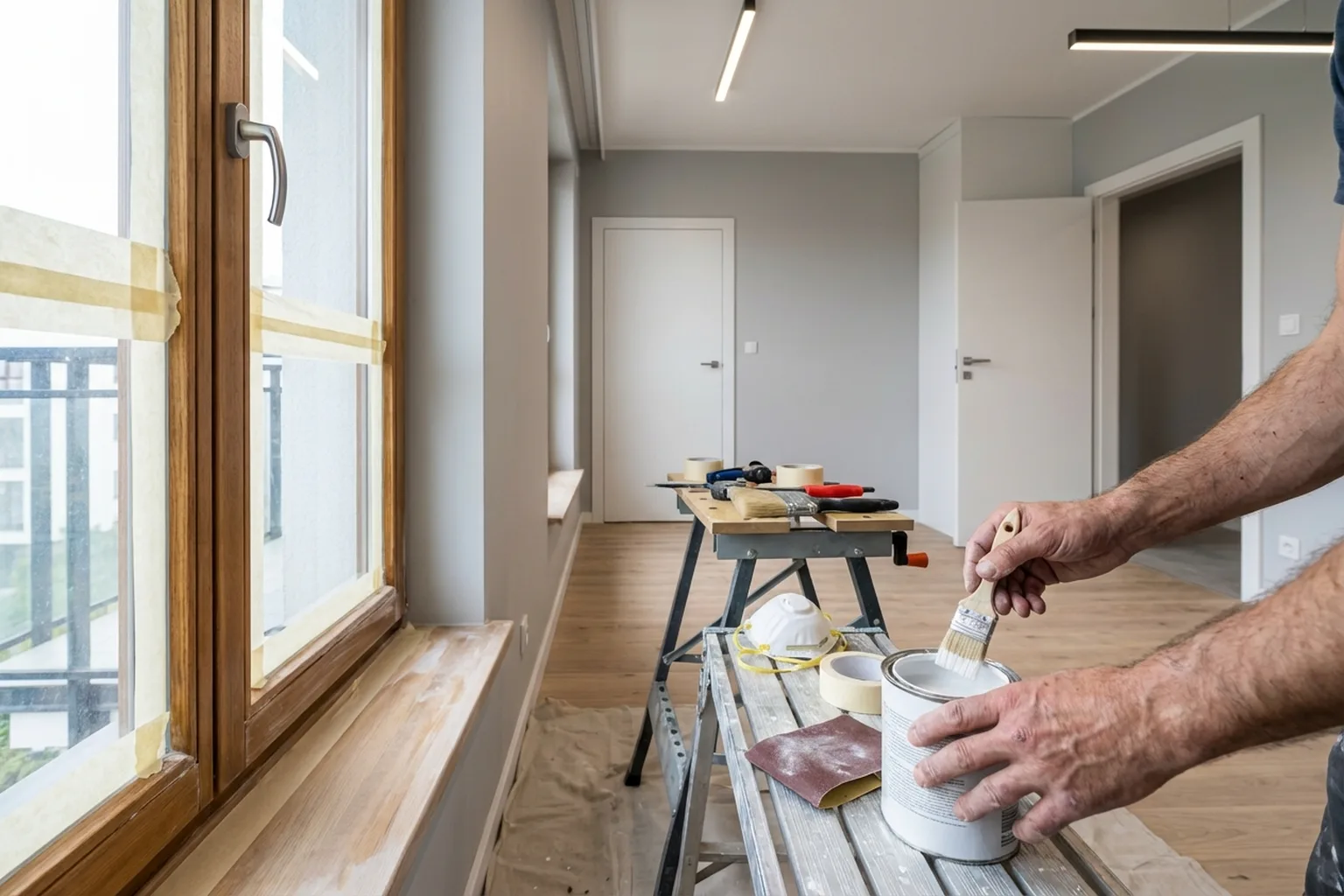
- Take down curtains, blinds, and anything hanging on or near the windows.
- Empty the windowsill: the technician needs room for tools and paint.
- If the windows are on upper floors and outside access is needed, say so in the order in advance; scaffolding or a platform may be necessary.
- Make sure there is ventilation — paint and solvent have a strong smell.
- Choose the colour beforehand: repainting over wet paint is not possible.
- If the frames are badly damaged, take photos and send them over for an estimate.
- Confirm how many windows need painting — this affects both timeframe and cost.
- Give access details: intercom, parking, basement keys if facade access is needed.
- Cover furniture and the floor under the windows with sheeting, stripping old paint creates dust and chips.
Window painting in practice: a Warsaw case
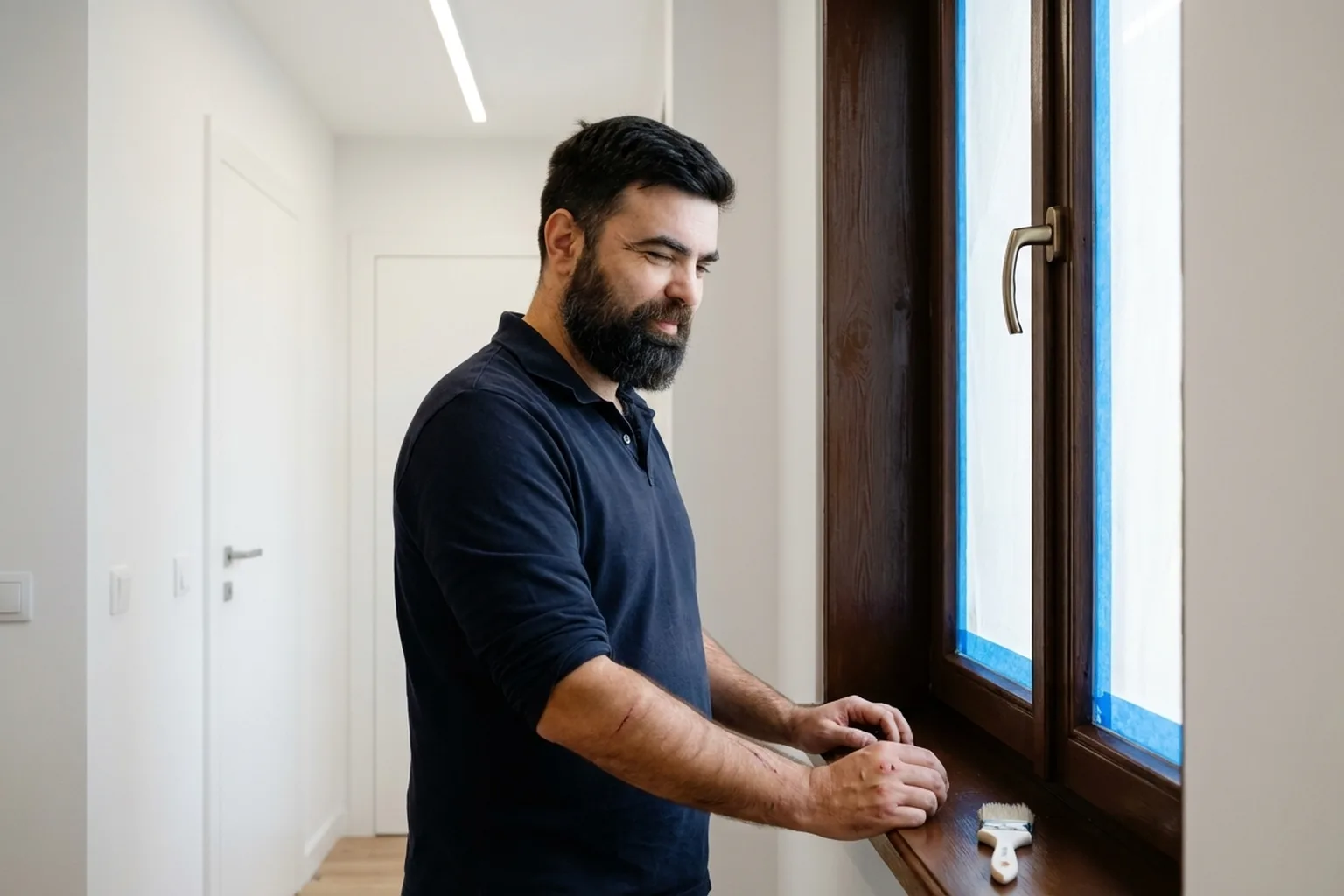
A pre-war apartment building in Zoliborz, a ground-floor flat with five large double-hung wooden windows. The tenant had inherited the flat and wanted to save the original windows instead of swapping them for plastic ones. The paint was cracked and peeling on every frame, and the lower rail of one window had soft, damp wood caused by years of condensation. The painter took out all sashes, stripped the frames back to bare wood with a heat gun and orbital sander, treated the soft area with wood hardener, and rebuilt it with epoxy. Two coats of alkyd primer, two coats of exterior alkyd enamel in classic white. Each window took about a day: five days total for the whole flat. The result: smooth, glossy frames that look exactly like they would have when the building was new in the 1930s. The tenant said the windows now suit the character of the original terrazzo floors and oak doors — something plastic replacements could never give.
For a specific brand, see Remmers Window Frame Painting in Warsaw.
Tikkurila and Dulux paint for wooden frames
Windows need an enamel or a wood paint, and the outside face needs one that stands up to the weather. Wall paint does not belong on a frame: it can’t cope with condensation from the glass, wears off around the handle and flakes on the edges.
Tikkurila, the Finnish paint maker, sells enamels and wood paints that include products for window joinery. When buying, check the label to see whether it is for interior wood, exterior wood or both, and which primer the manufacturer recommends.
In Poland Dulux is known mainly for wall and ceiling paint. If you want to stick with the brand, make sure the specific product is meant for wood and joinery. The tin left over from painting the walls won’t do for the frames.
Whatever the brand, how long the finish lasts depends on the preparation: scraping off flaking paint, sanding, filling gaps with wood filler and priming. New paint applied over an old layer that is coming away will come off with it.
Frequently asked questions
Can windows be painted in winter?
Exterior: no, most paints need a temperature above +5°C. The interior side can be painted all year in a heated room.
What paint is best for wooden windows?
For exterior use: alkyd or hybrid enamel with UV protection. For interior — acrylic works well.
How often should wooden windows be repainted?
With a good quality paint job: every 5–7 years. South-facing windows may need freshening up sooner because of UV exposure.
Can uPVC windows be painted?
Yes, but only with a specialist adhesion primer for plastic. Standard paint will not stick to uPVC.
Do the sashes need to be removed for painting?
Not every time. For a standard repaint they work in situ. For full restoration: removing them gives a better finish.
How long does window paint take to dry?
Between coats — 4–8 hours depending on the product. Full hardening: 2–3 days. During that time, do not close the windows tightly.
Who does the work
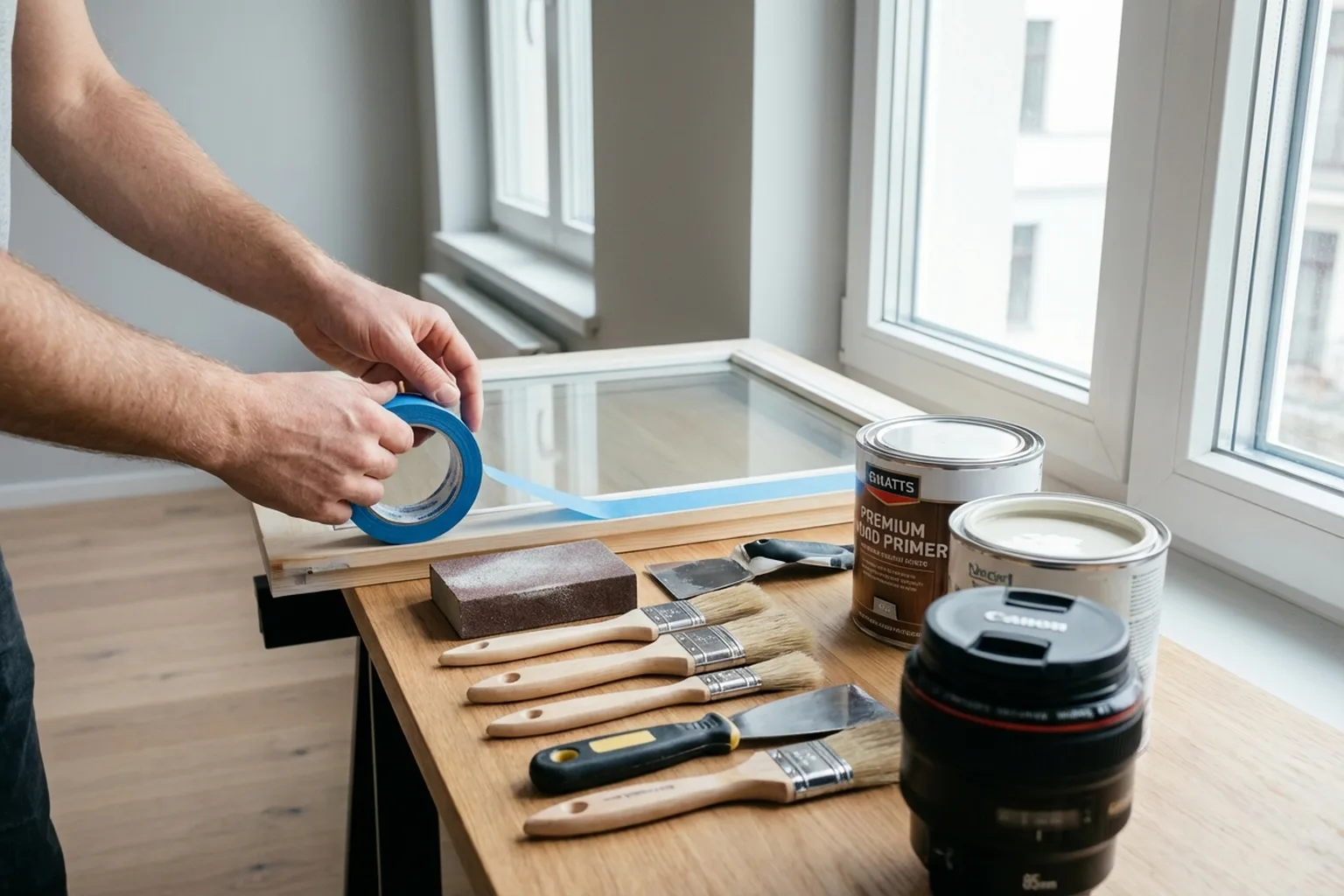
Window painting and restoration is done by experienced painters who specialise in woodwork. Tradespeople cover all of Warsaw: from the centre to the suburbs.
Order in the app
Describe the job, add photos and the address. Tradespeople send their own prices and dates, and you pick one of the offers.
Open the app