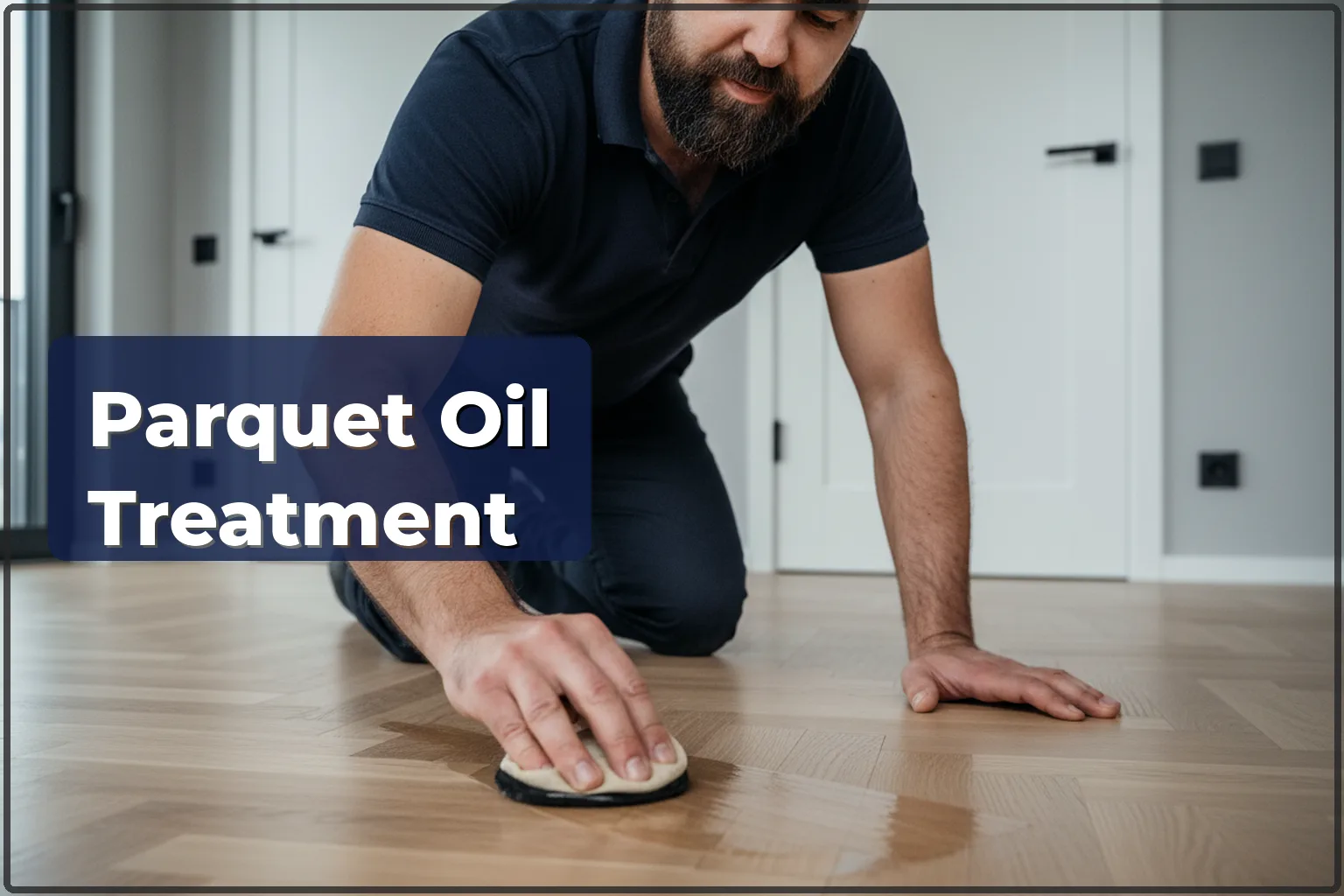
An oiled parquet floor feels nothing like a lacquered one. The wood remains warm, touch-friendly, and honestly comfortable to walk on. In flats around Mokotow and Wilanow, we often deal with old parquet that has sat for years under thick varnish layers and lost much of its original look. Oil restores that — bringing out the grain, deepening the texture, and shielding the wood from moisture and dirt without closing the surface completely. If your parquet is oak, ash, or beech, oiling is one of the smartest choices you can make for the floor.
How much does it cost and what affects the price
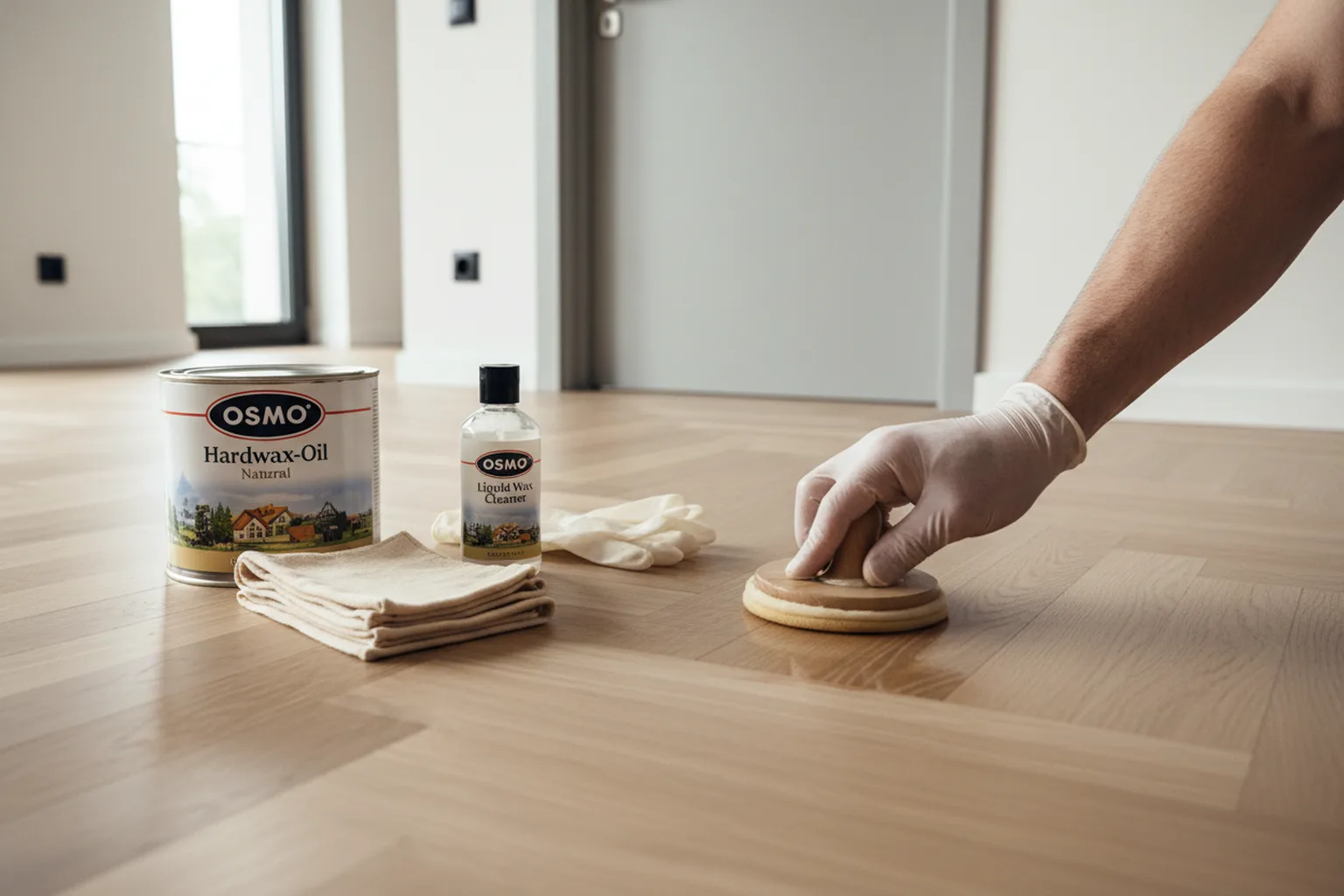
The price of parquet oil treatment depends on the condition of the floor, the oil used (hardwax oil, pure tung oil, linseed oil), how many coats are needed, and the total square area. If the parquet was lacquered before, it has to be sanded first — that is billed as a separate service. Current rates for all flooring jobs are listed in the table below. Consumables are included in the price; oil and main materials are charged separately.
| Service | min | max |
|---|---|---|
|
Floor panel removal
Book this service → | 15 zł/m² | 25 zł/m² |
|
Floor panel installation
Book this service → | 70 zł/m² | 90 zł/m² |
|
Floor panel replacement
Book this service → | 70 zł/m² | 100 zł/m² |
|
Vinyl panel installation
Book this service → | 80 zł/m² | 120 zł/m² |
|
Baseboard installation
Book this service → | 30 zł/mb | 45 zł/mb |
|
Baseboard removal
Book this service → | 15 zł/mb | 25 zł/mb |
|
Old flooring removal
Book this service → | 12 zł/m² | 20 zł/m² |
|
Carpet installation
Book this service → | 35 zł/m² | 60 zł/m² |
|
PVC flooring installation
Book this service → | 45 zł/m² | 75 zł/m² |
|
Glue-down flooring installation
Book this service → | 45 zł/m² | 75 zł/m² |
|
Parquet sanding
Book this service → | 70 zł/m² | 110 zł/m² |
|
Parquet varnishing
Book this service → | 45 zł/m² | 75 zł/m² |
|
Parquet oiling
Book this service → | 55 zł/m² | 90 zł/m² |
|
Parquet gap filling
Book this service → | 25 zł/m² | 45 zł/m² |
|
Floor threshold installation
Book this service → | 180 zł | 300 zł |
|
Door trimming after floor installation
Book this service → | 120 zł | 250 zł |
How parquet oil treatment works step by step
- Floor inspection — we check the condition of the wood, look for creaks, loose blocks, and any old finishes. We identify the wood species and choose the proper oil.
- Coarse sanding — we strip off old lacquer or earlier oil layers with a drum sander. Grit range from P60 to P100.
- Fine sanding — we finish the floor with an orbital sander at P150–P180. This opens the wood pores so the oil soaks in evenly.
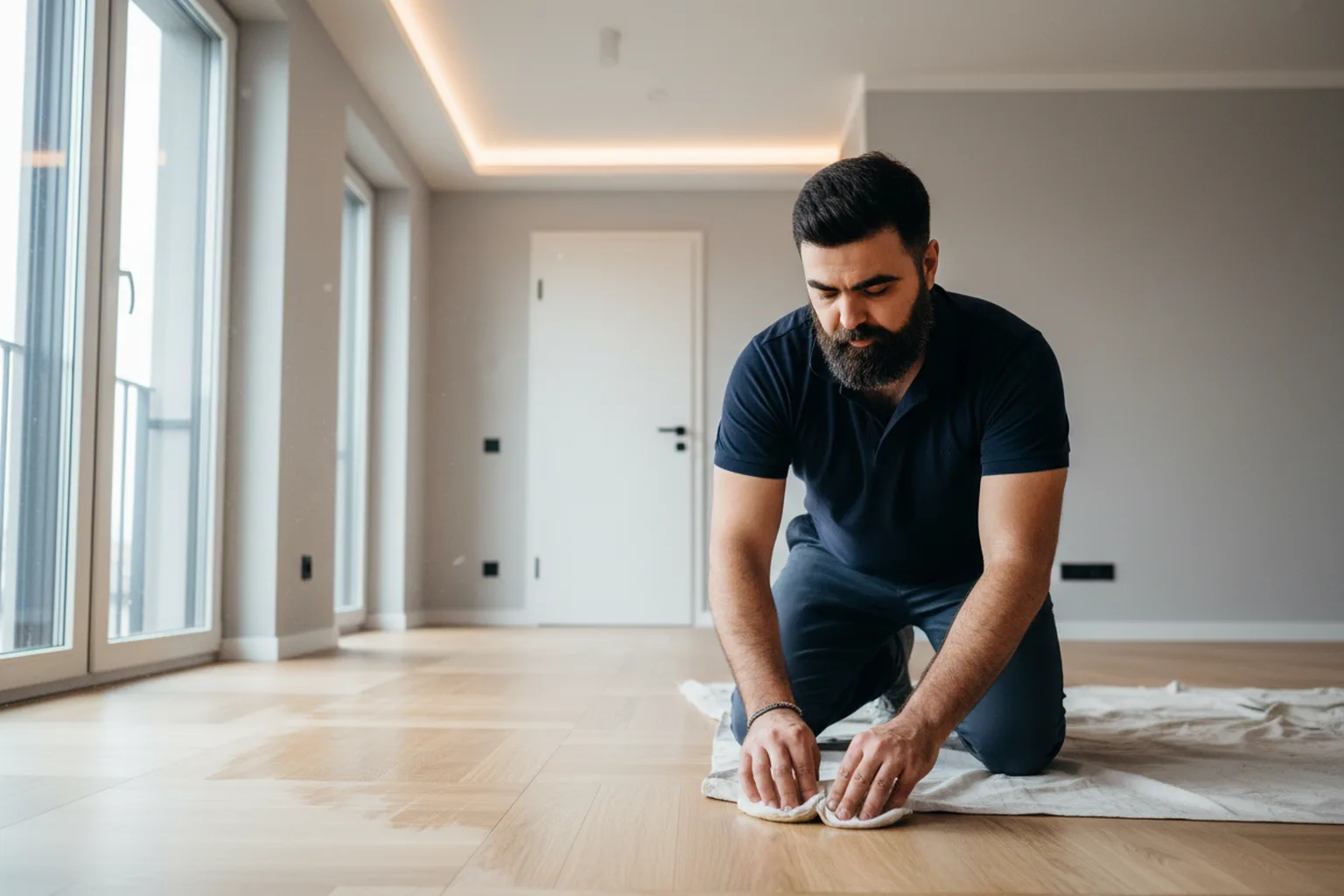
- First oil coat — applied with a stainless steel spatula or roller and worked along the grain. Excess is wiped off after 15–20 minutes with a microfibre cloth.
- Intermediate drying — at least 8–12 hours depending on the oil type. The room is aired out but protected from draughts.
- Second oil coat — we repeat the process. In high-traffic areas (hallways, kitchens), we sometimes add a third coat.
- Final buffing — after 24 hours, we buff the surface with a polishing pad to get an even, matte finish. Full use of the floor is possible after 5–7 days.
Common mistakes with parquet oil treatment
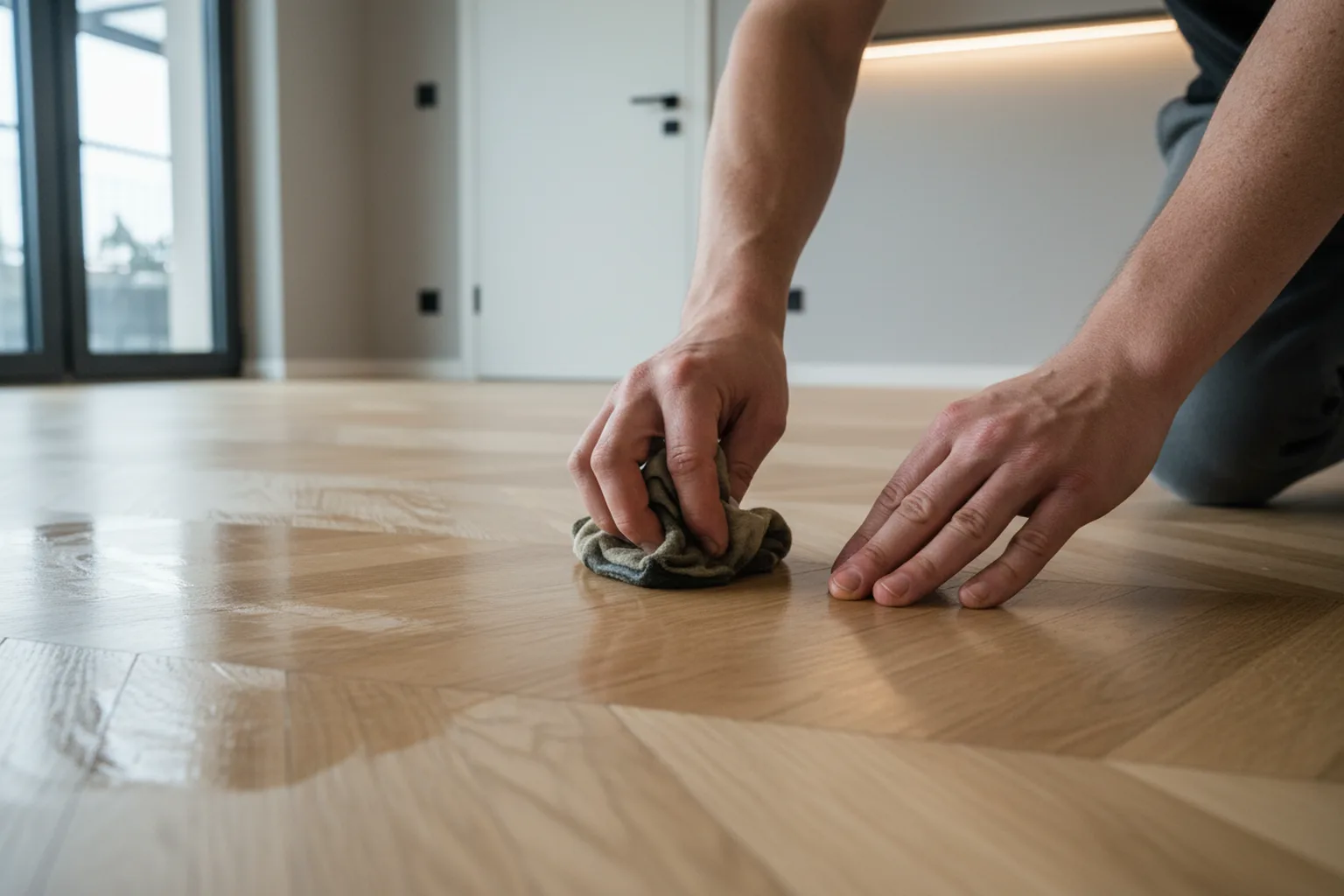
- Putting oil over lacquer without sanding — the oil stays on top in blotches and wears away within a week.
- Leaving too much oil on the surface — after 24 hours it creates a sticky layer that is hard to remove.
- Using cheap oil without a hardener — the finish never cures properly and leaves marks on socks.
- Ignoring drying times between coats — the second coat pulls up the first and causes streaks and uneven areas.
- Oiling at temperatures below 15°C — the product gets thicker, absorbs badly, and needs twice as long to dry.
- Putting furniture on a freshly oiled floor before 5 days have passed — it causes dents and marks in the uncured finish.
What to prepare before the technician arrives
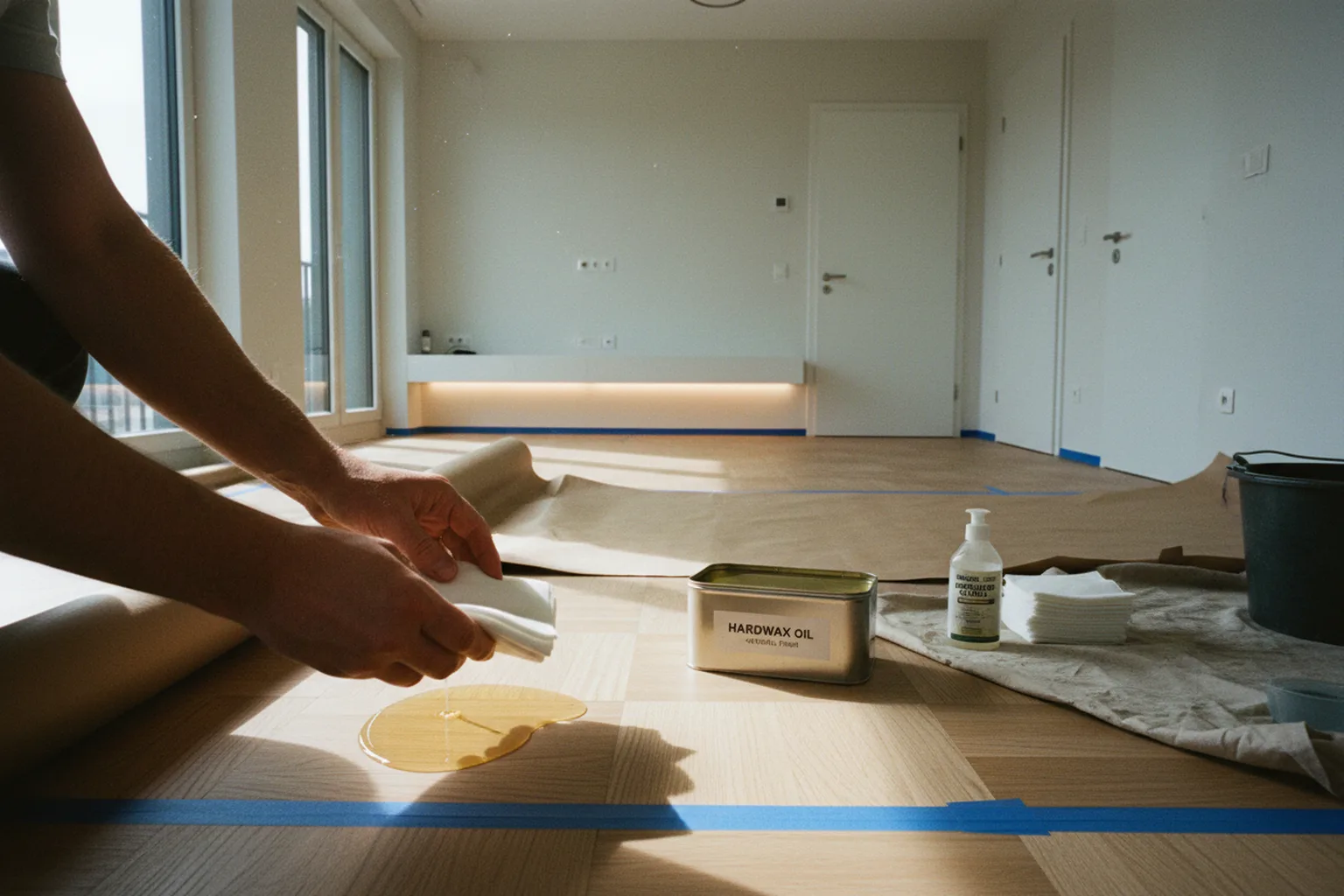
- Remove all furniture from the room — the floor has to be treated in one go; partial oiling is not possible.
- Take off skirting boards if they cover the edge of the parquet — dirt often builds up underneath.
- Make sure the room temperature is between 18–25°C — this matters for proper oil absorption.
- Check that there is a power socket in the room — the sander requires 220V.
- Let your neighbours know about the noise — sanding takes 2–4 hours and is fairly loud.
- Keep doors to other rooms closed — sanding dust is very fine and spreads everywhere.
A real case from Warsaw
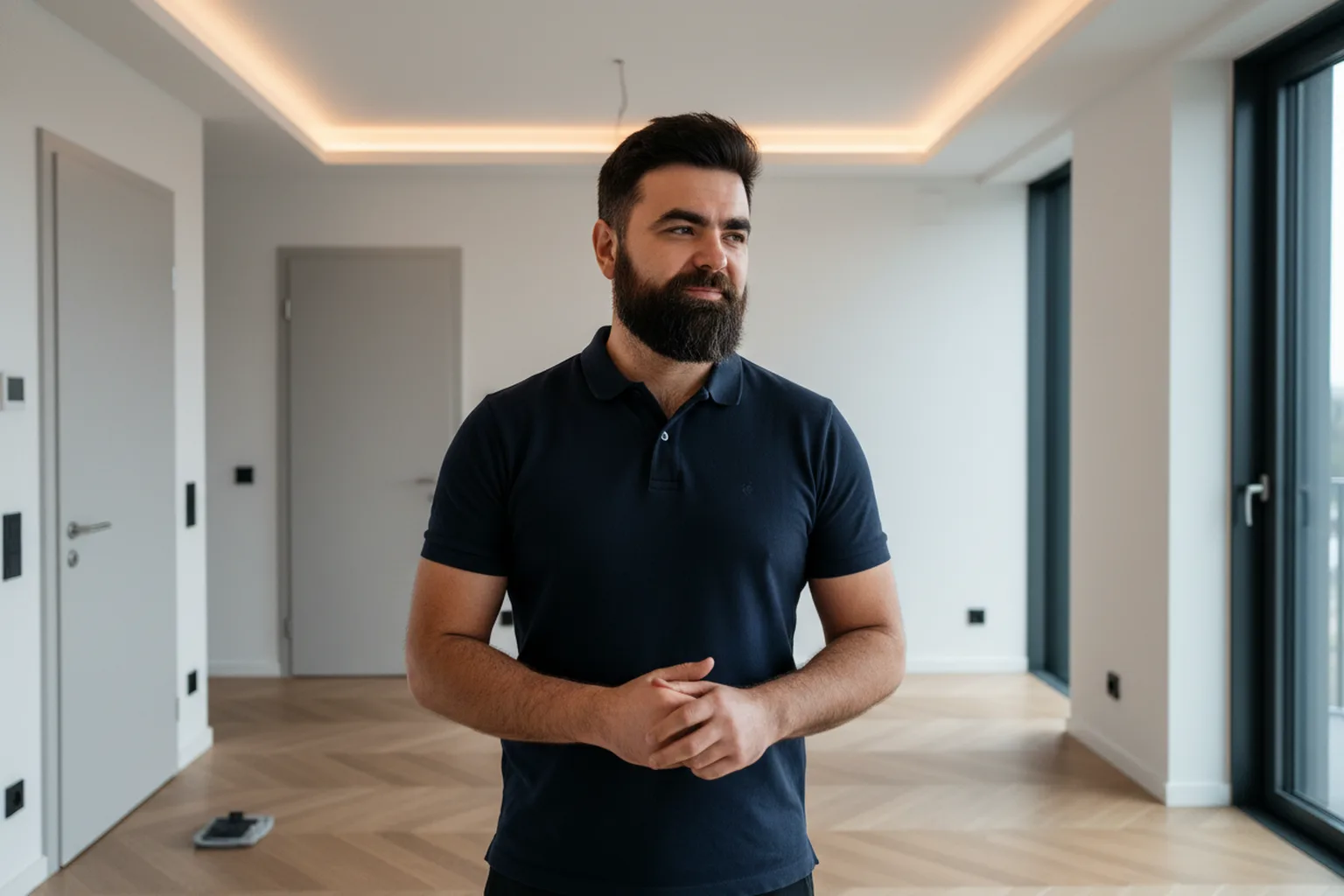
A homeowner in Mokotow wanted to change their oak herringbone parquet from lacquer to oil. The floor was about 20 years old and still in good condition — the wood had no deep scratches or cracks, but the lacquer was worn through in busy areas and had begun to peel near the balcony door. We removed the old finish with a drum sander, then smoothed the surface with an orbital machine. The client picked Osmo Polyx-Oil in a natural matt finish. We applied two coats with a 12-hour drying gap between them. After buffing, the floor looked excellent — the natural oak grain showed clearly, and the surface had a soft, silk-like sheen. Six months later, the client said the floor was performing perfectly. We advised a maintenance oil application in the hallway after about a year. The main point: oil treatment is not only about looks — it also makes long-term floor care much easier and cheaper (compatible with Quick-Step, Egger, Kronopol and similar).
Frequently asked questions
Why pick oil instead of lacquer for parquet?
Oil soaks into the wood and protects it from the inside, instead of creating a film on top. An oiled floor breathes, feels natural, and — most importantly — can be repaired locally without sanding the whole room. Lacquer cracks and peels when damaged; oil just wears down and is easy to refresh.
Which oil is best to choose?
For residential use, we recommend hardwax oil — brands like Osmo, Pallmann, or Bona. They give lasting protection with a natural matte finish. Pure tung oil or linseed oil is a good option for eco-conscious projects, but it needs more frequent maintenance.
How often does an oiled floor need refreshing?
In living rooms and bedrooms — every 2–3 years. In hallways and kitchens — every 1–1.5 years. Refreshing means applying a thin coat of oil without any sanding, and it takes only a few hours.
Can I oil my parquet on my own?
In theory, yes. In practice, without proper sanding the finish will come out uneven. Oil brings out every scratch and sanding mark. We strongly advise professional application, especially the first time.
How long before I can walk on the floor after treatment?
In socks — after 24 hours. Furniture can be placed back after 5–7 days. Rugs should not go down for at least 2 weeks.
Who does the work
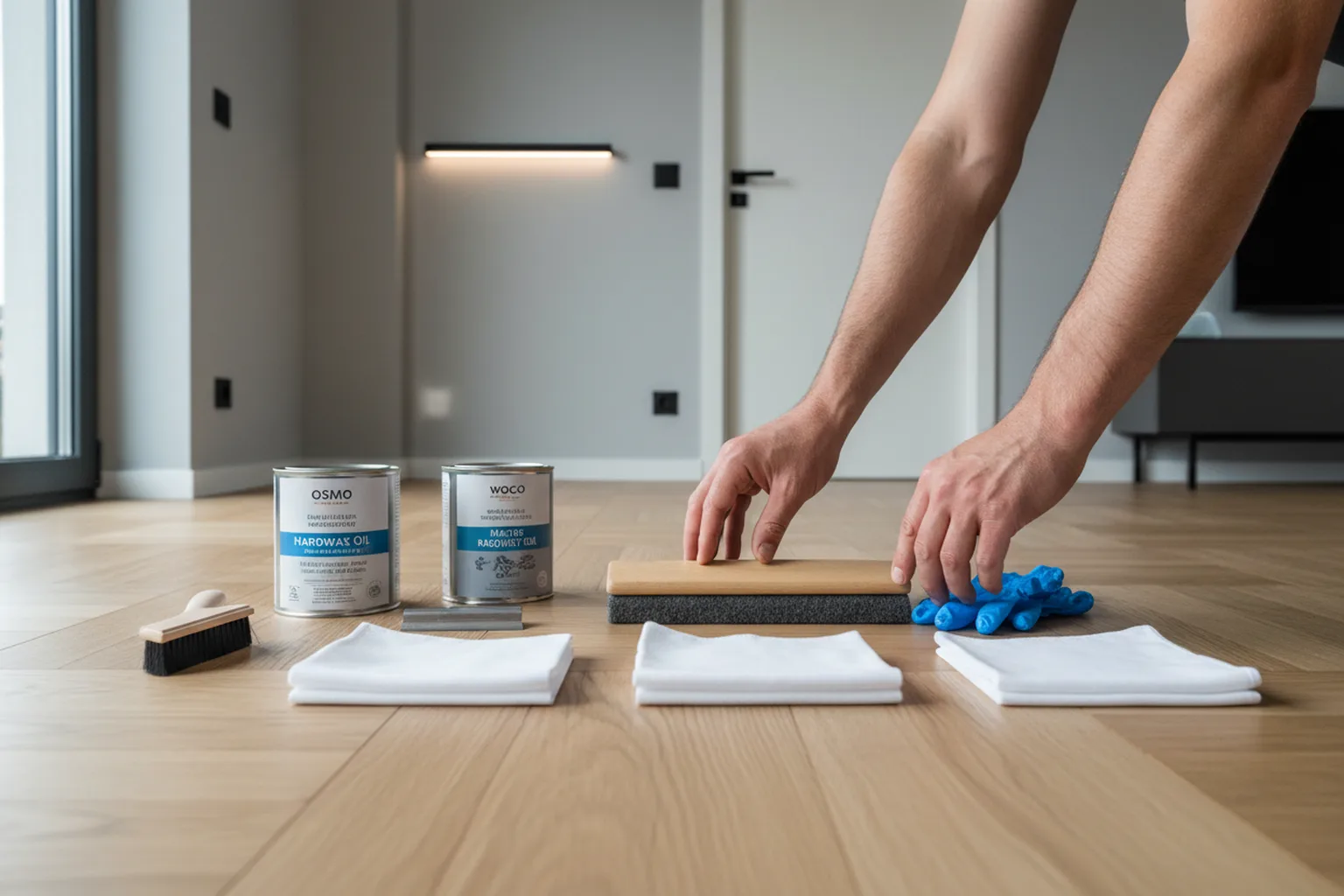
Parquet oil treatment is done by skilled craftsmen with hands-on experience in natural wood floors. We work across all of Warsaw and the nearby suburbs. We bring professional sanding machines and tools. You can buy the oil yourself, or we can choose and deliver the right product for your floor. To book a visit, call or message us — we reply within an hour and set up a convenient time.