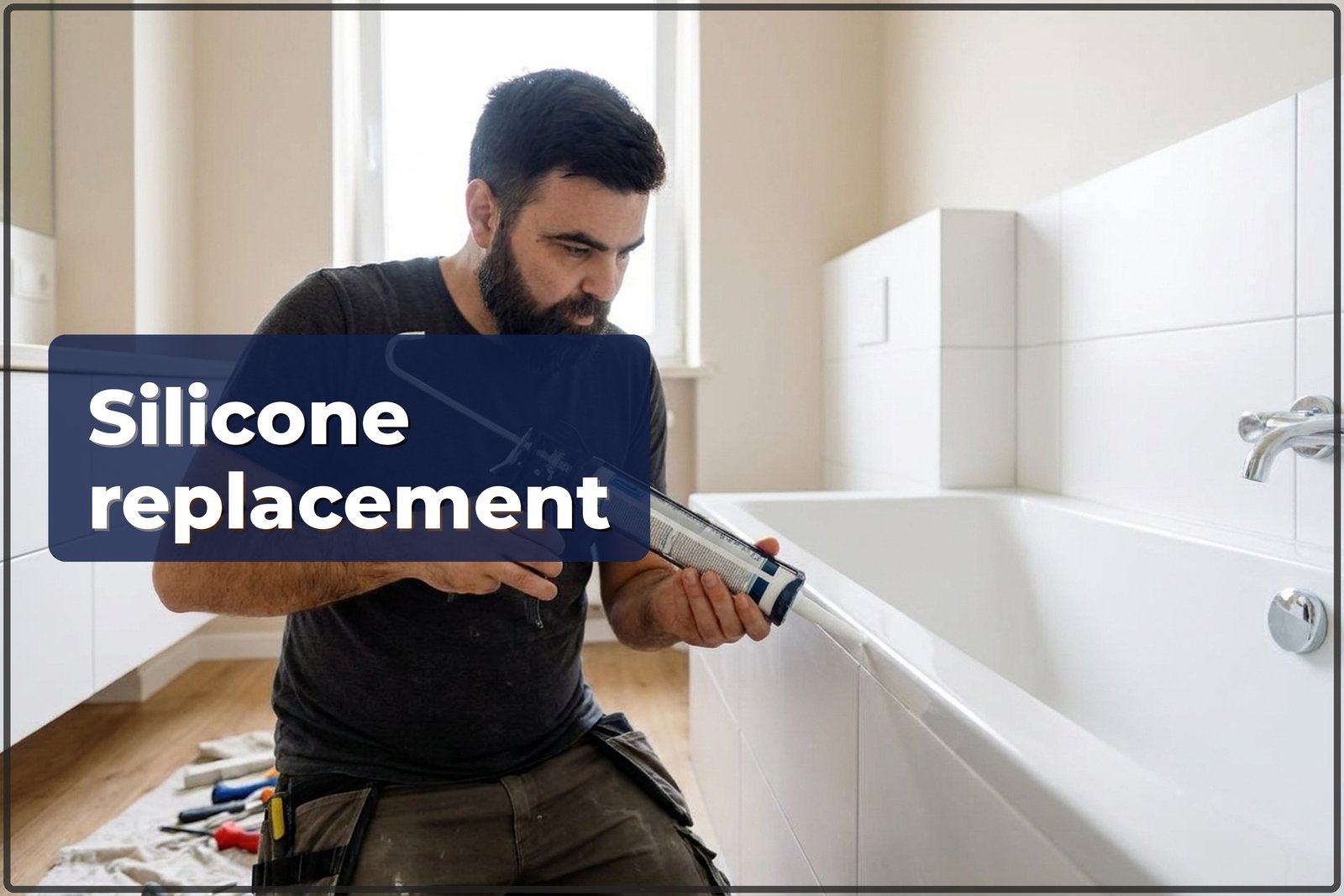
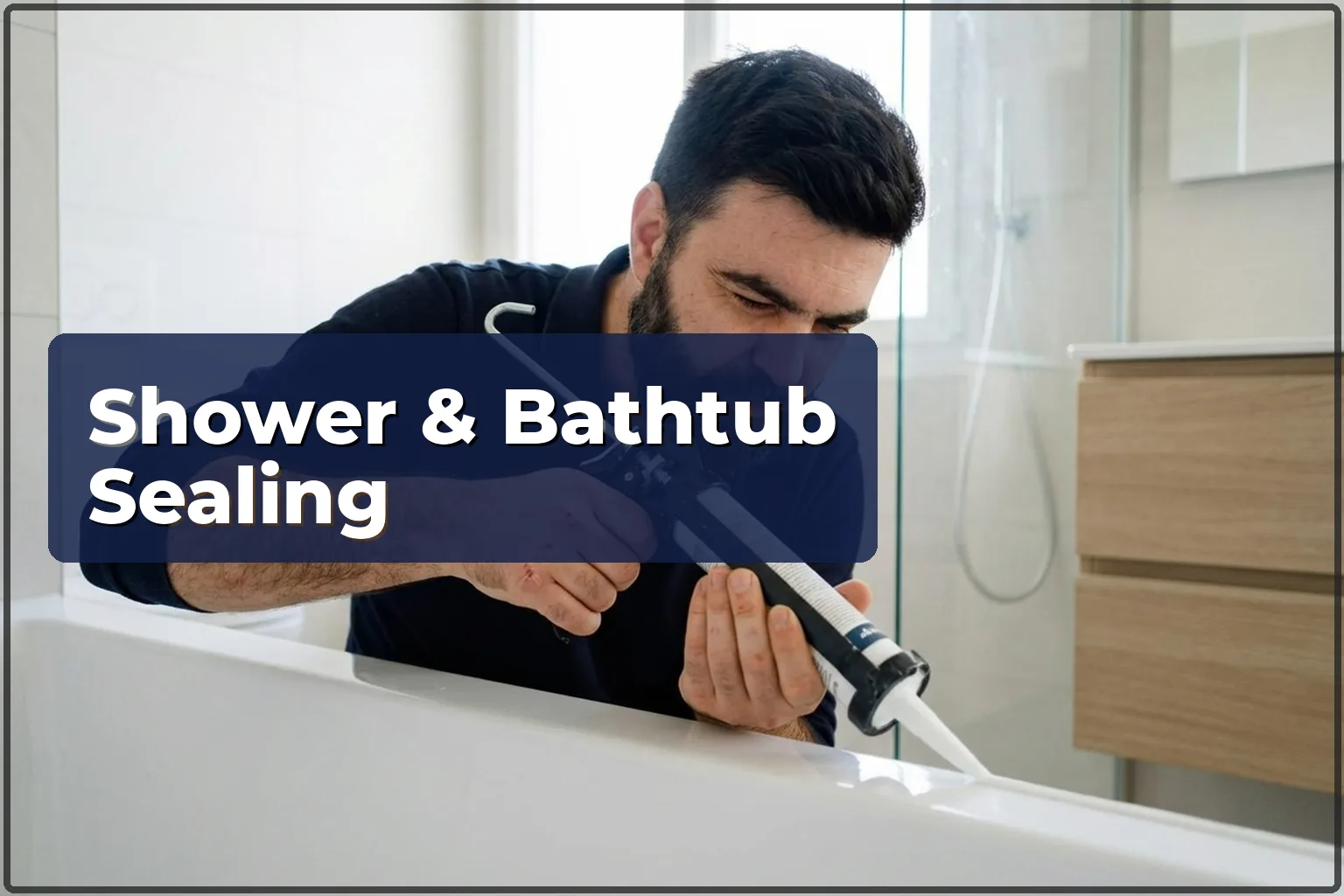
Black silicone around the bathtub edge, mould in all corners of the shower cabin, puddles on the floor after each shower — a scene many people know well. Old sealant stops being flexible with age, lifts off the surface and begins to let water pass through. Painting it or squeezing a new layer over the top does nothing: the old silicone has to be removed fully and replaced with a new bead. It may look like an easy job, but taking off old sealant neatly, getting the surface ready and laying an even fresh line takes practice. In flats on Bemowo, houses on Targowek, new builds in Bielany — the same issue shows up 3–5 years after the previous renovation. If you want it sorted once and done right, call a professional.
How much does it cost and what affects the price
The price depends on the length of the joints (in linear metres), the state of the old silicone and how accessible the joints are. One straight line along a bathtub is fast work. A corner shower cabin with lots of joints needs more time. If the old sealant is stuck into the grout or has been put on in several layers, removal takes longer. Up-to-date prices for all bathroom jobs are listed in the table below. Sanitary silicone is included in the service price.
How the work is done
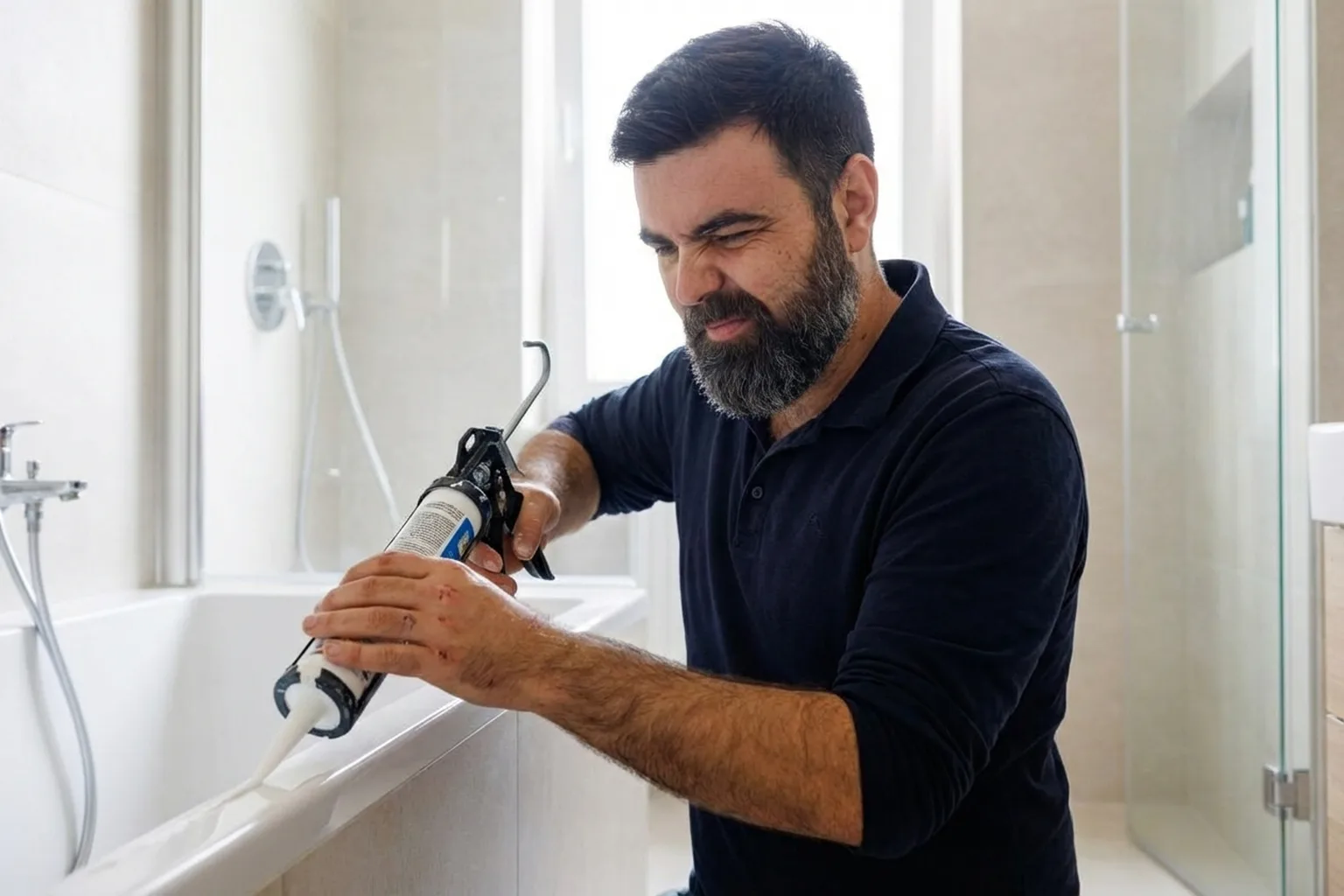
- Inspection: we check the scope — which joints need to be replaced and whether there are any hidden leaks behind the bath panel or cabin walls.
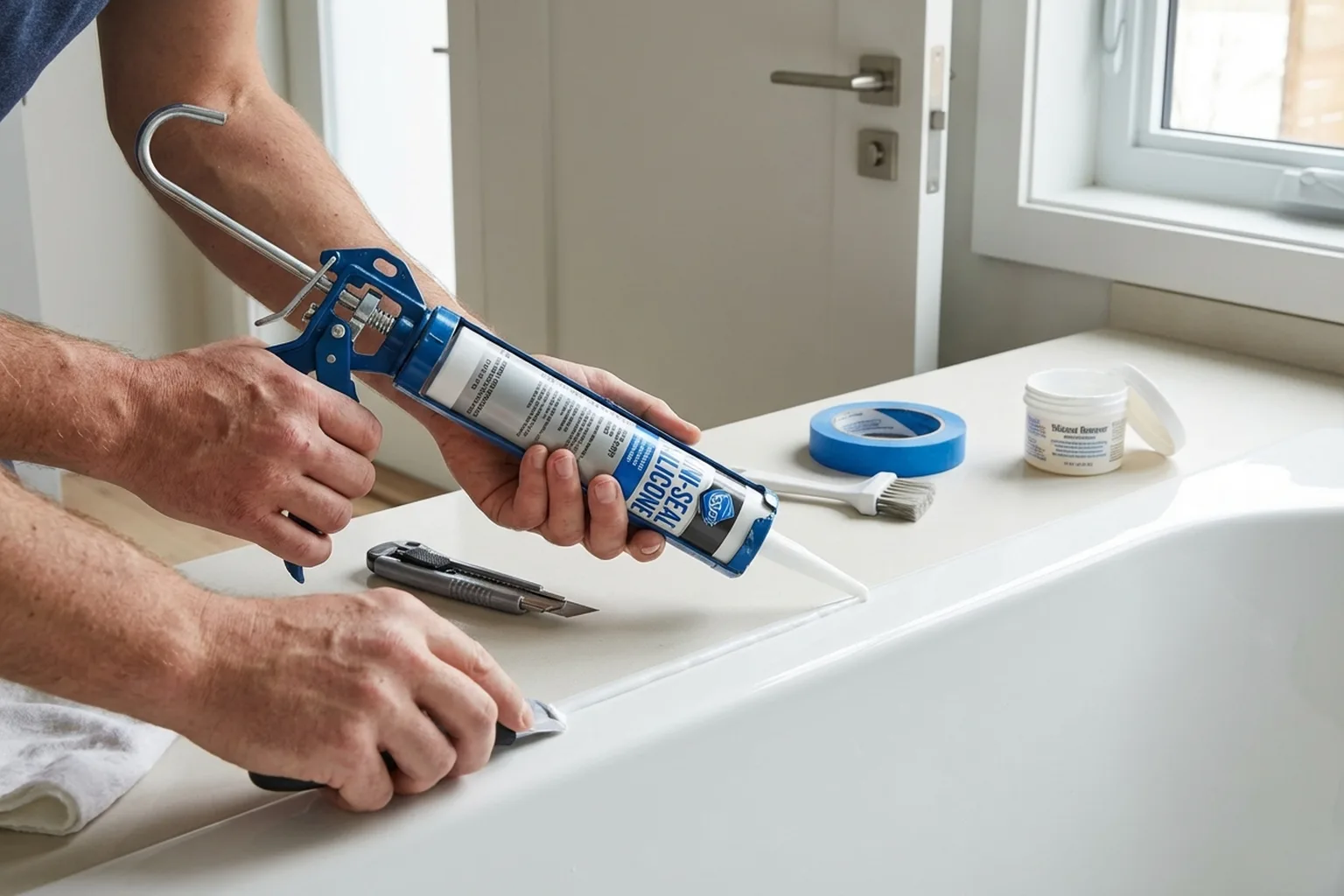
- Removing old silicone: we slice it out with a blade, then clear the remains with a silicone remover. Nothing can be left — fresh sealant will not stick to old silicone.
- Cleaning and degreasing: we wash the joint and wipe it with alcohol or a specialist degreaser. The surface has to be fully dry and clean.
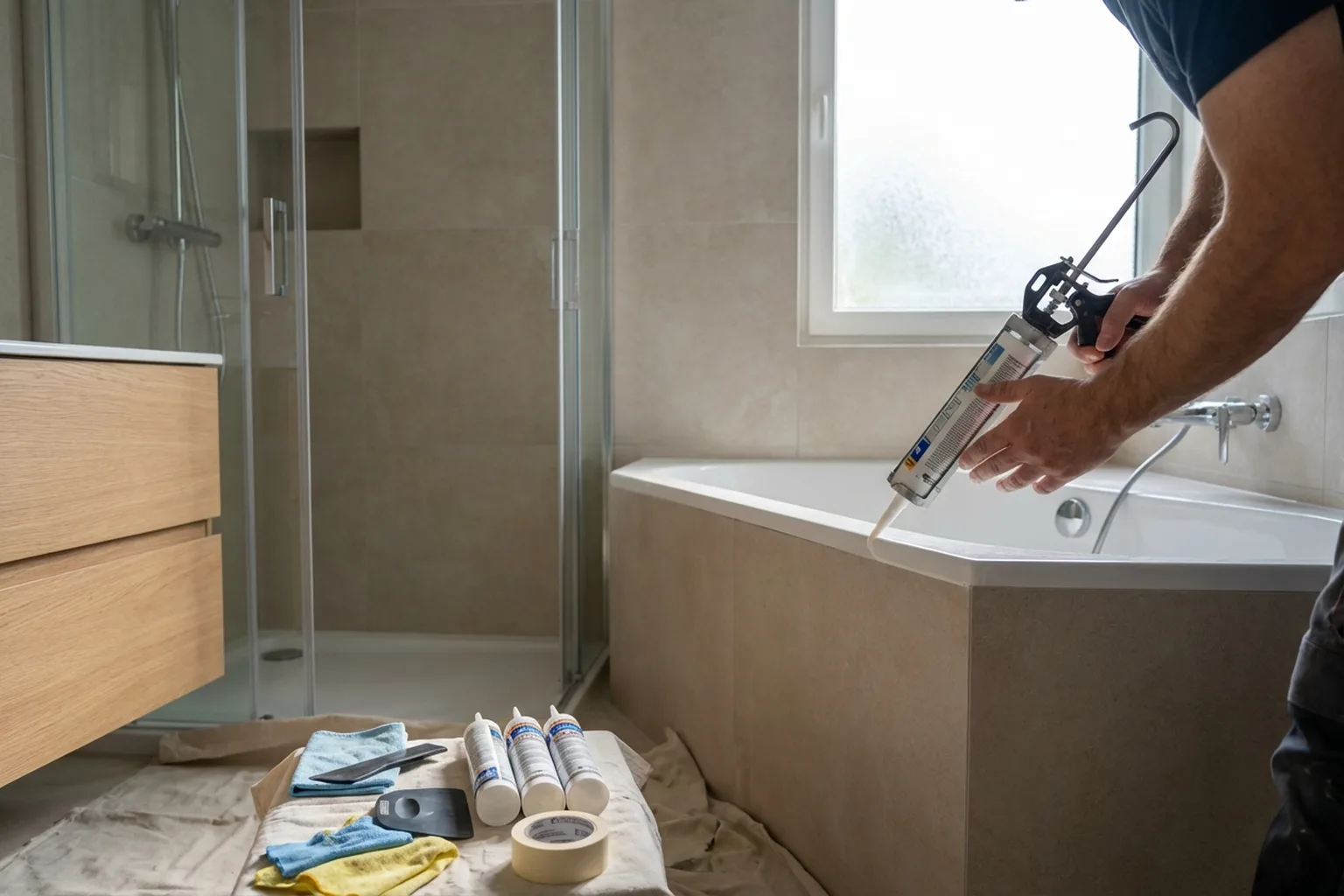
- Masking with tape: we put painter’s tape on both sides of the joint to get a neat edge and keep excess silicone off the tiles.
- Applying silicone: we use sanitary silicone with a fungicidal additive (anti-mould). It goes on evenly from a caulking gun and is smoothed with a spatula or a finger dipped in soapy water.
- Removing the tape: the tape is peeled off straight after smoothing, before the silicone starts forming a skin.
- Curing: the silicone reaches full strength in 24 hours. The joint must stay dry during that time.
Common mistakes
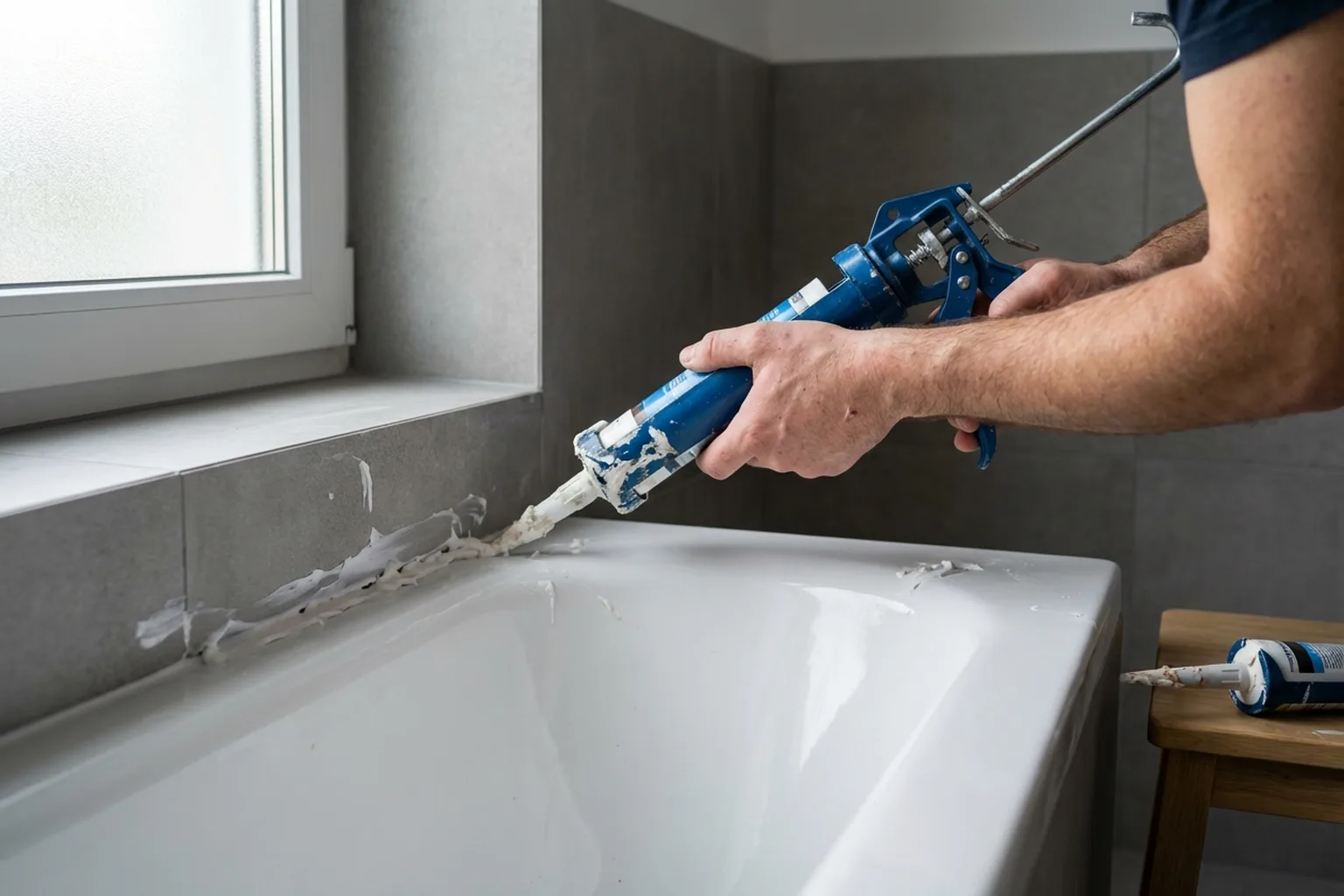
- Putting new silicone over the old one — it will not bond properly and starts peeling within weeks, so the leak comes back.
- Using general-purpose silicone instead of sanitary grade — without a fungicide, mould comes back in 2–3 months.
- Skipping degreasing — silicone does not grip well to greasy or soapy tiles.
- Making the bead too thick — it cracks or lifts at the edges while curing.
- Not using masking tape — the edges turn out messy and silicone gets smeared over the tiles.
- Getting the joint wet before the full 24-hour cure — the silicone does not polymerise completely and loses adhesion.
- Sealing only the visible parts — water gets through unsealed corners and joints.
What to prepare before the visit
- Take away all shampoo bottles, soap dishes and accessories from the bathtub edge and cabin shelves.
- Check that the bathroom is well lit — the technician needs to see every joint properly.
- If there is a bath panel, tell us in advance — it may have to be removed for access.
- Do not use the shower for at least 2 hours before the visit — the joints need to be dry.
- If you know where the water is leaking through, point it out to the technician.
- After sealing, you cannot use the bath or shower for 24 hours — plan for that.
- If the kitchen sink sealant also needs to be replaced, mention it beforehand — we can handle both during one visit.
- Air out the bathroom — the silicone remover has a strong smell.
A real case from Warsaw
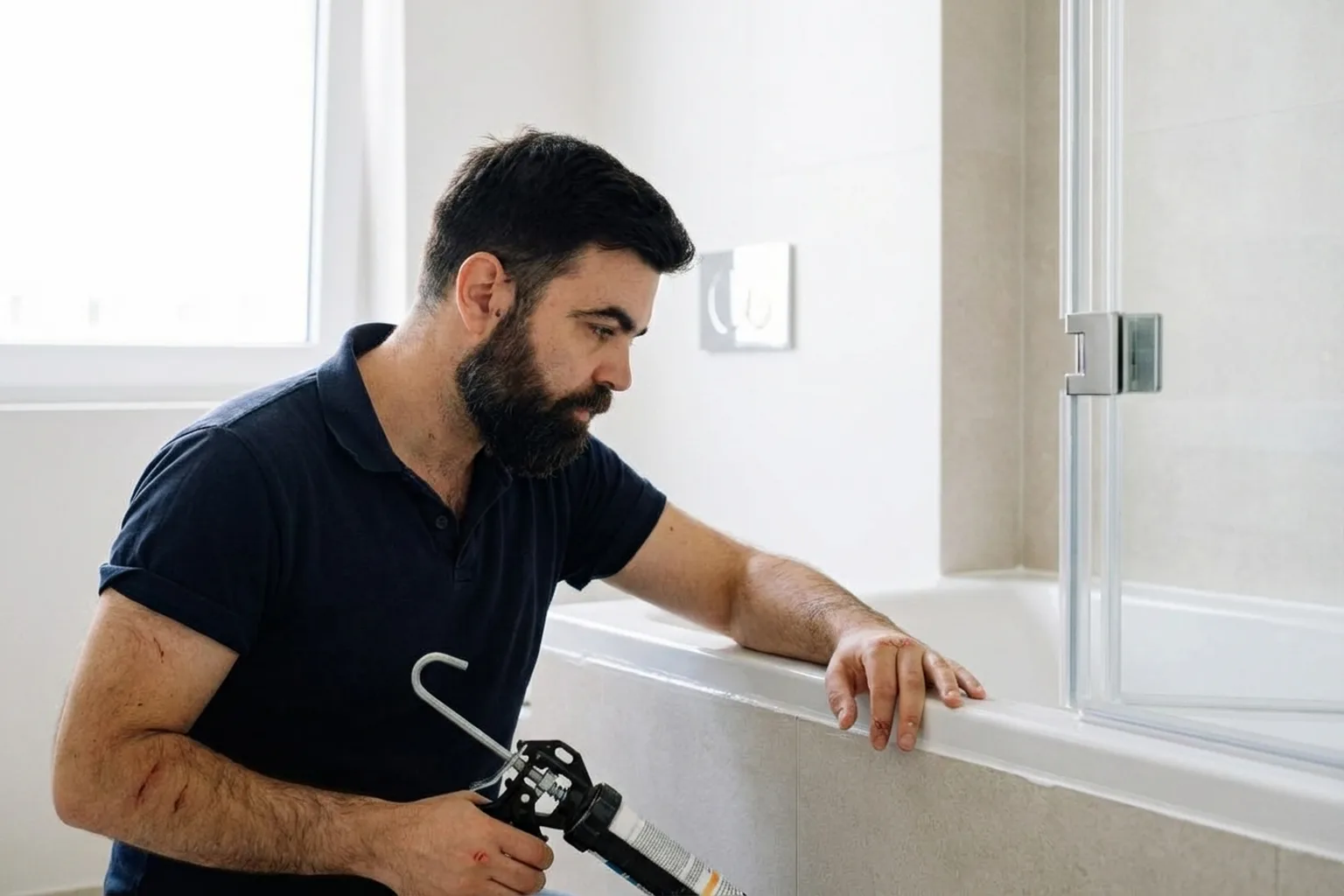
We got a call to a flat on Bemowo. The bathroom had a corner shower cabin with four-year-old sealant. Black mould was on every joint, the lower corner had come away from the tray and water was leaking onto the floor after each shower. Taking out the old silicone took more than an hour — the previous installer had put on three layers, one over another. We cleaned everything right down to the tile and acrylic, then degreased and dried the surfaces. After masking with tape, we applied Ceresit CS 25 sanitary silicone with an anti-fungal formula. The total joint length was about 8 linear metres (tray perimeter, cabin wall joints, wall junction). The result — clean white lines, no water getting through. The owners said it looked like a brand-new cabin (compatible with Grohe, Hansgrohe, Geberit and similar).
Frequently asked questions
How often should silicone be replaced?
Usually every 3–5 years, depending on how heavily the bathroom is used and how well it is ventilated. If mould has shown up or the sealant is pulling away, it is time to replace it.
Can I just paint over the mould on the silicone?
No. Mould grows inside the sealant — treating the surface will not solve it. The only fix is to replace the whole joint.
Clear or white silicone — which is better?
For white sanitaryware, white silicone covers small imperfections better. Clear works nicely with coloured tiles or dark surfaces. The main thing is that it must be sanitary grade with a fungicide.
How long does the sealing take?
A standard bathtub (three sides) takes around 1–1.5 hours, including removal of the old silicone. A shower cabin with many joints takes 1.5–2.5 hours.
Can I replace the silicone myself?
You can, but getting an even bead on the first try is uncommon. Uneven silicone is not only ugly — it also keeps water out less effectively. If you want a neat result, it is easier to call a professional.
Will sealing help if water is escaping under the bathtub?
If the issue is at the joint between the tub and the wall, yes — new silicone will solve it. If the drain or trap is leaking, that is a separate problem and needs diagnosis.
Book the sealing service
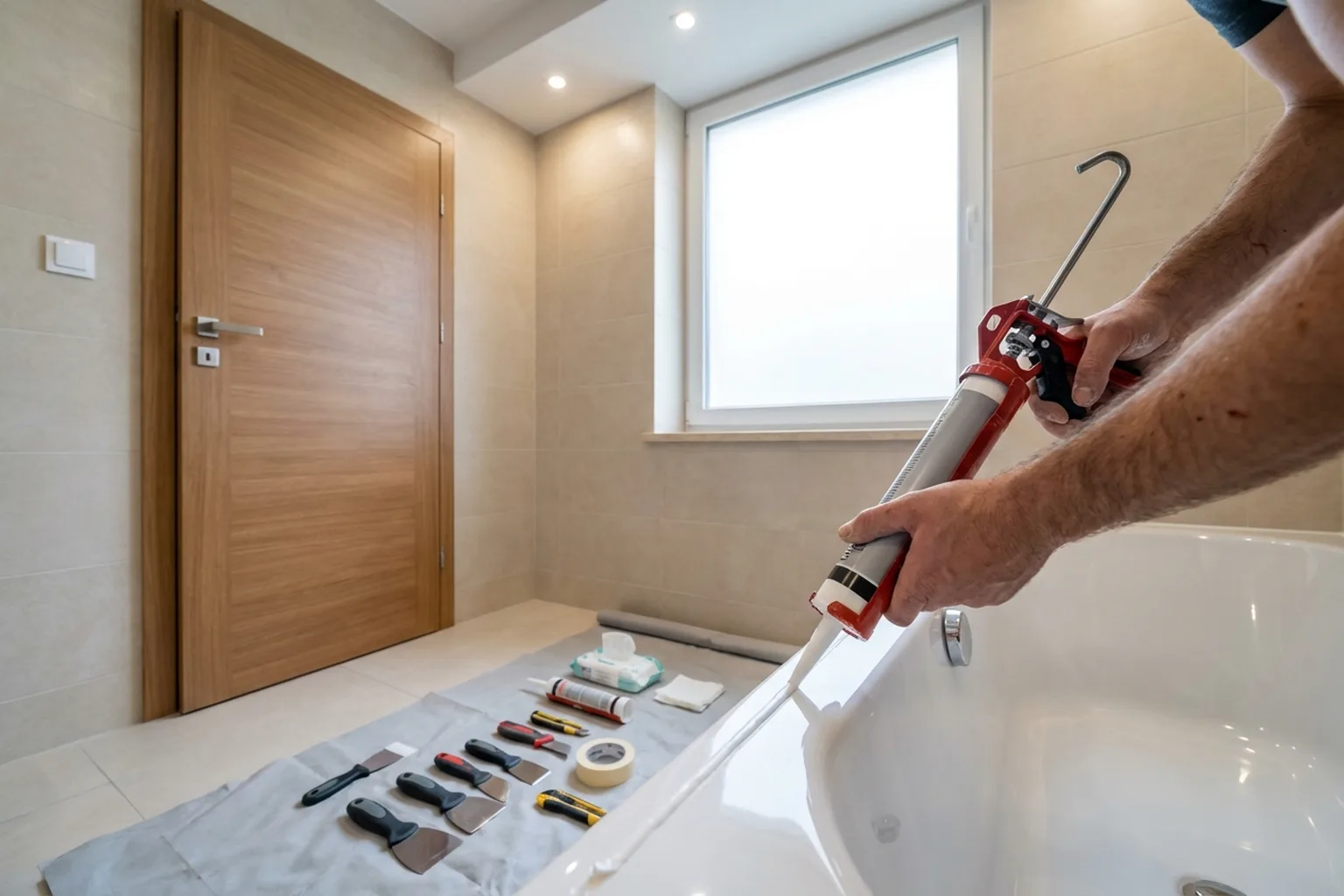
We replace silicone on bathtubs, shower cabins and trays across Warsaw. We remove the old sealant completely and apply fresh sanitary silicone with mould protection. The job takes 1–2 hours and the result holds up for years. Get in touch — we will come at a time that works for you.