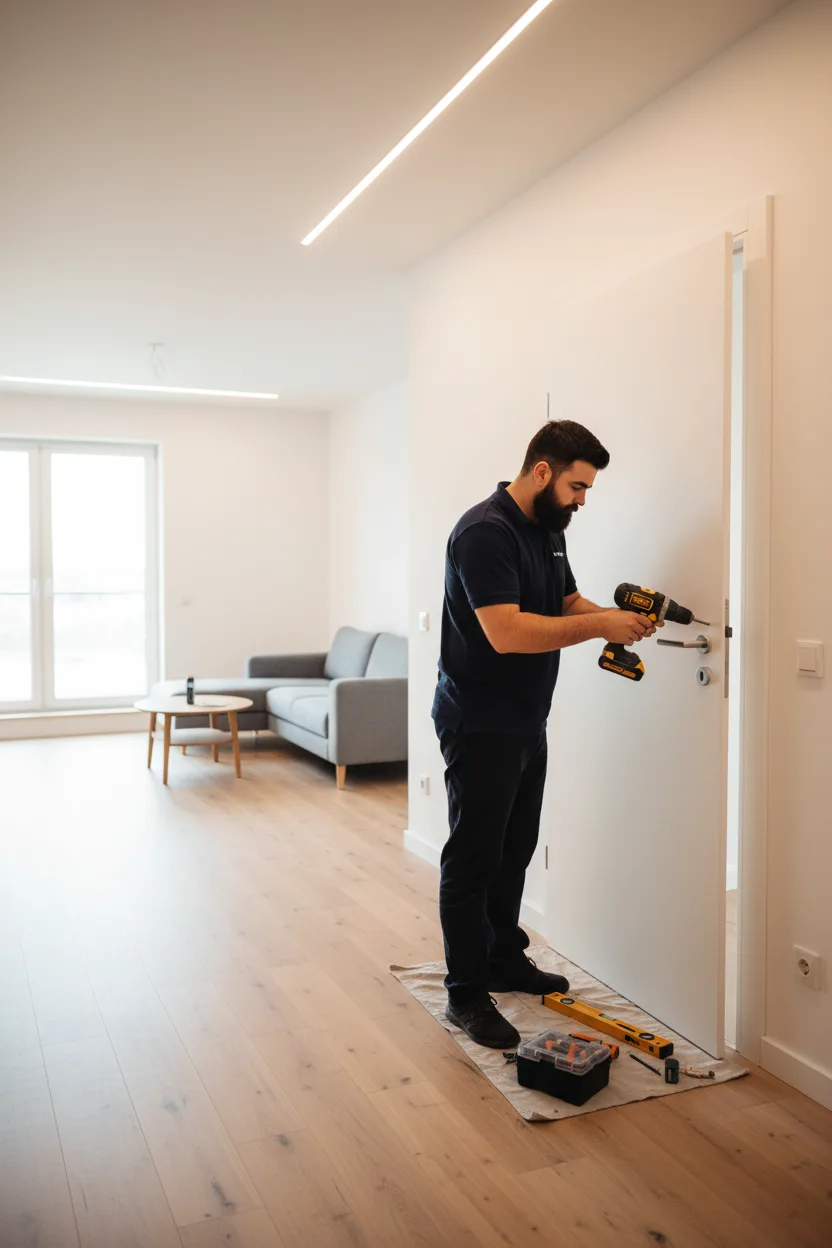
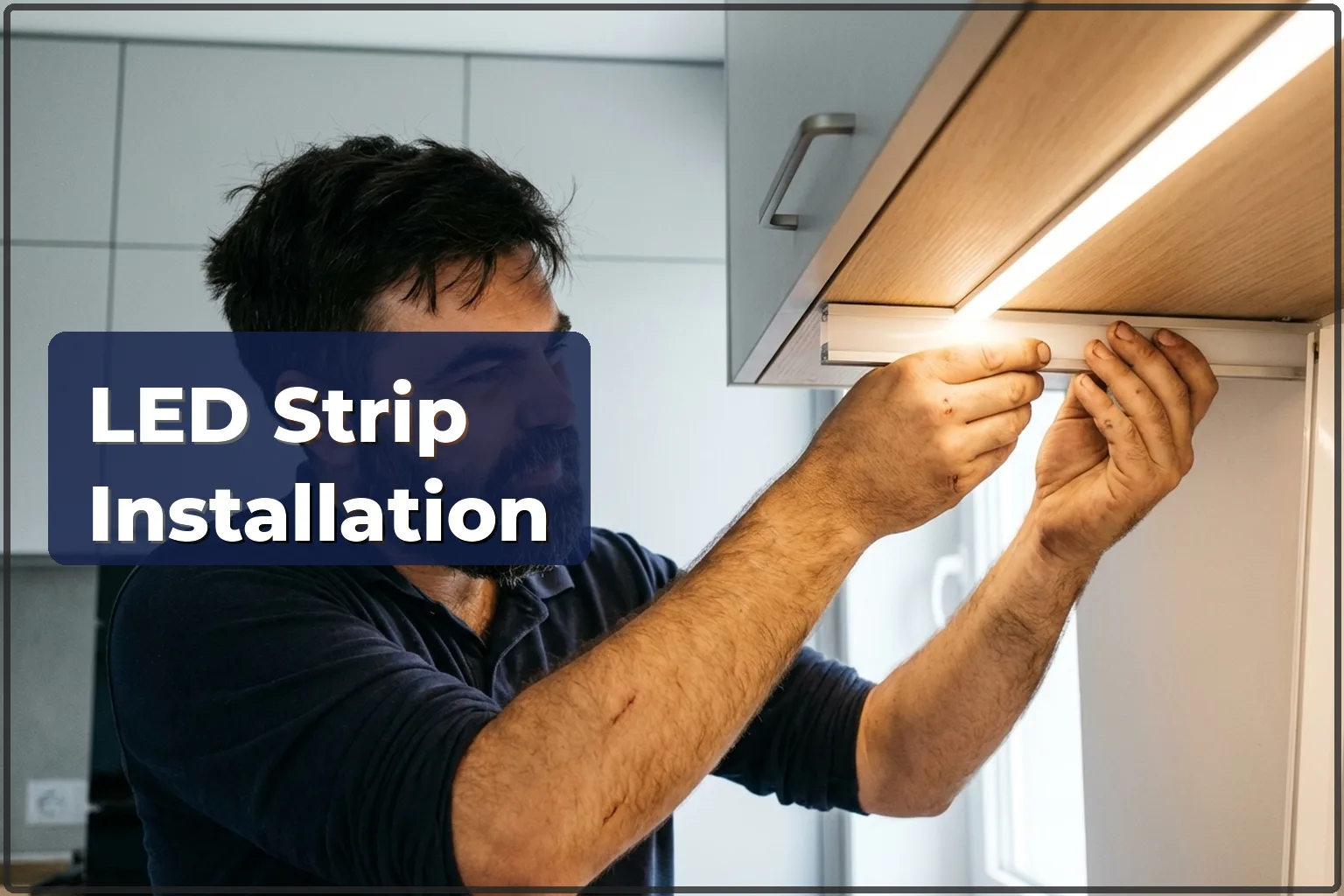
An LED strip is one of the simplest ways to change the whole atmosphere of your apartment. Lighting under kitchen cabinets, a line of light along the ceiling, lighting inside a wardrobe or around a bathroom mirror — all this can be installed in one visit. We cover the whole of Warsaw: from Zoliborz to Wilanow, and we come with tools, a soldering station, and all the small materials needed. If you are not sure which strip or transformer to pick, we will suggest what fits your exact setup best.
Important: any electrical work calls for proper safety measures. Connecting an LED strip to a 230 V mains supply through a transformer counts as electrical installation work. If you do not have wiring experience, do not gamble with it — call a professional. Wrong connections can cause a short circuit or even a fire.
How much does it cost and what affects the price
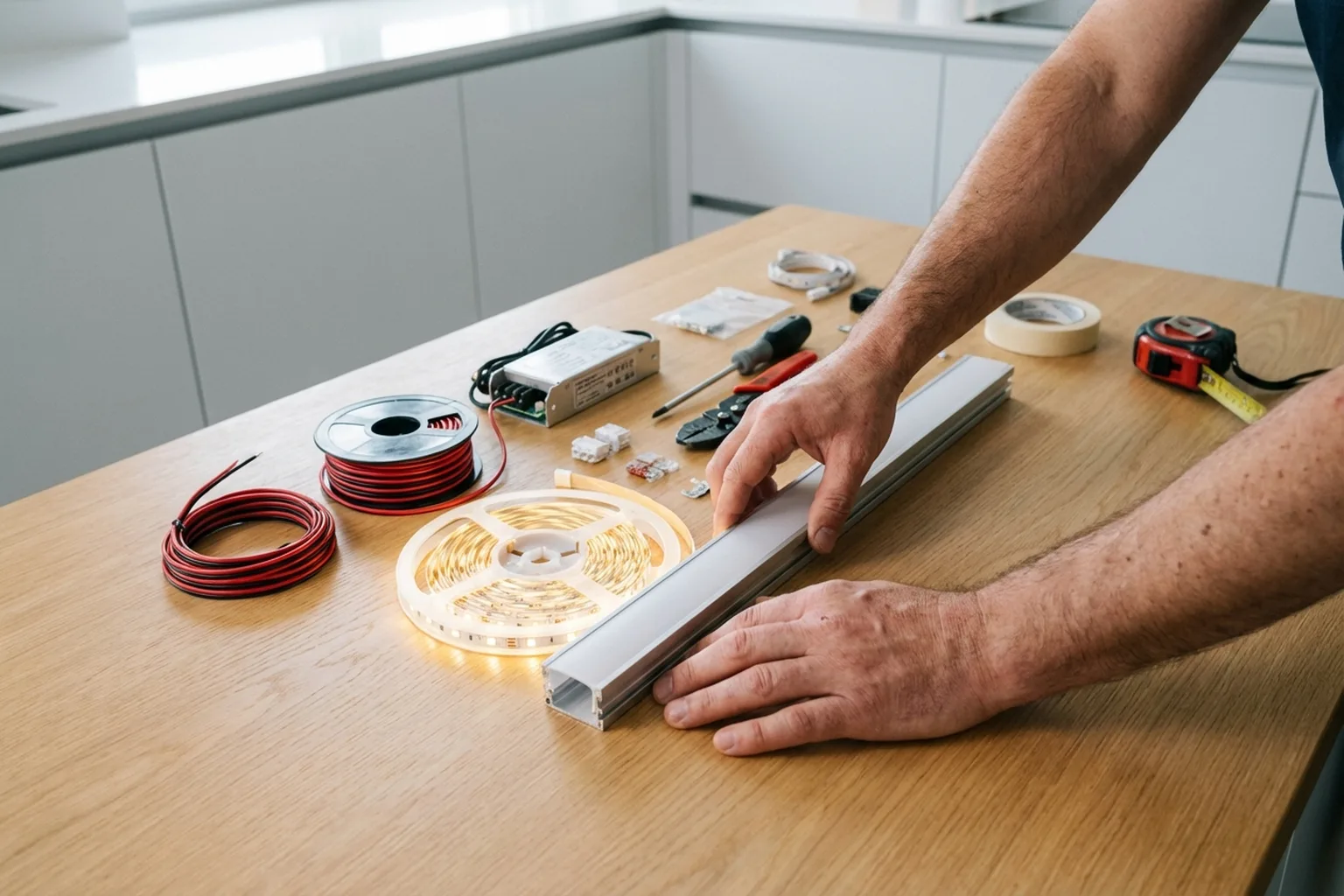
The installation price depends on the strip length, the way the cable is routed, and how complicated the connection is. If chasing into walls or hidden cable runs are required, the cost will be higher than for a simple surface installation in a ready-made profile. The transformer (power supply) is priced separately — it needs to match the strip’s wattage with a 15–20% reserve. Fixings and small consumables are included in the labour price. The strip itself, profile, transformer, and dimmer are billed separately. Up-to-date prices for all electrical services are listed in the table below.
How the on-site work goes
- You send a photo of the place where you want the lighting — by messenger or email.
- The technician уточняет: strip type (warm/cool/RGB), length, and whether you need a dimmer or remote.
- We set a time — often the same day or the next day.
- On site, the technician marks the route, finds the connection point, and chooses the transformer location.
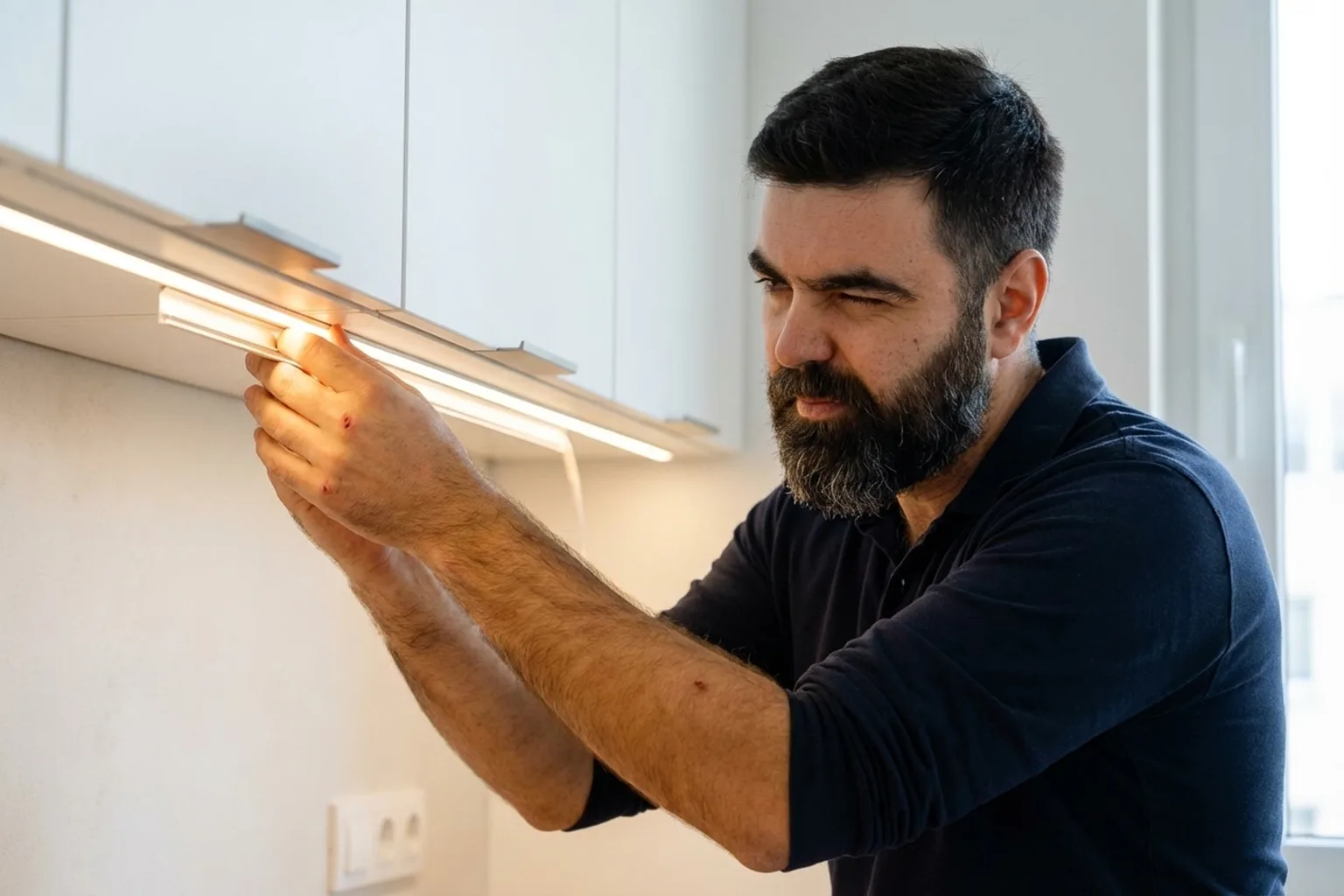
- Profile fitting (if needed), strip mounting, soldering or connectors on the joints.
- Connecting the transformer to the mains, then checking brightness and even light output.
- Clean-up and a quick explanation of how to use the dimmer or remote.
Common customer mistakes (and how to avoid them)
- Buying a transformer with no power reserve — the strip starts flickering or the transformer overheats and breaks down.
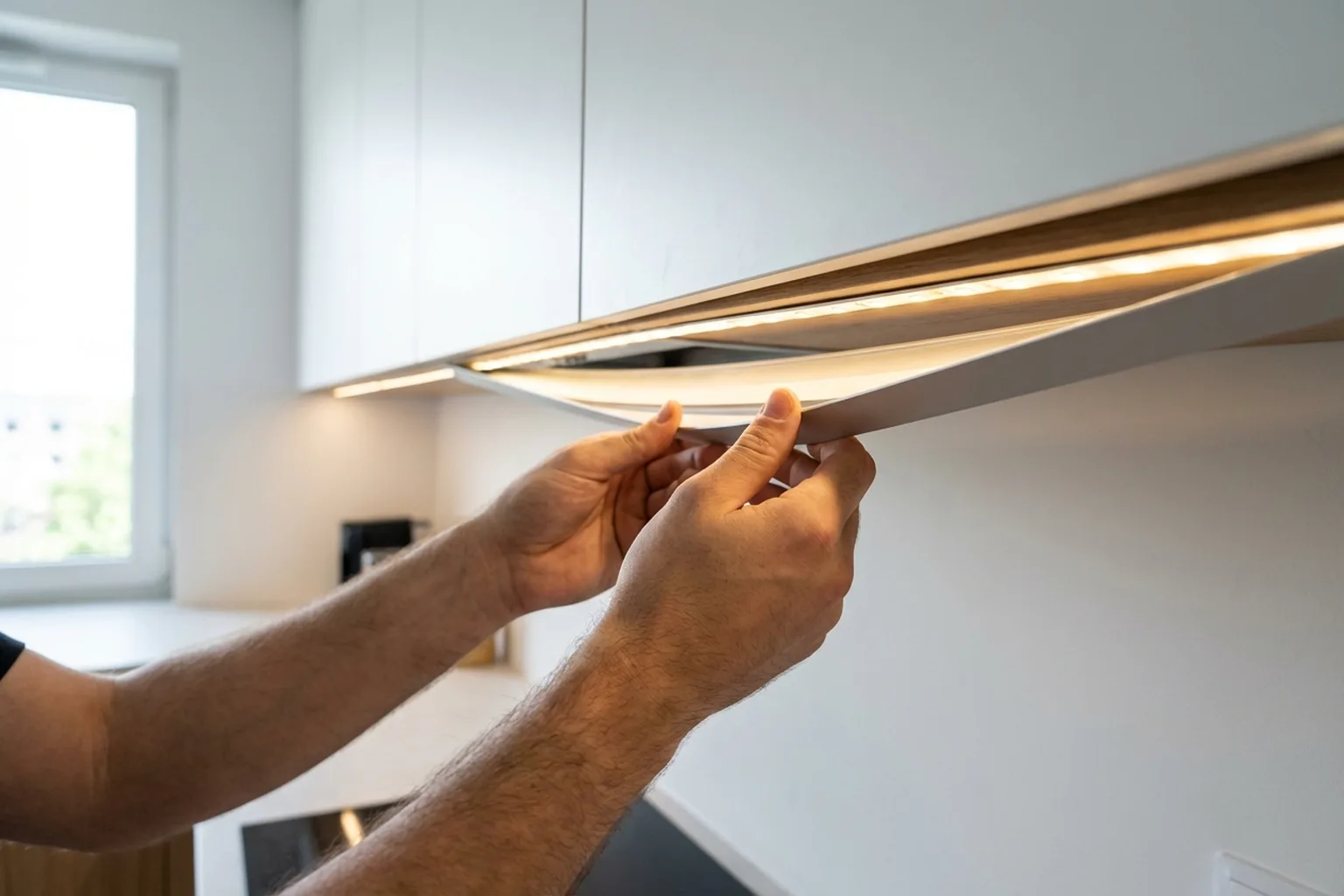
- Sticking the strip straight onto a surface without an aluminium profile — after a few months the adhesive loosens and the strip starts hanging down.
- Using an RGB strip for kitchen worktop lighting — coloured light does not give proper white light for cooking.
- Connecting more than 5 metres of strip in series — the last metre shines weaker because of voltage drop.
- Hiding the transformer in a closed cabinet without ventilation — it overheats and burns out.
- Buying cheap strip from AliExpress with a CRI below 80 — colours of objects look off and skin tones seem unnatural.
- Skipping the dimmer — then there is no way to adjust brightness, and adding one later is awkward.
What to prepare before the technician arrives
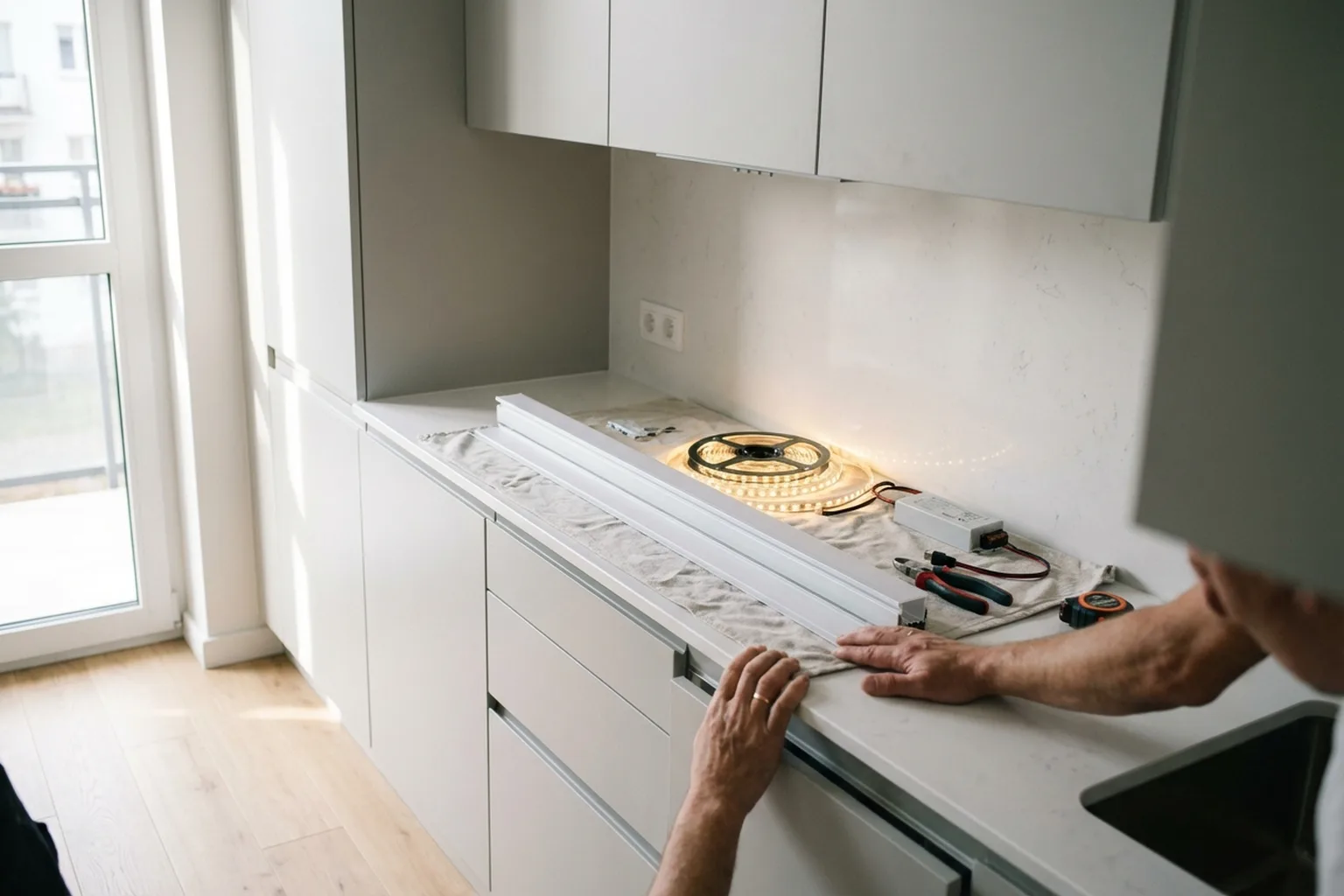
- Decide where you want the lighting — ceiling, kitchen backsplash area, wardrobe, mirror.
- Take a photo of the installation area and send it to the technician beforehand.
- Check if there is a socket or cable outlet near the connection point.
- If you are buying the strip yourself — confirm the required wattage (W/m) and colour temperature with the technician.
- Make sure the work area is accessible — remove dishes, decorations, and appliances.
- If you need concealed installation in a recess or behind a cornice — tell us in advance so the technician brings the correct profile.
- Prepare a stepladder or let us know the ceiling height (standard, 3 m, double height).
- Send access details: intercom code, parking, floor number.
A real case from Warsaw
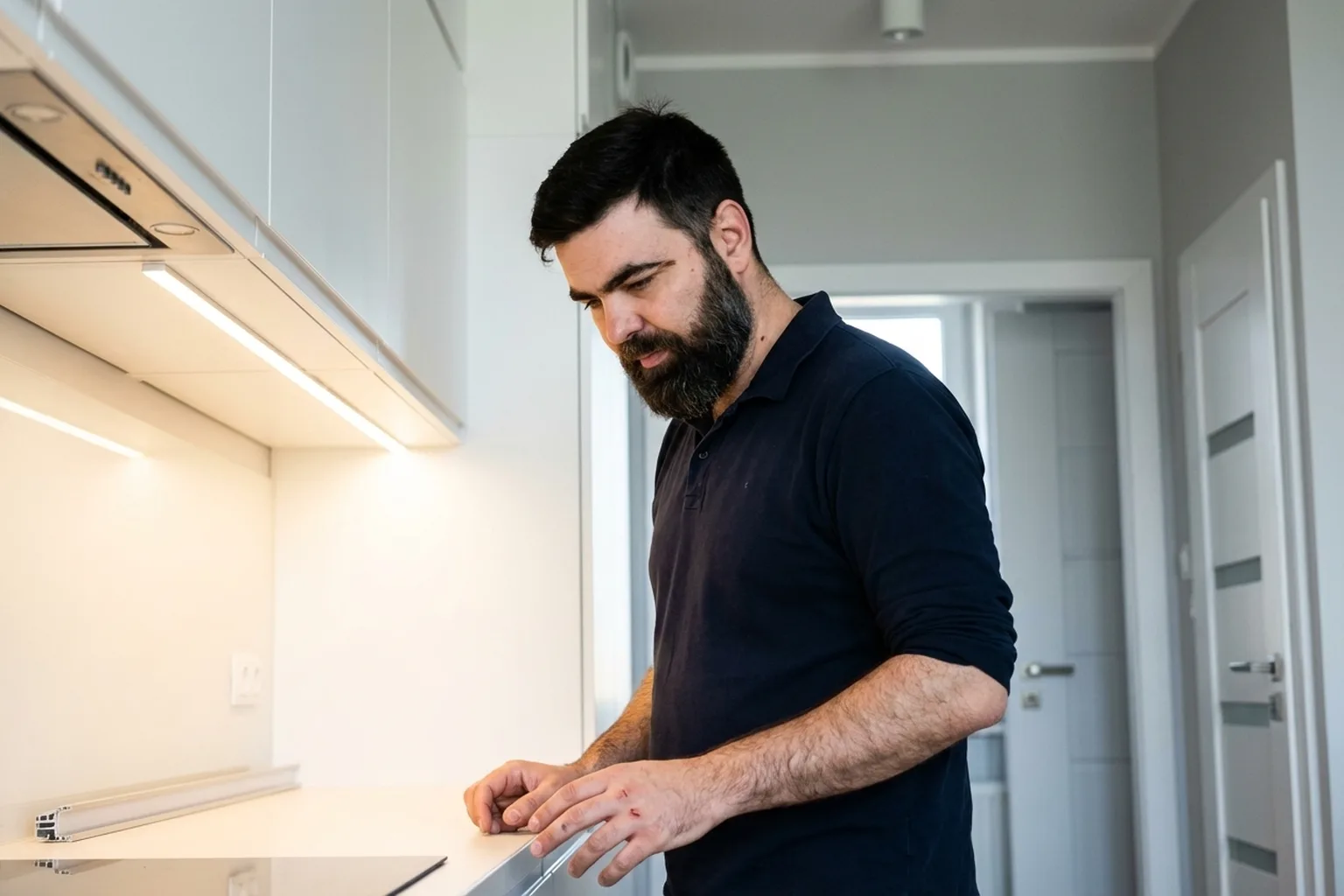
A client in the Praga-Poludnie district ordered under-cabinet kitchen lighting — 4 metres of LED strip under the wall units. During inspection, there was no socket nearby; the nearest cable outlet was behind the fridge. The technician routed the cable discreetly in mini trunking along the wall and installed the transformer inside a corner cabinet (with a ventilation gap). The strip was mounted in an aluminium profile with a frosted diffuser — the light was even, without visible dots. A touch dimmer was fitted under the cabinet. The full job took around 3 hours. The client said cooking became much more comfortable — before that, the worktop was shaded by the upper cabinets. The lesson: when planning kitchen lighting, think about the power point early, otherwise extra cable will have to be run (compatible with Legrand, Schneider Electric, ABB and similar).
Frequently asked questions
Which strip should I choose for the kitchen?
For the work area — choose white with a colour temperature of 4000 K (neutral white) and a wattage of at least 14 W/m. RGB is not a good choice for kitchens — it does not give proper task lighting.
Is an aluminium profile mandatory?
No, but we strongly recommend it. The profile helps release heat, increases the strip’s service life, and gives more even light through the diffuser.
Can the strip be connected to a regular socket?
Yes, through a 230 V to 12/24 V transformer. The technician will hide the transformer neatly and connect it to the nearest power point.
How much strip can one transformer power?
It depends on the wattage. For example, a 14 W/m strip x 5 m = 70 W — you need a transformer rated at least 85 W (with a 20% margin).
What’s included in the price?
Labour, fixings, soldering, and travel within Warsaw. The strip, profile, transformer, and dimmer are separate items.
How quickly can you come?
Often the same day or the following day. Urgent call-outs cost extra.
Who does the work
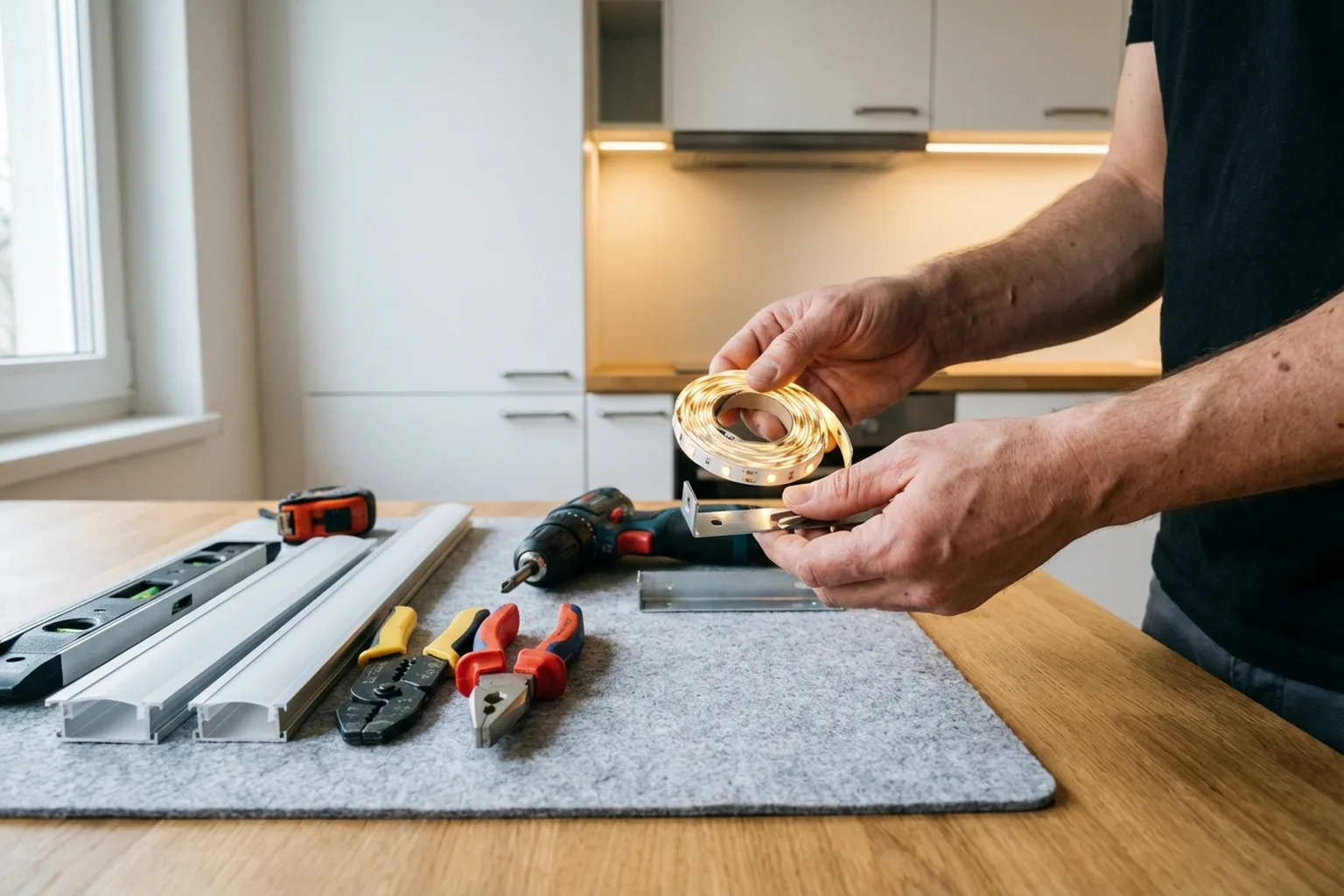
LED strip installation is done by technicians with hands-on electrical experience. We work across all of Warsaw and nearby suburbs. Minimum order — from 200 zl. Call or message us — we will help you choose the right strip and transformer, then come and install everything.