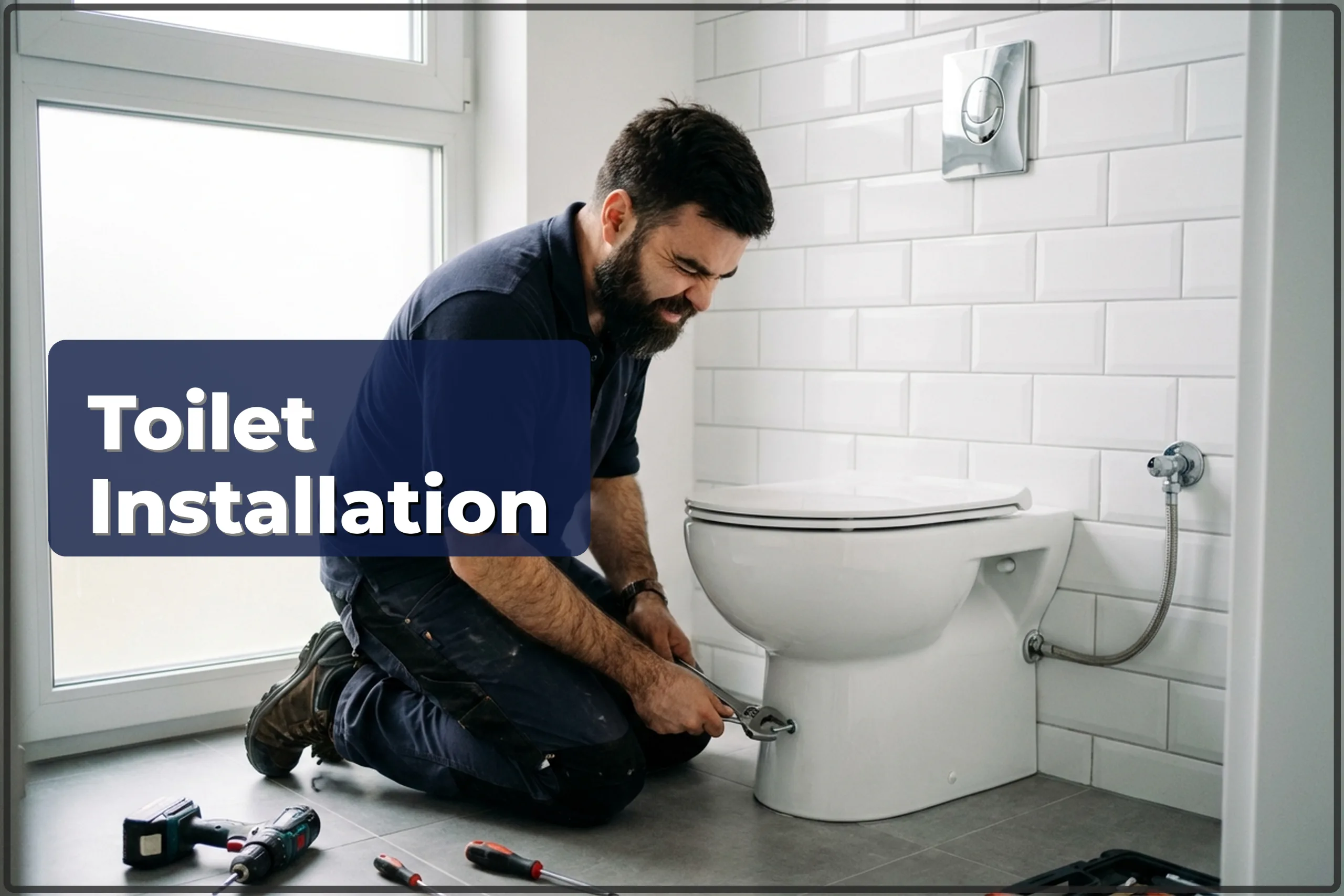
A floor-standing toilet is the old reliable option and you still see it in most Warsaw flats. In older blocks in Praga-Poludnie, in panel buildings all over Ursynow, in new studios in Bielany — it is in every kind of place. Installing one seems simple enough: fix it to the floor, hook up the water, connect it to the drain. But on site, small problems come up all the time: the outlet sits off line, the pipe size is wrong, the tiles are not flat. If you plan to tackle it yourself, read this first so you know what can trip you up. If you prefer to skip the hassle, call a professional.
How much does floor-standing toilet installation cost
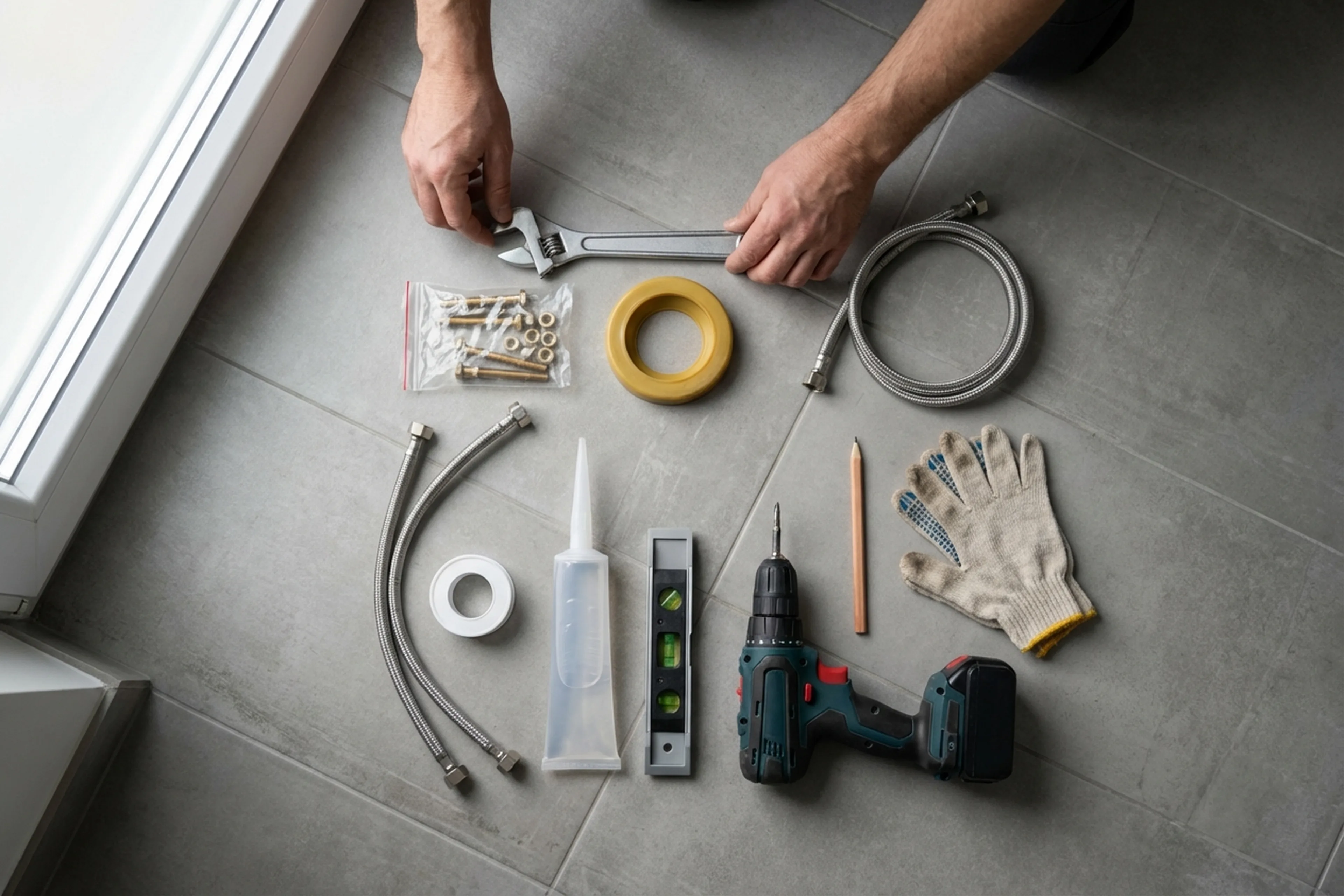
The cost is based on the toilet model, the state of the waste pipe, and where the water feed comes in. A close-coupled cistern toilet is quicker and less expensive to fit. A monoblock or a toilet with a separate wall-mounted cistern comes out a bit higher on labour. If extra connectors, flexi hoses, or adapters are required, those are charged as separate materials and paid by the client. Fixings are included. Up-to-date prices for all plumbing jobs are in the table below.
How the installation works
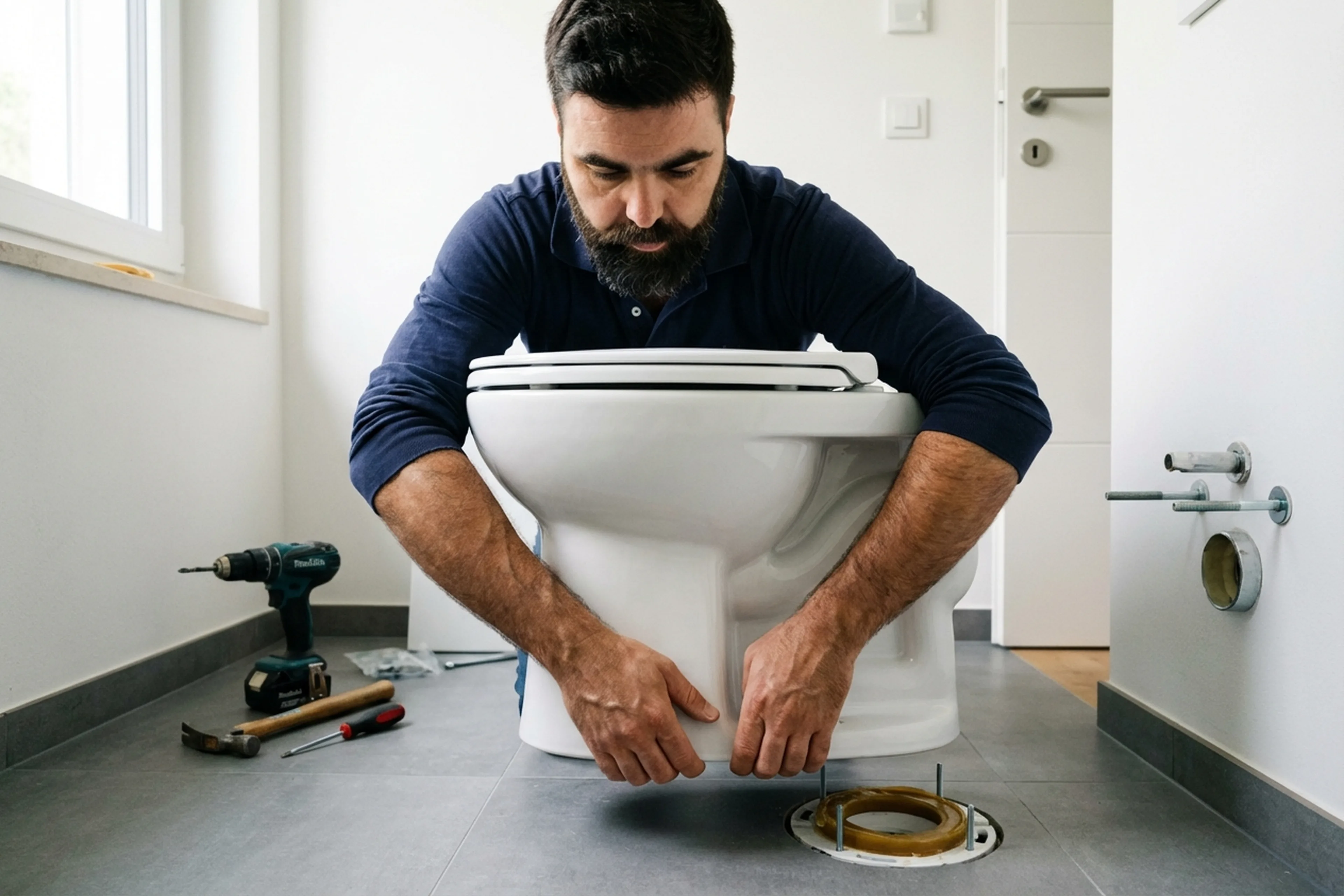
- Site inspection: we check the waste outlet type (horizontal, vertical or angled), where the water supply is, and what condition the tiles or screed are in.
- Dry fitting: the toilet is set in place without fixings, the outlet is lined up with the waste pipe, and we decide if a flexi connector or rigid adapter is needed.
- Marking and drilling the mounting holes. Tiles are drilled with a diamond bit at low speed, then we change to hammer mode for the concrete below.
- Wall plugs are inserted, and sanitary silicone is applied around the base of the toilet and at the waste connection.
- The toilet is bolted to the floor and tightened evenly on both sides — uneven force cracks ceramics.
- Cistern connection: the internal valve assembly is installed, the water supply hose is connected, and the fill and flush valves are checked.
- Test flush: we inspect every joint for leaks and make sure the flush mechanism is working properly.
Important: this job means working with water supply and waste connections. If you have not done this before, do not chance it. A bad seal on the waste pipe can cause leaks and water damage in the flat downstairs. It is much cheaper to bring in a professional once than to pay for somebody else’s ceiling repair later.
Common installation mistakes
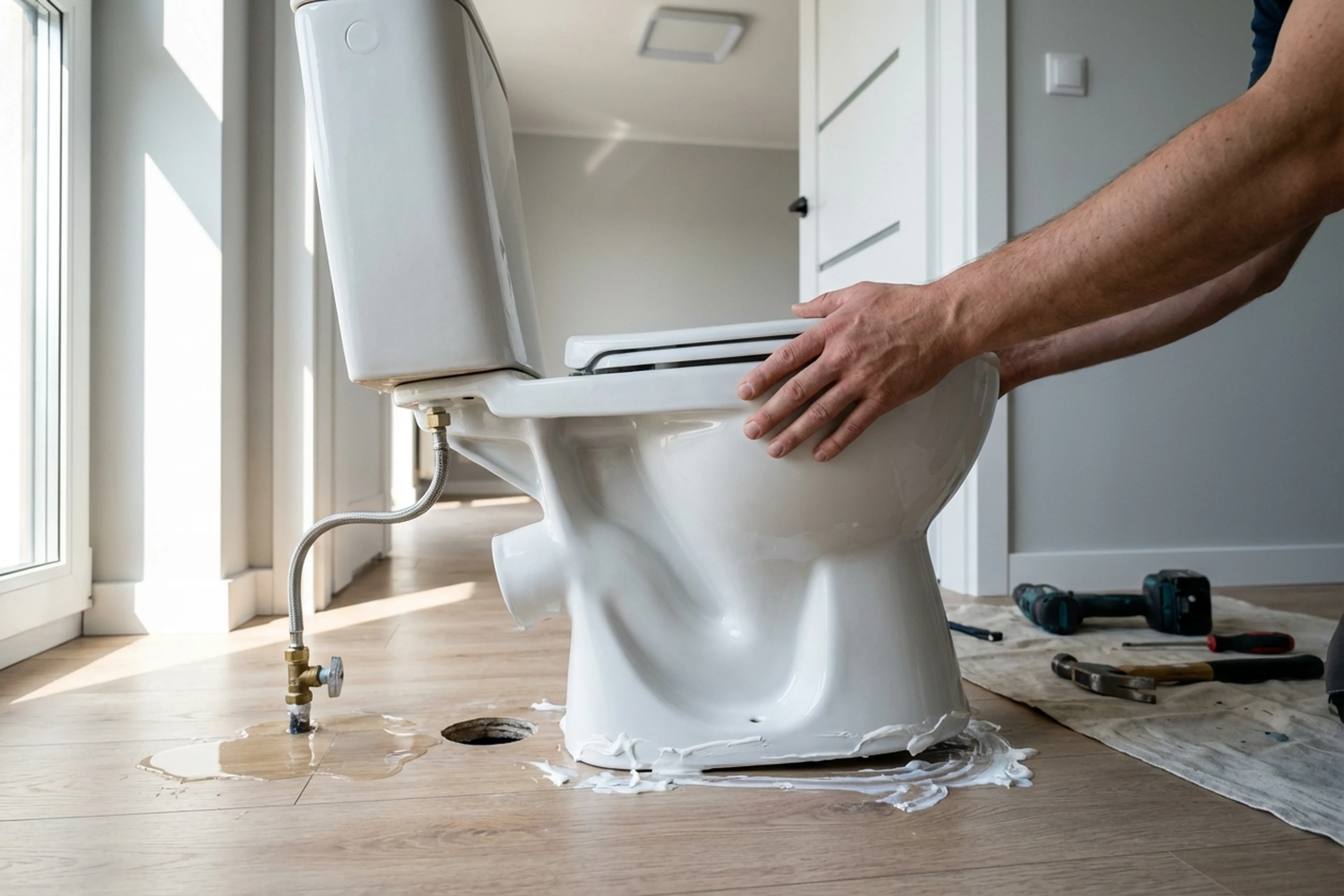
- Not checking the outlet type before buying — getting a toilet with a horizontal outlet when the pipe comes out of the floor (vertical). Then you need adapters or another toilet.
- Over-tightening bolts on one side — the ceramic cracks and the toilet is finished.
- Leaving out silicone around the base — wash water gets underneath, leading to mould and bad smells.
- Setting the toilet on an uneven floor without levelling — it wobbles, and the fixings work loose over time.
- Using the old flexi connector again — it is already misshapen and will start leaking within months.
- Forgetting to test the cistern valves after fitting — water keeps running, and the meter spins up.
- Not turning off the water before starting — flooding the bathroom when removing the old supply hose.
What to prepare before the visit
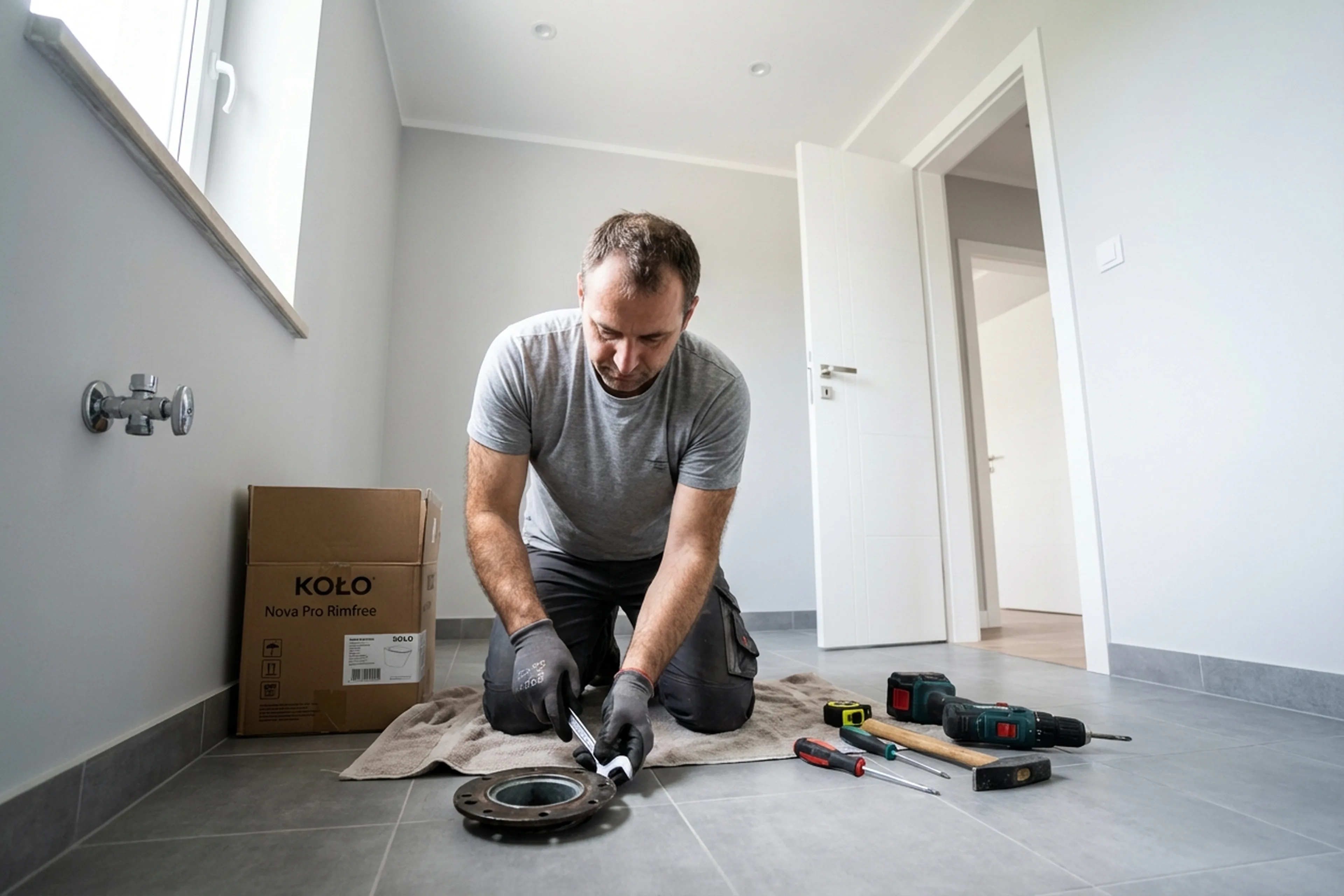
- Buy a toilet with the right outlet type — check beforehand whether your flat has a horizontal, vertical or angled waste pipe.
- Check what is in the box: cistern, internal valve set, mounting bolts, seat — make sure nothing is missing.
- Make sure there is access to the riser and the shut-off valve for the water supply.
- If the old toilet is still there, tell us whether it needs to be removed (that is a separate job).
- Floor tiles should already be laid before the toilet is fitted.
- Have a flexi hose, connector or rigid adapter ready — if you are not sure about the sizes, send us a photo and we will advise.
- Remove unnecessary things from the bathroom — we need room to work.
- If the building has a shared riser and the water has to be shut off centrally, let the neighbours or building management know in advance.
A real case from Warsaw
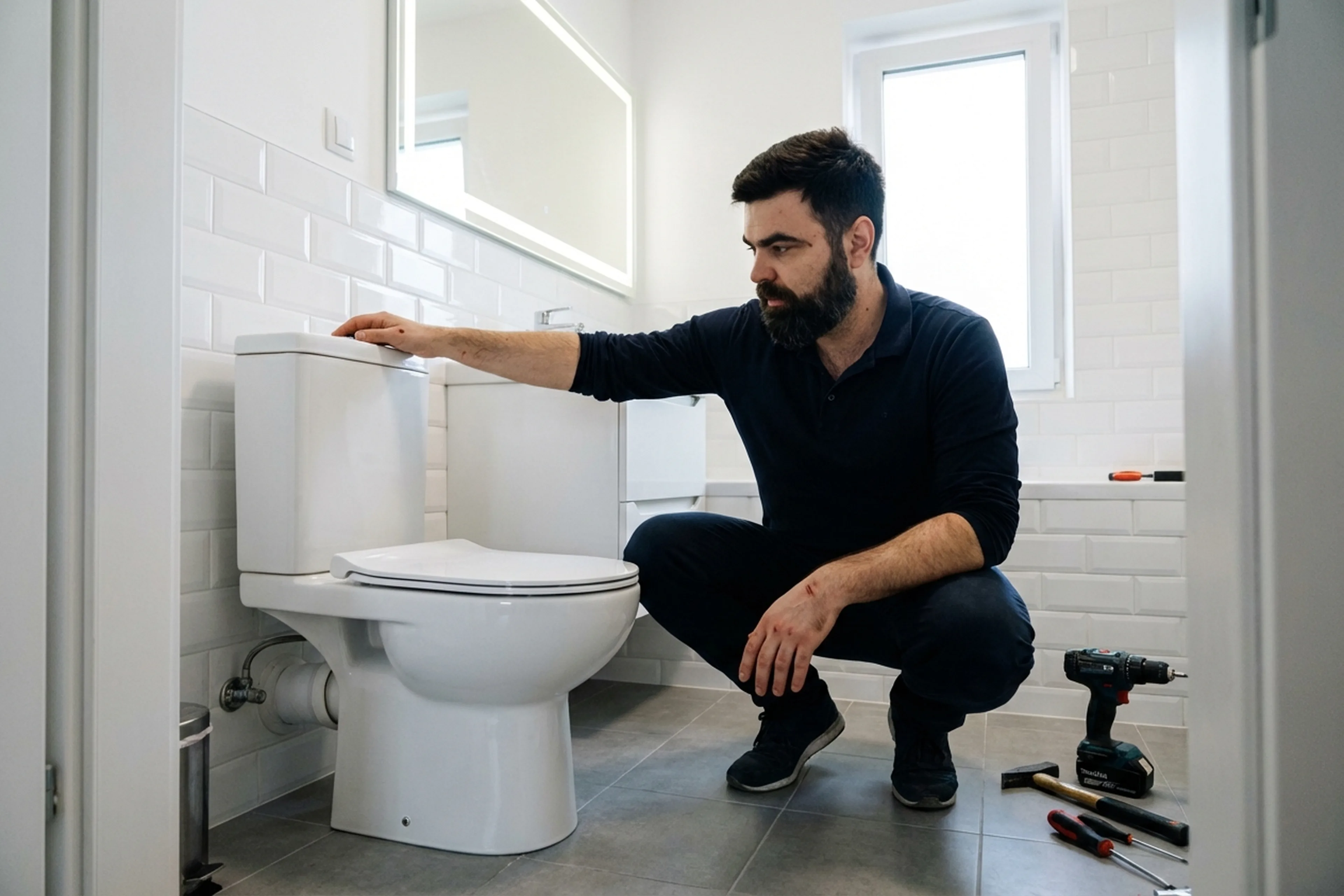
We had a call from Ursynow. The owners had bought a resale flat and were redoing the bathroom. They took out the old toilet themselves, laid new tiles, and then got stuck trying to install the new one. The problem was simple: they had bought a toilet with a horizontal outlet, but the waste pipe came through the floor — vertical outlet. They did not want to take it back. We found a 90-degree elbow adapter, adjusted the height, and sealed the whole connection. Then we connected the cistern and did a test flush — everything worked, no leaks. The job took a bit over an hour because of the adapter work. With the right outlet type, it would have taken about forty minutes (compatible with Grohe, Hansgrohe, Geberit and similar).
Frequently asked questions
How long does installation take?
A standard floor-standing toilet installation takes from 40 minutes to an hour and a half. If the old toilet has to be removed, add another 20 to 30 minutes.
Can a toilet be mounted on a wooden floor?
Yes, provided the floor is solid and even. We use long screws with washers and seal the base with silicone.
Should the connector be replaced when swapping the toilet?
In most cases, yes. Old connectors deform under load and lose their seal with time. Trying to save money on a connector often ends with a leak.
Which sealant should be used?
Sanitary silicone with an anti-mould additive. Standard acrylic sealant is not suitable — it lets water pass and turns yellow.
Can the toilet be relocated?
Yes, but only if the waste pipe can be extended with the proper gradient. Over longer runs a macerator pump may be needed. That is a separate project.
What if the toilet rocks after installation?
That means the floor is uneven or the bolts are too loose. The toilet has to come off, the base must be levelled with packing or compound, and then fitted again.
Book the installation
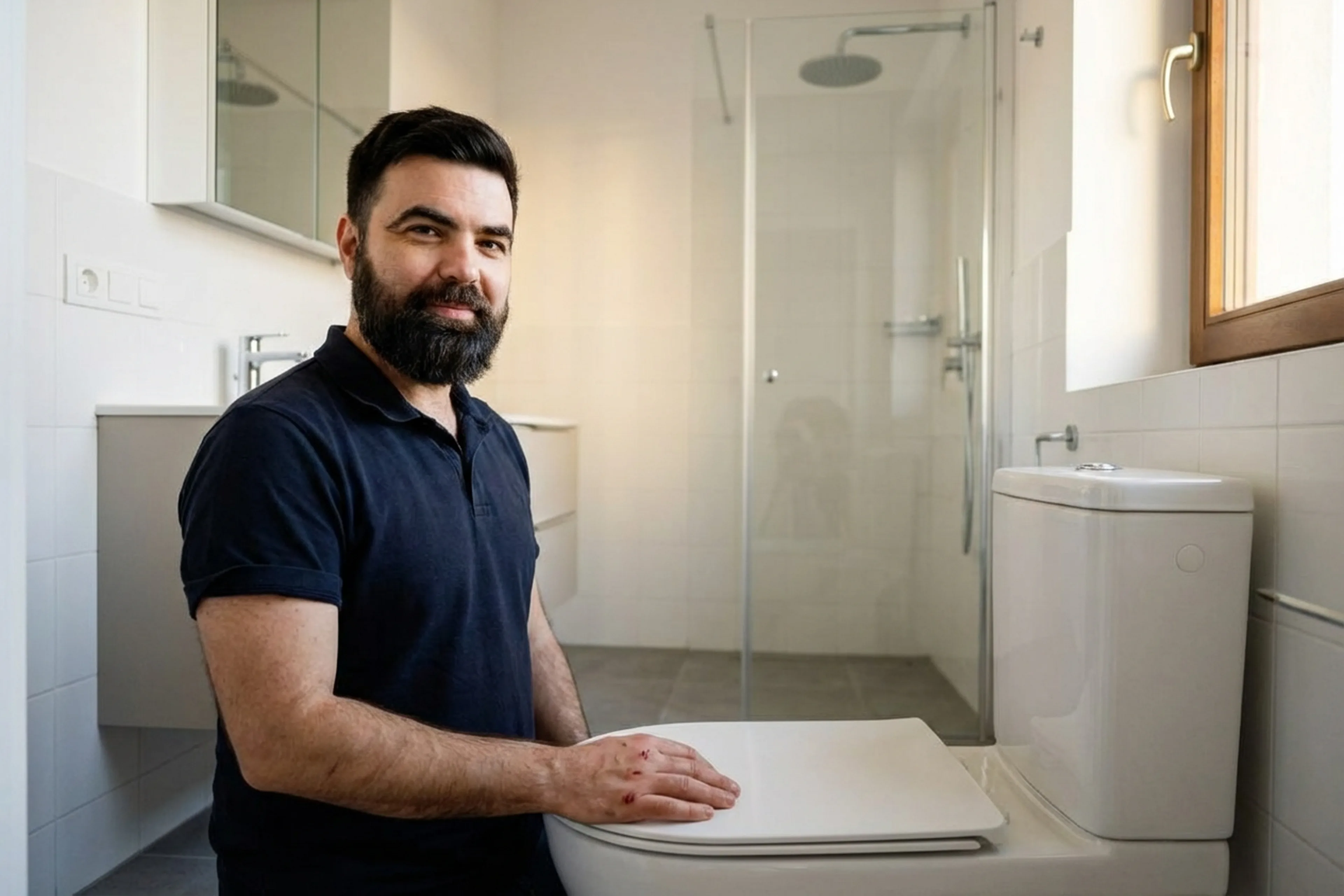
We cover all of Warsaw and come with tools and basic fixings. The toilet and consumables (connector, hose, silicone) are provided by the client. Not sure what to buy? Send us a photo of the bathroom and we will advise. Contact us and we will set up a convenient time.