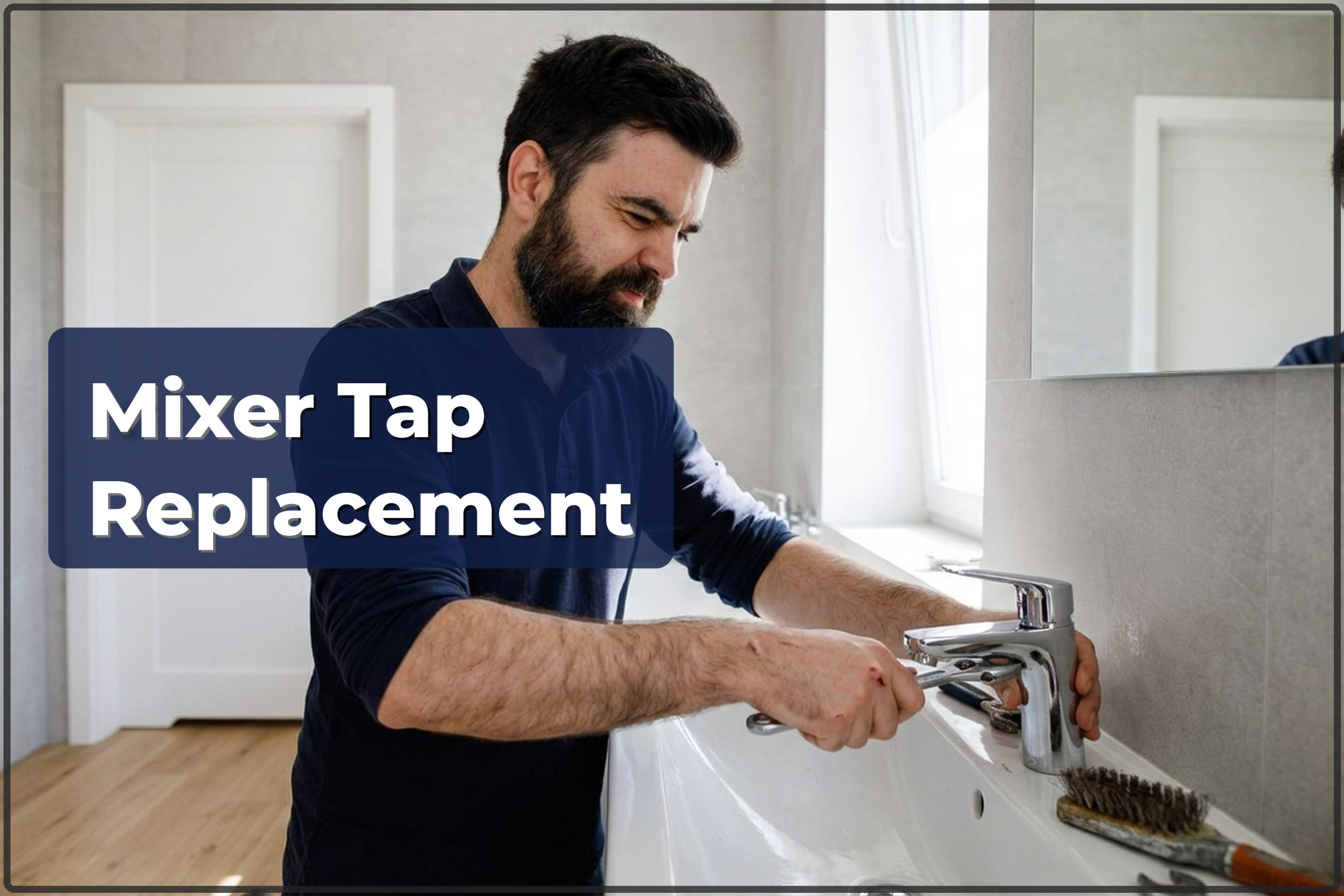
The basin tap is dripping, the lever has gone stiff, or the whole unit looks like it has lasted through three refurbishments — a common situation. In flats around Mokotow and Praga-Poludnie, this is one of the jobs we get called for most often: a leaking mixer, a loose base, and water collecting under the sink. Replacing the whole tap is easier and more dependable than trying to rescue the old one. The work takes an hour to ninety minutes if the supply lines are in decent condition and the new tap is on site.
How much does replacement cost
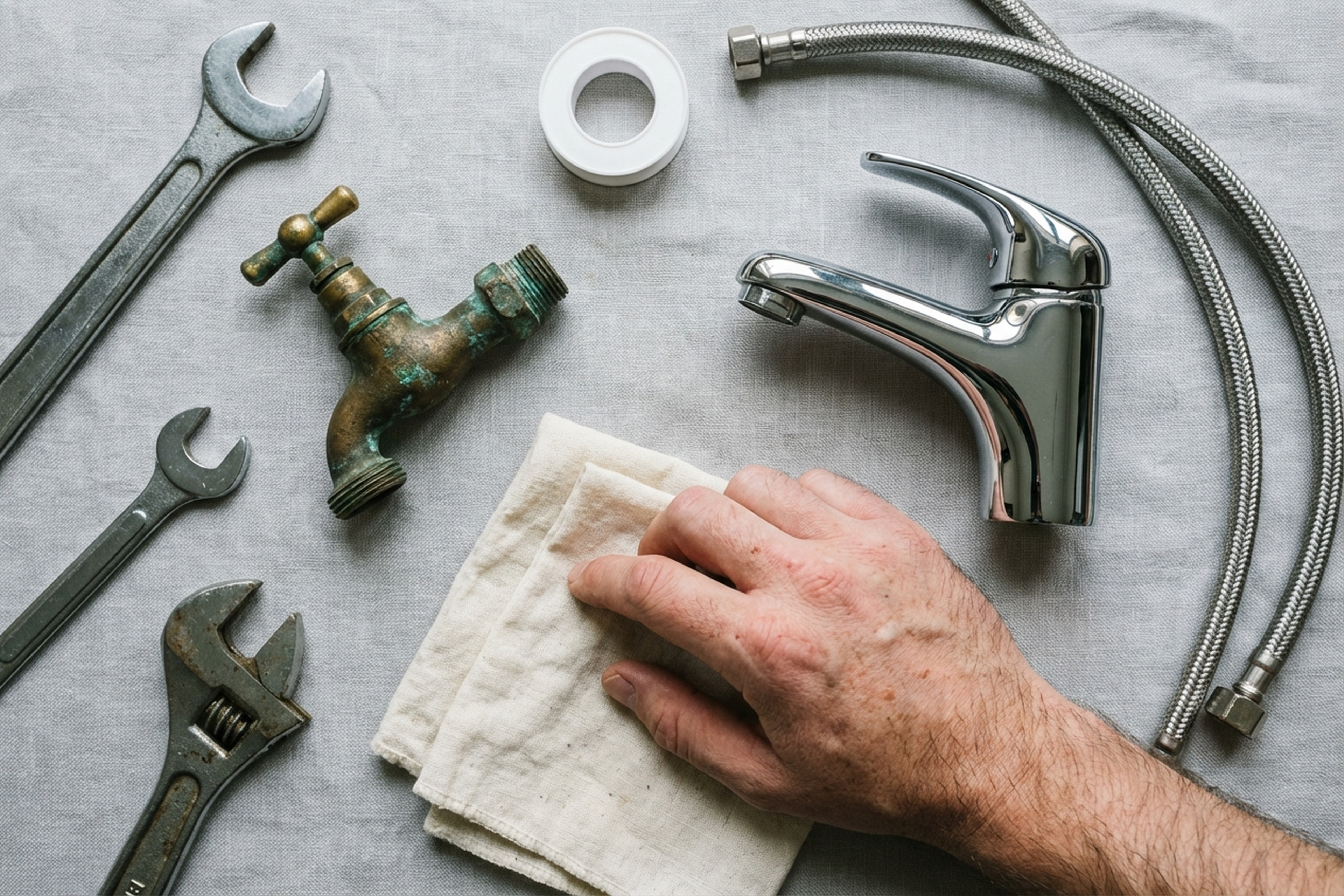
The cost comes down to the type of tap (single-lever, twin-handle, with pop-up waste), the state of the flexible hoses, and whether the trap also has to be changed. If the existing supply hoses are still fine, we leave them in place; if they are not, we replace them for an extra charge. Fixings are covered in the labour price; the tap itself and consumables are provided by the client. Current rates for all bathroom plumbing work are listed in the table below.
| Service | min | max |
|---|---|---|
| Washbasin installation | 200 zł | 300 zł |
| Washbasin replacement | 150 zł | 250 zł |
| Vanity unit with basin installation | 250 zł | 450 zł |
| Basin mixer tap installation | 150 zł | 250 zł |
| Basin mixer tap replacement | 180 zł | 300 zł |
| Floor-standing toilet installation | 200 zł | 350 zł |
| Floor-standing toilet replacement | 250 zł | 400 zł |
| Wall-hung toilet installation (frame) | 350 zł | 600 zł |
| Toilet frame replacement | 600 zł | 1200 zł |
| Bathtub installation | 700 zł | 1000 zł |
| Bathtub replacement | 900 zł | 1400 zł |
| Shower cabin installation | 900 zł | 1200 zł |
| Shower tray installation | 500 zł | 800 zł |
| Shower tray replacement | 600 zł | 1000 zł |
| Linear drain installation | 800 zł | 1500 zł |
| Shower cabin / bathtub sealing | 35 zł/mb | 60 zł/mb |
| Towel radiator installation | 250 zł | 450 zł |
| Towel radiator replacement | 350 zł | 700 zł |
| Drain cleaning | 150 zł | 300 zł |
| Trap replacement | 120 zł | 220 zł |
How the replacement works
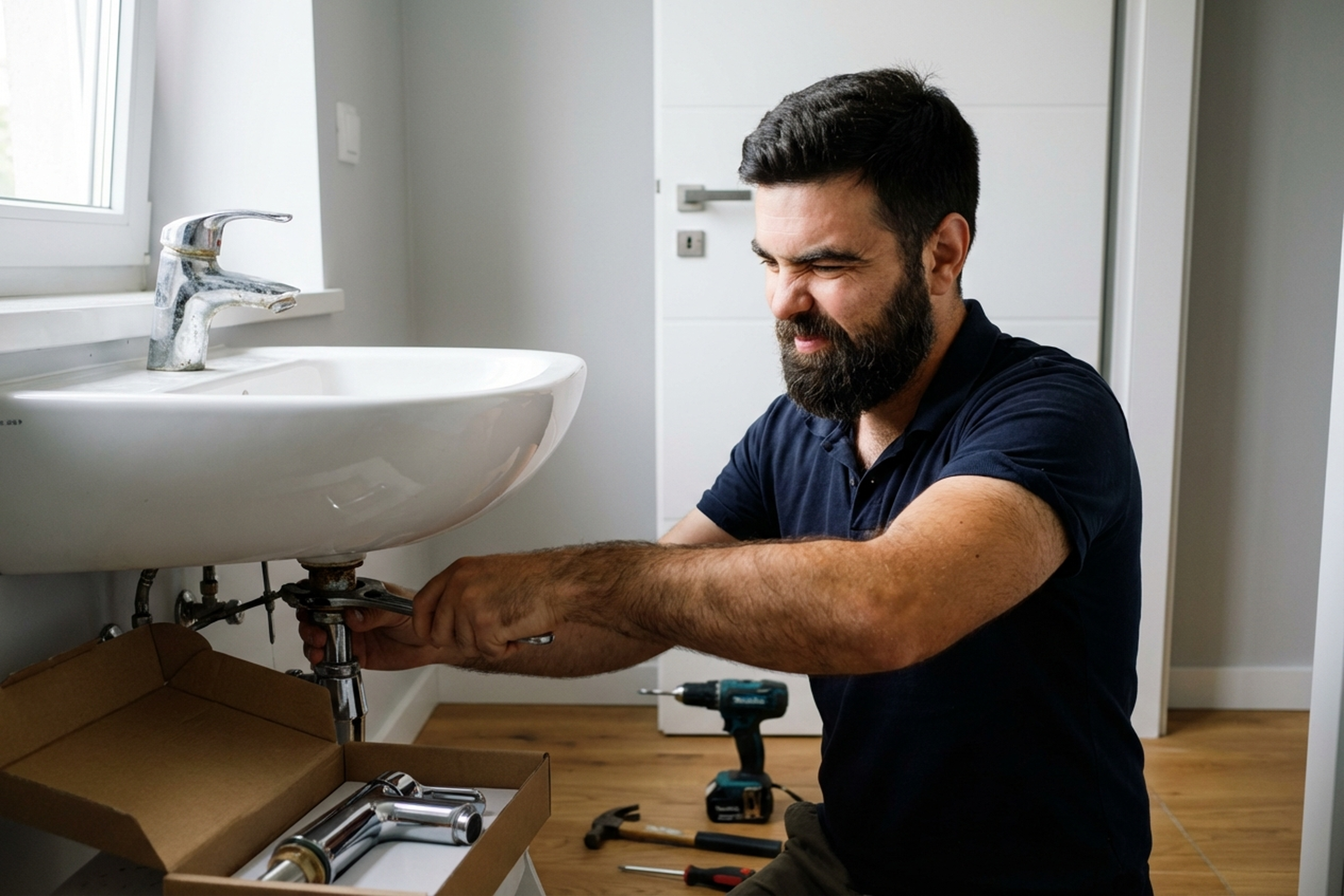
Important: all work on the water supply starts by shutting the valves. If the isolation valves under the basin do not seal properly or are not there at all, we shut off the riser. Do not try to replace a tap yourself if the valves are faulty — that is the quickest way to flood the flat downstairs.
- We turn off both the hot and cold water supply. The old tap is then opened to let out any remaining pressure.
- The flexible hoses are disconnected from the angle valves or wall outlets. A container goes underneath — there is always some water left in the lines.
- The fixing nut under the basin is undone. On older taps it is often stuck fast — we remove it carefully so the ceramic does not crack.
- The old tap is taken out and the mounting hole is cleaned from limescale and old sealant.
- The new mixer is fitted: gasket seated properly, fixing stud tightened from below, hoses connected. If the supplied hoses are too short, we install longer ones.
- The water is turned back on and every joint is checked for leaks. We let the pressure come up fully and inspect each connection.
- We test the lever movement, valve operation, and pop-up waste (if present). Before leaving, we clean the area up.
Common DIY mistakes
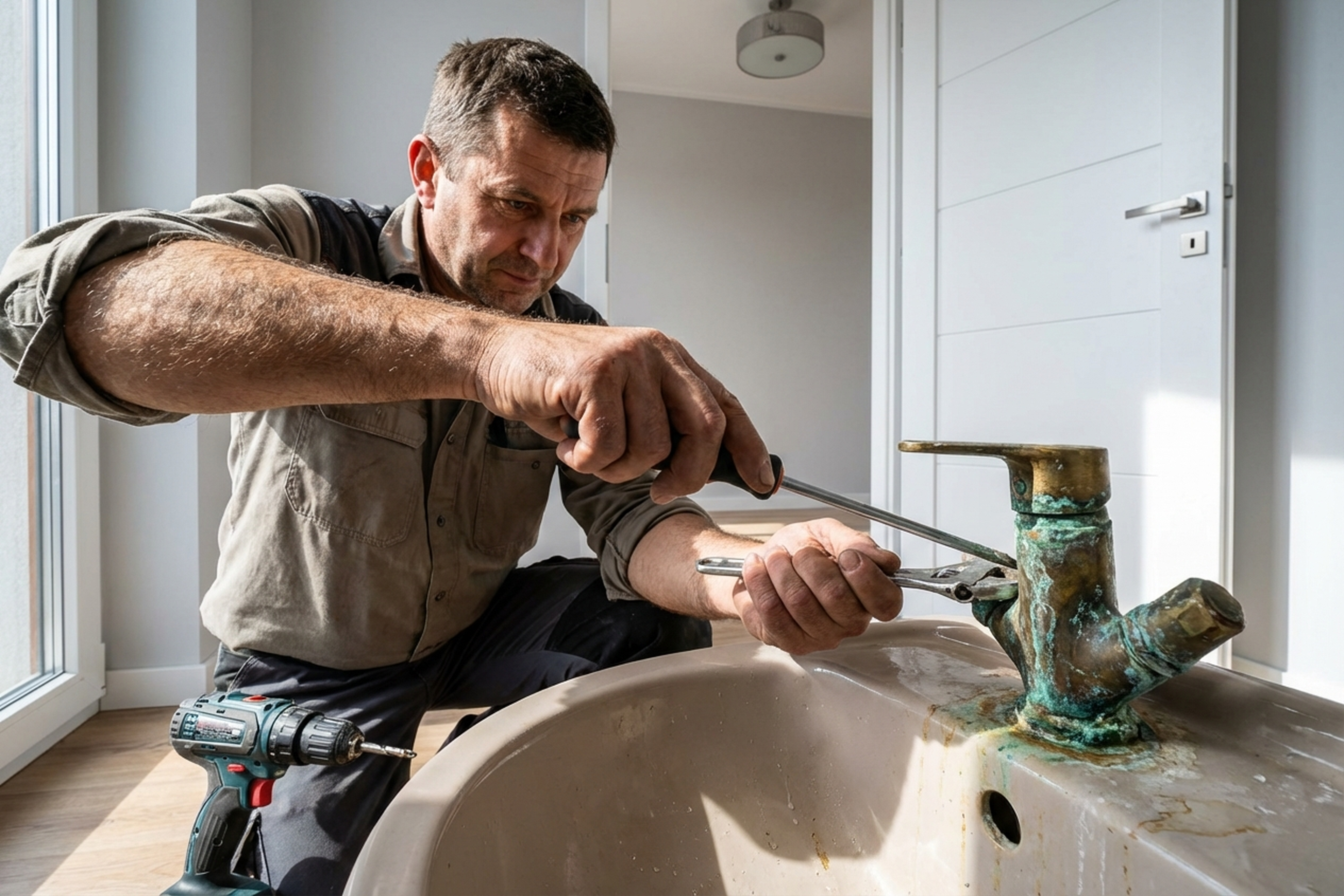
- Not turning the water off fully — loosening a hose while the supply is still on sends water all over the place.
- Over-tightening the fixing nut — the basin cracks. Ceramic does not handle too much force.
- Using old hoses with a new tap — the rubber washers inside have gone hard and will start seeping at the joints.
- Not checking the mounting-hole diameter — the new tap either does not fit or sits loose in a hole that is too big.
- Skipping PTFE tape or thread sealant — a drip shows up within days.
- Installing the tap without the base gasket — water gets under the body and damages the vanity unit.
- Forgetting to empty residual water — disconnecting hoses floods the cupboard below.
What to prepare before the visit
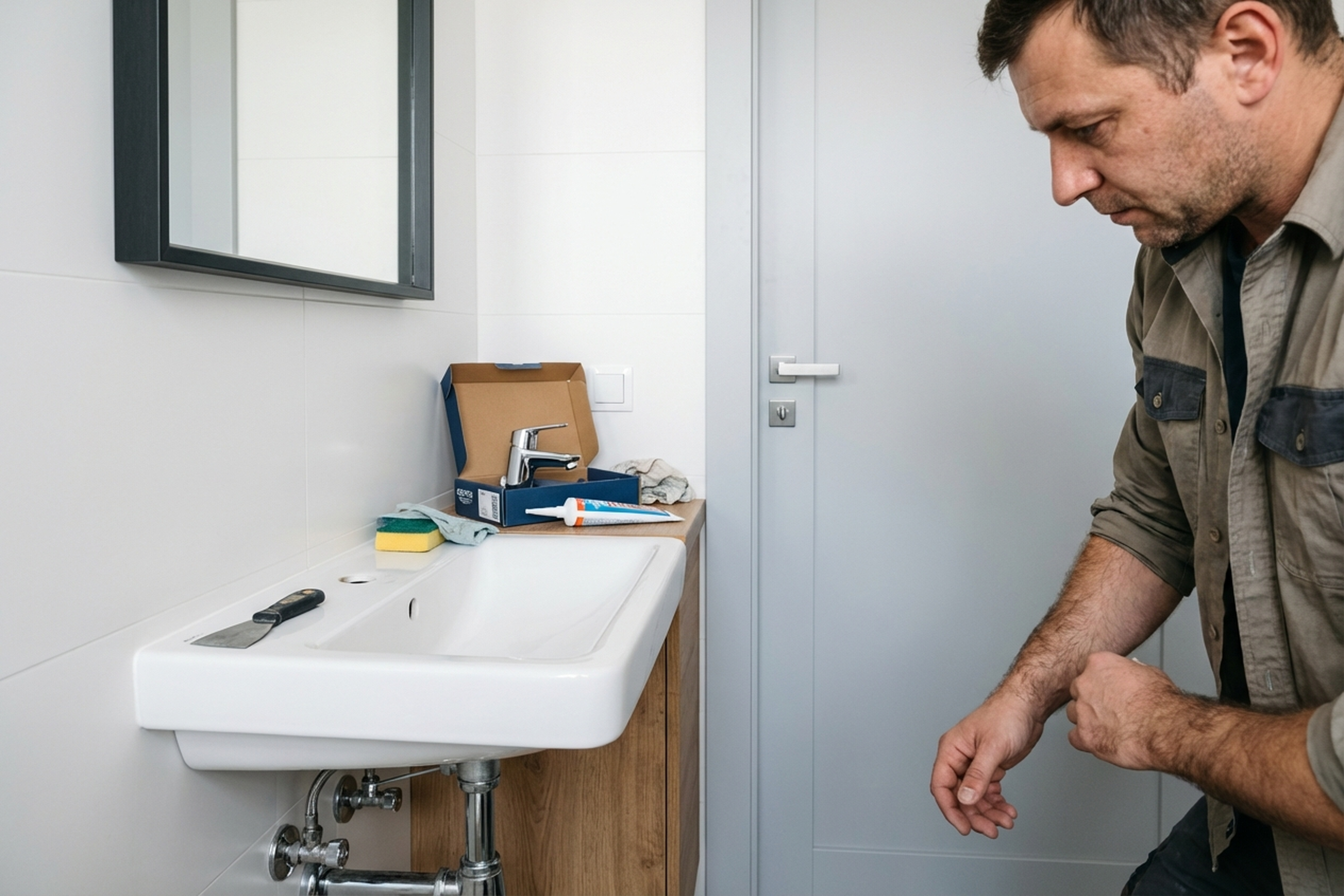
- Buy the new mixer tap — check the box contains fixings, gaskets, and hoses that are long enough.
- Make sure the isolation valves under the basin work — try closing and opening them in advance.
- Clear out the space under the washbasin — remove cleaning products, buckets, and bowls.
- If there is a closed vanity unit, make sure there is access to the pipework from below.
- Keep a cloth and a container ready for any leftover water.
- Decide whether the flexible hoses should be changed — if they are more than five years old, replacing them makes sense.
- Check that the tap matches your basin (single-hole or three-hole configuration).
- If there are no individual shut-off valves in the flat, tell us in advance so we can arrange for the riser to be closed through the building management.
A real case from Warsaw
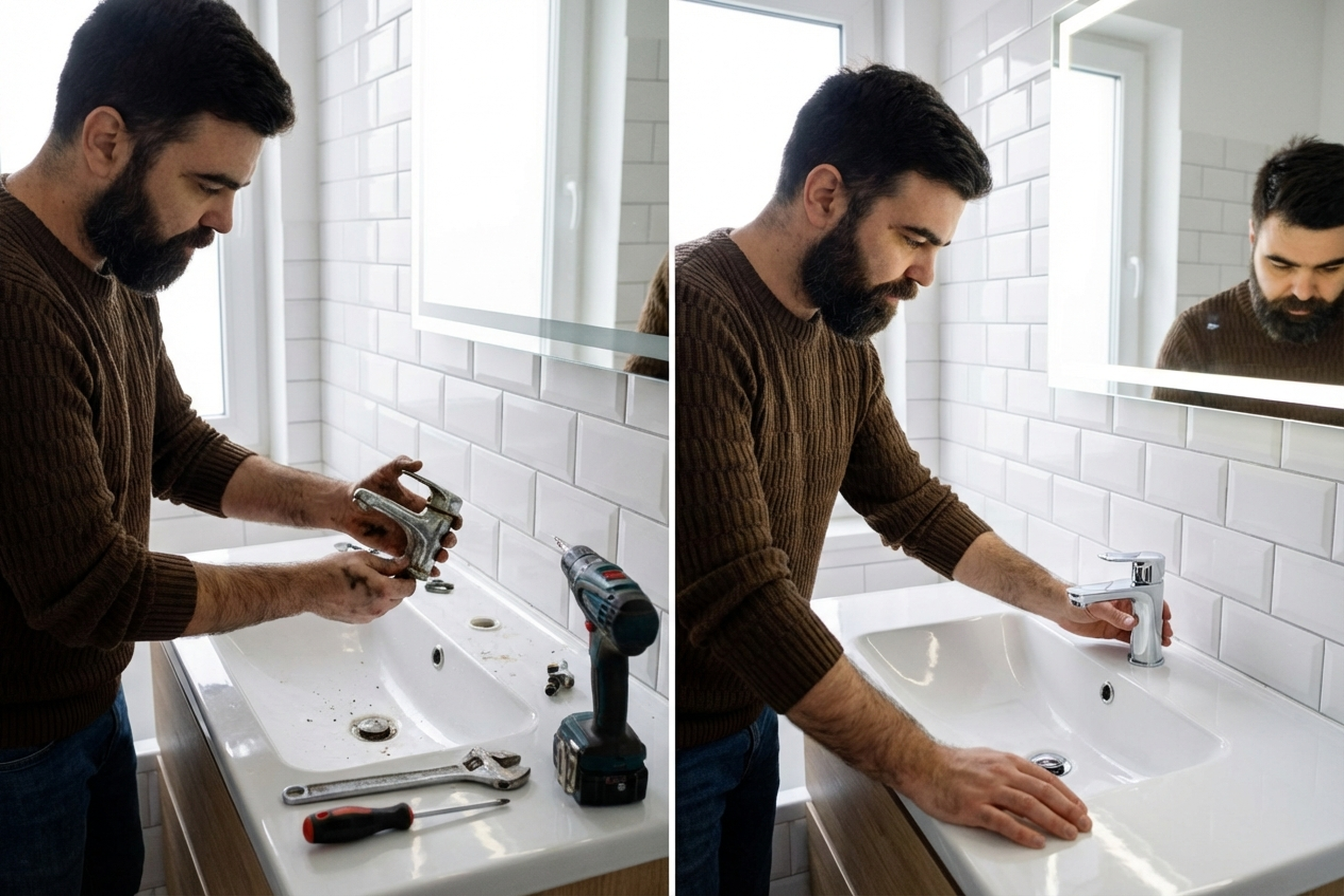
We were called out to a flat in Mokotow. The owner had bought a new single-lever Grohe mixer to replace an old twin-handle tap that had been leaking from under the handles for six months. Under the basin there was a vanity unit with very limited access, and the supply lines were rigid copper — original from the 1990s. We shut off the water, cut out the old copper pipes, installed angle valves, and fitted new stainless-steel braided hoses. The new mixer was put in, we tested it — not one drip. While we were there, we also changed the waste trap because the old plastic one had already cracked. The whole job took a little over an hour. The owner had kept a towel under the sink for half a year, and we sorted the whole thing in one visit.
Frequently asked questions
Can the old tap be repaired instead of replaced?
Yes, if the issue is only the cartridge or a washer. But if the body is corroded, the thread is damaged, or the model is no longer made, installing a new tap is easier and costs less.
Single-lever or twin-handle — which is better?
A single-lever mixer is handier for everyday use and simpler to service — one cartridge instead of two valve heads. Twin-handle taps are usually picked for their appearance in classic-style bathrooms.
Should the hoses be replaced at the same time?
If they are more than five to seven years old, yes. The rubber inside gets old and loses flexibility even if the outer braid still looks fine.
How long does replacement take?
A simple swap takes 40 to 60 minutes. If the hoses, valves, or trap also need to be changed, allow up to ninety minutes.
Does the technician clean up afterwards?
Yes, we leave the work area clean and tidy. We can also take away the old tap and packaging — waste removal is charged separately.
What if it leaks after the replacement?
We pressure-test every connection before we leave. If anything leaks because of our work, we will return and put it right.
Book your tap replacement
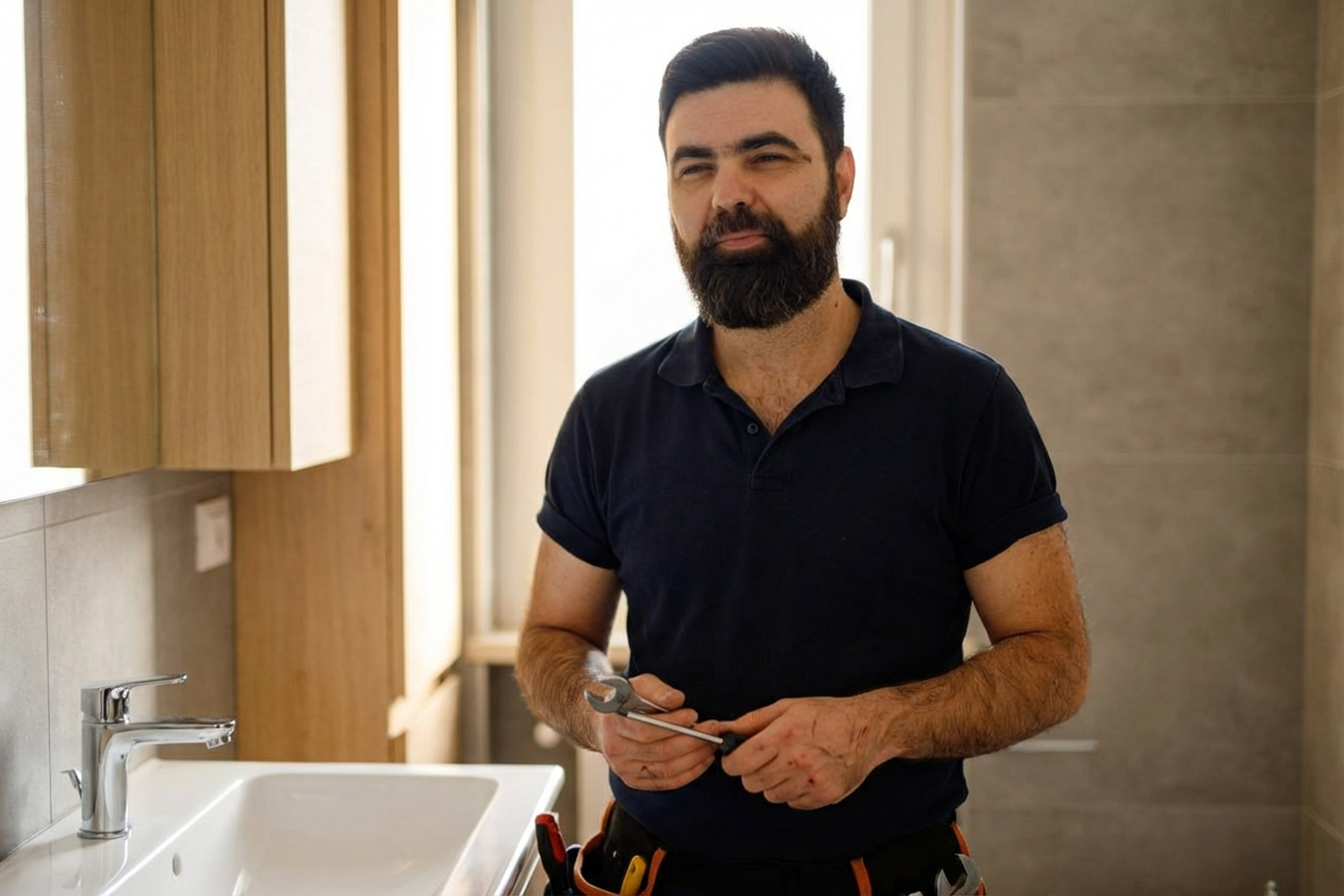
We cover all of Warsaw — from Praga to Wlochy. We come with a full set of tools and connection materials. You provide the tap; we remove the old one and install the new one properly. Call or message us and we will set up a time that suits you.