Laying cost
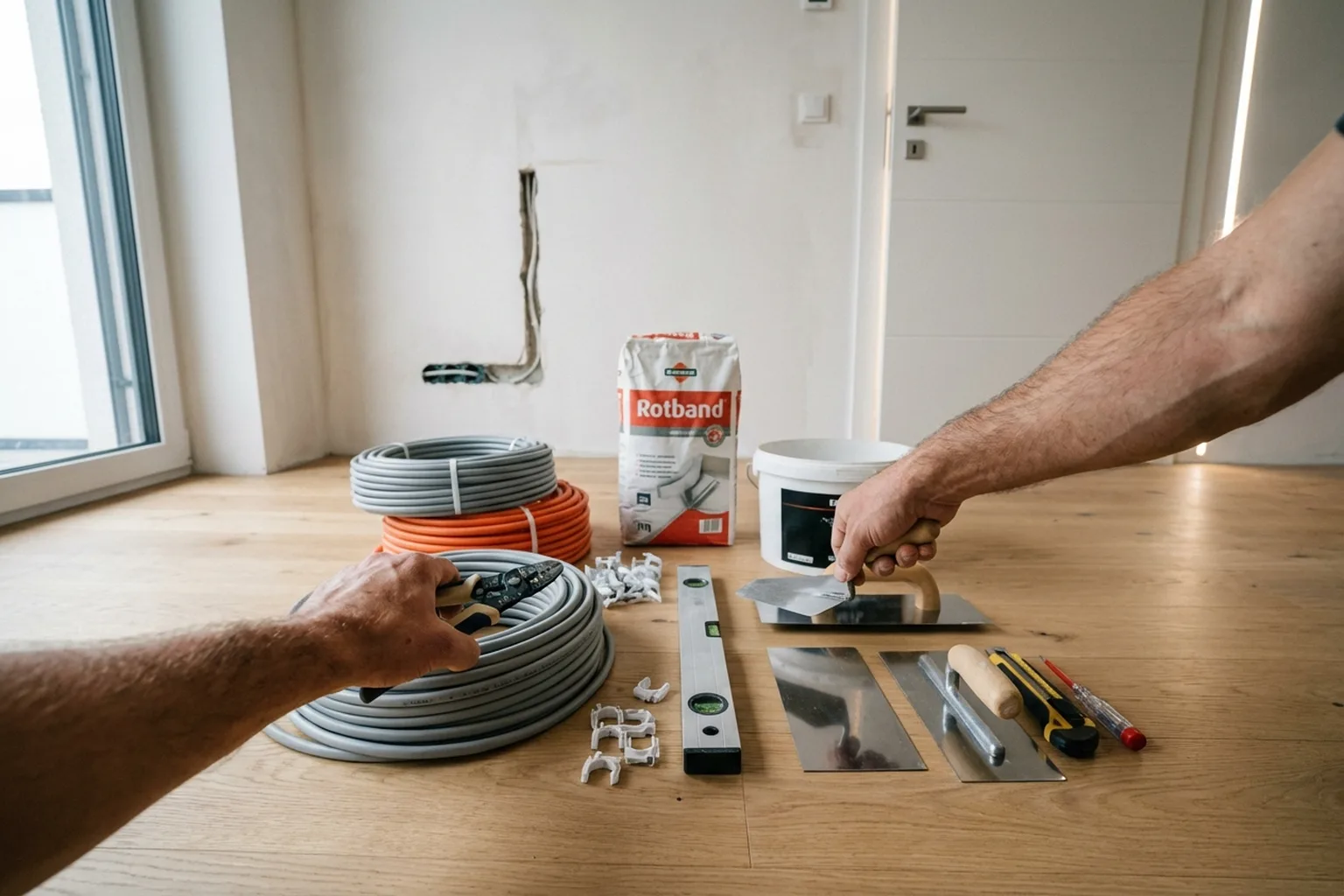
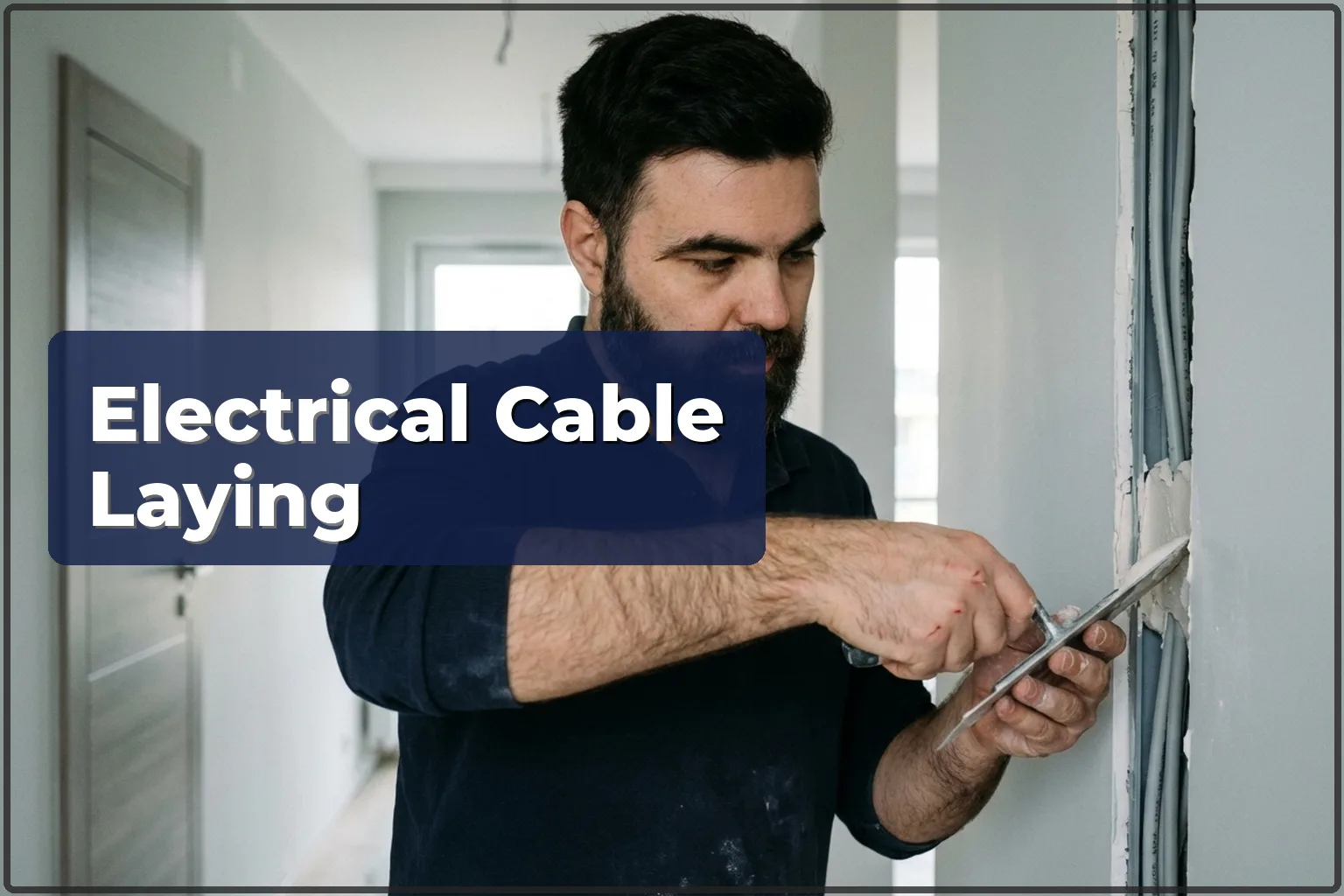
The cost is based on the run length, the cable type and the installation method (in a chase, conduit, trunking or behind plasterboard). Chasing is priced separately. Laying includes putting the cable in place, fixing it and terminating both ends. Materials are provided by the client. All electrical service prices are listed in the table.
| Service | Price |
|---|---|
| Light switch installation | 50–90 zł/pkt |
| Light switch replacement | 60–90 zł/pkt |
| Light switch repair | 150–350 zł/szt |
| Socket installation | 30–90 zł/pkt |
| Socket replacement | 50–90 zł/pkt |
| Socket repair | 60–250 zł/szt |
| New electrical point | 150–250 zł/pkt |
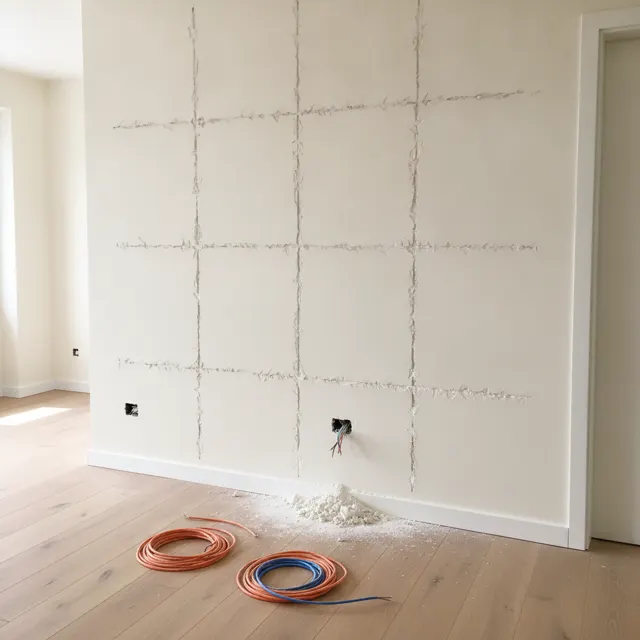
| Wall chasing for cables | 40–80 zł/mb |
| Running electrical cables | 15–50 zł/mb |
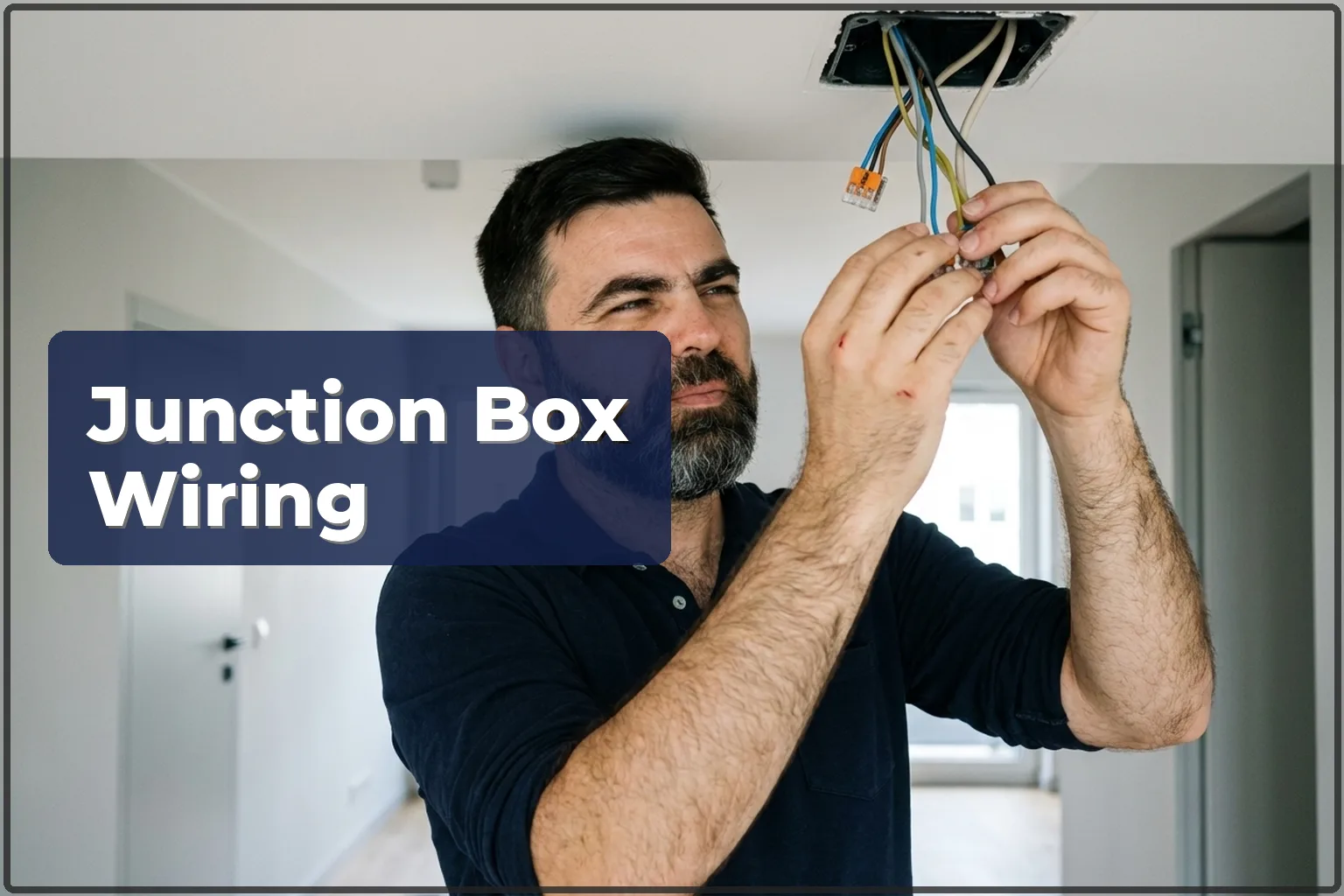
| Junction box wiring | 80–400 zł/szt |
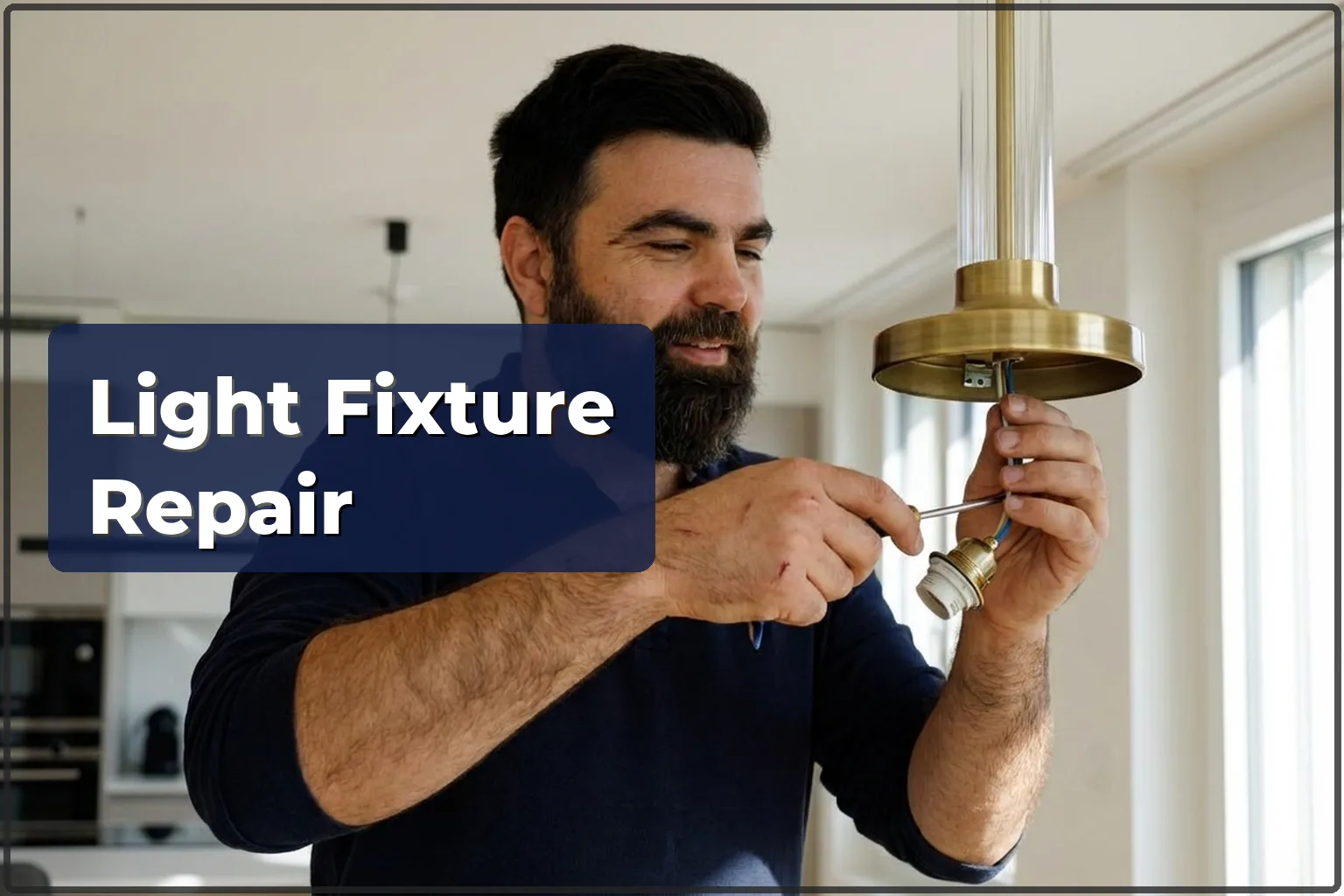
| Light installation (lamp, chandelier) | 80–550 zł/pkt |
| Light fixture replacement | 150–450 zł/szt |
| Lighting repair | 120–350 zł |
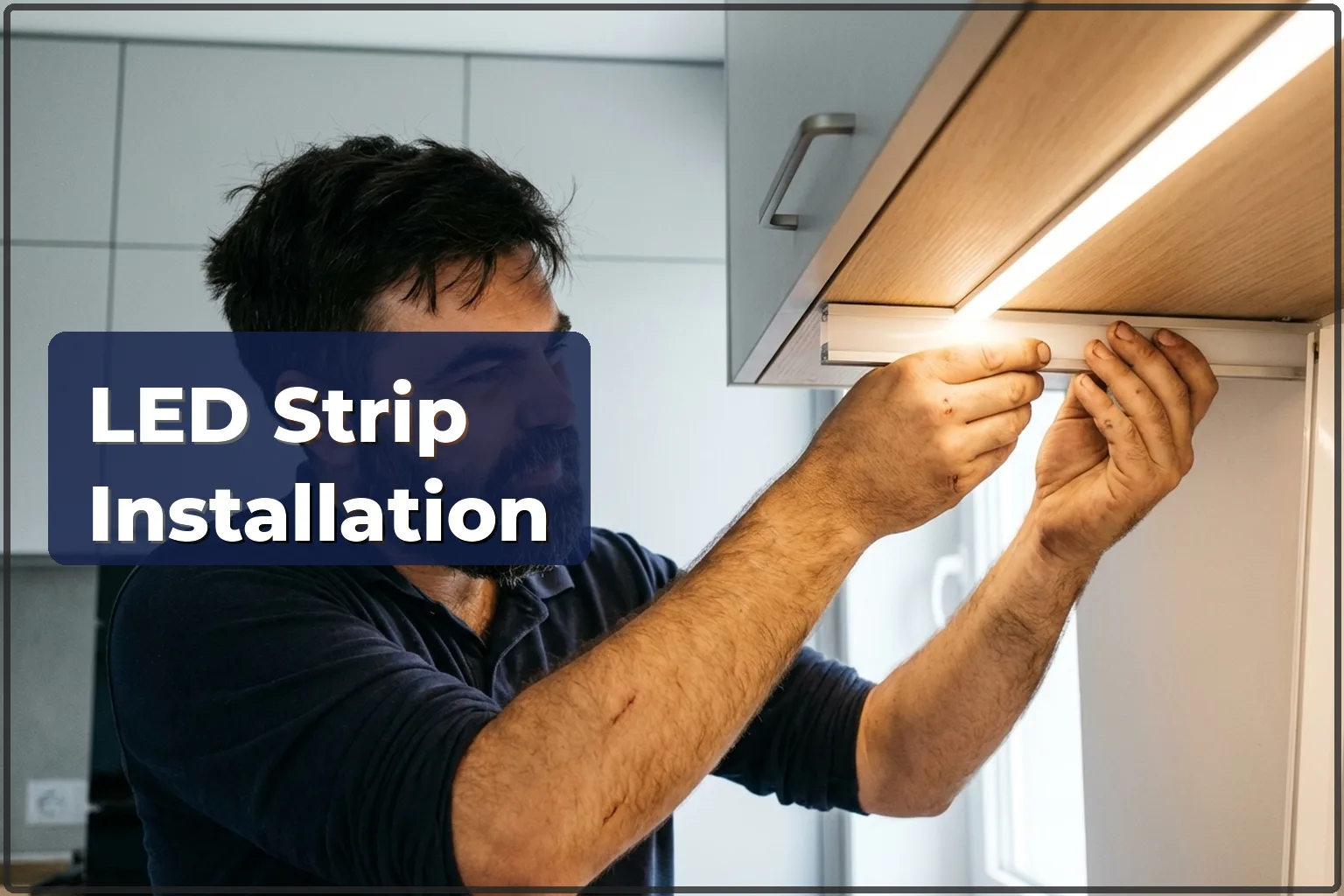
| LED strip installation | 60–90 zł/mb |
| LED transformer installation | 150–220 zł/szt |
| Bulb and halogen replacement | 30–50 zł/szt |
| Power socket installation 230/400 V | 150–350 zł/pkt |
Indicative prices. Ranges for a typical scope. Fixings included, materials separate. Minimum order 300 zł.
Rather hand the job over? More here: light fitting in Warsaw.
How the work is done
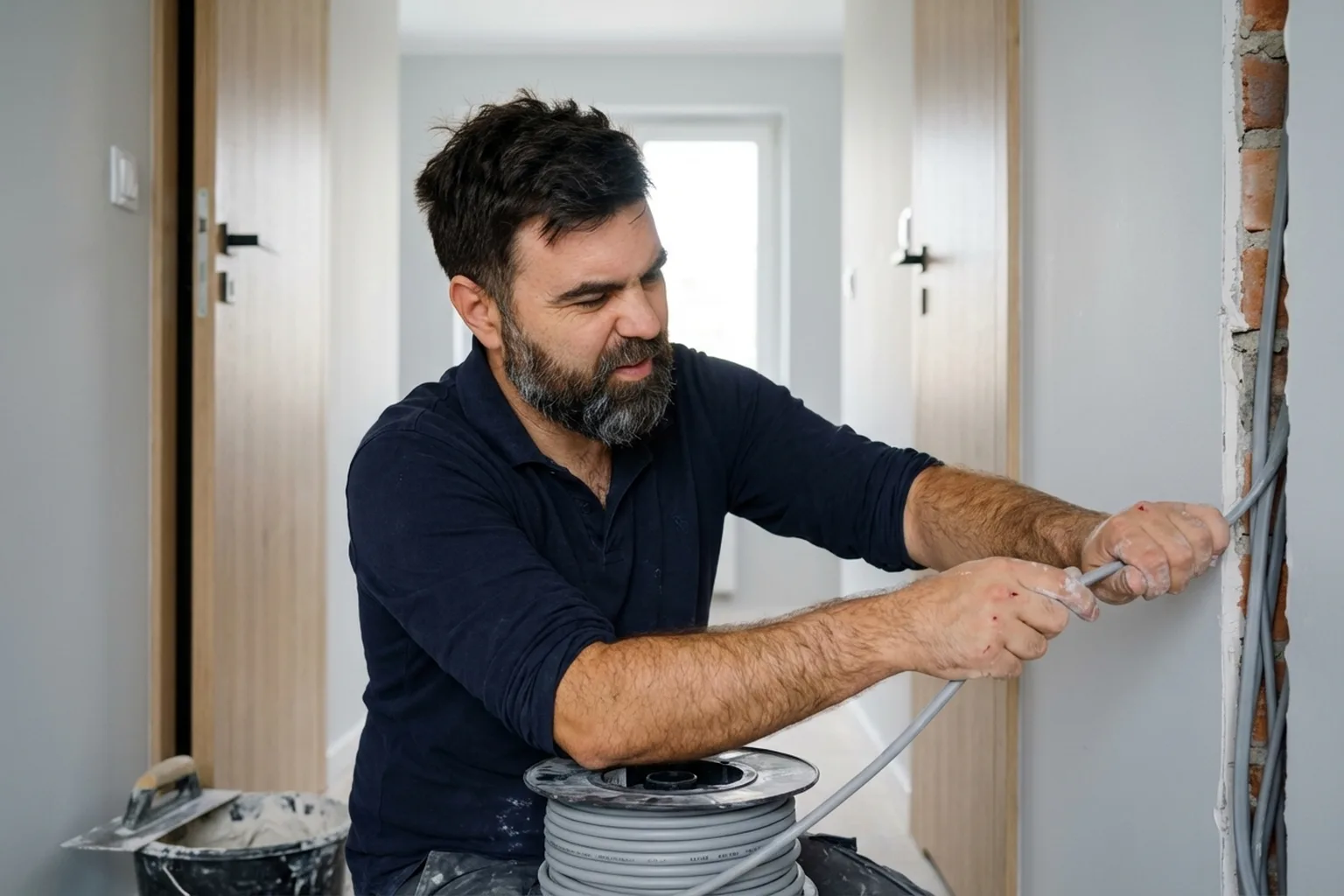
- Tradespeople first check that the chase or route is ready: the channel needs to be clean and deep enough.
- Tradespeople choose the right cable: NYM 3×2.5 for socket circuits, NYM 3×1.5 for lighting, NYM 5×2.5 or 5×4 for power circuits.
- Tradespeople run the cable in conduit (where needed) and secure it in the chase with clips or plaster.
- Tradespeople leave 15–20 cm of spare cable at every back box and junction box.
- Tradespeople mark each line: so it is clear which cable goes where.
- Tradespeople make the connections in the junction box and at each end point (socket, switch, light).
- Tradespeople test insulation with a megger and measure circuit resistance.
Key rules
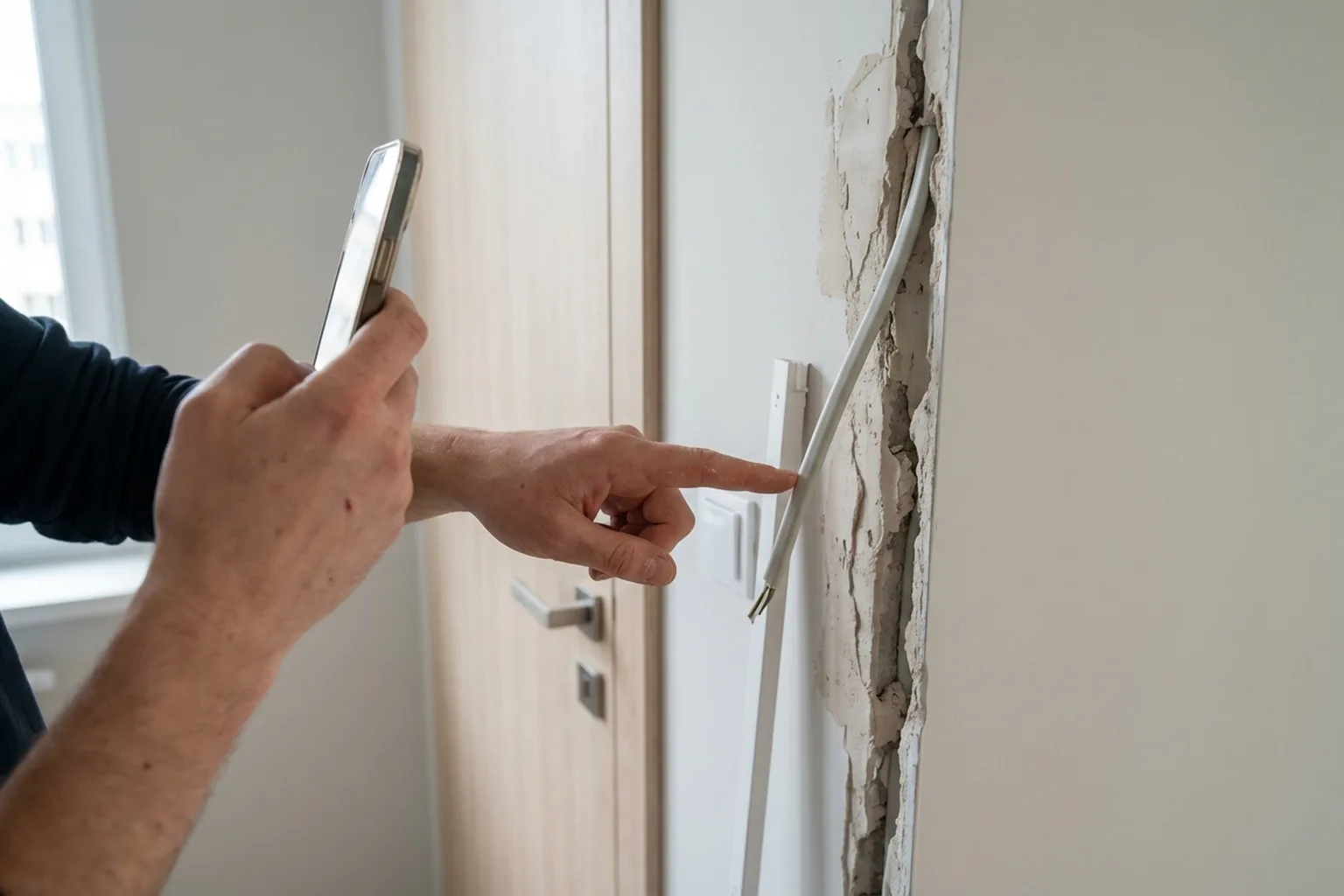
- Copper NYM or YDY cable is required. Aluminium is not used in new wiring.
- Each consumer group must be on its own breaker: sockets, lighting, power appliances.
- Cable runs are made without joints: only full lengths from box to point.
- Connections are made with WAGO connectors, crimp sleeves or solder. Twisted joints are not allowed.
- Cable in conduit gives extra protection and makes future replacement possible.
Warning: cable laying is serious work. The wrong cross-section, a bad joint or a routing error can cause overheating, short circuits and fire. It should be done by a qualified electrician.
What to prepare
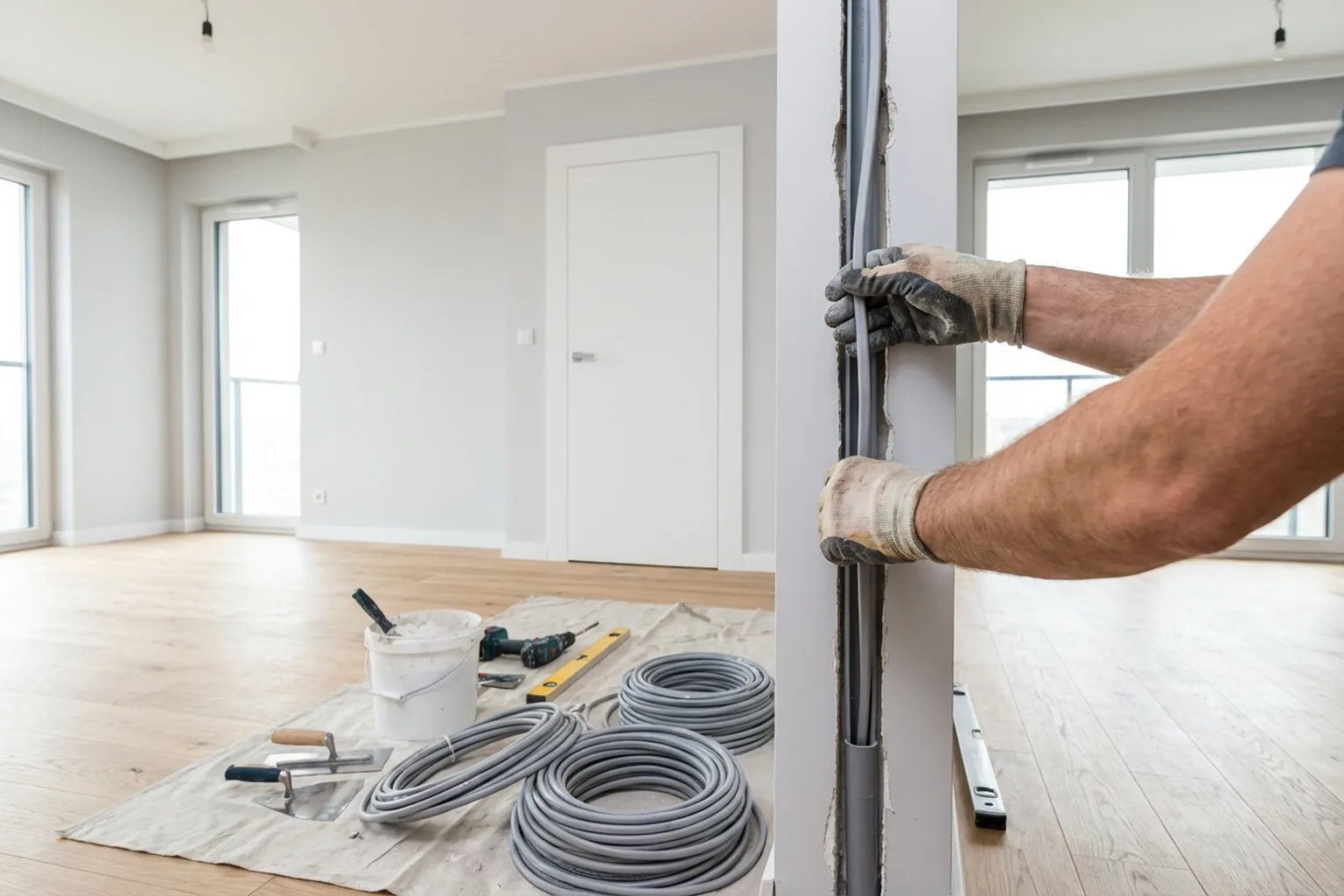
- Chases need to be ready and cleaned out.
- Buy cable in the correct size and length: or ask the technician to bring it.
- Back boxes installed or ready to be installed.
- Access to the consumer unit.
- A layout plan for sockets and switches — if you have one.
Electrical cable laying in practice: a Warsaw case
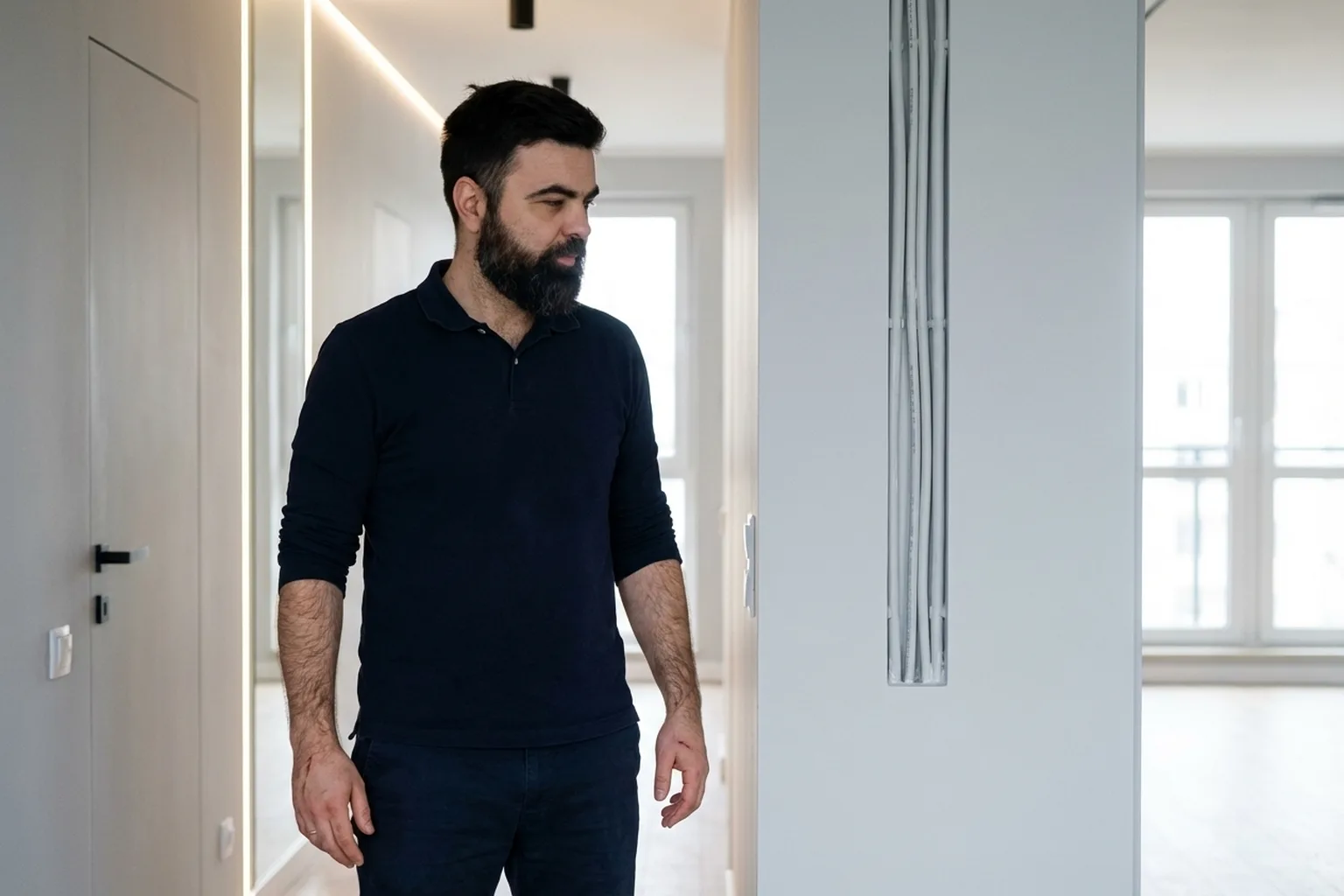
Tradespeople had a full renovation of a two-room flat in Ursynow: old aluminium wiring and only two breakers for the entire flat. The client wanted separate circuits for the kitchen, bathroom, sockets and lighting. Tradespeople installed about 80 metres of copper NYM cable: 3×2.5 for sockets, 3×1.5 for lighting, 3×4 for the oven and hob. All runs were in conduit, with WAGO connections in junction boxes. Tradespeople also fitted a new consumer unit with RCBOs. The whole job took two days including chasing.
Frequently asked questions
Is conduit compulsory?
In a chase: code does not require it, but they recommend it. Behind plasterboard and in timber structures: compulsory.
Can cable be run without chasing?
Yes — in surface-mounted trunking or behind plasterboard. A good option when the renovation does not include wet trades.
What size is needed for sockets?
The standard is 2.5 mm² for socket circuits and 1.5 mm² for lighting. For hobs and ovens: 4 mm² or 6 mm².
How many metres can be laid in a day?
30–60 metres, depending on how complicated the route is and how many connections there are.
Does the technician connect the cable in the consumer unit?
Yes: they connect it to the breakers, then check and test every circuit.
Book cable laying
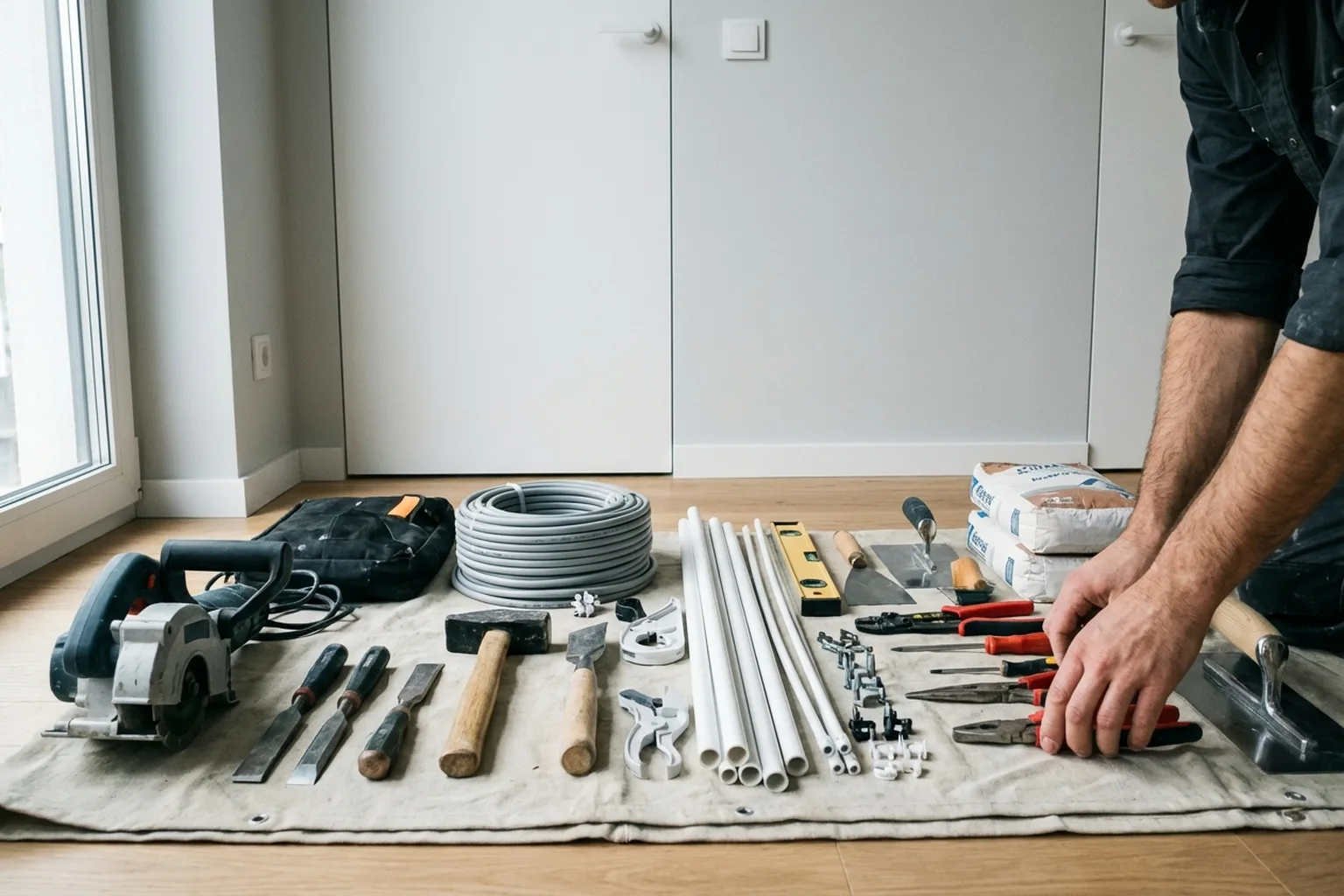
Tradespeople install electrical cable across Warsaw: in chases, conduit and trunking. Copper cable, solid connections, every circuit checked.
Order in the app
Describe the job, add photos and the address. Tradespeople send their own prices and dates, and you pick one of the offers.
Open the app