What goes wrong in a Geberit trap
Geberit is a Swiss brand that makes concealed frames, cisterns, shower channels and traps. You’ll find its traps under basins, including space-saving versions for vanity units, on baths and in shower drains.
What fails is mostly the same as in any trap. Washers harden with age and stop sealing. Plastic cracks if someone once forced a nut too tight. Hair and soap build up inside, the water drains slower, and the sludge starts to smell. The brand doesn’t change any of that; the difference is access.
A basin trap is quick to swap. Baths and shower trays are harder, because everything is boxed in. In Geberit shower channels some parts lift out from above for cleaning, so not every smell or slow drain means breaking tiles. Worth checking before you start calling renovation crews.
Replace it with the same model? If the trap is on show, say under a basin on legs, usually yes, so it matches the rest of the fittings. If it’s hidden in a cabinet, the diameter and connection height matter more.
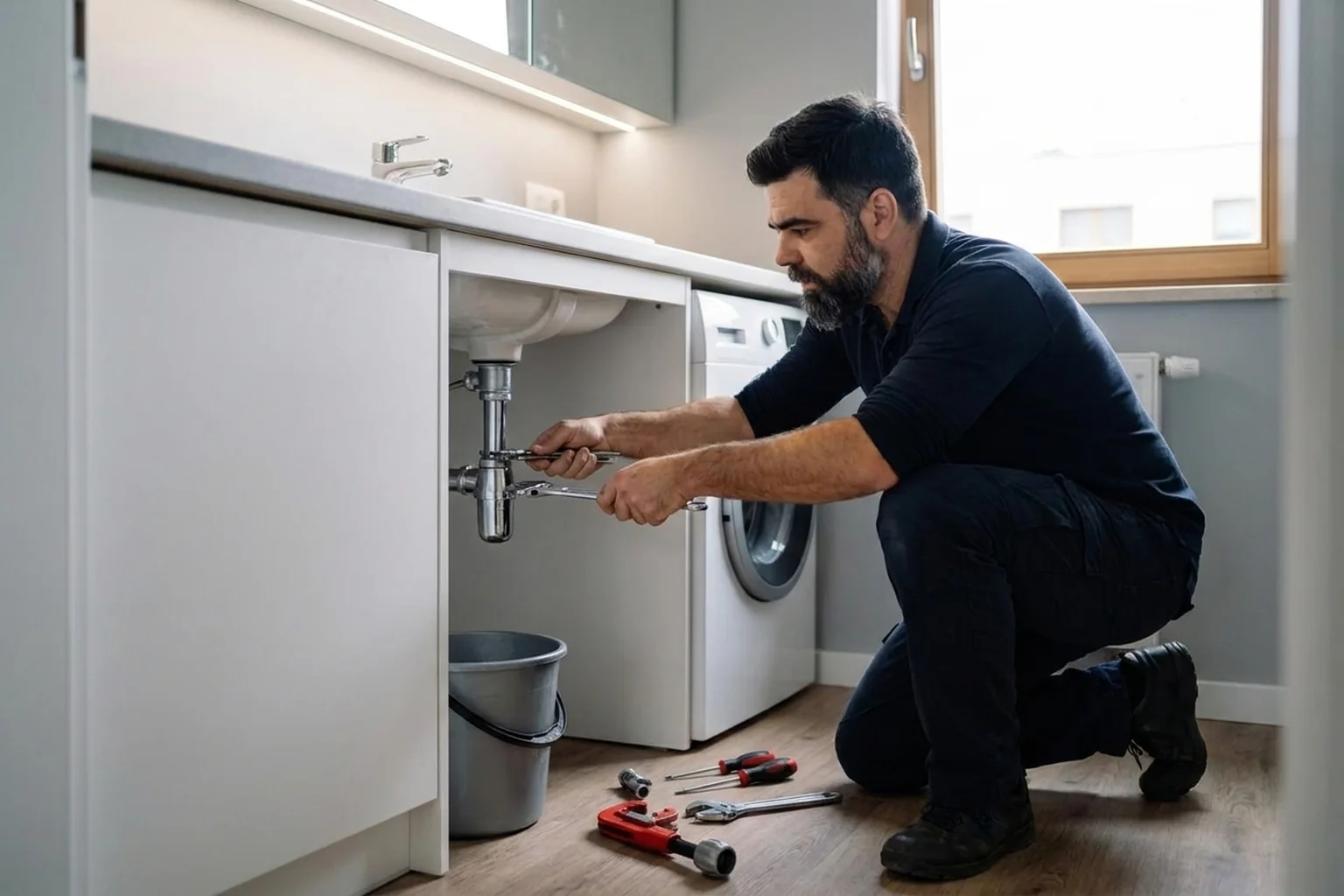
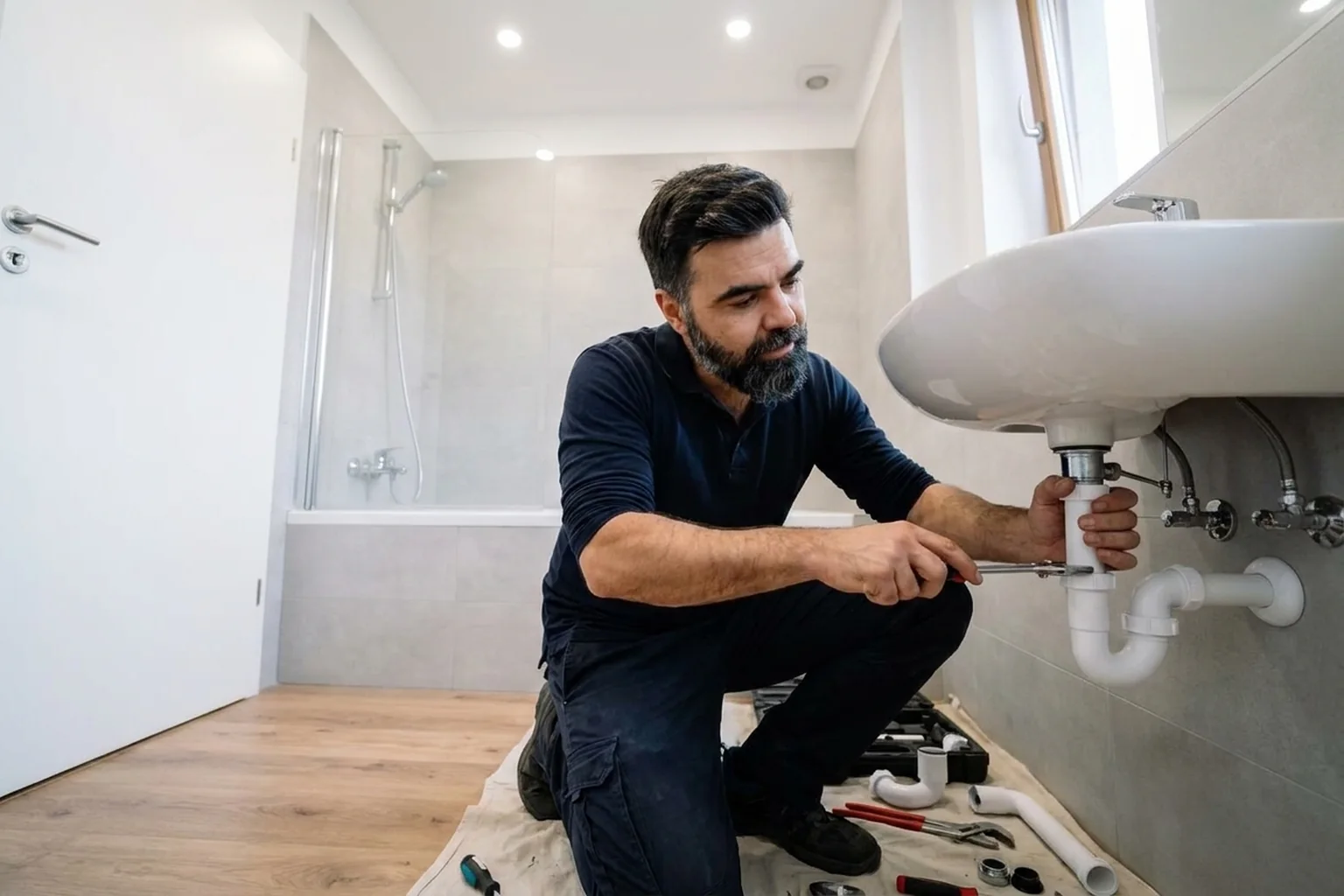
Unscrewing and cleaning a basin trap is something you can do yourself, with a bowl and a pair of gloves. A plumber earns his money when the nuts won’t budge, the plastic crumbles in your fingers, or it still drips after you put it back together.
The request, step by stepWhat a “Trap” request looks like in the appMark what needs doing and photograph the pipes under the sink. The app shows a price range at once. Then your address and a day that suits you, and the request goes to independent handymen. Each one names their price, the choice is yours. Nobody has to call anybody.Service and a photoAddress and a day that suits youOffers from handymen, you chooseOrder in the app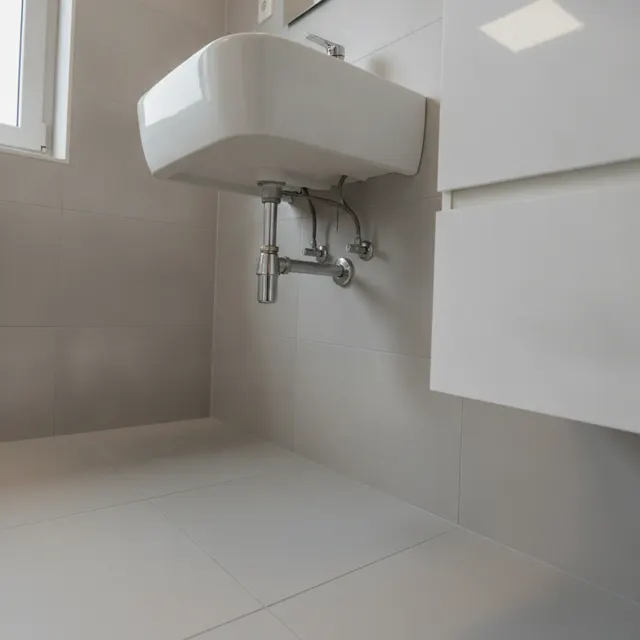
Price ranges and offers from tradespeople: drain unblocking in Warsaw.
Mistakes that show up a month later
- The trap got cleaned but the old, hard washers went back in. Dry for a few days, then it drips.
- The waste pipe pushed into the wall without a seal. Sewer smell leaks out next to the trap.
- A new trap bought without checking its height. Suddenly the vanity drawer won’t close.
- Drain chemicals poured in regularly “just in case”. They age the washers faster.
- A bath boxed in with no access panel, so nobody can reach the trap.
Before work starts
- Photograph the trap, the connection in the wall and, for a bath, where the access panel is.
- Measure the space inside the vanity unit.
- Clear the cabinet and have a bowl ready for the water in the trap.
From photo to invoice
- You take photos and describe what’s happening in the app: slow drain, leak, smell.
- Plumbers who take this kind of work in Warsaw send bids. Each one names his own price and date.
- You compare prices, ratings and reviews. Once you choose, you see the plumber’s phone number and he sees your address.
- You pay him directly, and he issues the invoice. The trap and materials are paid separately from the labour.
Order in the app
Describe the job, add photos and the address. Tradespeople send their own prices and dates, and you pick one of the offers.
Open the appThe plumber who fitted the trap answers for it and will fix his own leak. Boxed-in fittings with no access or an old pipe in the wall are outside his job.