Let the fabric pick the rod
Eurofirany mostly sells textiles: curtains, sheers, window dressings, plus rods and tracks to go with them. When fitting, what matters most is how the curtain is finished at the top and how much it weighs.
Eyelet curtains slide straight onto the pole, so the pole has to be the right diameter and stiff enough not to bend. Sheers with header tape need hooks or clips and a track or a pole with rings. A wave system gives even folds, but only on a dead straight, level track.
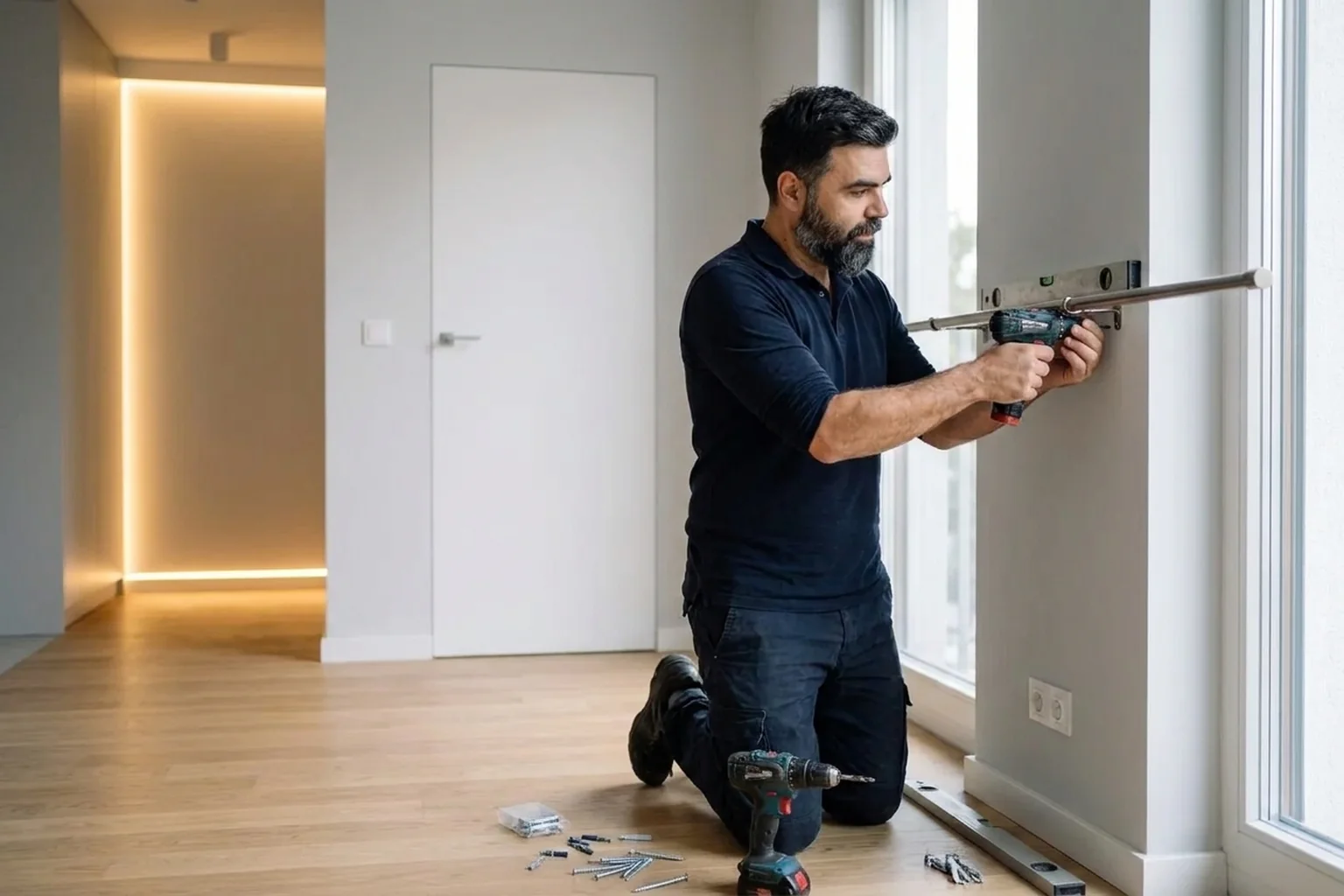
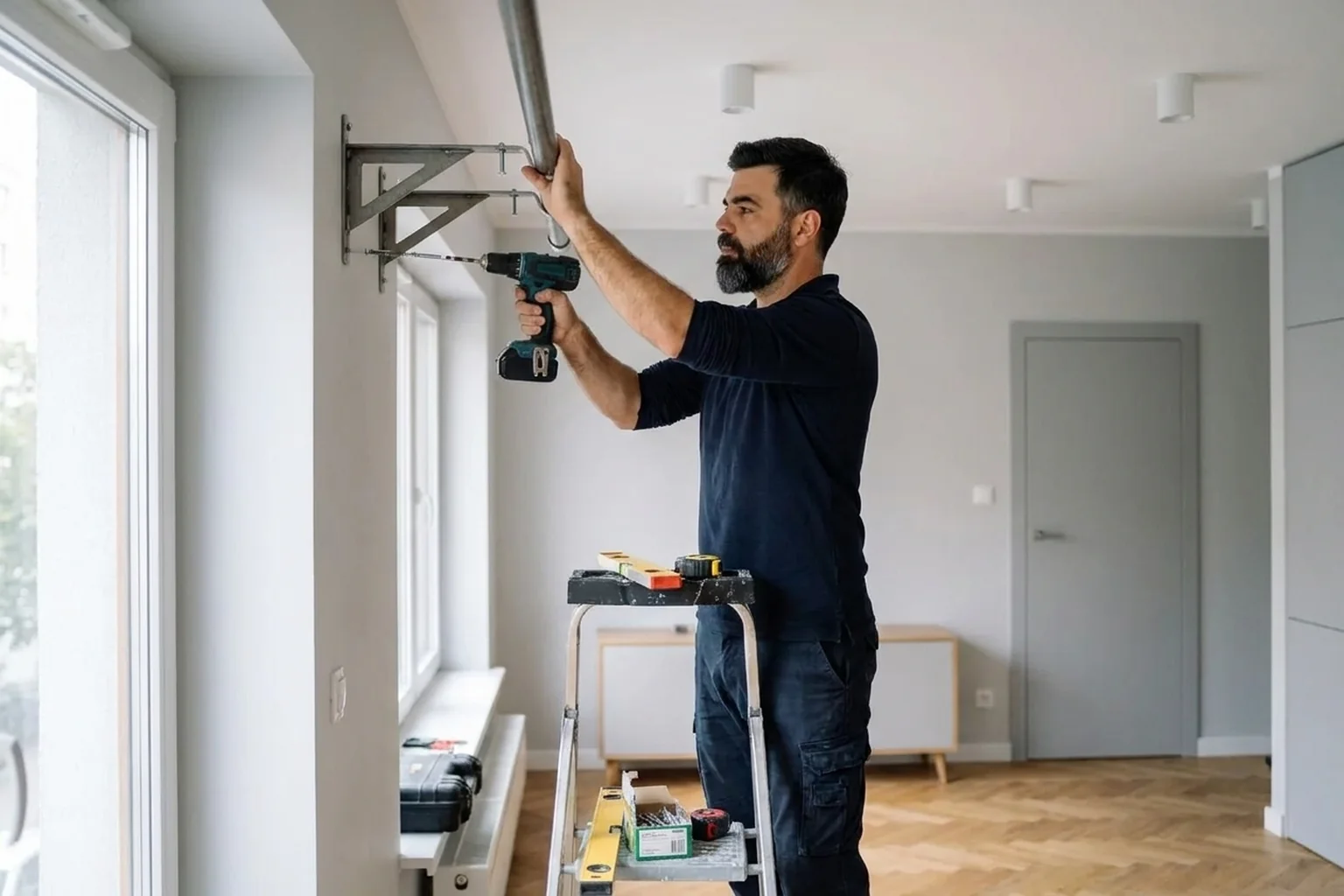
A heavy blackout weighs far more than a light voile. Across a wide window, one bracket at each end isn’t enough, and within a few weeks the pole starts to sag in the middle. A tradesperson will add a third bracket or suggest a ceiling track.
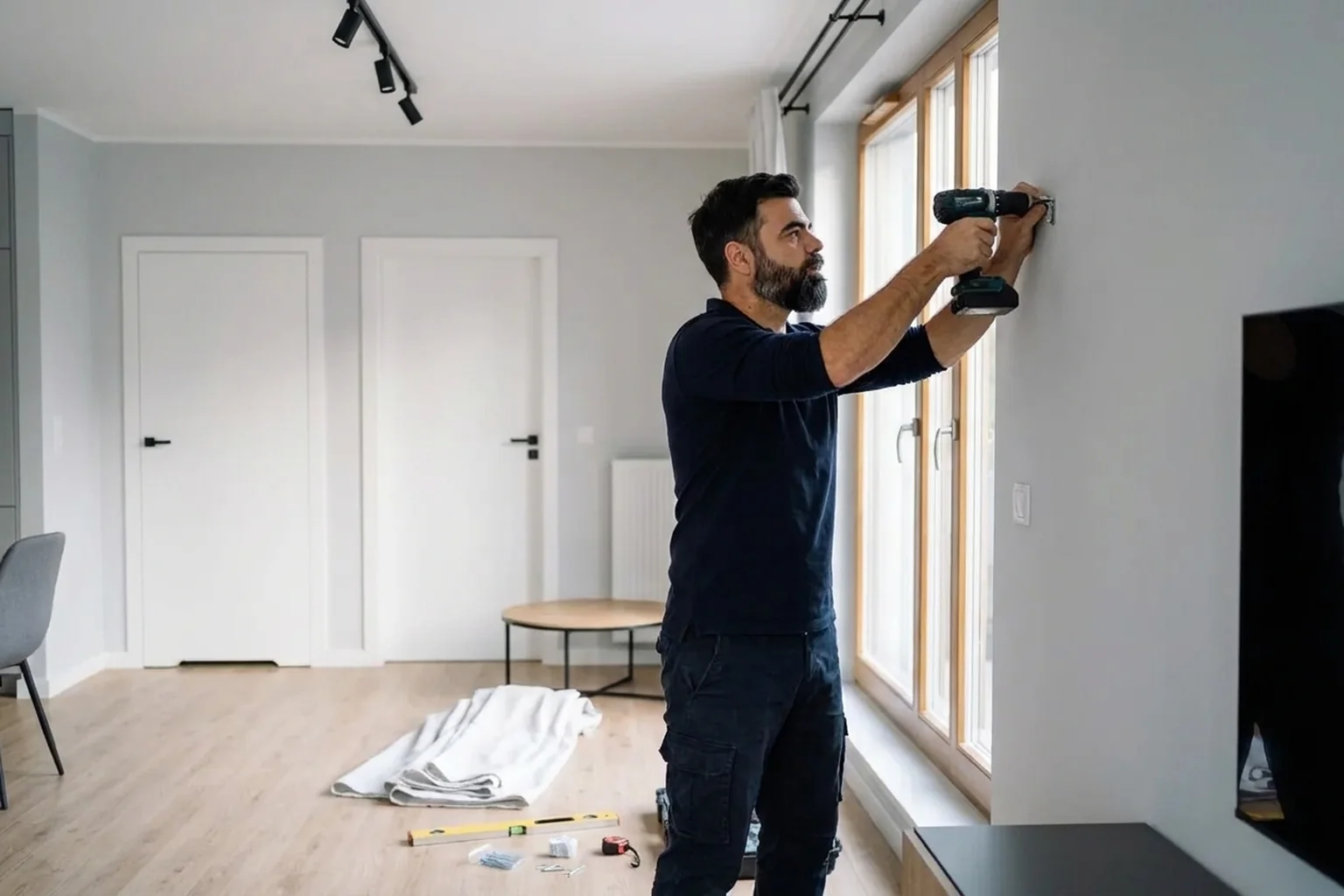
Height matters too. A rod right above the frame makes the ceiling look lower; the same curtain hung close to the ceiling makes the room look taller. Then the length has to work, so settle the rod height before you get the curtains shortened.
The old holes from the last rod are rarely any use. A plug in a blown-out hole holds badly, so new brackets usually go a few centimetres to the side and the old holes get filled.
What it costs and how to book: curtain rail fitting in Warsaw.
What spoils the result
- A rod chosen for the window rather than the fabric. A thin pole under heavy drapes bows within weeks.
- Curtains taken up before the rod went on. You end up a few centimetres short of the floor, or with fabric puddled on it.
- A wave track fitted with a slight slope. The folds drift apart and the curtain looks badly sewn.
- Plugs that don’t match the wall. In plasterboard or aerated block a standard plug won’t hold heavy fabric for long.
Eurofirany curtain hanging: getting ready
- Curtains and sheers unpacked, ideally ironed or steamed.
- The rod or track with all its brackets, rings and end caps.
- A decision on wall or ceiling fixing.
- Clear space by the window.
Booking it
Post the job in the app with photos of the window, the wall above it and the rod itself, and mention it if the drapes are heavy. Tradespeople send bids with their own price and timing; you pick one on price, rating and reviews. His phone number and your address are shared once you’ve chosen.
You pay him directly and he issues the invoice. Plugs and screws usually come with the job, the fabric and rod you buy yourself. He answers for his own fitting, not for crumbling plaster or hidden faults in the wall.
Order in the app
Describe the job, add photos and the address. Tradespeople send their own prices and dates, and you pick one of the offers.
Open the app