A Grohe in-wall cistern: what gets decided at the frame stage
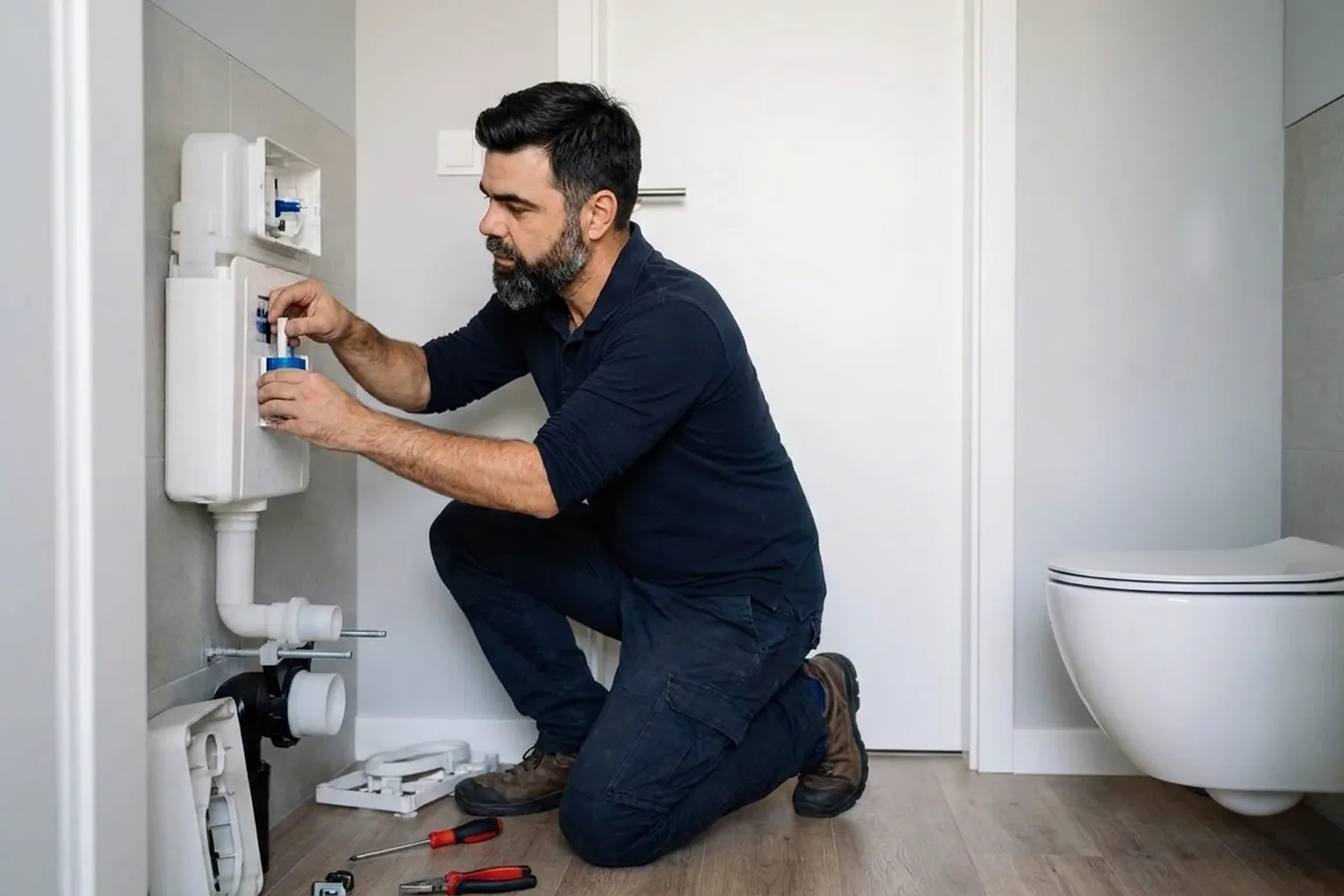
Grohe makes taps, and it also makes concealed frames with a cistern for wall-hung toilets. The frame settles several things at once: how high the pan sits, where the flush plate ends up, and whether the mechanism can be reached later without opening the wall.
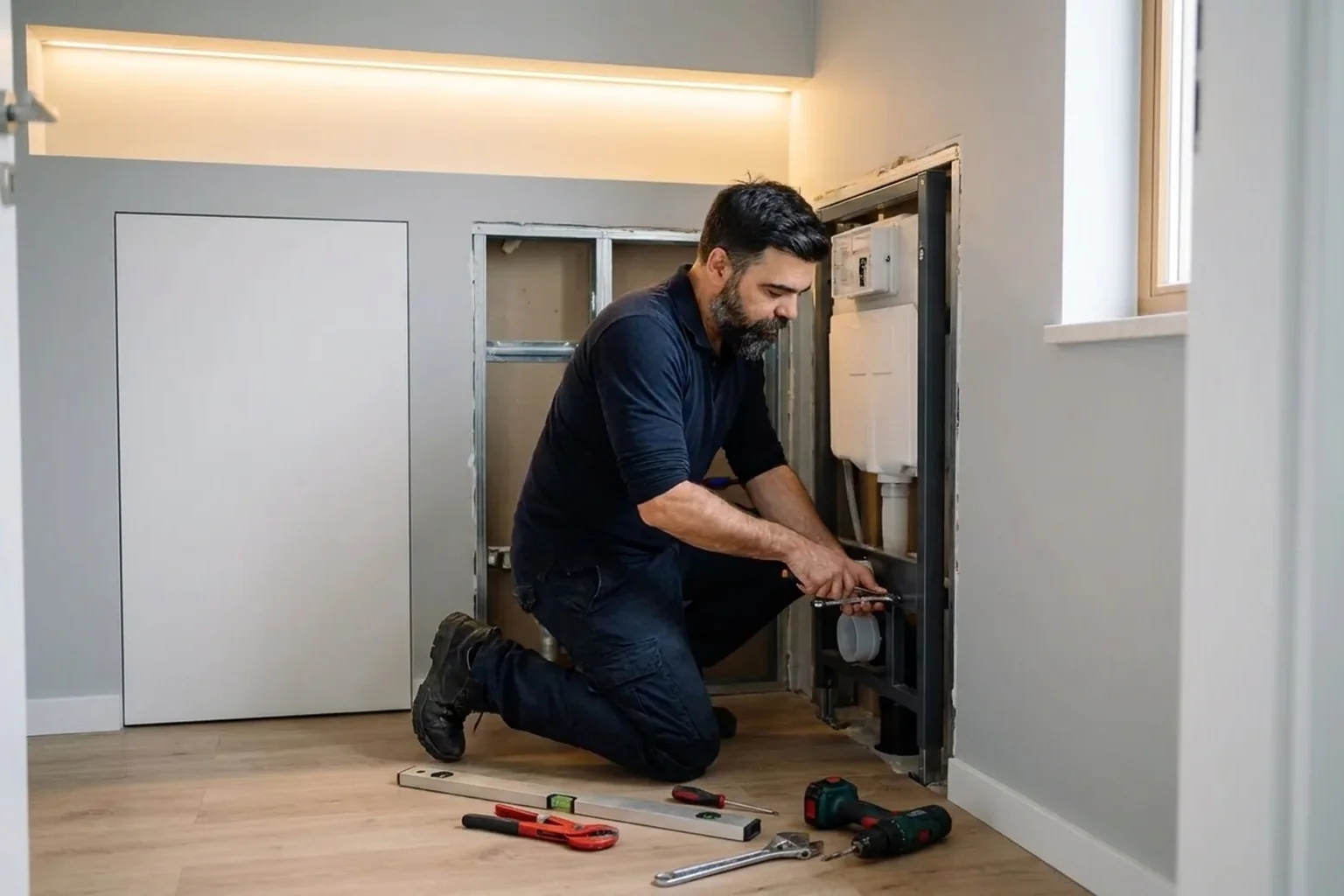
Pan height is set on the frame before any tiling. It’s worth fitting it to the people who live there, not just to the manual. The frame is fixed to the floor and to a load-bearing wall or a solid partition. A light stud wall needs extra bracing, or the pan flexes under weight.
Before the wall is closed there’s a test: water connected, cistern full, a few flushes into the waste. A leak found now costs a washer. The same leak after tiling costs a wall.
How it looks in the appWall-hung toilet installation in the app, screen by screenFirst the service and a photo: just show the wall for the frame. A price range appears right away. All that’s left is the address and the day. Handymen see the job and each decides whether to take it. Offers with prices land in the app. You pick the one that suits you.Service and a photoAddress and a day that suits youOffers from handymen, you chooseDescribe the job
Price ranges and offers from tradespeople: tiling services in Warsaw.
What tends to show up after finishing
- An access opening that’s off-centre or too small. The flush plate doesn’t line up with the tiles and the mechanism won’t come out.
- No leak test before tiling. The first leak appears as a damp patch on the next wall.
- A frame fixed only to the floor. The pan rocks slightly and the silicone at the wall cracks.
- Noisy filling in a block with thin walls. A scaled-up valve, or no sound insulation around the frame.
In older Grohe installations the main problem is mundane: hard water. Scale settles on the flush valve seal and water starts trickling into the pan. Cleaning or replacing the seal is enough, through the opening behind the plate.
If a whole valve needs replacing, the part has to match that particular frame. Photograph the mechanism and the label inside the cistern before buying anything. A universal “fits any cistern” valve in a concealed tank is often a gamble.
Have this ready
- The frame, fixing kit, flush plate and pan on site.
- Water supply and waste at the frame position.
- The thickness of tiles plus adhesive, since the frame is set to it.
The main water valve goes off before anything is connected to the supply.
How to book it
Tell the app what stage the bathroom is at and add photos of the wall, pipes and frame. Tradespeople who do this kind of fitting reply with bids at their own price and date. Compare prices, ratings and reviews and choose one; phone number and address are shared after that.
You pay him directly and he issues the invoice. Bolts and plugs are usually part of the labour; the frame, flush plate and pan are not, and rubbish removal and carrying materials up are charged separately. Whoever fitted it answers for it and redoes it if it leaks. A partition that turned out too weak, or someone else’s pipework changes, are not on him.
Order in the app
Describe the job, add photos and the address. Tradespeople send their own prices and dates, and you pick one of the offers.
Open the app