How a kit like this works
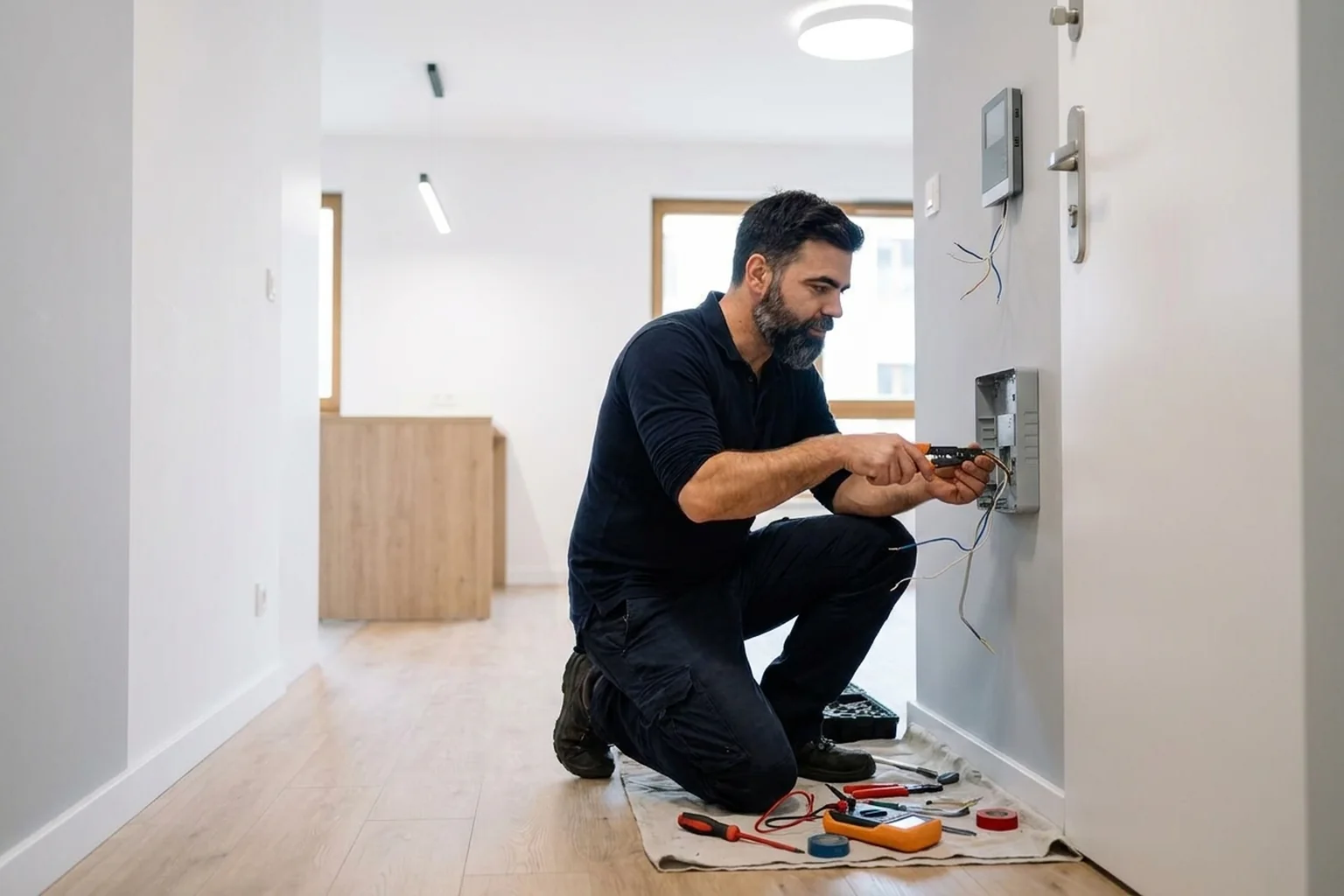
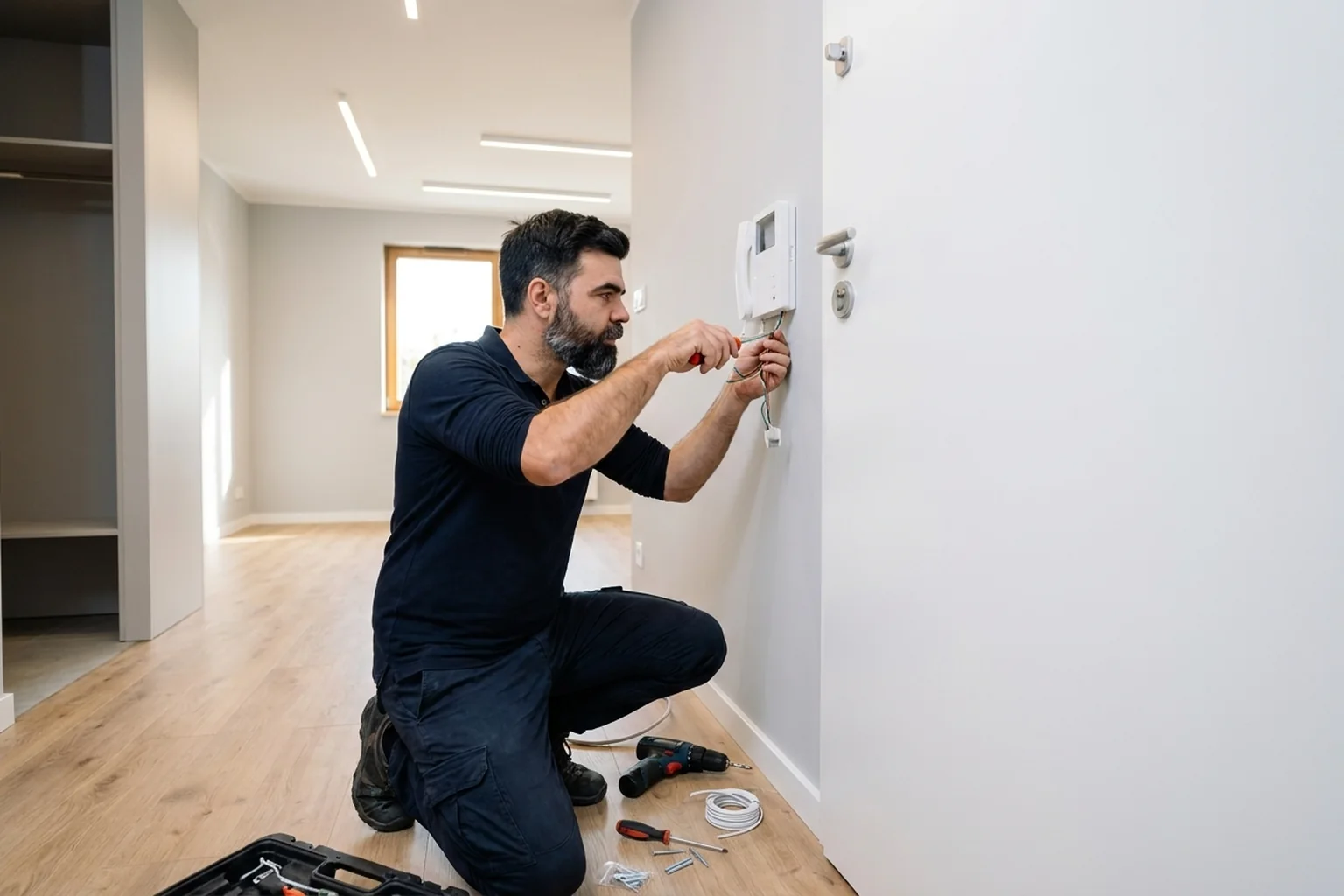
Commax is a Korean video intercom brand. A typical kit has a monitor indoors, a camera with a call button at the entrance, and a power supply. The monitor often needs a 230 V socket nearby or a separate supply in a wall box, so its spot is chosen with the power in mind, not just convenience.
The cable between camera and monitor is where most of the work goes. If the old intercom left a wire in the wall, the tradesperson checks it has enough cores and no break. If there’s nothing, the options are trunking, a chase in the wall, or a buried cable to the gate inside a protective duct. On longer runs the cable gauge matters too: one that’s too thin gives a dark, noisy picture.
The camera goes at roughly an adult’s face height, ideally under a hood. If it’s meant to open the gate, an electric strike comes into the job along with its connection to the monitor.
Repairs are often simpler. When the picture flickers or drops out, the connections at the camera and the power supply get checked first, the monitor itself later. Replacing the whole kit makes sense when the camera housing has cracked and water got inside.
Price ranges and offers from tradespeople: intercom installation in Warsaw.
Commax intercom installation: common mistakes
- A camera facing the sun. By mid-afternoon all you see on screen is a silhouette.
- Gate cable buried without a duct. After the first winter the picture starts playing up.
- The monitor hung where there’s no power, with an extension lead snaking across the hallway.
- The old intercom disconnected but its wires left loose in the box.
- The kit from one shop, the gate strike from another, and nobody checked they work together.
Commax intercom installation: getting ready
- Decide where the monitor will hang and check there’s a socket close by.
- Roughly measure the distance from the front door to the gate.
- Photograph the camera spot, the old handset and the box behind it.
- In a block of flats, ask the building manager whether you can tap into the shared system.
Finding someone for the job
- In the app you describe the job, add photos and say whether a cable is already in place. Tradespeople base their bids, with price and date, on that.
- You compare the bids, ratings and reviews and pick one. Only then does he see your phone number and address.
- You pay him directly, and he issues the invoice.
Plugs and small fixings are usually included; the kit, cable, duct and rubbish removal are extra. Whoever did the fitting answers for it and fixes his own mistakes. Cracked brickwork by the gate or earlier wiring alterations are not on him.
Work on 230 V circuits needs someone with electrical qualifications. His profile shows whether he has confirmed them.
Order in the app
Describe the job, add photos and the address. Tradespeople send their own prices and dates, and you pick one of the offers.
Open the app