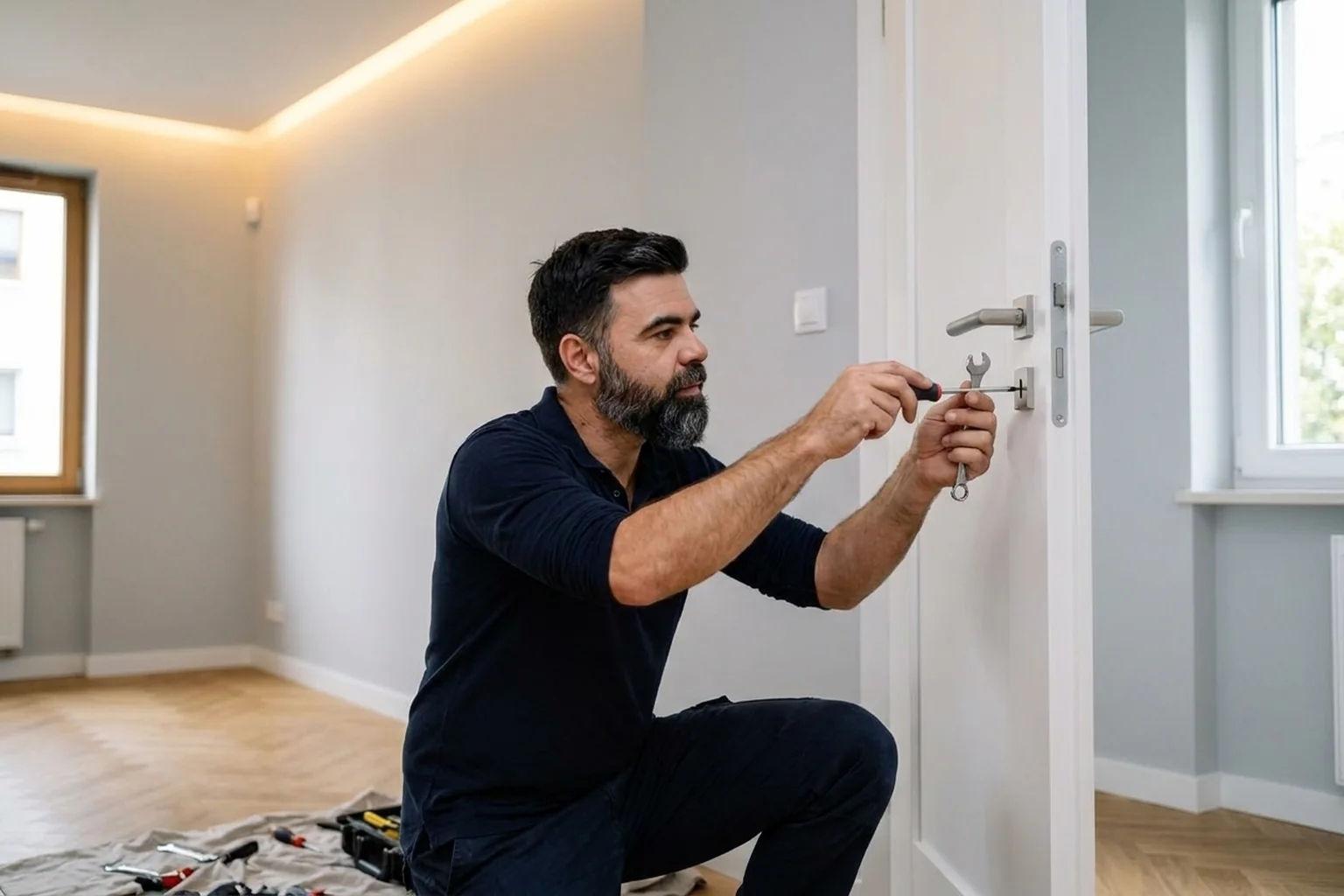
What you can adjust on a Geze closer
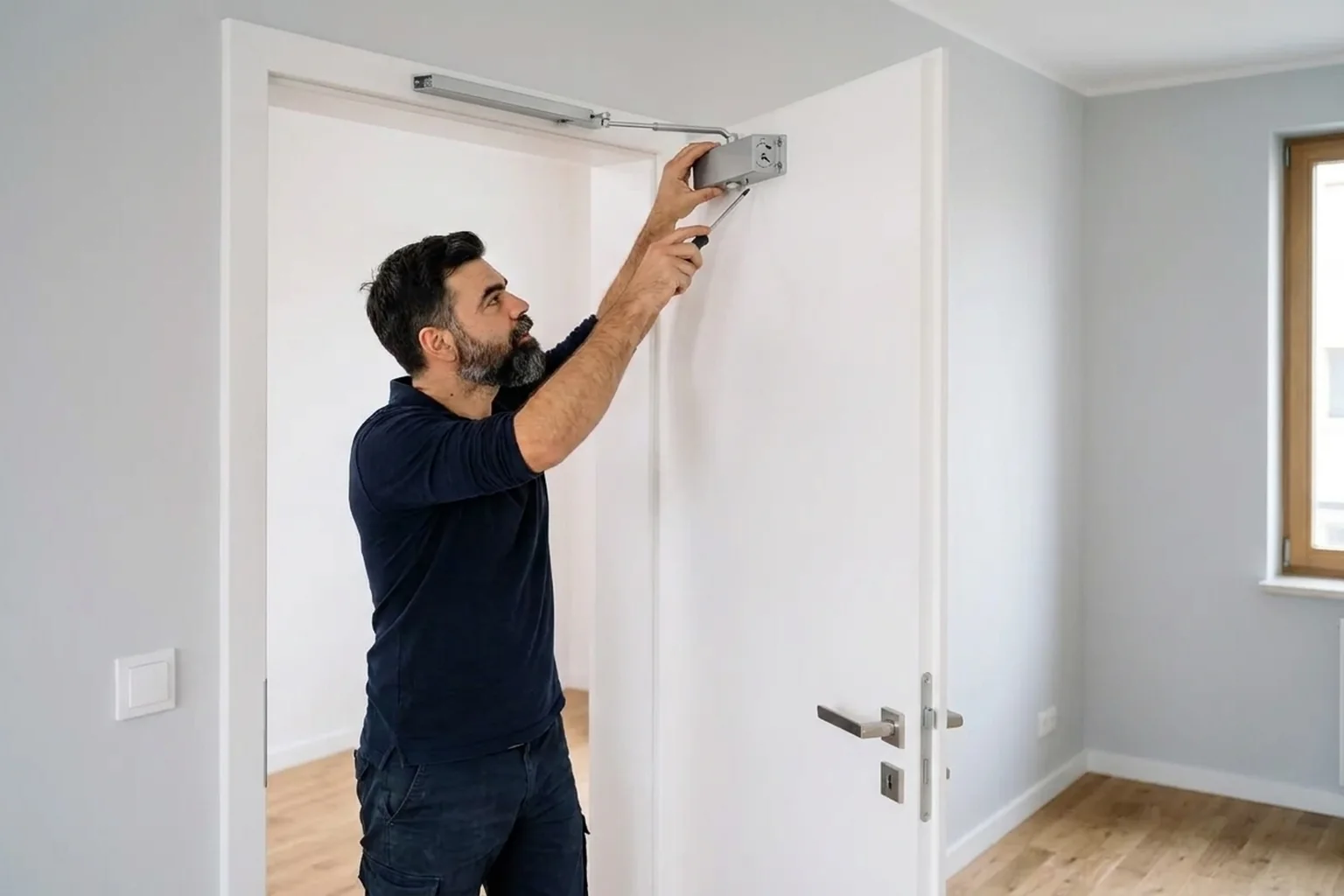
Geze is a German maker of door hardware, and in flats and offices you mostly meet its door closers. A typical hydraulic closer has separate valves for closing speed and for the latching action over the last stretch, and some models also have backcheck when opening. Which ones your unit has is shown on the body or in the manual. They are turned a little at a time: a quarter turn, test, another quarter.
Before touching the valves, check the door itself. If the leaf has sagged on its hinges or catches on the threshold, no setting will pull it shut. Hinges first, closer second. Closing force on many models is set differently, for example by the arm position or the size of the unit, and on a heavy front door that is what decides whether the latch catches.
One thing no adjustment fixes: oil on the body or on the floor underneath. A leaking closer normally gets replaced, since the seals inside are not meant to be repaired on site.
On doors to a stairwell or outside, closing speed changes with temperature: in winter the oil in the closer thickens and the door moves slower. So a summer setting sometimes needs a small tweak in autumn. On stairwell and office doors the closer often has to shut the door fully for fire safety, so those are not wedged open or set softer. If the door belongs to the building, agree the adjustment with the administrator.
How it looks in the appDoor adjustment: a request without phone callsPick the service, take a photo of the door closer and the estimate shows up straight away. After the address and date, the request goes out to independent handymen nearby. They send their offers with a price, and you compare and choose.Service and a photoAddress and a day that suits youOffers from handymen, you chooseDescribe the job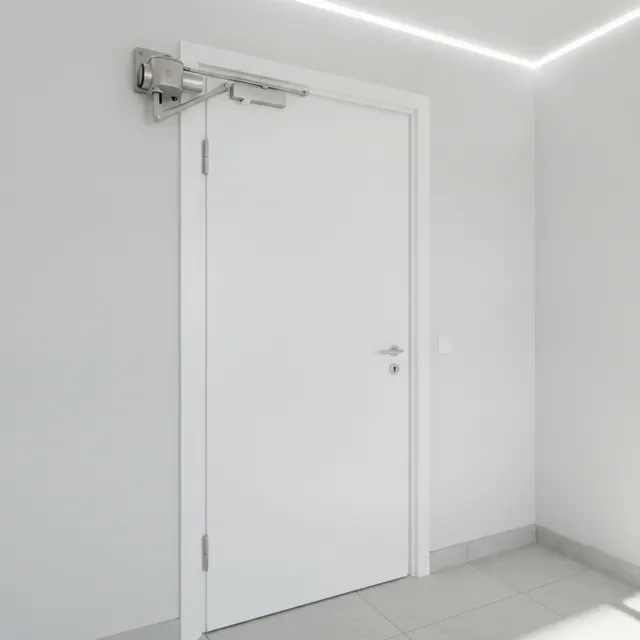
What it costs and how to book: apartment finishing in Warsaw.
Typical mistakes
- Opening a valve all the way and then some. On many closers that ends in a leak.
- Adjusting the closer when the real problem is a sagging leaf.
- Setting a fast close in a home with children or pets.
- Missing loose fixing screws. A body that wobbles chews out the holes in the door.
What to have ready
- A close-up photo of the closer where the model marking is readable.
- A short video of the door closing.
- A note on whether there are oil traces.
Booking the adjustment
Describe in the app what the door does and attach photos or a video. Tradespeople send bids, each with his own price. Pick on price, ratings and reviews; phone and address become visible after you choose. You pay the tradesperson directly and he issues the invoice.
Order in the app
Describe the job, add photos and the address. Tradespeople send their own prices and dates, and you pick one of the offers.
Open the appA new closer or parts are charged separately as materials. The tradesperson answers for his adjustment and will correct his own settings. A worn-out mechanism and hidden faults in the door are not on him.