The board is only half of it
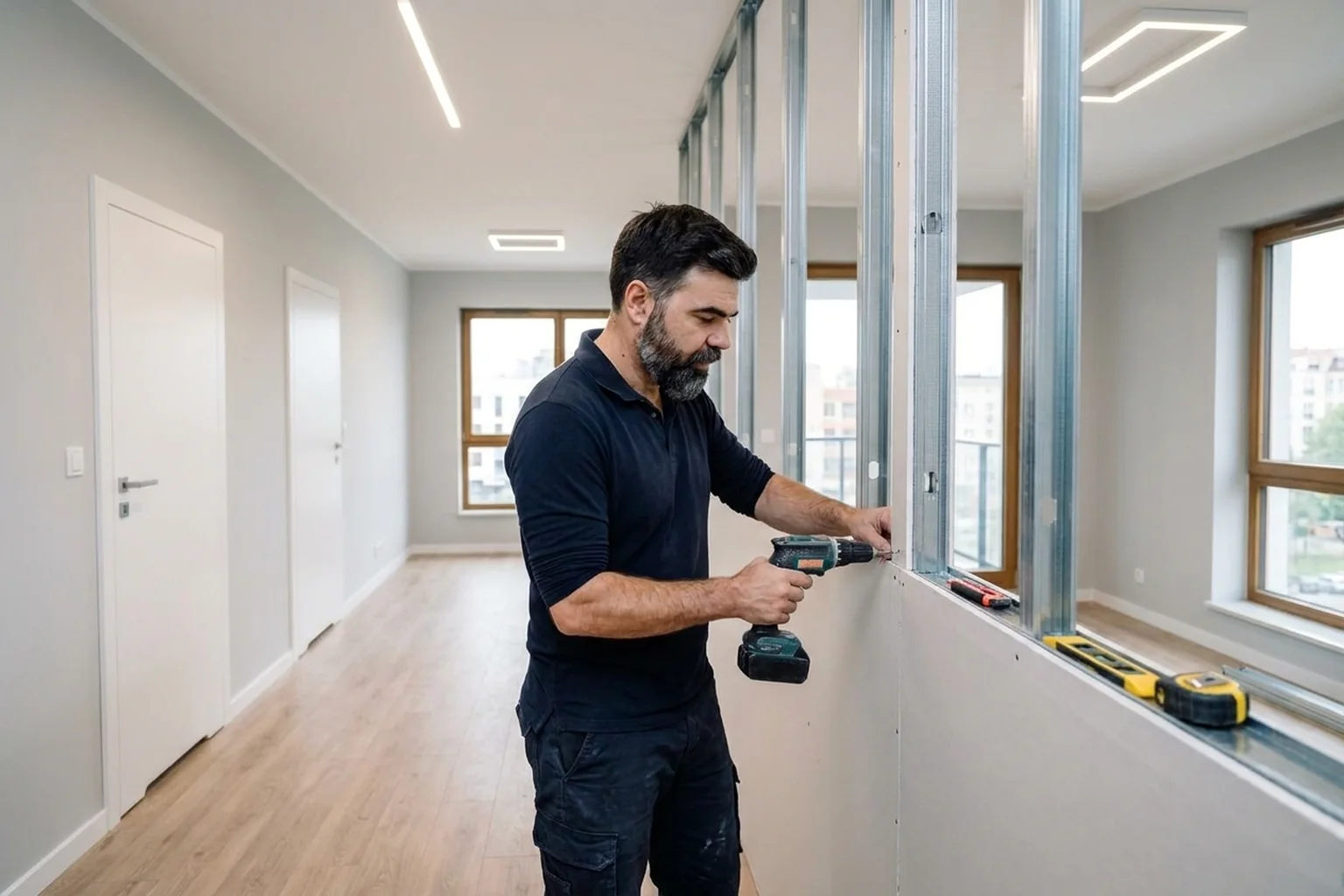
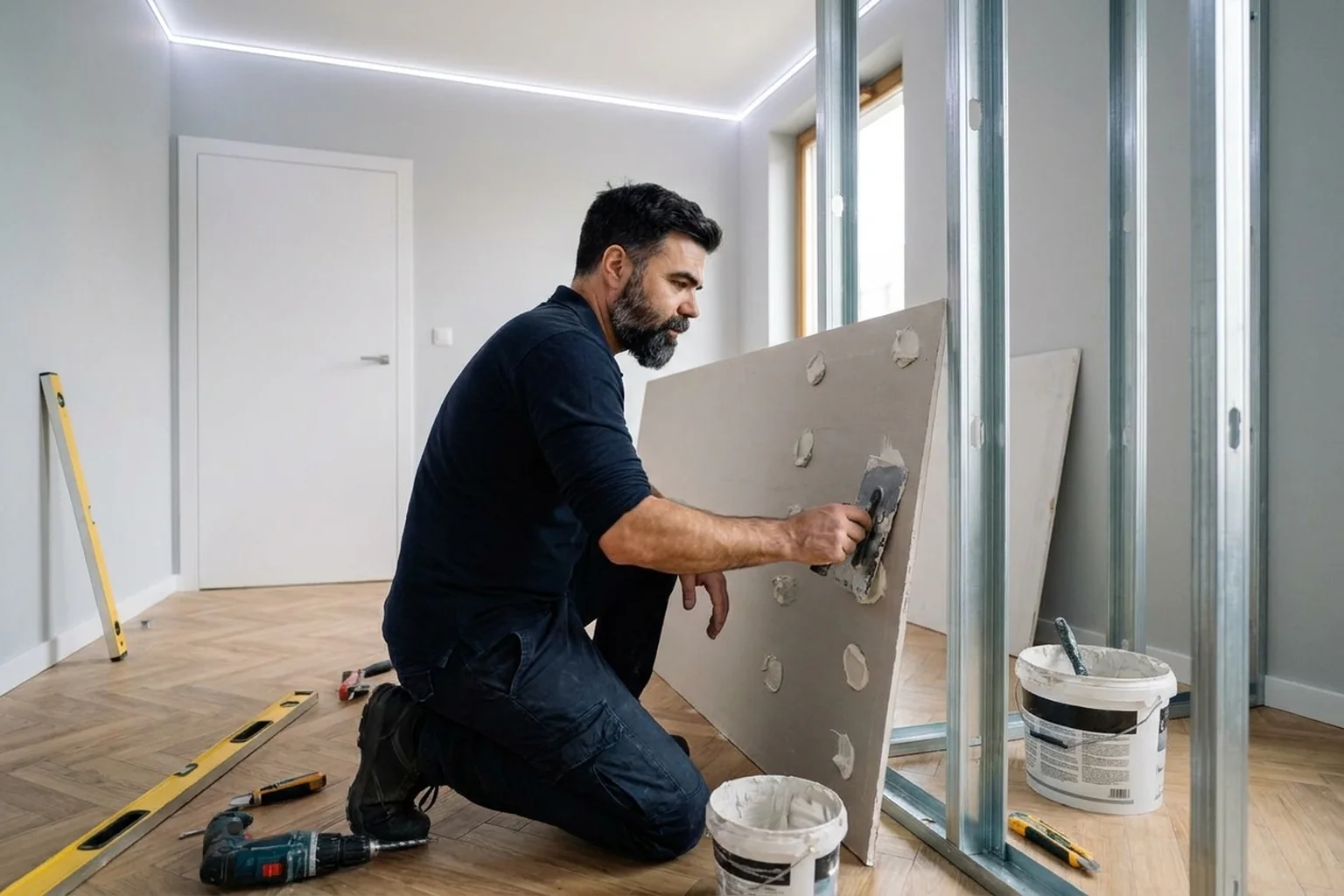
Alongside the boards, Knauf makes the rest of the system: studs and tracks, screws, tapes, jointing compounds. The parts are designed to work together, which is why tradespeople prefer to stay within one system instead of mixing a random stud with someone else’s filler.
The board type follows the room. A standard board is fine for a bedroom, moisture-resistant board goes into bathrooms and kitchens, and fire-rated board where fire resistance matters. You can tell them apart in the shop by the colour of the paper and the marking.
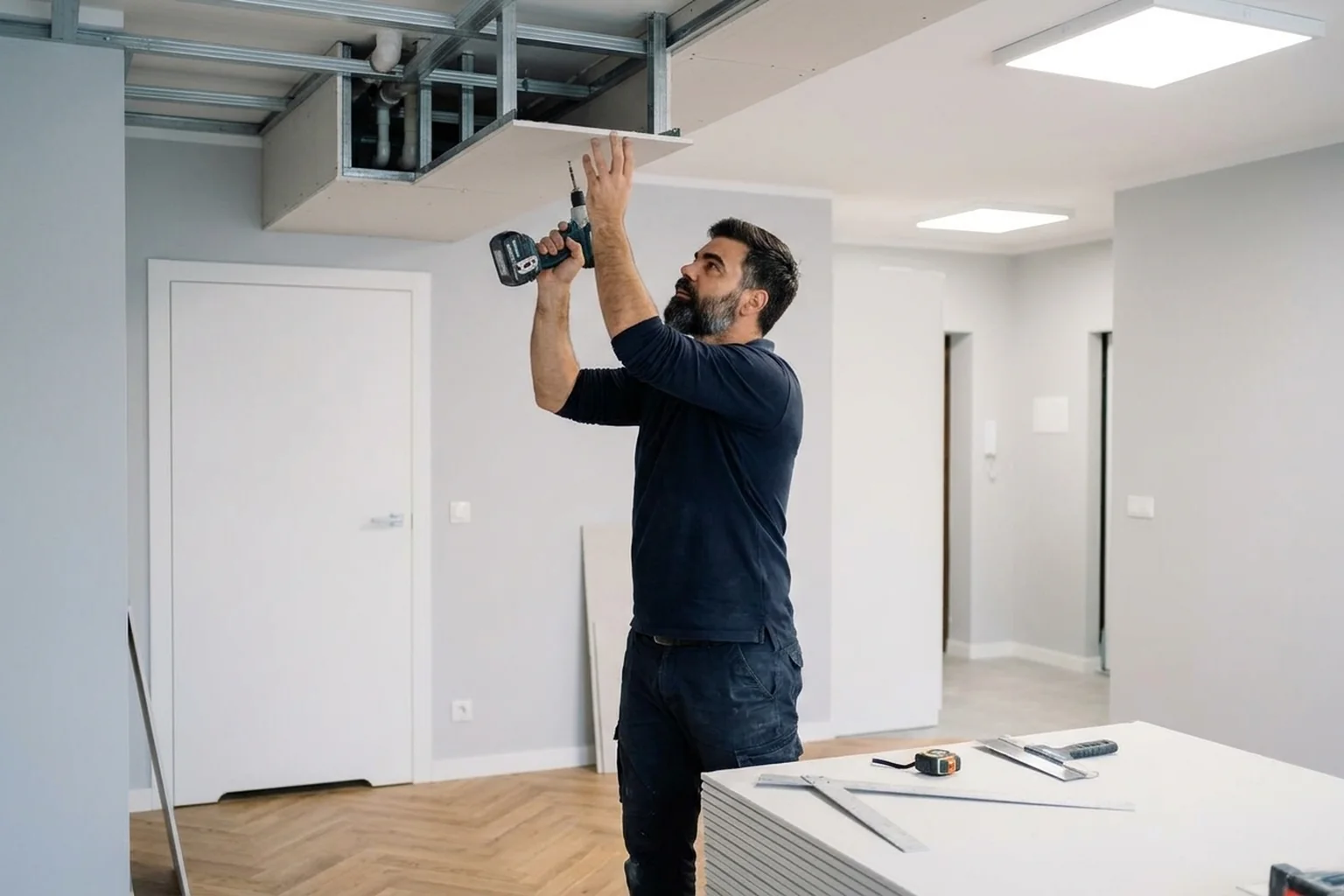
Ceilings are a different job from walls. The frame hangs on hangers and has to be levelled across the whole area, and a board overhead is heavy. If you want downlights, mark their positions before the frame is closed; afterwards every cable means cutting new holes.
Rather hand the job over? More here: apartment fit-out in Warsaw.
Where it cracks
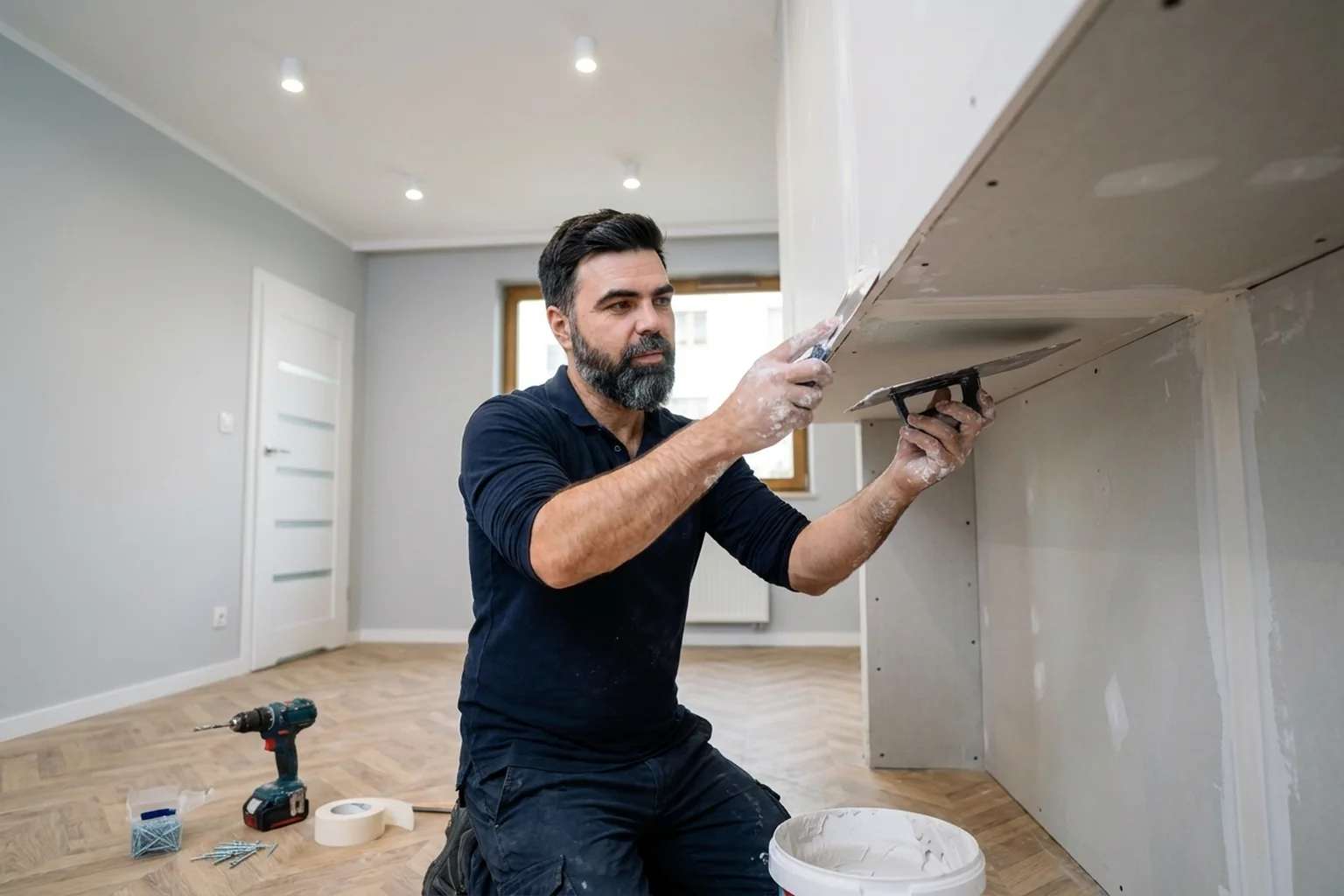
- Joints without tape. Filler alone can’t take the movement, and after one heating season a hairline crack shows up.
- Ceiling boards joined in one straight line. Joints should be staggered, or you get one long crack across the room.
- Standard board in a bathroom. Within months the paper takes on moisture and warps.
- Screws driven too deep. Torn paper no longer holds the board.
- Filling in a cold, damp flat. The compound dries unevenly and shrinks later.
Knauf plasterboard installation: getting ready
- Decide where sockets, lights and shelves go. Heavy cabinets need extra support built into the frame.
- If cables run inside the wall or ceiling, an electrician lays them before the boards go up. Wiring is only touched with the power off.
- Clear the room: cutting and sanding spreads gypsum dust everywhere.
- Take photos of the wall or ceiling and measure the height.
Getting it done
Post the job in the app with photos and sizes, and say whether it’s a wall or a ceiling, bathroom or bedroom. Tradespeople in Warsaw send bids with their own price and timing. You weigh up ratings and reviews and choose one; contact details and the address are shared only after that.
Payment goes straight to the tradesperson, who issues the invoice. Screws and plugs are usually included; boards, studs, compounds, rubbish removal and carrying materials in cost extra. The tradesperson answers for their own fitting and fixes cracks along their own joints. Movement in an old building and crooked masonry are not on them.
Order in the app
Describe the job, add photos and the address. Tradespeople send their own prices and dates, and you pick one of the offers.
Open the app