Siniat on adhesive or on studs
Siniat is a plasterboard brand in the Etex group, known in Poland earlier as Nida Gips. Besides boards it makes studs, gypsum adhesive and jointing compounds, so it covers both methods.
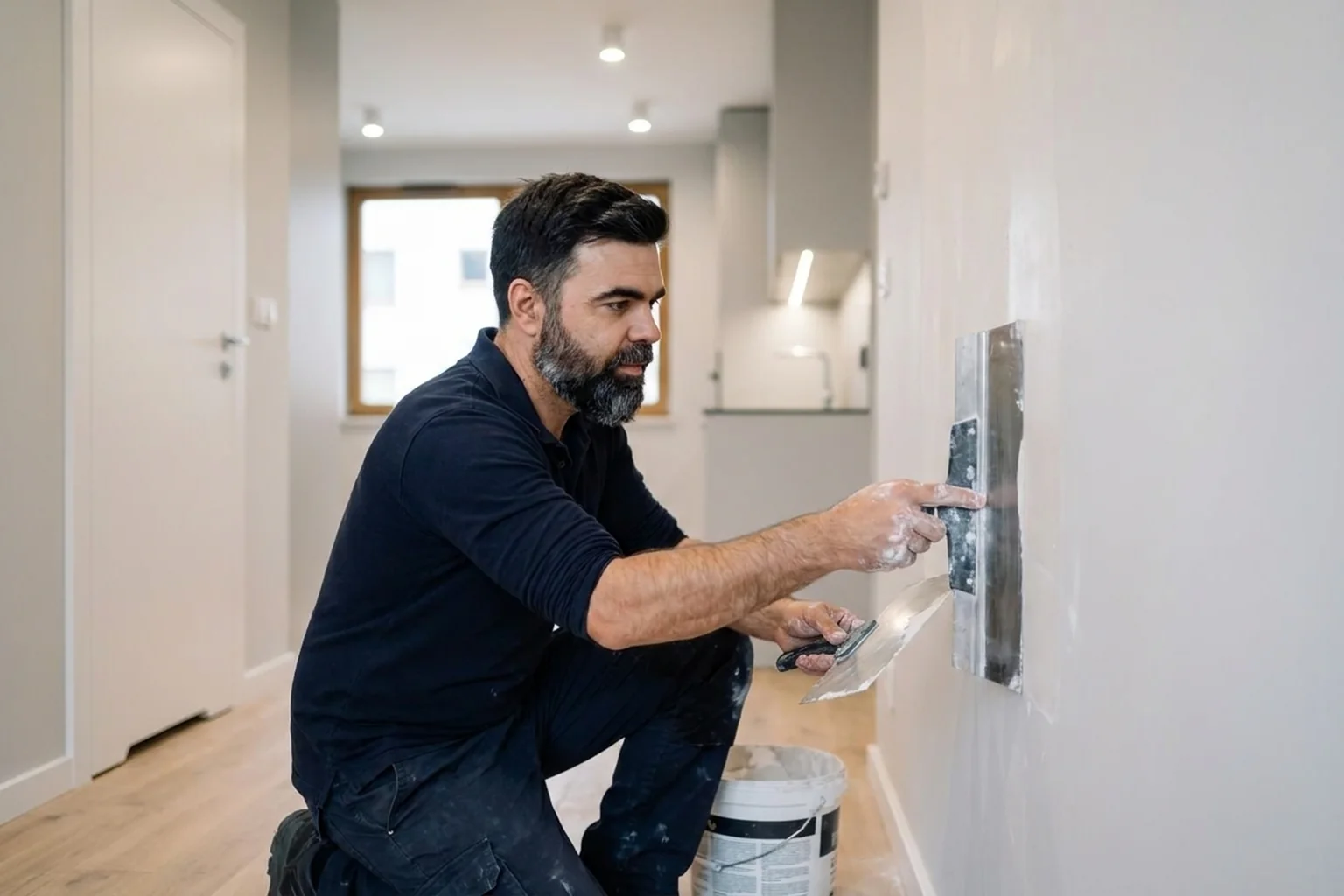
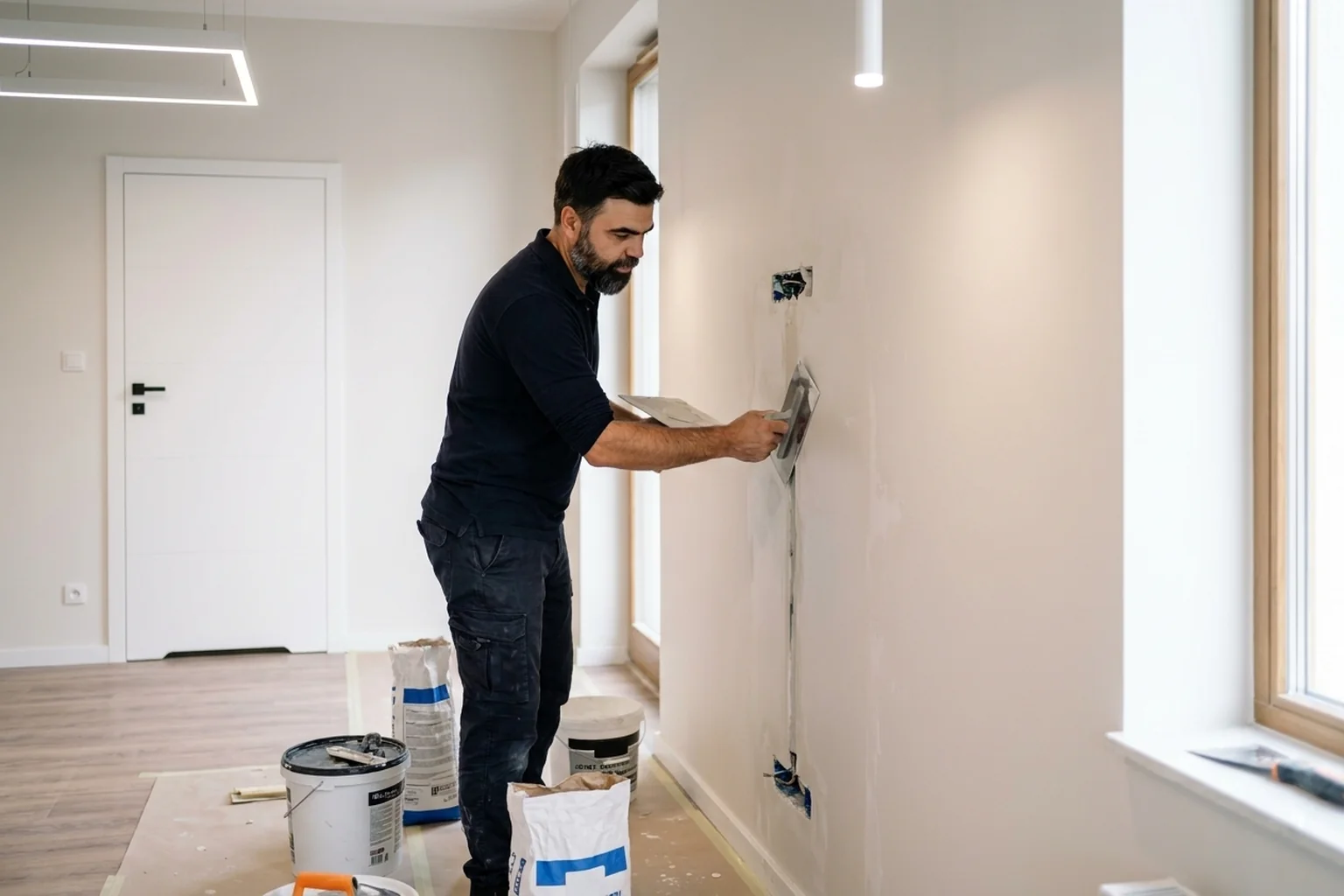
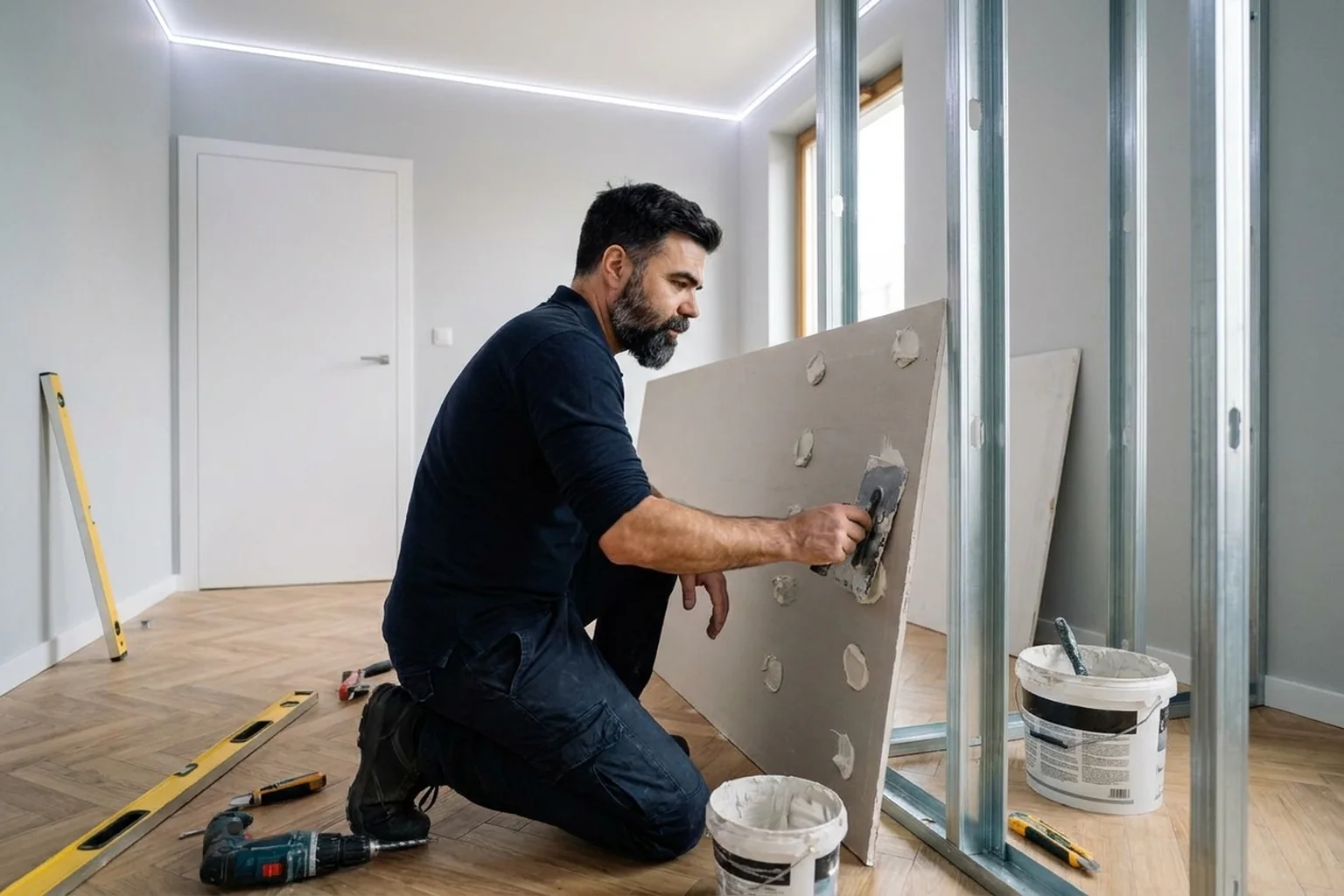
Dot-and-dab means sticking the board to the wall on dabs of gypsum adhesive. It takes up little room and goes quickly. It works when the wall is dry, sound and not too far out. If the wall is dusty, damp, or further out than a dab of adhesive can take up, a stud frame is the better call. It costs you more centimetres, but cables can run inside and you can add insulation against noisy neighbours.
The board type follows the room: standard in living spaces, moisture-resistant in bathrooms and kitchens, fire-rated where regulations or the design call for it.
Window reveals and corners are priced on their own. The board runs up to the window frame, and outside corners get a metal or paper corner bead so they don’t chip every time furniture is moved. It’s fiddly, slow work, so mention the windows in the job description.
What it costs and how to book: interior finishing in Warsaw.
Mistakes that show up a month later
- Too few dabs of adhesive. The board sounds hollow between them and cracks when you hang a picture.
- Dot-and-dab on a damp wall. The adhesive doesn’t grab, the board comes away and mould can follow.
- Boards standing directly on the floor. Without a gap they wick moisture up.
- Joints with no tape or a single coat of filler. The crack is back after the first winter.
Before you book
- Make sure the walls are dry. After fresh plaster or a new screed you’ll have to wait.
- Mark sockets and spots for heavy cabinets. With dot-and-dab the cables stay in the wall behind the board; with a frame they can run inside. Any wiring is done by an electrician with the power off.
- Photograph the walls with a level or straightedge held against them so the bow is visible.
What happens in the app
You describe the walls and attach photos. Warsaw tradespeople reply with bids: each gives their own price and date, and often suggests a method. You compare, read reviews and choose. Only the person you pick gets your contact details and address.
You pay them directly and they issue the invoice. Screws and plugs are usually included; boards, studs, adhesive, compounds, rubbish removal and carrying materials up are extra. The tradesperson answers for their fitting and redoes their own joints. Damp in the masonry and defects from a previous renovation are not on them.
Order in the app
Describe the job, add photos and the address. Tradespeople send their own prices and dates, and you pick one of the offers.
Open the app